Travels in Namibia - The Namib Desert
It was time for another trip to Namibia – probably our favourite place in the world to do a road-trip.
This was going to be our longest trip – three months – camping through the length and breadth of Namibia.
We wanted to see both Namibian deserts, the Namib and the Kalahari, and then visit the Namibian Four Rivers Region, also known as the Caprivi. And we also planned a loop through Botswana, primarily to travel with my brother and sister-in-law to Nxai Pans and Baines Baobabs in the Makgadikgadi Basin
We were also, primarily, looking to find and photograph the endemic and near-endemic birds of Namibia.
Starting our drive in Cape Town, South Africa, we crossed into Namibia over the Orange River border. Then through the wilderness of the south, the Namib desert, along the Atlantic coast, the rocky spectacle of Spitzkoppe and Erongo up to Hobatere. From there we transversed the length of the Etosha National Park, from west to east. Leaving Etosha we went north to the Okavango River bordering Angola. Following the Okavango, we spent four weeks in the Caprivi before looping down to Botswana, visiting the Okavango pan-handle, Makgadikgadi Basin and the Chobe National Park. Transversing the Caprivi again, we took the long road back home. We drove 12 000 km in total.
There were also some obvious bits we left out, namely the Fish River Canyon in Namibia and the Okavango Delta itself in Botswana, only because we have already done several visits to these places before.
Most of the general route just unfolded from our maps, detailed roads emerged from talking to people, mostly from the 4x4 forums and reading other trip reports on the region … and as always, talking to other travellers en route.
Our Route through the Namib
This is not exactly the route we planned, but it was what we did. That is one of the joys of longer-term travel … you have time to go where the road takes you. It is less about deadlines and more about destinations. The following are the key way-points of our route, but they were not all overnight stops. (Route-only way-points or side excursions are in brackets).
Southern Namibia:
• Northern Cape of South Africa
• Aus Klein Vista
• (Luderitz - day trip)
• Namib Rand Reserve
• Sesriem
• (Namib Naukluft Park – Sossusvlei)
• Namib Valley of 1000 Hills
Northern Cape
Driving up from Cape Town through the Northern Cape. Overnight on a farm just outside Vanrhynsdorp. Perfect distance and first stop from Cape Town. Stunning view of the mountains were reflected in the small dam at sunrise and sunset.
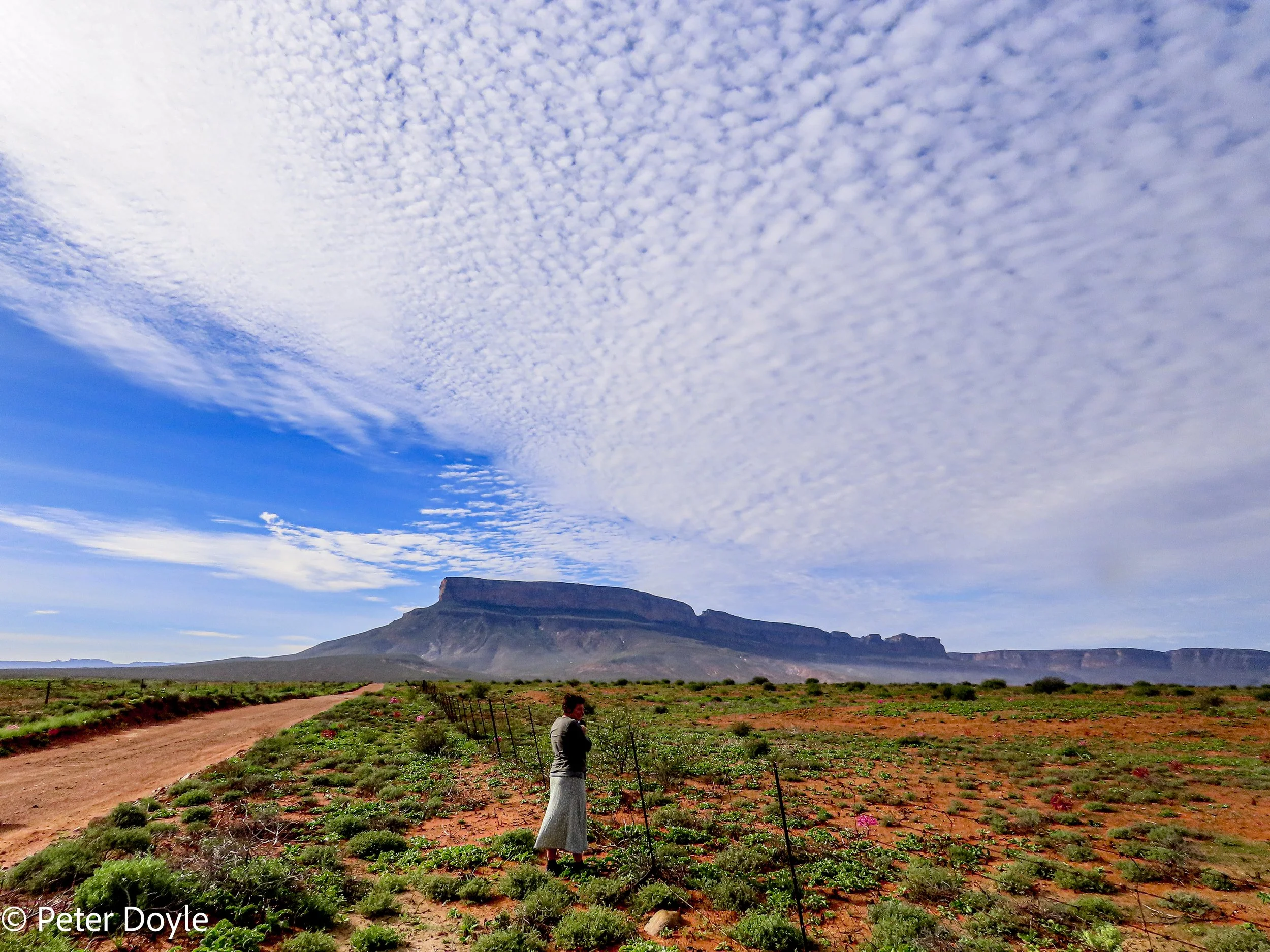
The Gifberg (poison mountain) near Vanrhynsdorp, Nama Karoo, South Africa
We always stop at farm-stalls along the way at places with somewhat evocative names, such as Bitterfontein and Garies.
The next overnight stop was at the Goegap Nature Reserve 5km outside Springbok. Great birdlife in and around camp, including the tiny and elusive Fairy Flycatcher. This is reputed to be the smallest bird in Southern Africa. We also had a lovely calling Rufous-eared Warbler visit us.
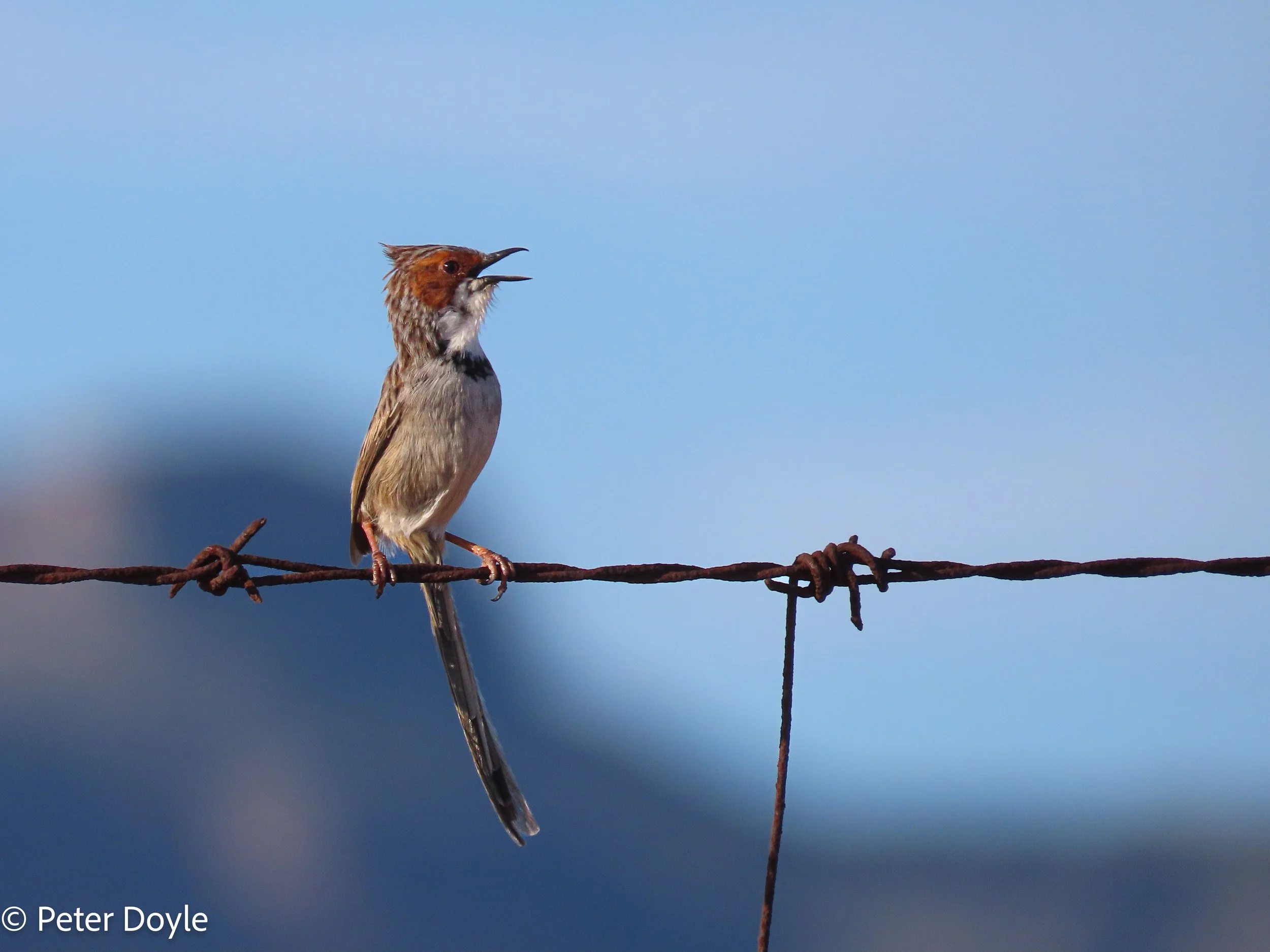
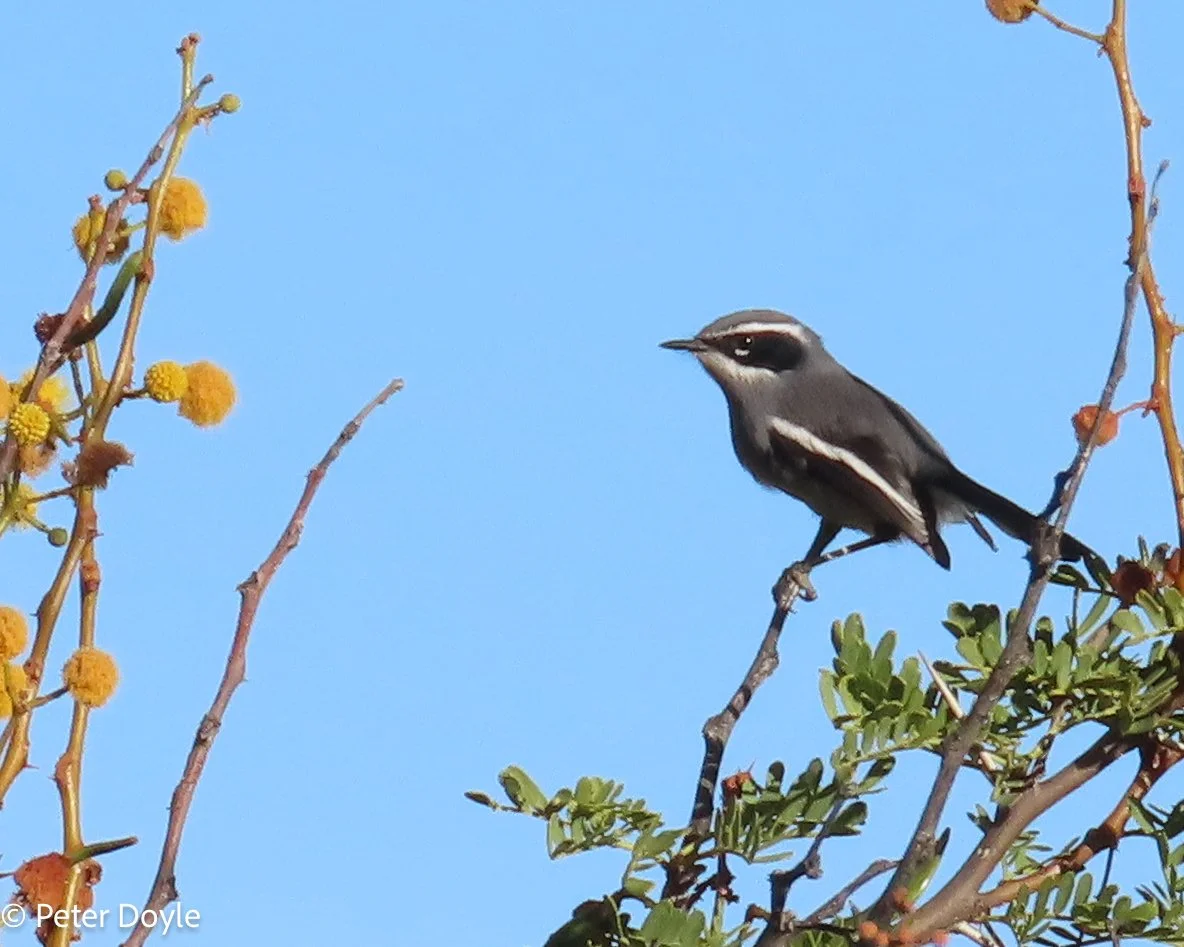
Rufous-eared Warbler (Malcorus pectoralis) Fairy Flycatcher (Stenostira scita)
Crossed the Orange River. Getting through the border into Namibia at Vioolsdrdift is easy … if you have all your papers and a pen and a smile … 5 minutes on the SA side … 50 minutes at on the Namibian side, because of more forms and road taxes.
And then the whole of Namibia beckoned to the north of us!
Namibia
In total we spent about 10 weeks in Namibia. In our opinion, it is a wonderful country to travel, especially an overland road-trip. The landscape changes dramatically across the country, and any pre-conceived ideas of a monotonous, flat, dry and dusty country is just wrong. The only places in the world that can compare to Namibia are perhaps regions like Patagonia or Iceland, for this kind of vast, stark, natural beauty.
We found friendly, helpful people throughout the country. Like everywhere in the world, there are local issues and politics, but our engagement with any officialdom, be it traffic police, road-blocks, park gates and staff, shops and border posts were always very pleasant and friendly. It helps if you have the same attitude.
The distances are vast and, in some areas, the dry heat and the dust can be challenging, but the rewards are worth it. Slow travel makes it so much more enjoyable. Quite often we found places, especially the desert regions and even in Etosha and the Caprivi region, that were difficult to assimilate during the first few days, but a longer stay has great rewards in unravelling the complexity and beauty of the landscape and life therein.
Southern Namibia
Driving the C13 From Noordoewer to Rosh Pinah through the Orange River gorge. This is one of our favourite single road trips. Desert and wilderness meet river. A strongly flowing river this time. Not too much life along the river, because it had all been swept away three times in the last few months. Unheard of flood levels that normally occur only once every 10 years.
Still, there are large flocks of Orange River White-eyes, Pale-winged Starlings and White-throated Canaries. Red-eyed Bulbuls too. Why do all these birds have hyphenated names???
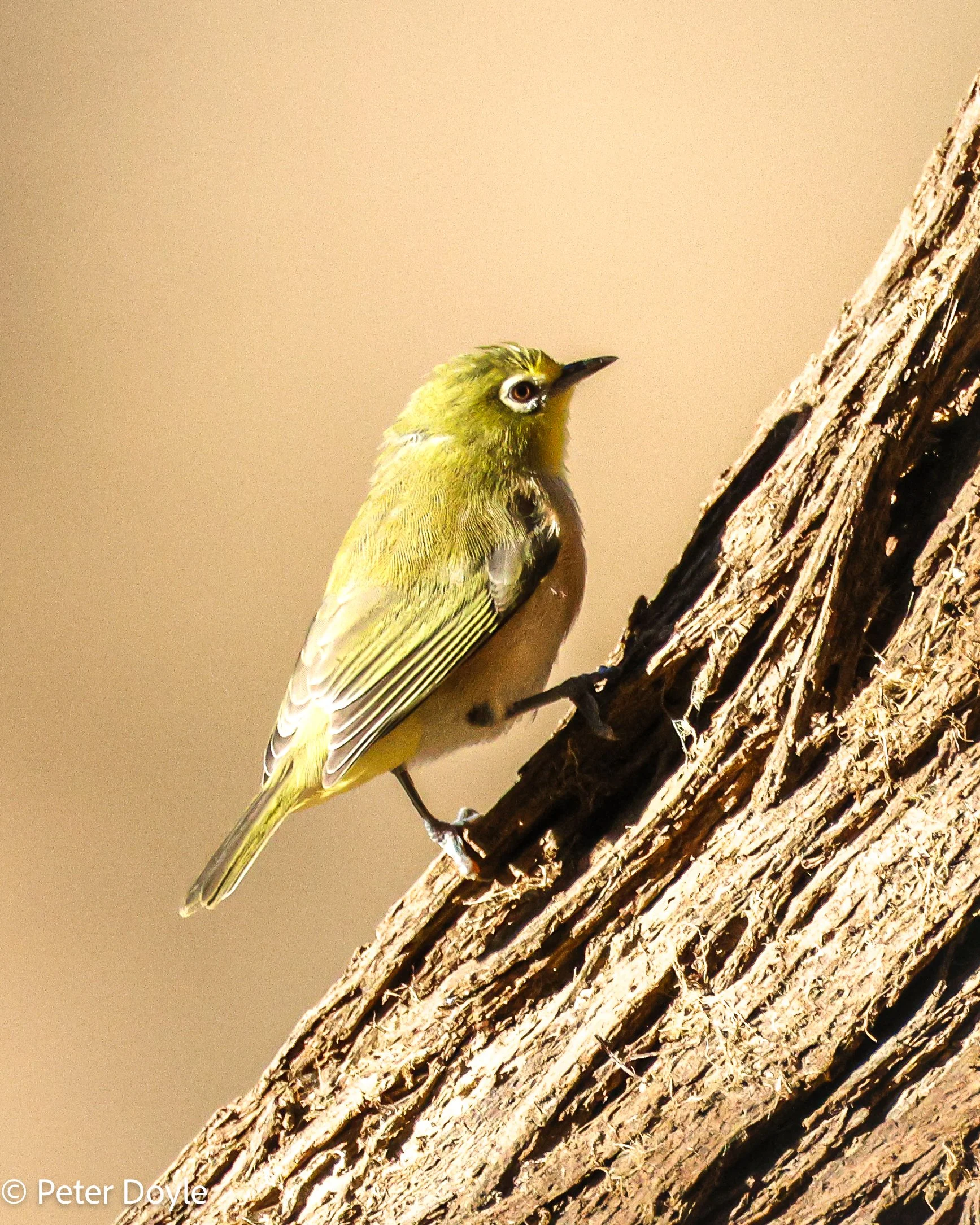
Orange River White-eye
(Zosterops pallidus)
There were also rumours on the day of two senior folk skinny dipping in a quiet stretch of the river, but as you know, if there are no photo’s, it never happened. Mind you, it was 42 degrees and that sort of behaviour would be completely understandable :))
Aus
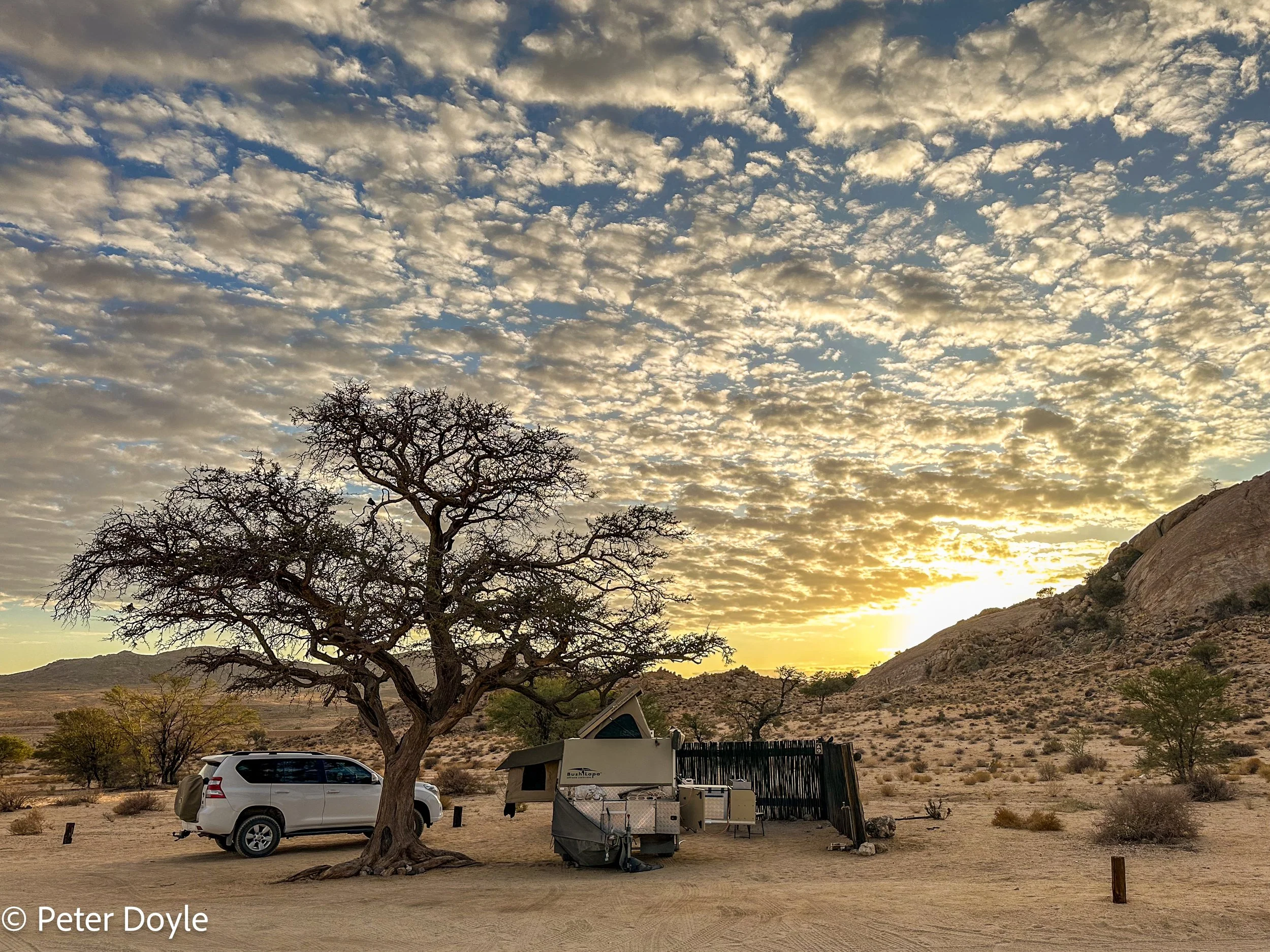
The campsite at Klein Aus Vista has an excellent position, superb vistas, comfortable campsite, well run, shade and sun … all on the fringe of the Namib. And the birdlife was very rewarding for us.
Elle found this Cape Eagle-Owl, a lifer for us, in the late evening light, while walking up on the hills around camp at Klein Aus Vista.
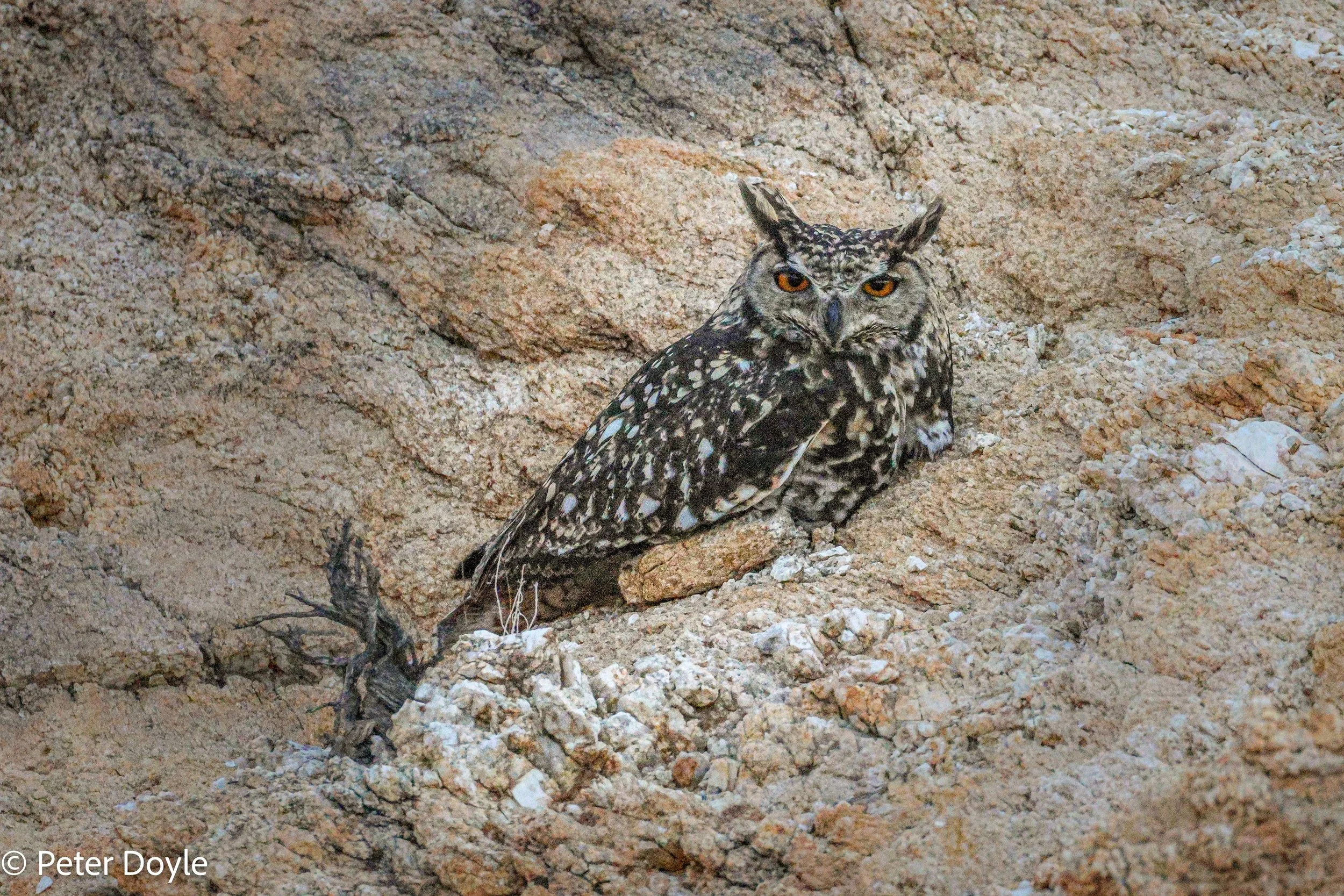
Cape Eagle-Owl
(Bubo capensis)
Lüderitz
Driving the B4 from Aus to Lüderitz and back is an excellent tar road, quick, easy drive, Although not long after we were there, that road was closed due to a massive dust storm. It happens in the desert.
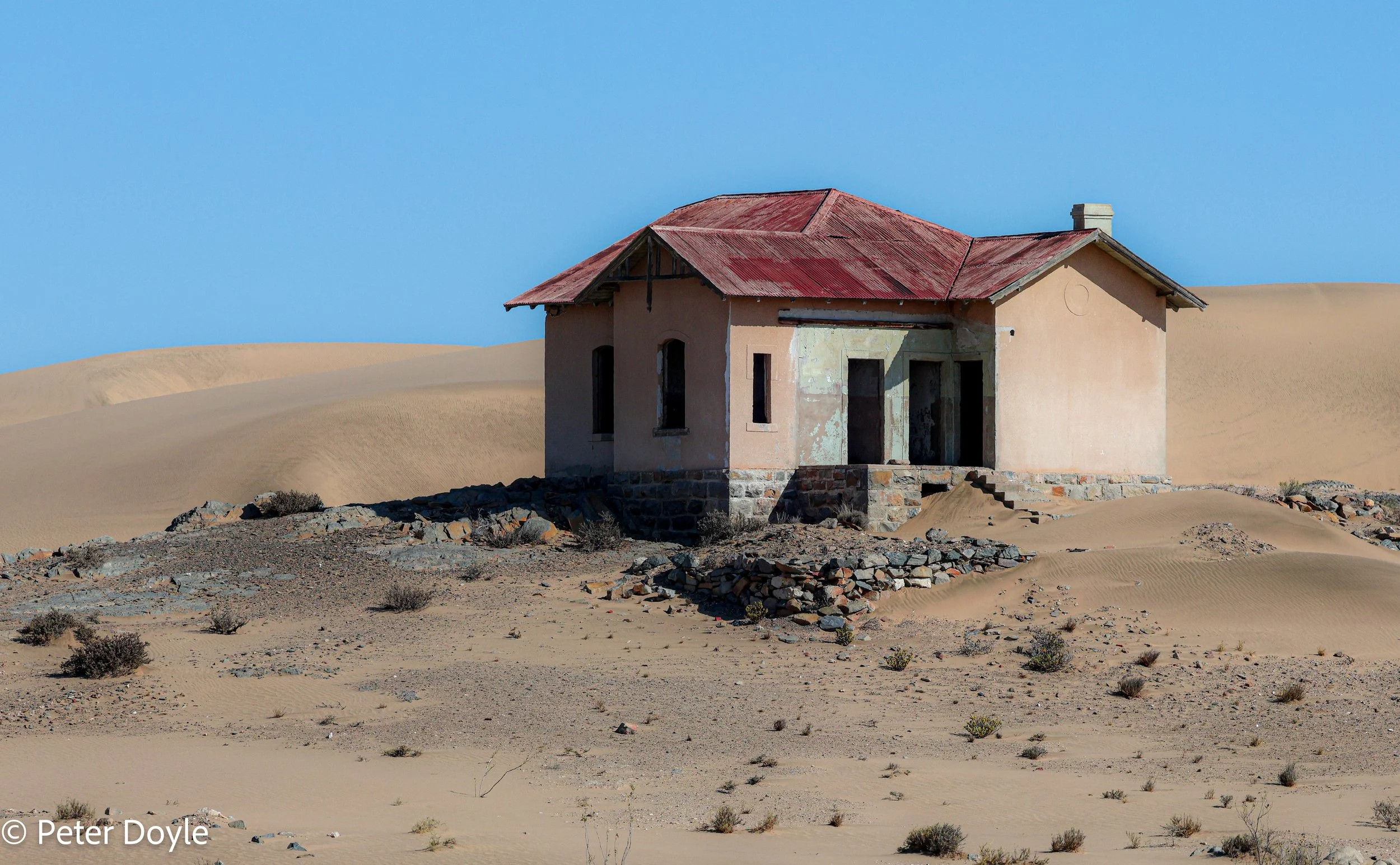
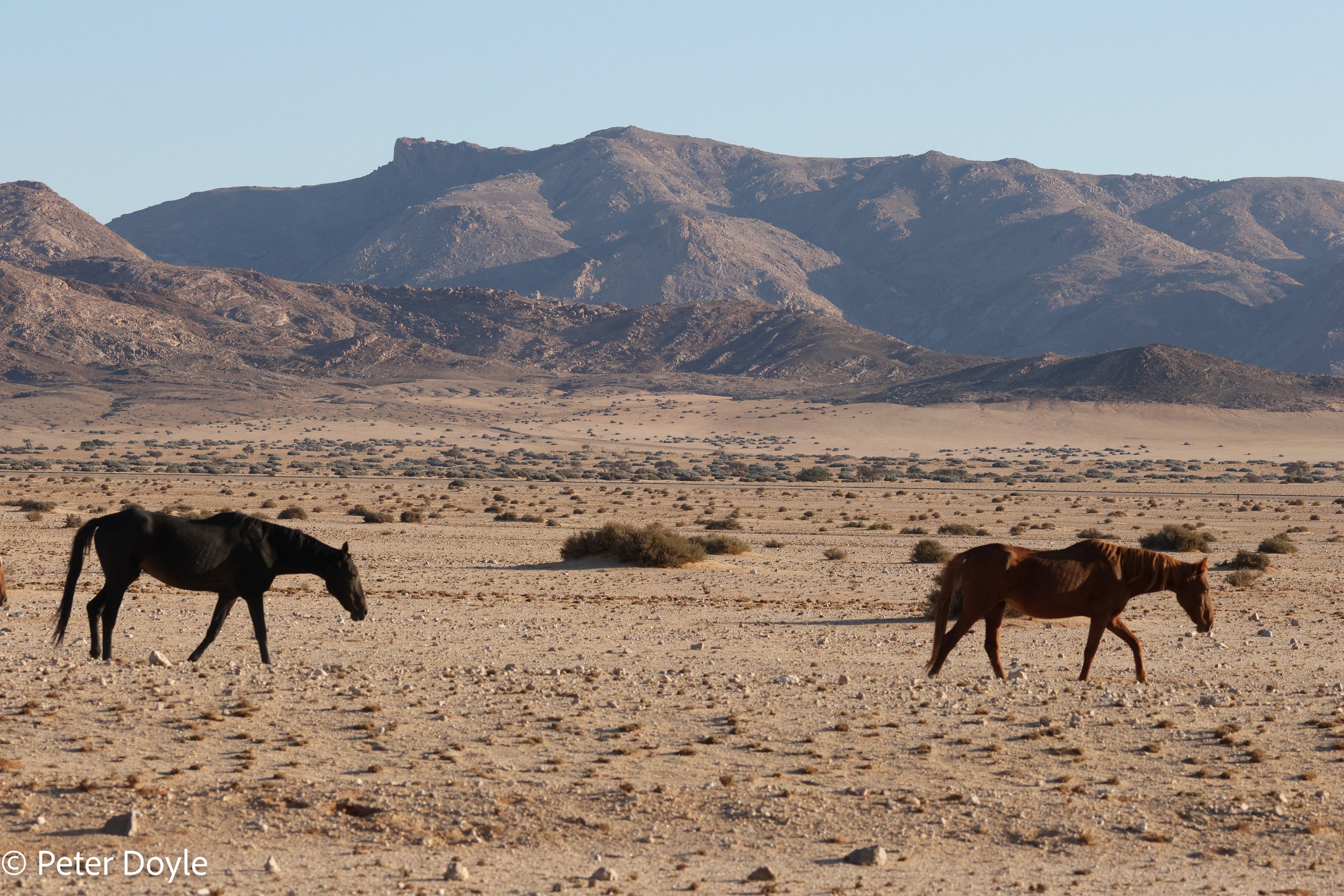
The scenery is spectacular (as is all of Namibia), but it was special the famous wild horses and ostriches on the way, some of the deserted buildings at the ghost town of Kolmanskop, a photographer’s dream destination.
NamibRand Reserve
Probably our favourite campsite we stayed at in Namibia. Well, some other contenders for favourite came along later in the trip, but we loved this campsite. The views and vistas of the Namib desert are probably some of the best in the world. Photos do not even do it justice. The three days spend there was well worth it … and we saw the Dune Lark, Namibia’s only true endemic bird. We could easily have stayed longer.
The striking thing about the Namib desert is always the colours. The red dune sands shine through the gleaming yellow grasslands, with blue mountain backdrops. Especially in the early mornings and late afternoons near sunset, all these colours deepen, the air clears and the colours get rich and deep.
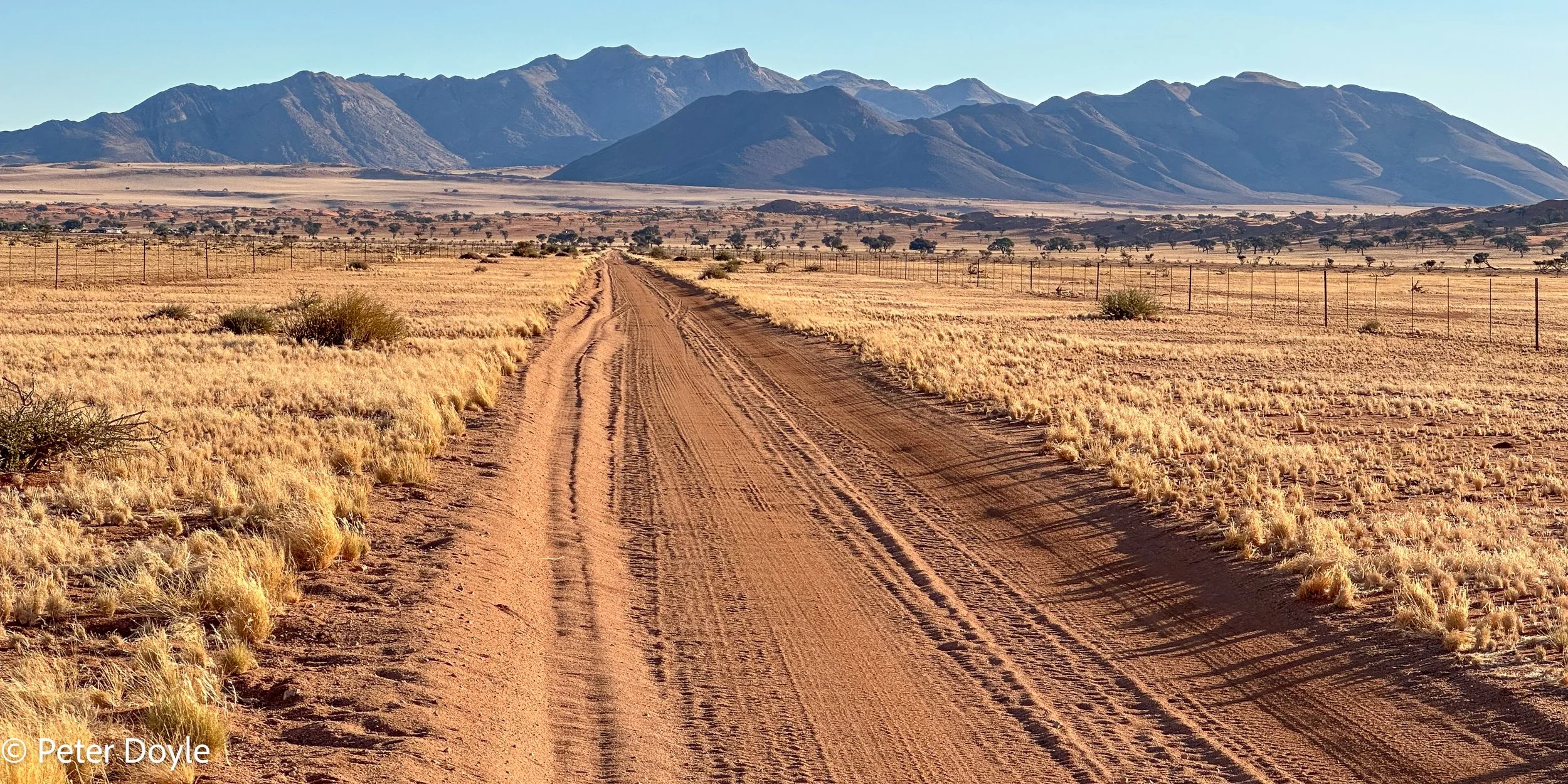
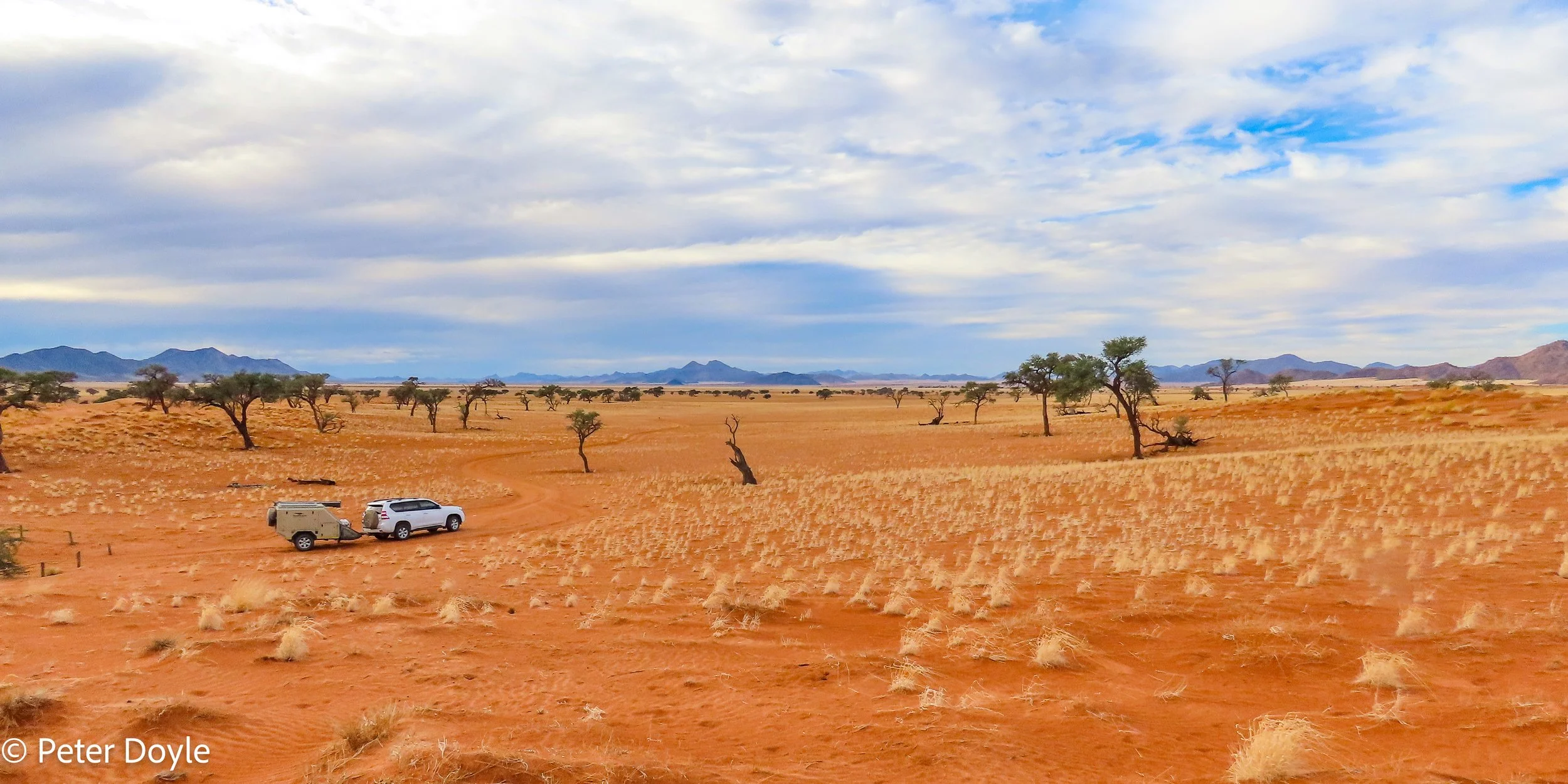
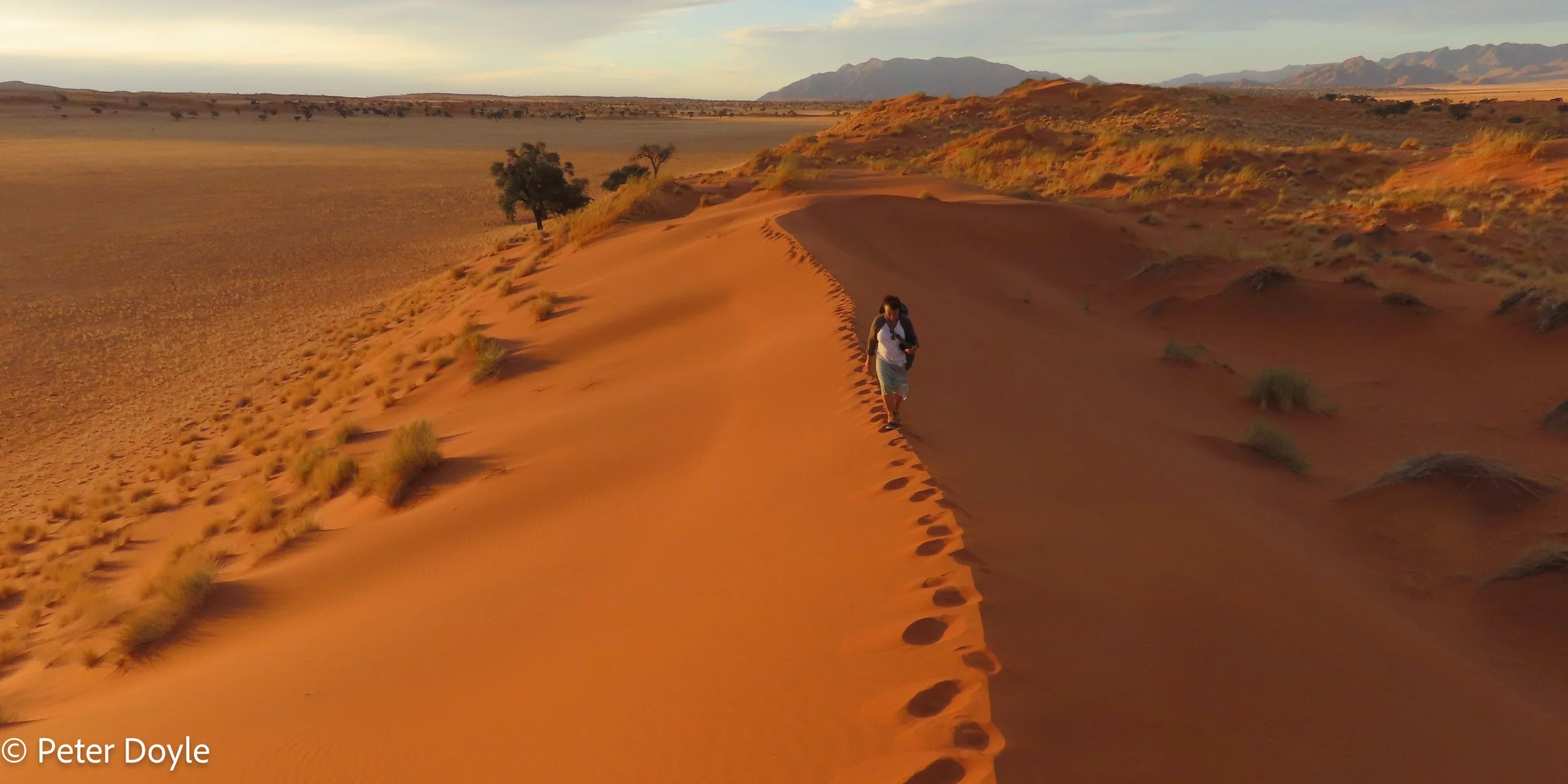
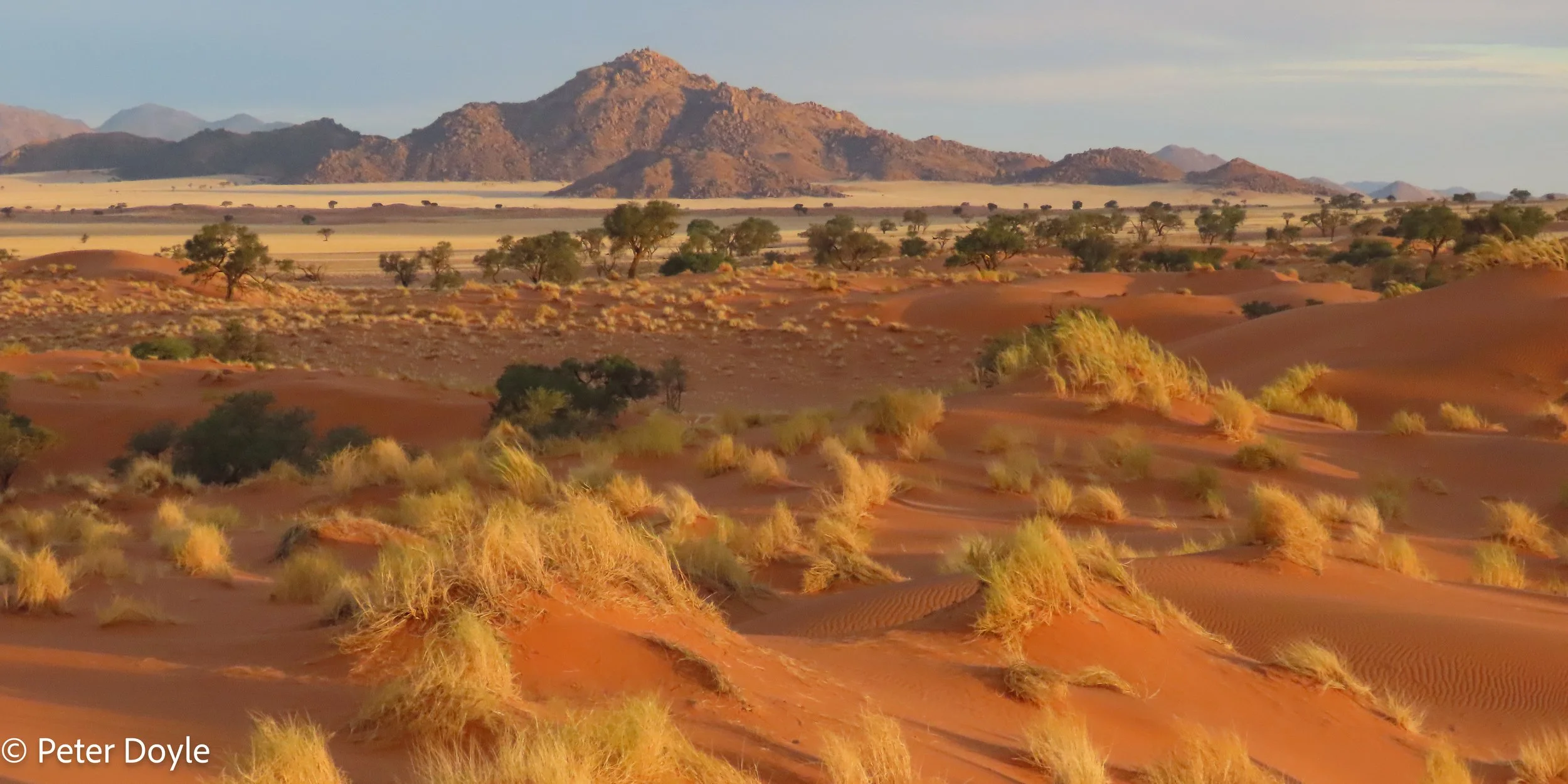
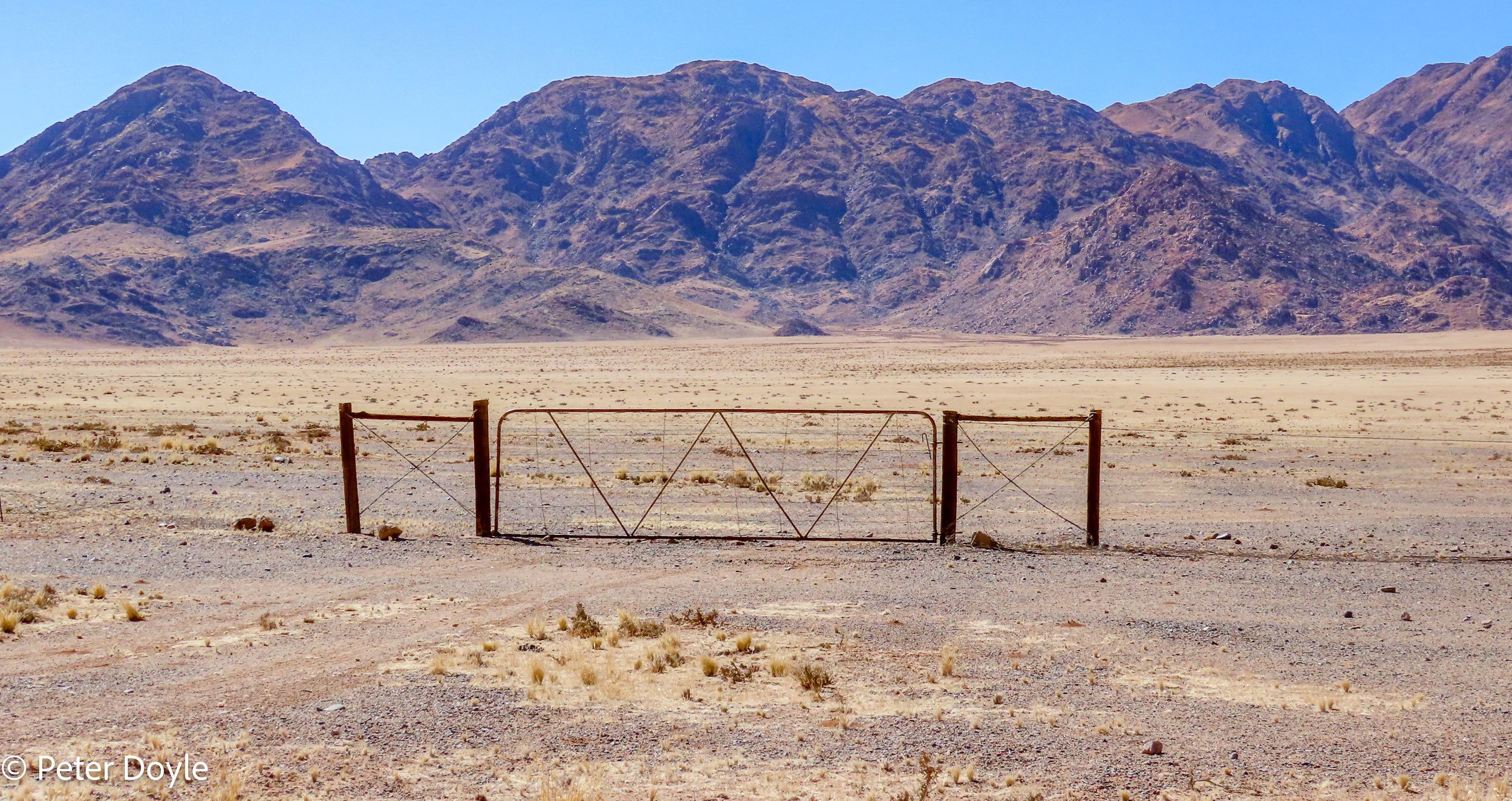
We also love the detail and the sand-art in the desert. The tracks are that of the bird we were searching for … the Dune Lark. In the desert, even feathers leave a trail.
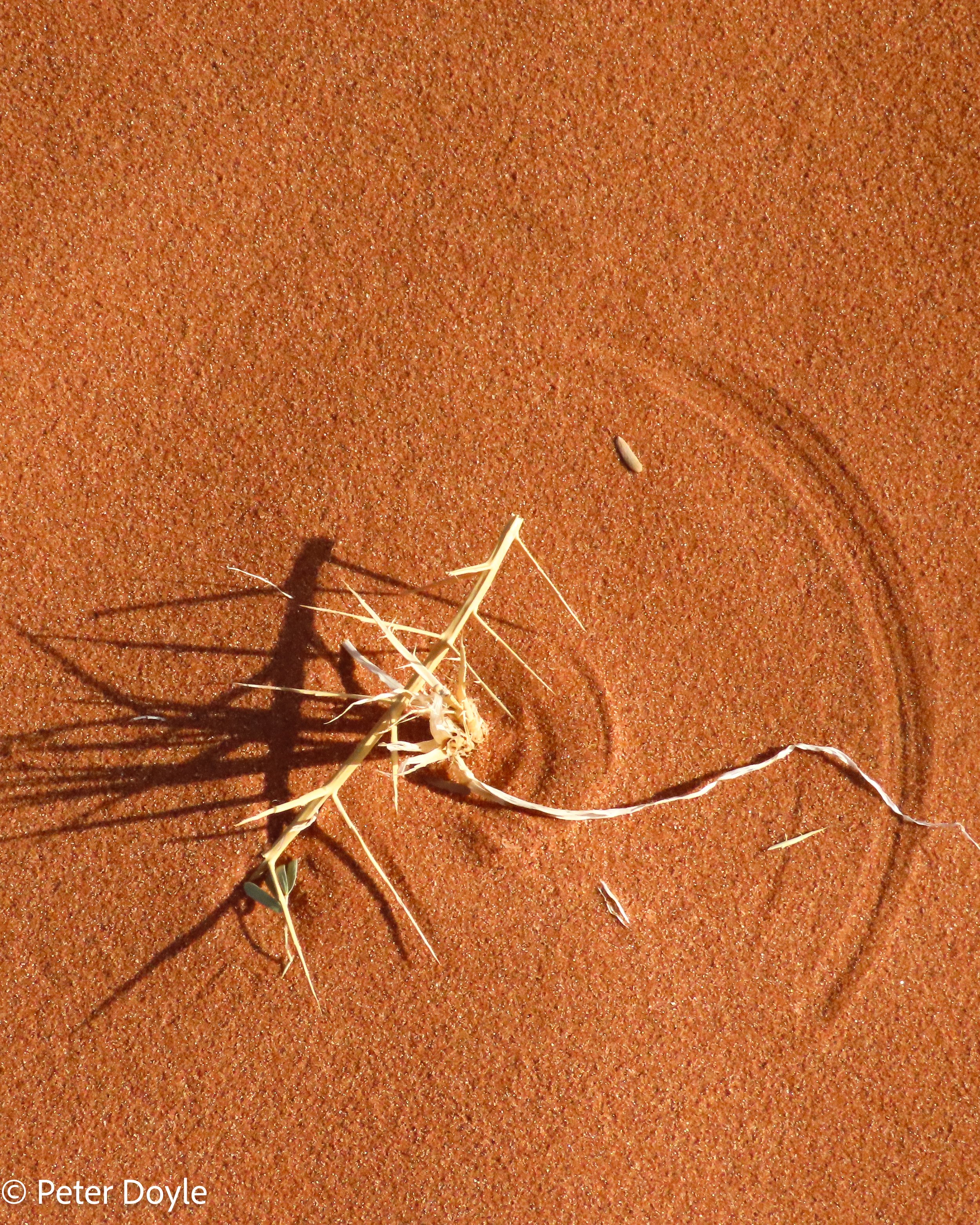
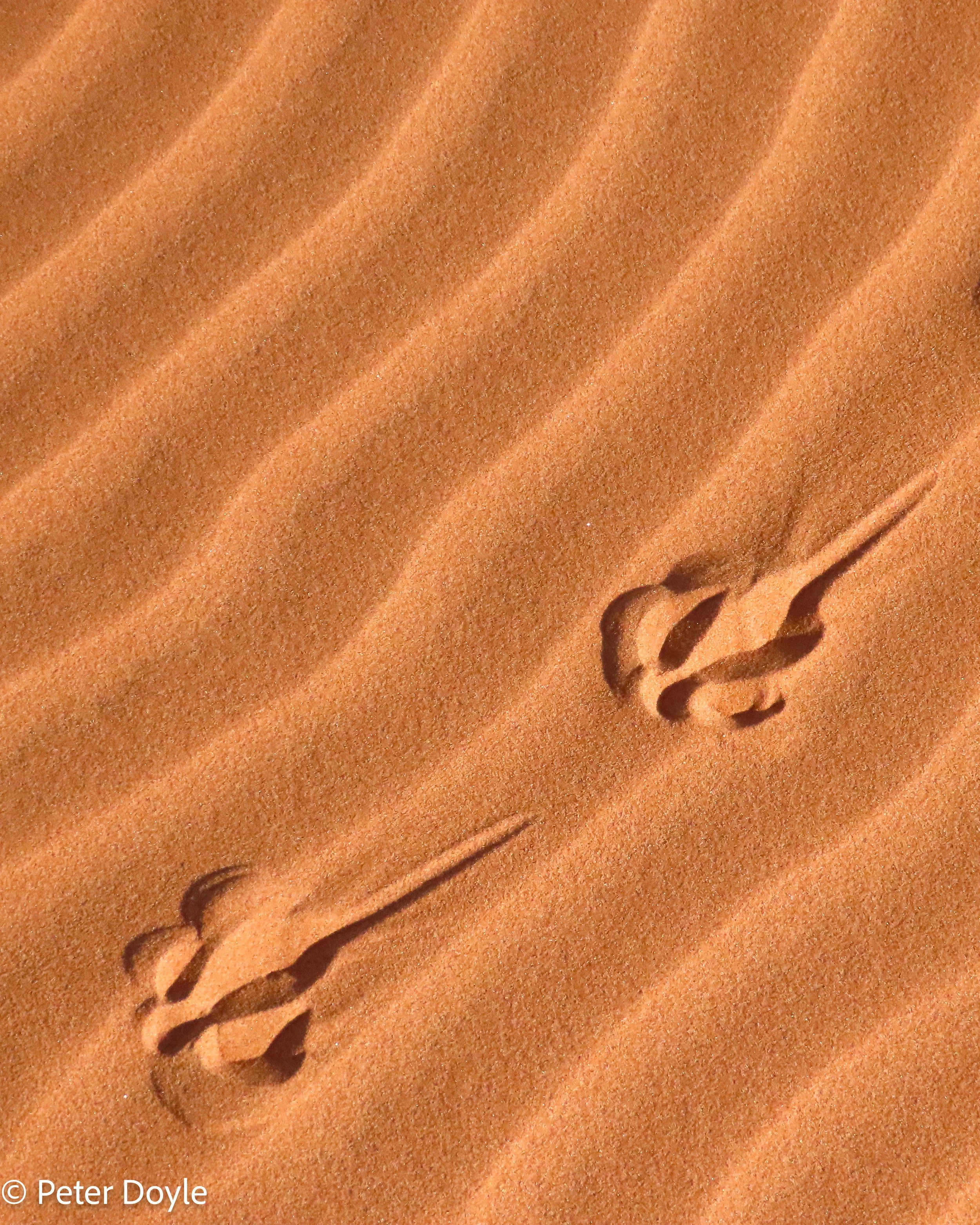
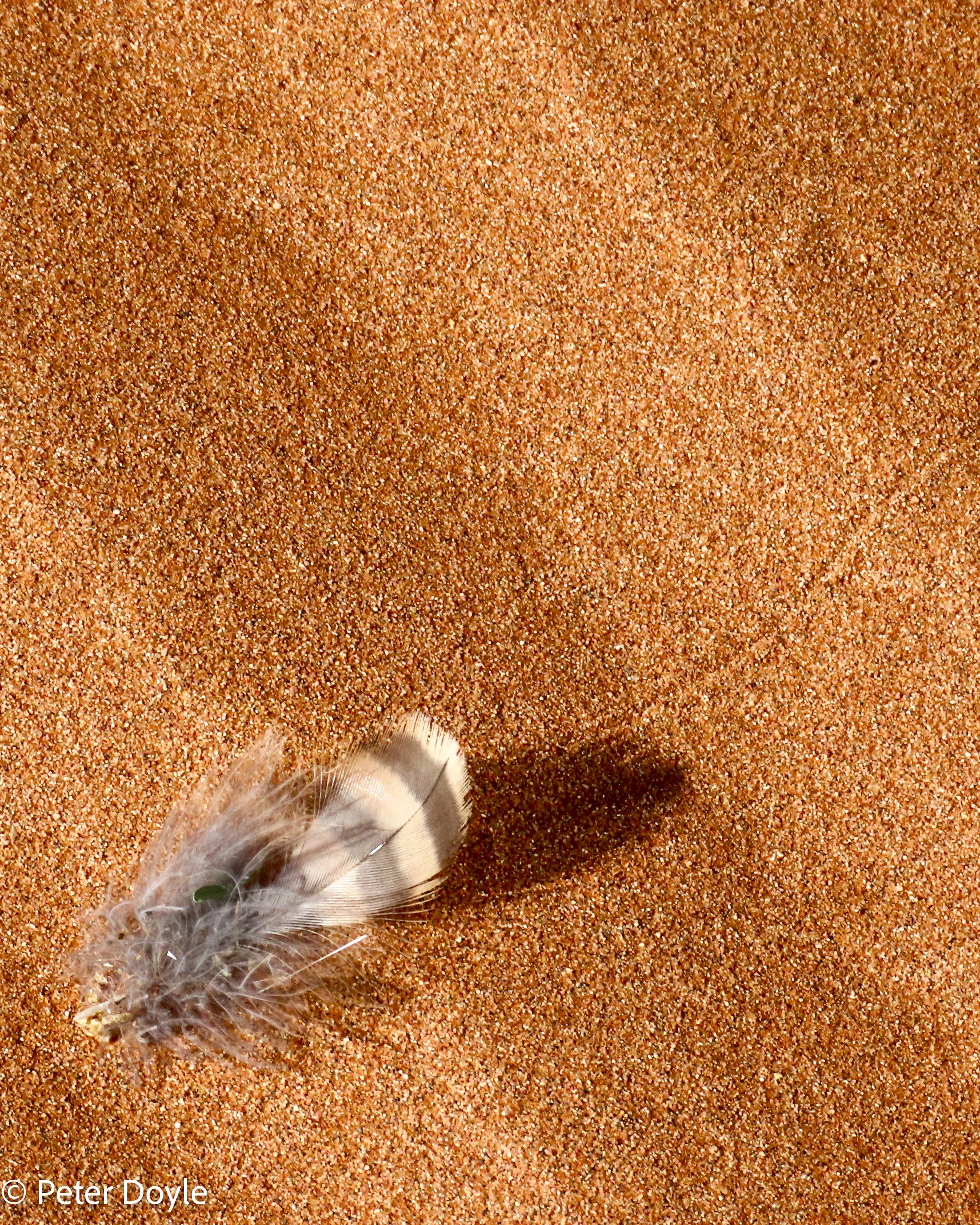
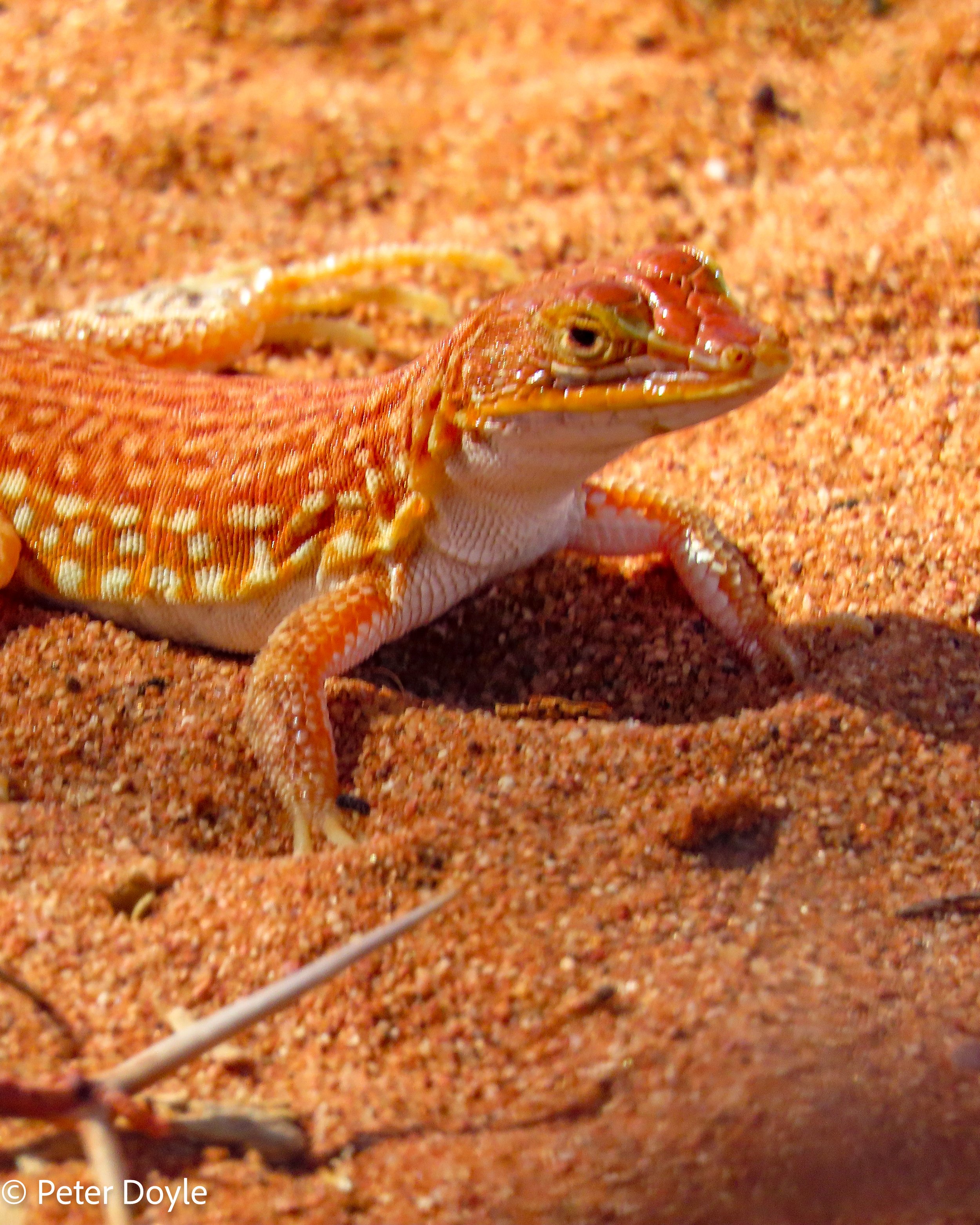
After two days of searching, we finally saw the Dune Lark, after it casually walked into our campsite. The next day we saw it at every turn. Birding often works like that! The Dune Lark is probably Namibia’s most well-known and sought-after endemic bird.
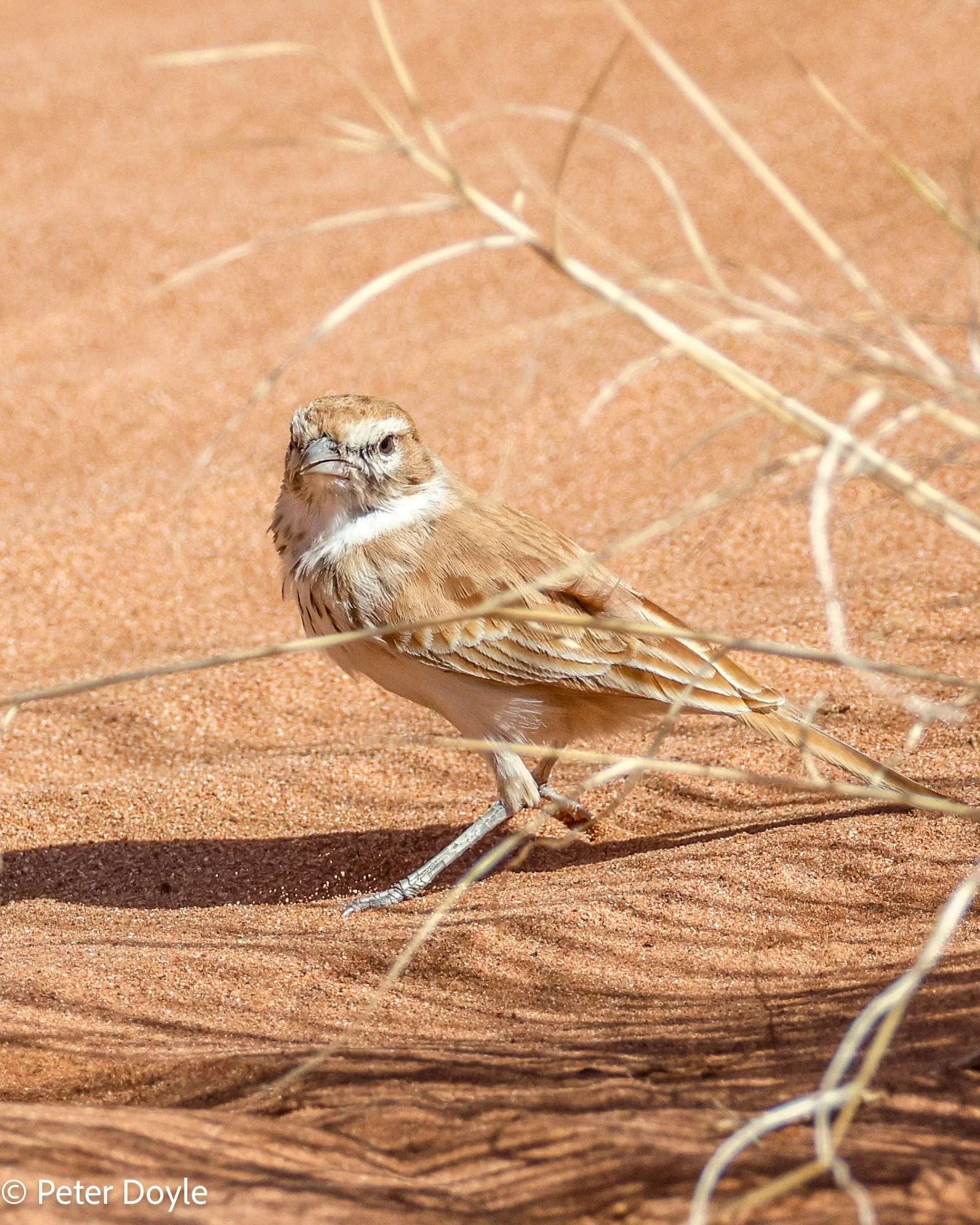
Dune Lark
(Calendulauda erythrochlamys)
Sesriem - gateway to Soussosvlei & Dooivlei
Sesriem is the world famous entry point into the depths of the Namib desert. Here a (normally) dry river bed cuts into the sand dunes, ending the the cul de sac of Sousossvlei and Dooivlei. So when the rains come every ten years or so, the vlei (pan) fills with water, just for it to evaporate over the next year. The water can go nowhere else.
The road into Soussosvlei takes you right in-between some of the highest desert sand dunes in the world. These are all spectacular red sand dunes. We spent only one night and day here, perhaps surprisingly, but we have been there twice before, the first time doing a hot-air ballon trip over the desert.
After NamibRand Reserve, Sesriem, the tourist village at the gateway to the desert, suddenly felt crowded with people. We stayed at the NWR (Namibian Wildlife Resorts) campsite, as many of the other private camps were full. But anyway, having only one day there it was better to get into the park to Sossusvlei on hour earlier and out one hour later, which you can do from NMR because it is inside the park gates.
These vleis and the drive in and out through the dunes are just spectacular. It is easy to avoid the crowds … go rather at sunset than sunrise, when it is rather crowded. On our sunset drive in, we were the only people in Soussosveli and on the dunes. We drove back in the dark after sunset, dodging geckos and insects on the road all the way.
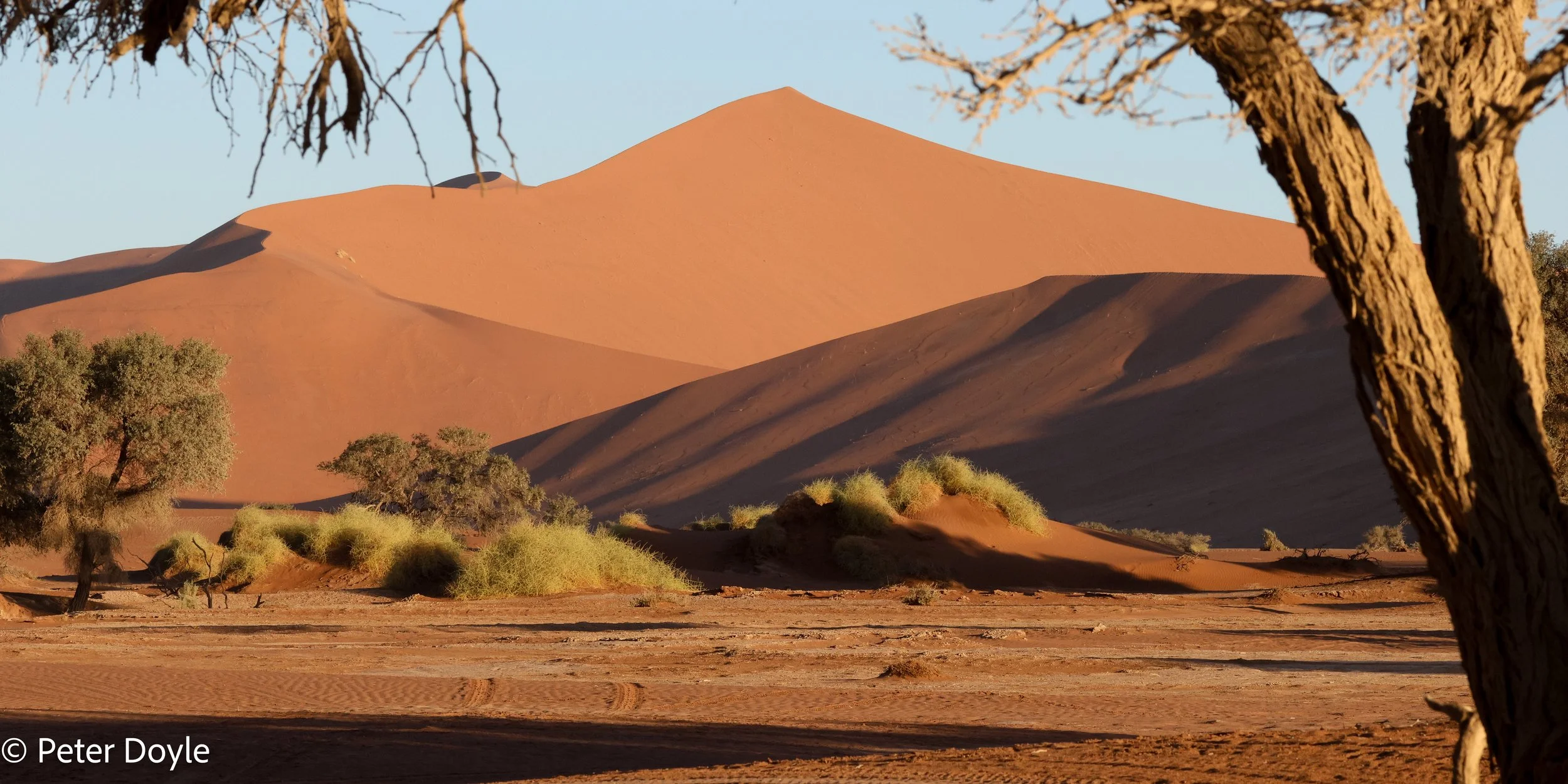
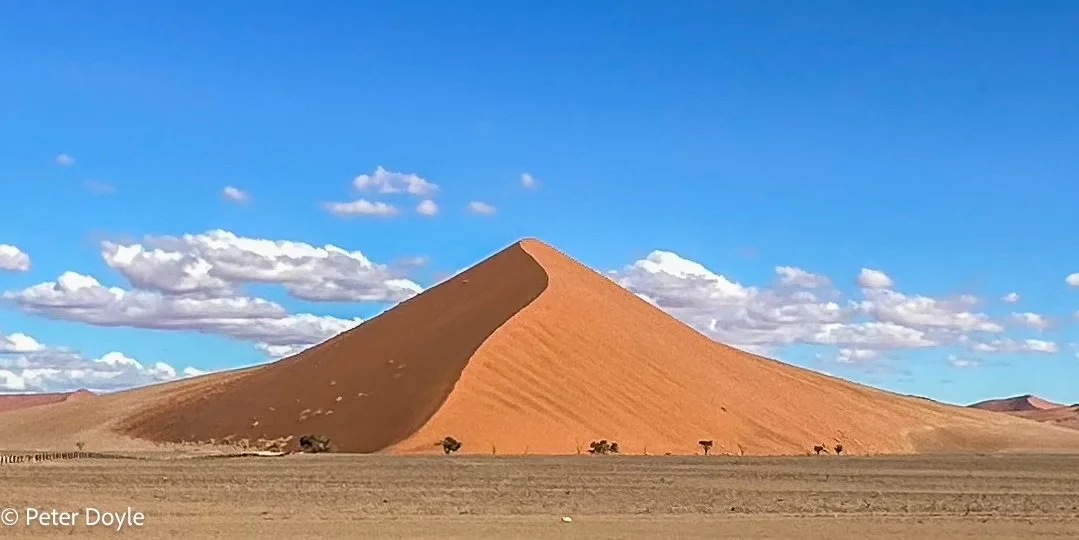
We had one beautiful bird sighting at sunset in Soussosvlei. We were all on our own in the pan, when we saw a pair of Booted Eagles soaring over the highest dunes in Namibia. We watched as they turned and dived right down the face of the dunes. We soon realised that they were hunting, using their shadows on the sand in front of them, perhaps trying to provoke a movement from some creature below in the sand.
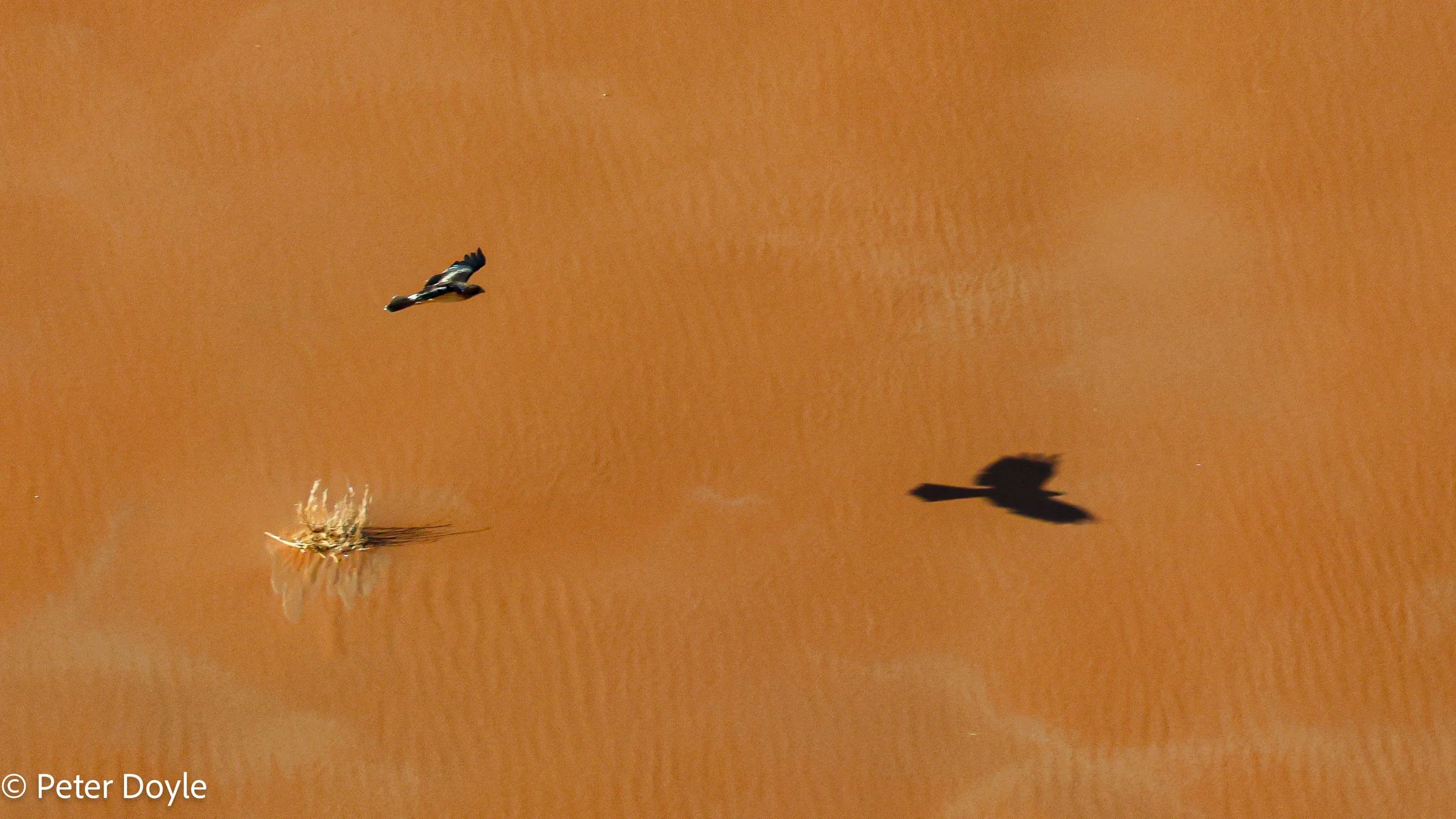
Booted Eagle (Hieraaetus pennatus)
Namibia Valley of 1000 Hills
Driving the C19 from Sesriem to Solitaire is probably my least favourite road to drive in Namibia. Dusty and corrugated, busy with tourists, buses, over-landing trucks, lodge vehicles, etc., as this is the main road from Windhoek to Sesriem. But the reward is that most people turn off at the oasis of Solitaire back towards Windhoek, leaving you to do the next wonderful several 100 km open gravel road on your own.
After Solitaire until the junction with the C26, it becomes a beautiful, wide gravel road, not nearly as corrugated as the C19, and hardly any traffic. Through the lovely short Guab river pass. Wonderful scenery. The Namibia Valley of 1000 Hills campsite is just 7km off this junction.
What a find! 165km from Sesriem and another 165km from Walvis Bay. Perfect halfway stop, but we liked it so much we stayed for 2 nights. Three camp sites on a cliff overlooking a stupendous valley. This could be in the Drakensberg or Lesotho. So unexpected after the Namibia desert.
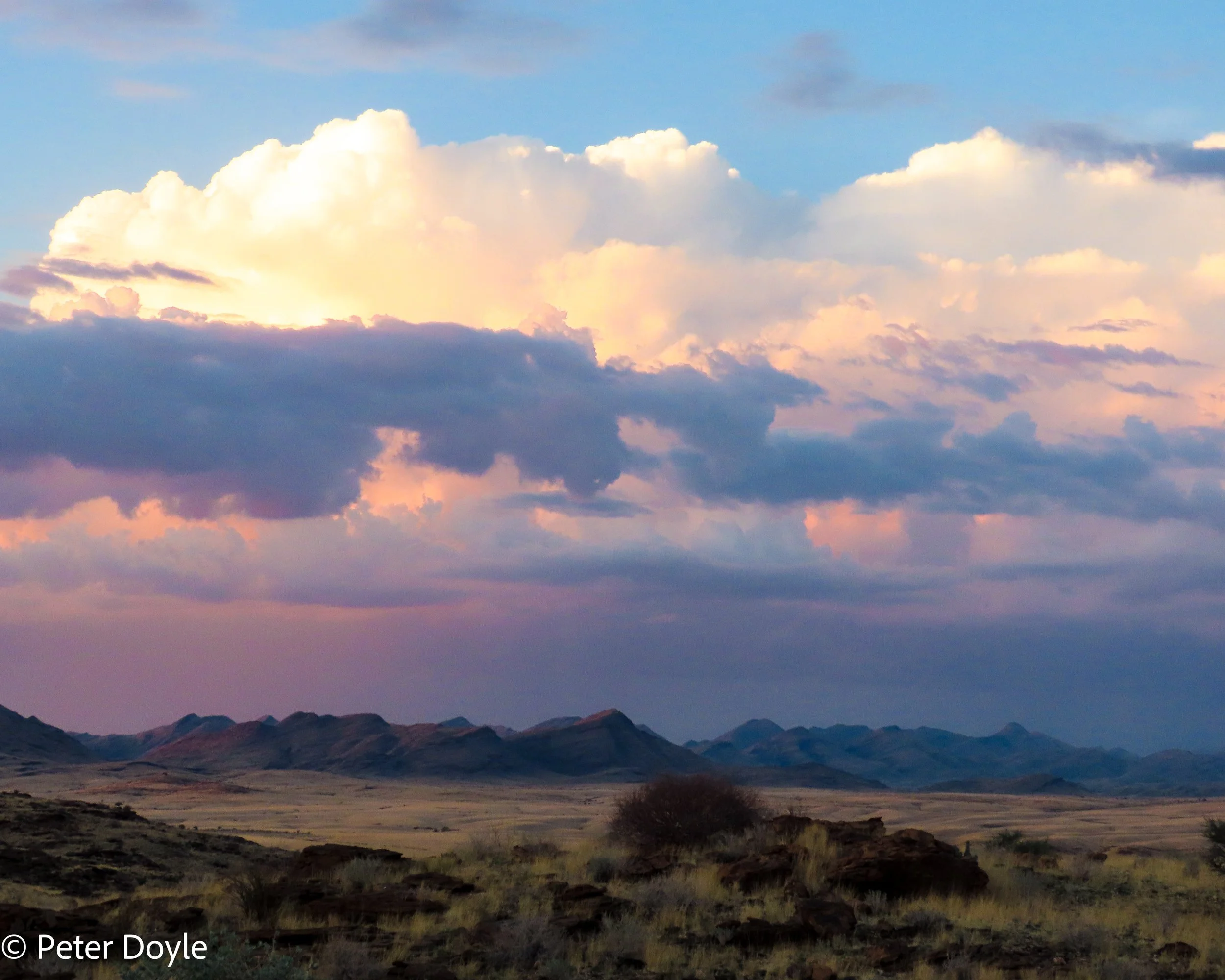
The short 6km drive into the campsite is rocky, but easy, but getting an off-road trailer onsite was tricky, with a drop-off cliff looming two metres behind you, I would not want to take anything larger than our Boskriek off-road trailer down there. Basic, private ablutions for each campsite. We had our first thunder and lightning storm there on the first evening.
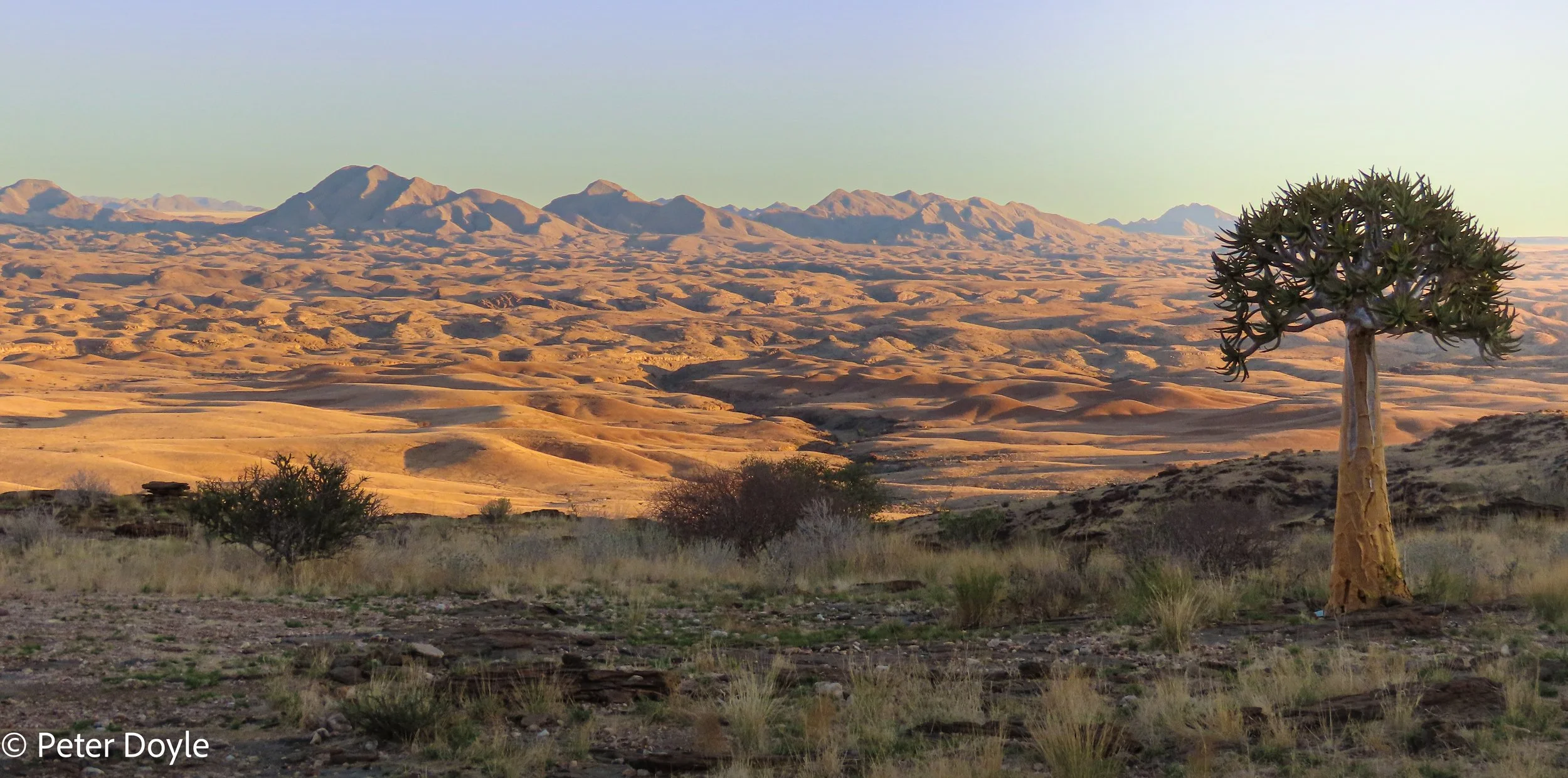
We camped like kings, admiring our kingdom laid out at our feet. What a great start to our trip in Namibia!
