Kingfishers – Jewels of Wetlands and Woodlands
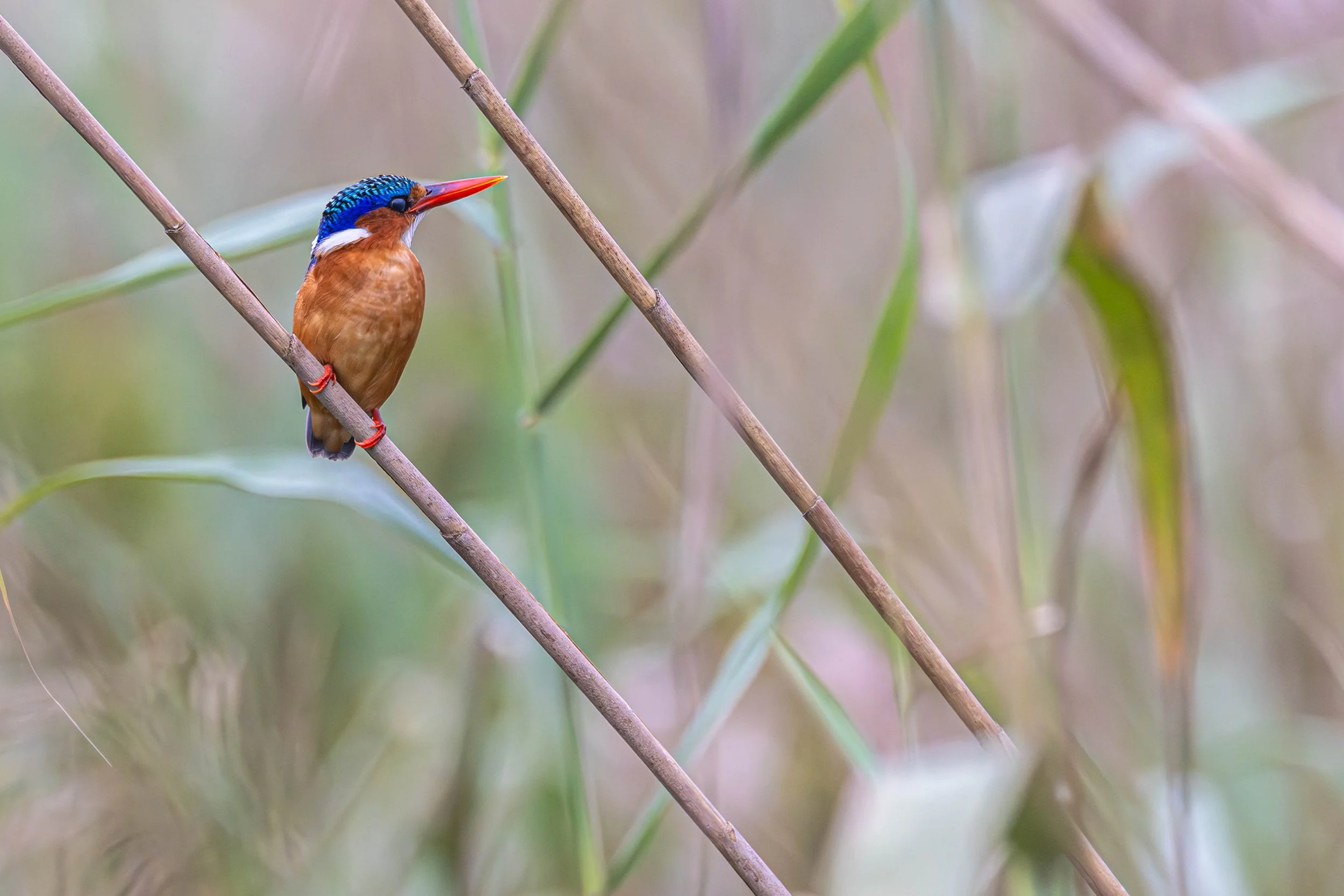
Not all Kingfishers fish.
But a flash of wings or a burst of unexpected colour is often the first sign of a Kingfisher. The word camouflage does not fit into its vocabulary or description. Kingfishers are brightly colored and striking looking birds, often perched in a prominent position, scanning for its next meal.
All Kingfishers belong in the same family, Alcedinidae, with long, straight and pointed bills and very short legs – one seldom sees a Kingfisher walking. Their plumage often includes some combination of bright blue, rufous or brown colours.
It has always been curious to me that when we travel to Europe, birding talk is about “the Kingfisher”. Until I realized there is only one species of Kingfisher in Europe, the Common Kingfisher (Alcedo atthis), which is an occasional vagrant visitor to North Africa, especially down the Nile River.
However, in Africa we are blessed with no less than sixteen different species of Kingfisher, split into three different genera:
Cerylid is a group of only two, relatively plain, Kingfishers. The name Cerylid in Latin is linked to a water bird in Greek mythology. The two species are distinctly different in size, and the sexes differ in plumage. This genus comprises only of the following two species:
Giant Kingfisher (Megaceryle maxima)
Pied Kingfisher (Ceryle rudis)
Alecedo is a group of small, mostly blue and orange, Kingfishers. They are separated by size, bill colour and plumage, as well as by habitat and geography. Sexes are alike. Alecedo is the Latin name for Kingfisher. This genus comprises six species:
Malachite Kingfisher (Alcedo cristata)
White-bellied Kingfisher (Alcedo leucogaster)
African Pygmy Kingfisher (Ispidina picta)
African Dwarf-Kingfisher (Ispidina lecontei)
Shining-blue Kingfisher (Alcedo quadribrachys)
Half-collared Kingfisher (Alcedo semitorquata)
Halycon are medium-sized Kingfishers with distinctive blue flight feathers, and their calls are loud and trilling. The sexes are mostly alike. The word Halycon is also derived from Greek mythology and means Kingfisher. This genus comprises eight species:
Grey-headed Kingfisher (Halycon leucocephala)
Blue-breasted Kingfisher (Halycon maliimbica)
Woodland Kingfisher (Halycon senegalensis)
Mangrove Kingfisher (Halycon senegaloides)
Brown-hooded Kingfisher (Halycon albiventris)
White-collared Kingfisher (Todirhamphus chloris)
Chocolate-backed Kingfisher (Halycon badia)
Striped Kingfisher (Halycon chelicuti)
So now we must deal with their family name and their habitat. The fact is that not all Kingfishers fish. They all hunt prey… but that is where things change.
Some of the Kingfishers dive into water and fish for their prey, while others hunt primarily on dry land, but also diving down onto their prey. Hence some of the Kingfishers are always found around rivers and wetlands and while others are always in the woodlands, savannah or forests. Their behavior is virtually the same, though. They will sit perched in a prominent position, observing carefully and then swoop down to catch their prey.
But these situations provide wonderful opportunities for photography. Either the striking colours of the bird perching still, or the swift, violent action of its dive down to the water or the bush, revealing all its stunning colours. The only way to really know the difference of these two groups is by observation and habitat.
Only seven of the sixteen species are closely associated with water:
Giant, Pied, Malachite, Mangrove, Shining-blue, Half-collared & White-collared.
The other nine species are birds of the woodland, savannah or forest:
White-bellied, African Pygmy, African Dwarf, Grey-headed, Blue-breasted, Woodland, Brown-hooded, Chocolate-backed, Striped.
The following images of Kingfishes that I have seen and photographed illustrate the differences in habitat:
WETLANDS & RIVERS
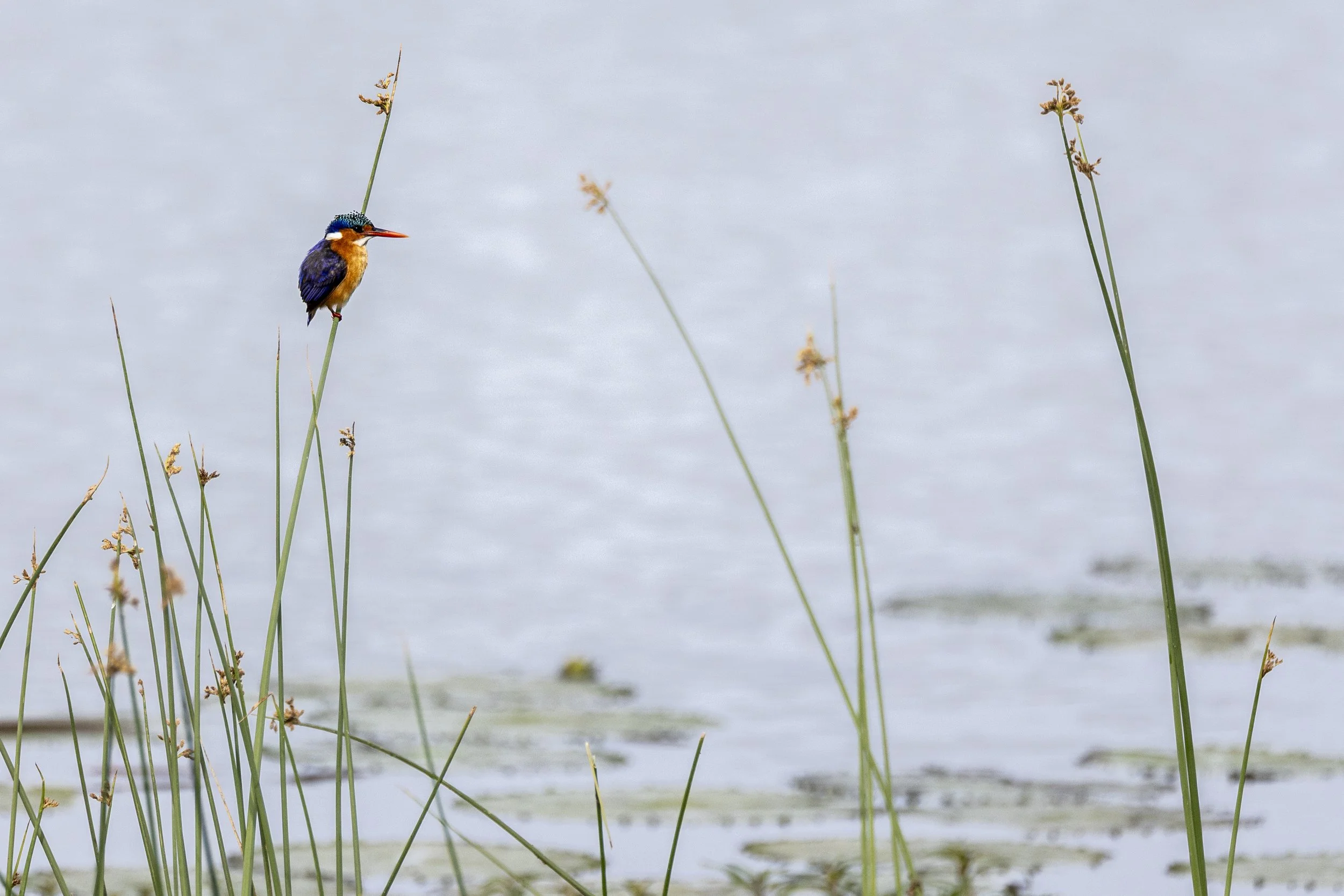
Malachite Kingfisher (Alcedo cristata) Kruger National Park, South Africa
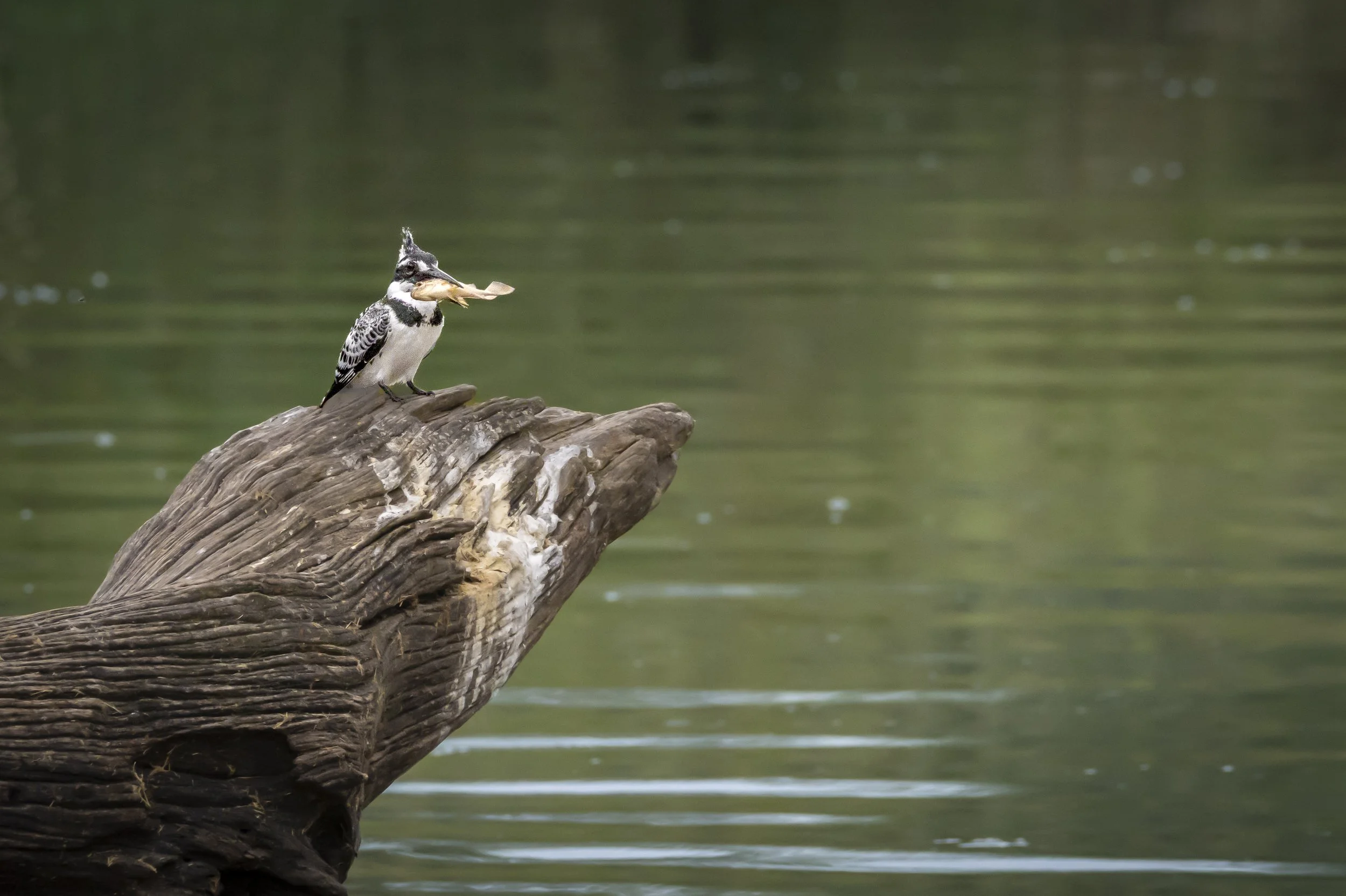
Pied Kingfisher (Ceryle rudis) Kruger National Park, South Africa
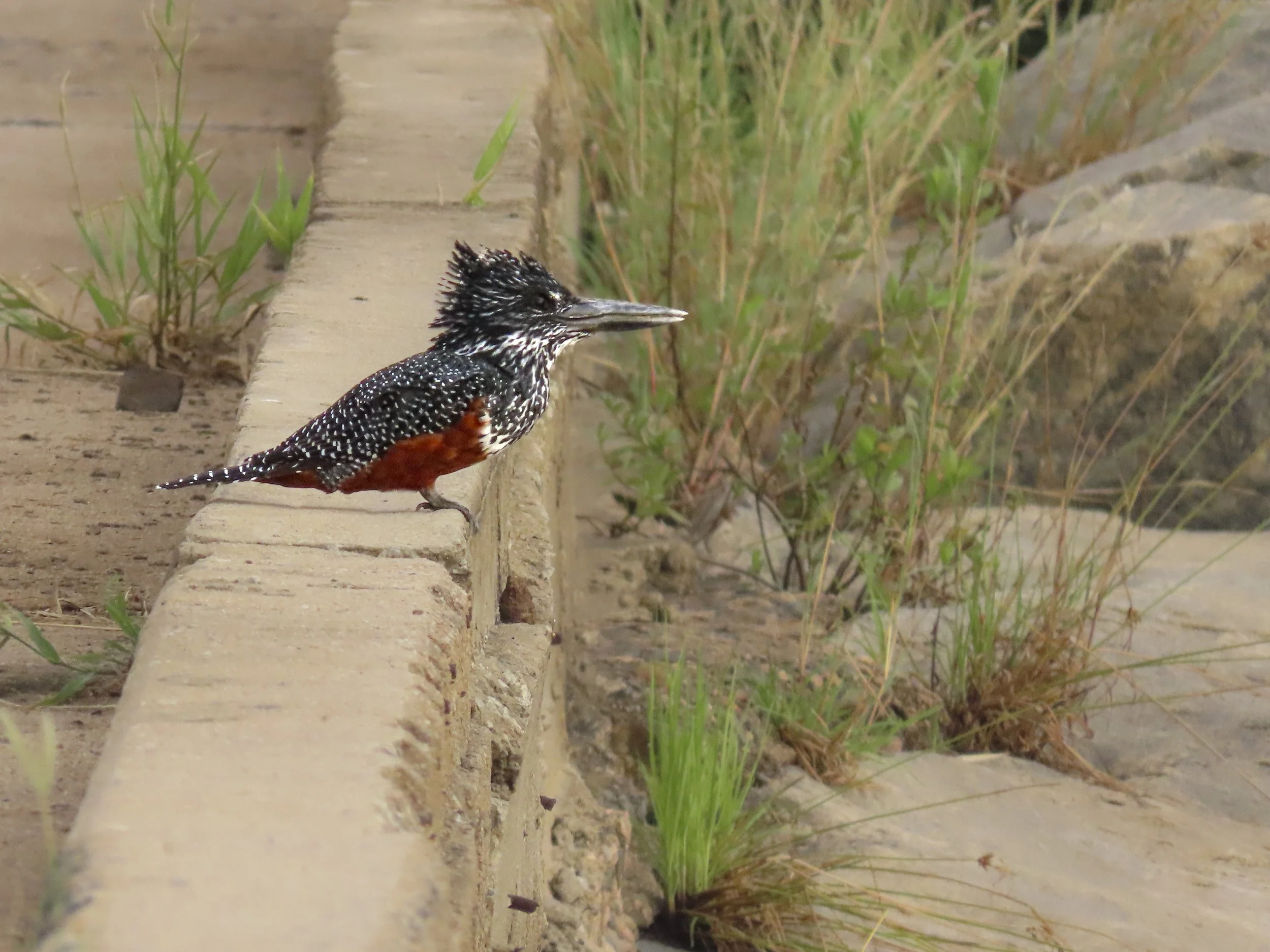
Giant Kingfisher (Megaceryle maxima) Kruger National Park, South Africa
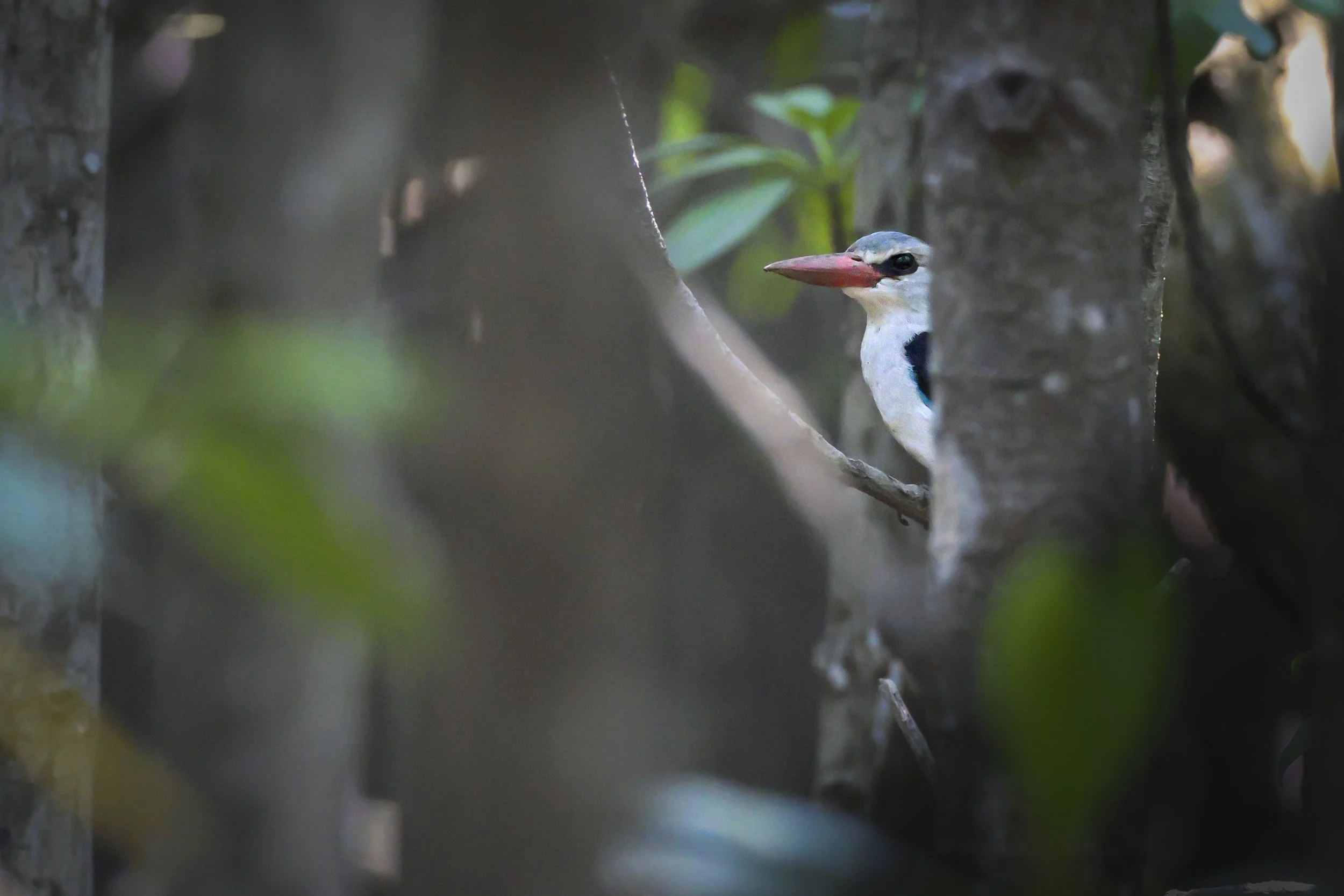
Mangrove Kingfisher (Halycon senegaloides) Umtinzini River, KZN, South Africa
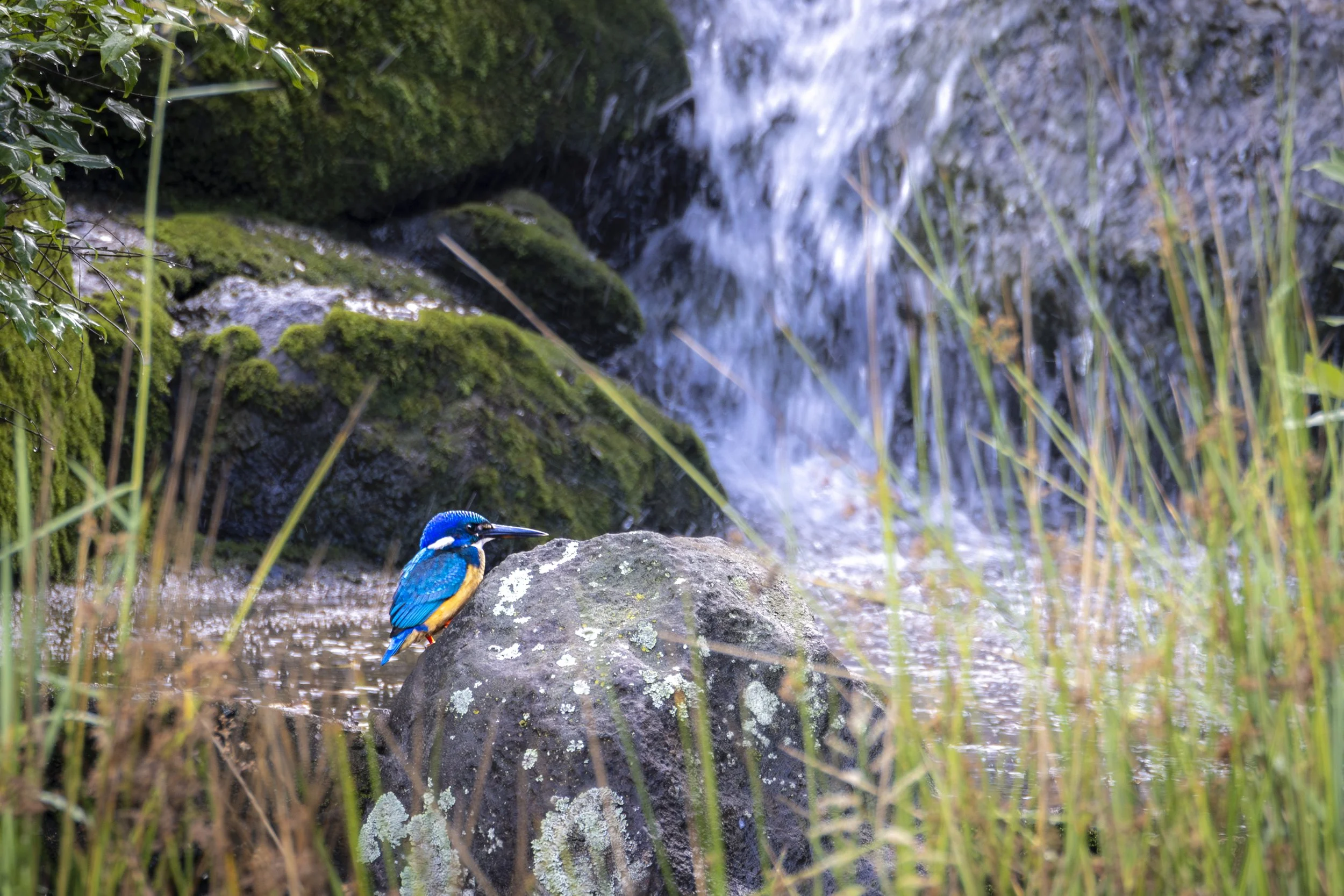
Half-collared Kingfisher (Alcedo semitorquata) Bosch Hoek Estate, KZN, South Africa
WOODLANDS & FORESTS
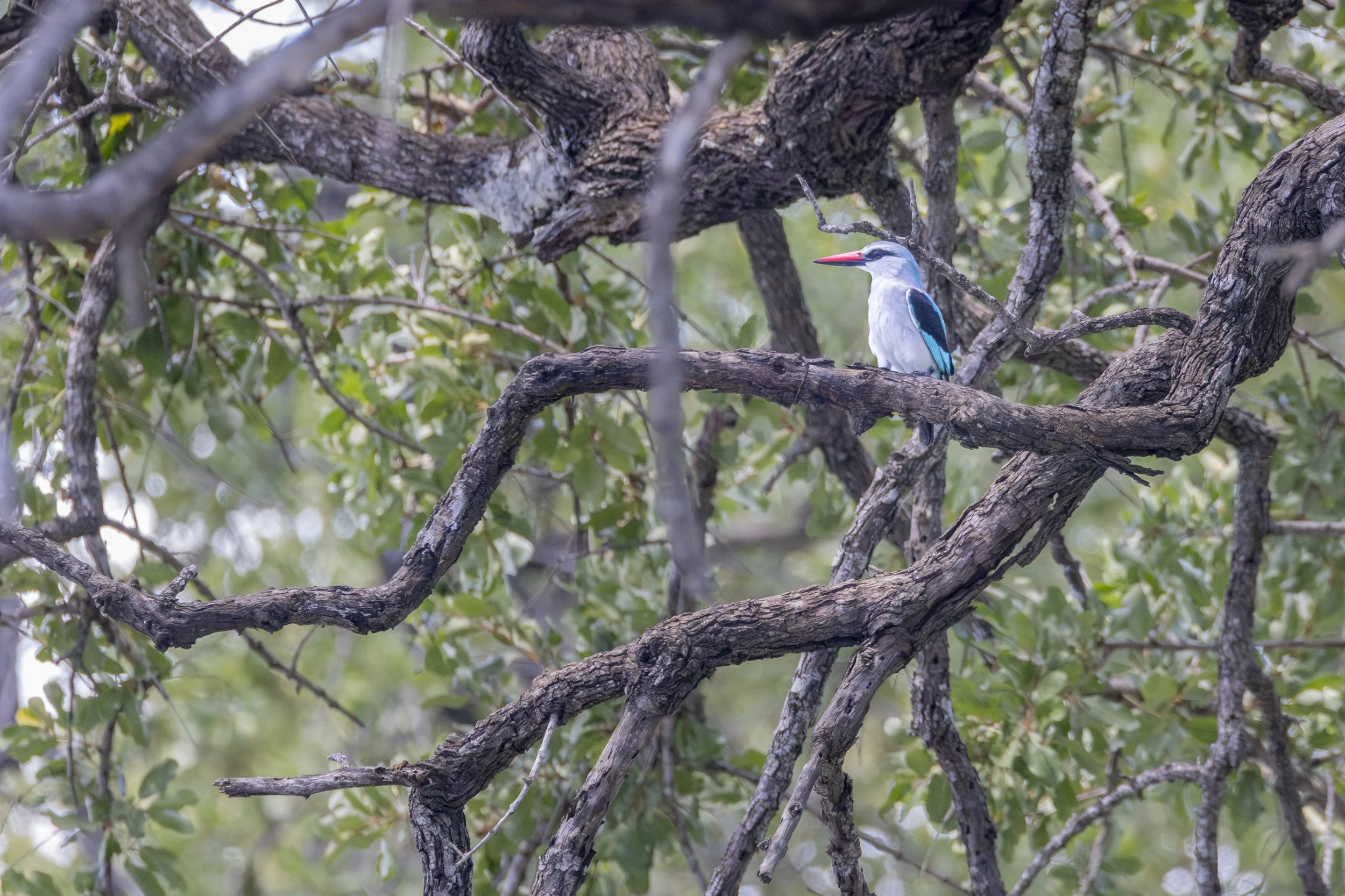
Woodland Kingfisher (Halycon senegalensis) Kruger National Park, South Africa
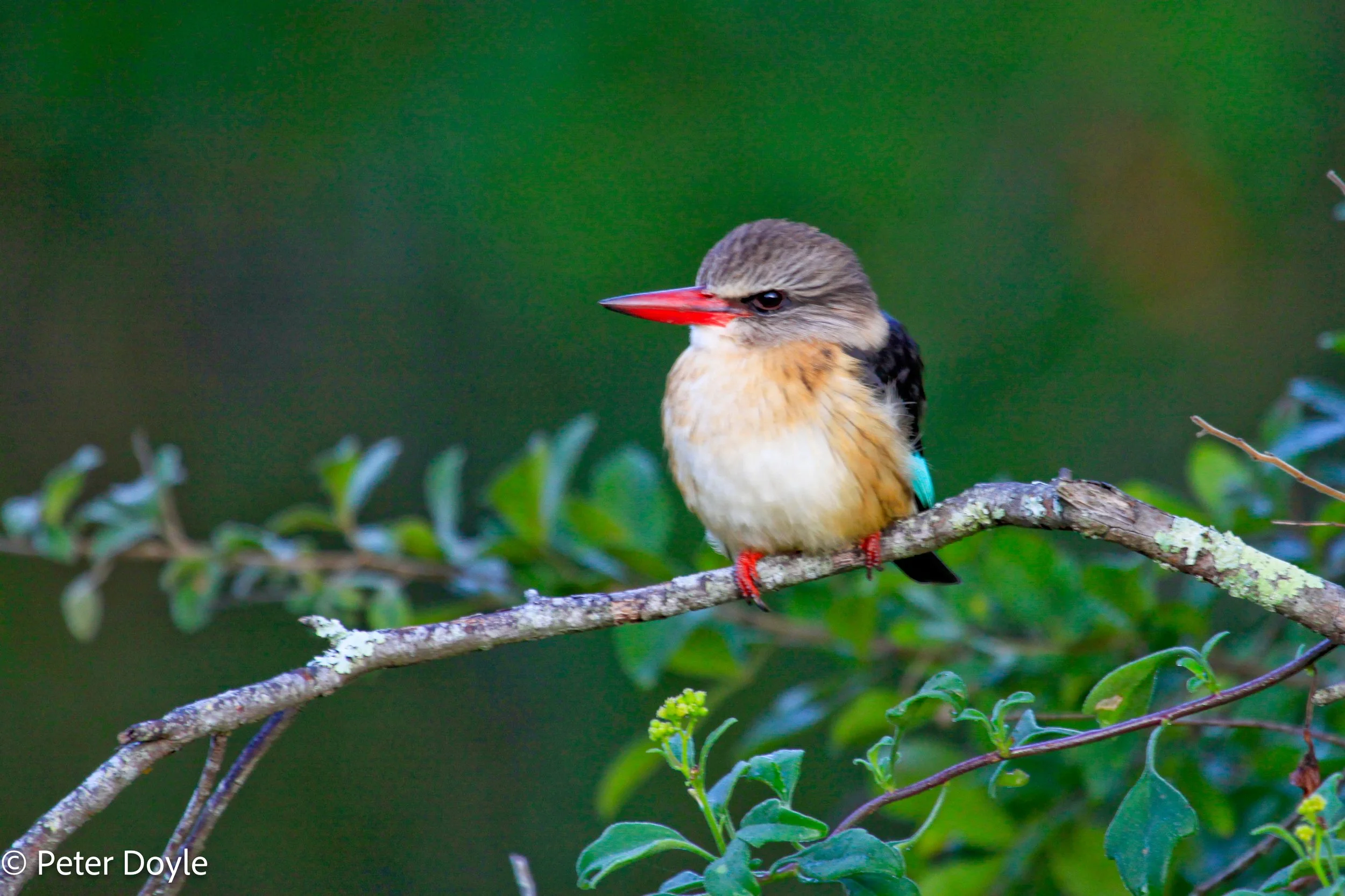
Brown-hooded Kingfisher (Halycon albiventris) Pumba Game Reserve, South Africa
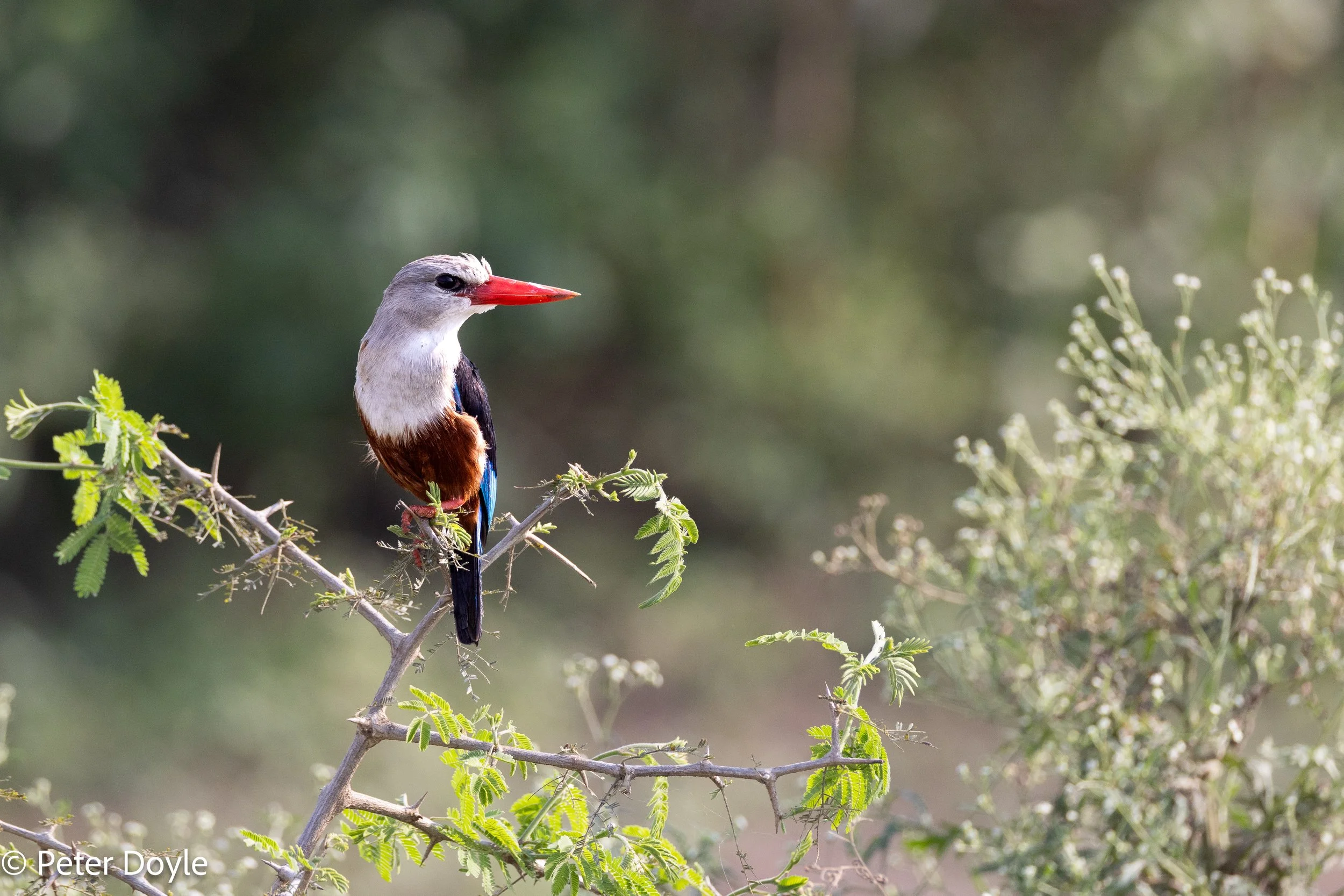
Grey-headed Kingfisher (Halycon leucocephala) Budongo Forest, Uganda
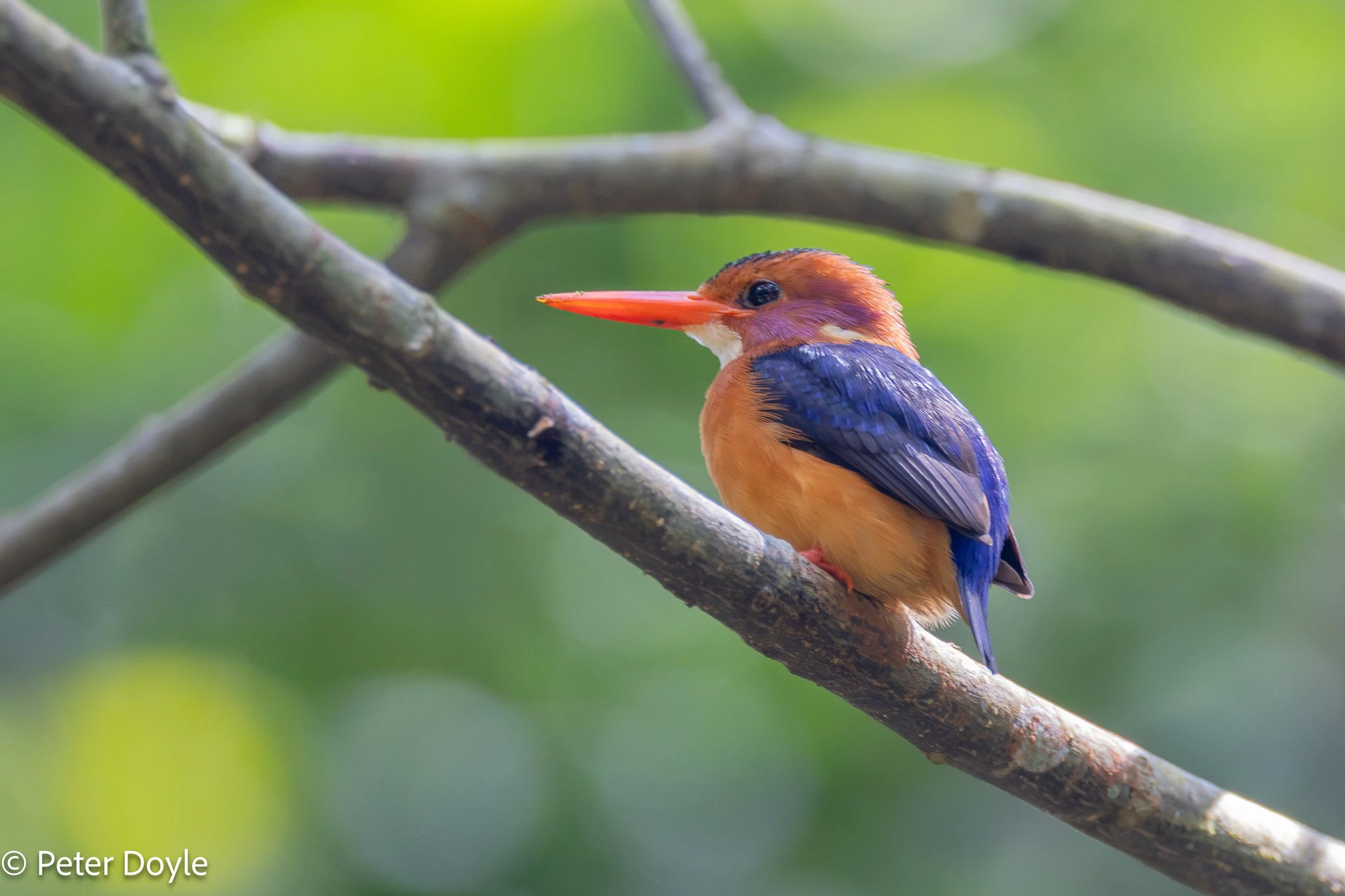
African Pygmy Kingfisher (Ispidina picta) Budongo Forest, Uganda.
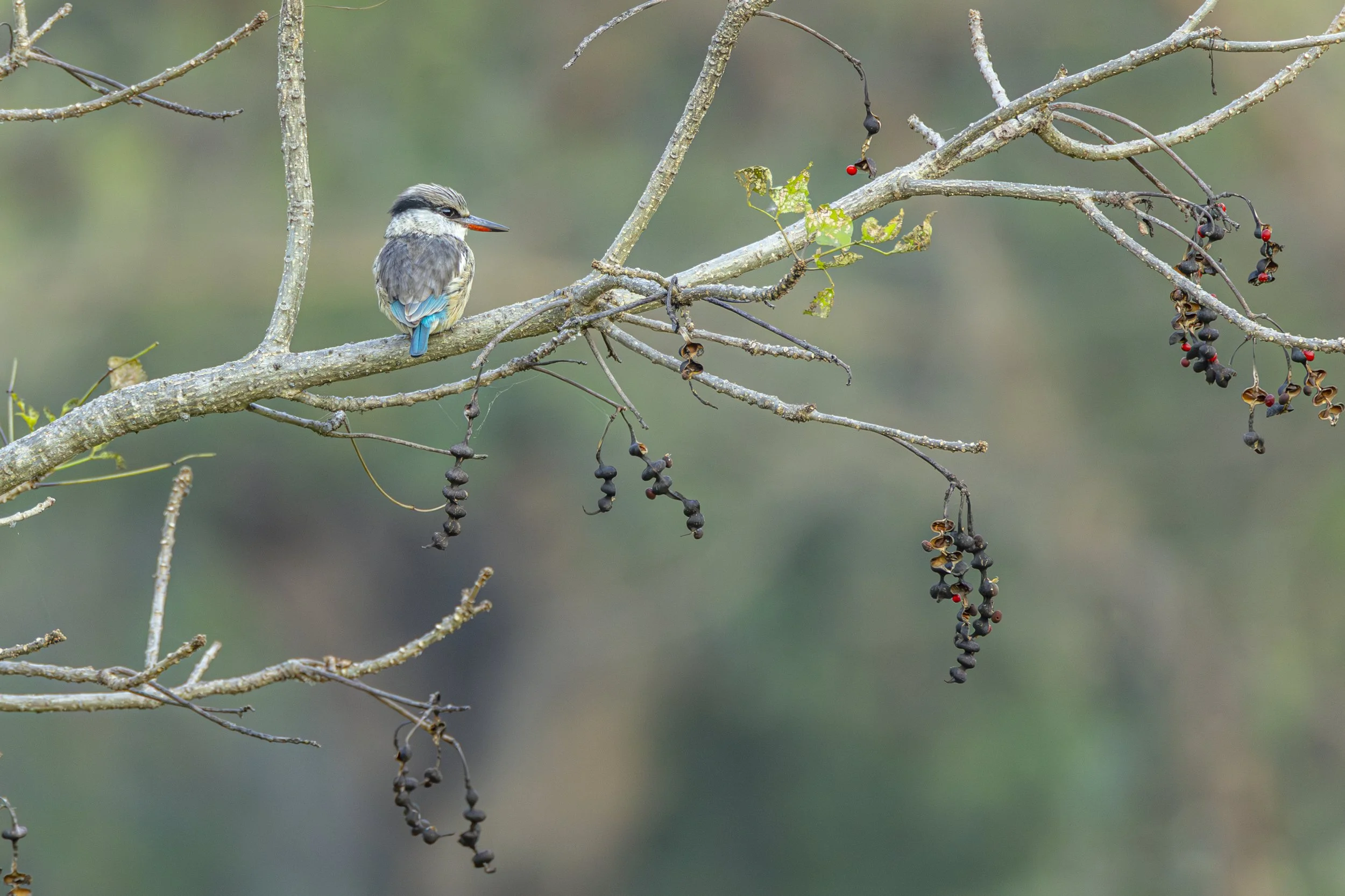
Striped Kingfisher (Halycon chelicuti) Mpumalanga, South Africa
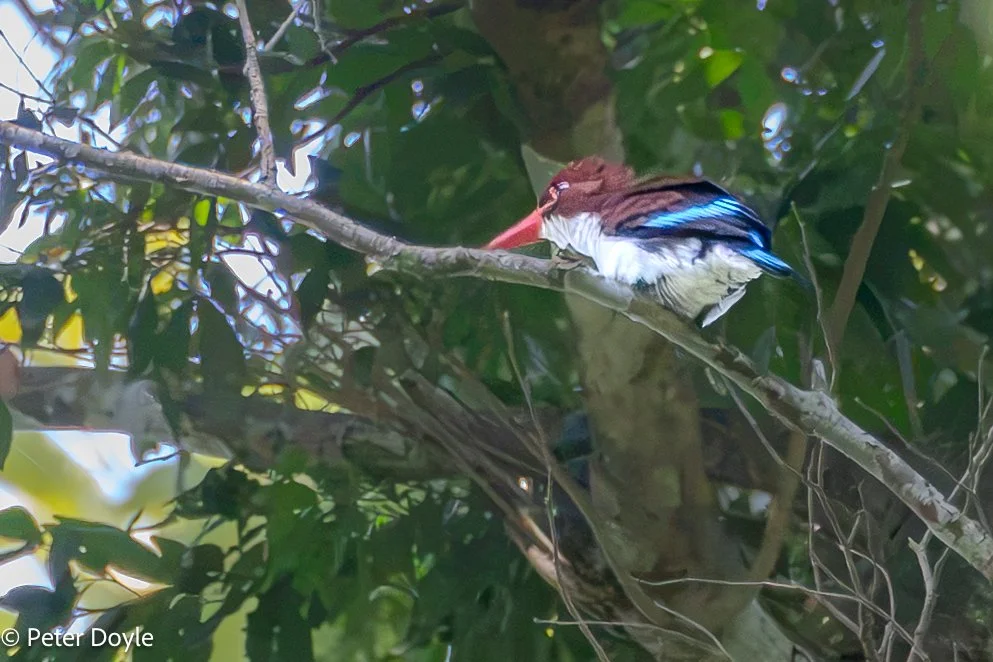
Chocolate-backed Kingfisher (Halycon badia) Budongo Forest, Uganda
Missing from my photos are still the Shining-blue, African Dwarf, White-collared and Blue-breasted Kingfishers. These are all birds of the forests of West and Central Africa. I saw the Shining-blue Kingfisher, hurtling around me near a forest stream, and have heard the call of a Blue-breasted, but so far impossible to photograph!
Watch this space …
