Authentic Photography
“I was there, and this is what I saw and experienced.”
That is what can you expect from me, as a photographer, when you view my images. I was there and that is what I saw.
This note is a bit introspective, talking about how I see photography and what I do with my images, especially in the digital age and, increasingly, in the AI age.
I am not intending to preach to anyone … quite frankly all photographers can, and will, do whatever they like, within rules of whatever genre of the art they find themselves and their own conscience.
But I would like to address what you can expect to see in my images.
A Short History
My history in photography is perhaps relevant, as I have been taking photographs for about 60 years! My first images were all colour transparencies, slides as we used to call them. Developed in a photo lab and posted back to me several weeks later. The anticipation was intense!
I never really liked colour prints, because they were too expensive and faded too quickly. Later, at school and then university, I got more involved in black and white images and processed them myself in the darkroom. We used to crop and “dodge and burn” during processing, to get the best out of our rather bad images.
At university and early adulthood, I progressed to an SLR (single lens reflex) camera, still shooting mostly colour transparencies in the mountains, where I spent a lot of time. I was not particular good at it, but got the occational good image of incredible places.
I continued taking some black and white photographs, mostly of people, which I continued to develop in the darkroom. There is something magical about darkroom processing, seeing your image emerge for the first time on the white paper, in a chemical bath, under a red light, while choking in the chemical haze! It is a bit like processing a RAW image today, but without the fumes!
Thereafter followed a long period in my life of point-and-shoot cameras, colour prints of family and friends and the odd landscape and travel shoot.
Enter the digital age!
I bought a DSLR very early in the digital era but, frankly, did not know what to do with it. I was determined NOT to process (or “photo-shop”) my images and so ended up disappointed with the results.
Then along came Lightroom, in which I could finally organize my digital images and do some editing … suddenly some of my images came to life. I enjoyed that.
I should also say that I love the whole photographic process. These days it includes thinking about what I want to see, planning where to go, walking in nature looking for opportunities, or special bird species, enjoying the habitat and behavior, framing the image, downloading images, organizing, editing and finally the output.
Authentic Content and Experience (ACE)
That long historical digression brings me to this point: what can you expect from my images today? My own definition of my images is this: Authentic Content and Experience (ACE). When showing one of my images, I want to be able to say:
“I was there, and this is what I saw and experienced.”
If you were there, and had a similar camera and lens, you could have captured a similar image.
What about technology? Well, photography is a highly technical art form. The camera and lens in my hands are the result of the marvels of modern technology, design and manufacturing. This includes the lens, the digital sensor and the processing ability of the camera itself.
However, I would add that it still requires some skill and knowledge from the photographer to optimally use this equipment.
Post-Processing (Editing)
What about processing? I think of a RAW file as a digital negative and post-processing is there to enhance my images.
“To enhance means to intensify, increase, or further improve the good quality, value, or attractiveness of something. It is often used when raising something that is already good to an even higher standard.” (Oxford Learner’s Dictionary – source suggested by Google AI).
I really like that last phrase “raising something that is already good to an even higher standard”. That, for me, sums up post-processing. But what does that mean I do in practice? I will happily do some/all of the following with my images:
Þ Crop, rotate, align.
Þ Adjust light balance, highlights, tones, shadows, whites & blacks.
Þ Use masking to accentuate different parts of an image (dodge & burn).
Þ Sharpen or improve clarity.
Þ Increase or decrease colour tint and/or saturation
Þ Use AI De-noise to reduce the noise in low light images.
Using AI may surprise you, but noise in an image is a digital artifact, an aberration not present in the original scene. In real life, there is no noise in low-light situations (which is different to heat-haze, which is a real problem on a hot day, in bright sun, especially in Africa). Just because it is called an “AI” tool does not prevent me from using it and still allows me to think of the image as being ACE.
However, I will not do any of the following on my published images, even if the technology allows me to:
Þ Remove objects.
Þ Insert objects or backgrounds that were not there.
Þ Fundamentally change colours
Note that I said “published images”, only because in some unusual situations, e.g. when seeing a difficult bird for the first time, or a first view of a “lifer”, or other situations, that are more about ornithology, e.g. bird behaviour, or rare, out-of-range, birds, where identification and clarity is more important than photography. I could imagine doing more aggressive editing in these situations for identification purposes, but not for publication and not without full disclosure.
Note also that I am primarily making images for my personal enjoyment but I also like to share what I have seen. If somebody else can see and enjoy it too, so much the better, so long as they know what they are looking at.
I seldom enter competitions, because that is not my style or purpose.
Competition Rules
But speaking of competitions, while I have written all of the above to express my own thoughts and principles, it is probably worthwhile to look at what the rules are for major wildlife photography competitions. Because the organisors have obviously grappled with these issues for years now and have put in place what they think are workable solutions to protect the integrity of photography and their competition.
Instead of working through many competitions and many rules and their nuances, I decided to focus only on one; and rather examine that one thoroughly. So I have aimed high and decided to look only at the competition Rules of the Wildlife Photographer of the Year of the Natural History Museum, in London.
And here I am going to quote the relevant rules as published on their website:
“4. ETHICAL REQUIRMENTS
(1) Any breach of these Ethical Requirements below will constitute a breach of the Rules.
(2) Your photographs must report on the natural world in a way that is creative, honest and ethical:
(i) entries must not deceive the viewer or attempt to disguise and/or misrepresent the reality of nature;
(ii) caption information supplied must be complete, true and accurate (see section 5.9); and
(iii) photographs must not portray captive, restrained, manipulated animals, animal models, taxidermy animals, and/or any other animal being exploited for profit. The only exception is when reporting on a specific issue regarding the treatment of animals by a third party, in which case you must make clear that the animal was captive, restrained, a model or a taxidermy animal.
(3) You must not do anything to injure or distress an animal or damage its habitat in an attempt to secure a photograph. This includes flying (or flying a drone) too low or noisily over an animal; using artificial lighting in a way that may distress, endanger or blind a subject; and taking photographs at nests or dens using wide angle lenses although telephoto lenses are permitted. An animal’s welfare must always come first.
(4) You are responsible for ensuring full compliance with any applicable national or international legislation (including in relation to drones) and for securing any relevant permits (which, in the case of human portraits, will include the subject’s permission) and which must be made available to us if we request it.
(5) Photography involving any interference, or baiting (including luring with food/feeders, scent, sound) or any means of attraction is not eligible. To clarify, entries must have been taken in natural situations without interference by the photographer or anyone else. The only exception is the documentation of field research by scientists; captions must include full details.
(6) If we suspect that an entry has been achieved through cruel or unethical practices or in any way in breach of these Rules, the entry will be disqualified and we reserve the right to report you to the applicable authorities.”
5. PHOTOGRAPH SPECIFICATIONS
(1) Photographs must have been shot within the past five years. The capture date must be after October 2020 and evidenced on request.
(2) The Jury will be looking for fresh photographs, so we strongly request you not to enter photographs that have already been awarded in other similar international competitions (e.g. winner, runner-up, commended, honourable mention). The Jury will strongly favour photographs that have not already been awarded in other competitions.
(3) Your entry must be uploaded in JPEG format. High-quality scans of transparencies or negatives are also acceptable.
(4) For all categories, photographs must be submitted as JPEGs, saved at a high-quality setting of at least 8 in Photoshop, Adobe RGB (1998), and at 1920 pixels along the longest dimension. The Jury will not consider photographs that have borders, watermarks or signatures.
(5) If your photograph is shortlisted for the final round of judging you will be required to provide the following:
(i) RAW files (e.g. .ARW, .CR2/3, .NEF, .ORF, .PEF), or original untouched JPEGs (with a range of ‘before’ and ‘after’ original untouched JPEG files); and original transparencies or negatives, will be required for authentication. DNG files are only permitted if this is the native RAW format of the camera.
(ii) High resolution files (preferably TIFF) required for printing should be 8-bit, Adobe RGB (1998) at full resolution, and match the colour and cropping of the JPEG submitted at entry. Please do not upscale. Files must not exceed 500MB.
(6) Any entry that cannot be authenticated or is not of an acceptable quality will be disqualified. We reserve the right to ask you to supply a range of ‘before’ and ‘after’ original files for any photograph that requires further authentication.
(7) Other than those set out in section 5(8) below, digital adjustments are permitted providing that they comply with the Competition’s principles of authenticity i.e. they do not deceive the viewer or misrepresent the reality of nature, or what was originally captured by the camera - tone and contrast, burning, dodging, cropping, sharpening, noise reduction, minor cleaning work (e.g. removal of sensor dust or scratches on transparencies/scans, removal of chromatic aberration, lens distortion and vignetting), HDR, stitched panoramas, and “stacking” - photograph stacking and combined for the purposes of; focus stacking, exposure blending, noise reduction or lengthening exposure if taken at the same location at approximately the same time (as a continuous sequence) or within the Natural Artistry category only as multiple exposures in-camera.
(8) For the avoidance of doubt the following digital adjustments are not permitted: adding, moving or removing objects, animals or parts of animals, plants, people etc; the removal of dirt, highlights, backscatter, bubbles, debris and similar; composites; painting the foreground / painting out the background or AI generated photographs or images. If any post processing method adds new image content to the photograph via AI algorithms or by manual intervention, the resulting photograph/image will have contravened these Rules.
(9) Caption information must be complete, true and accurate, and include a description setting out what is happening in the photo, why the photo is meaningful, the behaviour observed; background story; exact location (e.g. GPS coordinates), the year the photo was taken; and where possible the scientific name of any species featured in the photo. Photographers are encouraged to provide informative but concise captions for the Jury – a maximum of 2,500 characters.
(10) You must not include your name in the caption or on the photograph itself. You must not include your name in any file data i.e. owner, copyright or creator fields.”
Well, that is very clear and helpful. Objectively, your photographs must:
“report on the natural world in a way that is creative, honest and ethical (and) must not deceive the viewer or attempt to disguise and/or misrepresent the reality of nature.”
Furthermore, on the ethical theme, the rules say that:
“Photography involving any interference, or baiting (including luring with food/feeders, scent, sound) or any means of attraction is not eligible.”
Then, as far as editing is concerned, Para 5.7 sets out clearly what you can do in editing, while Para 5.8 sets out what you cannot do in editing. Furthermore, the judges reserve the right to call for any form of evidence, including RAW files, etc., to validate that photographs comply with these rules.
As a matter of record, I agree with all these rules and try to adhere to these standards, especially in respect of editing. The only area where I think some of my photographs will fall short of competition rules is in respect to baiting, especially the use of calls to get a bird to respond, especially for forest birding. The other interesting debate could be around water; for example, is photographing birds at waterholes in nature reserves and national parks, or on farm dams, considered “baiting”? But those nuances are for the comptetion judges to sort out.
Last Thoughts
To conclude this ramble into the countryside of ethical wildlife photography, in the time of AI, here are two images to consider, a processed image and its RAW file. The image is of a Malachite Kingfisher in the Kruger National Park.
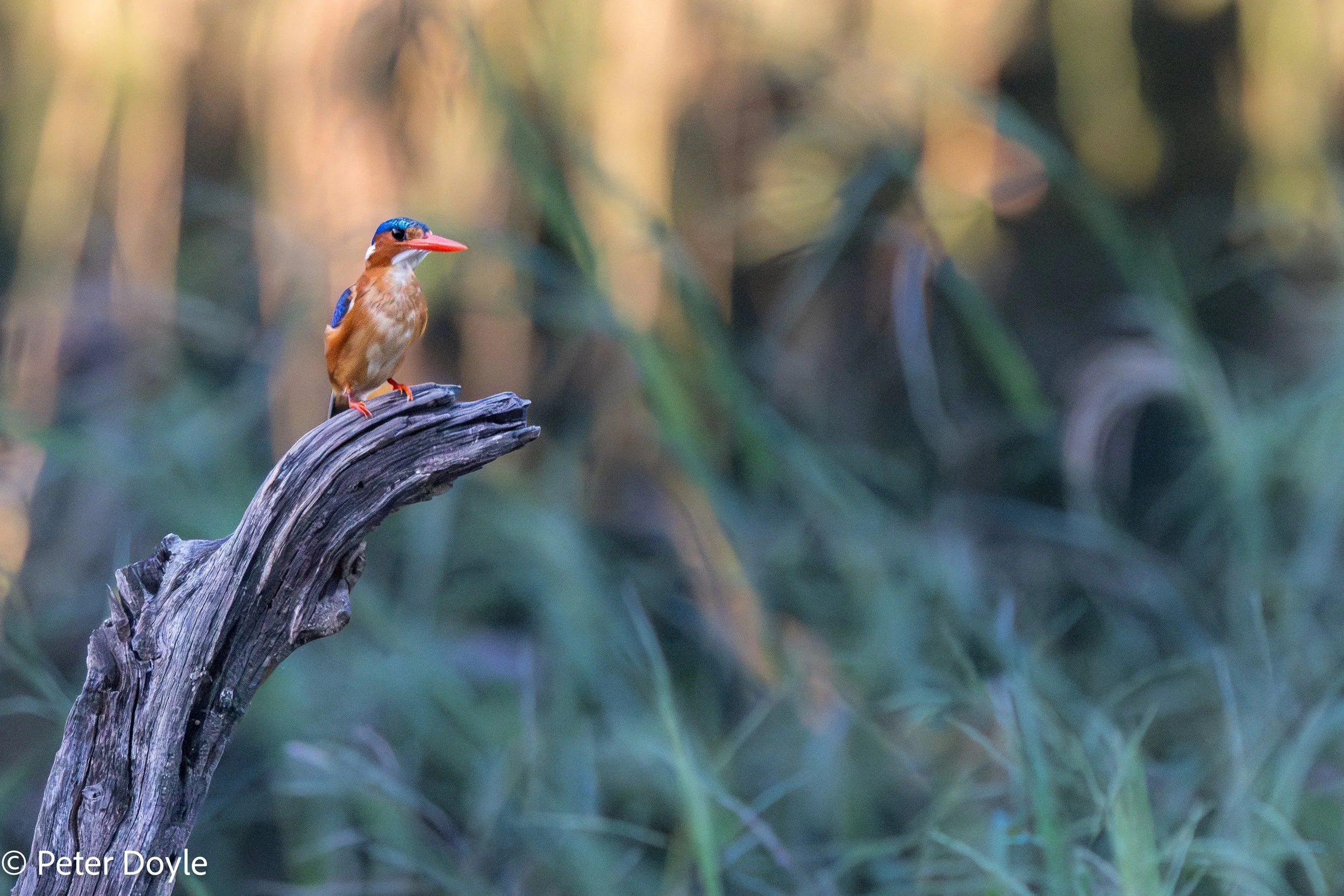
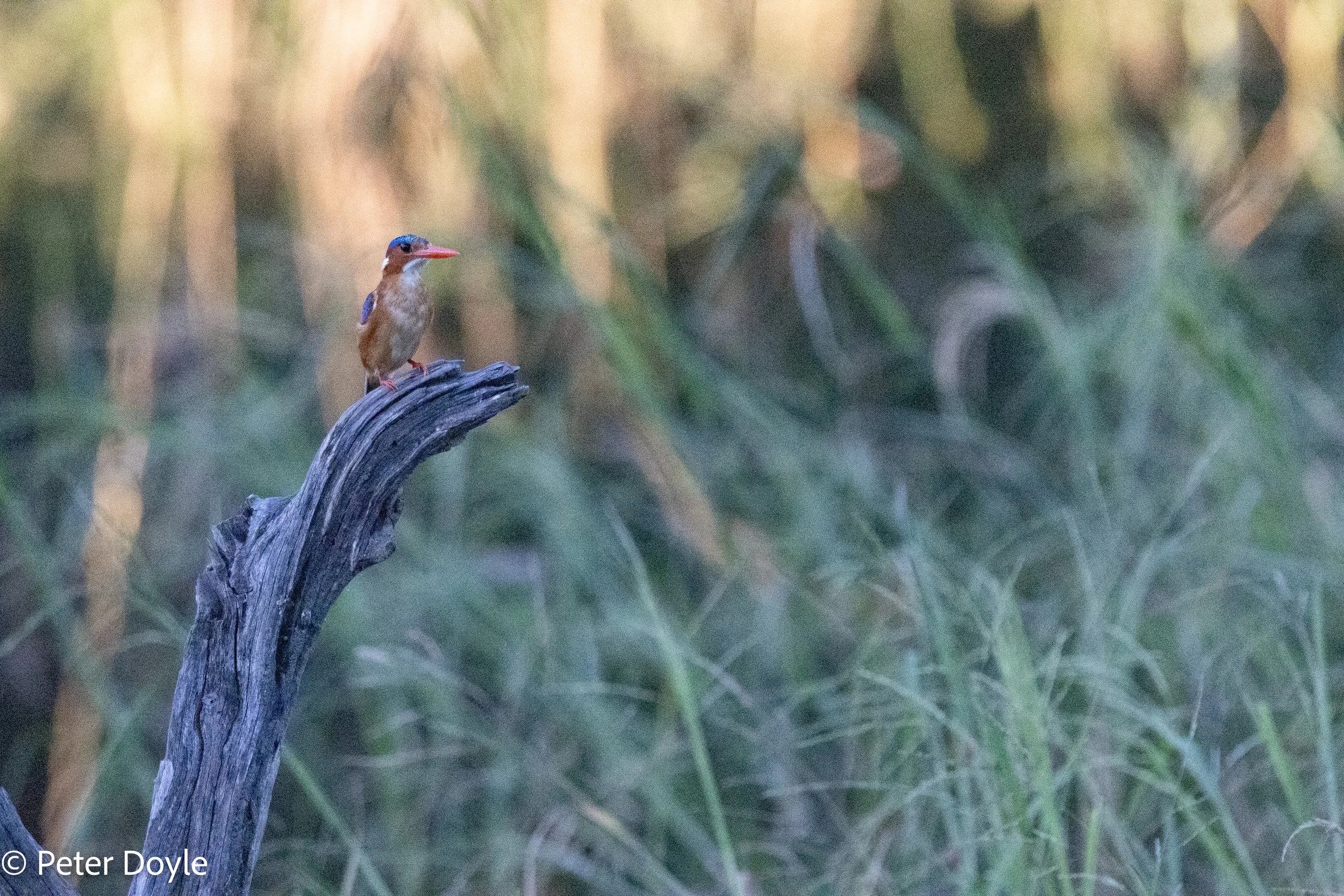
Enhanced? Yes!
Changed? No!
Authentic Content and Experience? Yes!
I would love to hear your thoughts?
