Birding in Tanzania's South Pare and Usambara Mountains
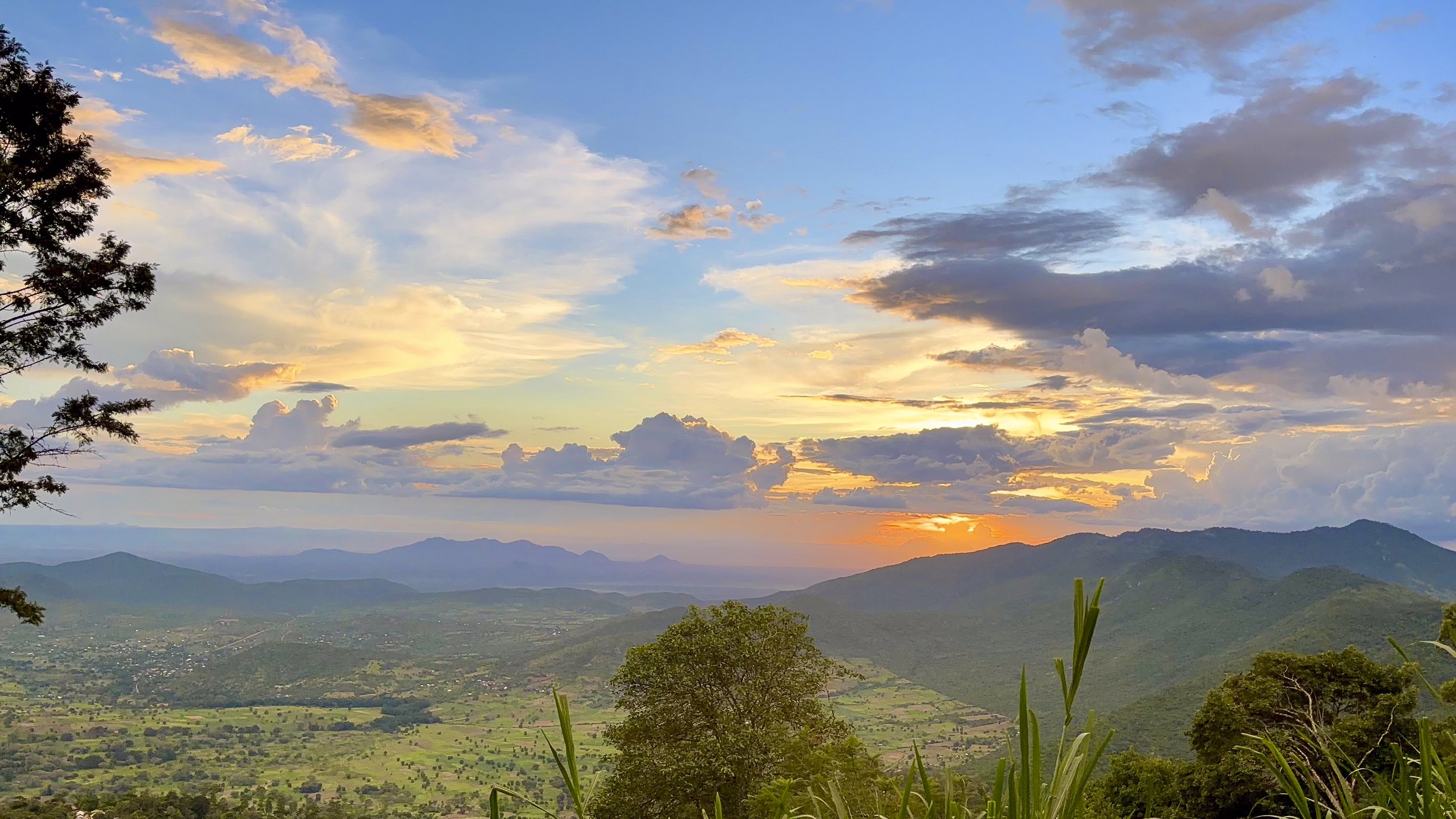
A magical sunset over Kenya, as seen from the South Pare Mountains
The Road to the Mountains
After renting an old, but very capable, LandCruiser in Arusha, we drove from Arusha to the mountains ranges of South Pare and East & West Usambara. Driving in Tanzania is entertaining, but demands your full attention. Our 4×4 rental company told us that when you plan your trip with distances and times, at the end of the plan just double all your expected times. This proved exactly right every day!
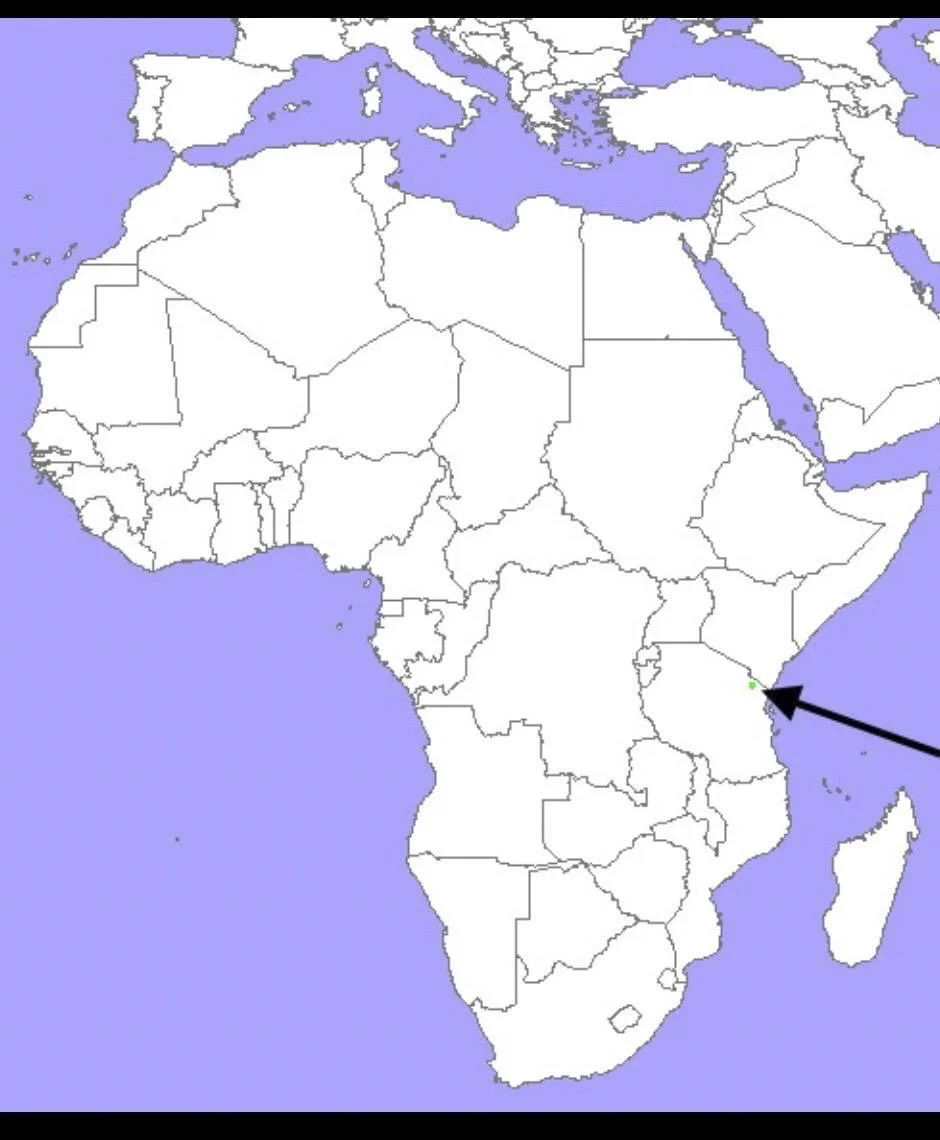
The arrow on the map points to where these mountains are found in the north-east of Tanzania, just south of the equator and Kenya and east of Mount Kilimanjaro.
(Map source: Birds of Africa app)
The Habitat
These mountain ranges are in the far north-east of Tanzania, and only about 100 to 150 kms from the sea. They are not particularly high, ranging between 1000 to 2000 metres above sea level.
Collectively part of the ancient Eastern Arc mountains, they are covered by large areas of old montane forests. This includes forest floor bracken, ferns and flowers, and then woodlands, as well as high canopy forests, increasing the diversity of species found here. The mountains experience very high annual rainfall, up to 2000mm, and as a result are very lush and have high levels of biodiversity, including plants, flowers, trees, insects, chameleons and, of course, birdlife.
In between the natural woodlands are a mixture of tea and coffee estates and small-scale farming, mostly maize, fruit and vegetables. The soil is very fertile and the small-scale farming looks very successful on the few less steep areas that intersperse the high montane forests. There are many villages, even at quite high altitudes and this ecosystem seems healthy for now.
One big risk are the plantations of alien trees. By and large there does not seem to be rampant alien tree growth into the natural forests, probably because they are so well established and not so prone to fire risk. And the plantations we went into on the margins of the forest had a lot of natural undergrowth and active bird populations.
As usual we found the single tea plantation uniformly barren, but at least contained to one small area. Lower down there is more development of coffee plantations, but we did not see new trees being planted.
These forests, although geographically isolated, look lush and flourishing and so too is the birdlife. The nature of the South Pare and Usambara Mountains is that there are steep slopes and valleys, along which the forests thrive. There are obvious signs of strong endemism among all this biodiversity, probably due to the island nature of these isolated old forests.
The Route to South Pare
Our route took us via the towns of Moshi, Mwanga and Same. Once at Same, we drove straight up the mountain track to the top of the South Pare Mountains and after birding until dark, we went down again to stay overnight near Same.
Our birding in the South Pare mountains started off looking primarily for the South Pare White-eye, which we found in the late afternoon light nearly on top of the mountain.
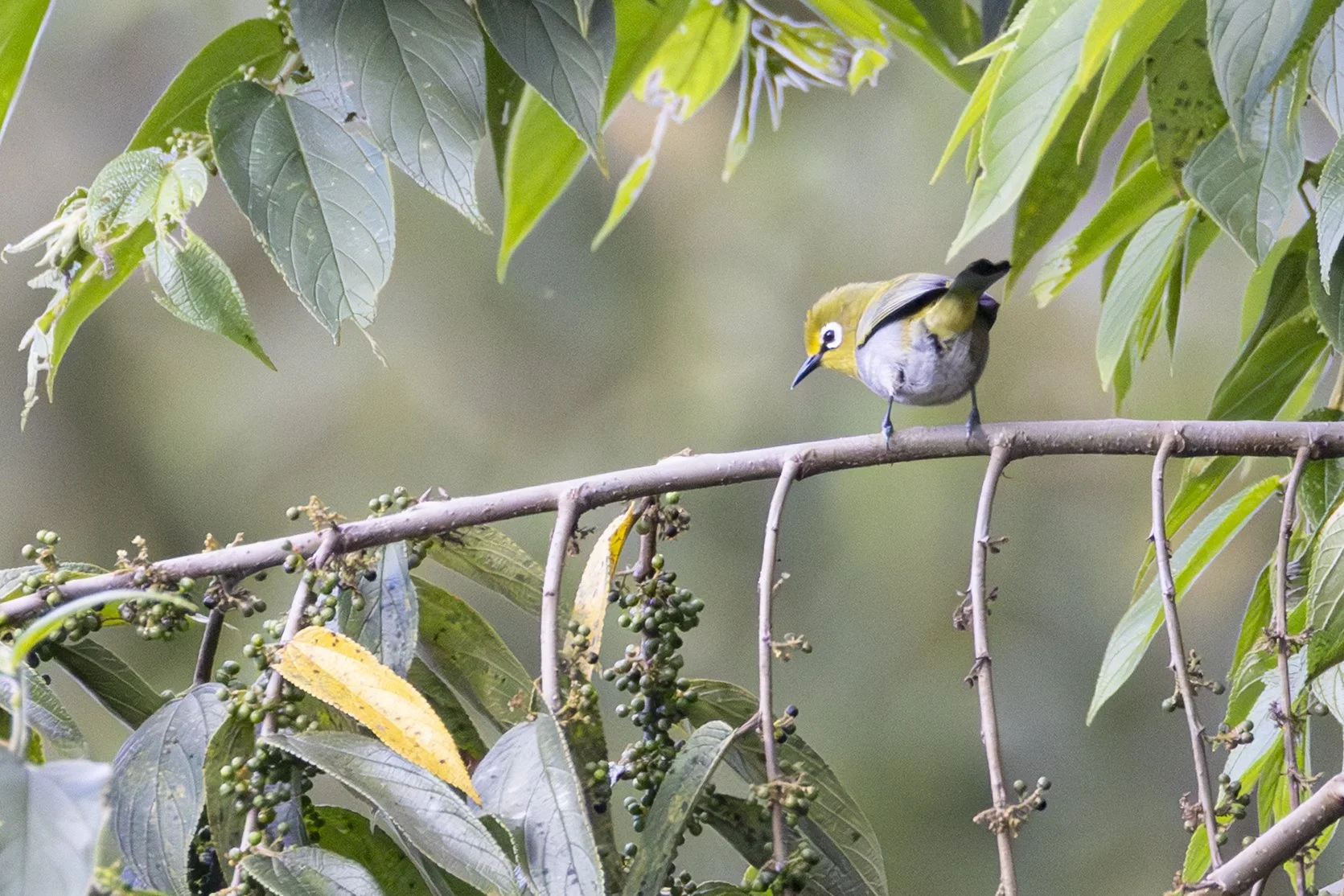
South Pare White-eye (Zosterops winifredae)
Birding in the late afternoon light. The White-eyes forage in the vast montane forests in the valleys below, but in the evening come up to roost in the bracken near the top. A final feed in the canopy of the trees provides the best opportunity to see and photograph these highly localised and endemic birds.
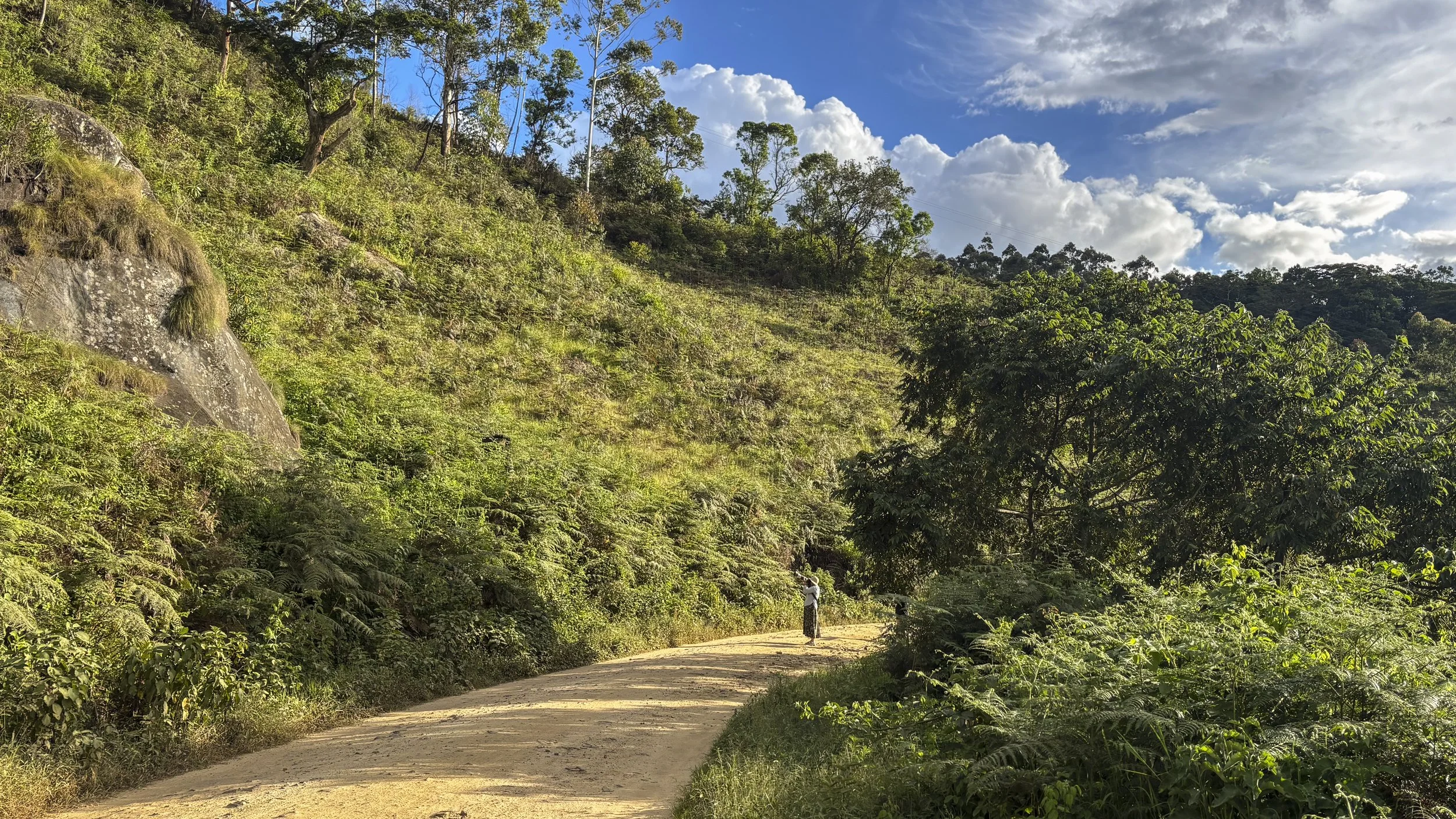
Birding near the top of South Pare Mountains at sunset
The Road to the East Usambara
Leaving the South Pare behind us, we drove onwards via Mkomazi and Mombo, passing all of the Usambara ranges just to the north of us, until the major regional town of Korogwe, where lunch and supplies beckoned. Leaving Korogwe, we eventually turned North-East on the road to the sea and up towards Kenya, until we got to the town of Muheza. At that point we were less than 40km from the Indian Ocean.
We now turned off the main roads onto some more challenging roads, zig-zagging up to the top of the East Usambara Mountains, reaching the Amani Natural Forest Reserve, our base for the next three days.
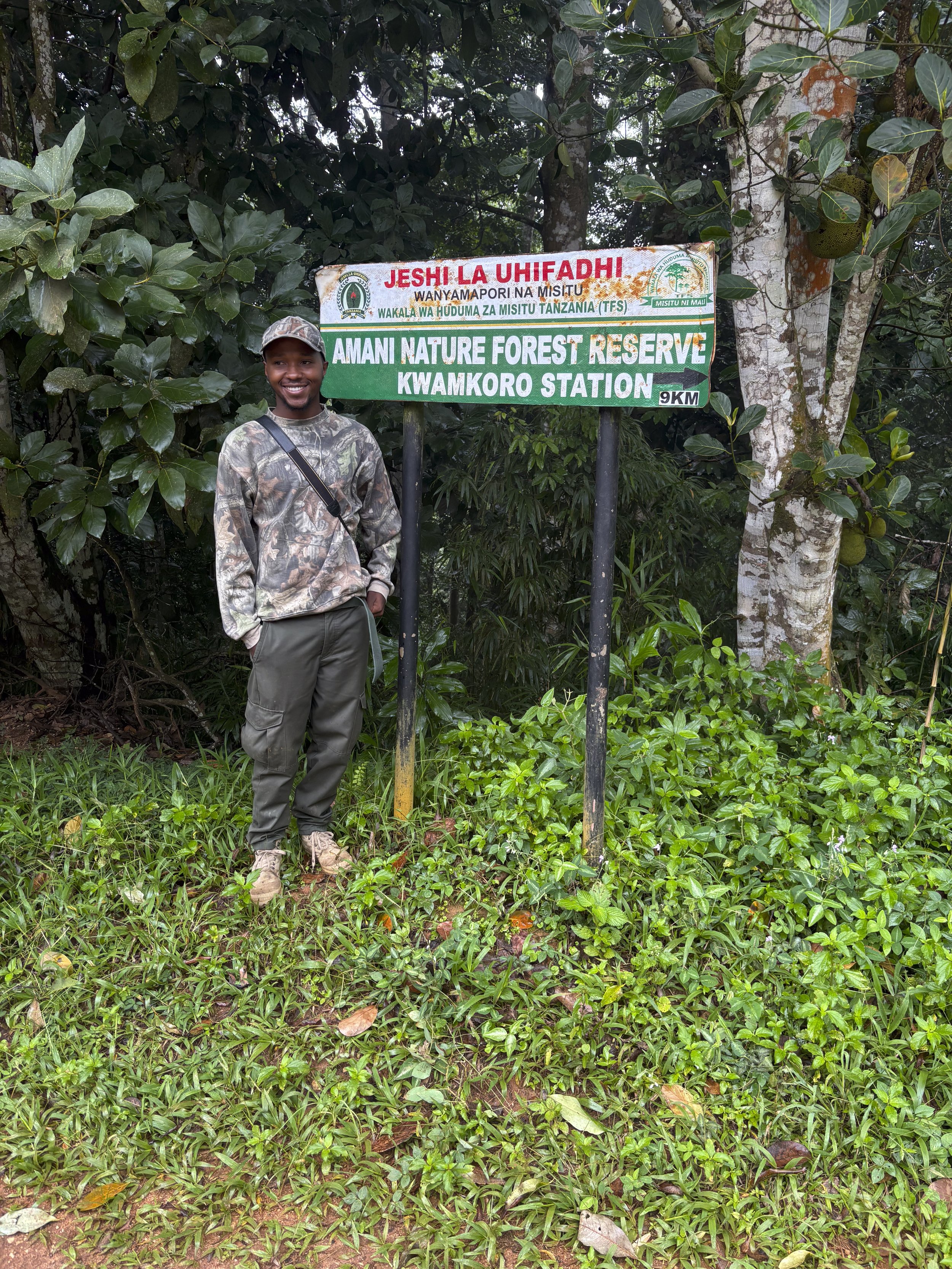
Two of our favourite birding spots in the mountains were the Amani Nature Reserve in East Usambara and the Magamba Forest in West Usambara.
But forest birding is notoriously difficult, and we would not have managed without Frank Shirima, our excellent bird guide, who travelled with us from Arusha.
Frank is a Tanzanian bird specialist, having lived in Tanzania all his life. He has personally seen about 900 out of the 1100 birds in Tanzania.
Forest birding relies heavily on knowing the bird calls, and on the first morning Frank heard the Red-tailed Ant Thrush, calling in the early morning light, just outside our lodge.
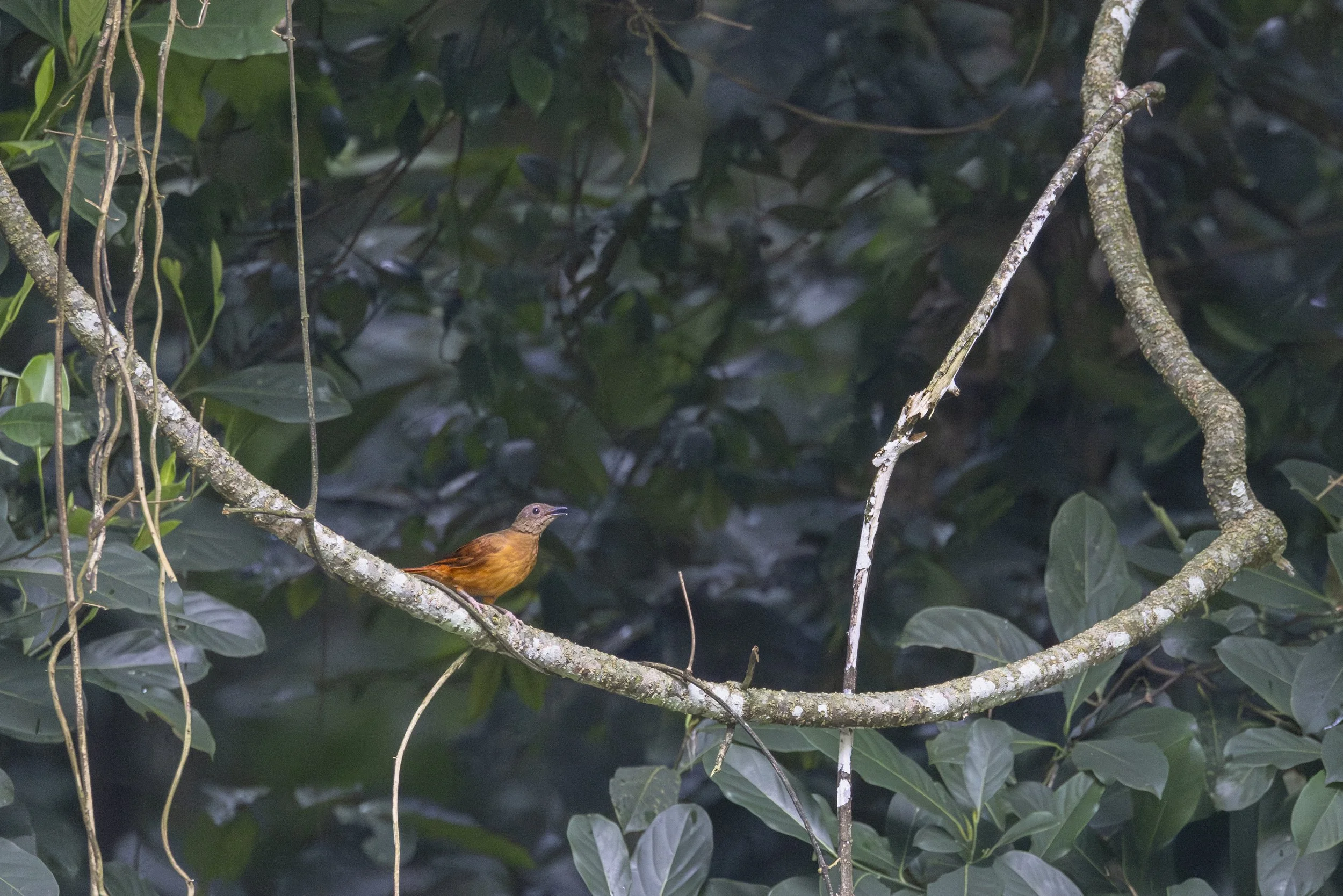
Red-tailed Ant Thrush (Neocossyphus rufus)
It poured with rain every night… it was the rainy season! But during the day it was often just a mist or light drizzle that was no problem in the forests… except the available light was often a challenge for our photography. The roads were muddy, of course, but we never got stuck and were able to go everywhere we planned in our hired Landcruiser.
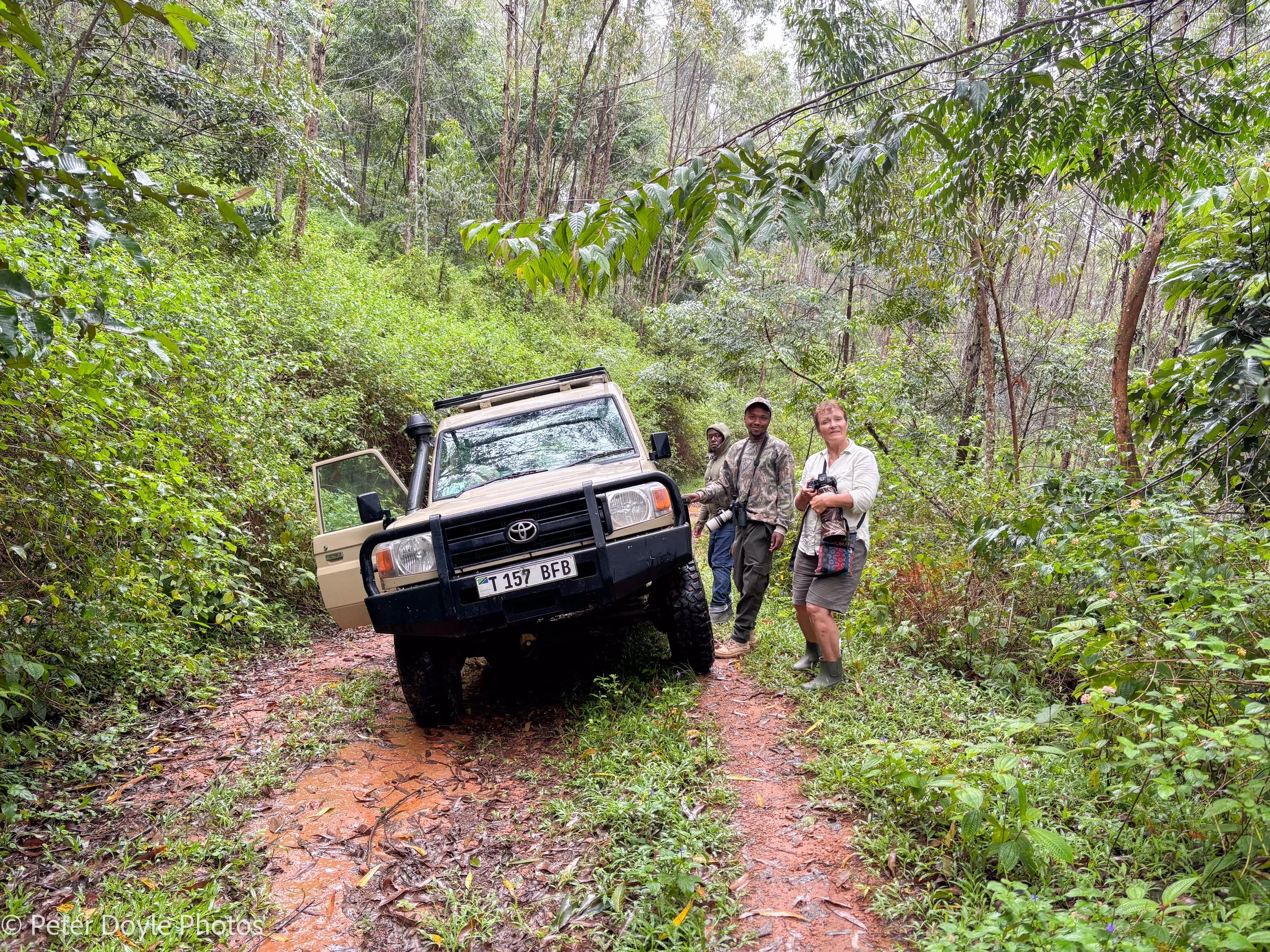
Typical stop in the forests … Joe, Frank and Elle ready to roll.
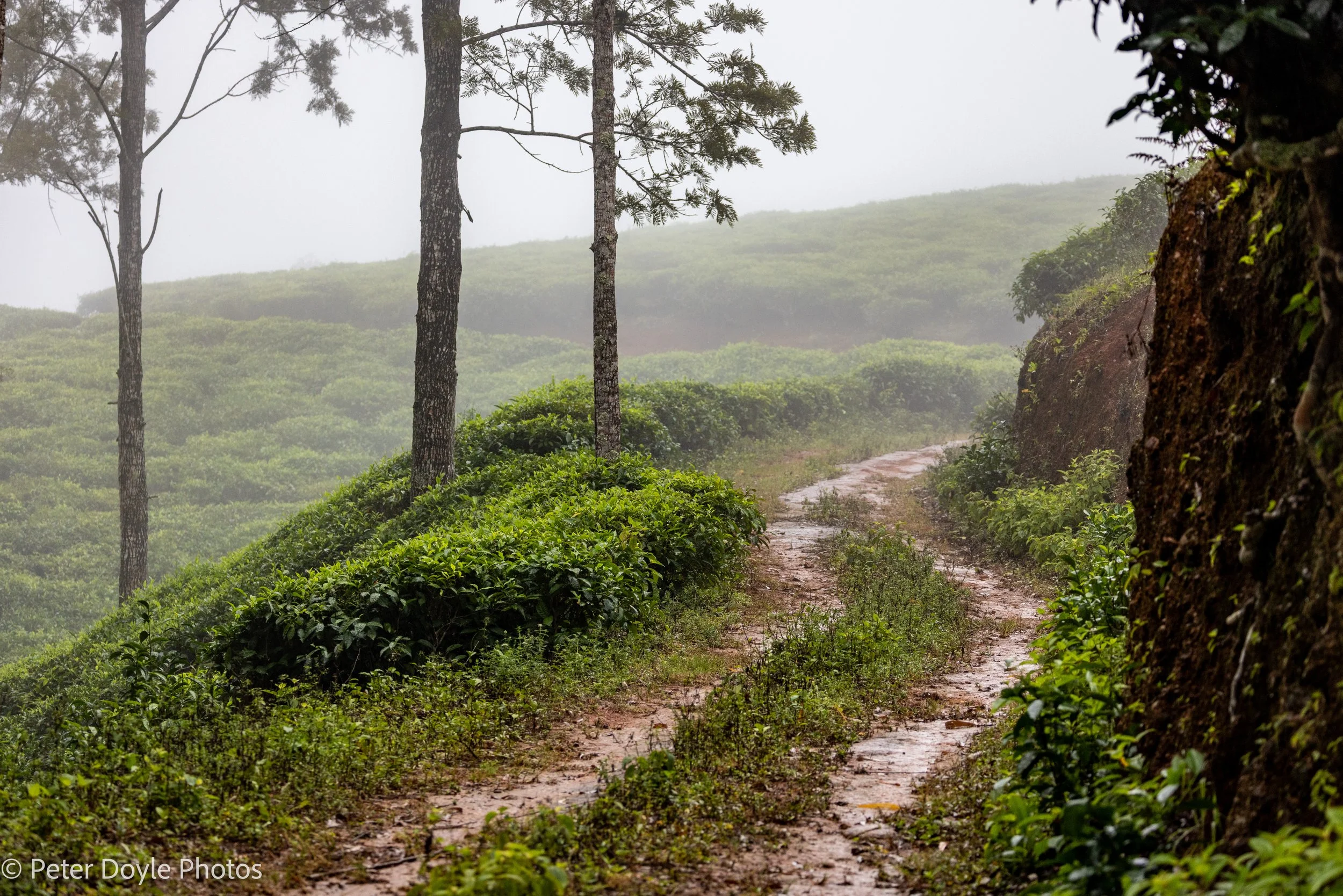
The road up through the tea plantations on our way to find a special bird.
That special bird we were looking for was Kretschmer’s Longbill. It is an Old World Warbler, found primarily in the coastal montane forests of Tanzania and Mozambique. It spends most of its time in the tangled undergrowth, so is seldom seen, but has a distinct call.
After Frank heard its call, we watched this particular bird for some time darting around the undergrowth. I took several vague photos of shapes in bushes, but Frank was overjoyed when it suddenly popped out on a branch near us.
In 20 previous visits to the Usambara, Frank had not been able to photograph the Longbill out in the open … and he was skipping with joy in the muddy path… as were we!
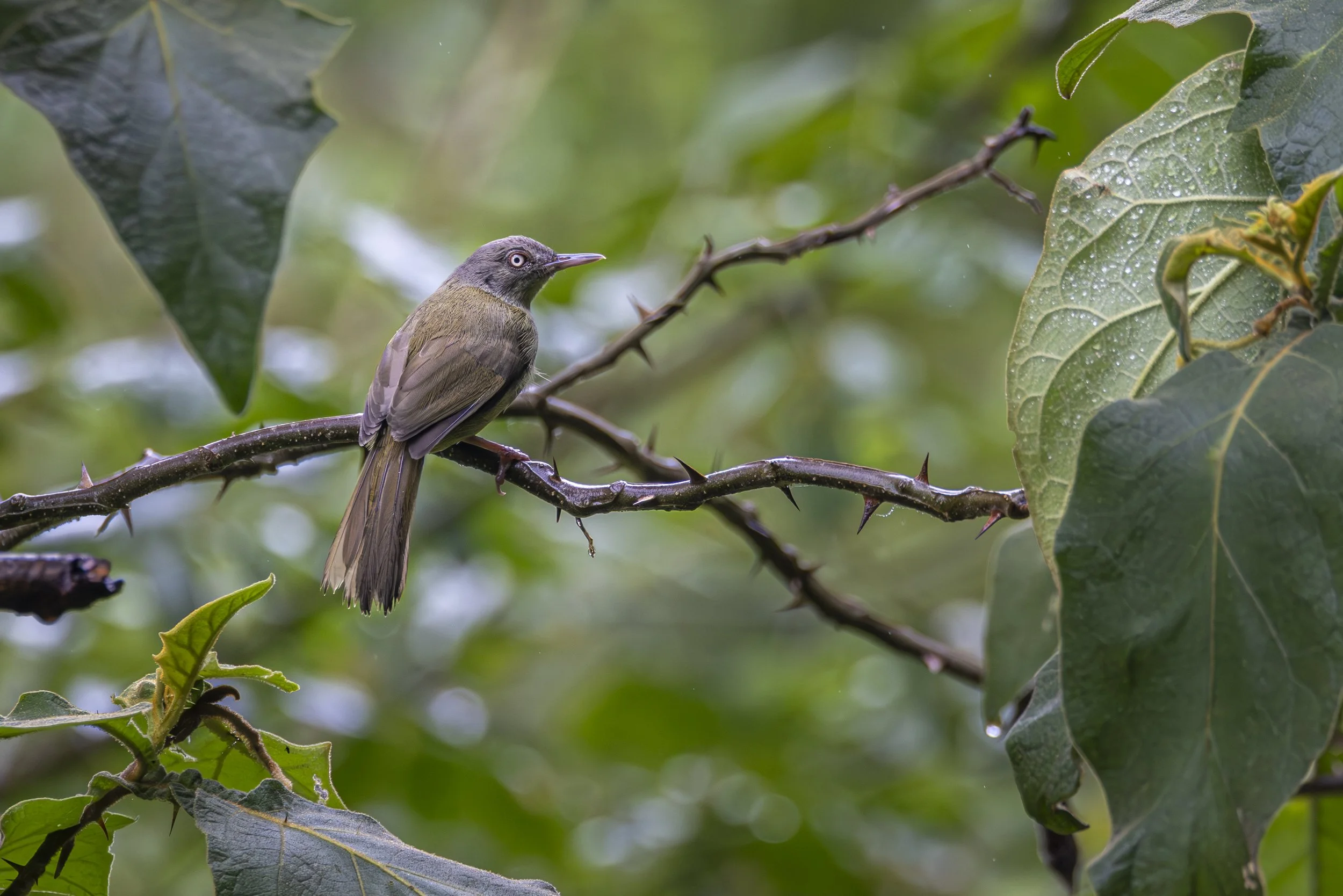
Kretschmer’s Longbill (Macrosphenus kretschmeri)
We continued to find many other special birds, including… Uluguru Violet-backed Sunbird, Usambara double-collared sunbird, Banded Green Sunbird, Green-headed Oriole, Green Barbet, East Coast Boubou, Silvery-cheeked Hornbill, Long-billed Forest Warbler, Fischer’s Turaco, Southern Banded Snake-Eagle, Red-headed Bluebill, White-chested Alethe, and the Lowland Tiny Greenbul.
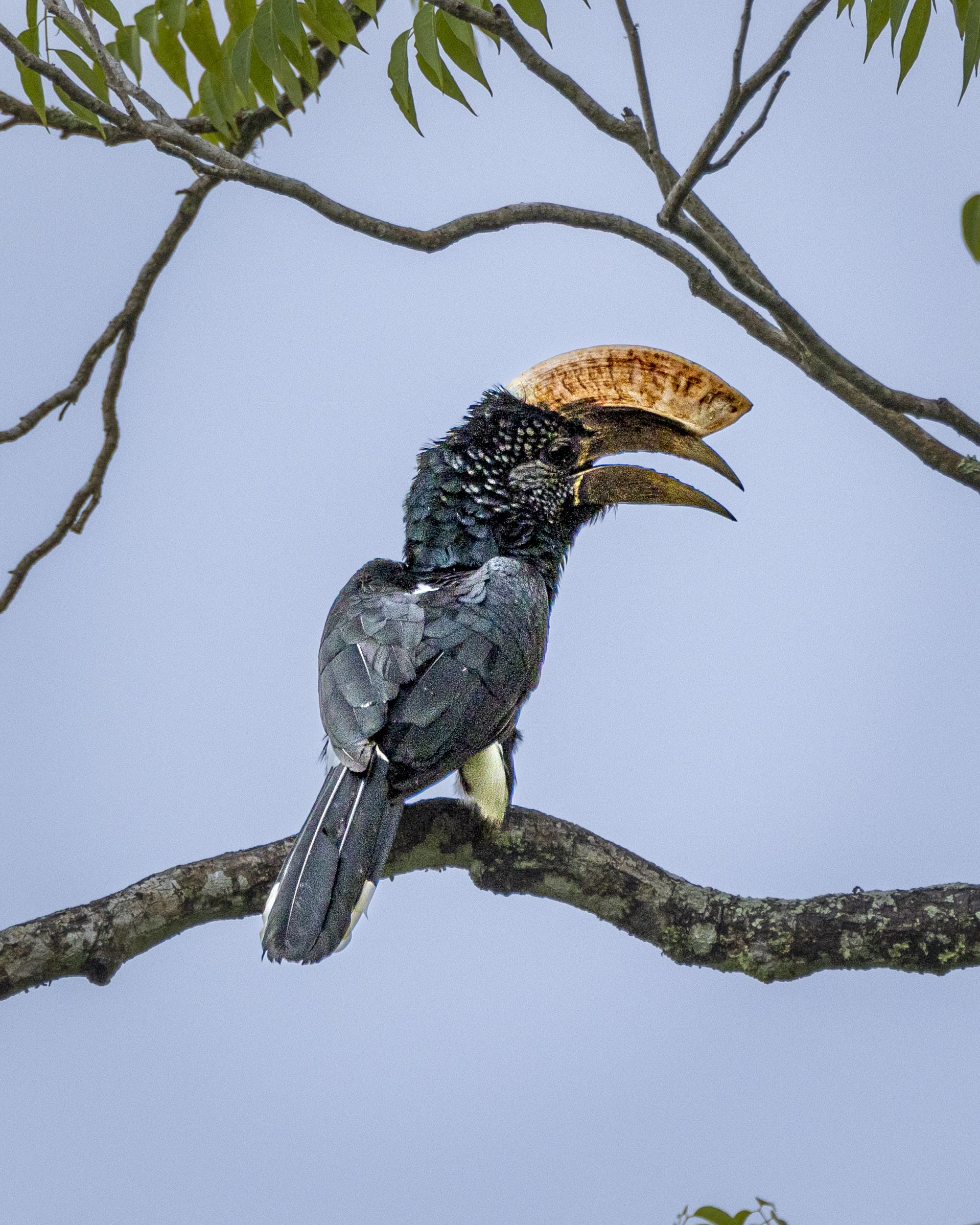
Silvery-cheeked Hornbill
(Bycanistes brevis)
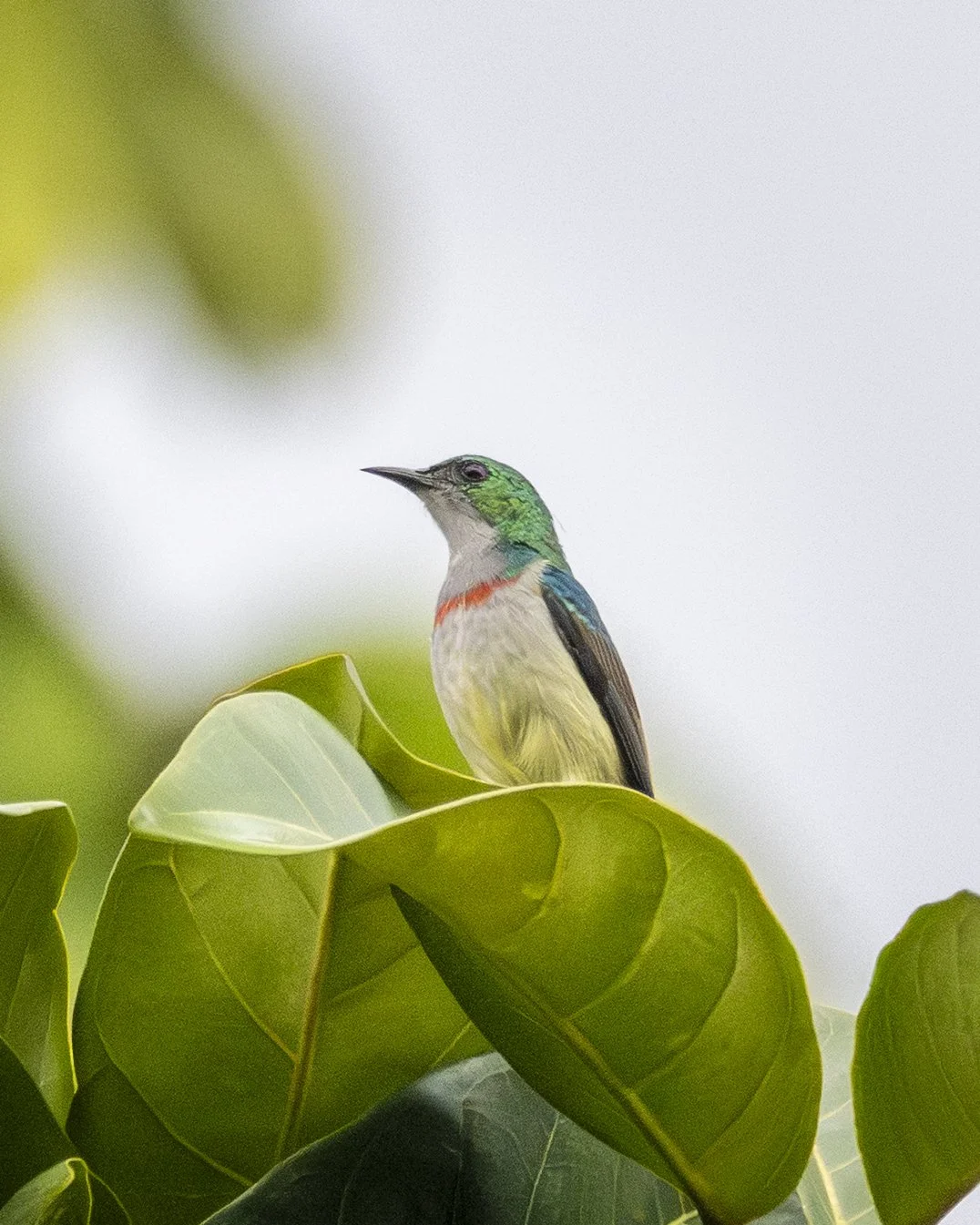
Banded Green Sunbird
(Anthreptes rubritorques)
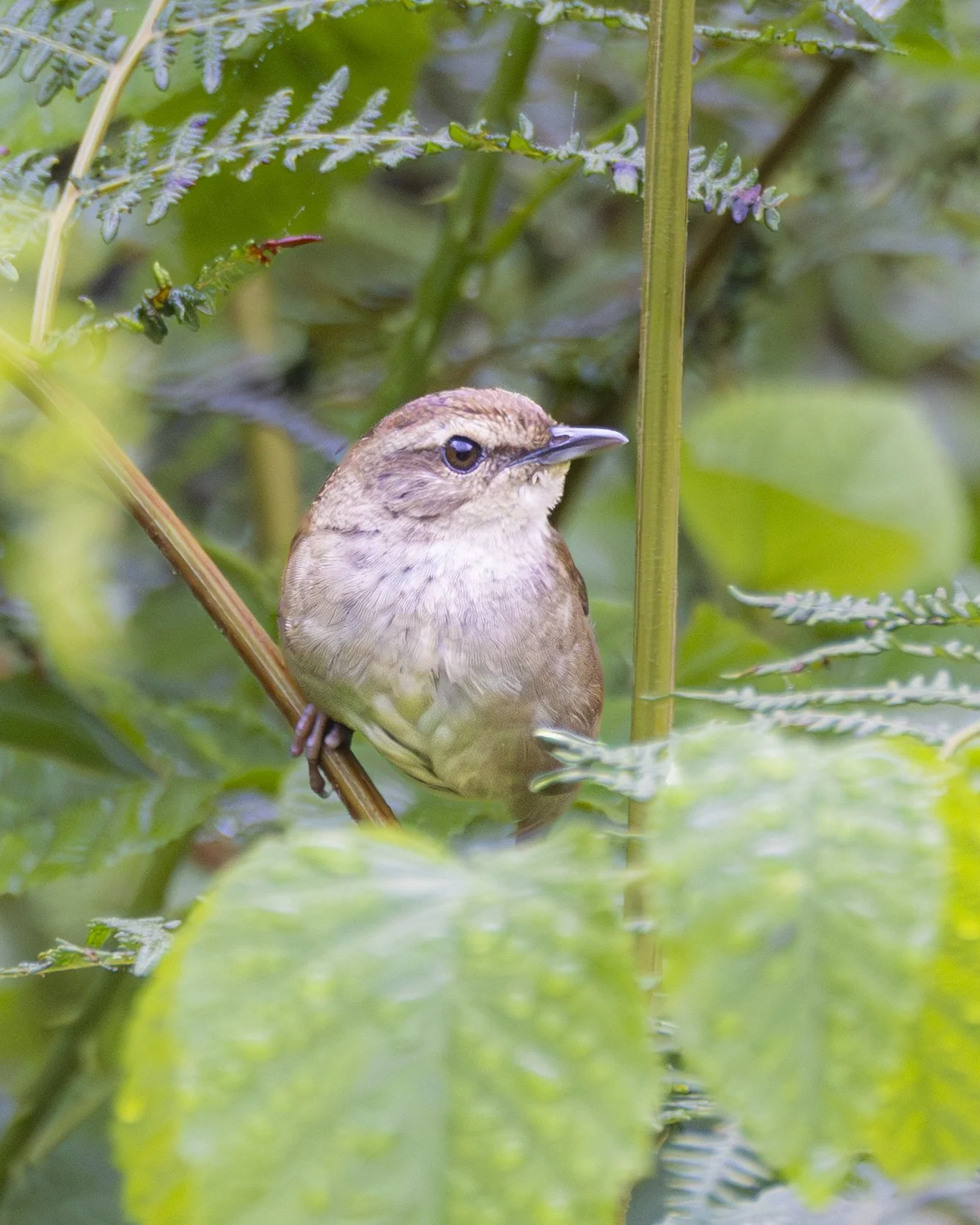
Evergreen Forest Warbler
(Bradypterus lopezi)
The Road to West Usambara
As this was the furtherest point of our trip, we now turned back the way we had come and drove back to Korogwe, at the base of the West Usambara’s. Leaving the main road, we again drove high up the mountains on another zig-zagging road, sometimes good and sometimes terrible, but all manageable.
Going into West Usambara, we were amazed at the biodiversity and endemism of trees, plants and creatures … insects, ants, beetles, butterflies, dragonflies, frogs, crabs, snakes and a number of different chameleons crossed out path.
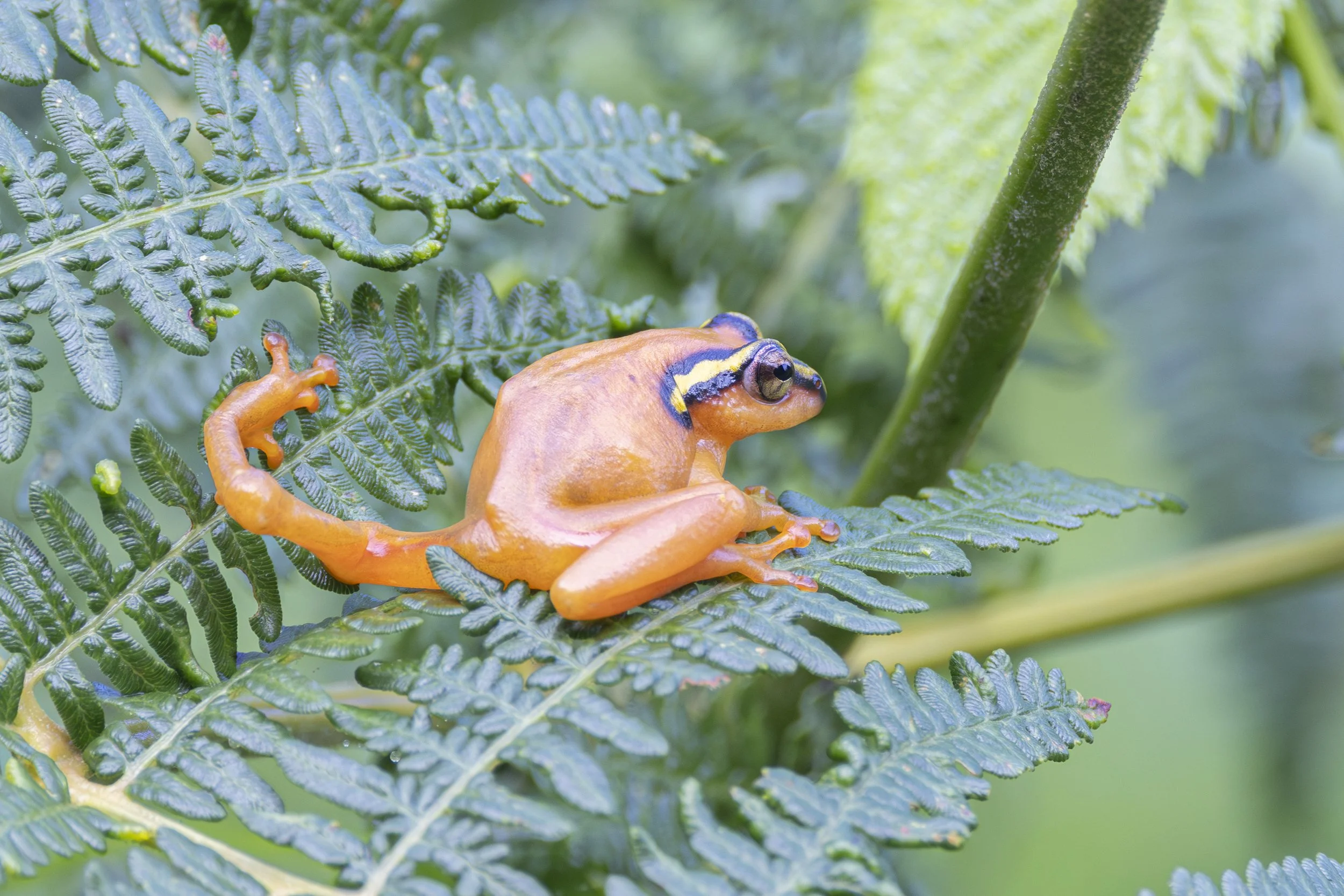
Spotted Reed Frog (Hyperolius substriatus)
The most spectacular of the chameleons was the West Usambara blade-horned chameleon (Kinyongia multituberculata) which is a species of chameleon endemic to the West Umsambara Mountains
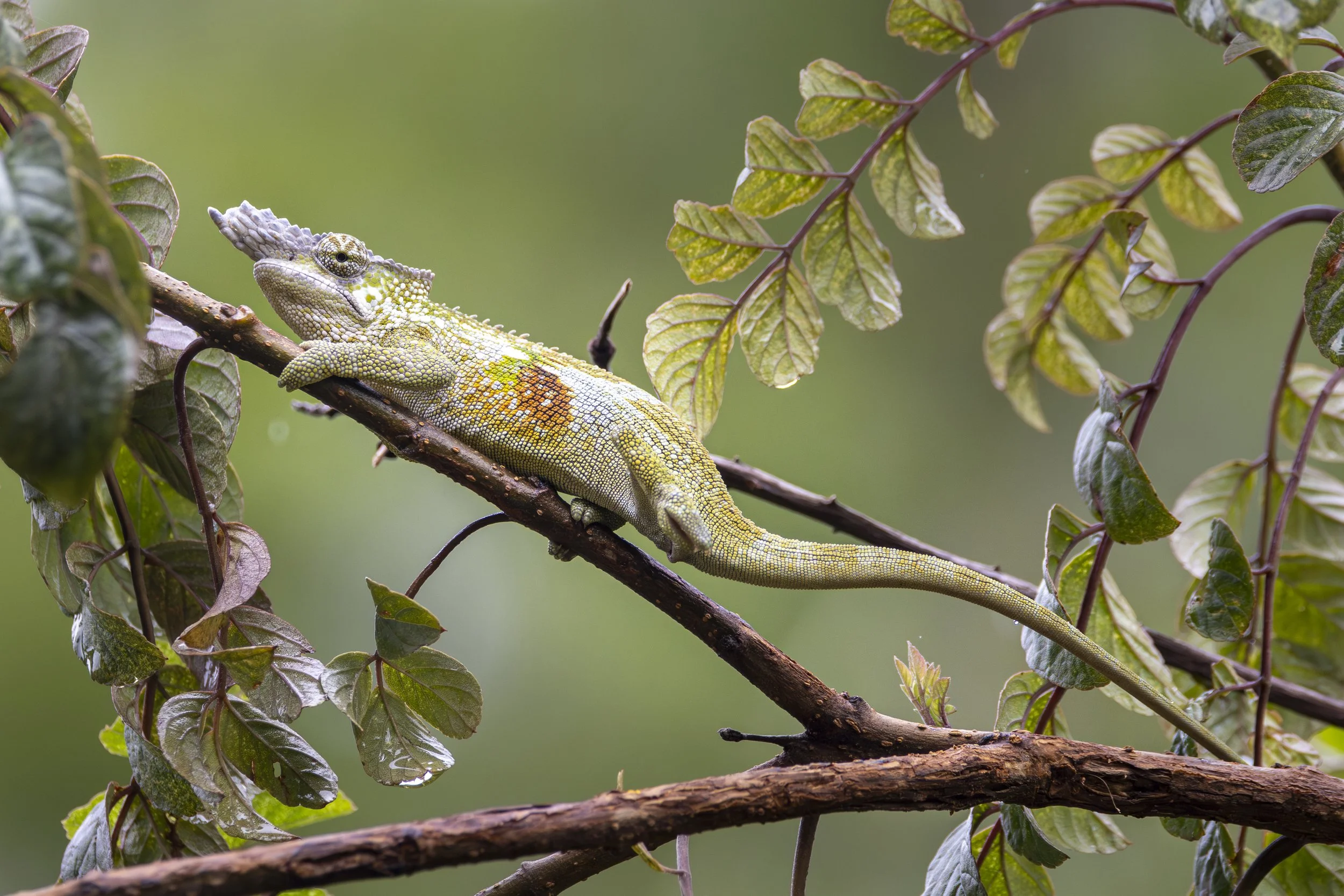
West Usambara Blade-horned Chameleon (Male) (Kinyongia multituberculata)
Long before coming to Tanzania, my target bird in the Usambara Mountains was the Bar-tailed Trogon, and one day we had several sightings of this beautiful bird, up to six of them among woodlands, both the male and the female:
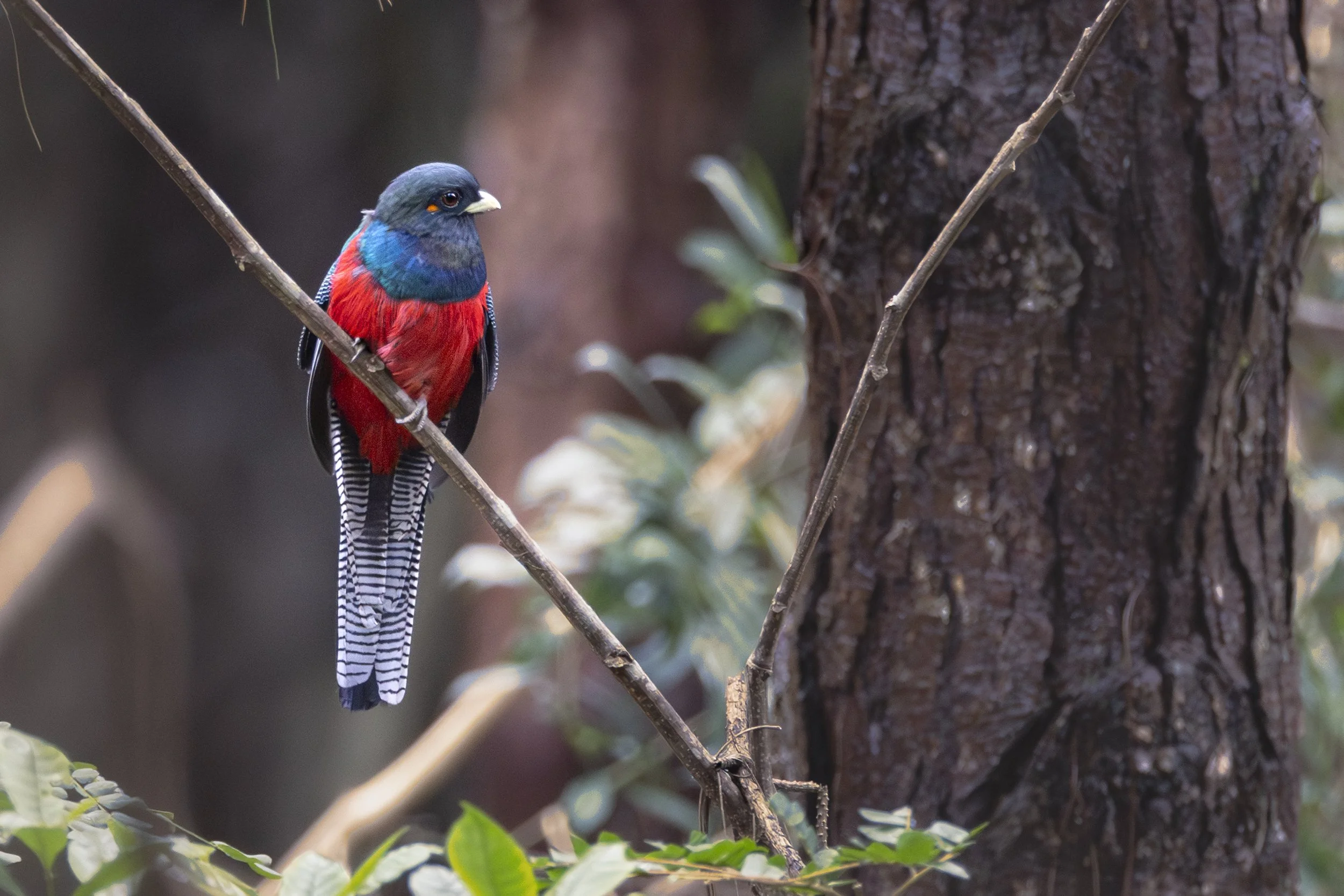
Bar-tailed Trogon (Male) (Apaloderma vittatum)
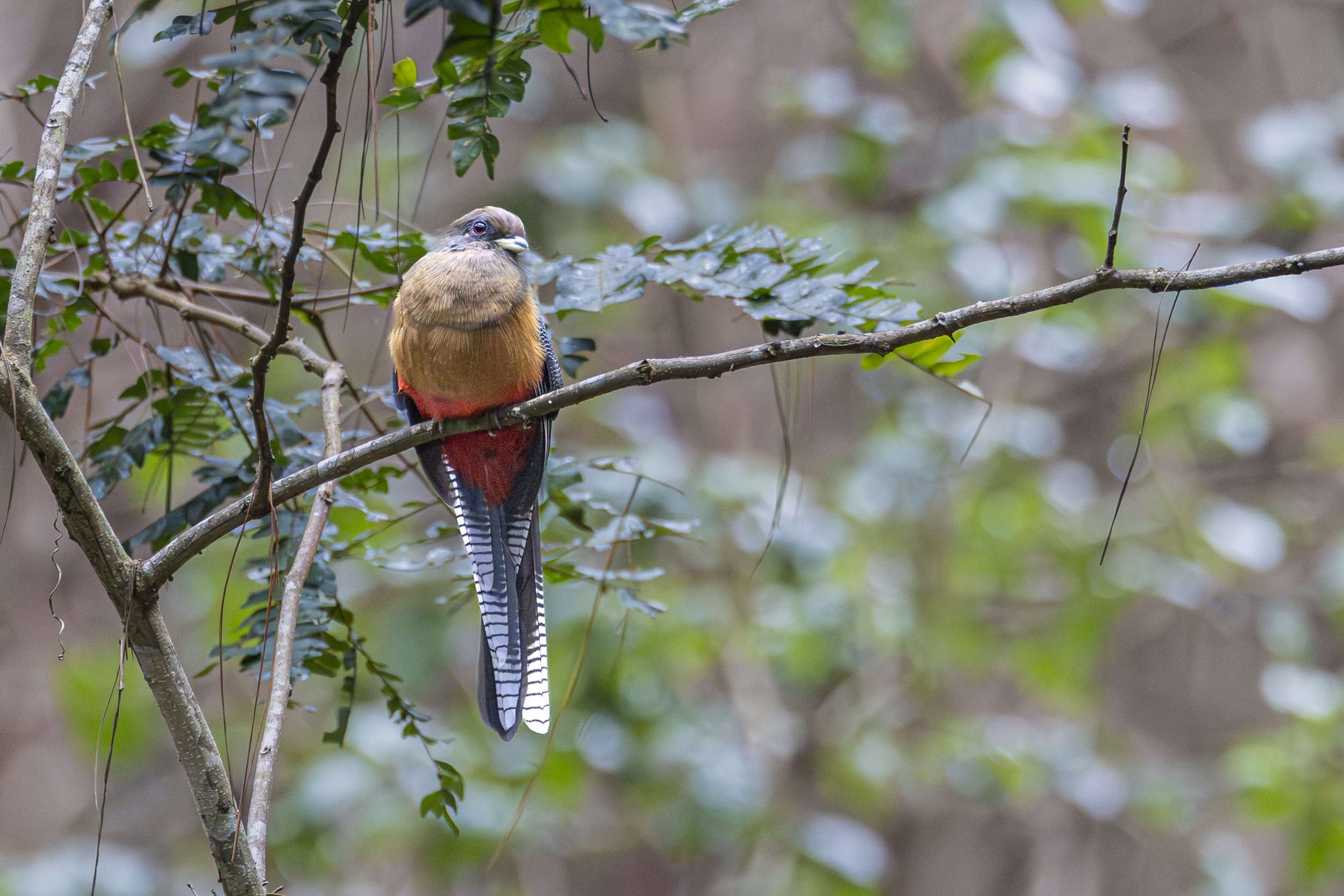
Bar-tailed Trogon (Female) (Apaloderma vittatum)
Tanzania has 26 different Greenbul species, many very difficult to identify. Here is Cabanis’s Greenbul in its typical woodland habitat:
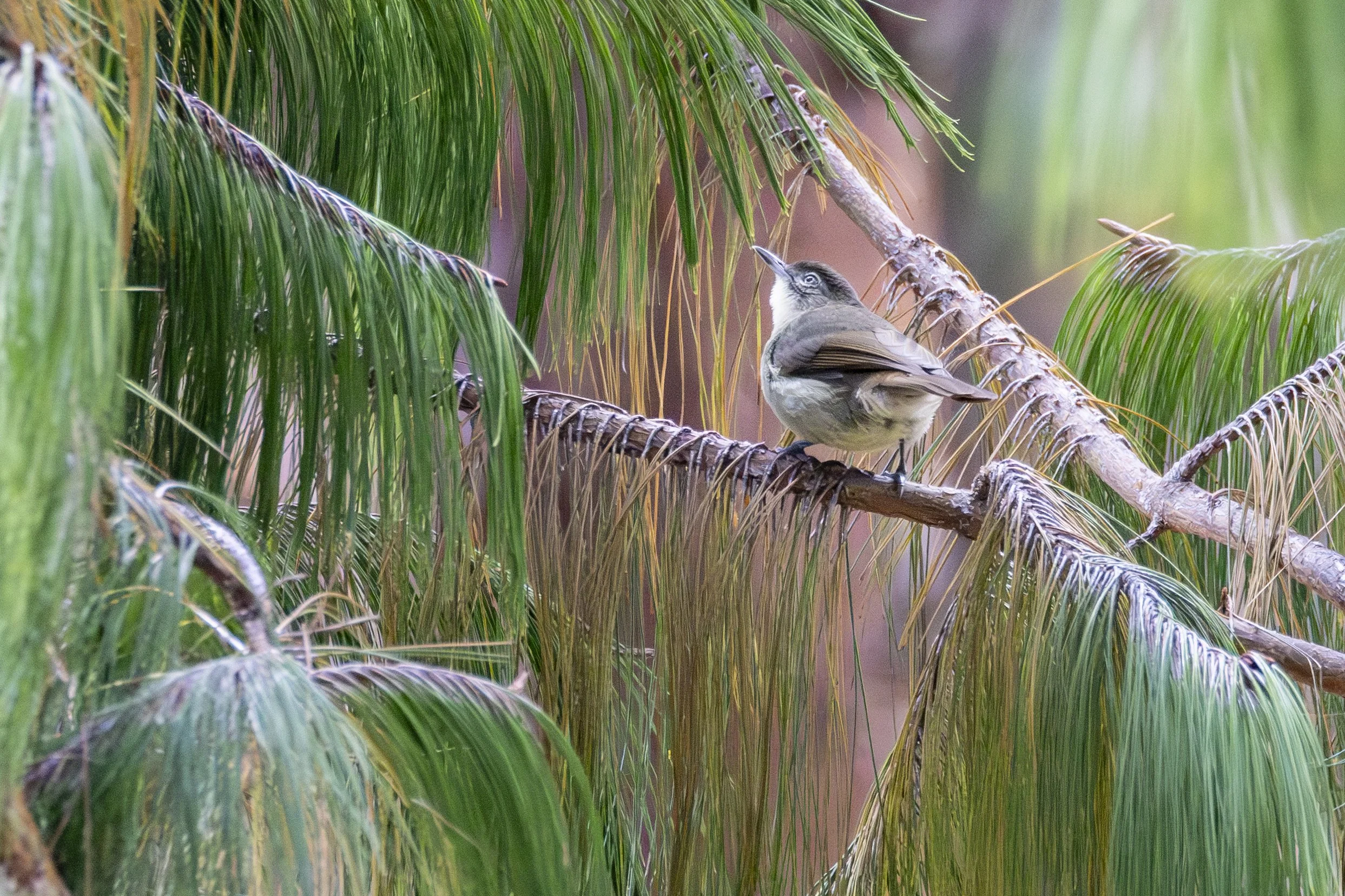
Cabanis’s Greenbul (Phyllastrephus cabanisi)
Another special sighting was a Red-faced Crimsonwing, which Ellen had photographed previously in the Eastern Highlands of Zimbabwe.
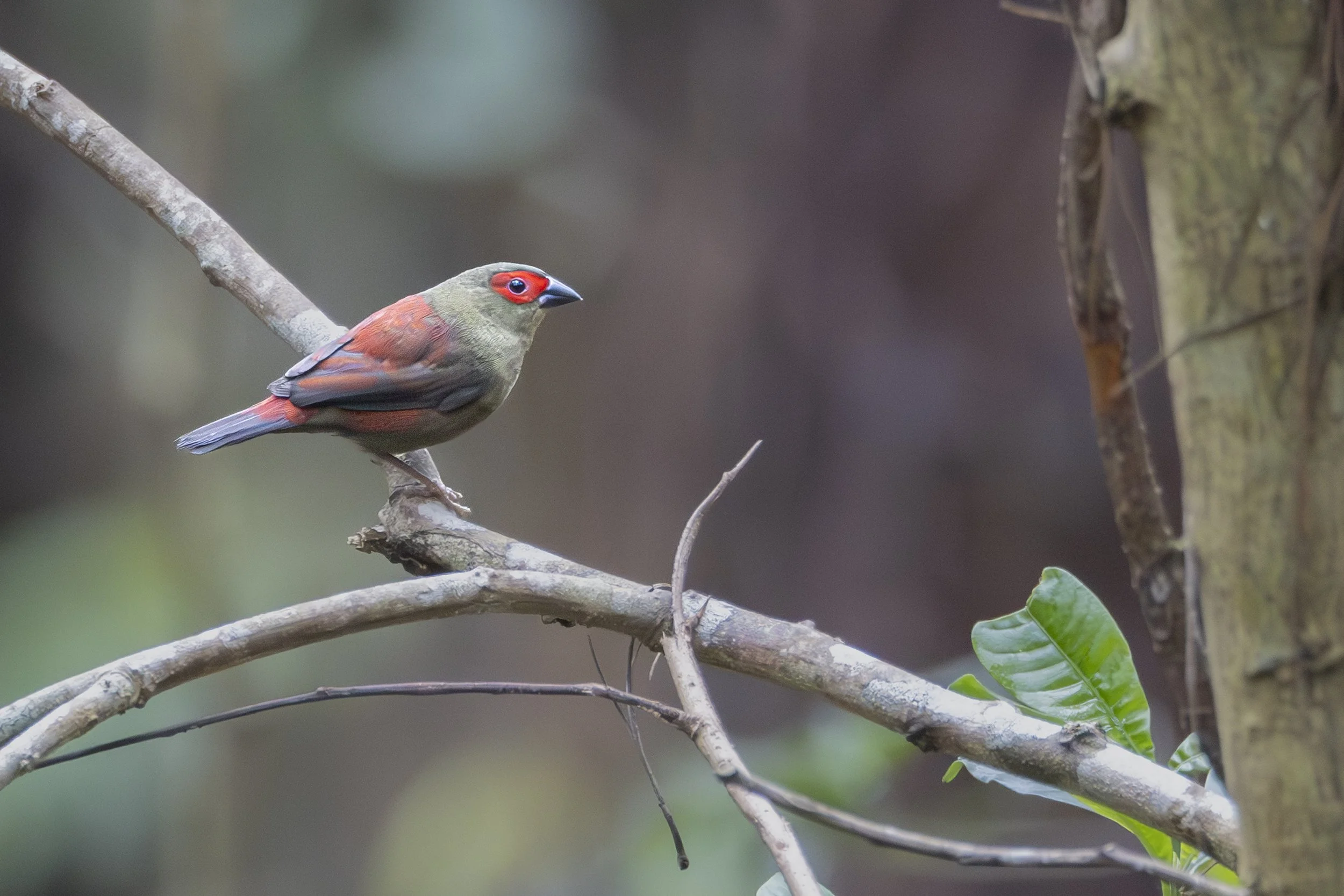
Red-faced Crimsonwing (Cryptospiza reichenovii)
There were also the unexpected and exotic, to us, surprises, such as a Red-headed Bluebill, or a White-chested Alethe. We often heard Tinkerbirds and then on our last day in Usamabara we had a visit from a Moustached Tinkerbird, which to be honest, I not known about before.
It displayed beautifully above us in a clearing in the forest.
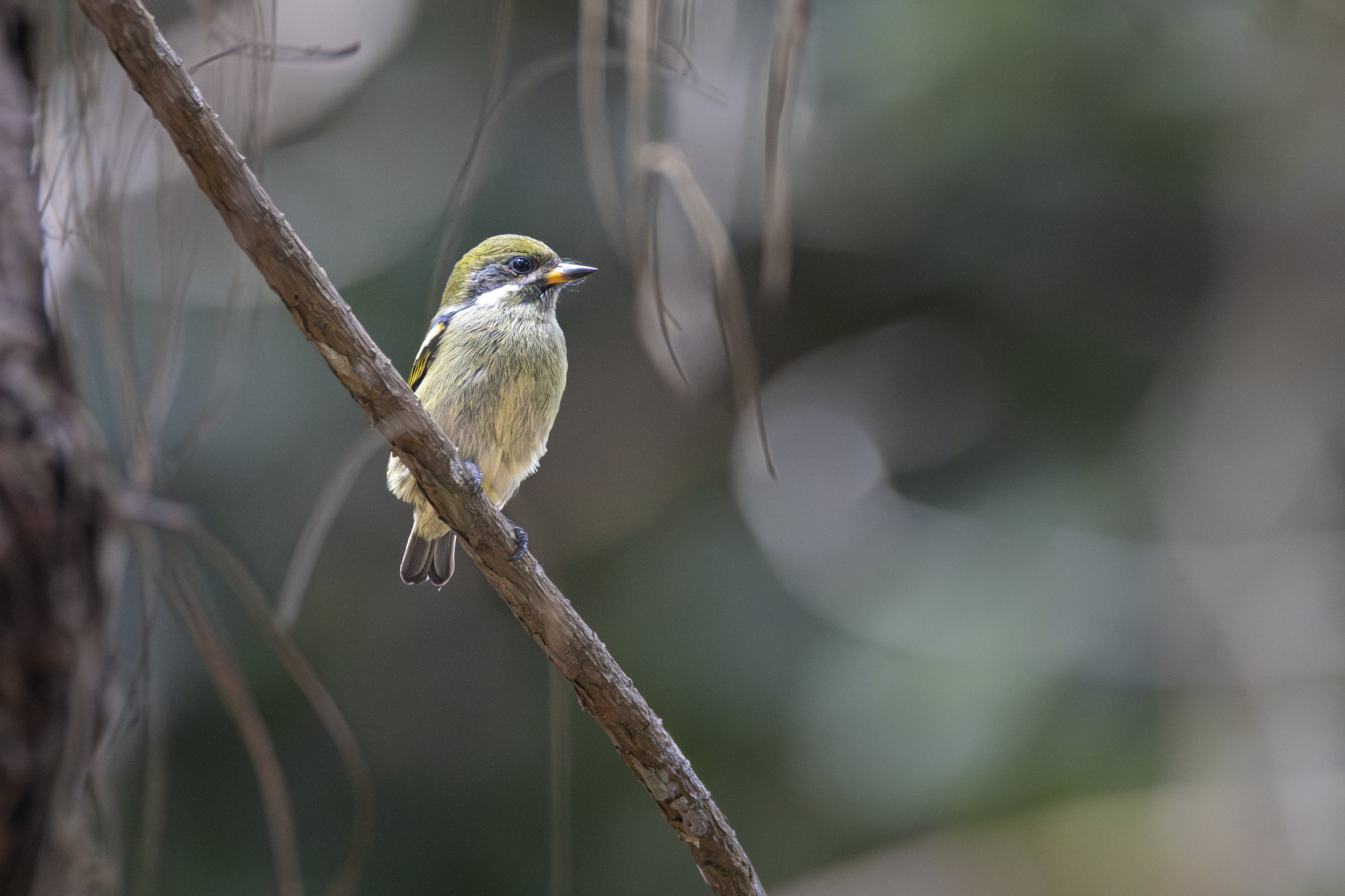
Moustached Tinkerbird (Pogoniulus leucomystax)
There were of course several small forest species that we only heard, or glimpsed sight of, in the tangled undergrowth or very high canopy of the forest. One day in the Magamba Forest an endemic Usambara Akalat suddenly jumped out onto the path to grab a fat grub… and give us a very rare photo opportunity of this very tiny and elusive bird.
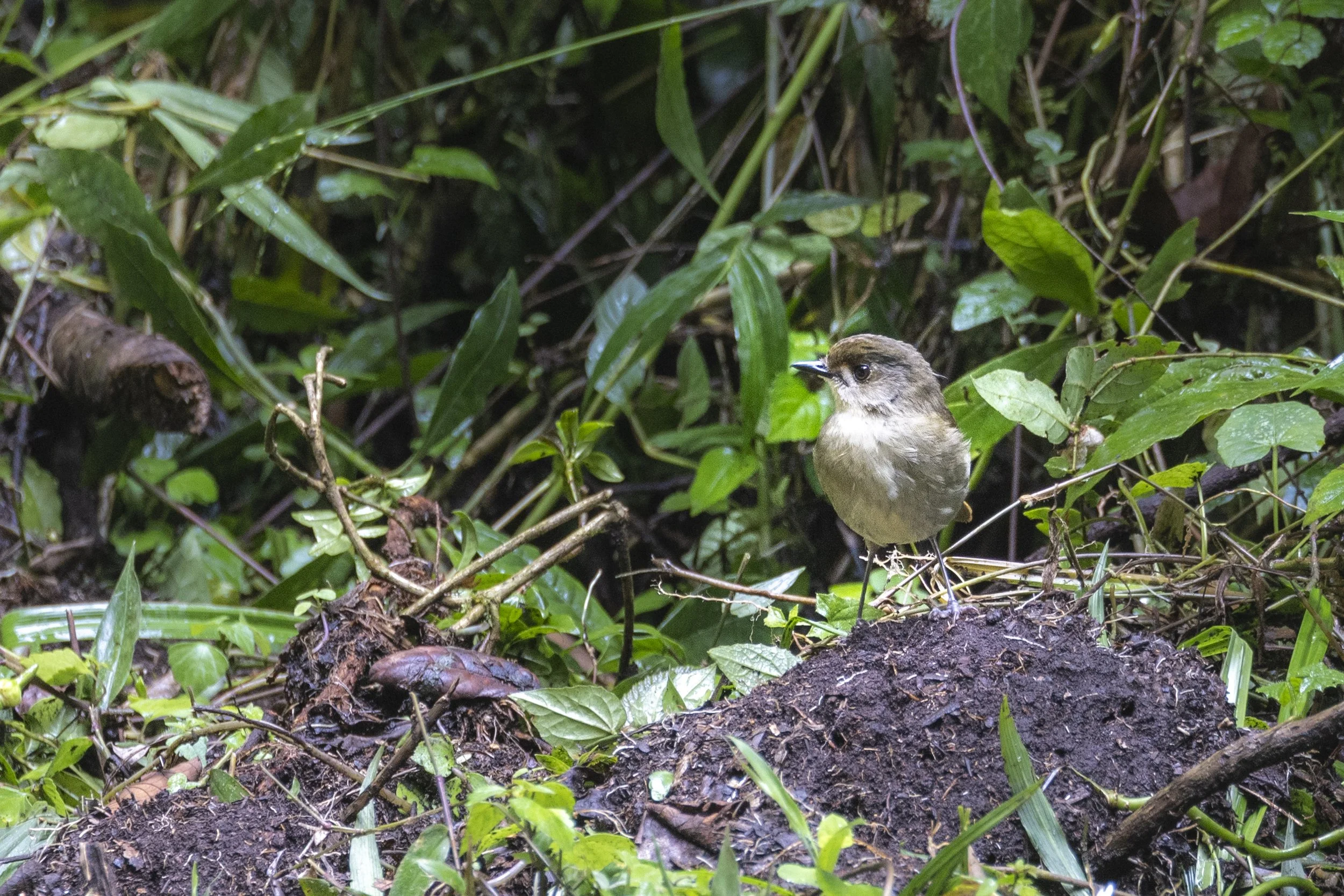
Umsambara Akalat (Sheppardia montana)
The Road back to Arusha
The Eastern Arc Mountains had delivered for us birding, beauty and adventure in equal measure.
Not all of our birding was in the mountains. On our way to and from the mountains we also detoured down several dry country roads, especially towards the Masai Steppes, where the birding was spectacular and also very different. But the habitat and birdlife is so interesting, I will keep those side trips for another birding story on Tanzania.
And after three cloudy weeks in Tanzania, on our last day driving back to Arusha we were finally rewarded with our first view of the summit of Kilimanjaro, appearing majestically above the clouds. A fitting climax to our trip in Tanzania.
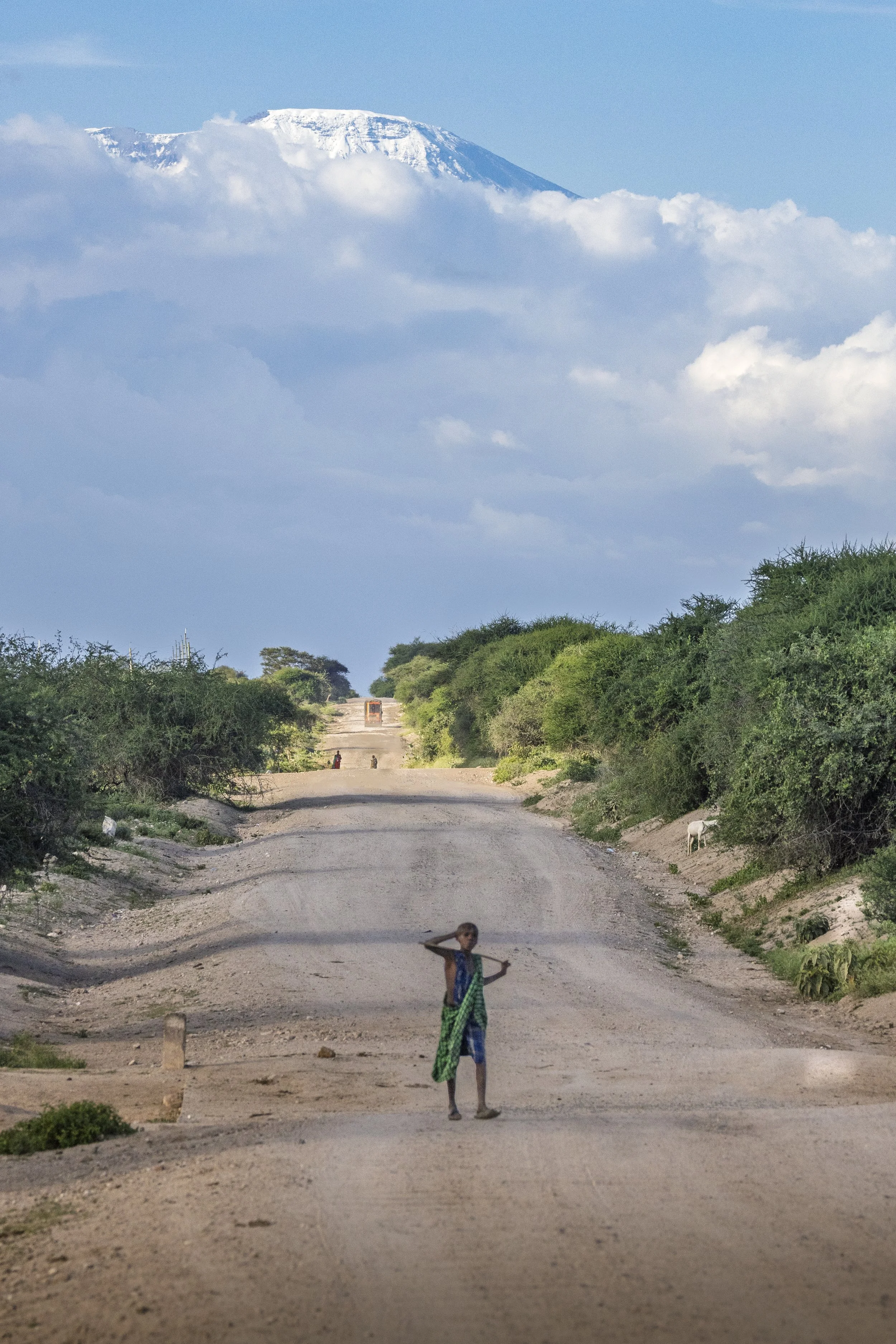
Mount Kilimanjaro looms over a Tanzanian country road
Trip Details
4x4 Rental: Roadtrip Africa info@roadtripafrica.com
Bird guide: Frank Shirima +255 678 186 687
Bookings: Joseph Ndekia +255 754 959 353
The People
One of the special and, perhaps unexpected, joys of traveling in this part of Tanzania it the close contact we had with the local communities and people. Very few places in the countryside have walls or fences, very little is demarcated, everything is interconnected. Even in the forest reserves there are villages high up on the mountains and every day we met engaging and friendly people going about their business, going to school or just walking along the paths.
We made new friends.
