The African Oystercatcher
The African Oystercatcher has a fascinating story!
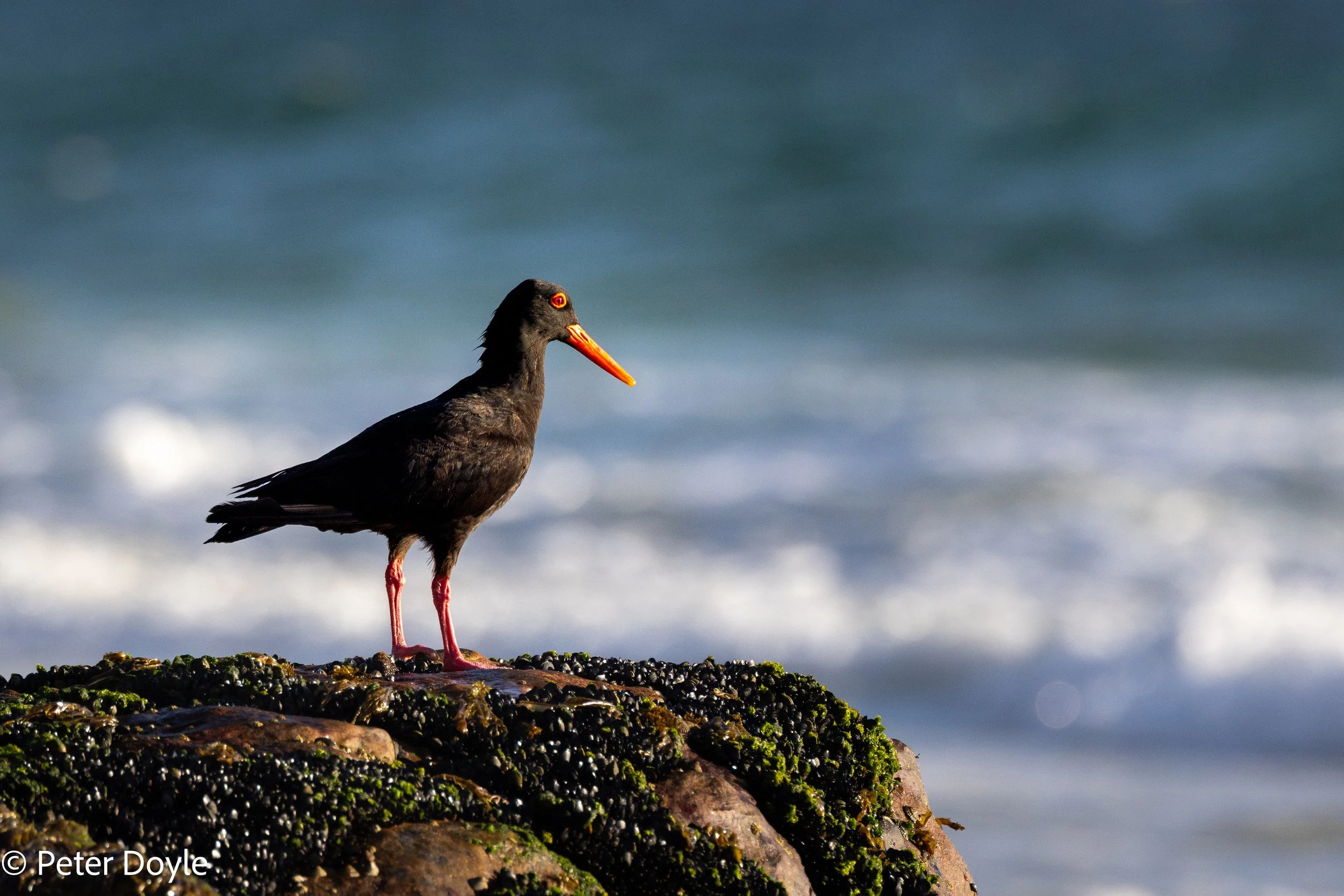
African Oystercatcher (haematopus moquini)
I must confess that the African Oystercatcher is probably my favorite coastal bird.
It is also one of the first birds that really caught my eye and piqued my curiosity about birds.
Not that I don’t like Gulls, Terns, Plovers, Turnstones, Sanderlngs, Whimbrels and the rest; but there is something very appealing about the African Oystercatcher … its looks, its behavior and its story.
And it can also be a challenge to photograph!
Family and Genus
The Family of Haematopodidae has a single Genus of Haematopus. This Latin name is derived from words that mean “blood-red legs”. Twelve species of Oystercatcher are found worldwide, around the coasts of all the continents and islands, except for the polar regions.
African Oystercatcher (haematopus moquini)
The African Oystercatcher is endemic to southern Africa, breeding along the coast in South Africa and Namibia, with vagrants occurring in both southern Angola and southern Mozambique.
Identification and Behaviour
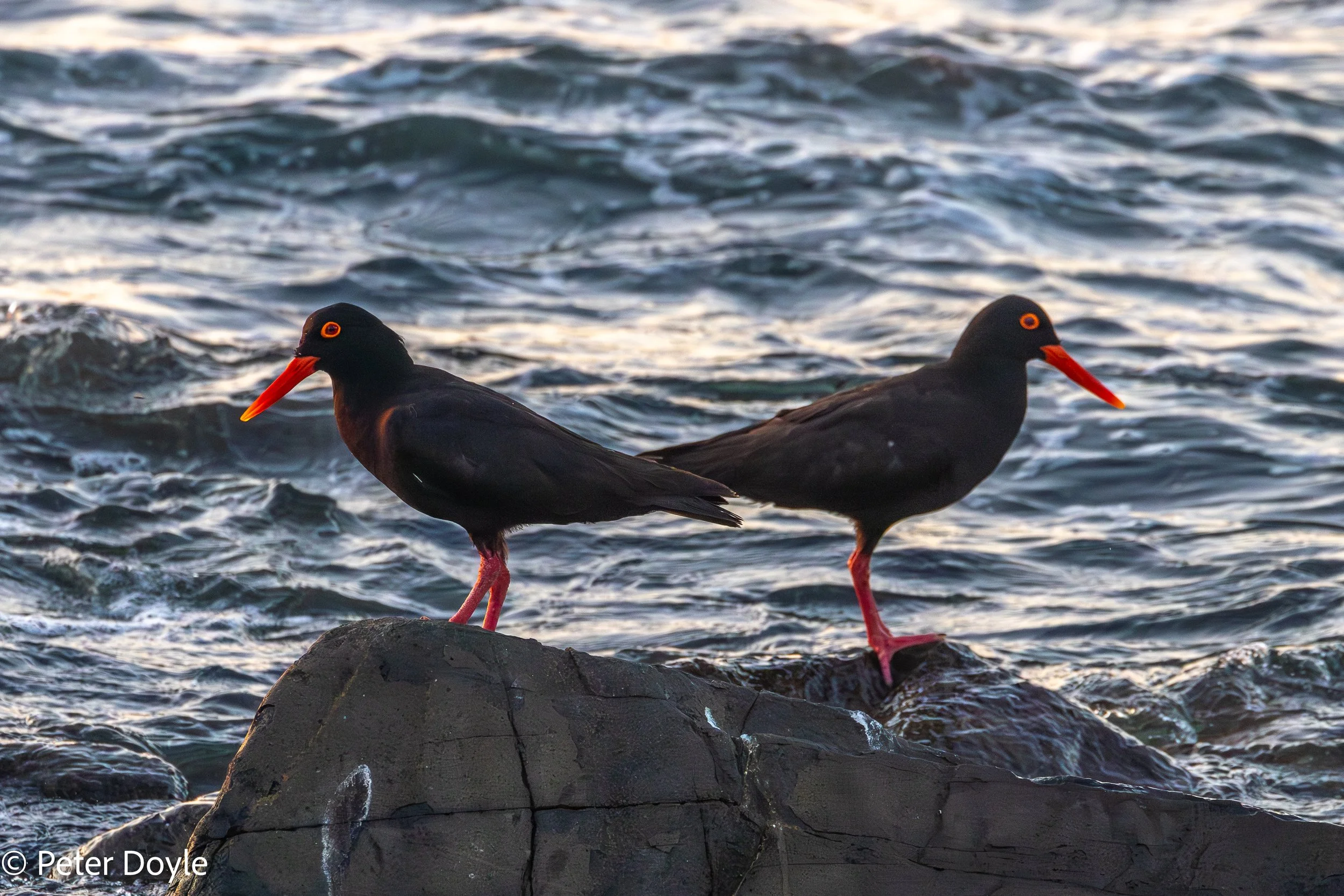
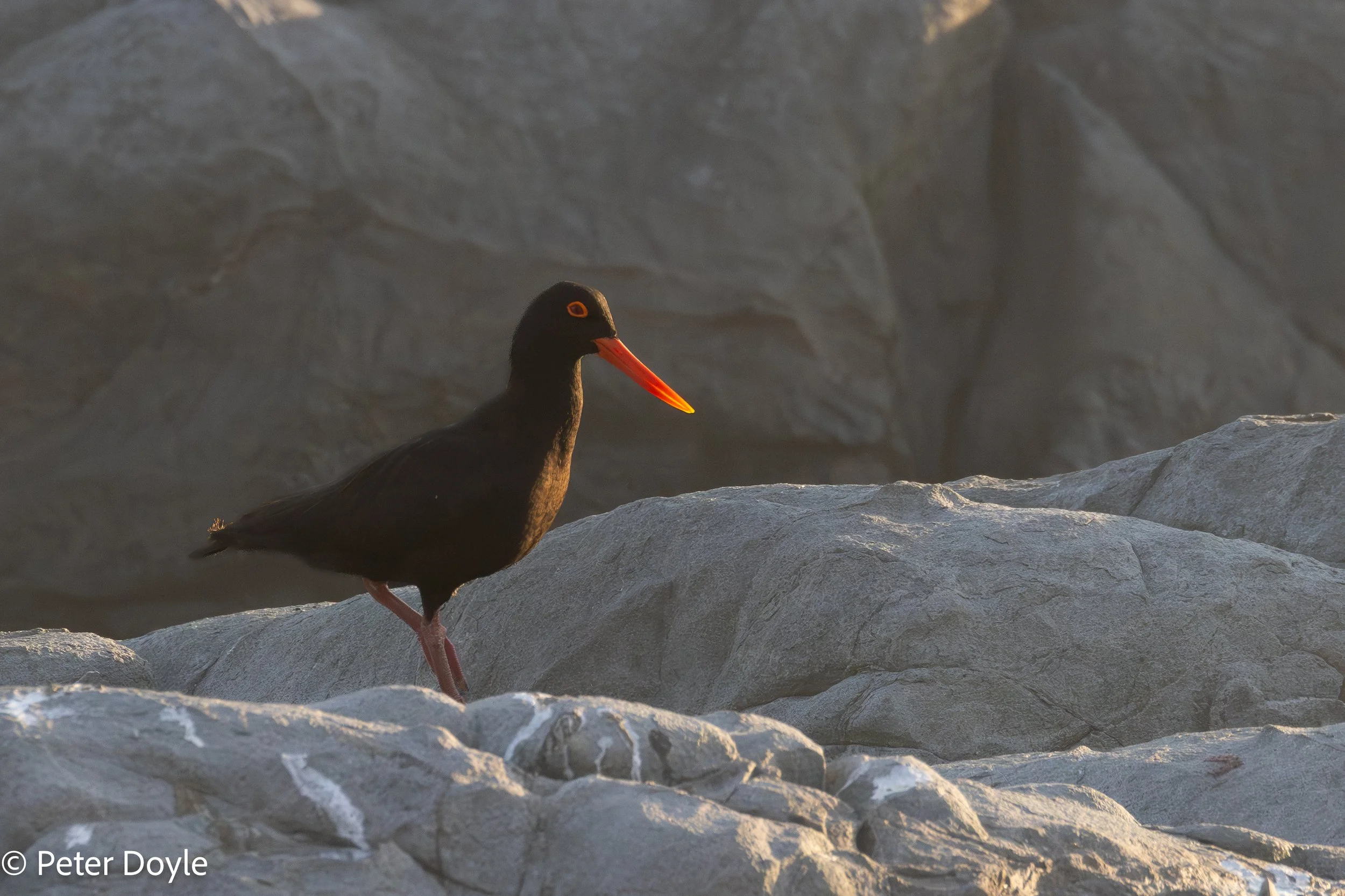
The African Oystercatcher is unmistakeable. It is a relatively large, robust, upright, noticeable, shore bird. Its plumage is uniformly black, with a striking red-orange bill, eyes and eye-ring and pinkish-red legs and feet. The only comparable bird is the European Oystercatcher (haematopus ostralegus), which is a vagrant Palearctic migrant from Europe, and sightings are seldom recorded in southern Africa.
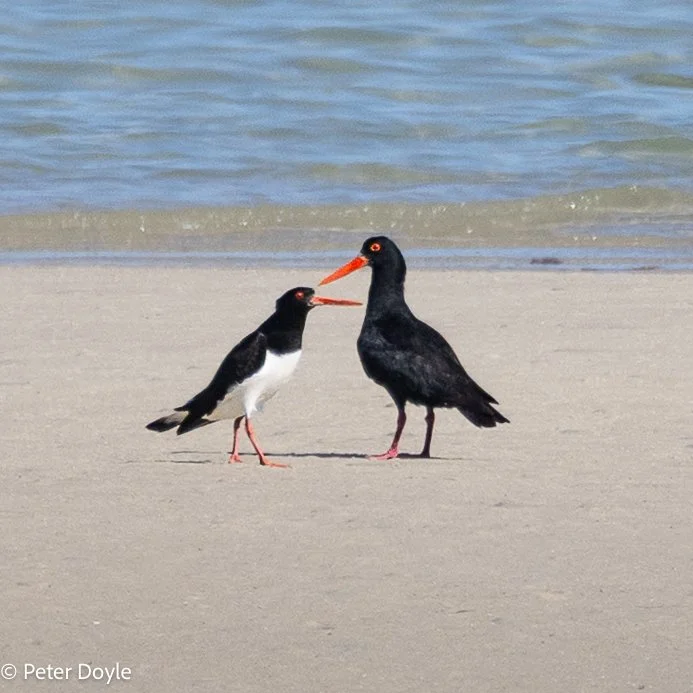
Comparing the European and African Oystercatchers
The vagrant European Oystercatcher is pied and smaller, and so cannot easily be confused with the African Oystercatcher.
These two species were photographed together at the West Coast National Park, South Africa.
African Oystercatchers are very tightly associated with the shoreline. They are always found feeding on the rocks, particular those rocks exposed by the receding tide, or walking along the beach just near sea, always in the intertidal zone. The only time they will go above the high-tide mark is when breeding or raising chicks.
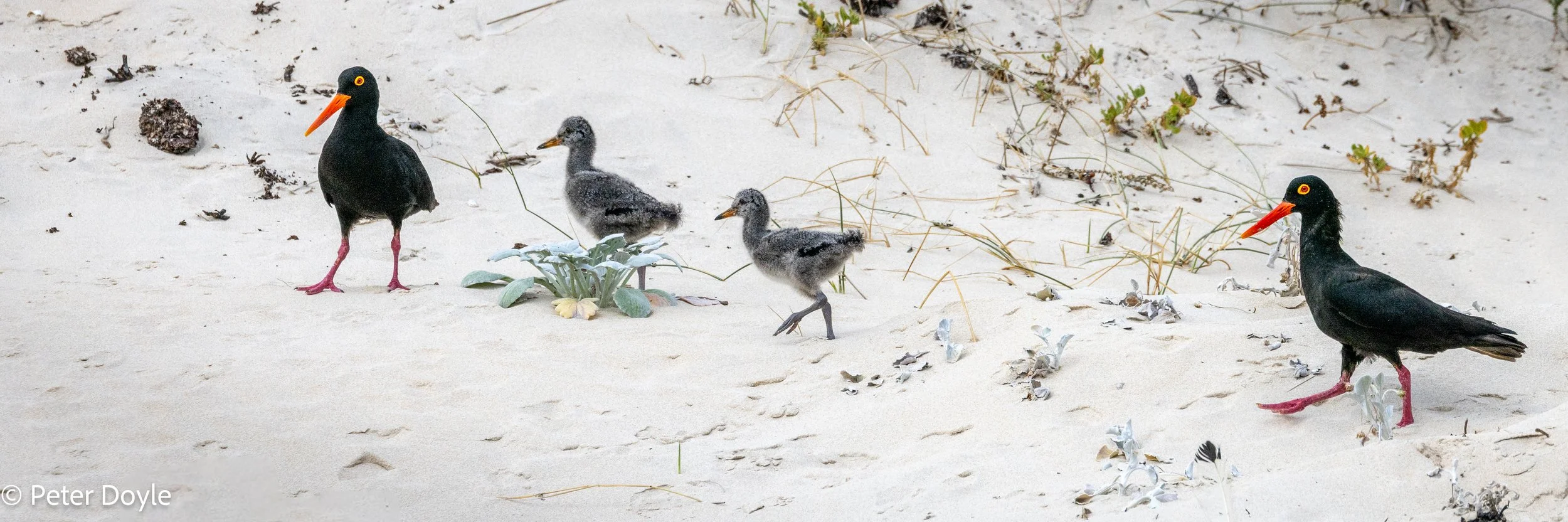
Adult Oystercatchers shepherding their two chicks up to the safety of the dunes.
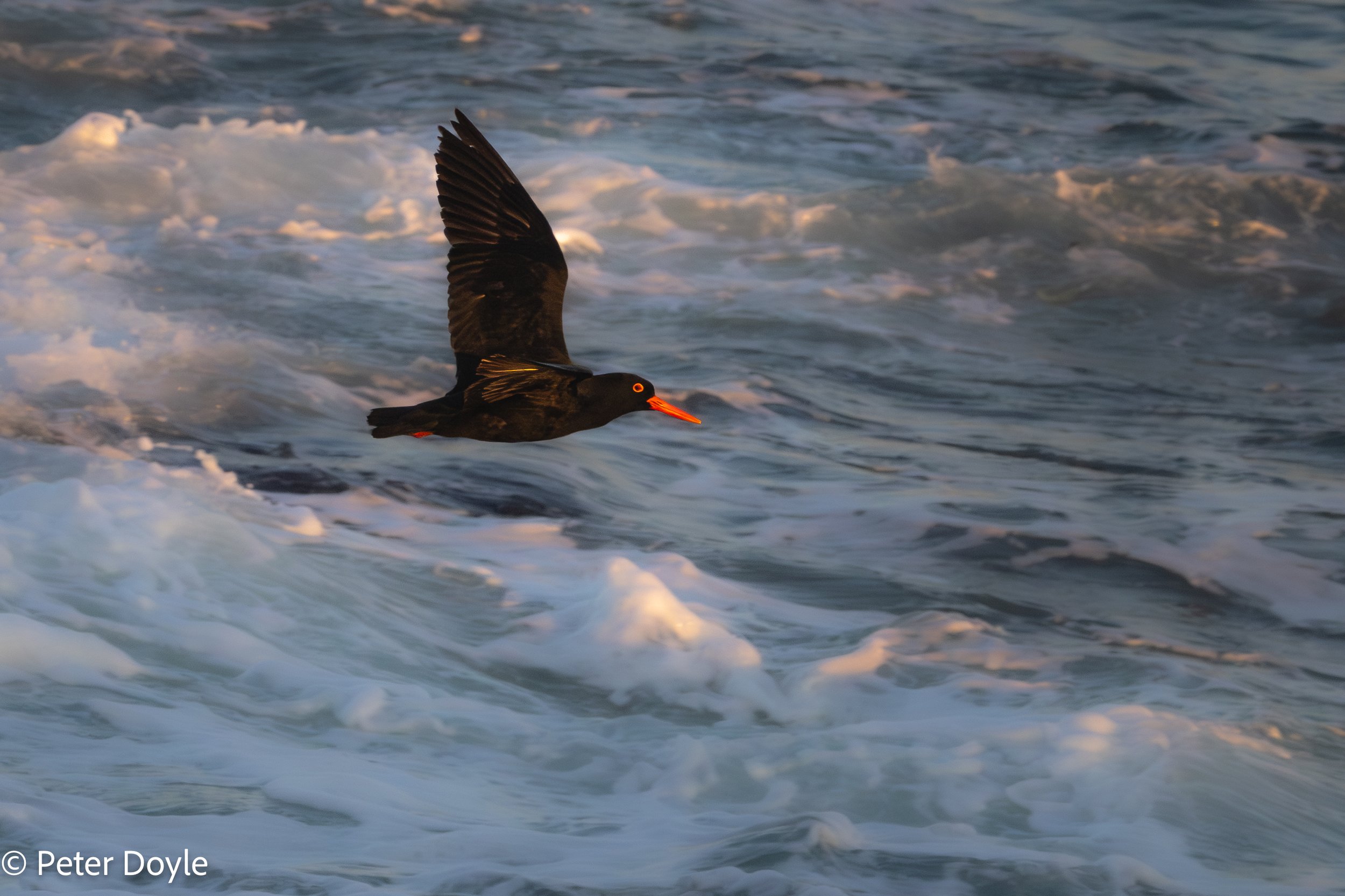
They look strong in flight - often calling to their mate in flight - but they seldom fly far; only perhaps to the next beach.
Their call is a piercing, unmistakable “kleepee-kleepeek-leepee-kleepee” … as describe in Robert’s! We often hear this call from our home near the beach, especially in the evenings when the sound travels best. It is a lovely, clear call!
Although Oystercatchers would also feed on oysters, if available, in southern Africa they feed primarily on mussels and other bi-valves, limpets, whelks and crustaceans. Their sharp and strong bills allow them to dislodge and then pierce the shells, breaking through to eat the flesh inside.
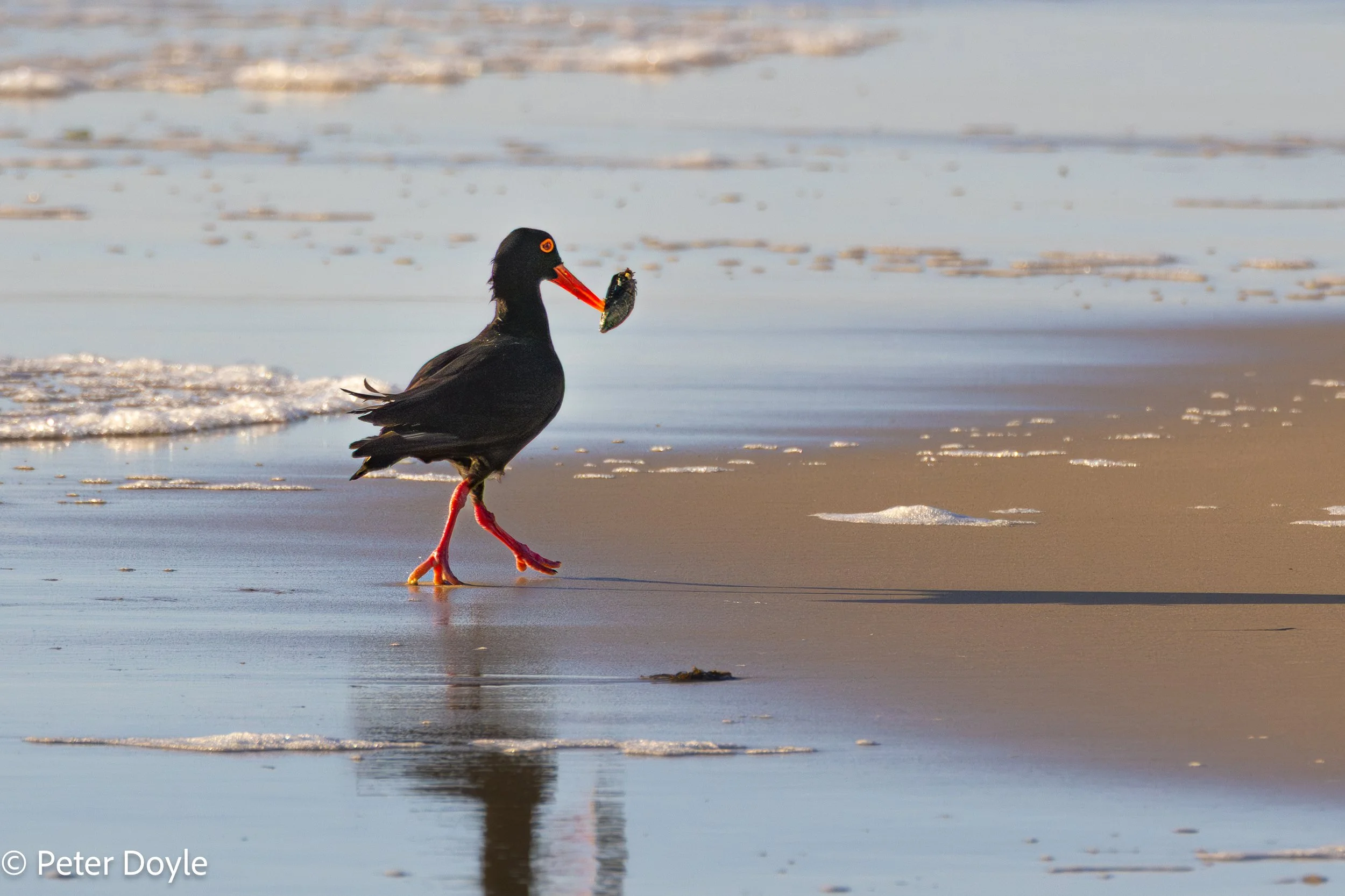
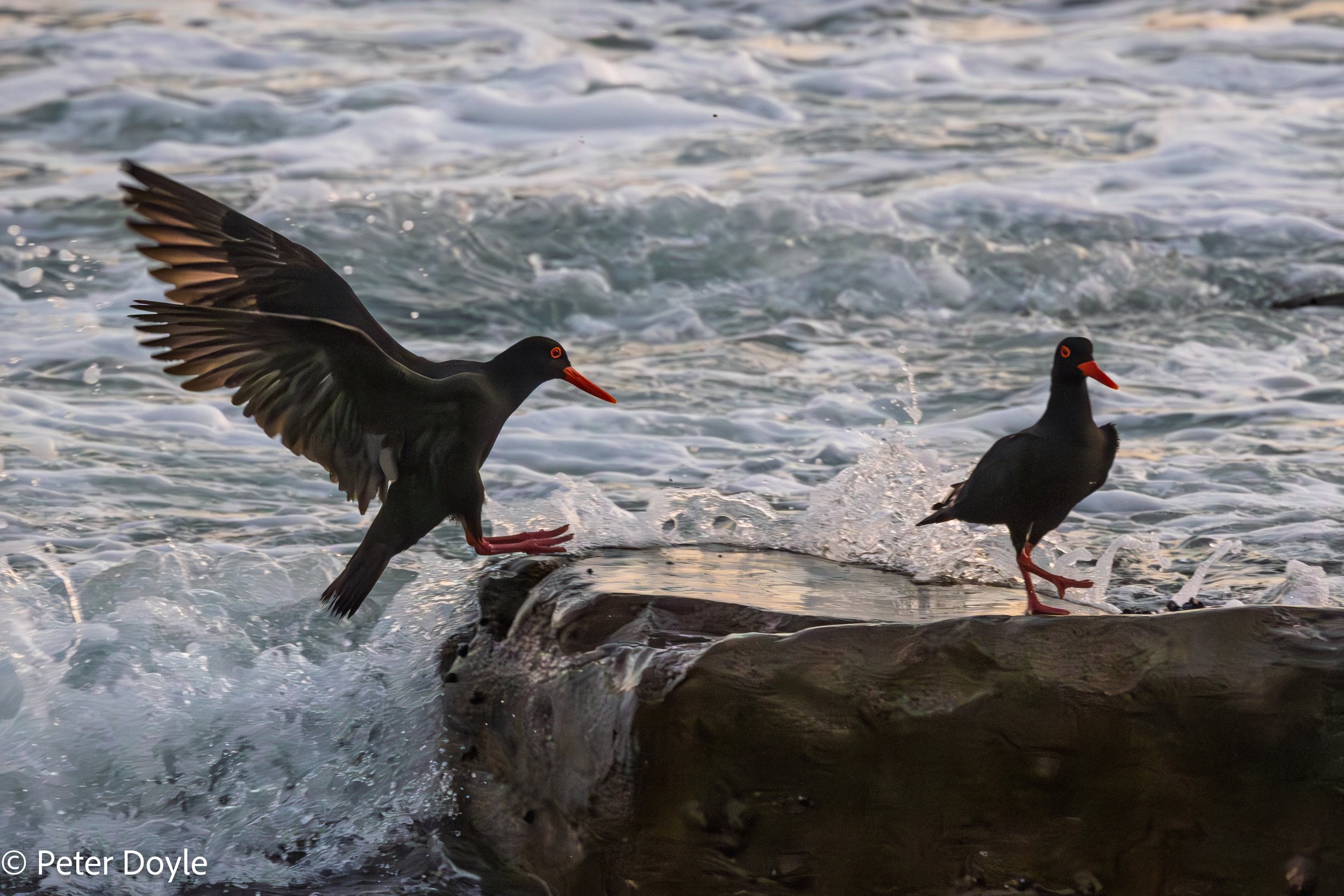
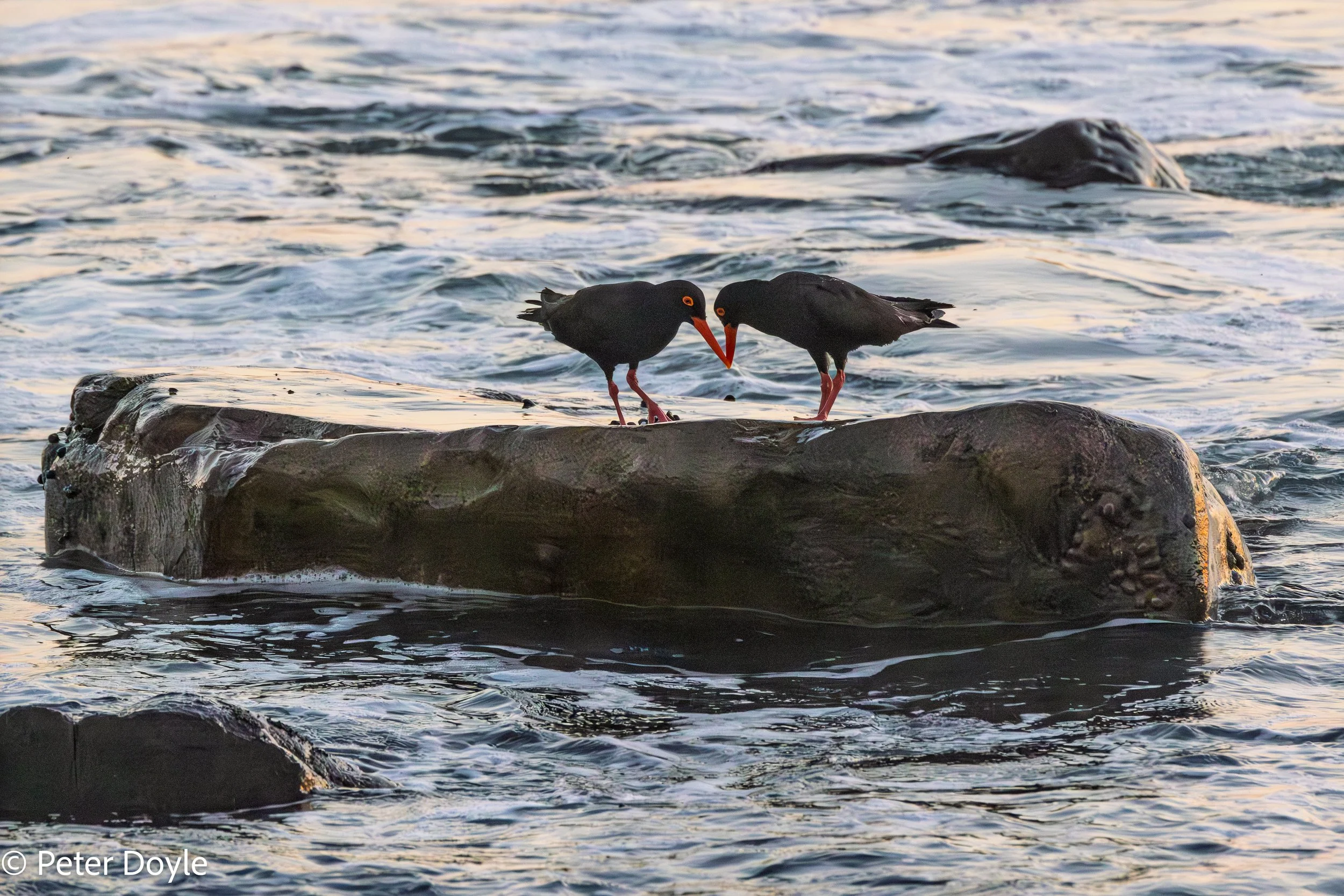
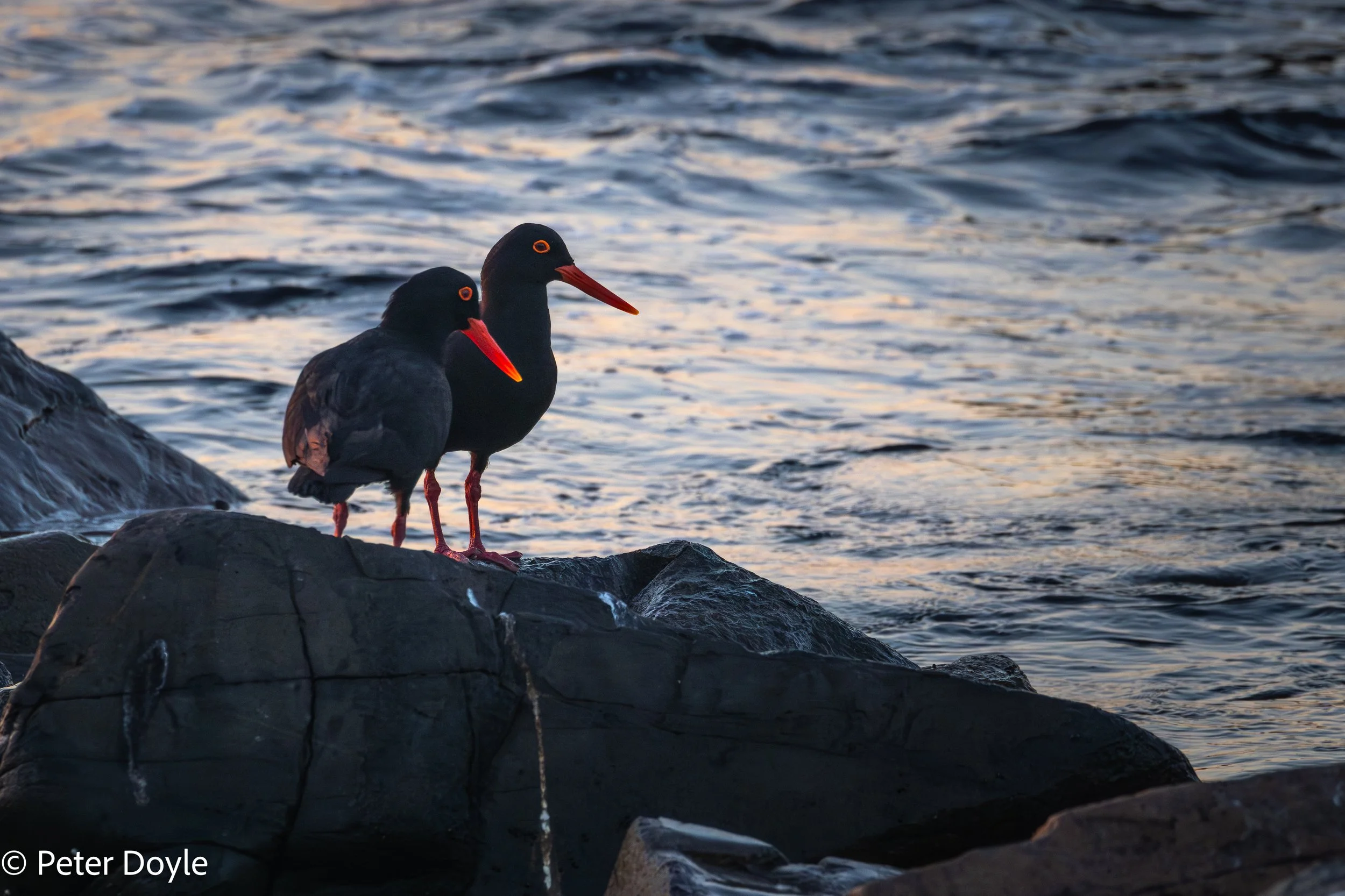
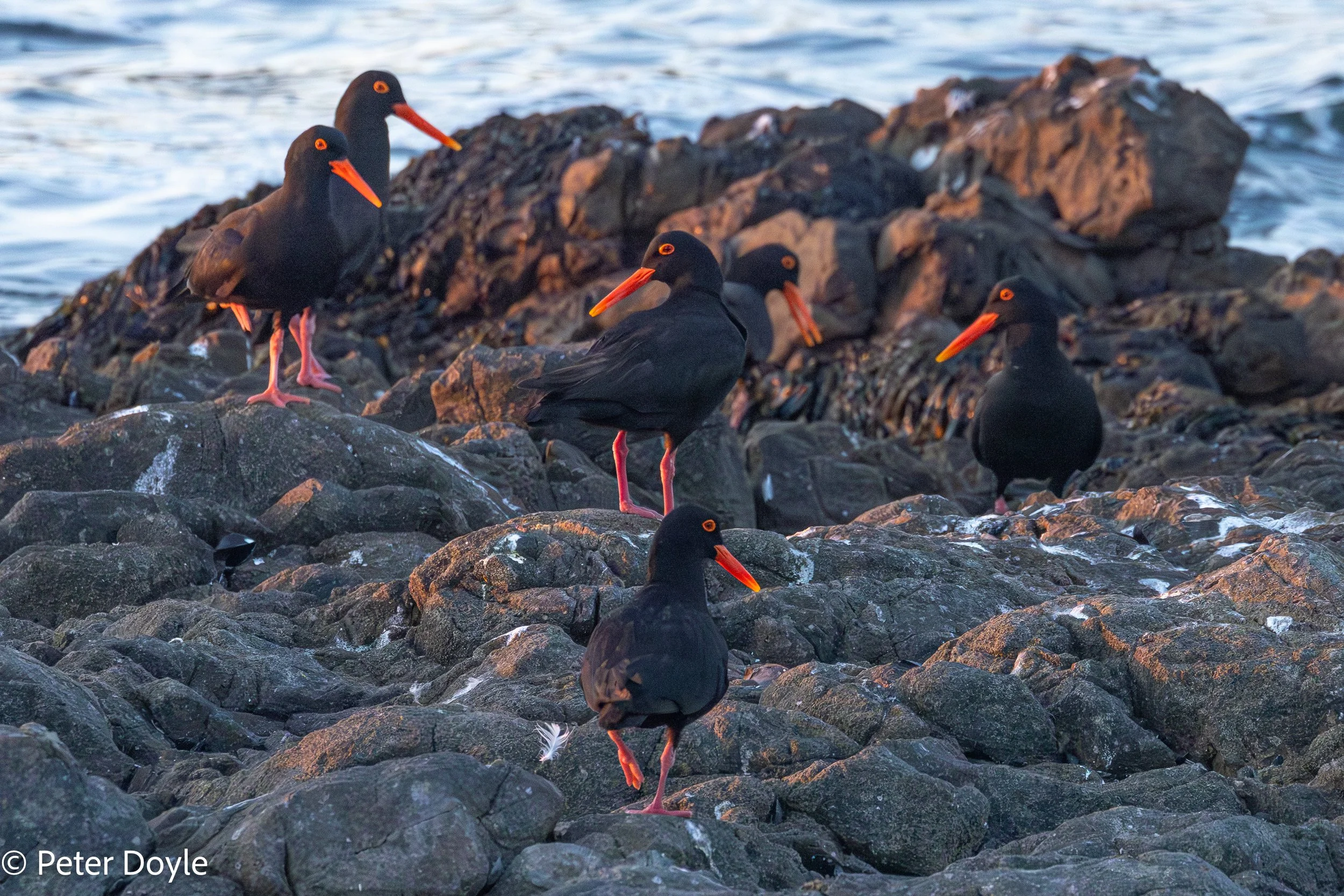
We often see the Oystercatchers on the rocks until dark and they seem to continue feeding into the night. You see them most often feeding in pairs, although in the late evening larger numbers get together to roost for the night.
Conservation
African Oystercatchers are one of the early birdlife conservation success stories. In the early 1980’s the African Oystercatcher was considered Near Threatened on the IUCN Red Data List of Threatened Species. A team led by Prof Phil Hockey surveyed the population and found that there were less 5000 individual birds in existence.
The FitzPatrick Institute of African Ornithology, together with Birdlife South Africa, subsequently launched the Oystercatcher Conservation Program (OCP). One of the major achievements of the OCP was to get government and other NGOs to agree to a ban of recreational vehicles on all beaches in South Africa. This strong action significantly improved the breeding success rate of the African Oystercatchers.
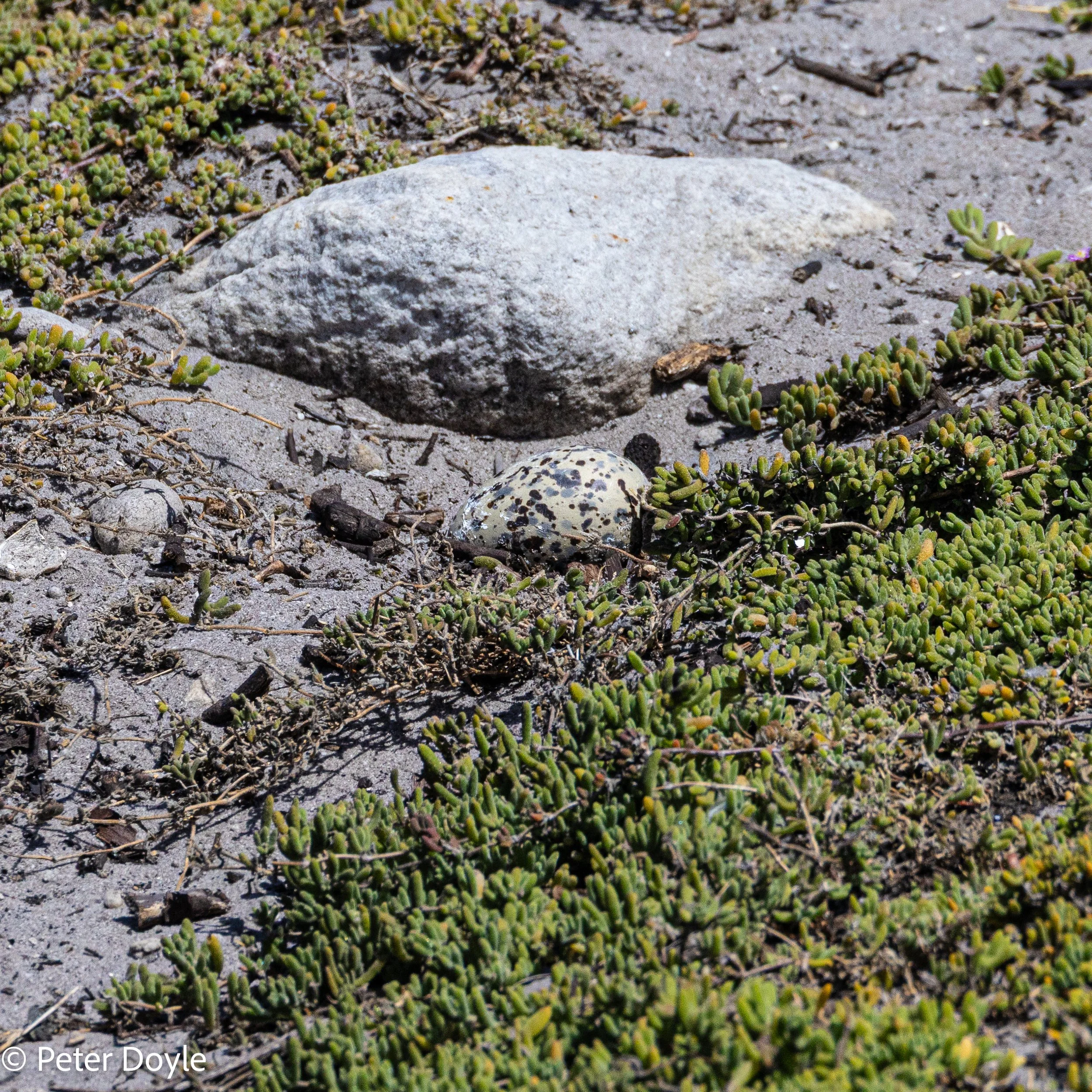
A single African Oystercatcher egg in the nest. Females normally lay only one to two eggs.
The nest is an open scrape on the sand-dune above the high-water mark. The egg is highly camouflaged to blend in with the surrounding rocks. And clearly vulnerable to any off-road vehicle.
The Oystercathers have also benefited from the eradication of alien predators on some of the off-shore islands, where it is estimated that over 30% of the breeding occurs. There has also been an increase in marine protected areas and guano scraping on local islands was also stopped in the 1980’s.
Ironically, one of the major contributions to their survival has been better feeding, and as a result better breeding, caused by the spread of the alien Mediterranean mussel in the 1990’s. The Oystercatchers are helping to keep these aliens in balance.
To highlight this success, but also to encourage the continued conservation actions, Birdlife South Africa named the African Oystercatcher the Bird of the Year 2018. The population is estimated at around 7000 birds today and the IUCN and downgraded its status to Least Concern. Proof that targeted conservation actions do work.
Photography & the African Oystercatcher
This bird is so striking, that on seeing it, any photographer will grab their camera to take a photograph. But here the challenges begins. These birds are very alert, and a direct approach will chase them off very easily, with a quick flight to the other end of the beach the likely result.
On the other hand, especially when feeding or preening, they can be confiding if you just sit and take no interest in them initially. Sit quietly and they will often approach nearer, going about their business. Especially on the beach or the rocks, I find that sitting low down can sometimes get you very close to the Oystercatchers.
Taking a good photographs seems easy, initially, with the crisp black plumage offset by the startling reds and oranges of its bill, eyes, eye-ring and legs. But the first challenge is accurate focus, as autofocus will just not work on the plumage, because there is too little contrast. So focus therefore must be on the eye or the bill.
The real challenge, though, as always, is light. Both the quality of light and the direction of light. An all-black bird is all very well, but it can be … just boring! The best light is not harsh or direct, otherwise the black plumage shows little or no contrast. And trying to fix the contrast in post-processing does not work … I have tried.
On the other hand, when the light is just right, magic can happen.
It is a very enjoyable bird spend time with, just observing its behaviour, watching them near the waves breaking into white foam, or walking on the green-black rocks, contrasting with the sea behind.
And the rising or setting sun always provides a beautiful backdrop.
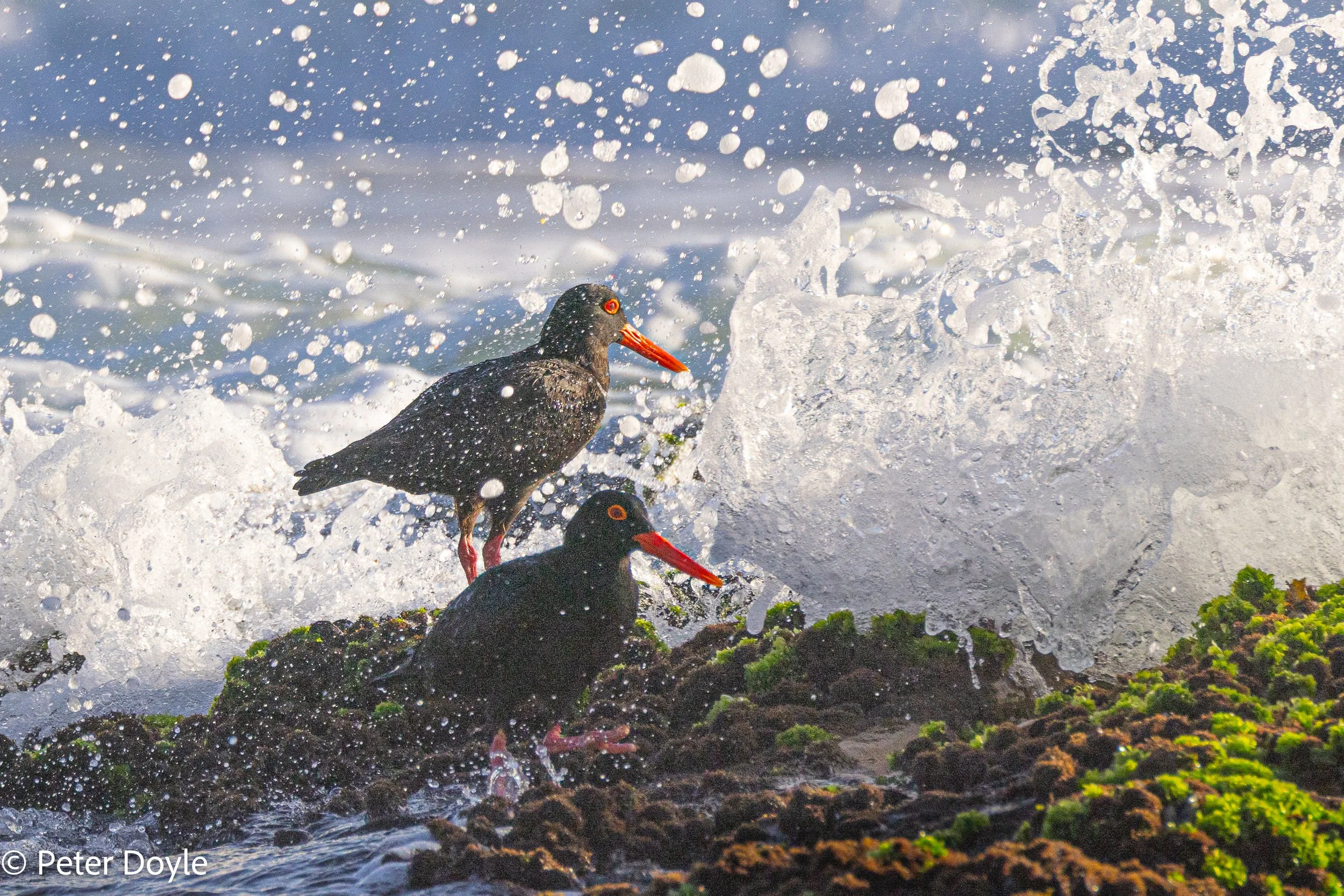
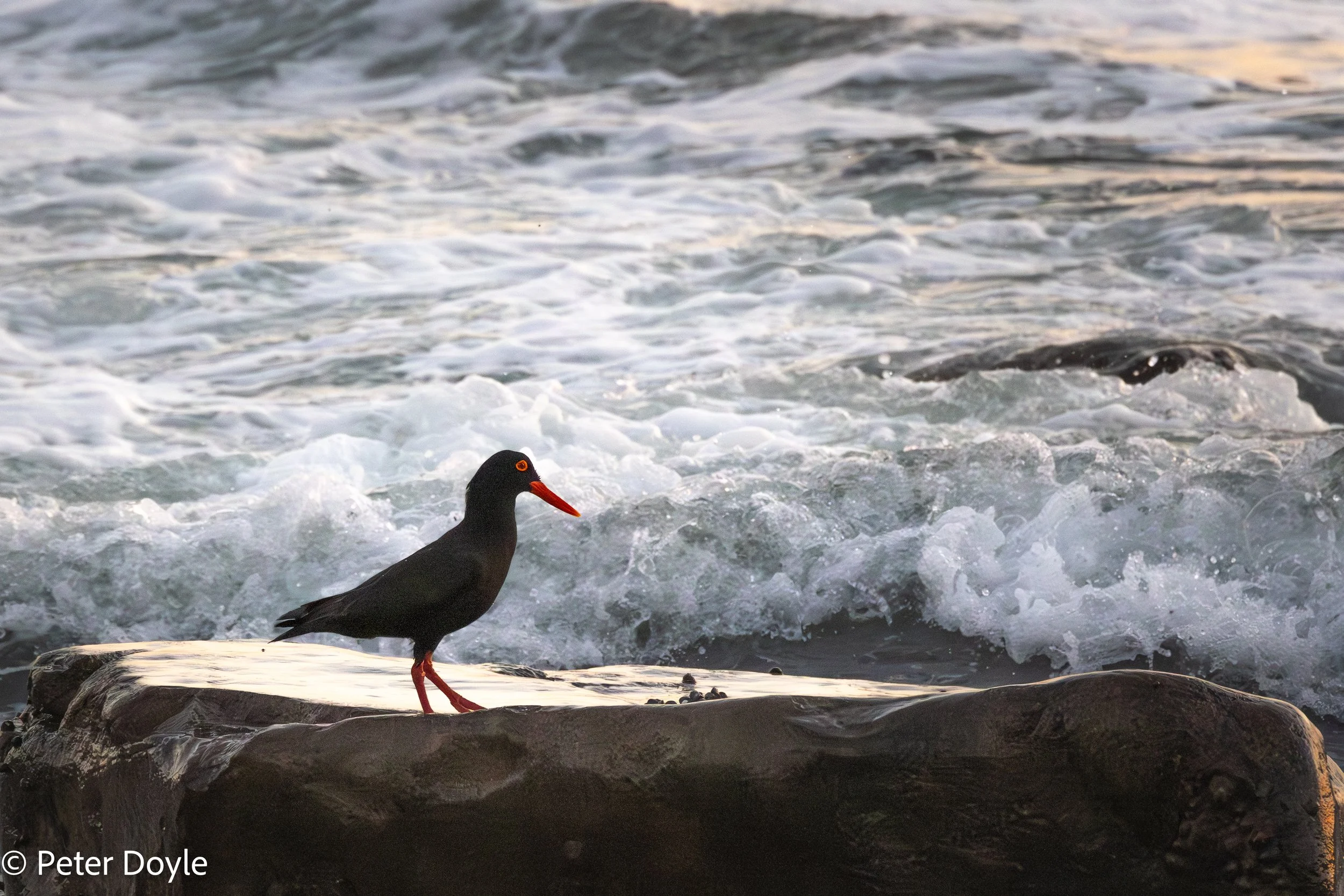
Watching and photographing the African Oystercatcher is very rewarding. All the more so, because we know that it has been a major conservation success story in southern Africa.
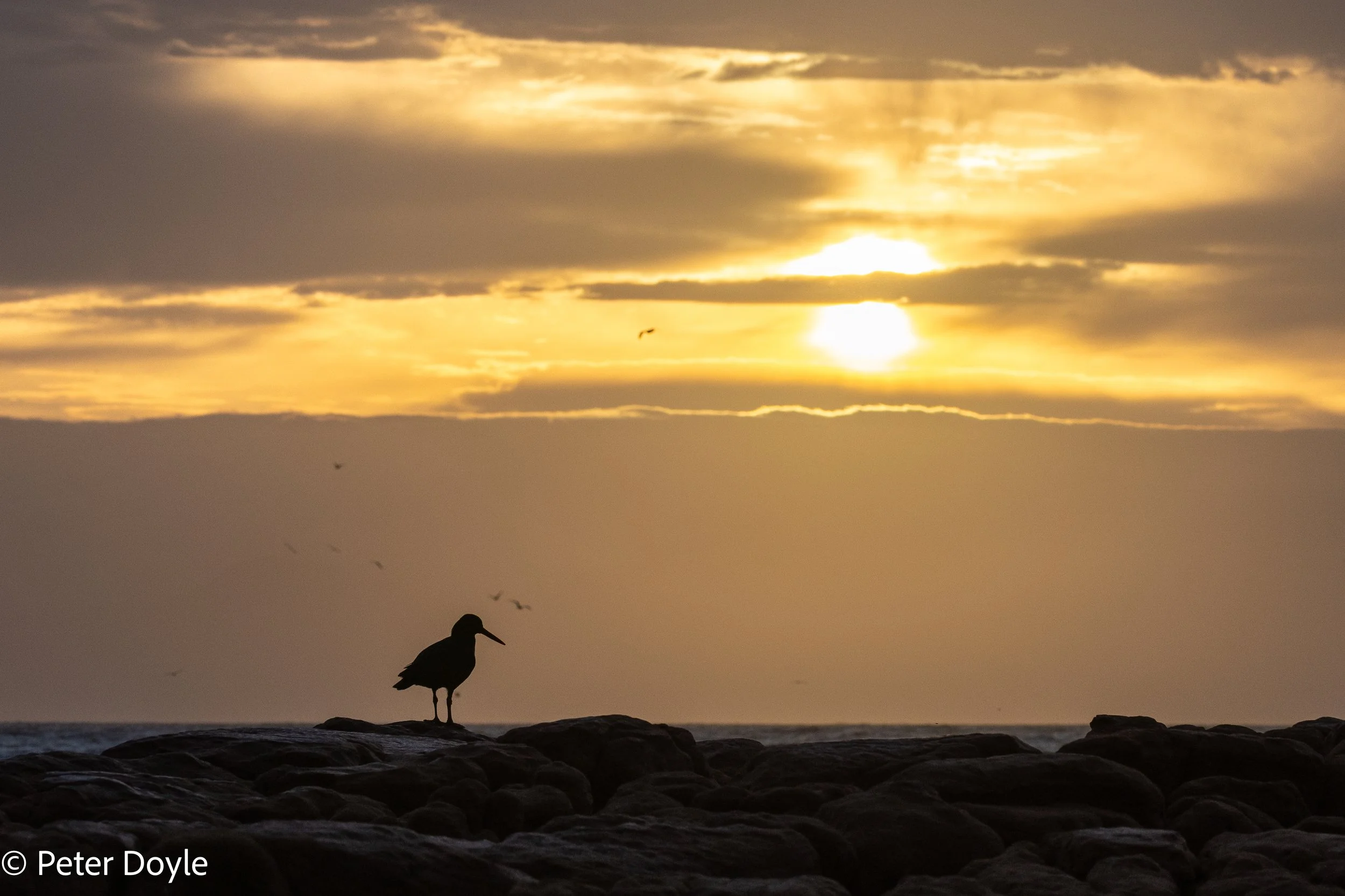
Read more about the conservation story here:
https://www.birdlife.org.za/bird-of-the-year-2018/
