The Cape Rockjumper … and a perfect day birding
Cape Town has beautiful autumn days … and fantastic bird habitats
After weeks of early winter storms, wind and rain, the warm sunny days are perfect for a walk in the mountains; and for photographing birds. Cool days, wind-free, clear skies and, most importantly for photography, no heat haze.
This last point matters for photographing Rockjumpers, because they are often best seen in the late morning and even in the middle of the day, when at other times of the year, the wind and heat haze destroys any semblance of sharpness in the images.
We are also very blessed in the Cape to have mountain ranges, covered mostly in Fynbos, coming right down to the sea, creating a unique habitat for birds, many of them endemic birds.
For example, another local endemic is Victorin’s Warbler (Cryptillas victorini). A beautiful and colorful warbler, with a striking call. It is endemic to the Western Cape of South Africa, because it is uniquely found only in the Cape Floral Kingdom and only on the south-facing slopes of the Cape Mountains.
But that was not our target bird today. We were after the Cape Rockjumpers.
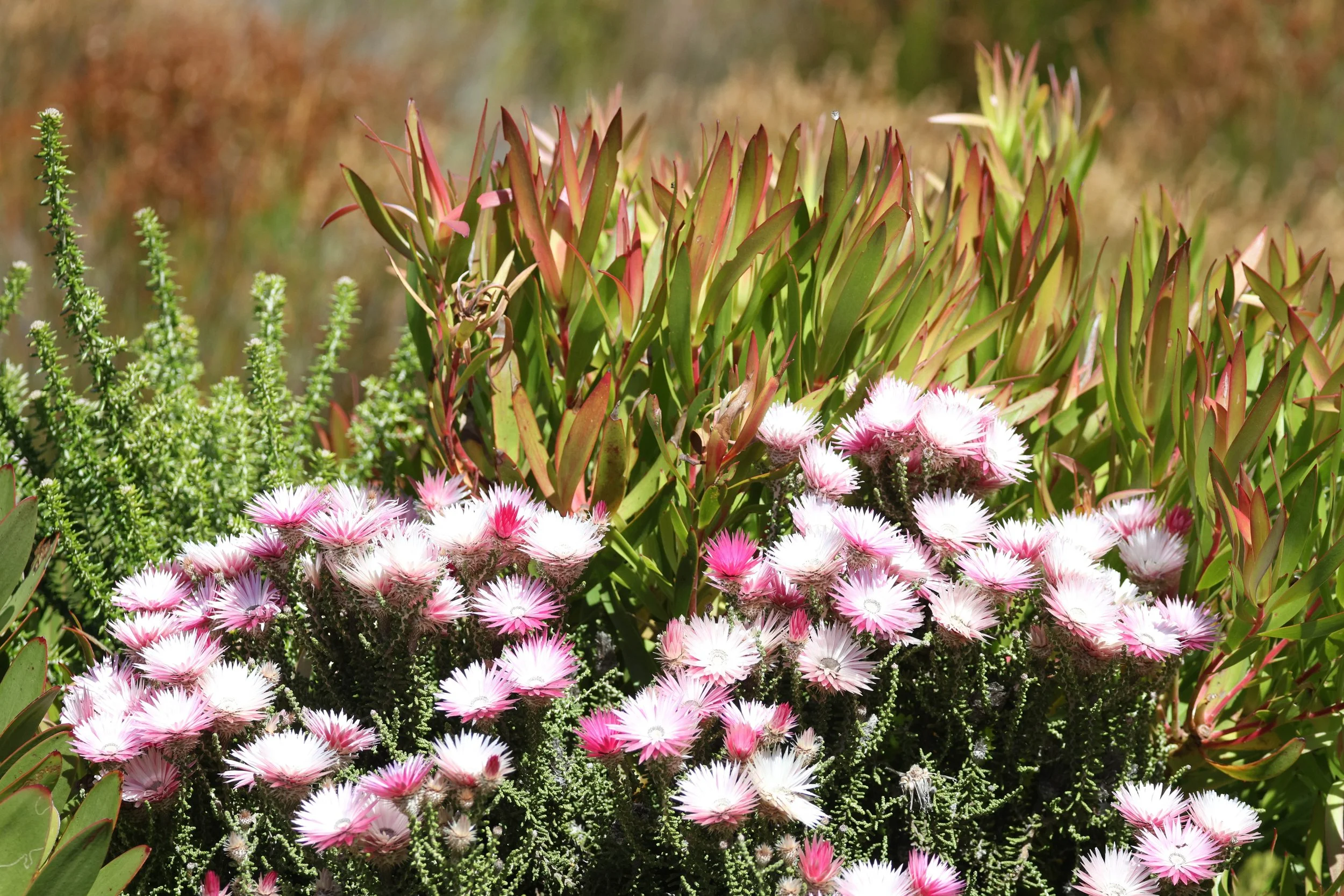
The Cape Floral Kingdom is unique
Cape Rockjumper
We (Ellen and I, of course) were going looking for Cape Rockjumpers, (Chaetops frenatus), another Western Cape endemic. The only other member of this Chaetops genus is also found in South Africa, the Drakensberg Rockjumper (Chaetops aurantius), but those are only found in the Drakensberg mountains, far to the north in South Africa.
In 2021, the Cape Rockjumper was Birdlife South Africa’s “Bird of the Year”. This was in recognition of its endemism but also to bring to attention its Near Threatened status on the Red List of the IUCN (International Union for Conservation of Nature).
Monitoring the Cape Rockjumper, being so range and habitat restricted, is also a useful indicator of the health of their habitat itself. In this case, it is mountain Fynbos, a key part of the Cape Floristic Region. Trends over the last 25 years unfortunately show declining records of this bird, as reported by the South African Bird Atlas project. The biggest threat seems to be encroaching alien vegetation; but that is a topic for another day.
Today’s trip was planned around photographing this beautiful and interesting bird.
So, we went to Rooiels, which is on the Cape coast of False Bay, just where the bay heads out into the Atlantic Ocean and where the steep mountains around plunge down towards the sea. But there are not many sea-cliffs here, as the mountains suddenly ease their descent into the sea, and end in long rocky slopes covered in Proteas and Fynbos. This is the perfect habitat for the Rockjumpers.
The high mountains mean that the slopes are in deep shadow in the mornings and the Rockjumpers are more active as the sunshine hits the slopes in the late morning, so we planned arrive later in the morning.
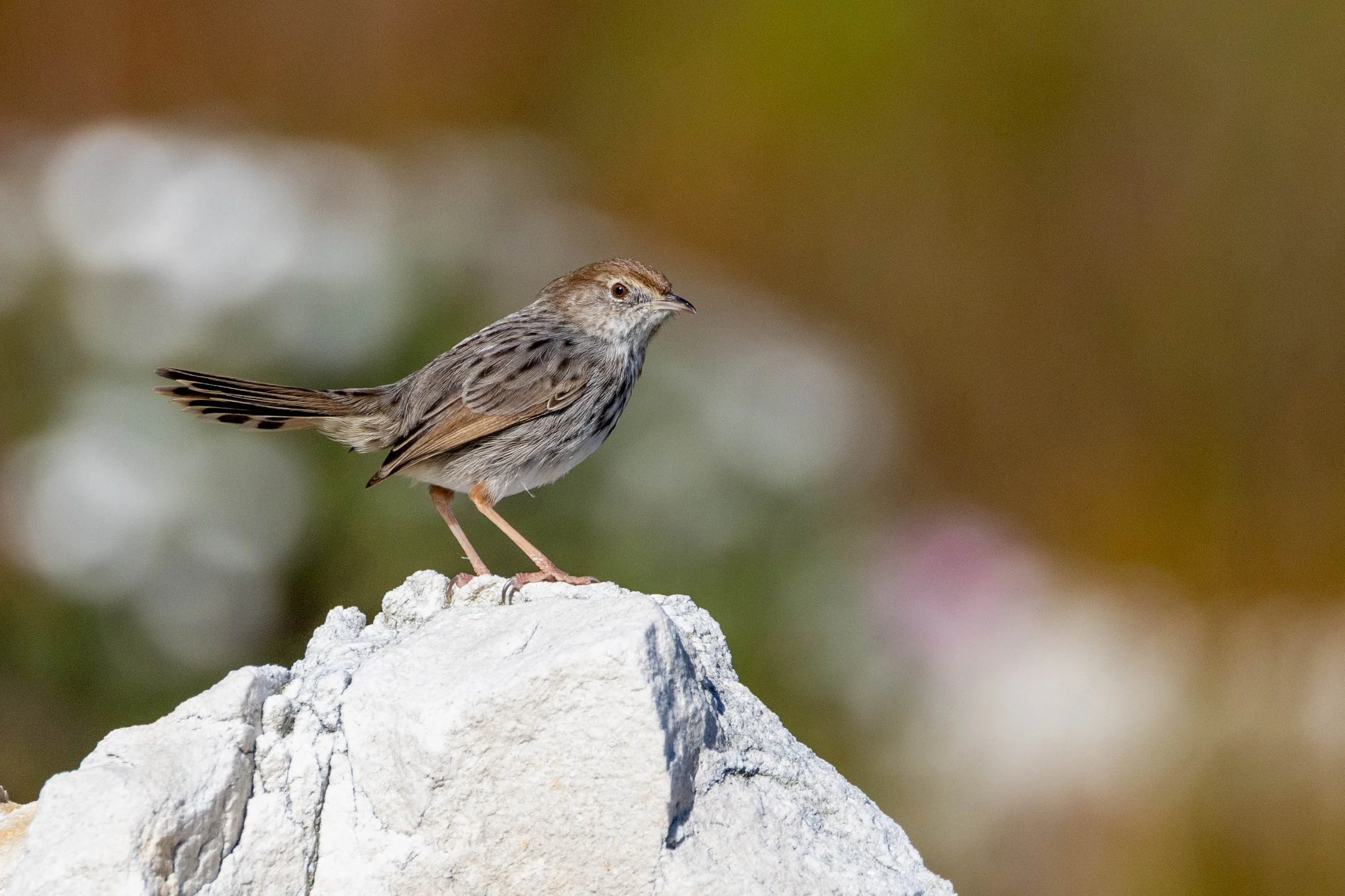
As we wandered down the rocky track, we saw plenty of bird activity. This included a Lesser Kestrel, Familiar Chats, Cape Bulbuls etc. Most noticeably the Orange-breasted Sunbird (male and female show below) and a Cape Rock Thrush and Grey-backed Cisticola.
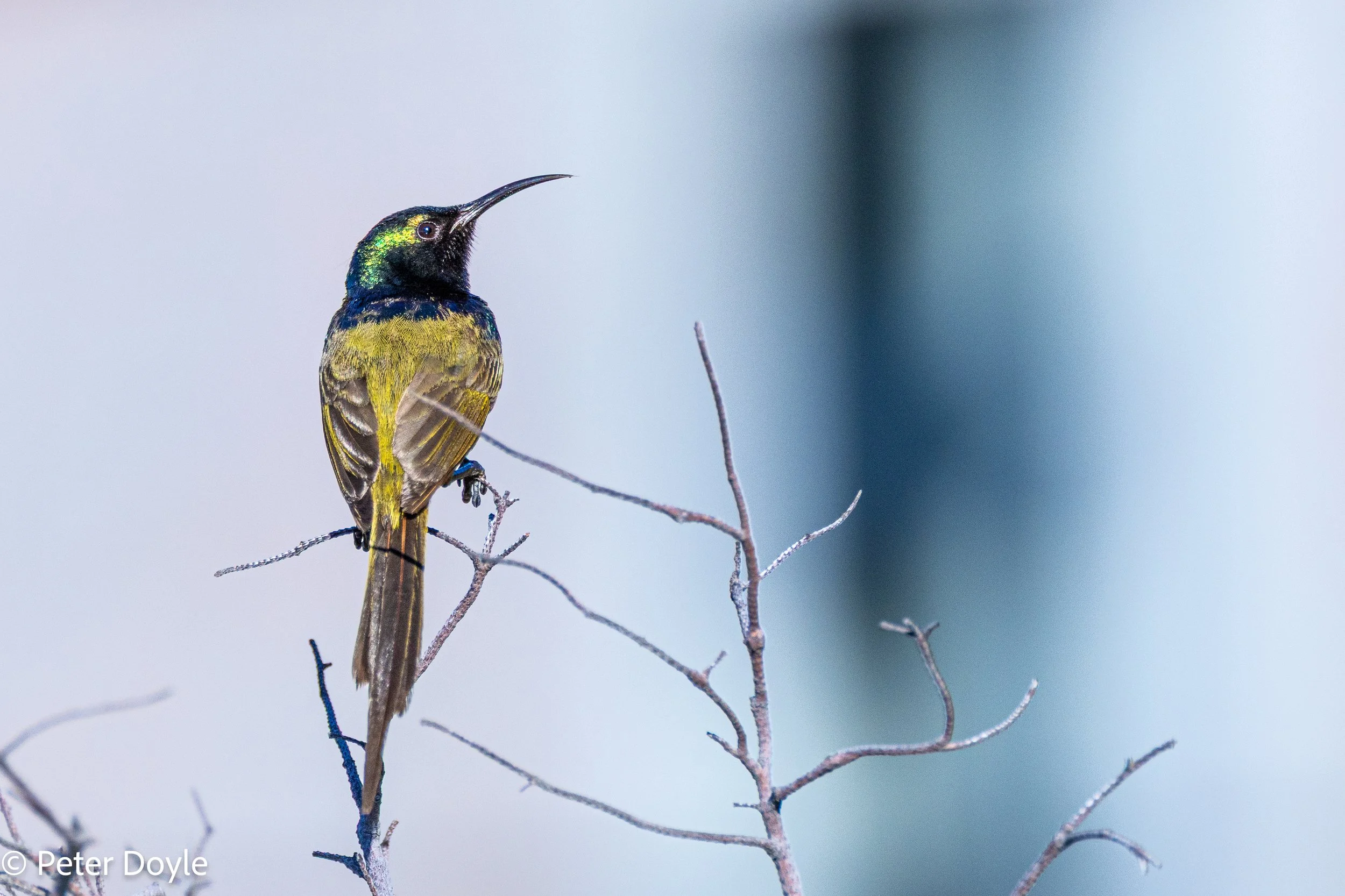
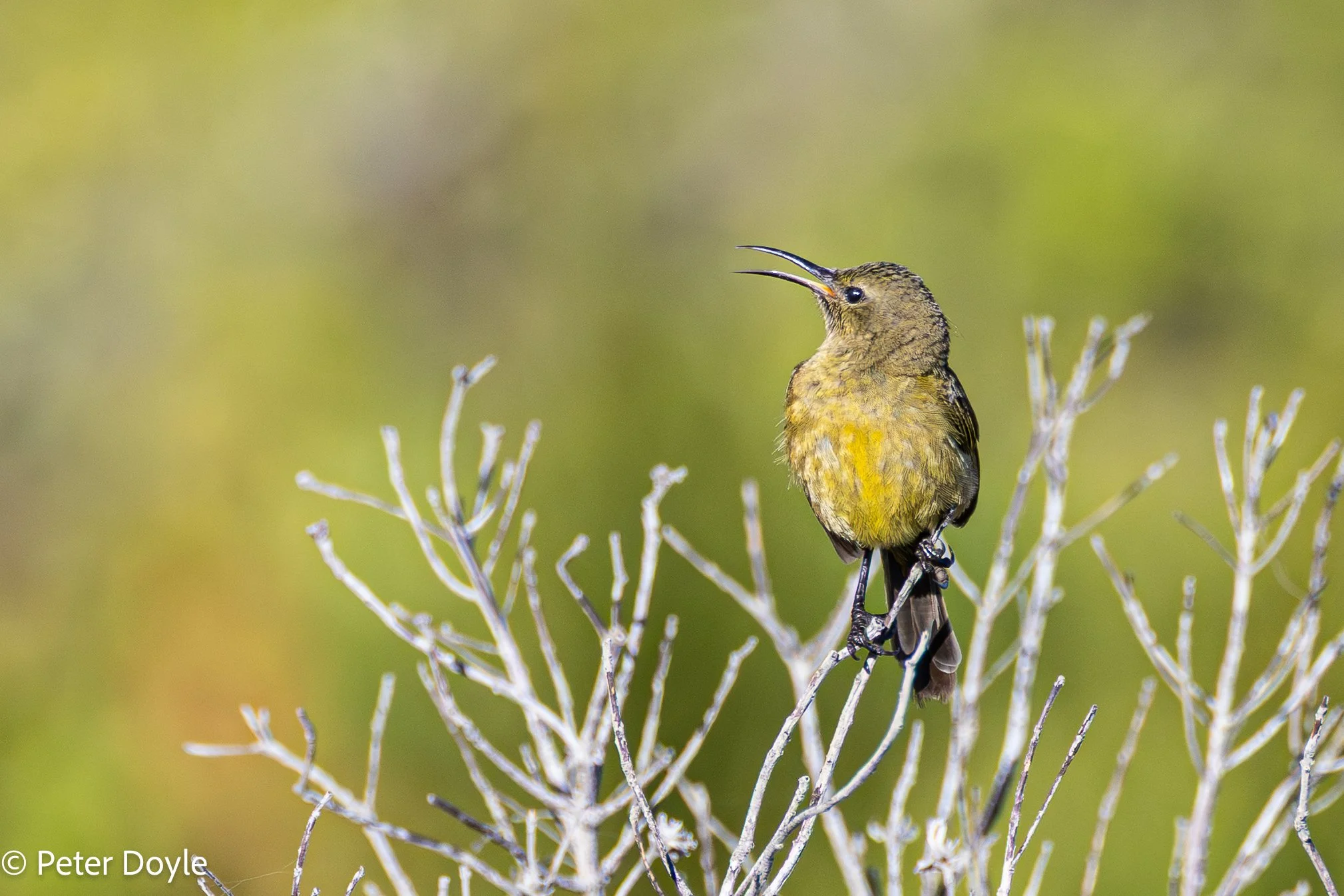
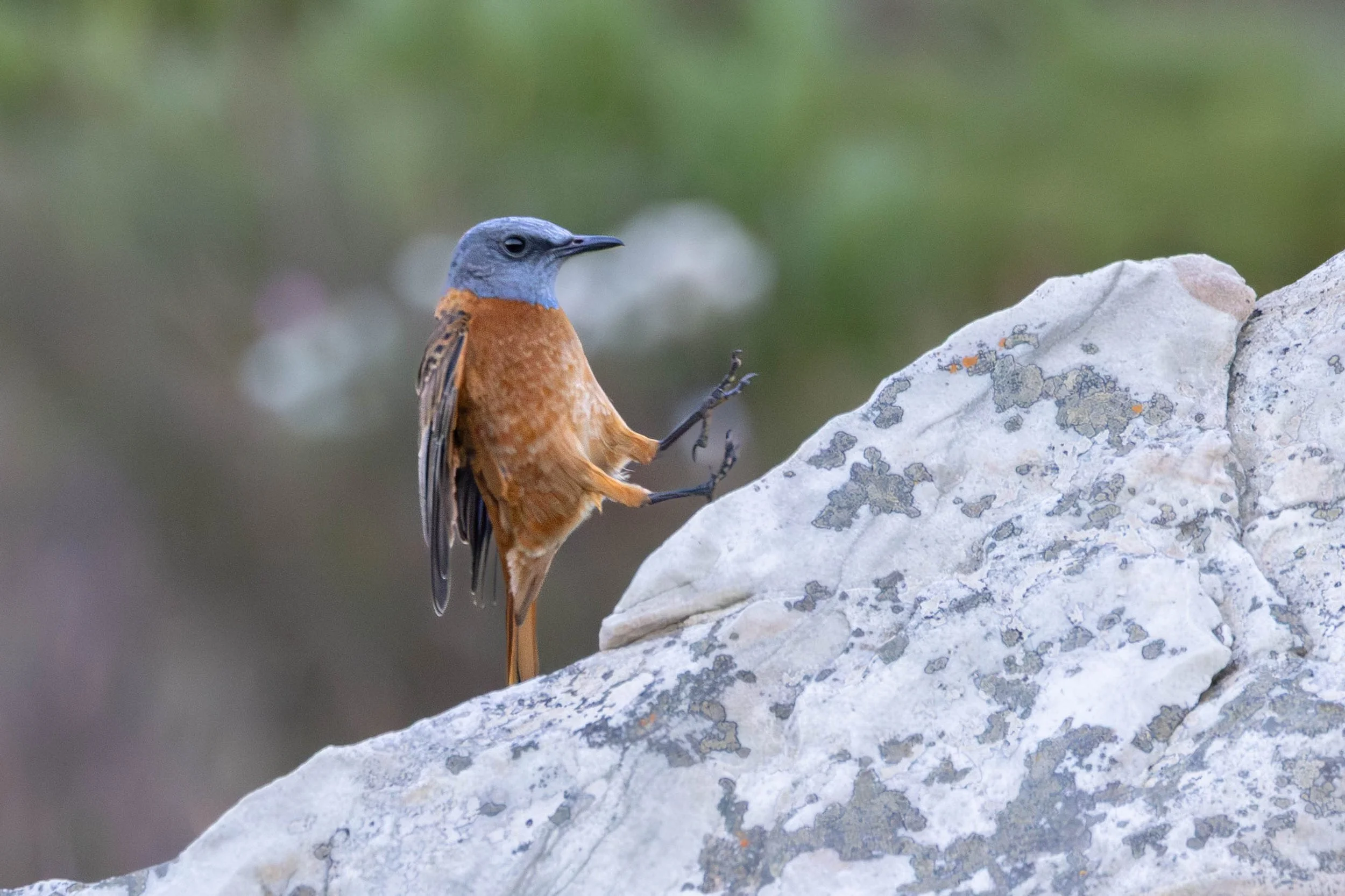
Rock jumping
We were quite far into our walk when we saw the first Cape Rockjumper, jumping onto a rock, of course!
Their behaviour is very interesting to watch and, once you know it, quite predictable. The Rockjumpers spend most of their day on the ground, in amongst the Fynbos and Restio, where they forage and nest, mostly invisible to the birdwatcher. They are primarily insectivorous, although apparently also eat lizards, amphibians, scorpions, worms and spiders; although I have never seen this myself.
Then, occasionally, they jump up onto a rock, mostly to scan the environment and that is when we get our best view of them.
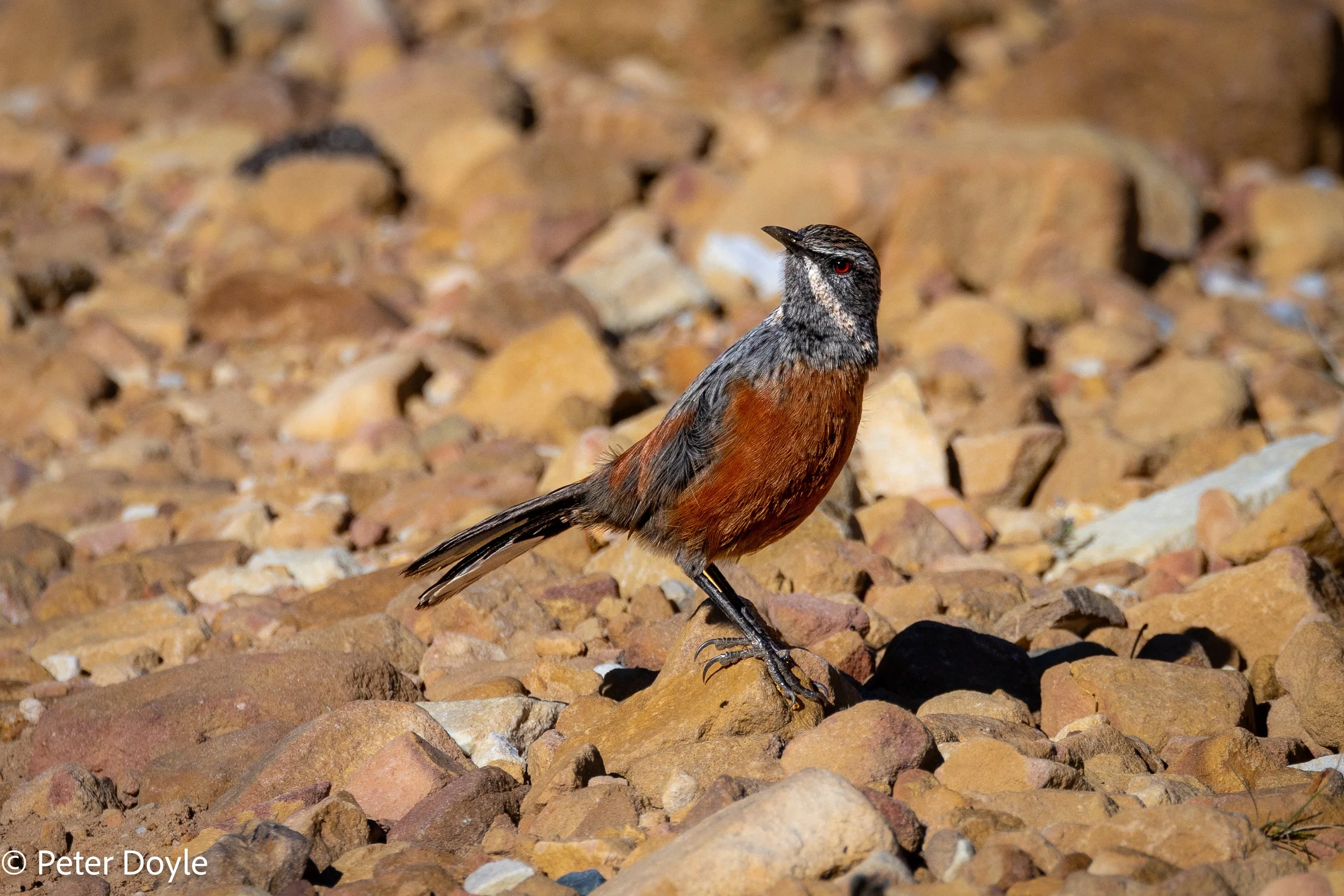
Once up on the rock, they are very prominent; especially the males, since they are quite large (about the size of a typical Starling), striking, mostly black birds, with white contrasting markings on their face and wings, a rich rufous belly and a piercing red eye. I like to think that they are looking at us, but most likely, they are looking for their mates or the other members of their family group.
The females are less conspicuous, generally greyer overall and a rich buff below; and they are seen less often. When they do appear, it is often quietly and unobtrusively. Suddenly they are there. You then notice how incredibly well camouflaged the female is on the rocks; from her grey upperparts being a similar grey to the rocks, right down to her buff underbelly matching exactly the colour of the lichen on the rocks.
The males spend more time up on the rocks, sunning themselves and preening, but are soon off again, jumping into the undergrowth. Although strong fliers, they very seldom fly anywhere, as they rather walk through the undergrowth.
The trick is now to guess where they will re-appear. Hardly ever on the same rock. They can often travel far, and appear again on another rock, 10 minutes later and up to 25 meters further away.
So, just sit quietly and watch.
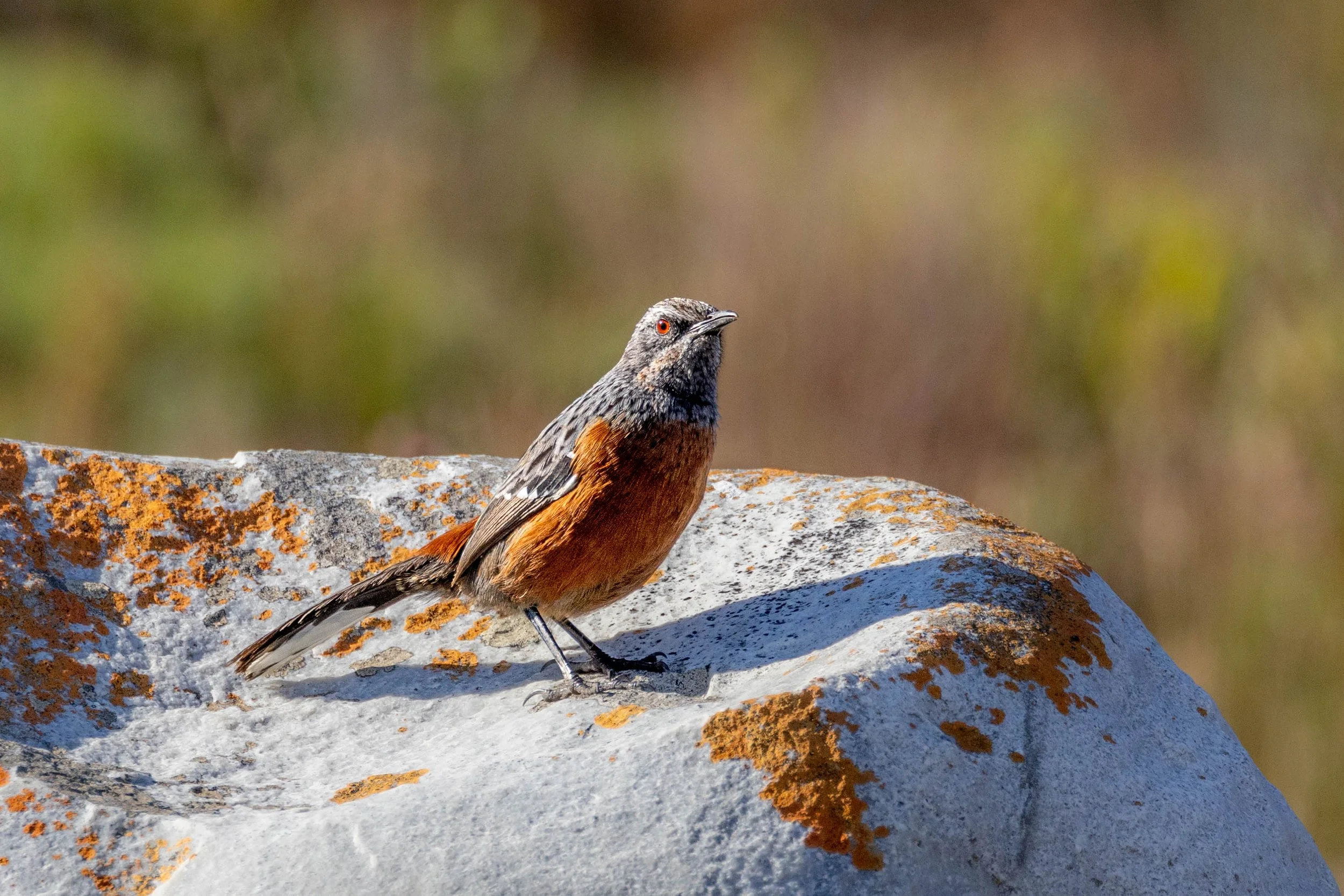
Cape Rockjumper (Female) (Chaetops frenatus)
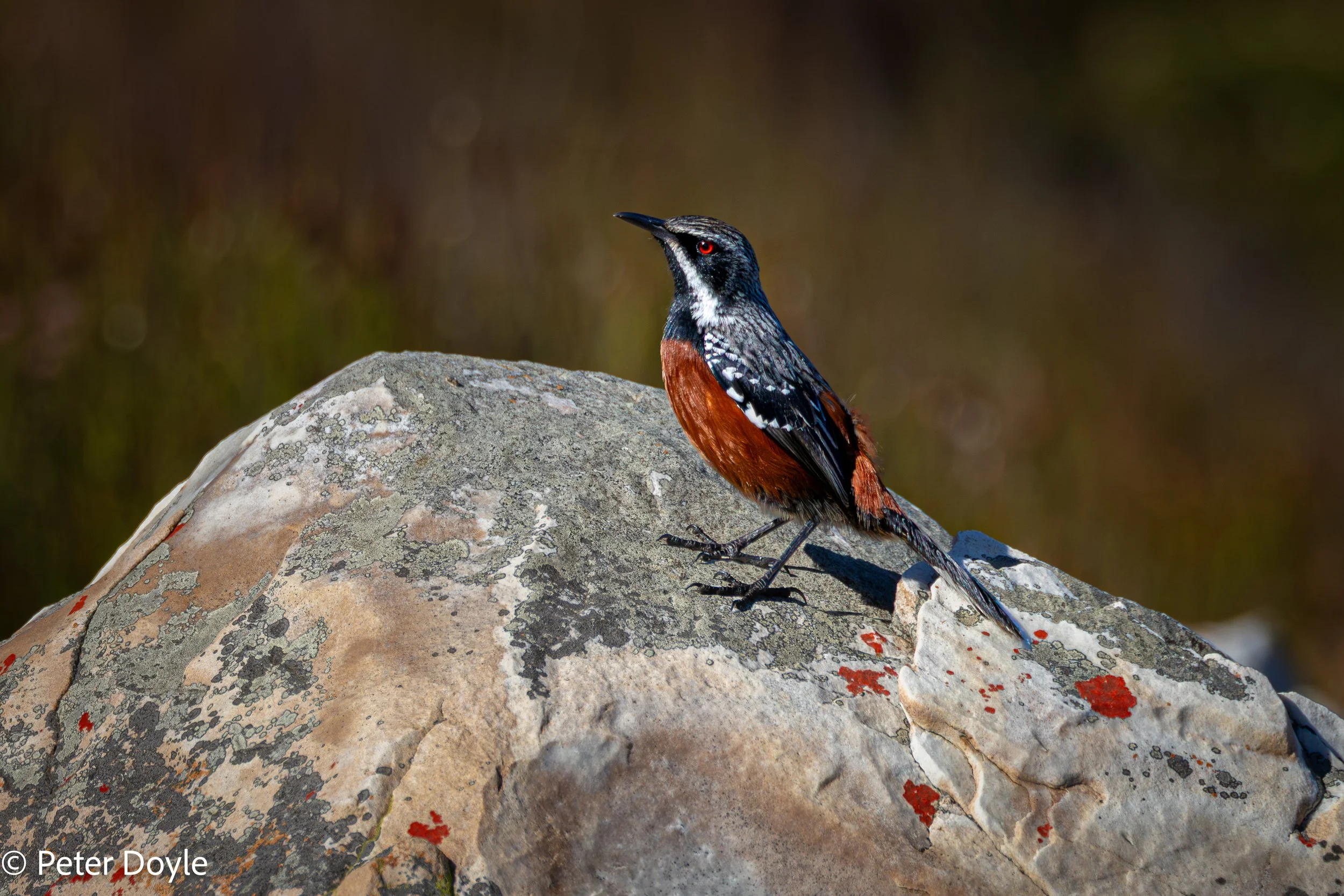
Cape Rockjumper (Male) (Chaetops frenatus)
Isn’t it incredible how for both the male and the female, their colours blend in and match exactly the colour of the rocks and even the lichen on the rock? Coincidence (or not?).
And here is another image of the striking male Rockjumper, surveying his territory; or looking for his mate?
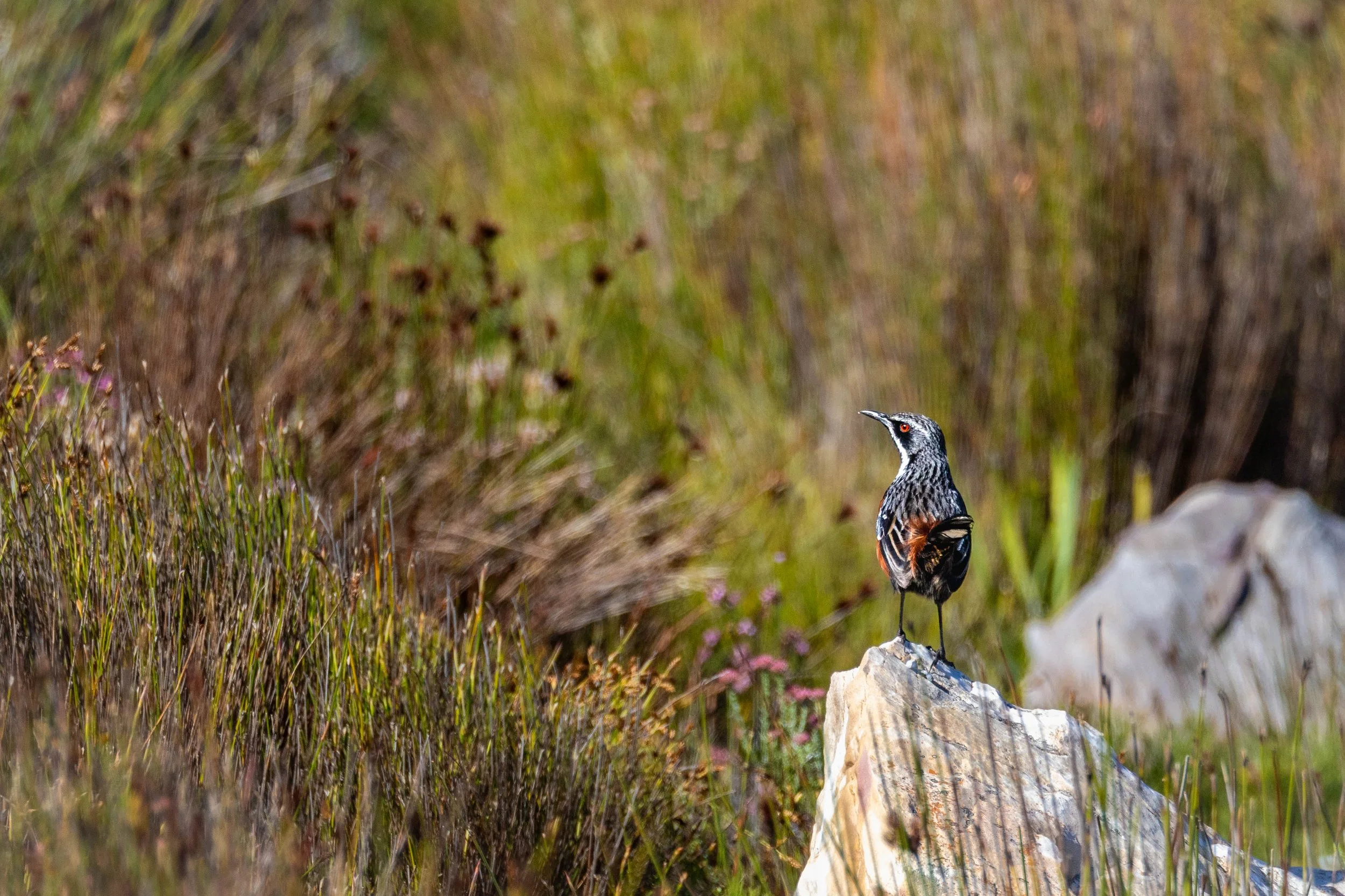
Cape Rockjumper (Male) (Chaetops frenatus)
Photographing Cape Rockjumpers
Photographing the Cape Rockjumpers is altogether another challenge. Although large and striking birds, I have found them difficult to photograph well. Lots of snaps, little detail, poor focus, busy backgrounds. There are a few things that really help.
Firstly, once you have first seen the Rockjumpers, stay still. This is true for all birds, but I find this true especially true with the Rockjumpers because, if you are relaxed and still, they will often come closer, and closer, to you.
Secondly, the sun must be in the right place, preferably at a 90-degree angle to the bird. That is also why late mornings at Rooiels are best because, before that, the sun will be shining directly in your face, while the birds are in shade and you will only get silhouettes, at best. And late afternoons the sun is directly behind you, washing out all the colours and detail in the feathers.
The big challenge for photographing Rockjumpers is the question of contrast. The plumage of the males is predominately black, while the rocks that they jump onto are bleached very white in the sun. So, if you expose for the bird only, the highlights get blown out on the rocks, resulting in unpleasing images. So, I tend to stop down my exposure compensation to avoid this, not a lot, maybe one stop or even less.
The other big challenge, which I have found with other large, dark birds, is accurate focus. Somehow, the focus just drifts off, leaving the image less sharp. The best solution here is to try and find the eye, which is a very striking red. It is so striking that, in some of my best images, it appears false, or worse, “photo-shopped”. But it is real and can bring you into sharp focus on the bird.
Early in the day we were joined by another young couple with binoculars and a camera, who had a look, took some photos and left. As an aside, it is so noticeable and rewarding to see how many young people are becoming interested in birding and that bodes well for the future of birds and their habitat.
A Sand Bath
We spent about two to three hours among the Rockjumpers. As we started to leave, we saw more of them, seemingly different pairs each time.
The highlight came near the end of our walk, when a pair came right down onto the road right in front of us to have a sand-bath. We were less than 5 meters away from them and they were totally relaxed. Elle could hear the female calling softly (alas, too soft for me to hear), but I could see her calling through my viewfinder.
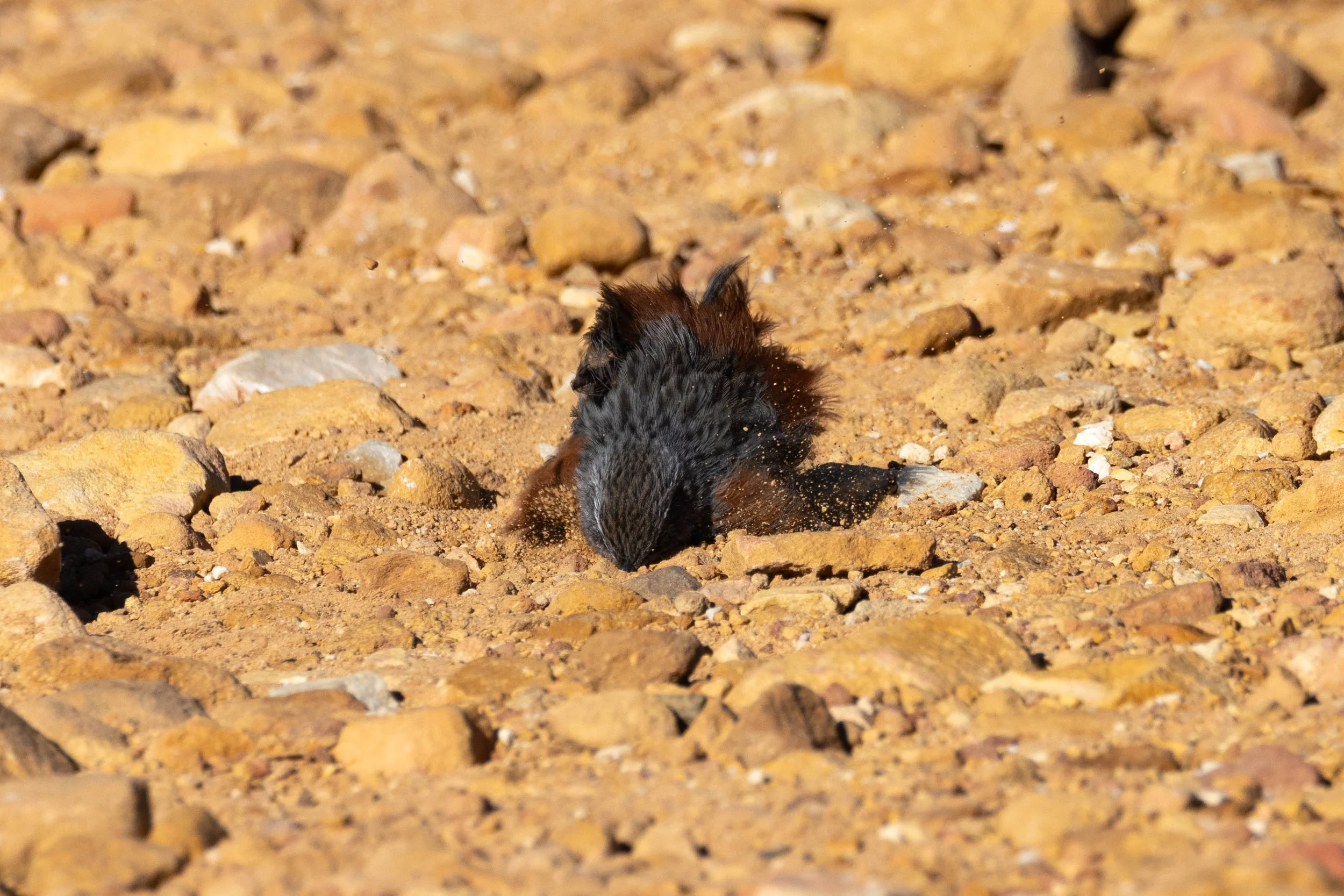
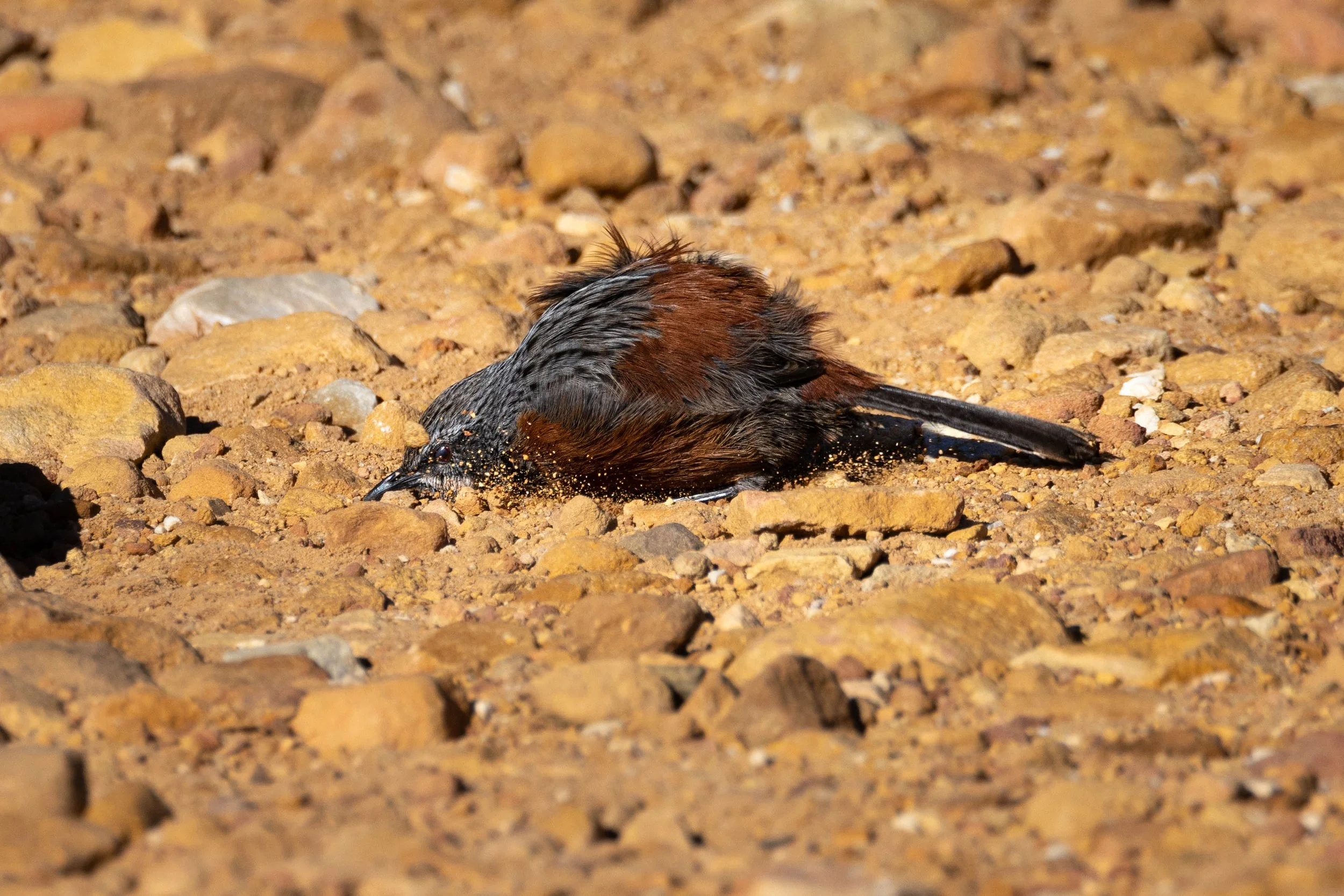
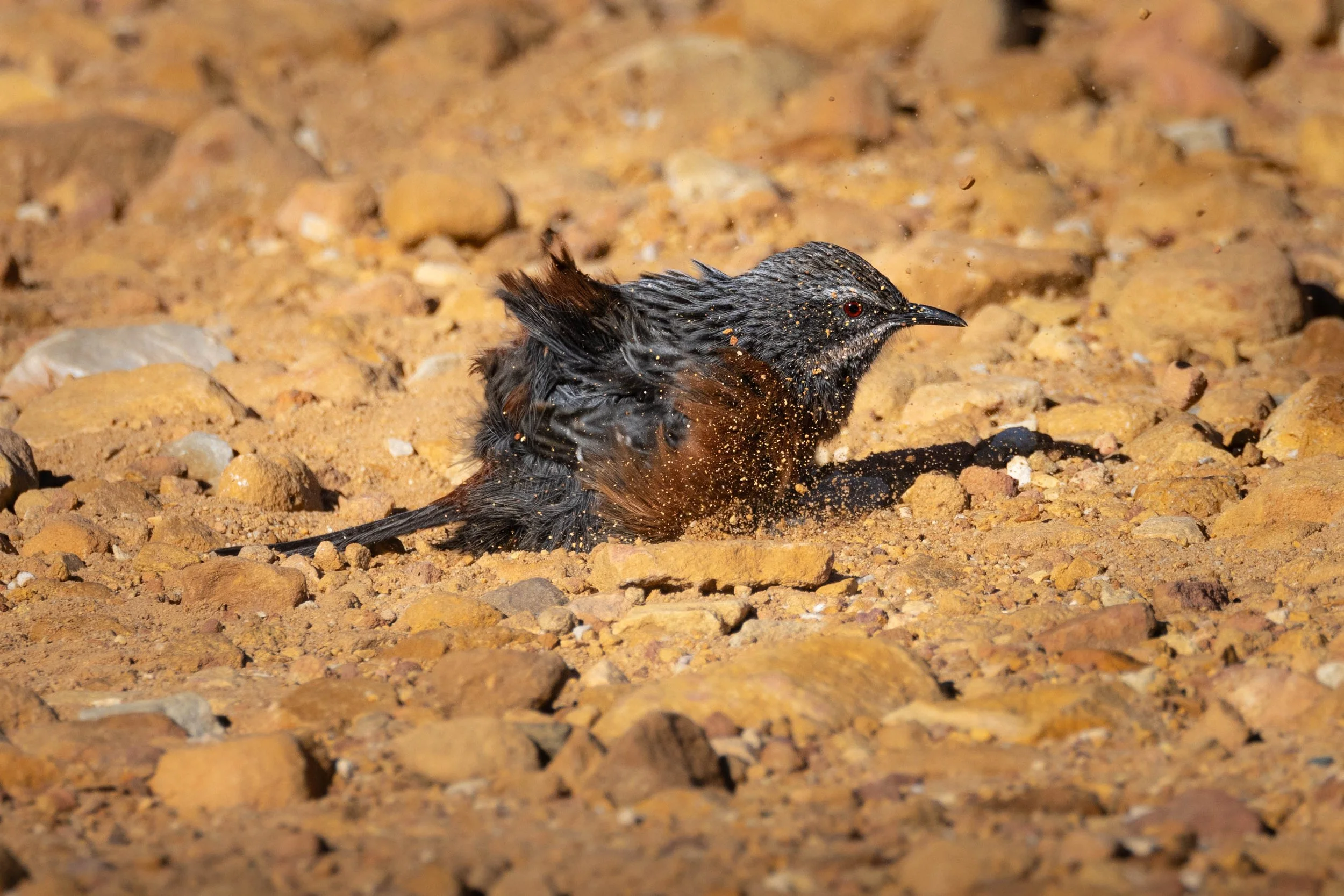
Their bathing was vigorous, and the sand flew everywhere!
A wonderful sighting and experience.
Time to go
It was time for us to go; but not before one more beautiful sighting.
A pair of Peregrine Falcons (Falco peregrinus) soared high above us near the mountain peaks. Swooping down over our heads, at speed, and then going up 400 meters or more without a flap of their wings.
They looked imperious, masters of the sky and mountain peaks.
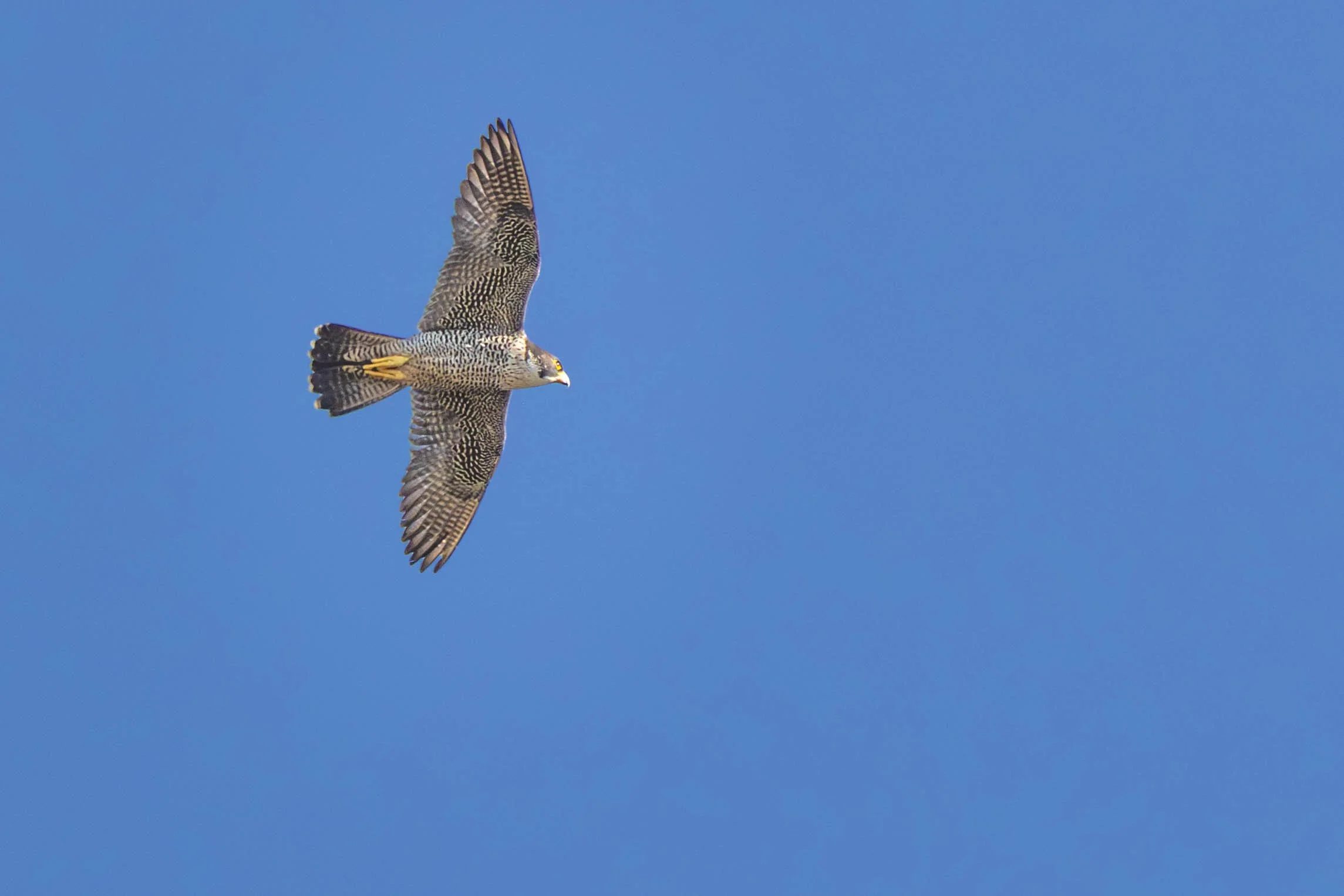
Peregrine Falcon (Falco peregrinus)
A walk together in the mountains, beautiful Fynbos and Proteas abounding, Rockjumpers displaying, Falcons soaring, the ocean at our feet, the sun at our backs; and some good images in our cameras to enjoy later.
It is hard to describe how blessed we felt at that moment.
