Tanzanian Travels
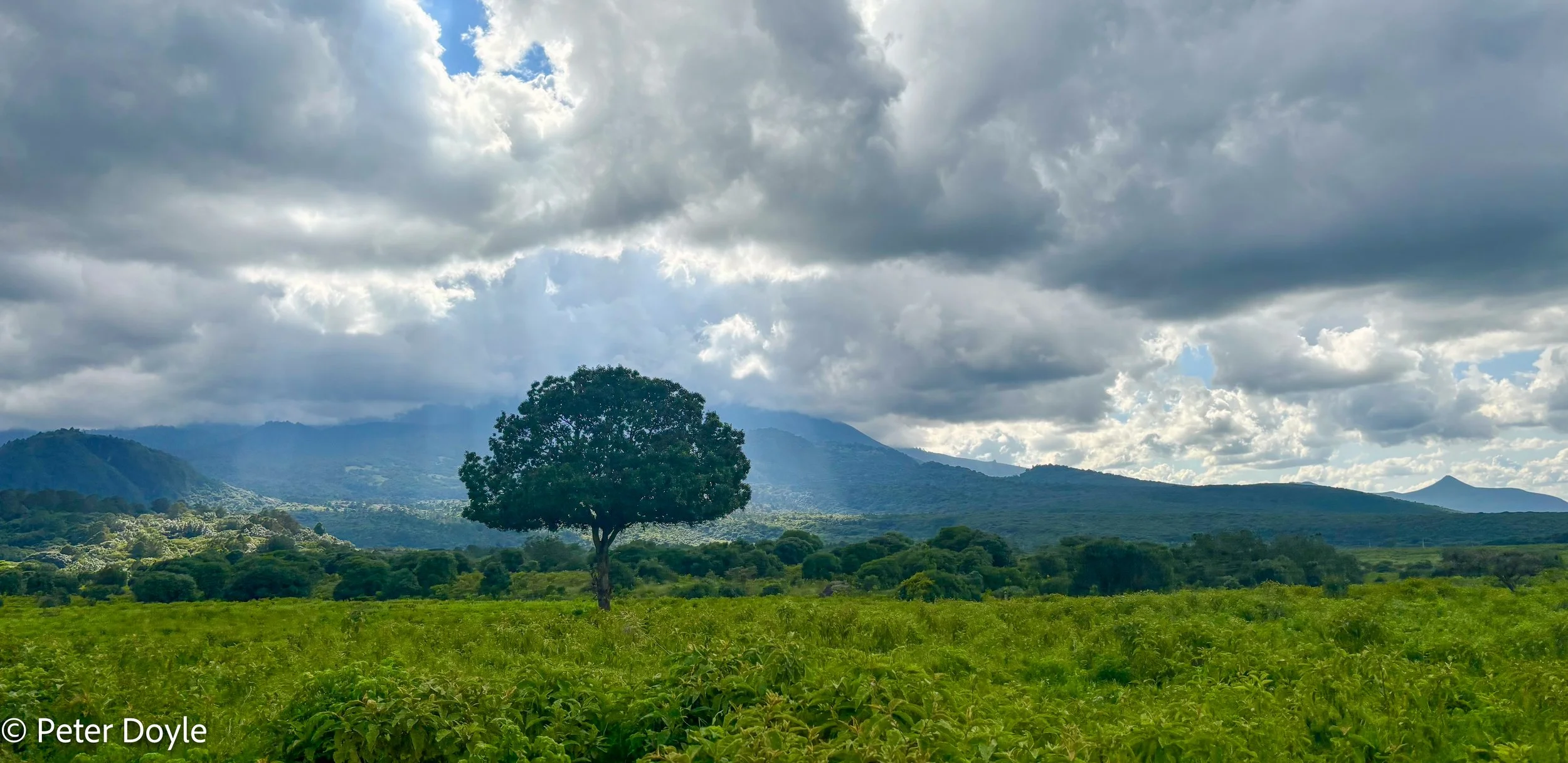
Arusha National Park, Tanzania
Our first week of traveling in Tanzania during April 2026
…. with Let’s Go Birding.
We spent three weeks in total traveling and birding around Northern Tanzania. The last two weeks of our trip was in the Usambara mountains, which I have written about in another story on the Usambara’s.
Our first week in Tanzania was a trip arranged and guided by Jacques Giliomee of Let’s Go Birding. We have done many trips with Jacques Giliomee in South Africa and especially around Cape Town, but this was our first trip with him further up into Africa.
We were 5 guests, plus Jacques and a local guide, Frank Sharima. Over the 6 days, we all traveled in a long-wheel-base Land-cruiser with our excellent driver, …. All the local logistics and accommodation were organised by Joe Ndekia of Nungunungu Expeditions.
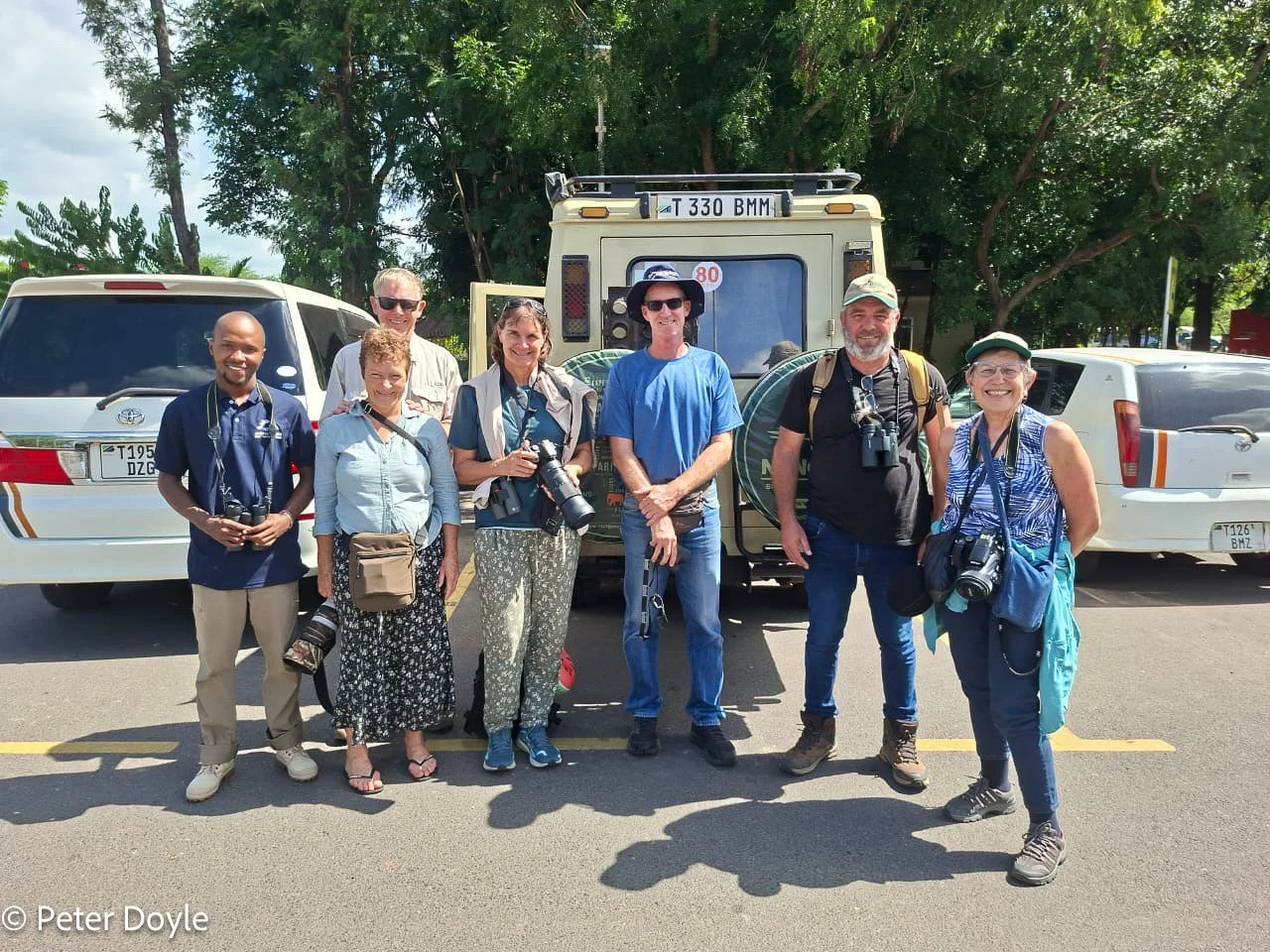
Frank, Ellen, Peter, Simone, Steven, Jacques and Lydia standing in front of the Landcruiser.
Frank Sharima … our excellent guide
Birding in a new country can be difficult. Forest birding is even harder. While we love going to new places and exploring on our own, it takes time. A good local guide makes all the difference.
We need to acknowldge that we would never have seen so many birds as we did in six days, without our local guide, Frank Sharima. He is a young man, but with great skills and knowledge. His ability to hear the birds before you see them is astonishing.
He has trained as a guide and then a bird guide. Frank is a Tanzanian bird specialist, having lived in Tanzania all his life. He has personally seen about 900 out of the 1100 birds in Tanzania. Not only that, but in many cases he knows the latin names; and the old names of the birds. He also studies butterflies, dragonflies, flowers and chameleons and could identify many of them that we came across.
After these first 6 days, we also had the pleasure of continuing our trip with him into the Usambara and South Pare mountains.
And finally, Frank is enjoyable to be wtih and good with people.
Do we recommend him? YES!
Flying in to Kilimanjaro International Airport
We flew via Narobi into Kilimanjaro International Airport, at Arusha in the north of Tanzania. Flying between Nairobi and Arusha, we had excellent views of Kilimanjaro from our plane window.
It turned out to be the last time we saw the peak of Kilimanjaro until the very last day of our trip, even though we would spend weeks within sight of the mountain. We had chosen to come in the low (rainy) season and we had nearly constant cloud cover over “Kili” for three weeks. But we had surprisingly little rain, which was good for the birding.
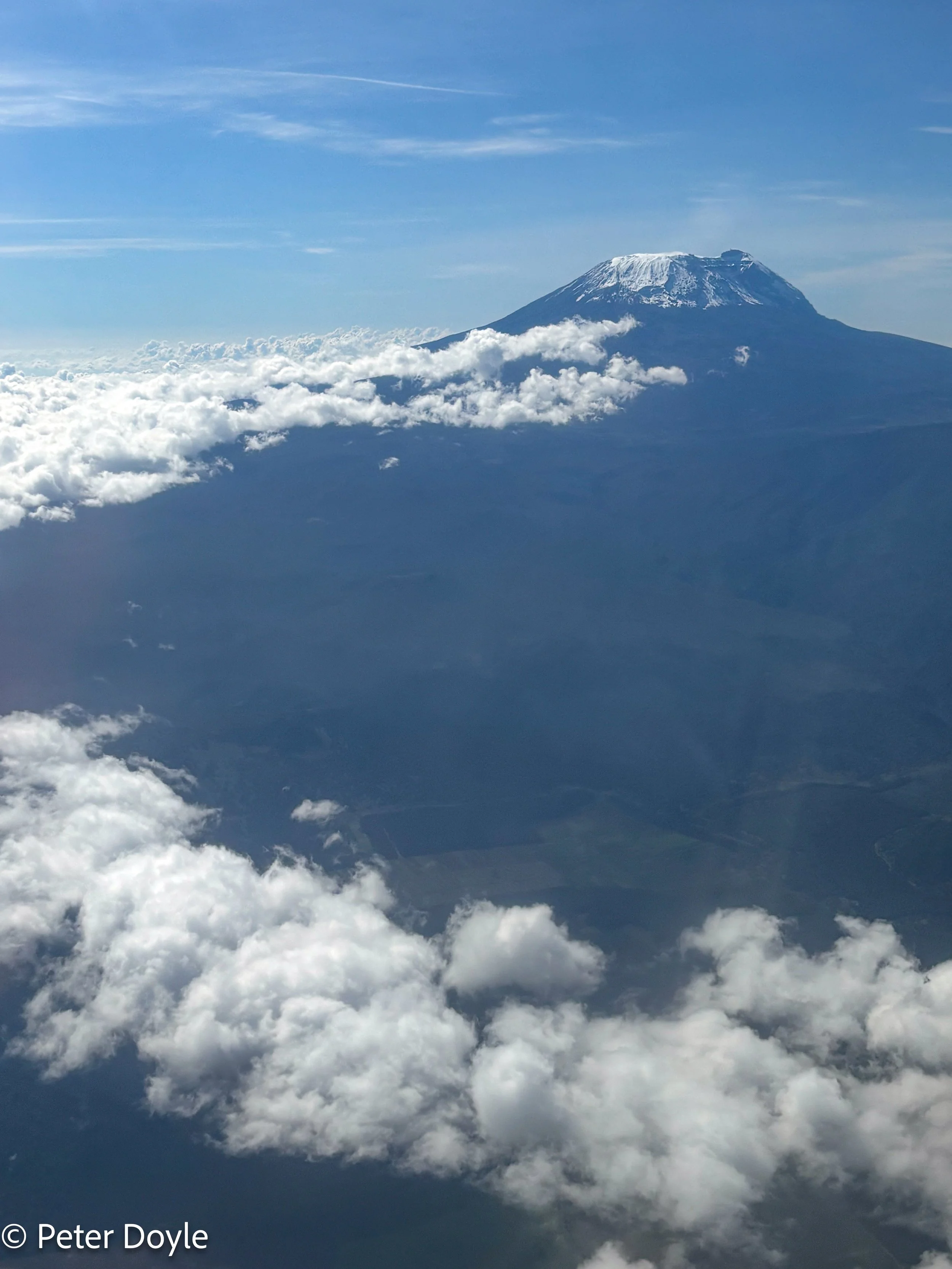
Mount Kilimanjaro
First Birds … and a Chameleon
After spending our first night near the bustling city of Arusha, we headed off in the morning towards the Ngorongoro Highlands. We were unfortunately not going into the Ngorogoro Crater; but the birdlife in the highlands around the crater is prolific. The crater itself will have to wait for another trip.
The traffic around Arusha is very busy, but we were soon at our first stop near the Usa River, where we saw and photographed our first birding lifers for the trip. It should have been no surprise that the two lifers were a Greenbul and Weaver respectively. There are 26 species of Greenbul found in Tanzania … and no less than 36 species of Weaver! For comparison there are 5 species of Greenbul found in Southern Africa and some 15 species of Weaver.
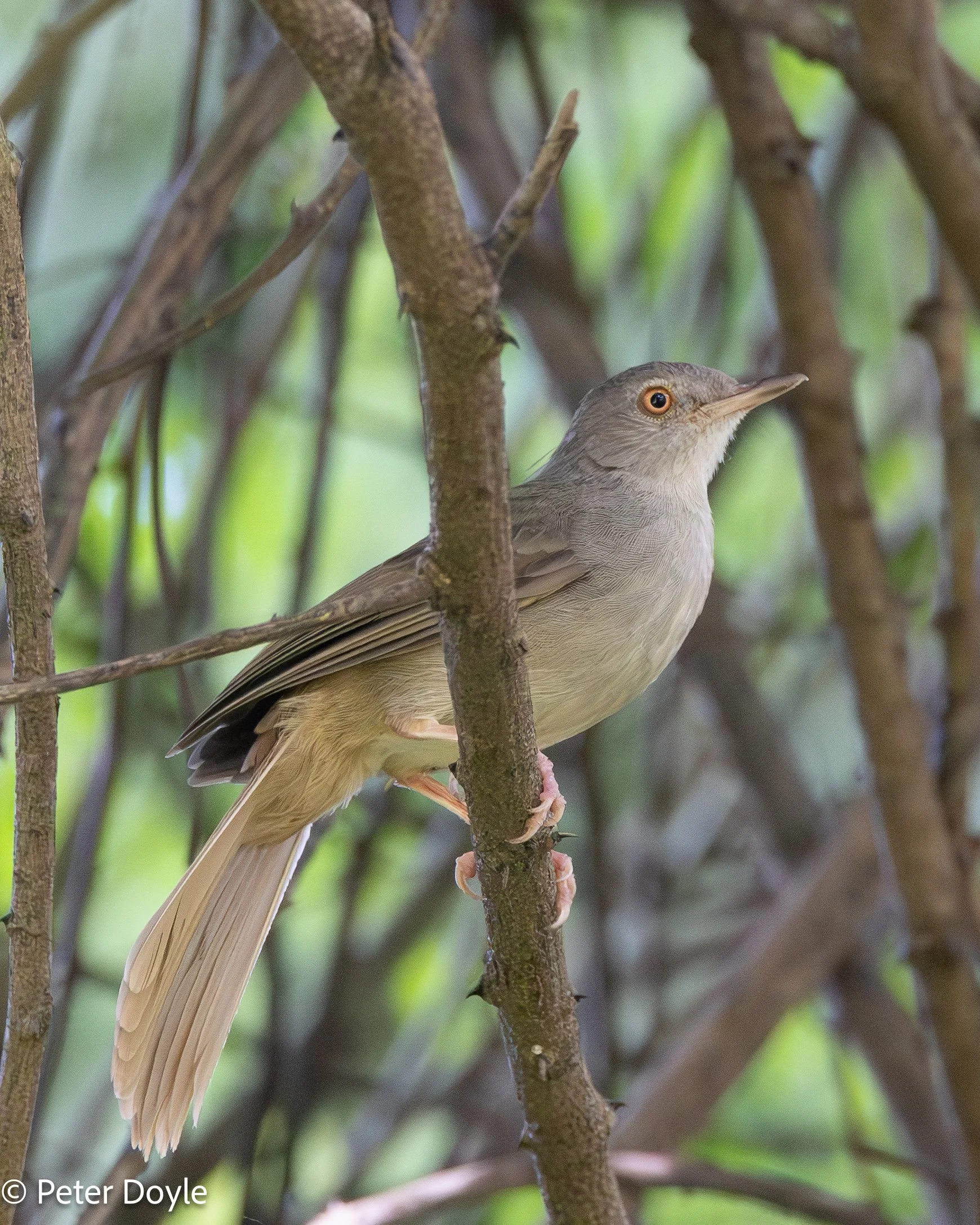
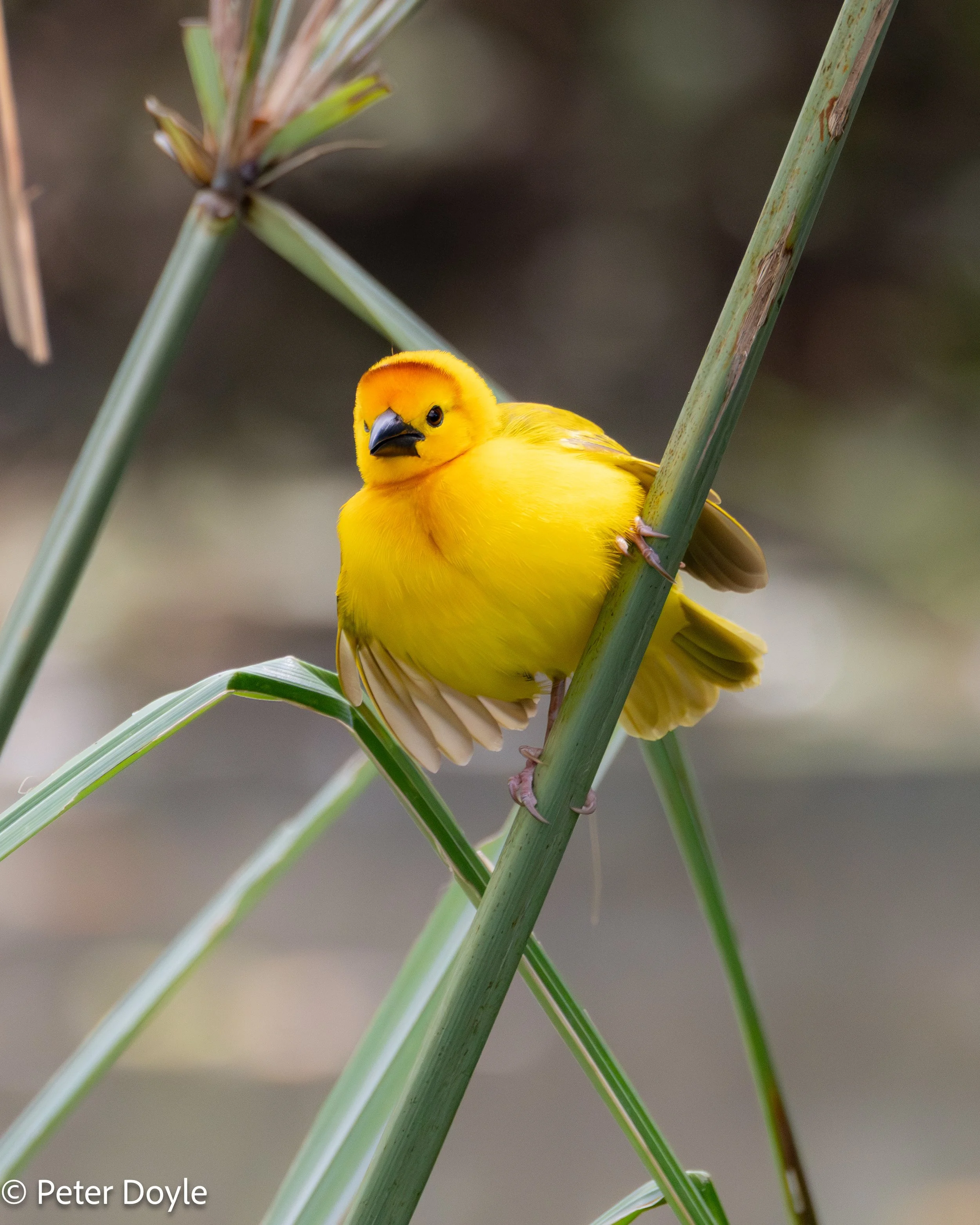
Grey-olive Greenbul (Phyllastrephus cerviniventris) Taveta Weaver (Ploceus castaneiceps)
We also met the first of several chameleons we saw in Tanzania.
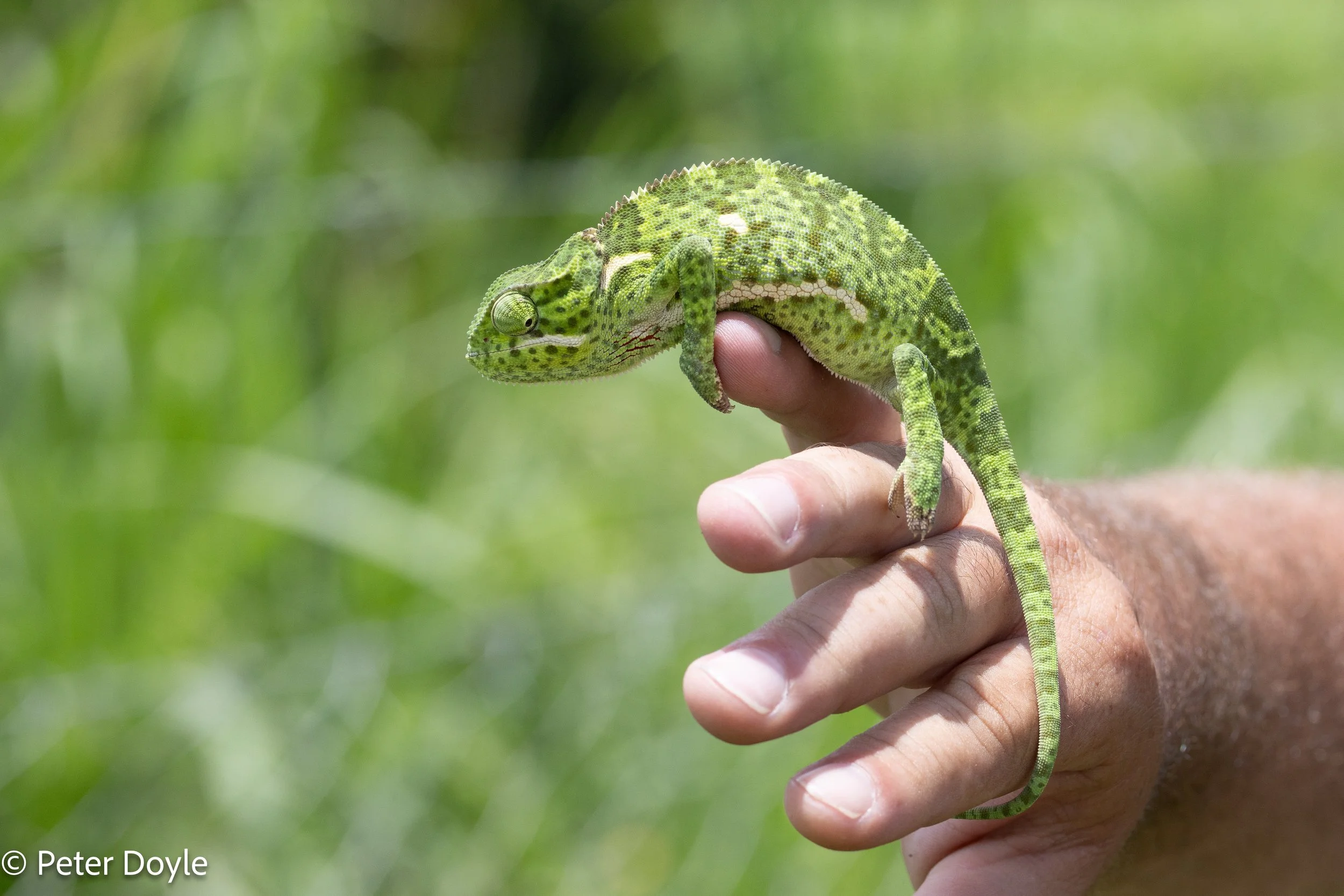
Flap-necked Chameleon (Chameileo dilepis)
On the road to the Ngorogoro highlands
Our trip to Ngorogoro took much longer than expected, because it was Easter weekend and we had to pass by a massive outdoor church gathering, with many thousands of people; and a traffic-jam that nearly came to a complete standstill and stretched for many kilometers. Nevertheless, it was a fascinating opportunity to see many of the local people, families, transport and organisation of this huge event.
Moving on from people to birds, later in the day we saw another party, this time a “bird party”, at a roadside coffee stop. A bird party happens when a number of unrelated species of bird all get together in one location, sometimes even in one tree. These could be single birds, pairs of birds or even small flocks of birds. The party often move, loosely together, through a woodland.
The reason for them sticking together like this probably involves food sources and mutual protection from birds of prey; and sometimes snakes. When birding, particularly in forests or woodlands, we are always on the look-out for a bird party, because of the wide range of species that can be observed in one place and at one time.
Being our first day in Tanzania, made it difficult to focus on all the birds, because there were so many birds new to us in that bird party. In the end I counted 12 new birds species at that one stop. To give some idea of the range of species, this included a Northern Red-fronted Tinkerbird, Buff-bellied Warbler, African Grey Flycatcher, Beautiful Sunbird, Vitelline Masked Weaver, Kenya Sparrow, White-bellied Canary, Somali Bunting, Blue-capped Cordon-bleu, Superb Starling … and to crown it all an Eastern Chanting Goshawk that came to hunt at the party.
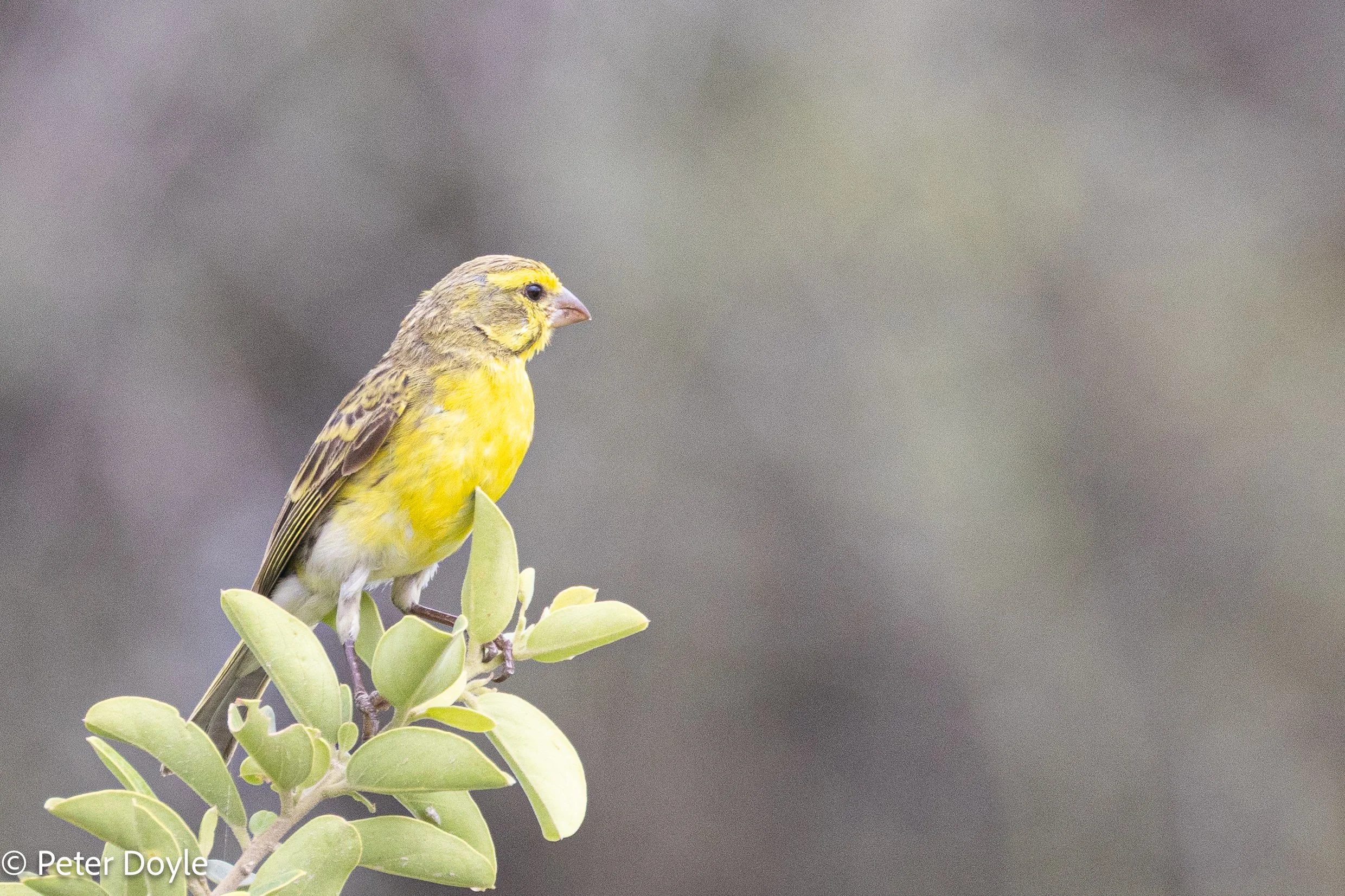
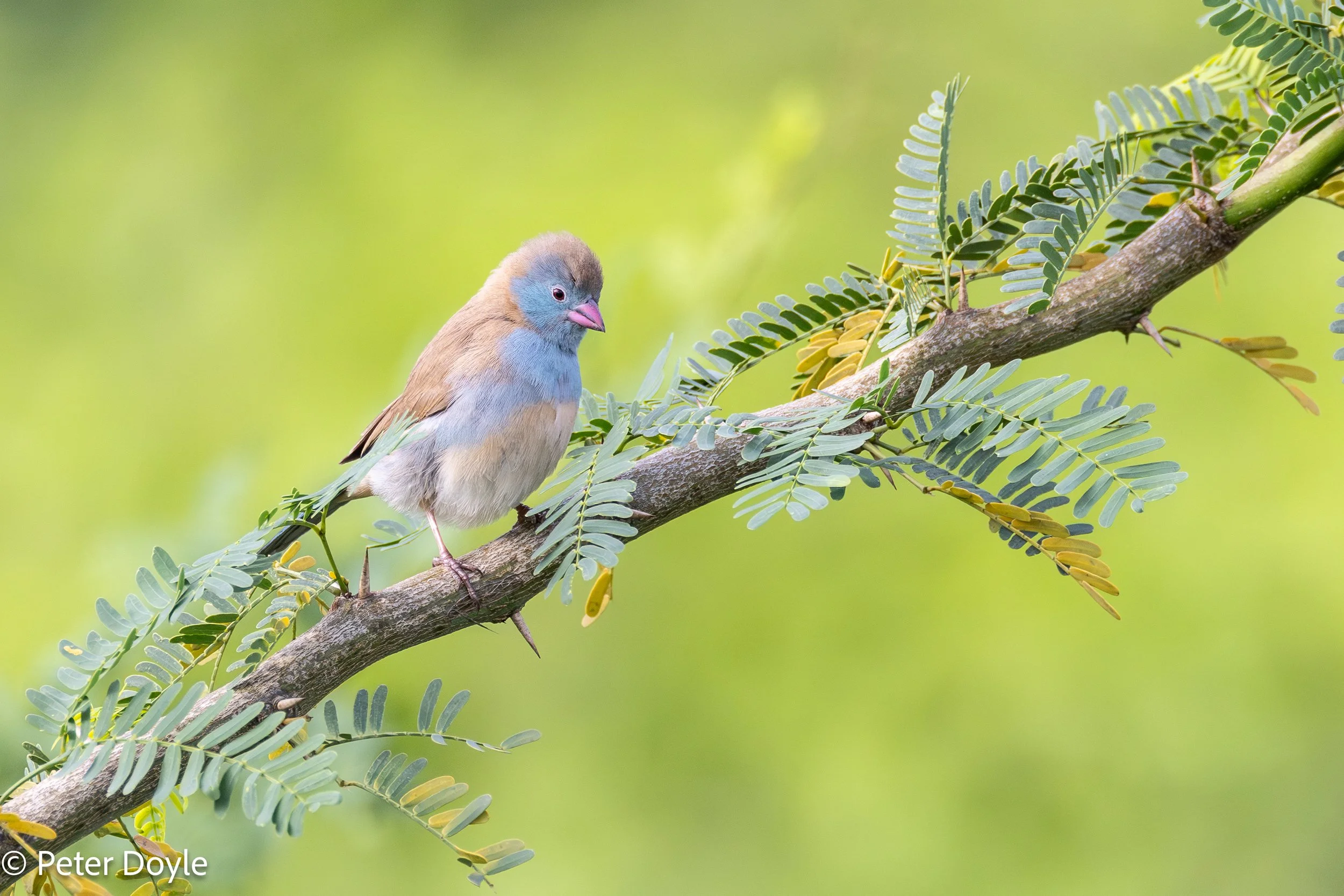
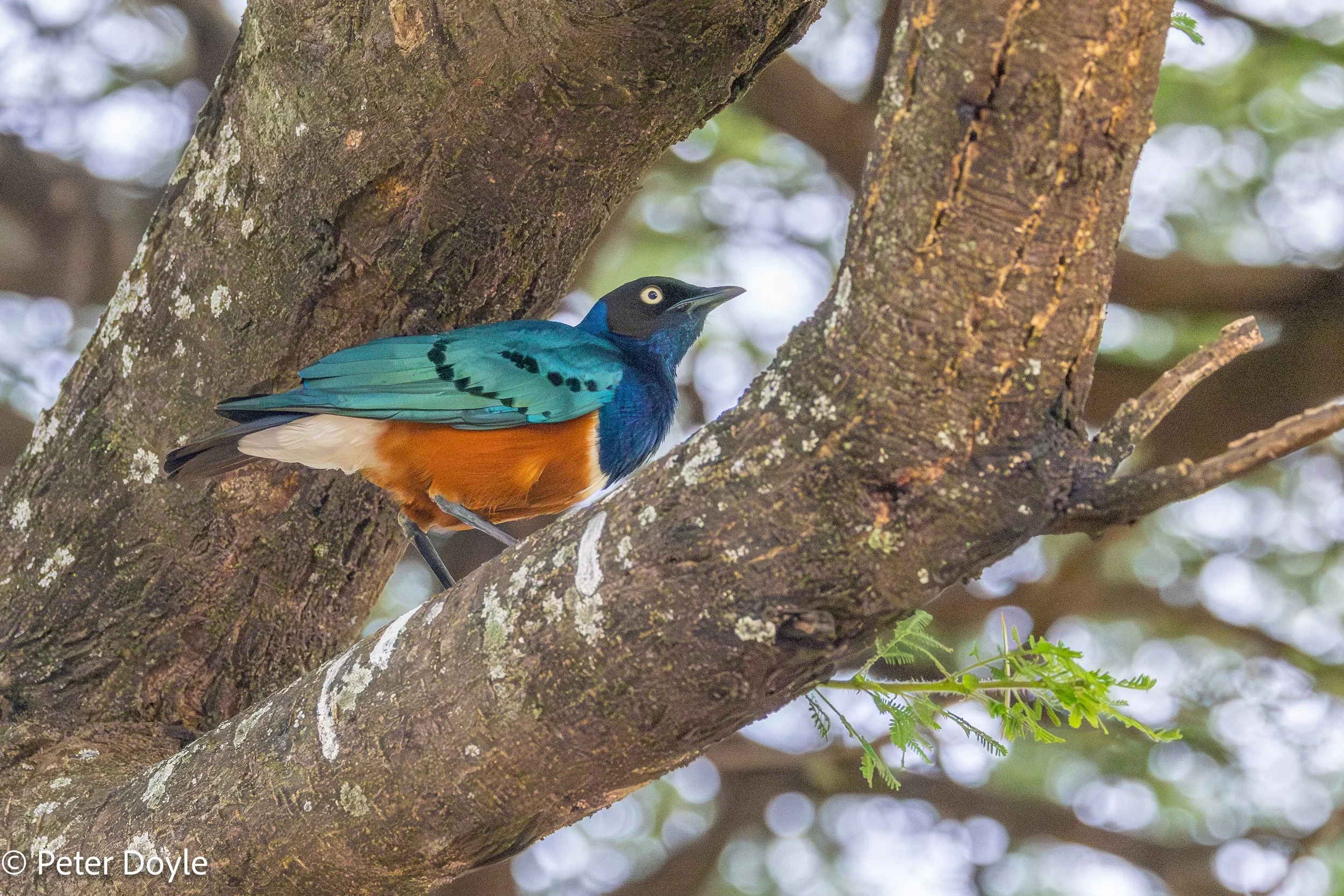
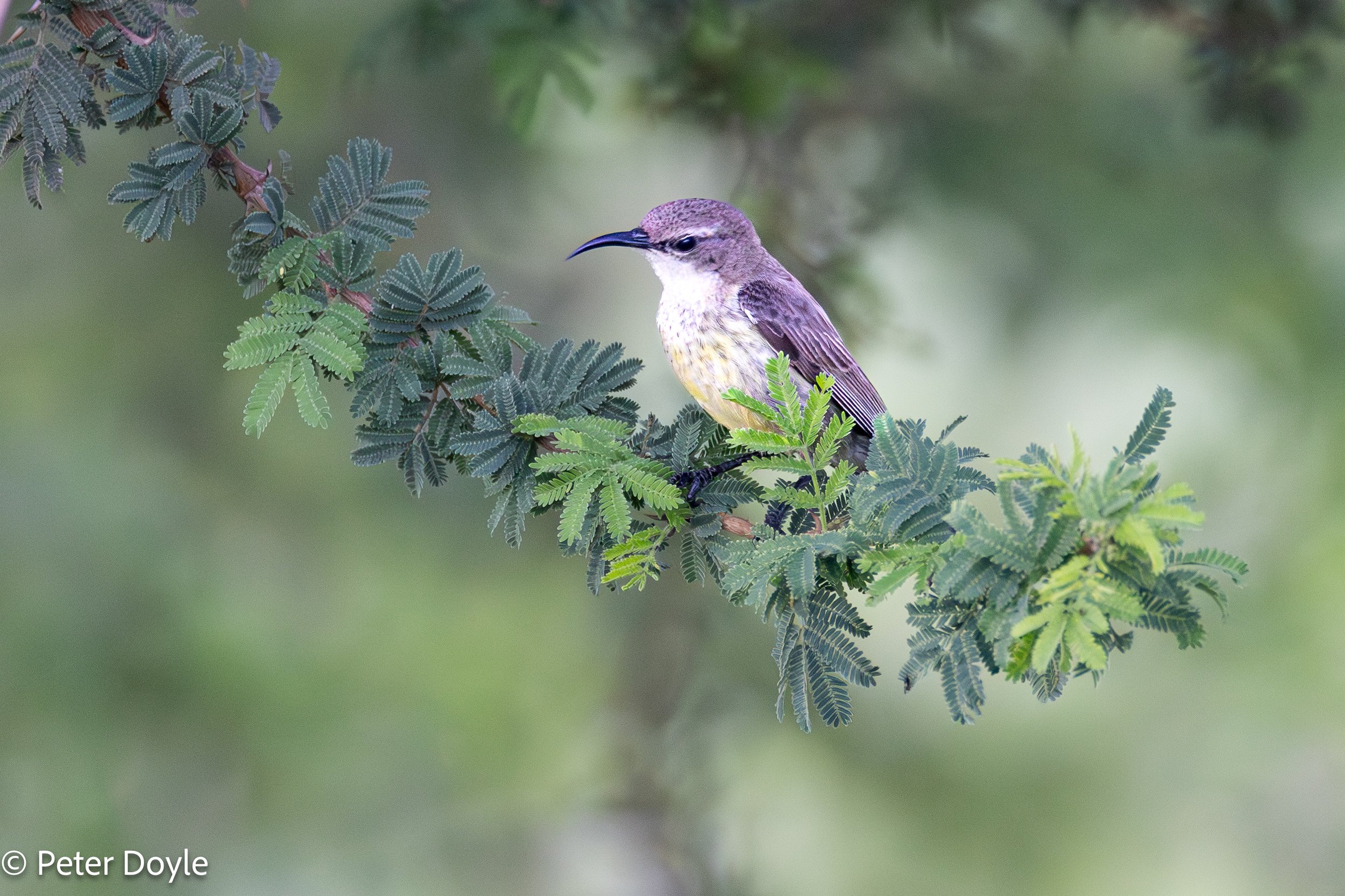
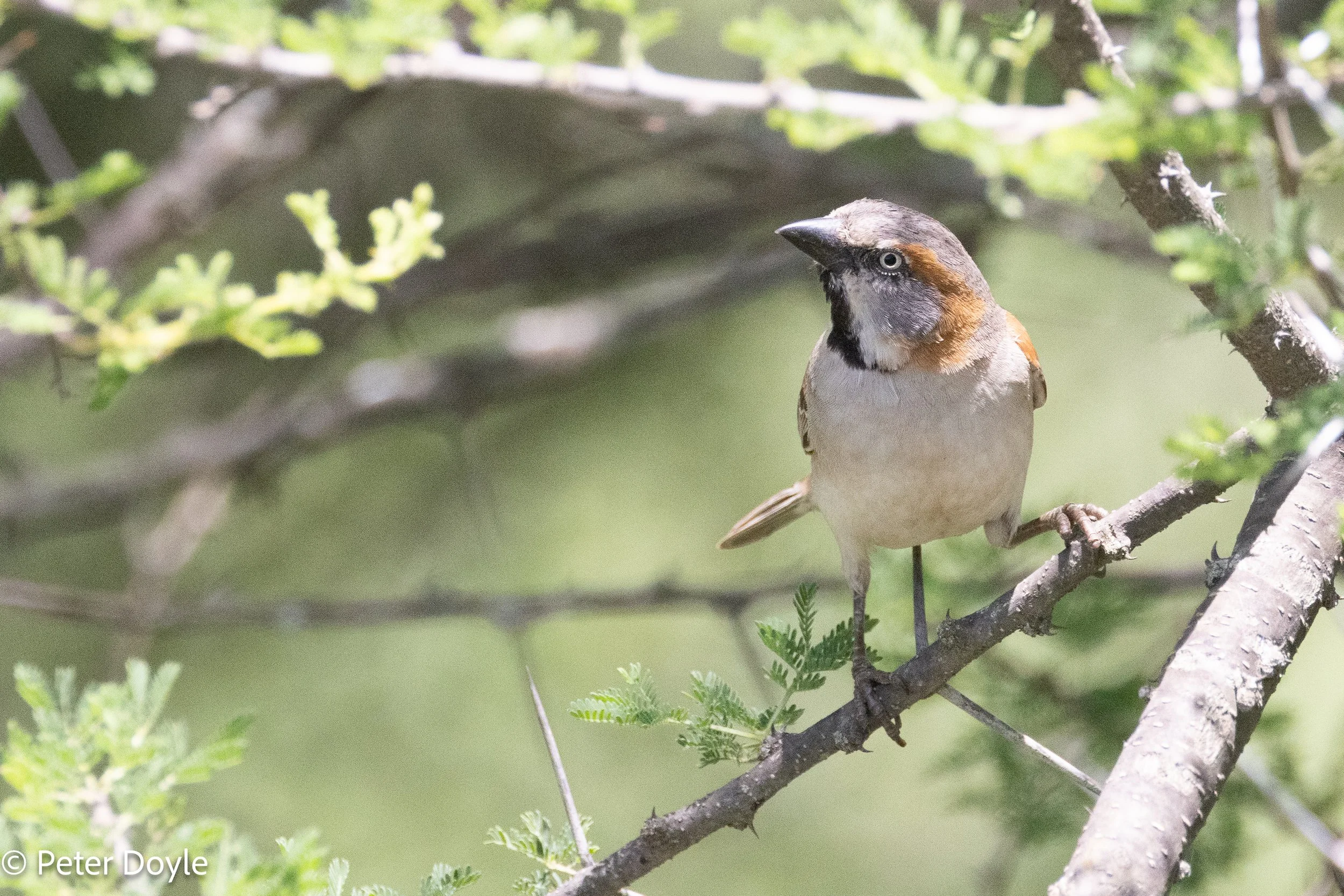
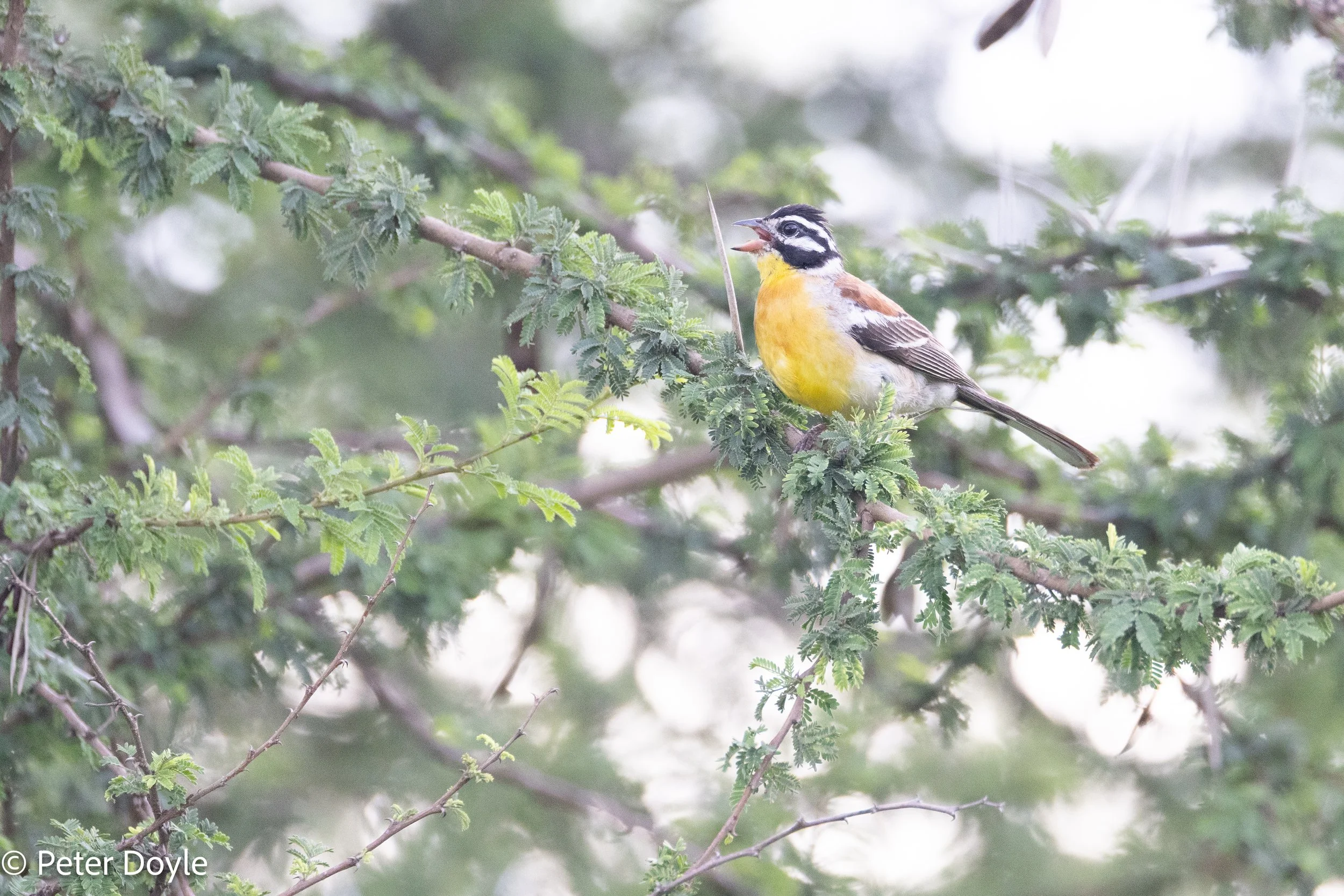
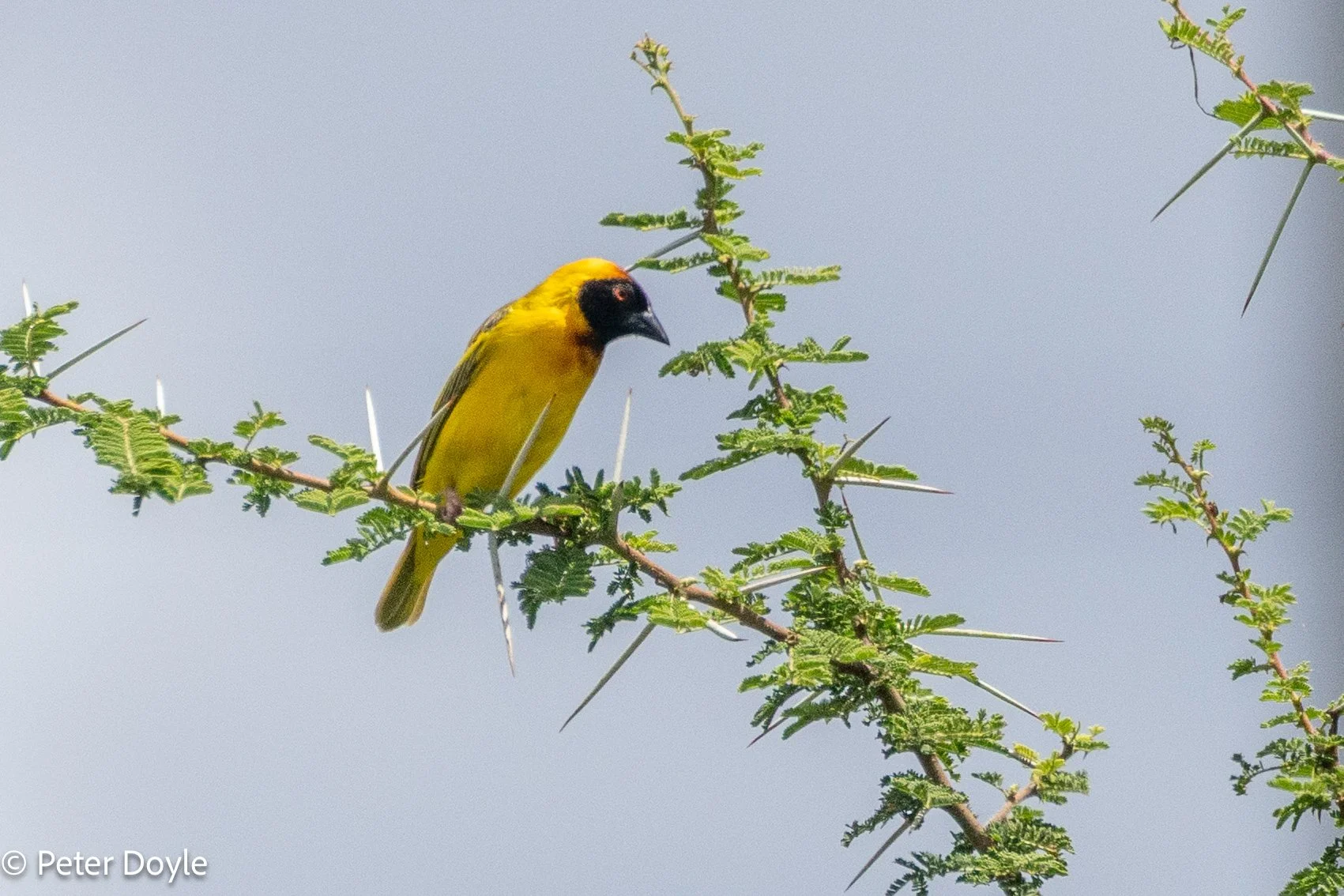
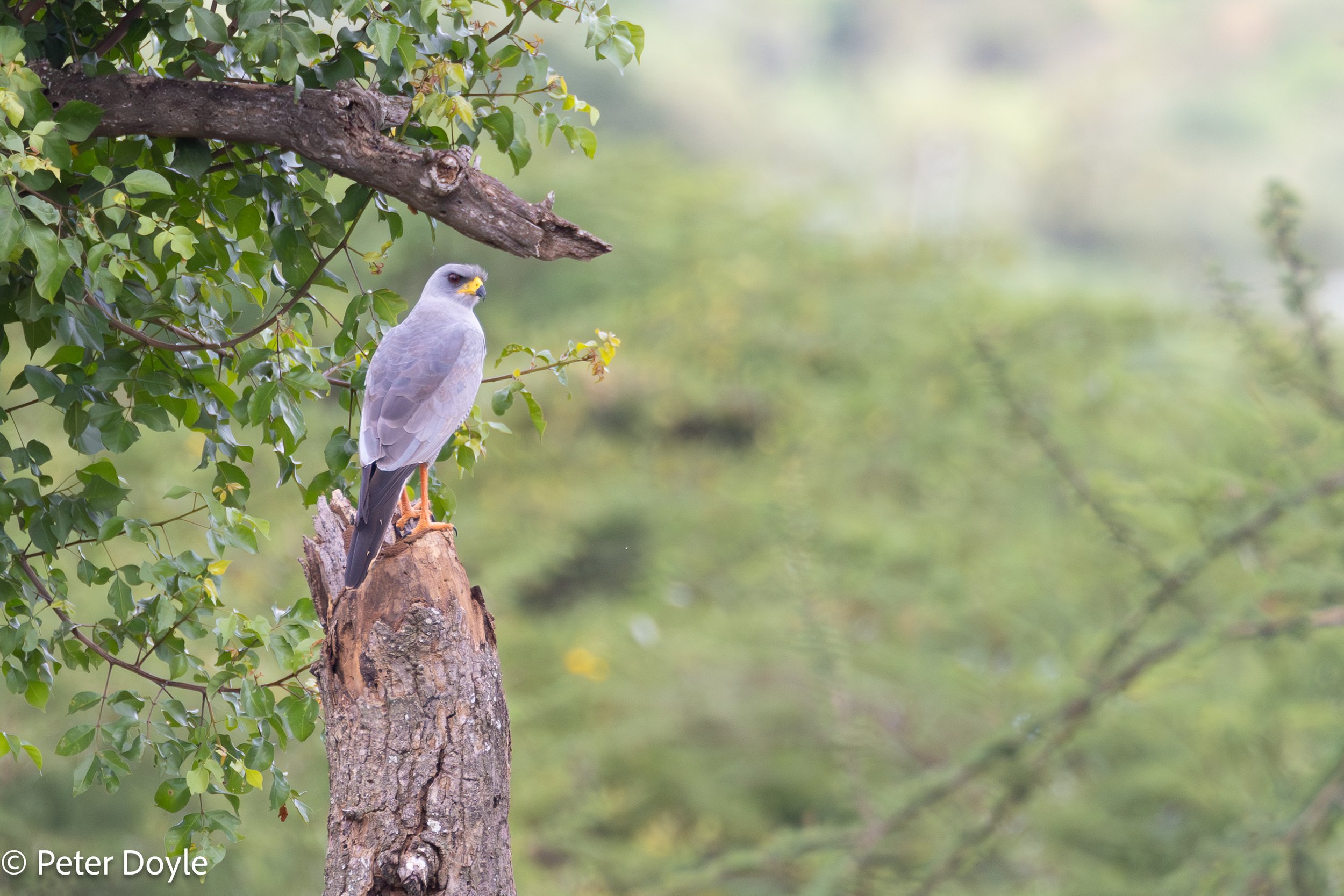
Clockwise from top left:
White-bellied Canary (Crithagra dorsostriata) Blue-capped Cordon-bleu (F) (Uraeginthus cyanocephalus) Beautiful Sunbird (F) (Cinnyris pulchellus) Somali Bunting (Emberiza poliopleura) Eastern Chanting Goshawk (Melierax poliopterus) Vitteline Masked Weaver (Ploceus vitellinus) Kenya Sparrow (Passer Rufocinctus) Superb Starling (Lamprotornis superbus)
But perhaps my favourite bird from this first day in Tanzania, was this beautiful little Northern Red-fronted Tinkerbird:
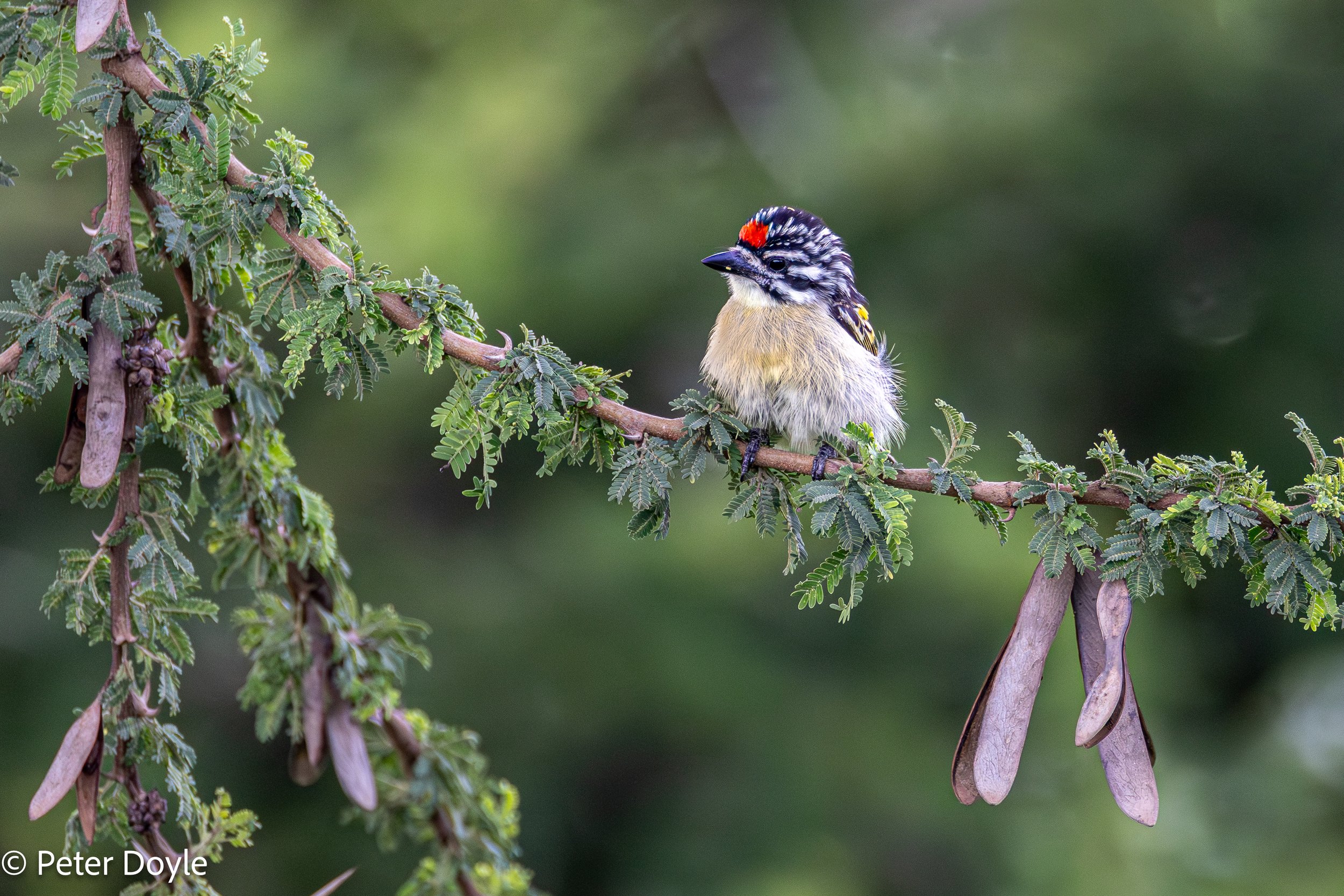
Northern Red-fronted Tinkerbird (Pogoniulus uropygialis)
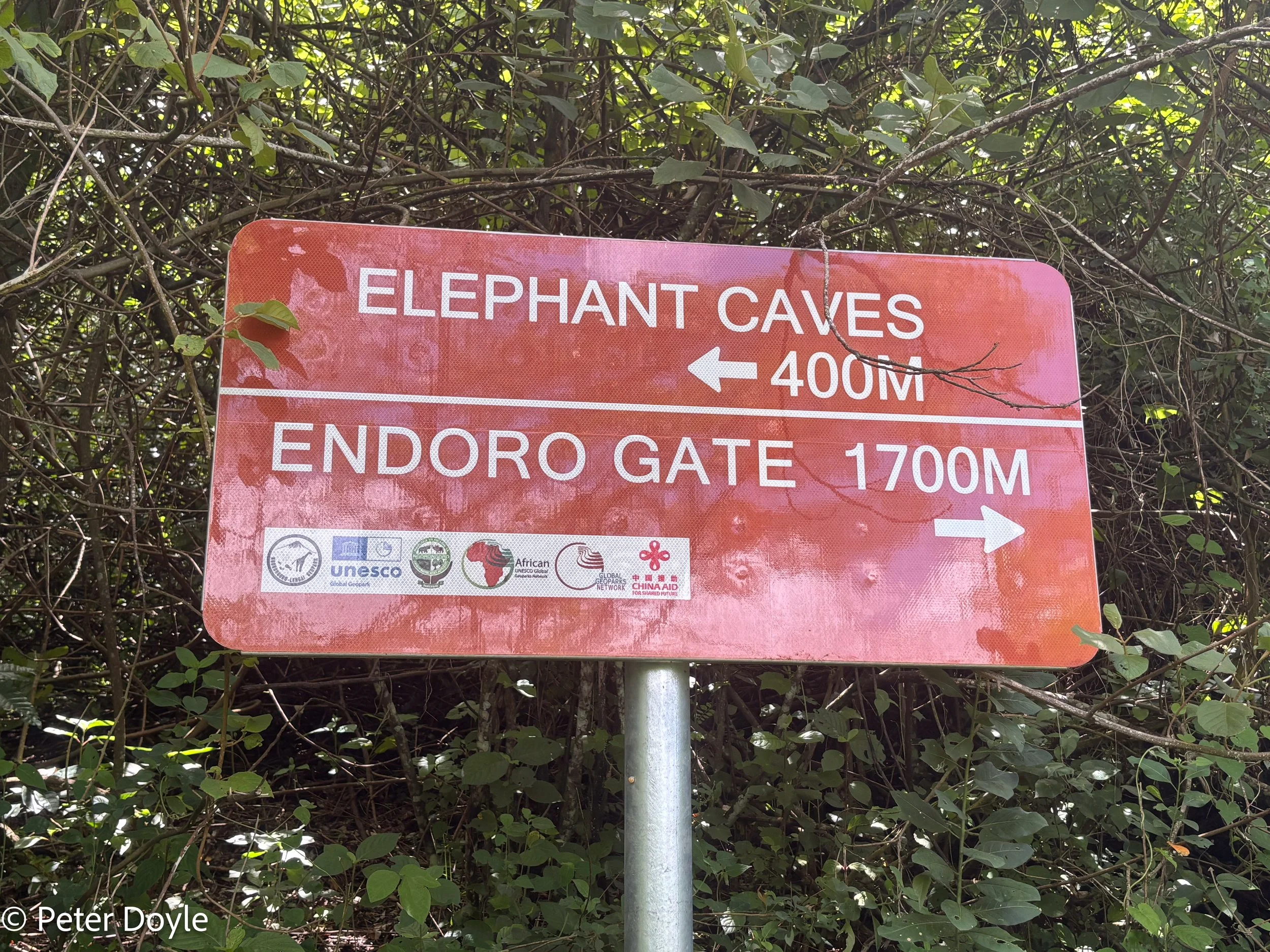
Walking the Endoro Trail to Elephant Caves
Arriving eventually in the Ngorogoro Highlands, we stayed at Kankari Lodge in the town of Karatu.
We spent most of the next day walking through the forest trail from Endoro Gate to Elephant Caves. We did not eventually get to the caves, where the elephant apparently dig for minerals in the clay. Nor did we see any elephant that day, but we saw plenty of evidence of the elephant and their tracks.
But perhaps it was better that we did not meet any elephant on that narrow, muddy trail!
But as said, the birdlife was prolific. And although it was a forest trail, we were mostly walking along contours along a steep hillside, and so often we had a steep bank on one side, and the canopy of trees nearer to eye-level on the other side, just because of the steepness of the slope.
Almost all the birds we saw were in that tree canopy. This is ideal for forest birding.
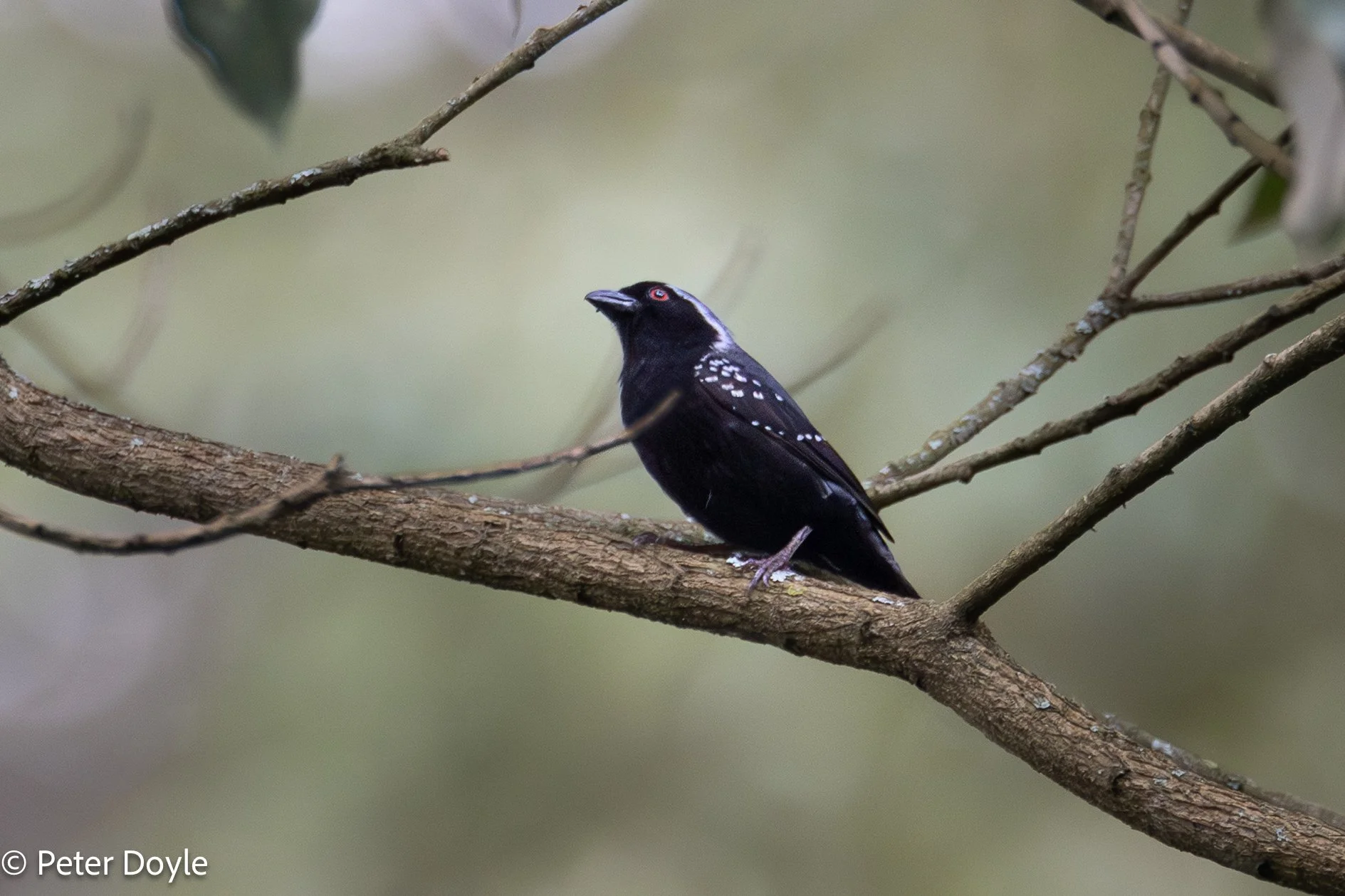
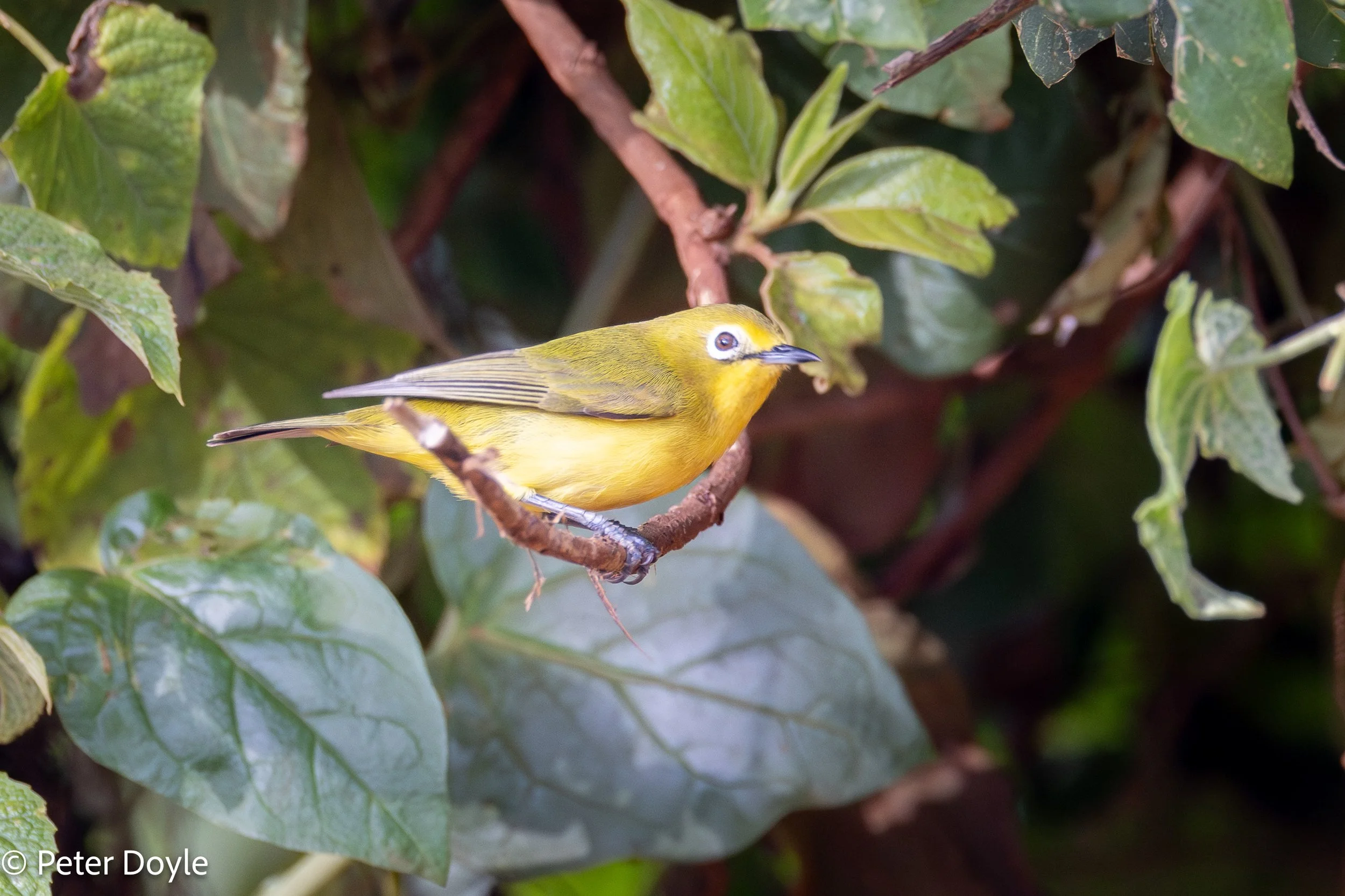
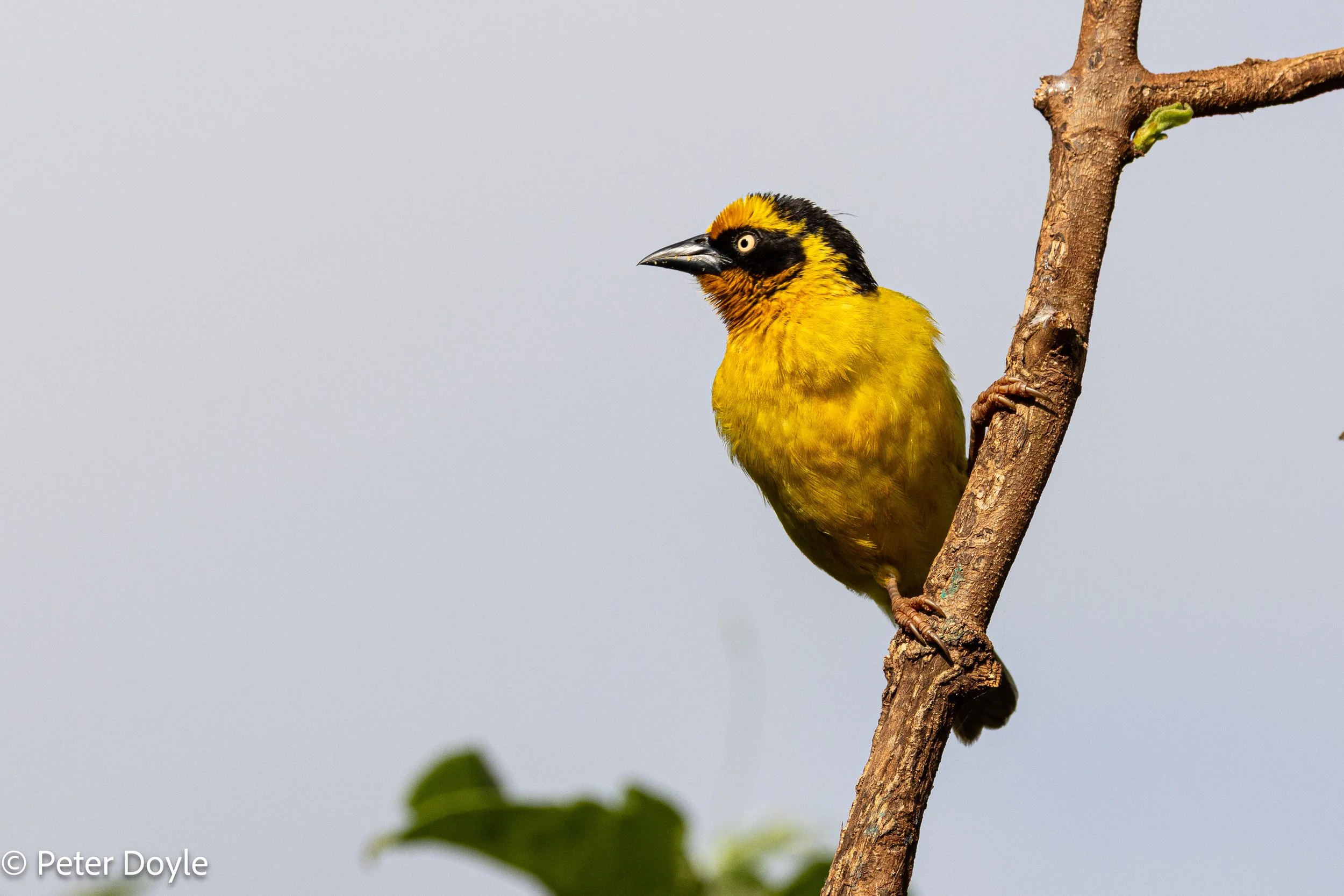
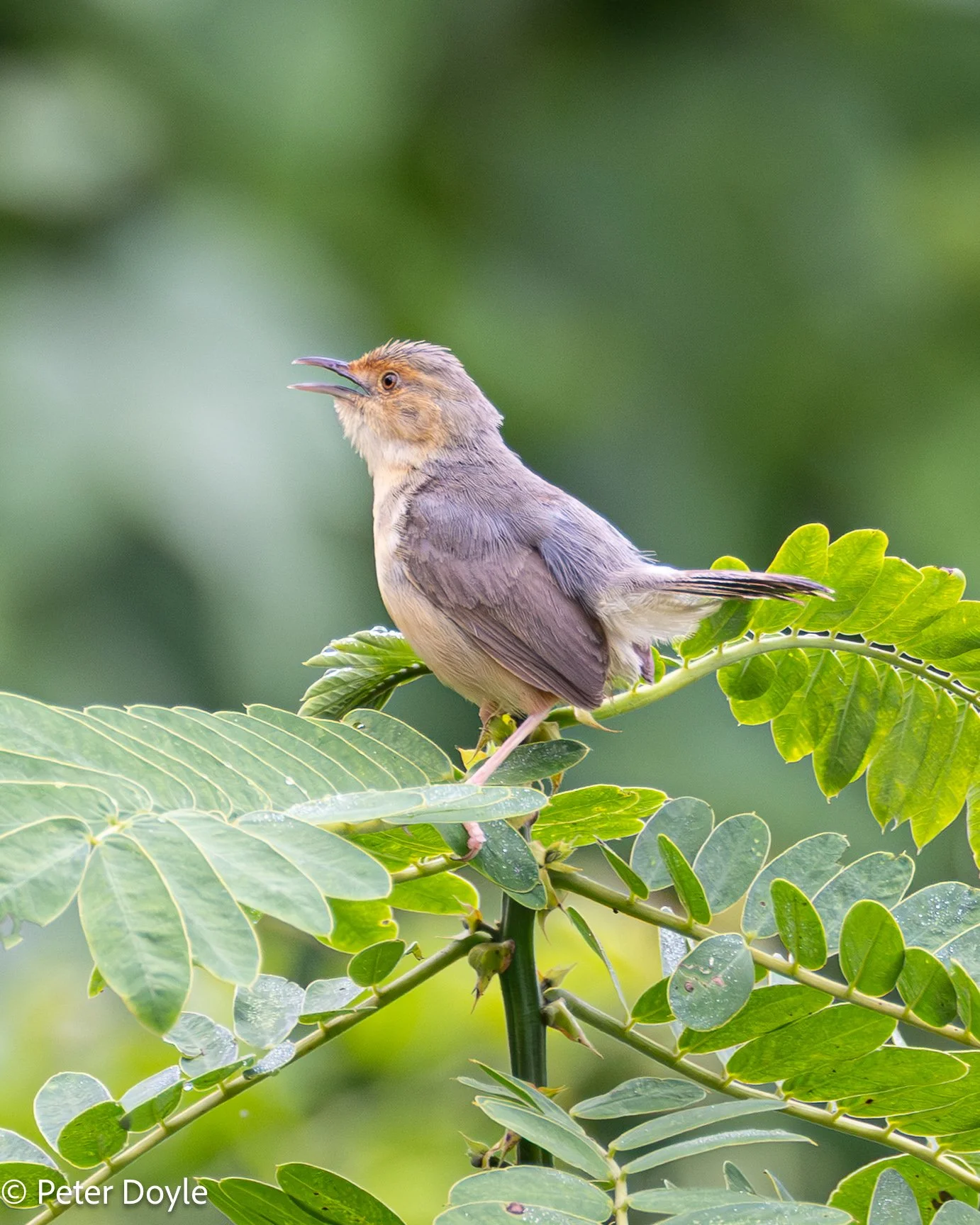
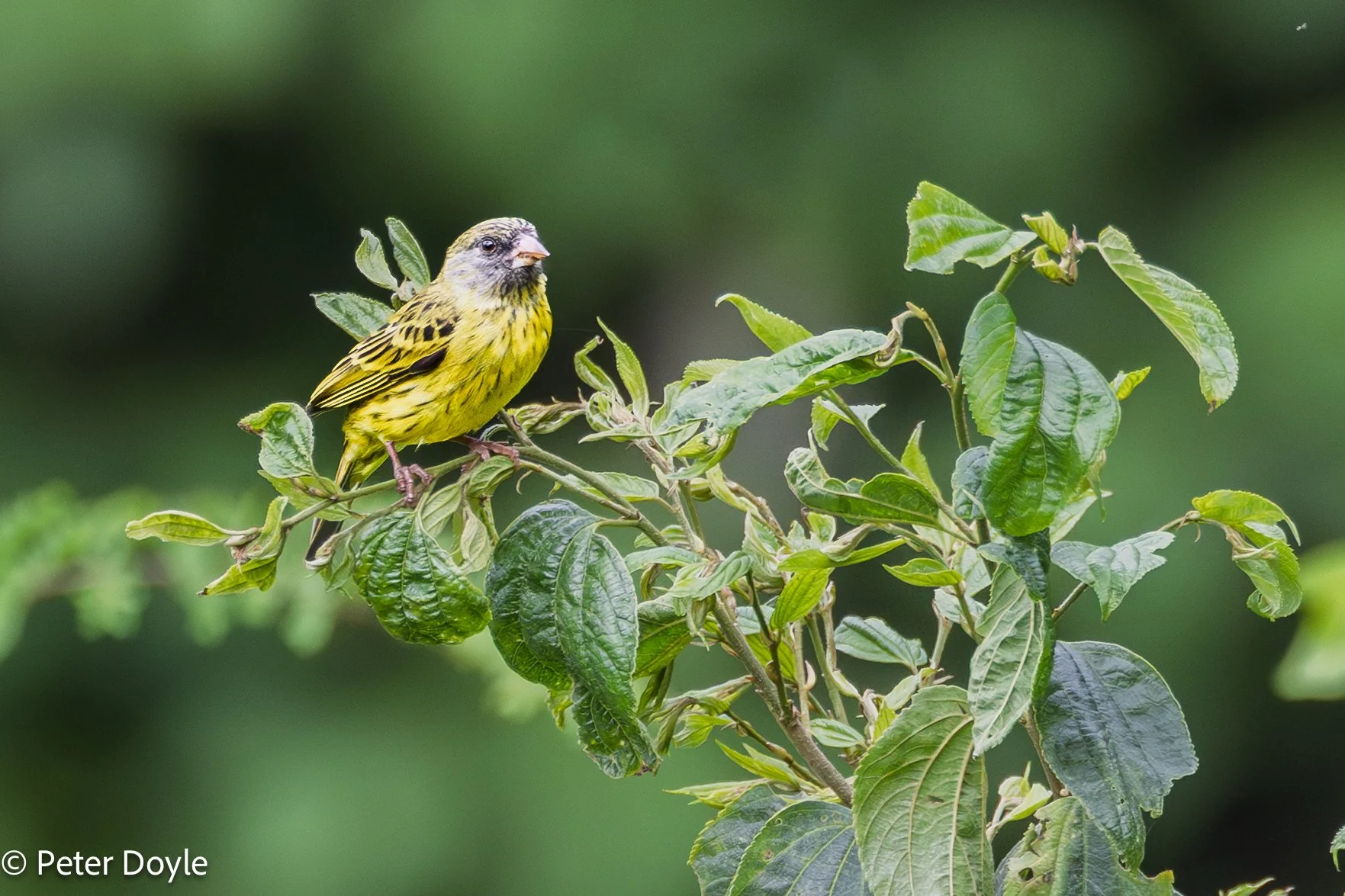
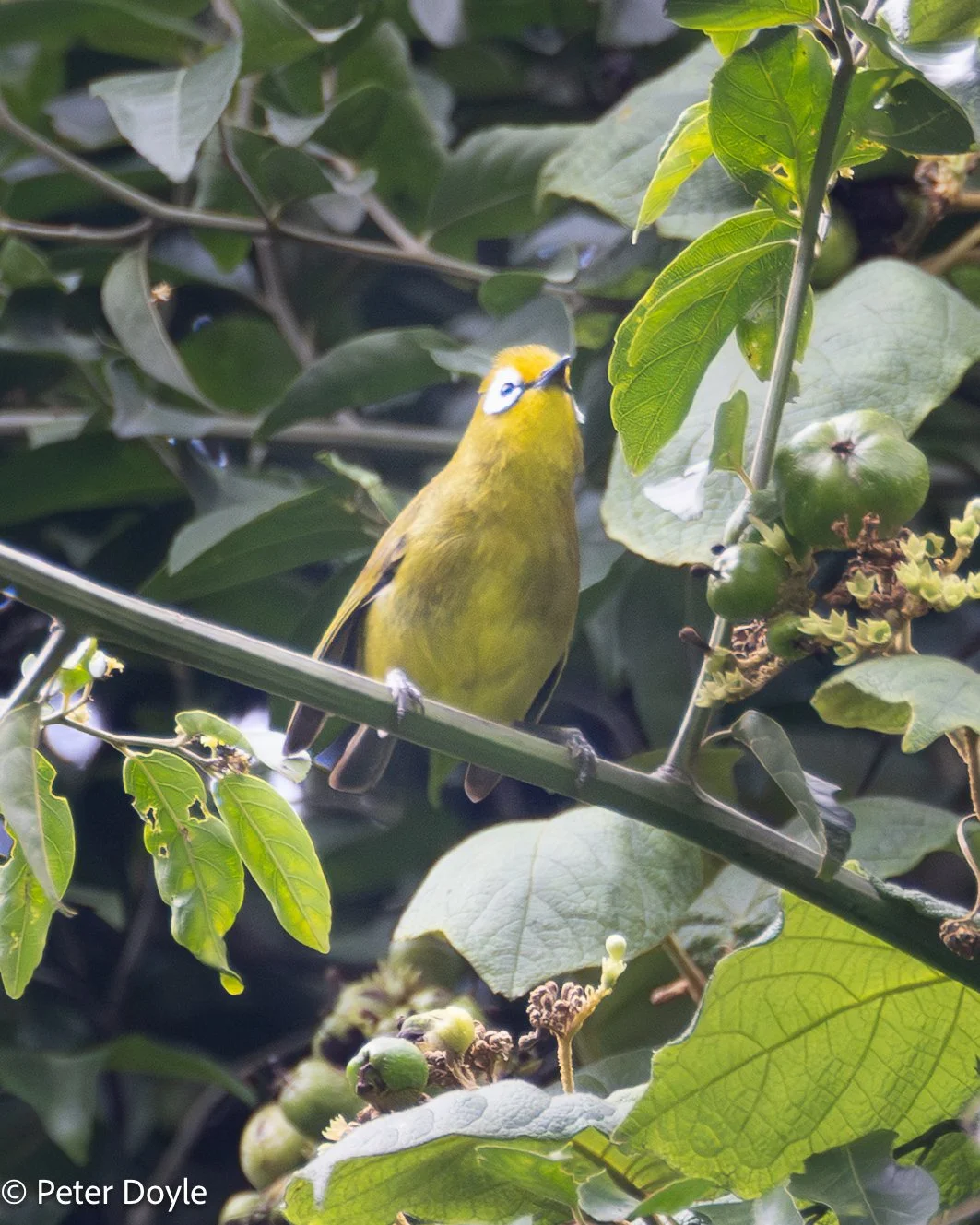
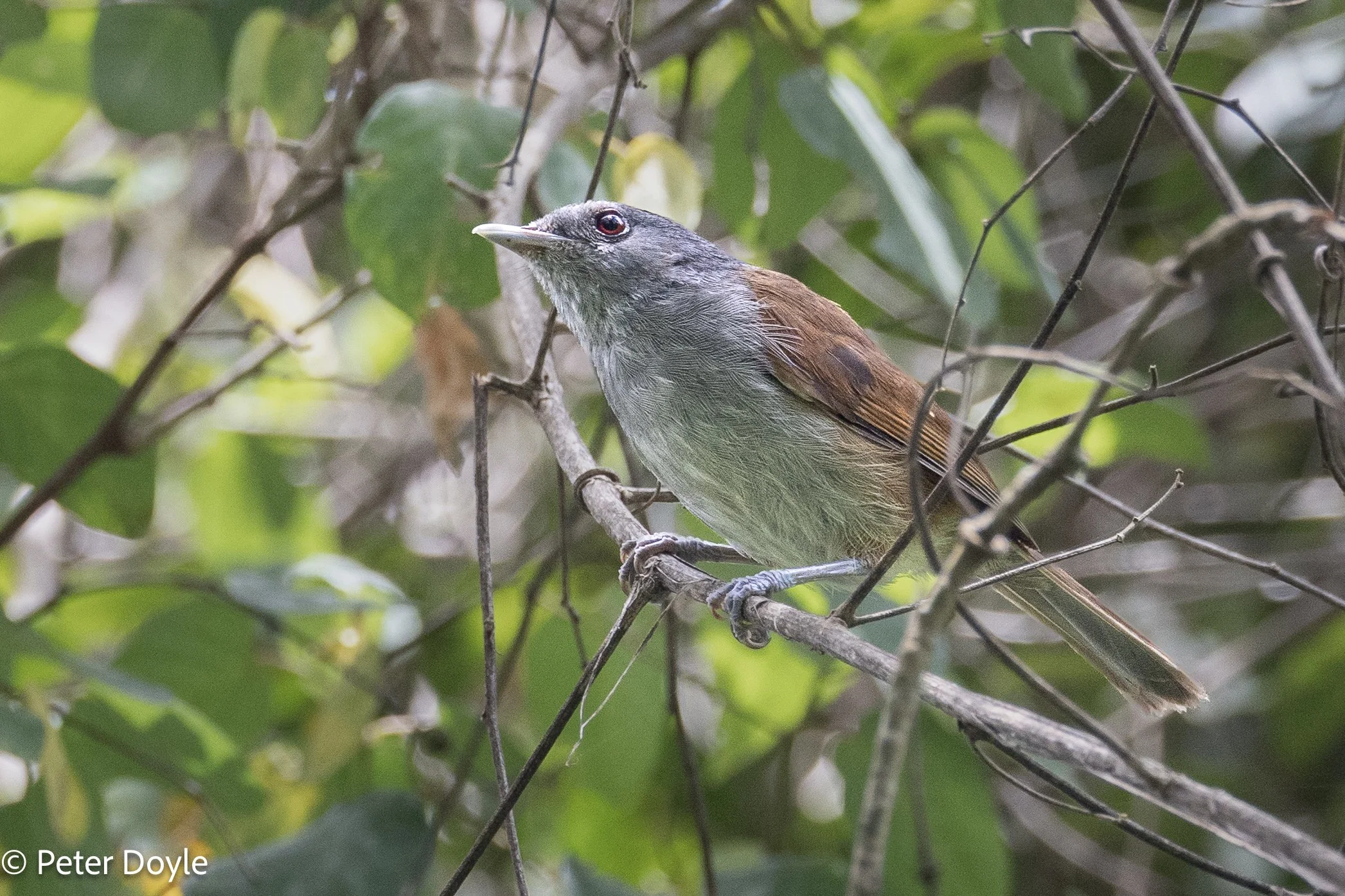
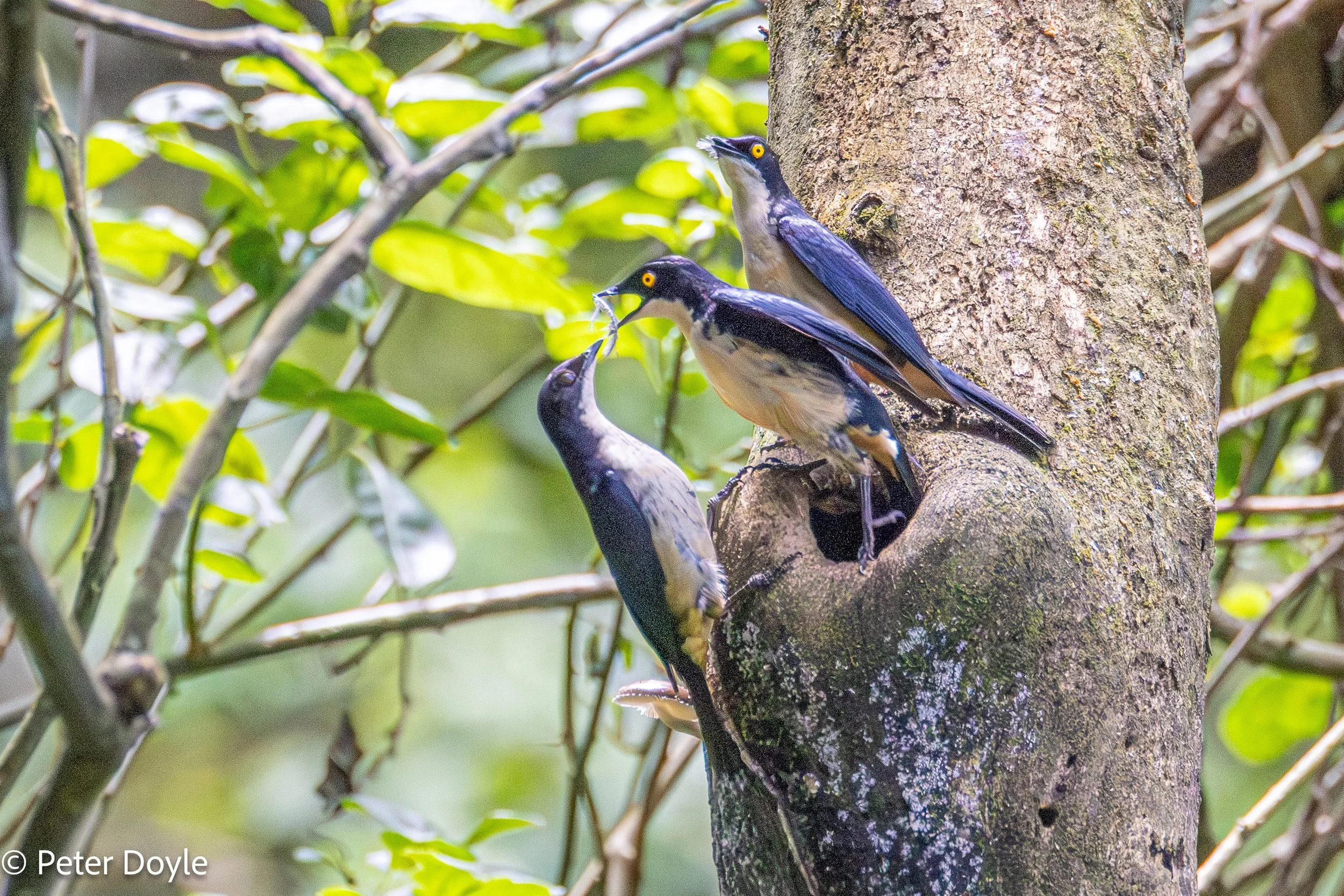
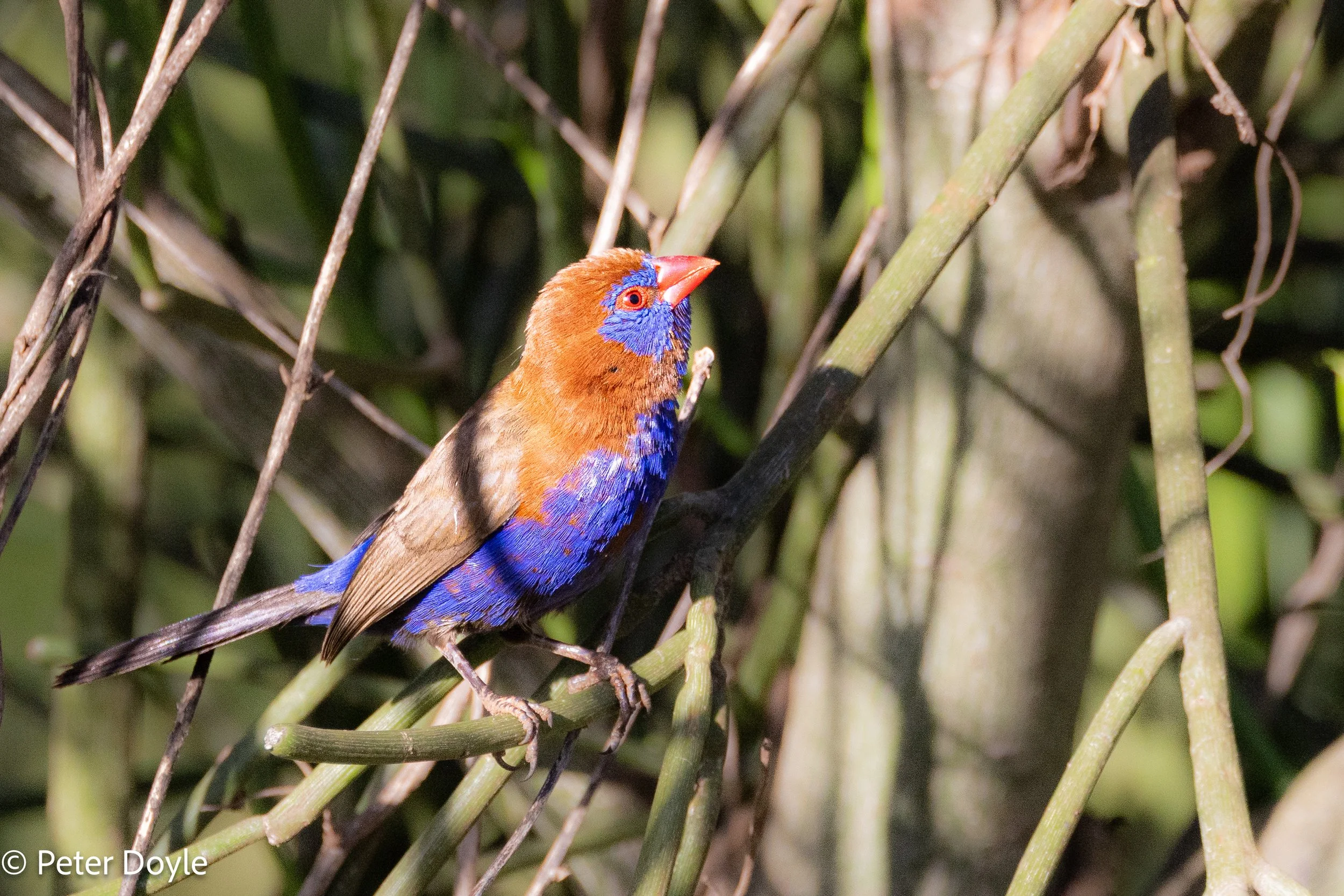
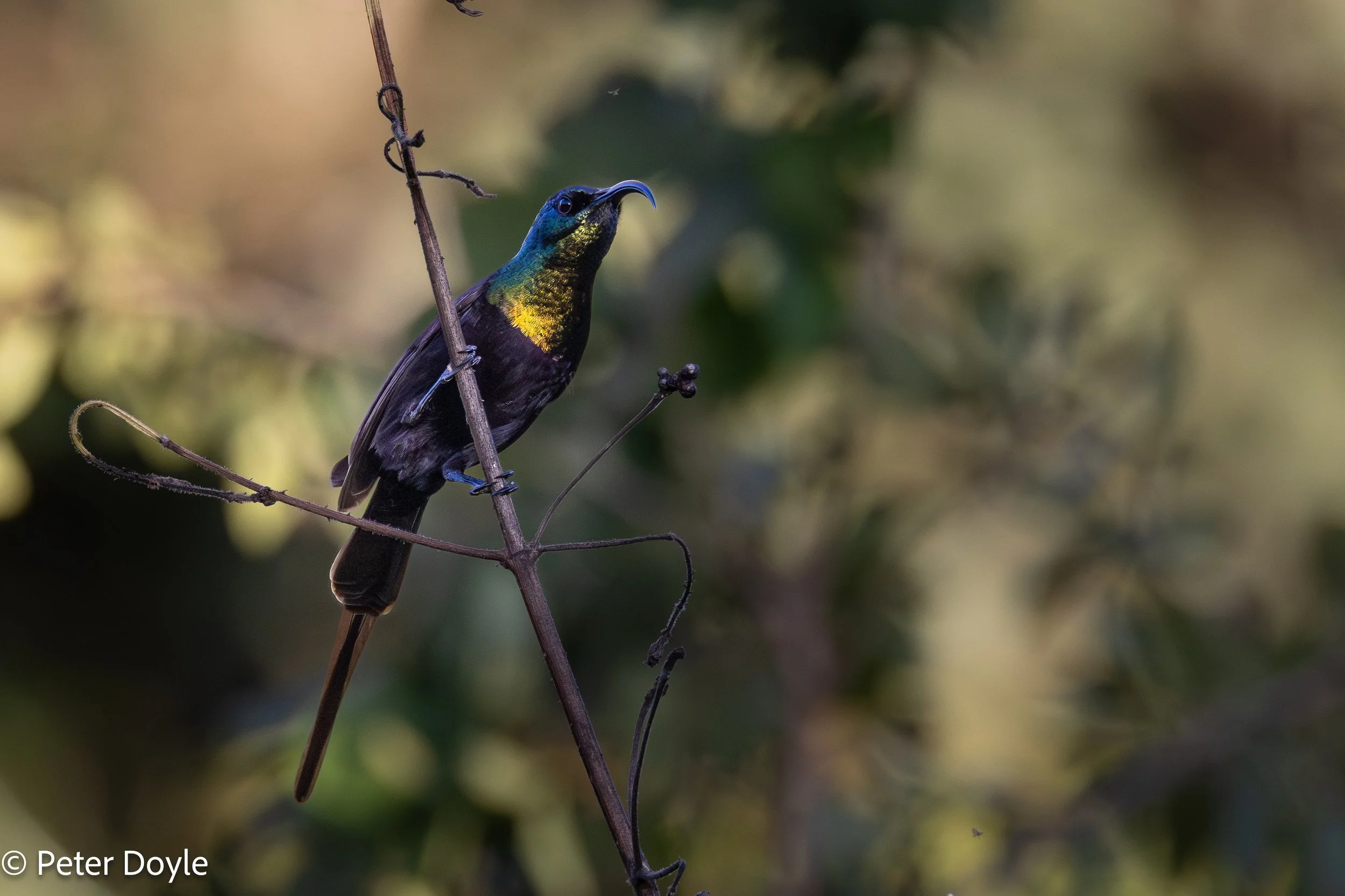
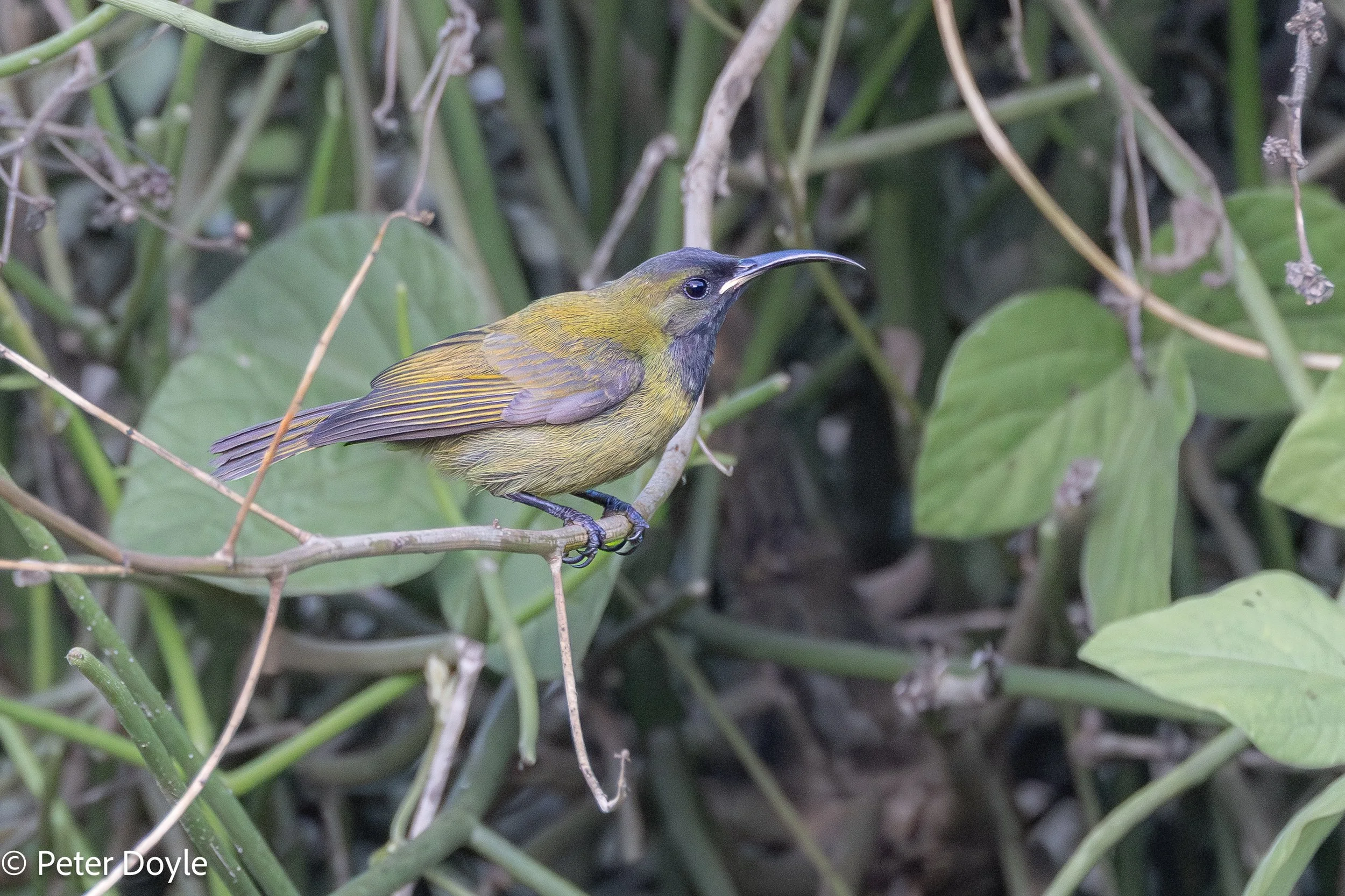
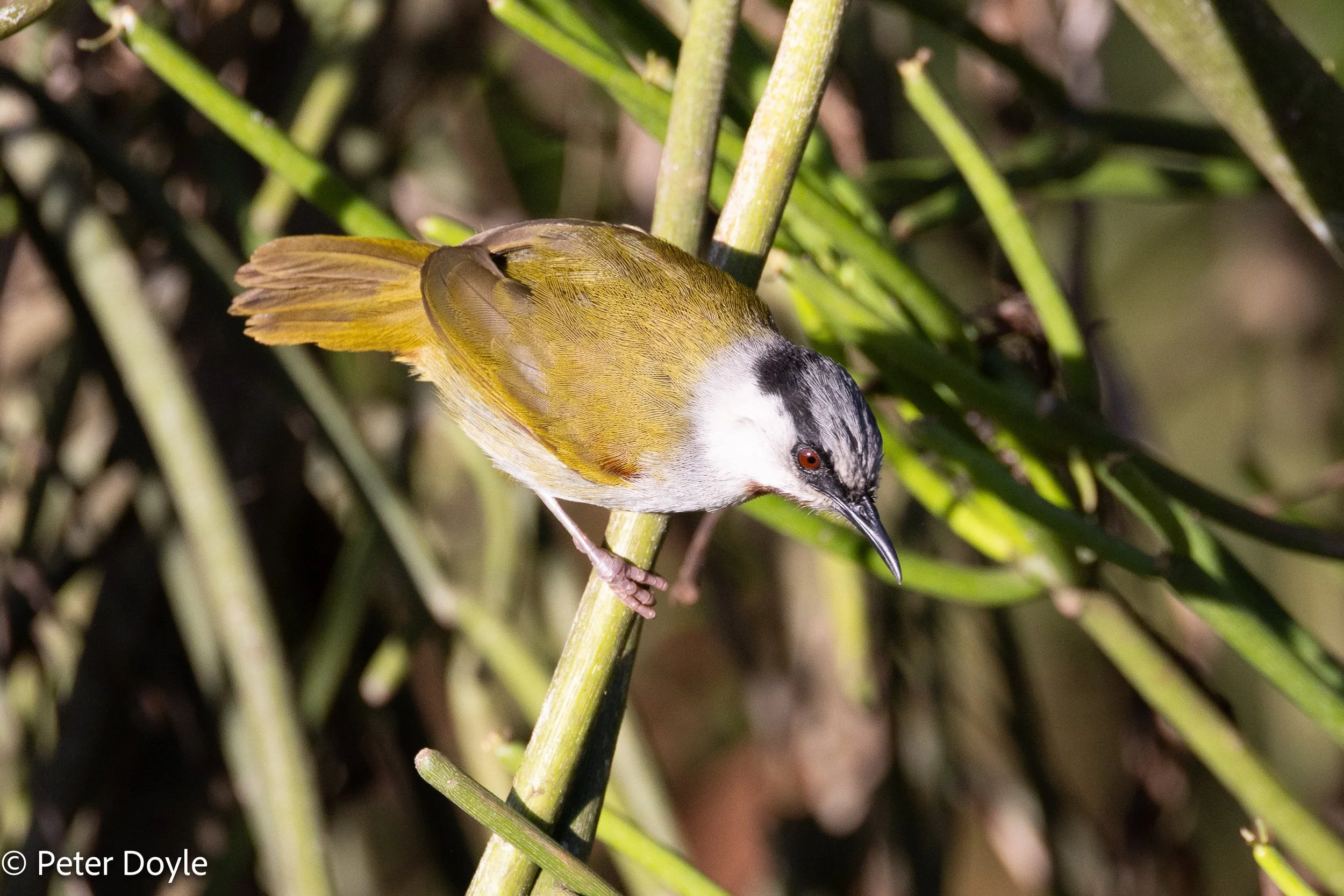
Clockwise from top left:
Grey-headed Nigrita (Nigrita canicapillus) Pale White-eye (Zosterops flavilateralis) Red-faced Cisticola (Cisticola erythrops) Mbulu White-eye (Zosterops mbuluensis) Sharpe's Starling (Pholia sharpii) Bronze Sunbird (Nectarinia kilimensis) Grey-capped Warbler (Eminia lepida) Green-headed Sunbird (juv) (Cyanomitra verticalis) Purple Grenadier (Granatina ianthinogaster) African Hill Babbler (Sylvia abyssinica) Southern Citril (Crithagra hyposticta) Baglafecht Weaver (Ploceus baglafecht)
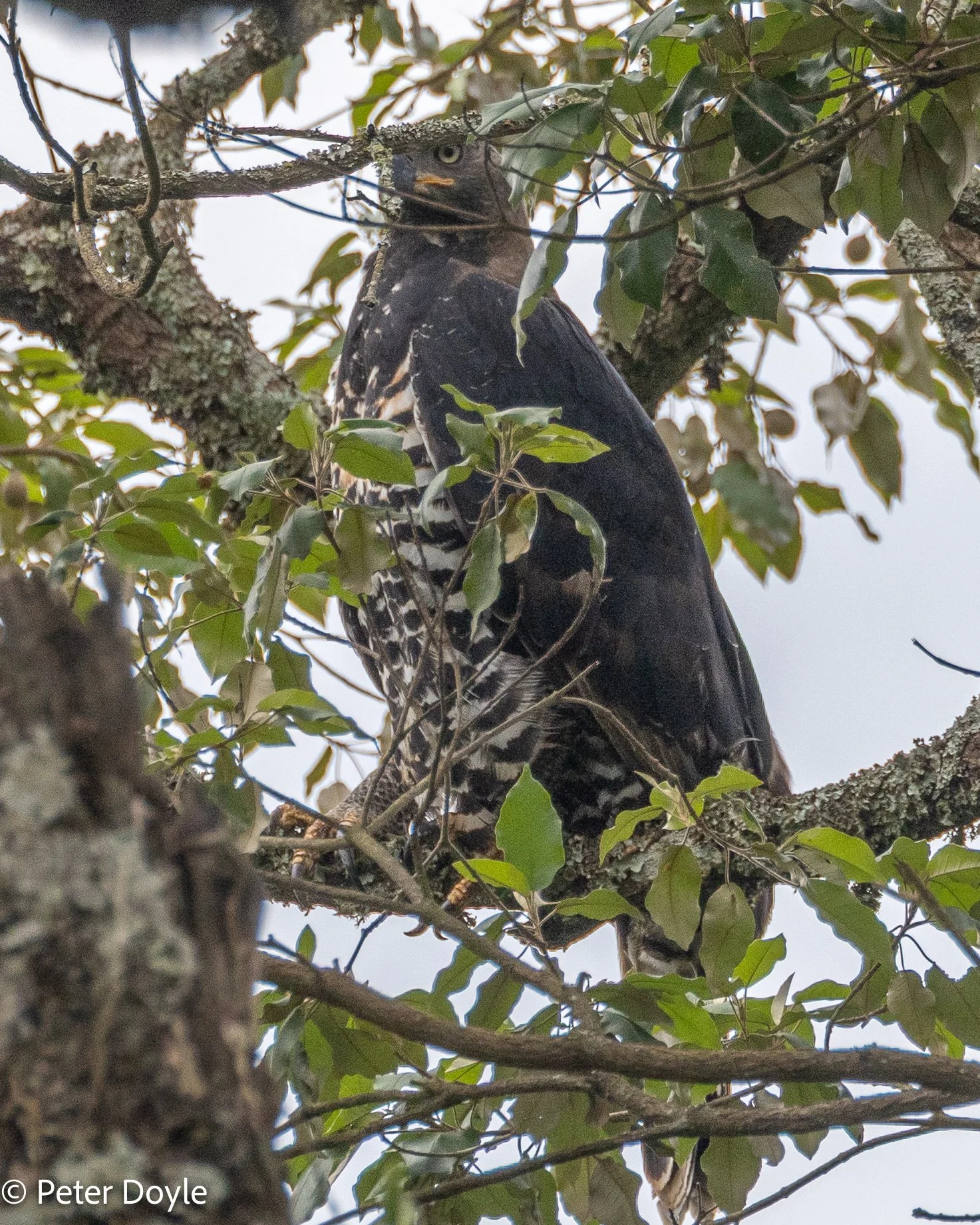
We also had the pleasure of a close up view of this magnificent bird of prey normally found above the forest canopy.
Crowned Eagle (Stephanoaetus coronatus)
Tarangire National Park
The next day we were off to our first naitional park, the Tarangire National Park. On the way, in the early morning light we were treated to to the sight of two, new, but very different birds. To give context, the Lovebird is probably the same size as the Hornbill’s bill!
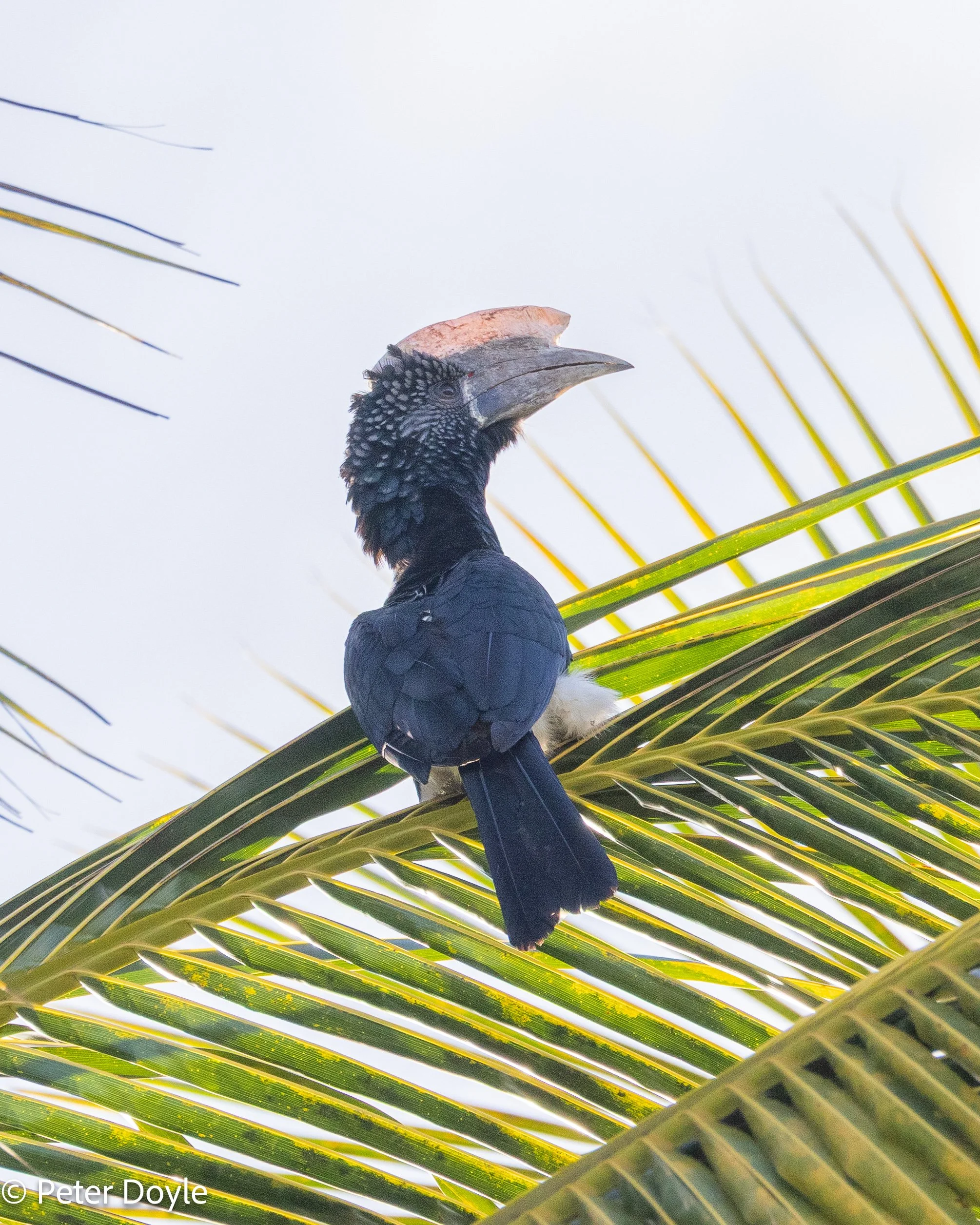
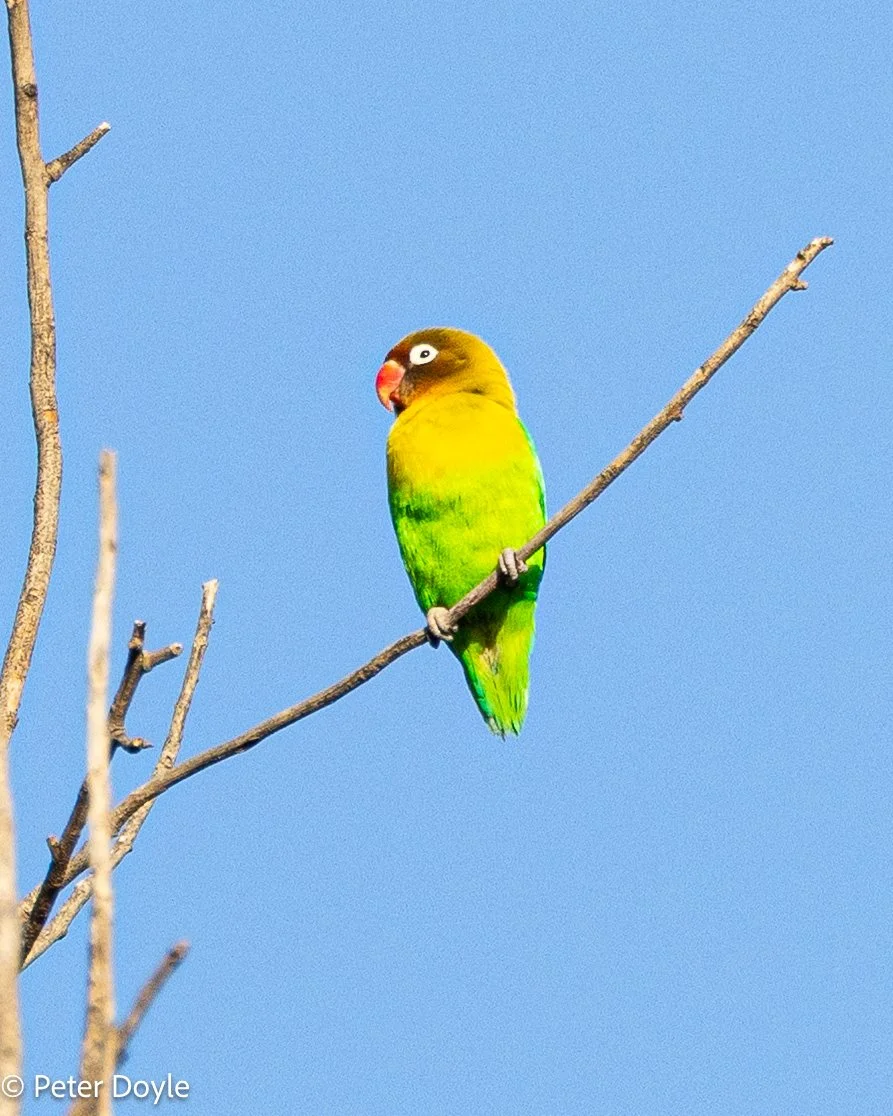
Silvery-Cheeked Hornibill (Bycanistes brevis) . Fischer's Lovebird. (Agapornis fischeri)
We also did some roadside birding en-route, seeing two new, but very different, Weavers:
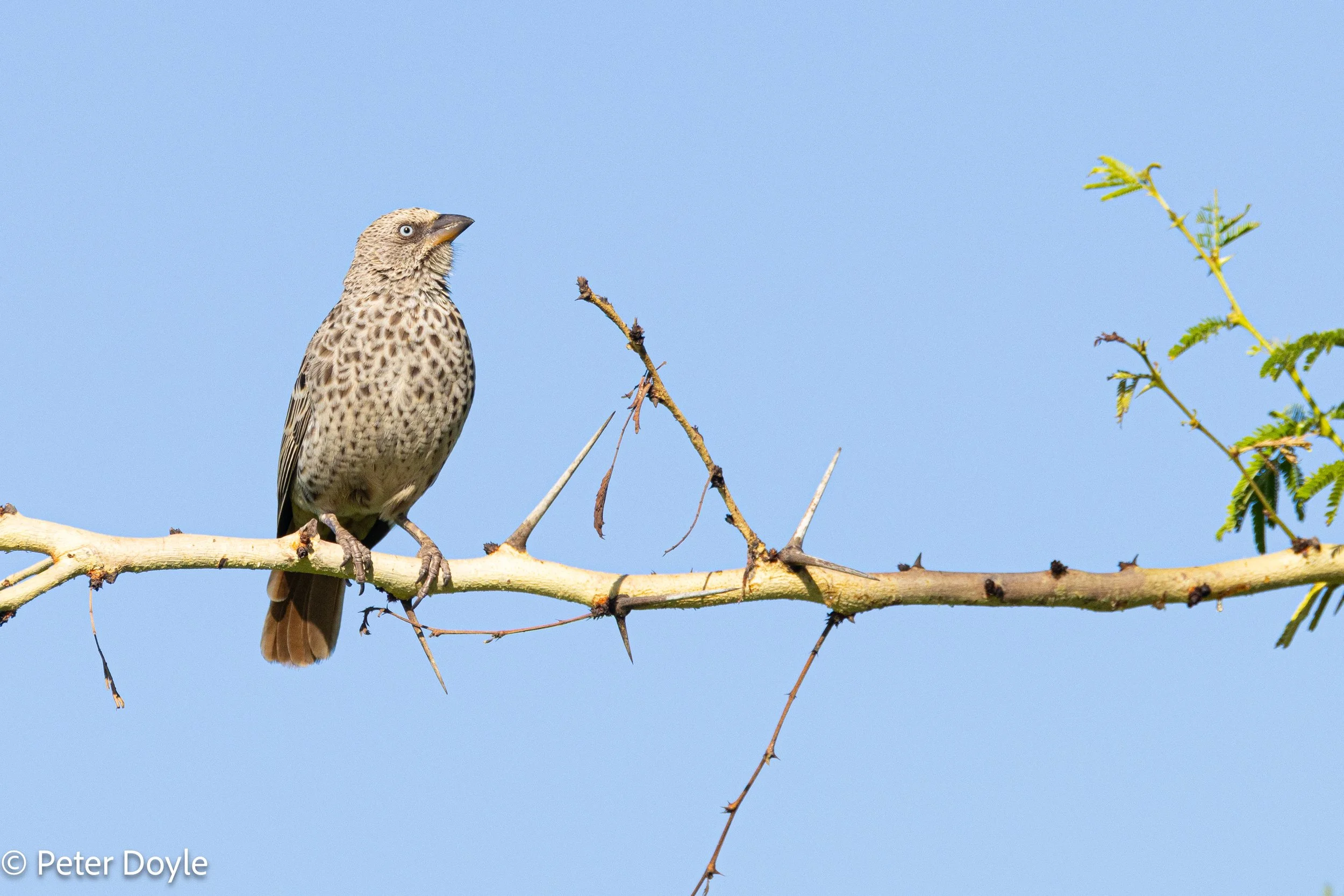
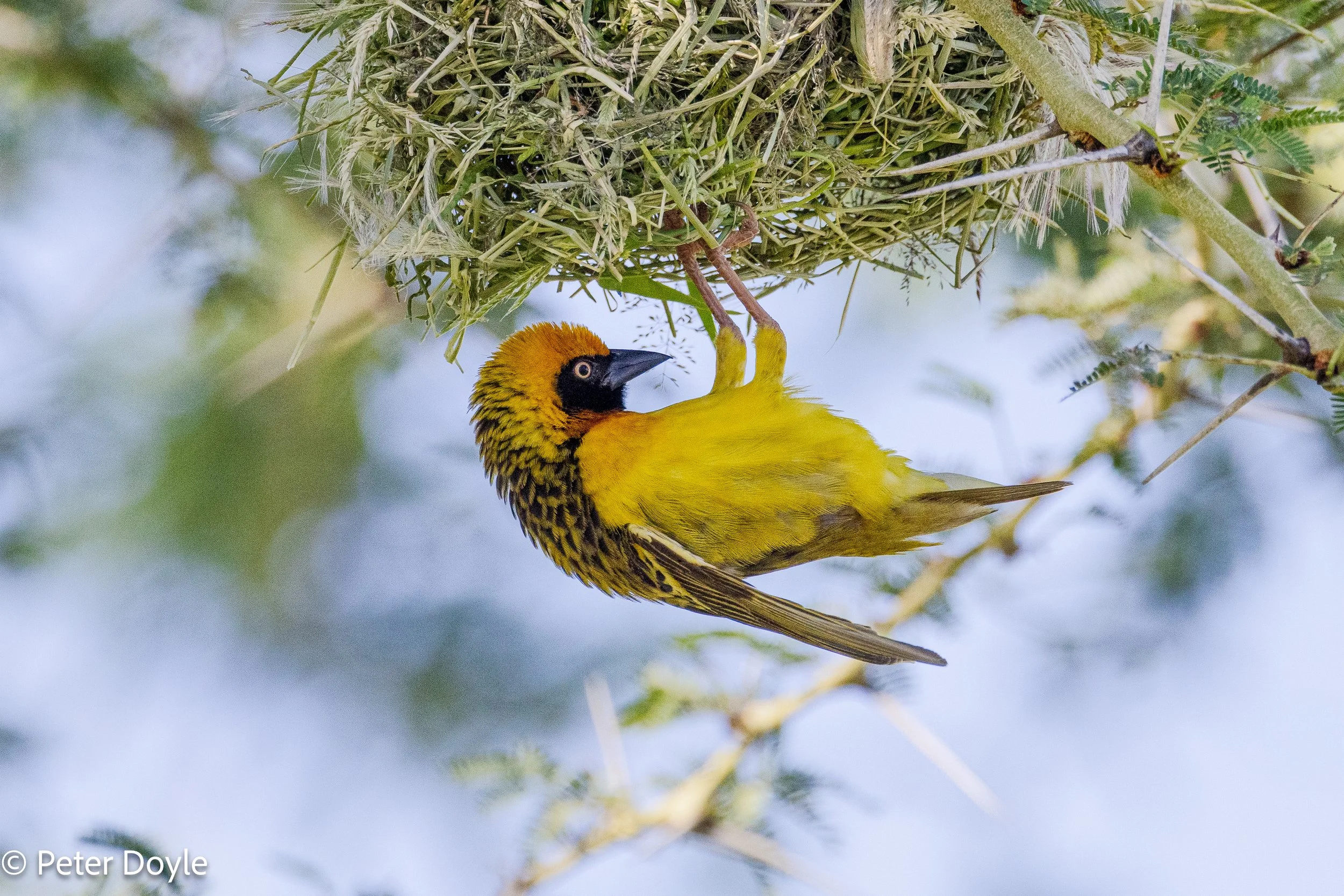
Rufous-tailed Weaver (Histurgops ruficauda) Speke's Weaver (Ploceus spekei)
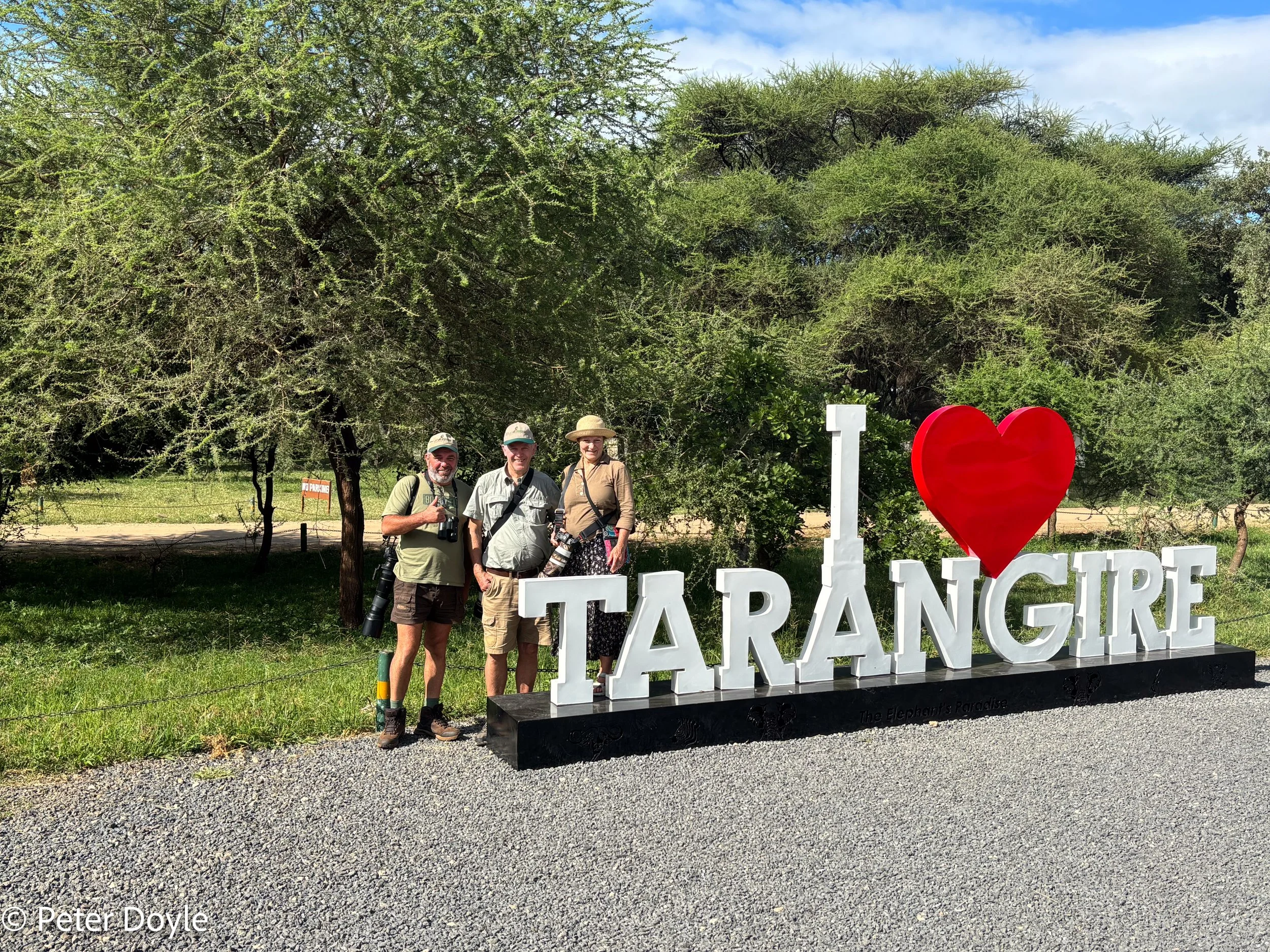
Guess where we were?
Some of the most productive birding we had at Tarangire was actually around the entrance gate, which is surrounded by a small thornveld woodland. It was also nice to be out of the vehicle and walking around.
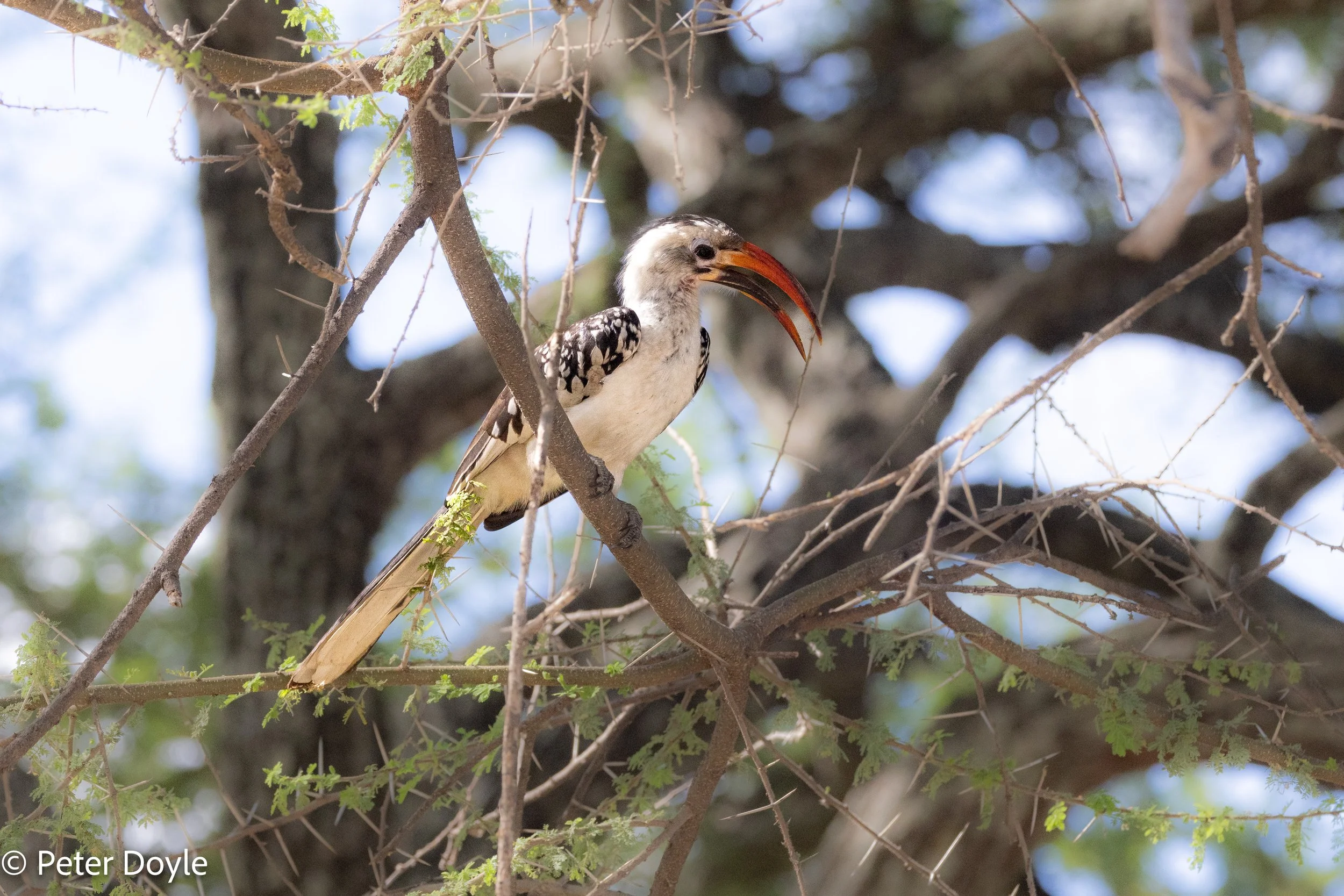
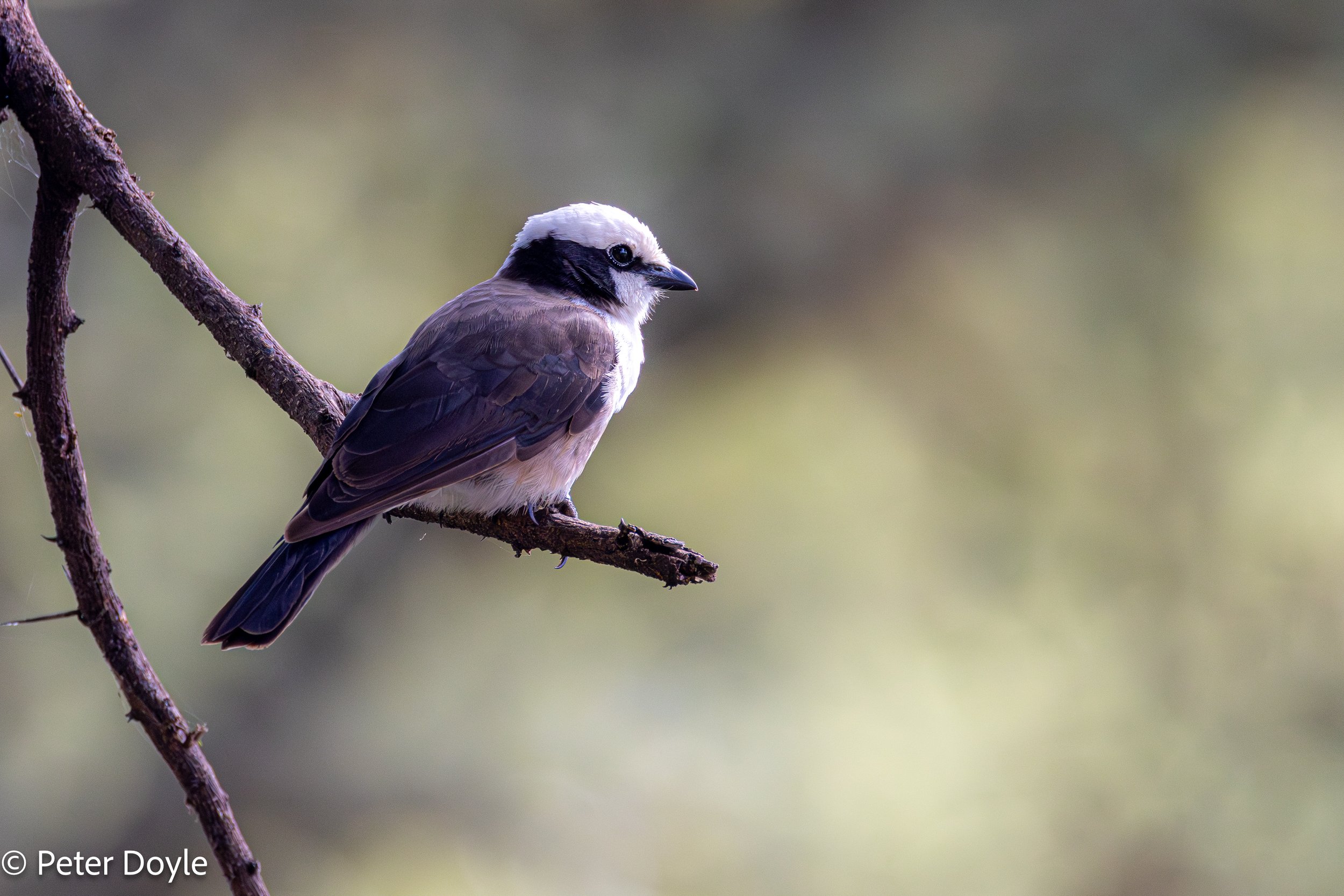
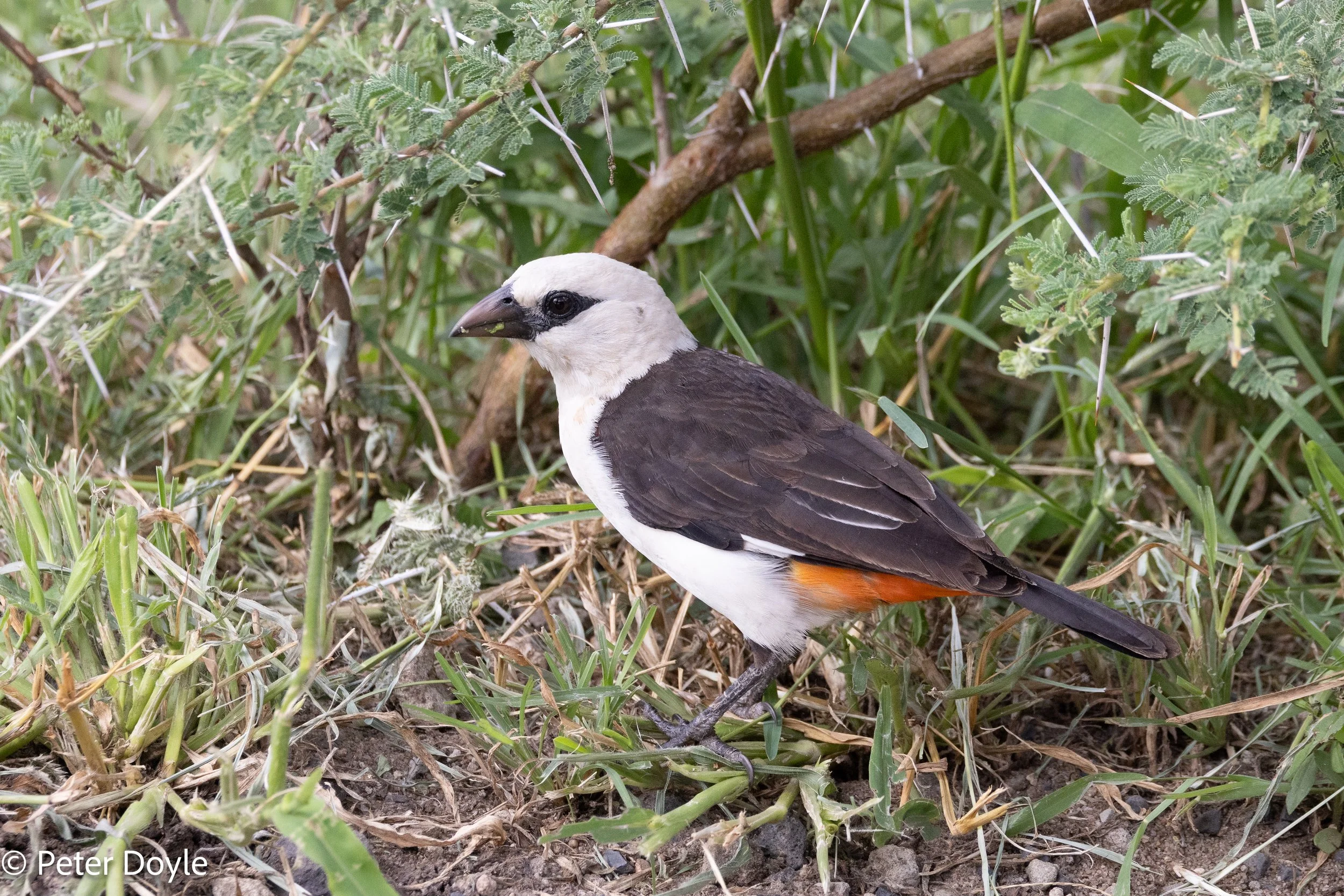
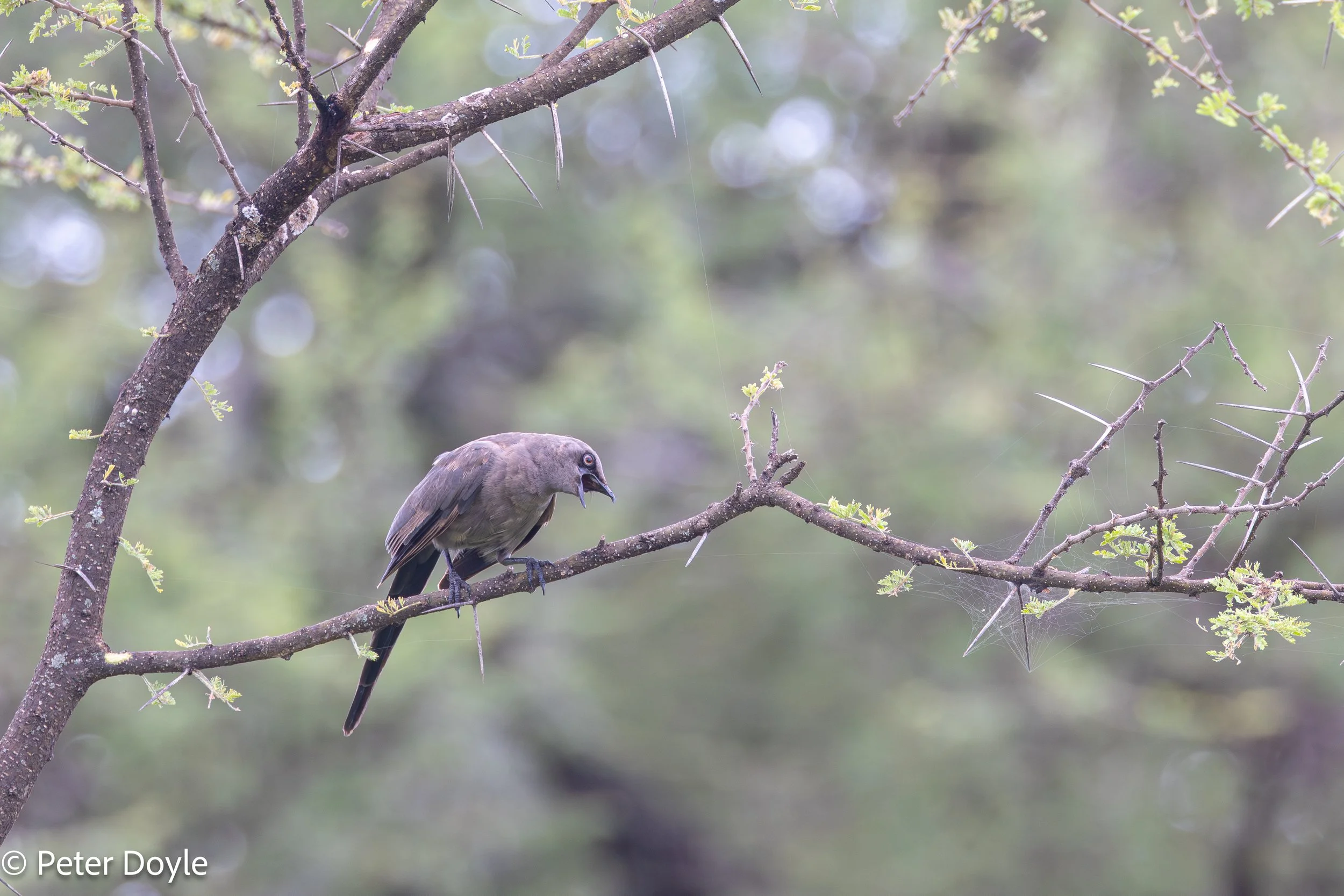
Clockwise from top left:
Northern Red-billed Hornbill (Tockus erythorhynchus) Northern White-crowned Shrike (Eurocephalus ruppelli) Ashy Starling (Lamprotornis unicolor) White-headed Buffalo Weaver (Dinemelia dinemelia)
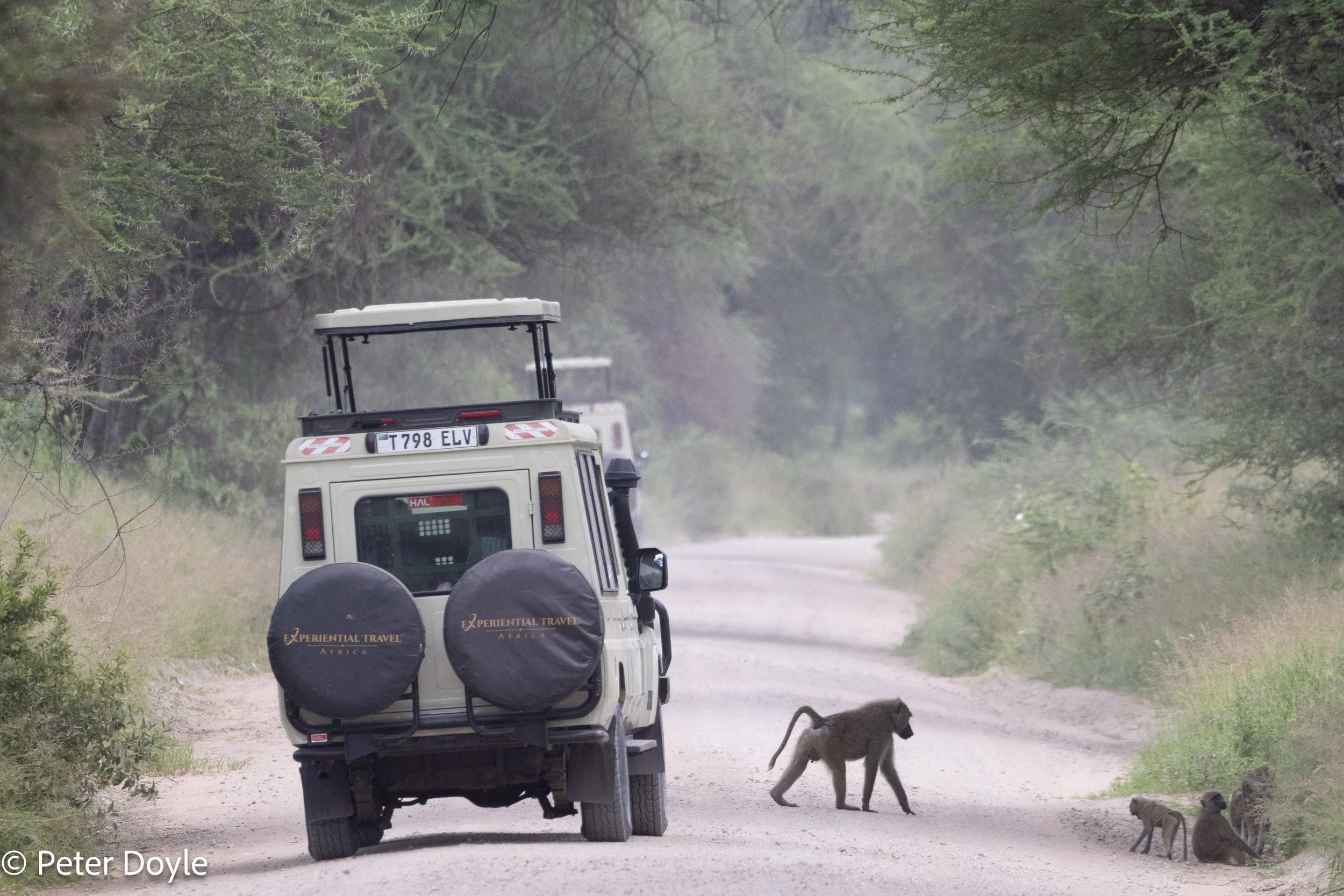
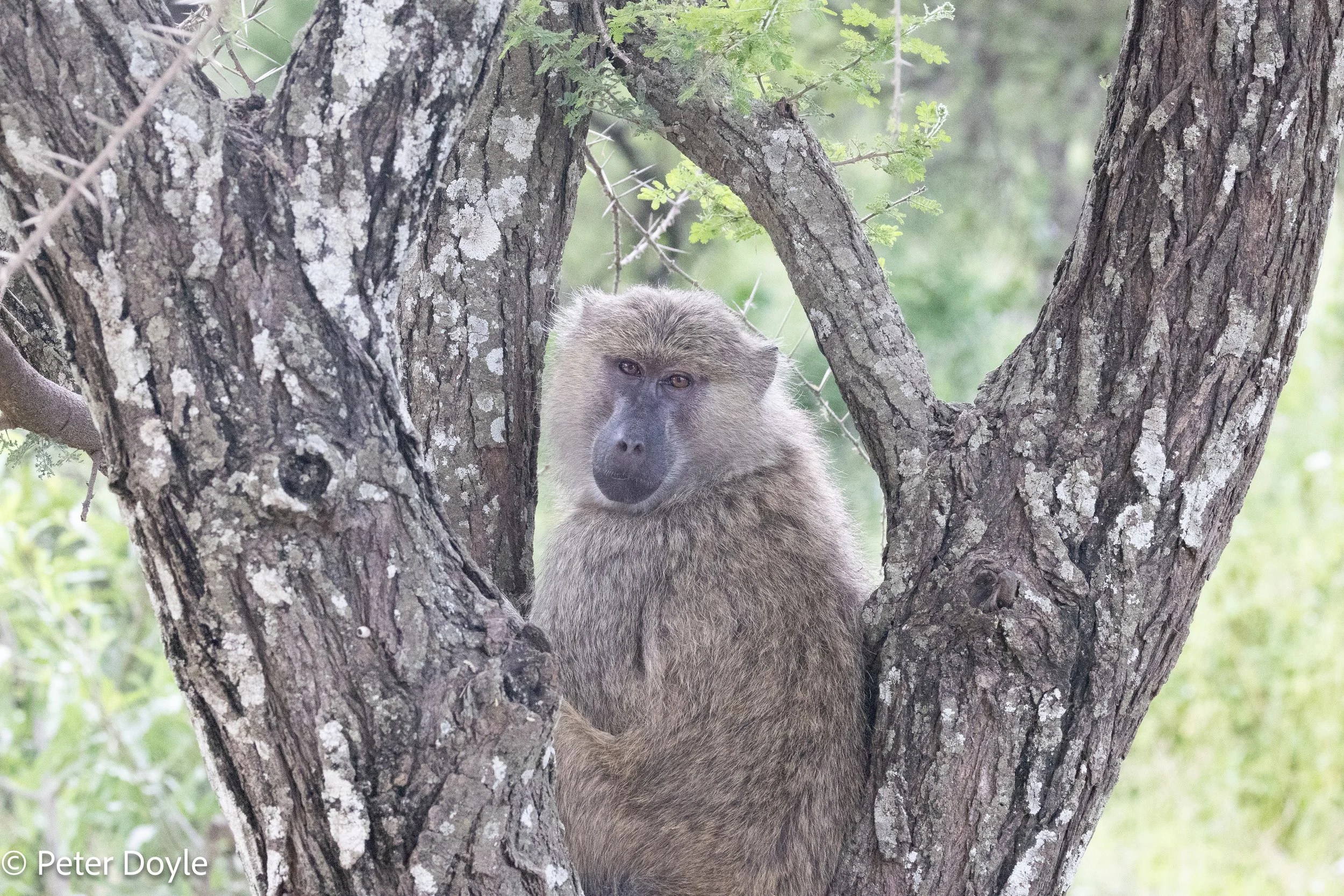
Olive Baboons were a common sight in the park.
We loved all the new and colourful species of Barbet in East Africa:
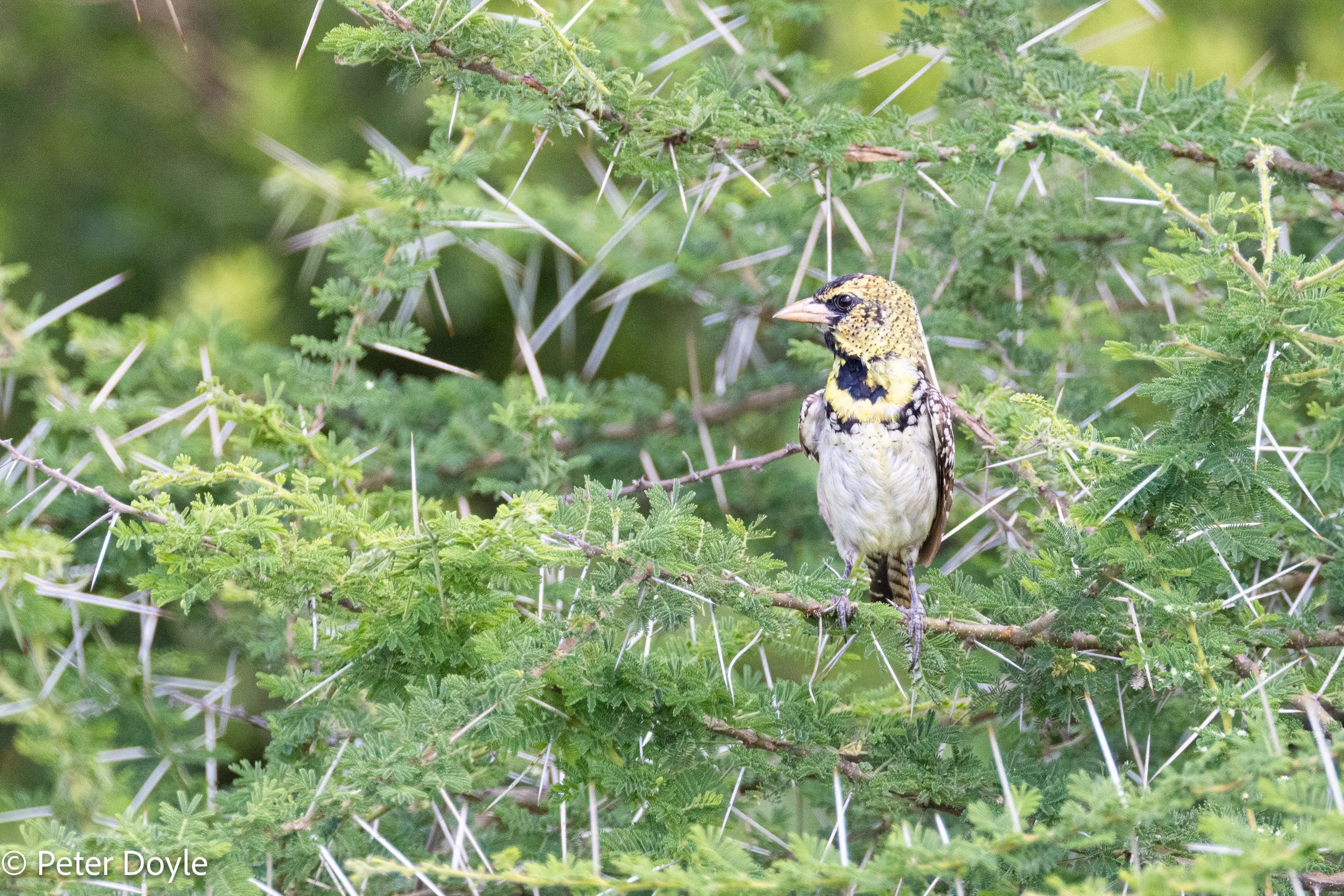
D'Arnaud's Barbet (Trachyphonus darnaudii)
… and a new species of Sandgrouse:
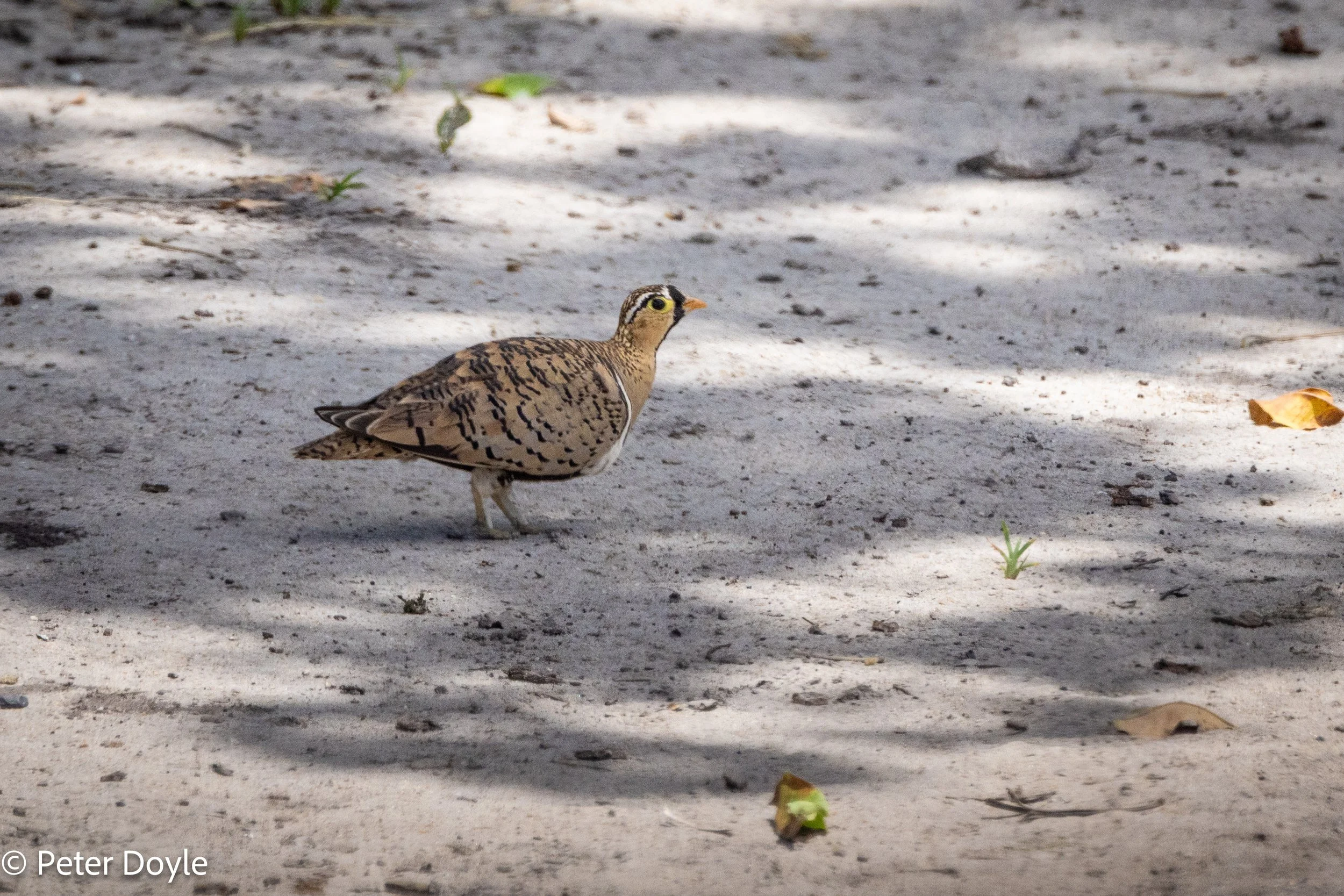
Black-faced Sandgrouse (Pterocles decoratus)
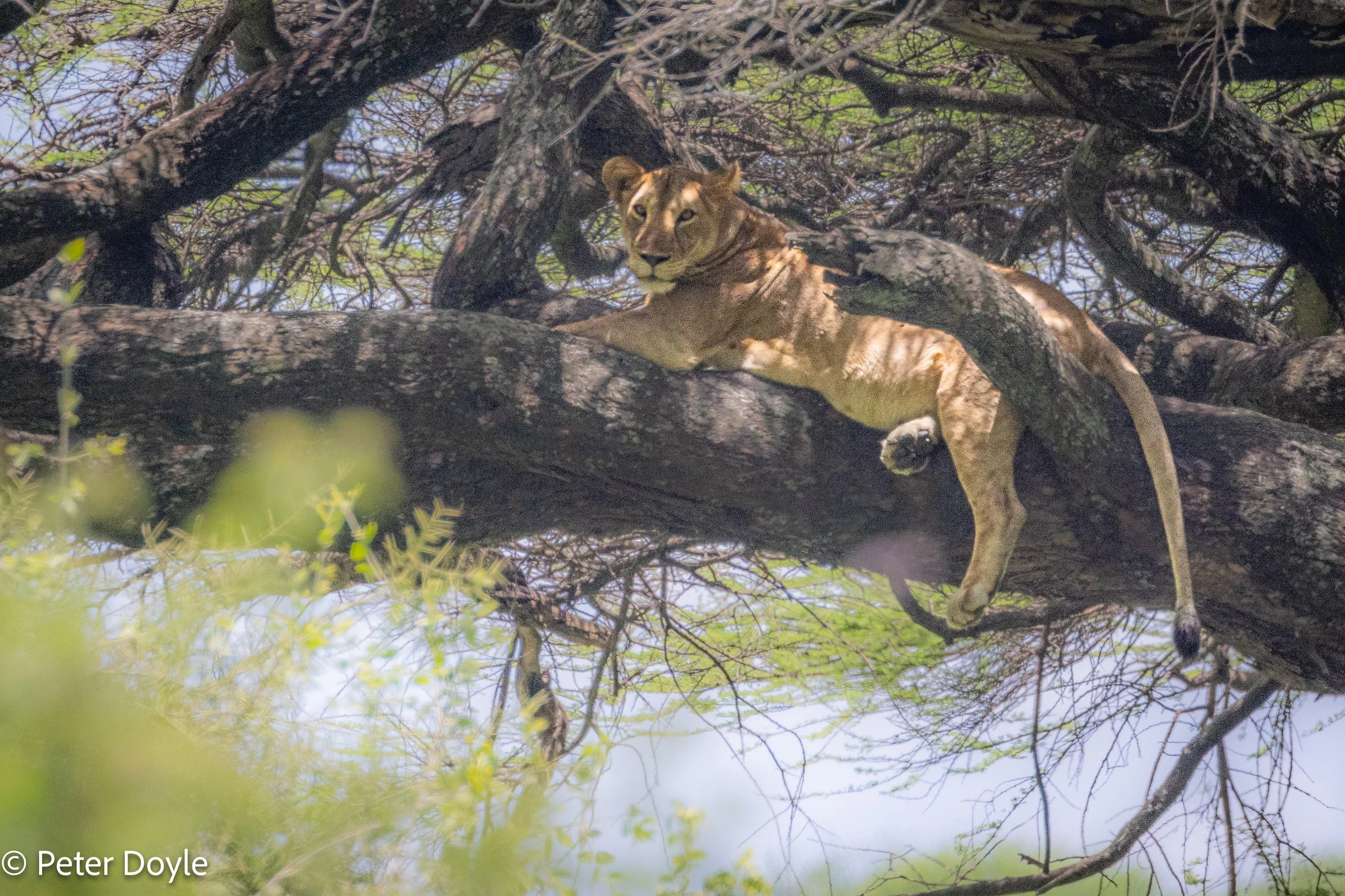
There are not only birds in the park. Tarangire NP is also renowned for its tree-climbing Lion (Panthera leo). And, well, we saw one!
No East African park is complete without an elephant, an umbrella thorn-tree, savannah grass and fluffy cumulous clouds overhead:
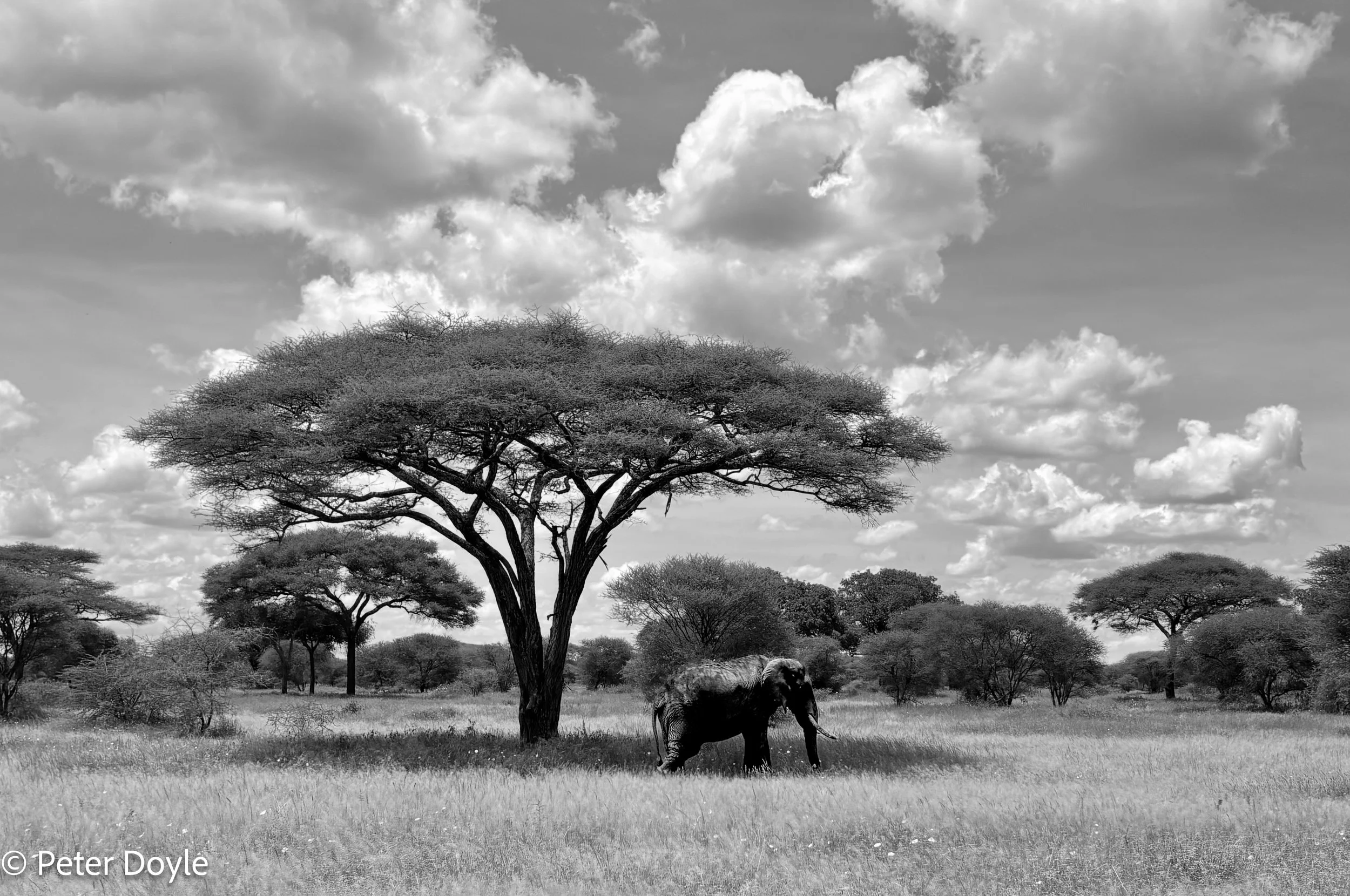
Tarangire National Park
Mousebirds
Roadside birding never disappoints in East Africa. Very early in the morning we saw a new lifer … and a Mousebird at that. Not many people know that the Mousebird family is endemic to Africa. In fact, to quote Birda.org:
“Mousebirds, belonging to the order Coliiformes, are unique to sub-Saharan Africa and characterized as "living fossils," as the current six species are remnants of a once widespread lineage that also existed in Europe and North America during the Paleocene.”
https://app.birda.org/species-guide?region=Southern+Africa&category=Mousebirds
Our new Mousebird was the Blue-naped, sitting in the morning sun.
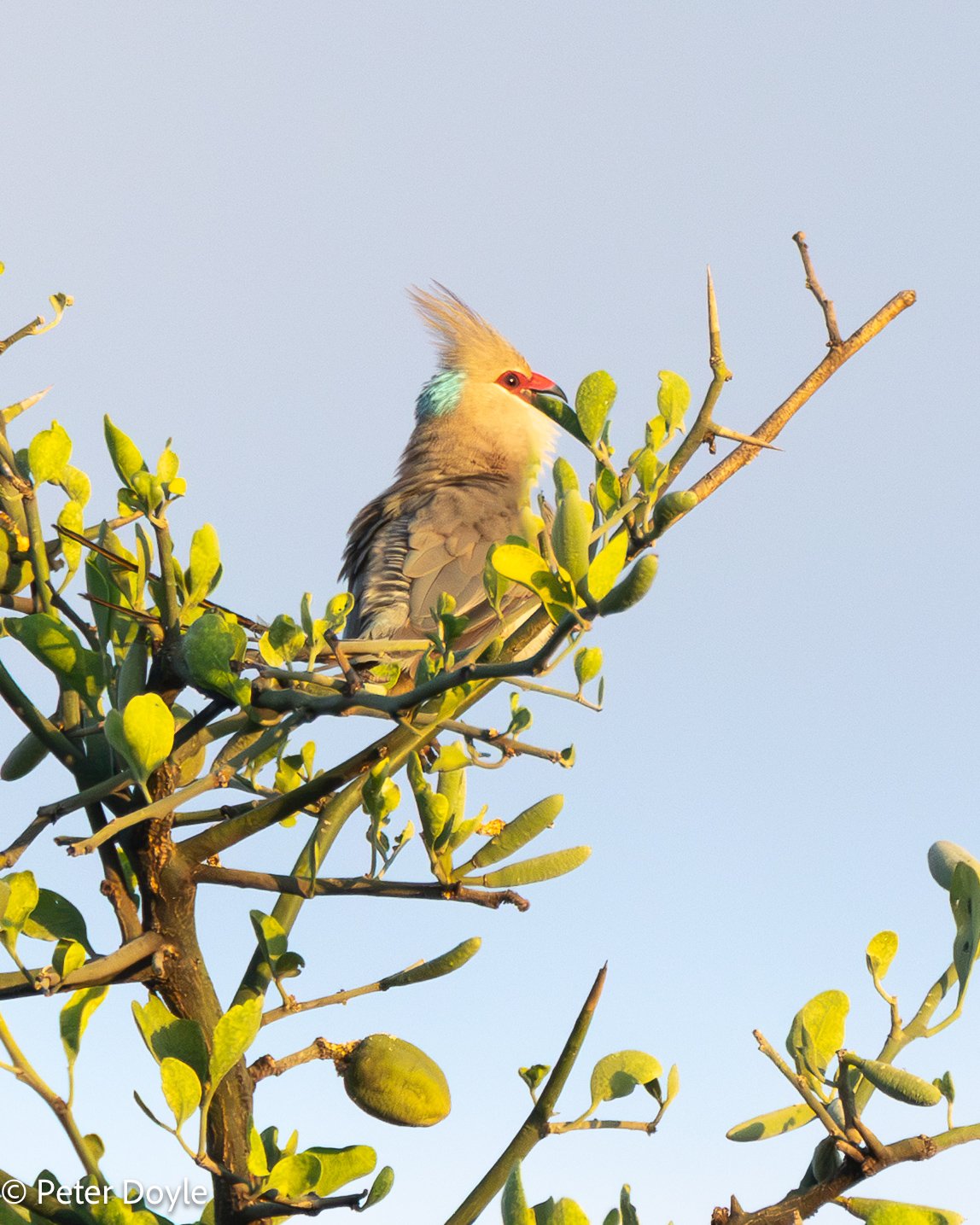
Blue-naped Mousebird
Urocolius macrourus
Heading towards the Engikaret Lark Plains
On our fourth day in Tanzania we left the Ngorogoro and Tarangire region, heading back in towards Arusha. This was going to be an exciting day, as we going to be in search of of possibly Tanzania’s rarest birds … in fact one of the most threatened bird species on the planet!
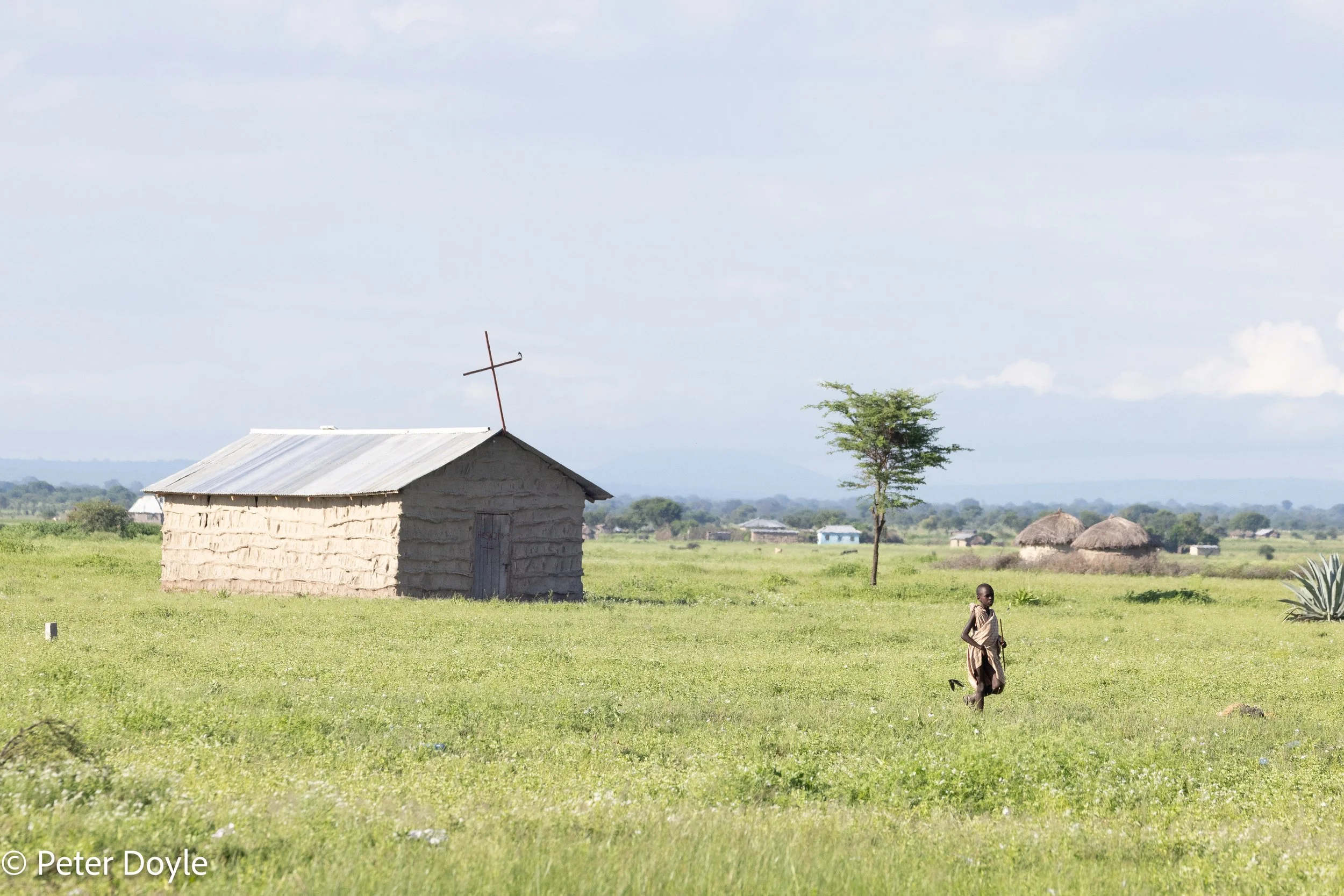
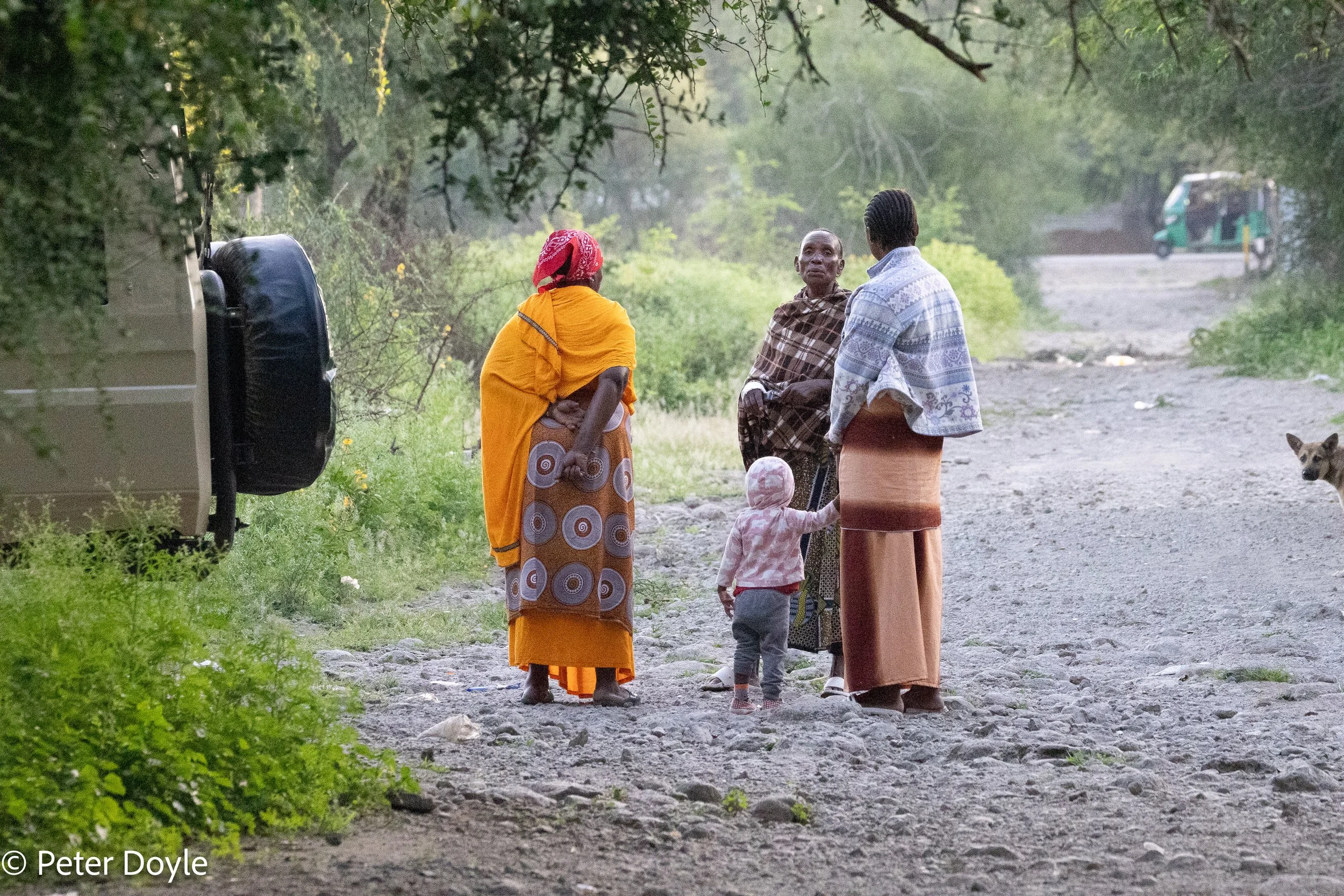
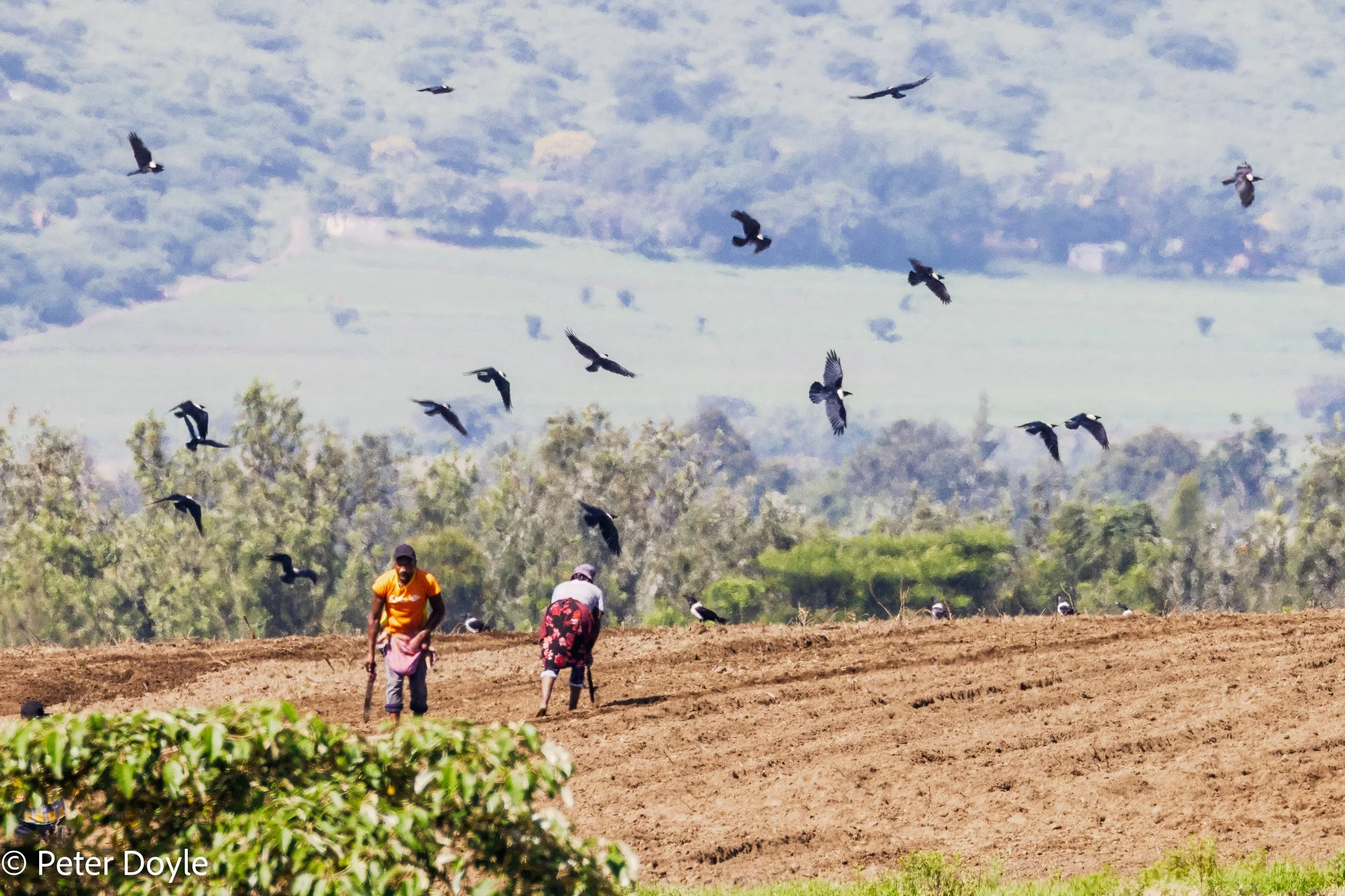
Throughout Tanzania, the colours and the landscapes were striking, Even more so the colourful and friendly people of Tanzania:

Beesley’s Lark
On the plains, 30km north of Arusha, between Mount Meru and the Kenyan border, is an area called EngiKaret, also known as the “Lark Plains”. As said previously, we were going there looking for one of the world’s bird rarities … Beesley’s Lark.
We found a variety of specialised plains birds on the Lark Plains, including several other new lifers for us. These included the Short-tailed Lark (Spizocorys fremantlii), Chestnut-bellied Sandgrouse (Pterocles exustus) and Fischer's Sparrow-Lark (Eremopterix leucopareia).
But the main attraction is, of course, was Beesley’s Lark (Chersomanes beesleyi). Beesley’s Lark is a bird of the plains. In particular, a tiny area of volcanic grasslands in the rain-shadow of Mount Meru. Due probably to farming activity, its remaining habitat is now restricted to an astonishingly small area, less that 60 square km, some patches being less than 10 square km. The total adult population is now estimated to be about 100 birds.
In South Africa we have a similarly scarce and threatened endemic Lark, that is Botha’s Lark (Spizocorys fringillaris). In an attempt to converse the few remaining Botha’s Larks, Birdlife SA have recently launched a project to protect the species. This includes a prohibition on any birders or guides going to look for or calling the Larks. It is threatened, of course, primarily because of loss of its habitat in the high altitude grasslands of the Drakensberg, mostly as a result of the encroachment of people and farming activity. https://birdlife.org.za/project/bothas-lark-project/
Given the approach taken in South Africa, I wondered if visiting the Beesley’s Lark was a good idea. But after going there and seeing the birds, I decided that, on balance, awareness and economic value can balance conservation, if done properly. Read about it here:
https://birdsoftheworld.org/bow/species/beelar1/cur/introduction
The local Maasai community are the custodians of the Beeeley’s Lark and play a prominent role in its conservation. On arrival at the plains, bird watchers are met by a local Maasai guide who monitors the birds daily. We were quietly directed to some of the birds, which we could observe from a safe distance. This is probably better than having birders tramping around the grassland and disturbing the birds and nesting sites.
As guides, the community now also have an economic interest in protecting these threatend birds. And they can see it brings visitors to the area.
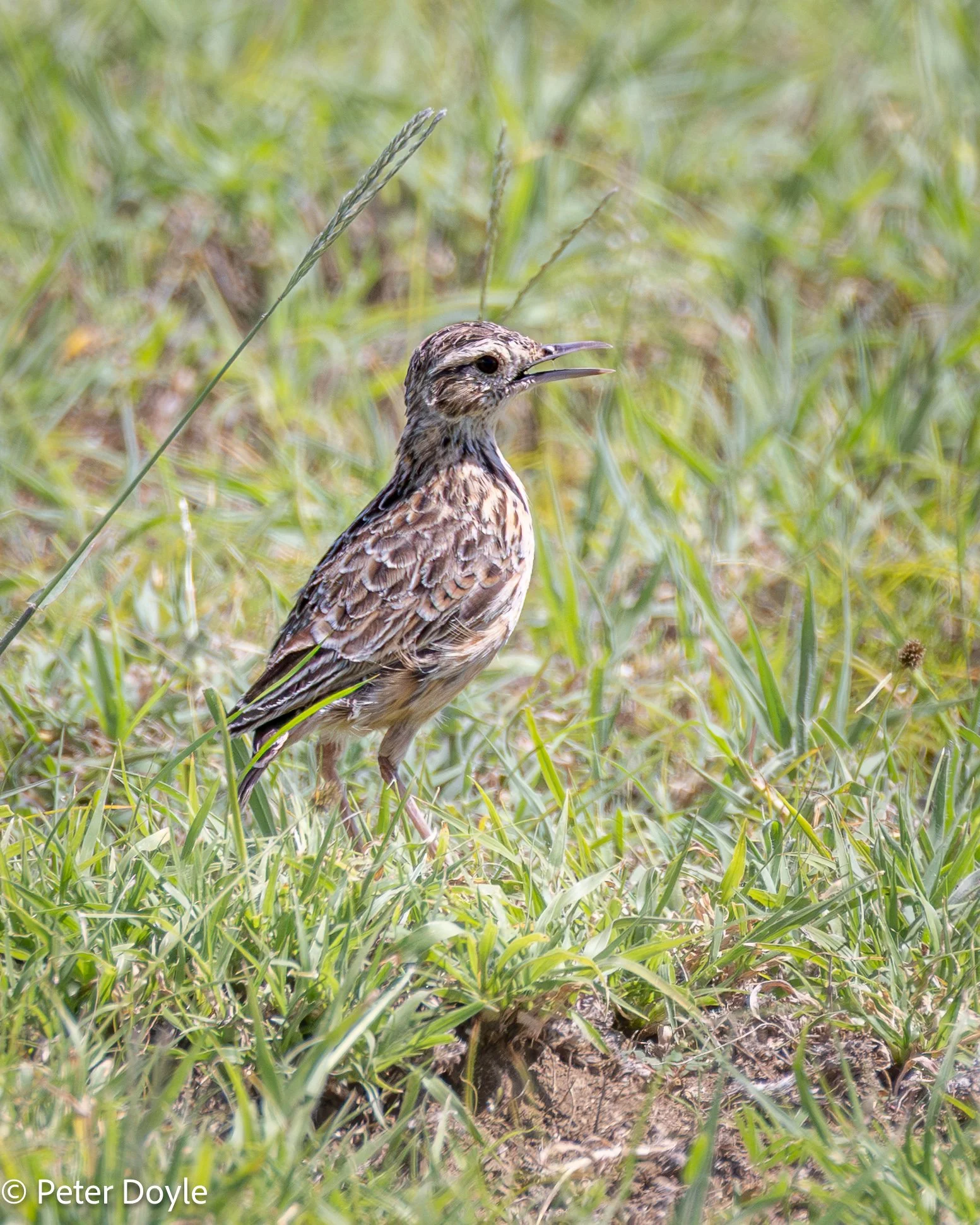
Beesley's Lark (Chersomanes beesleyi)
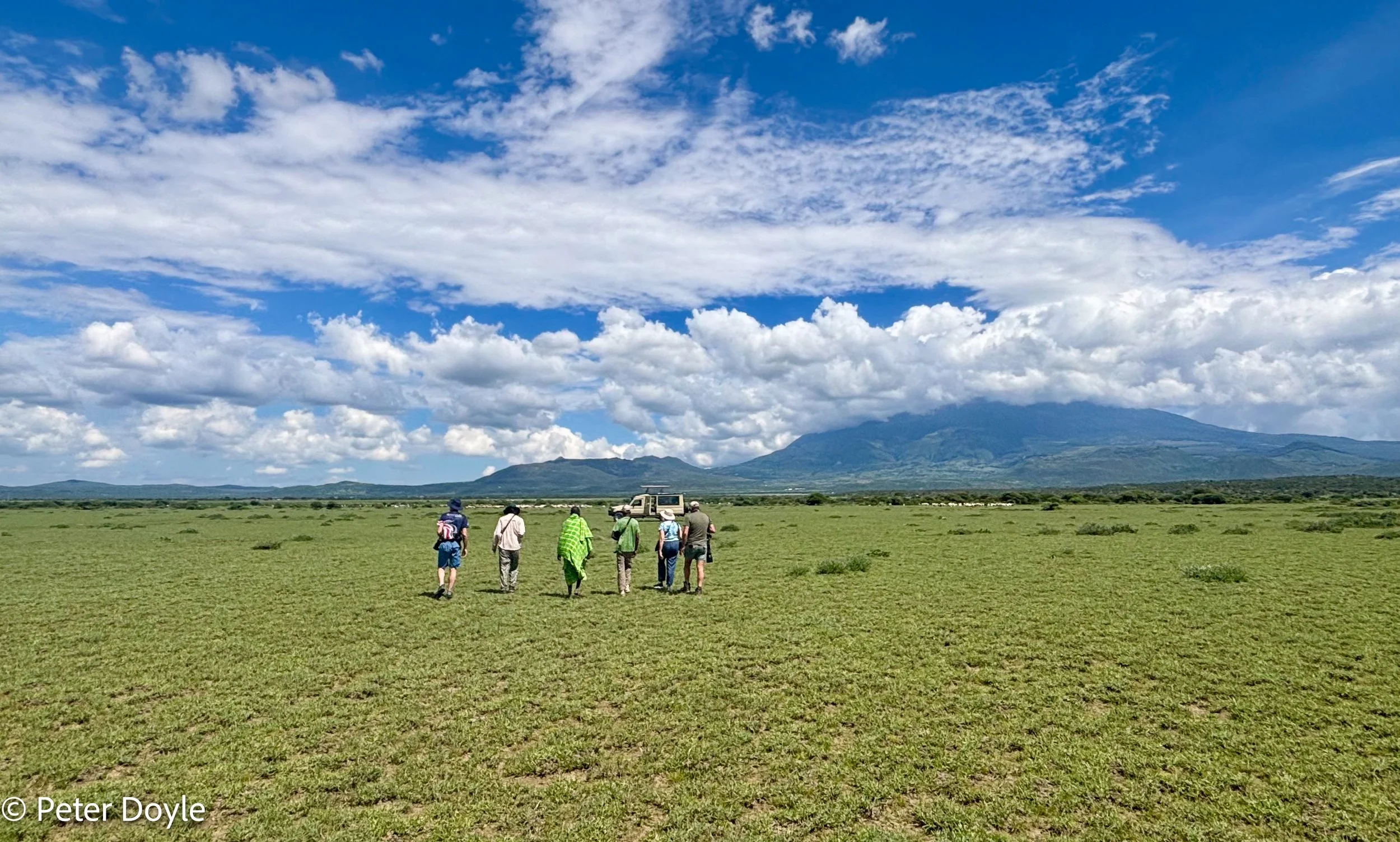
The Lark Plains with our Maasai guide; and Mount Meru in the background.
After a short stay, we left the Larks behind, much more aware of their status and challenges. And thankful to have seen them. This is a story the probably repeats itself all over the world: how do we save the biodiversity of our planet; that same biodiversity that we have nearly destroyed?
Arusha National Park
The Arusha national Park is immediately north of the large, bustling, city of Arusha … the gateway city to northern Tanzania.
The park is about 550 square km and surrounds and includes the Mount Meru volcano (which last erupted in 1910). Just 50km to the west, visible on a clear day, is Mount Kilimanjaro, the highest peak in Africa at 5 895m. Many climbers use the climb up Mount Meru (4 566m) as an acclimatisation climb before tackling Mount Kilimanjaro.
The habitat of Arusha NP includes lush montane forests, open savannah grasslands and alkaline lakes. Its high rainfall (1,200 to 1,600 mm per year) and the rich volcanic rock and earth creates am array of very fertile mirco-habitats.
In addition to Mount Meru, other noticeable places of interest in Arusha NP are the Ngurdoto Crater and the Momella Lakes, both of which we visited.
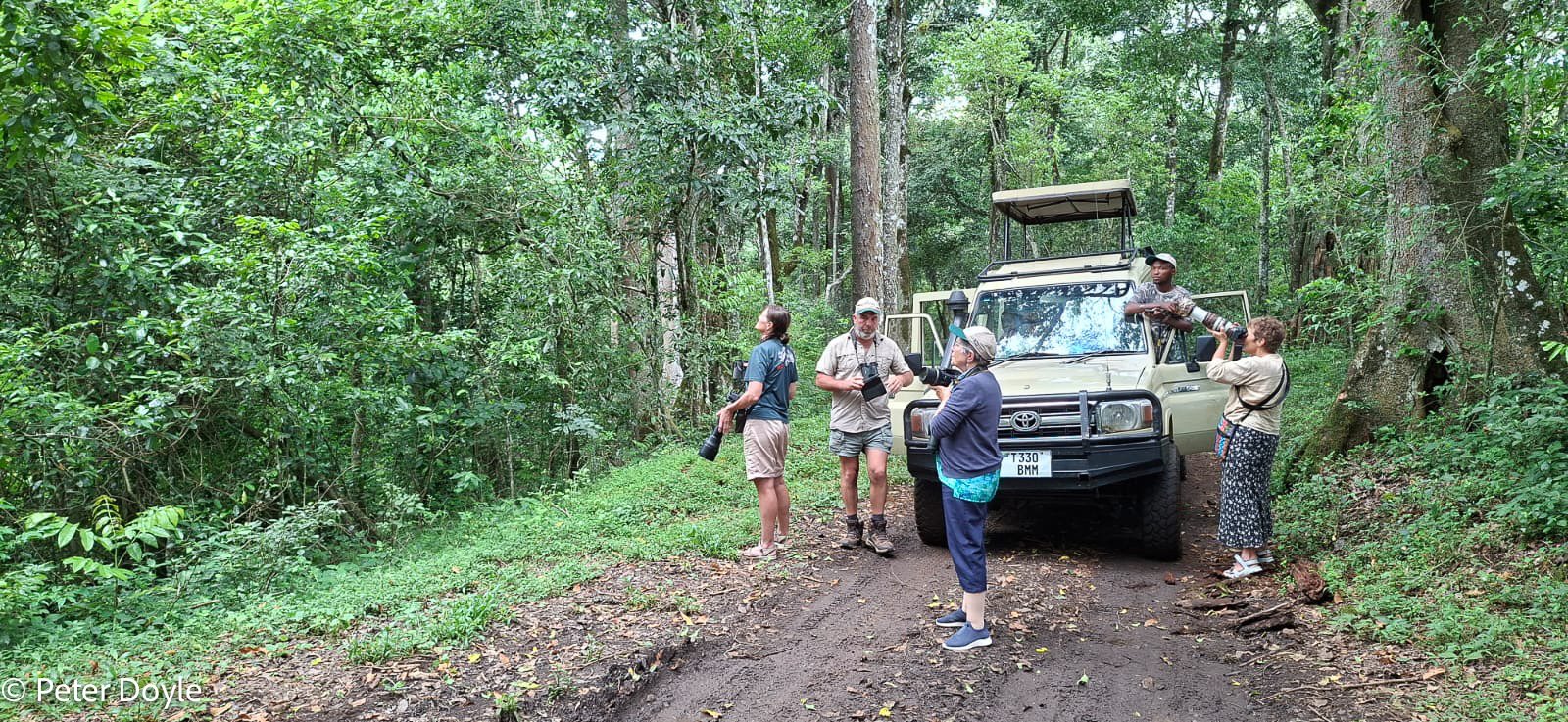
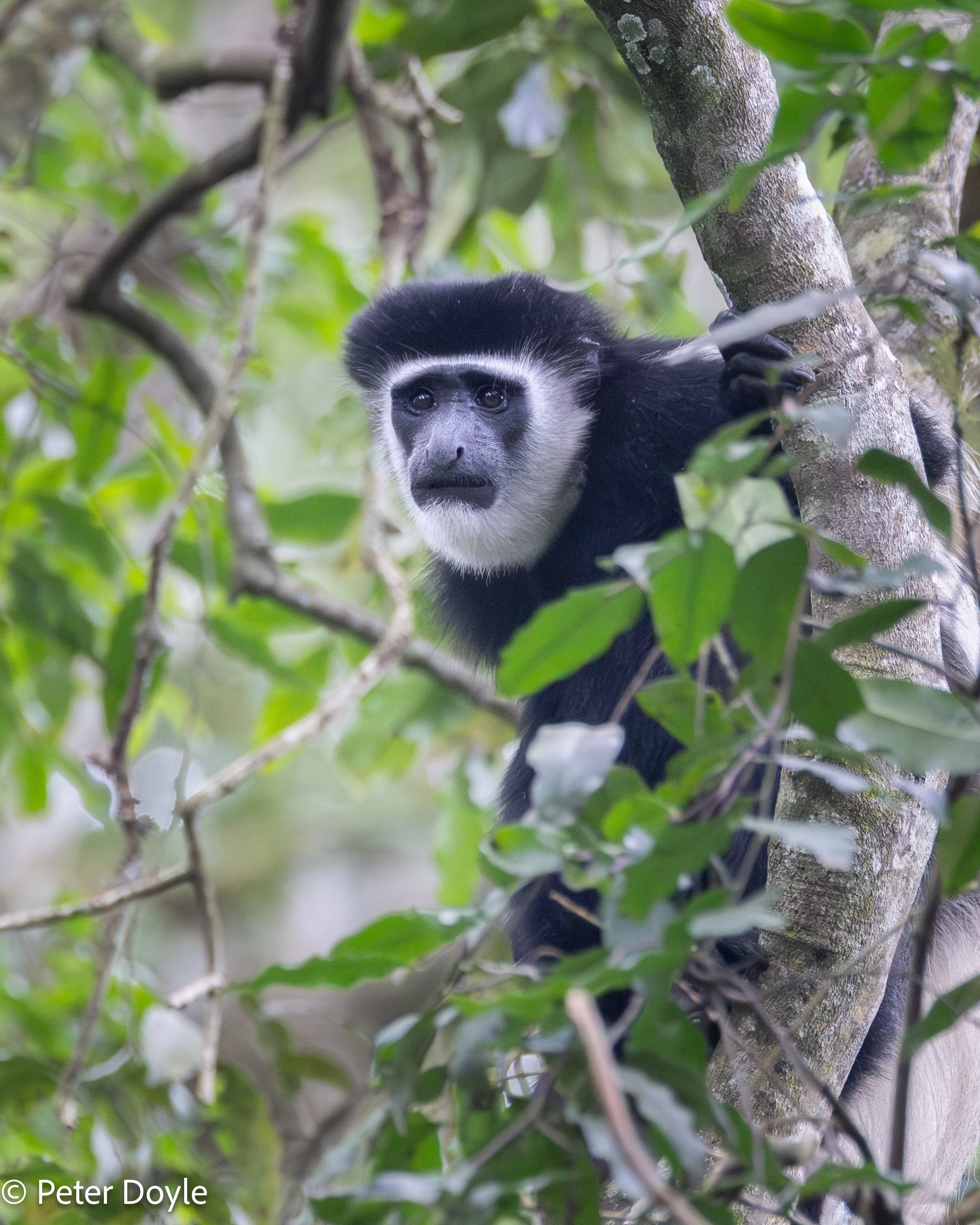
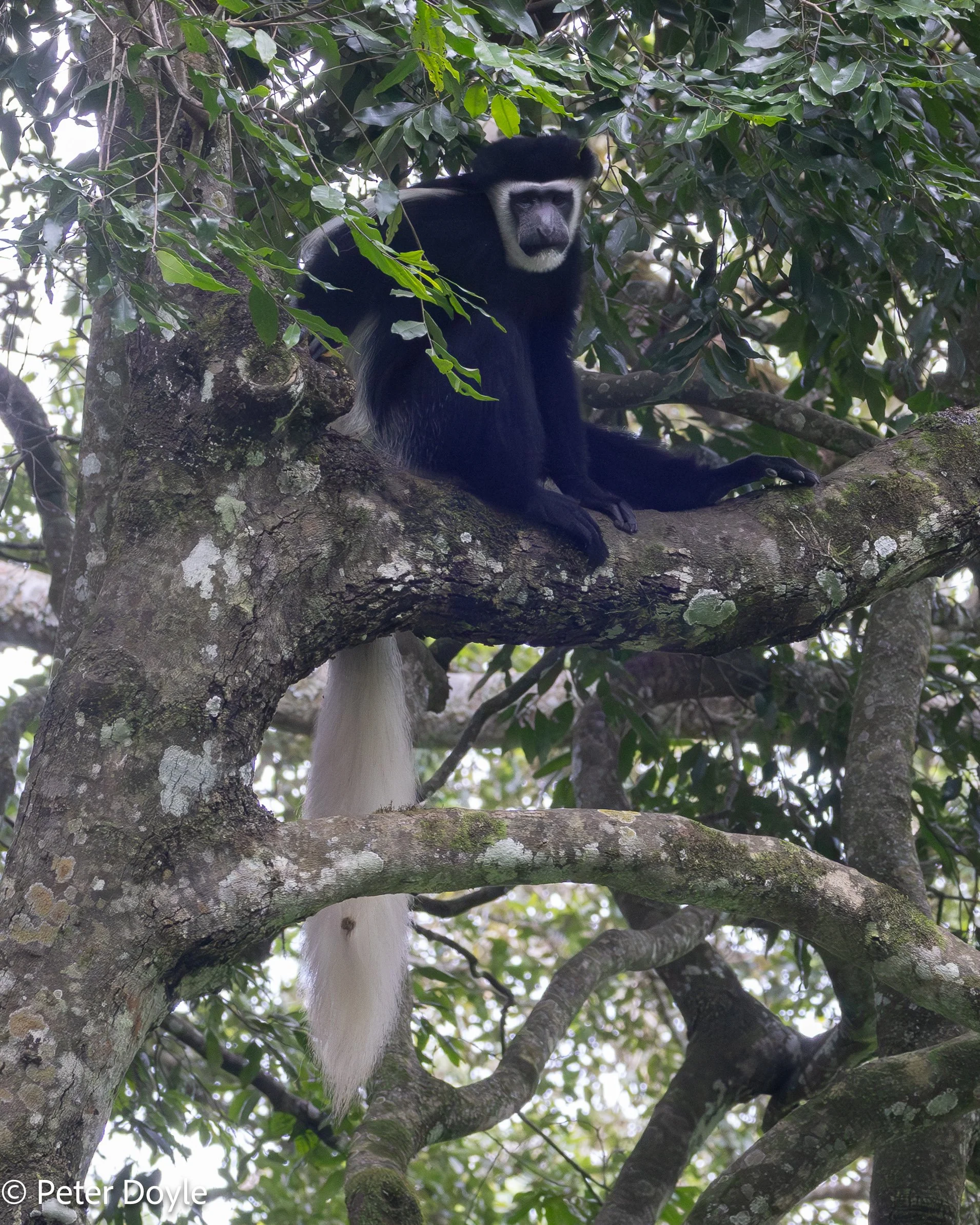
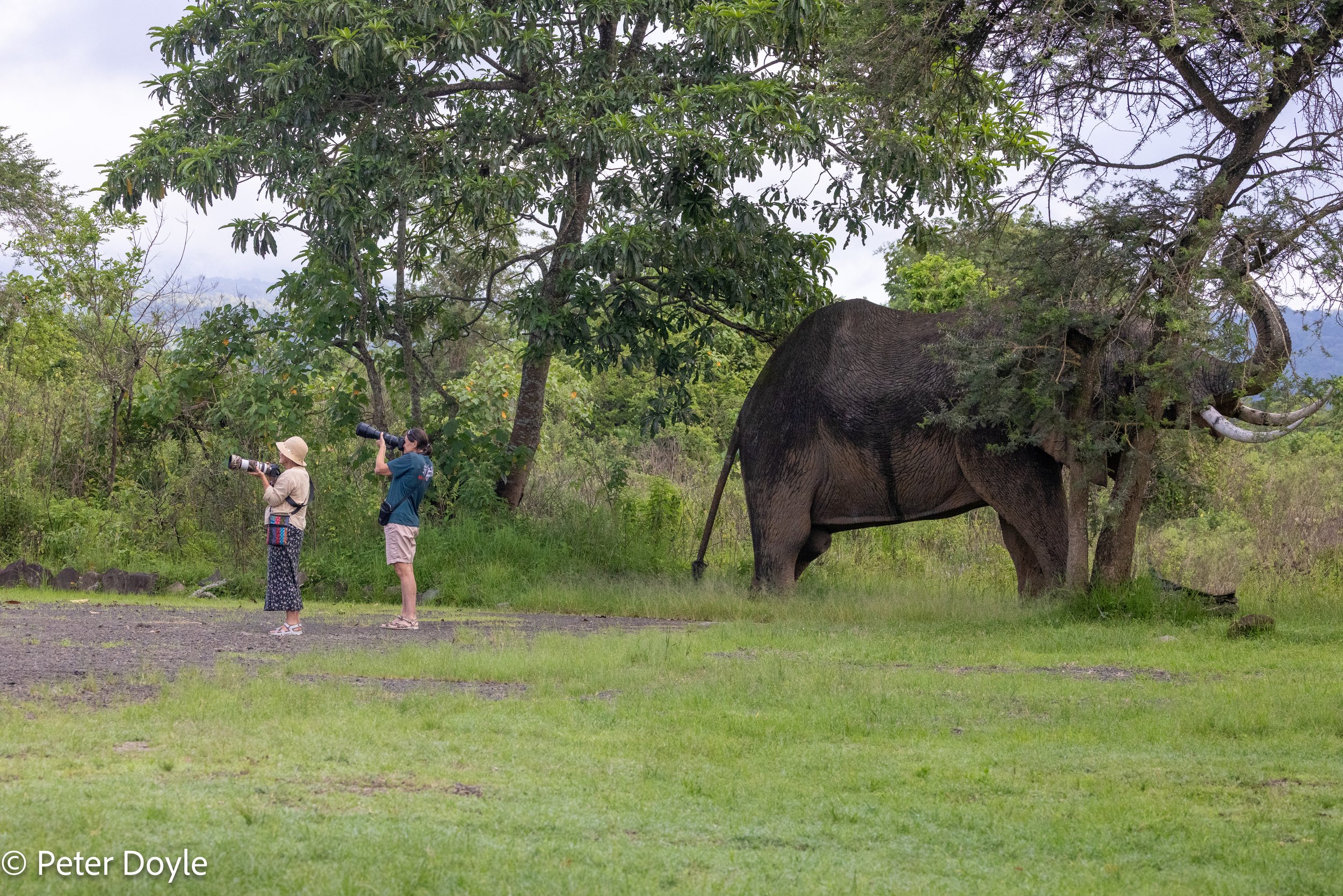
This is what real birders do!
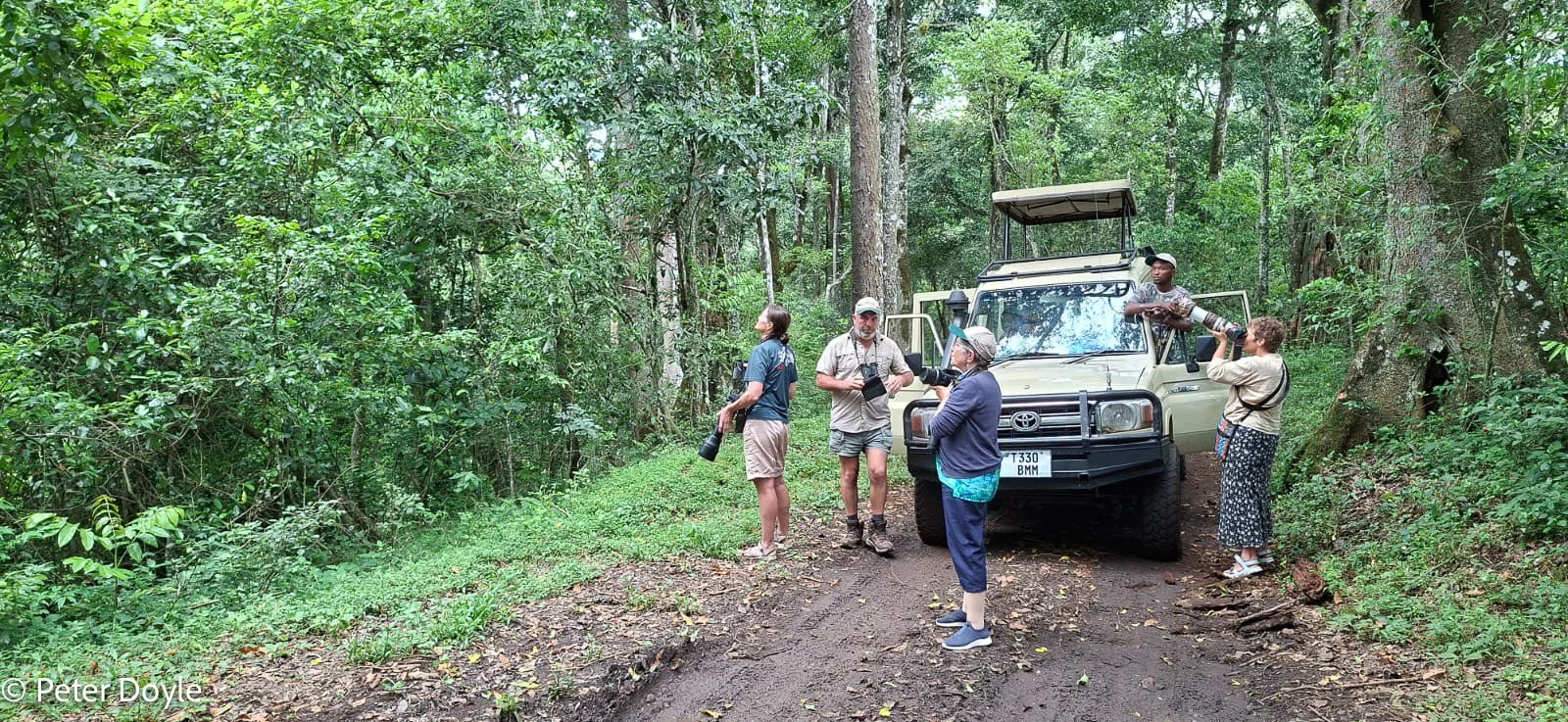
Birding in the montane forests of Arusha NP
(Note that the park regulations allow visitors to be outside, but in close proximity to, their vehicle. And also note that the elephant in the previous photo was a display at the entrance gate … a most realistic artificial elephant!)
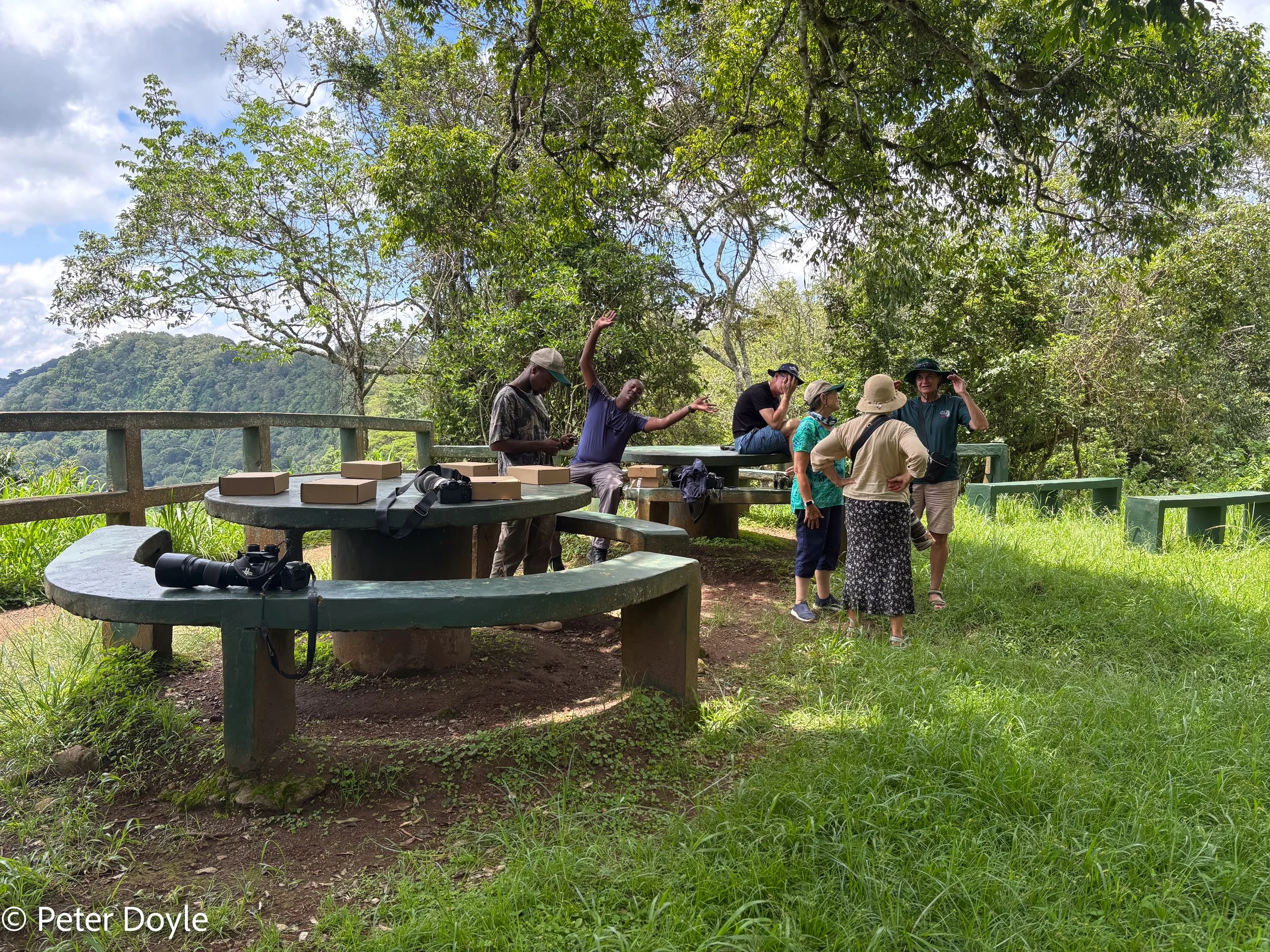
Our picnic lunch at Ngurdoto Crater … a stunning view and good birding
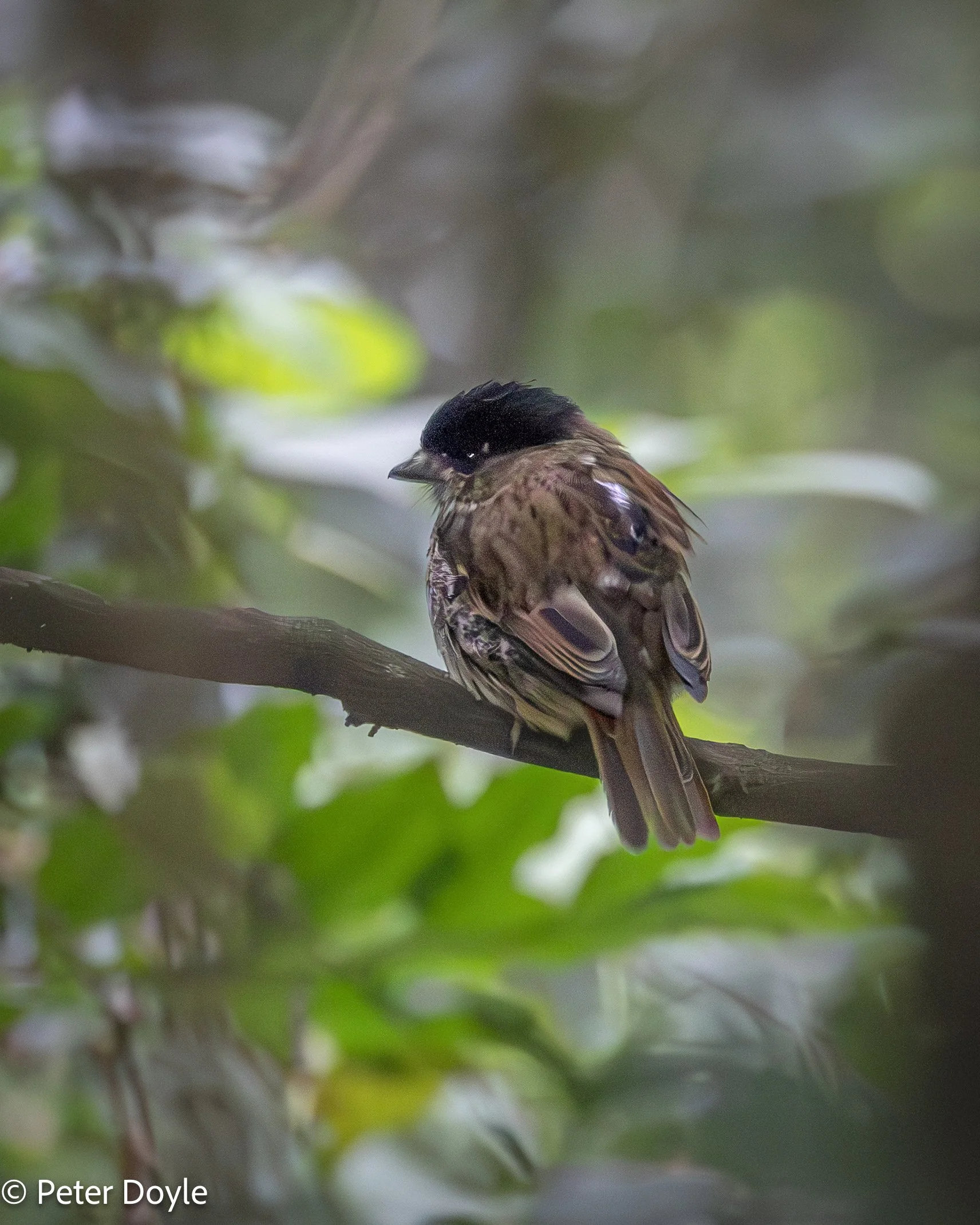
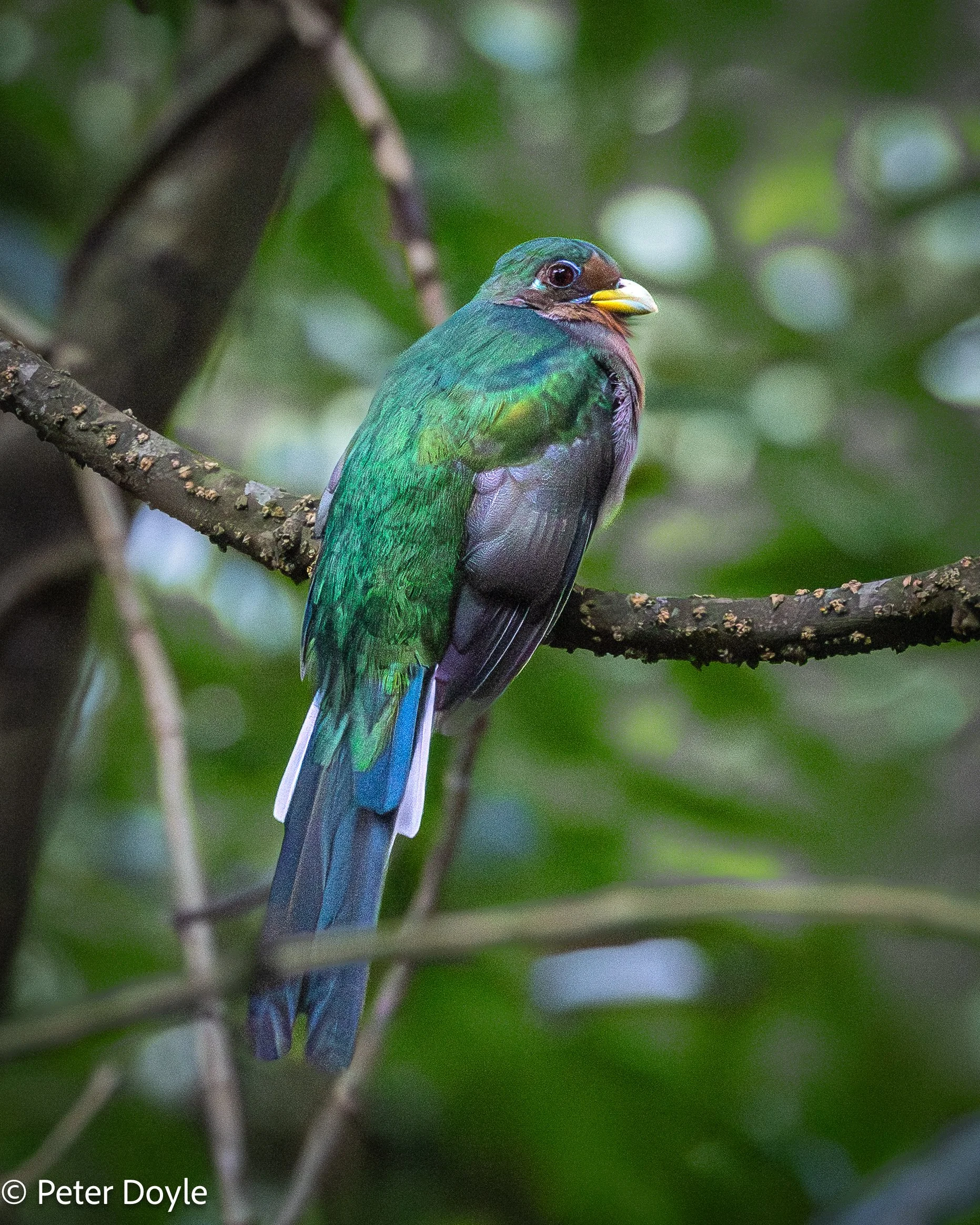
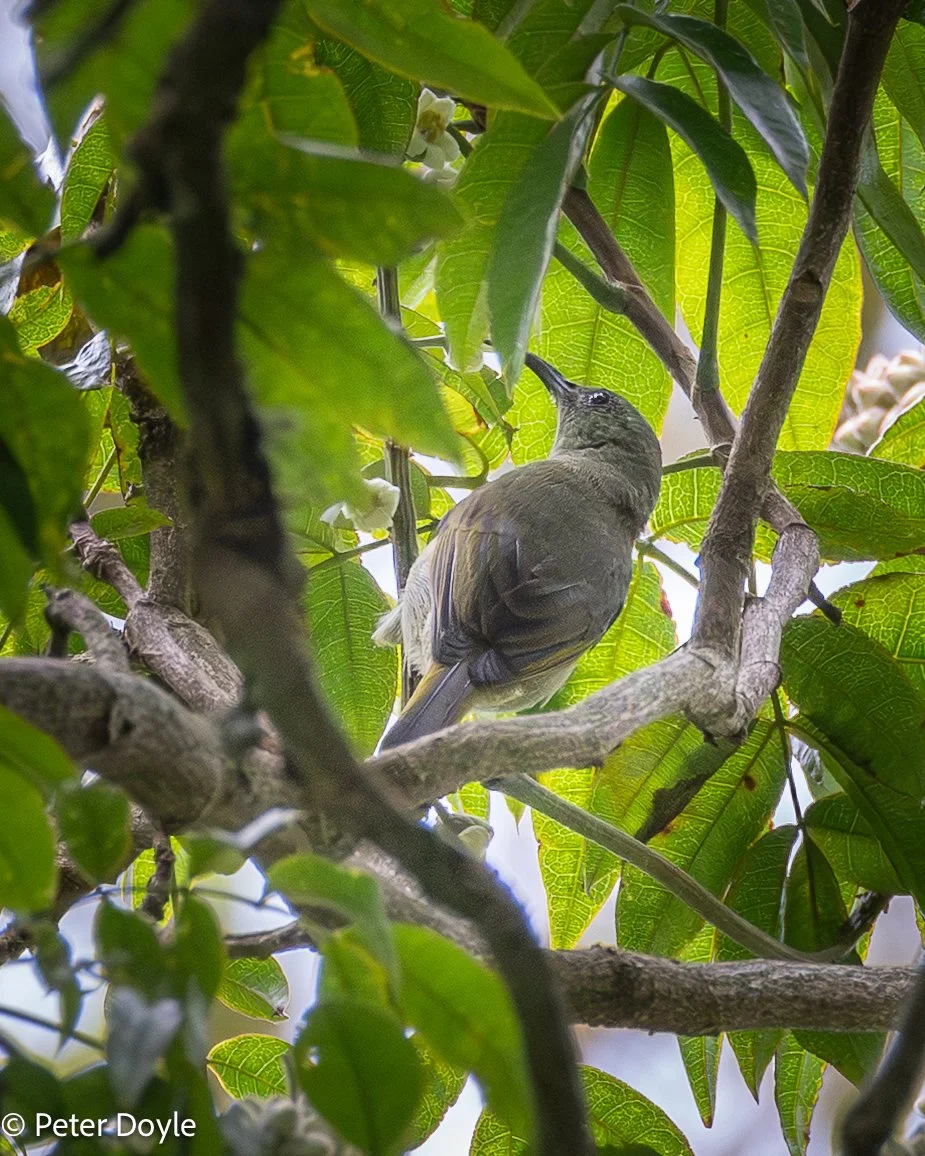
Left to Right:
African Broadbill (Smithornis capensis) Narina Trogon (Apaloderma narina) Olive Sunbird (Cyanomitra olivacea)
Outside of the forests, on the savannah plains and around the alkaline lakes, the bird species changed and we were now seeing Cisticola’s, Larks, Warblers, Spurfowl and Longclaws.
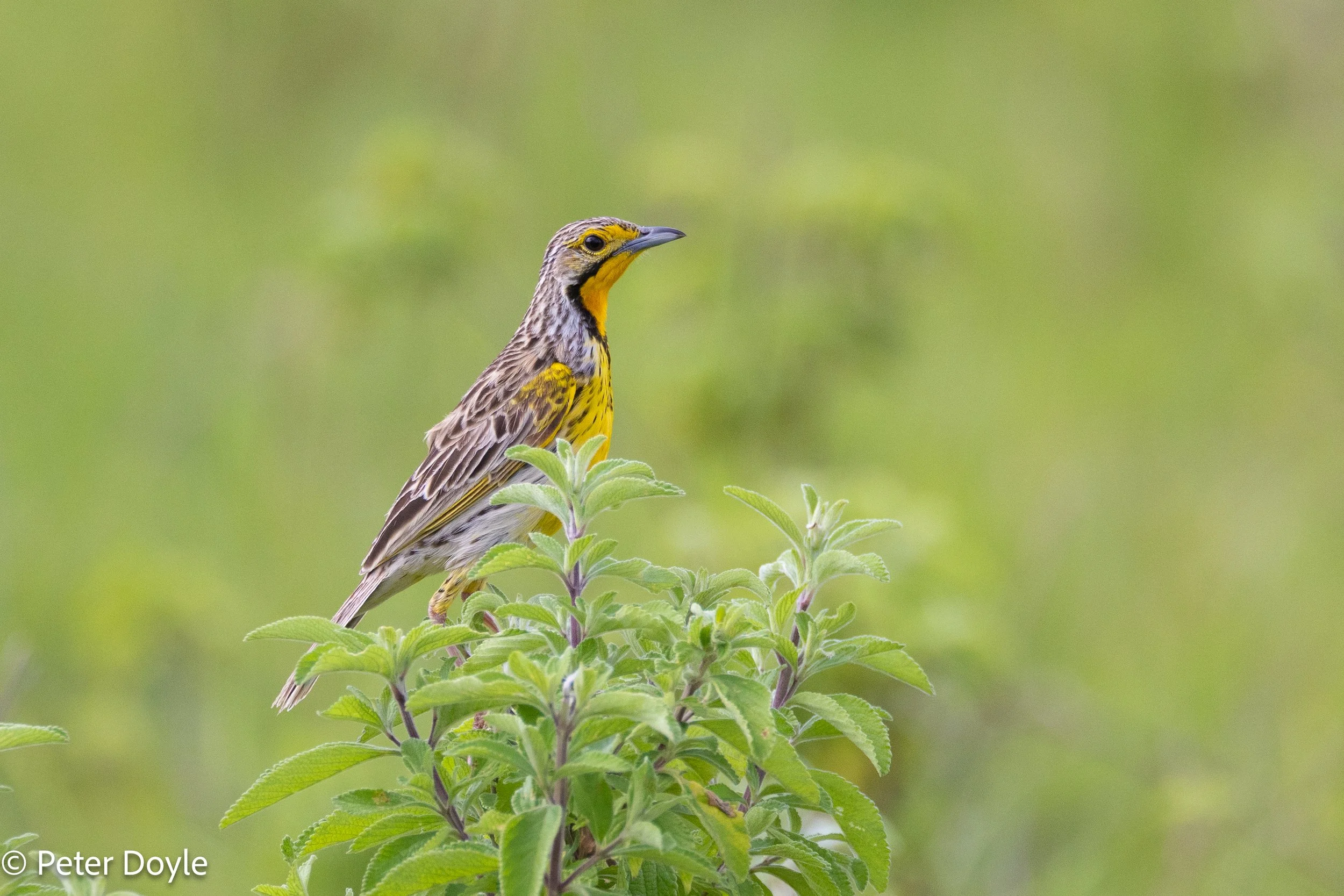
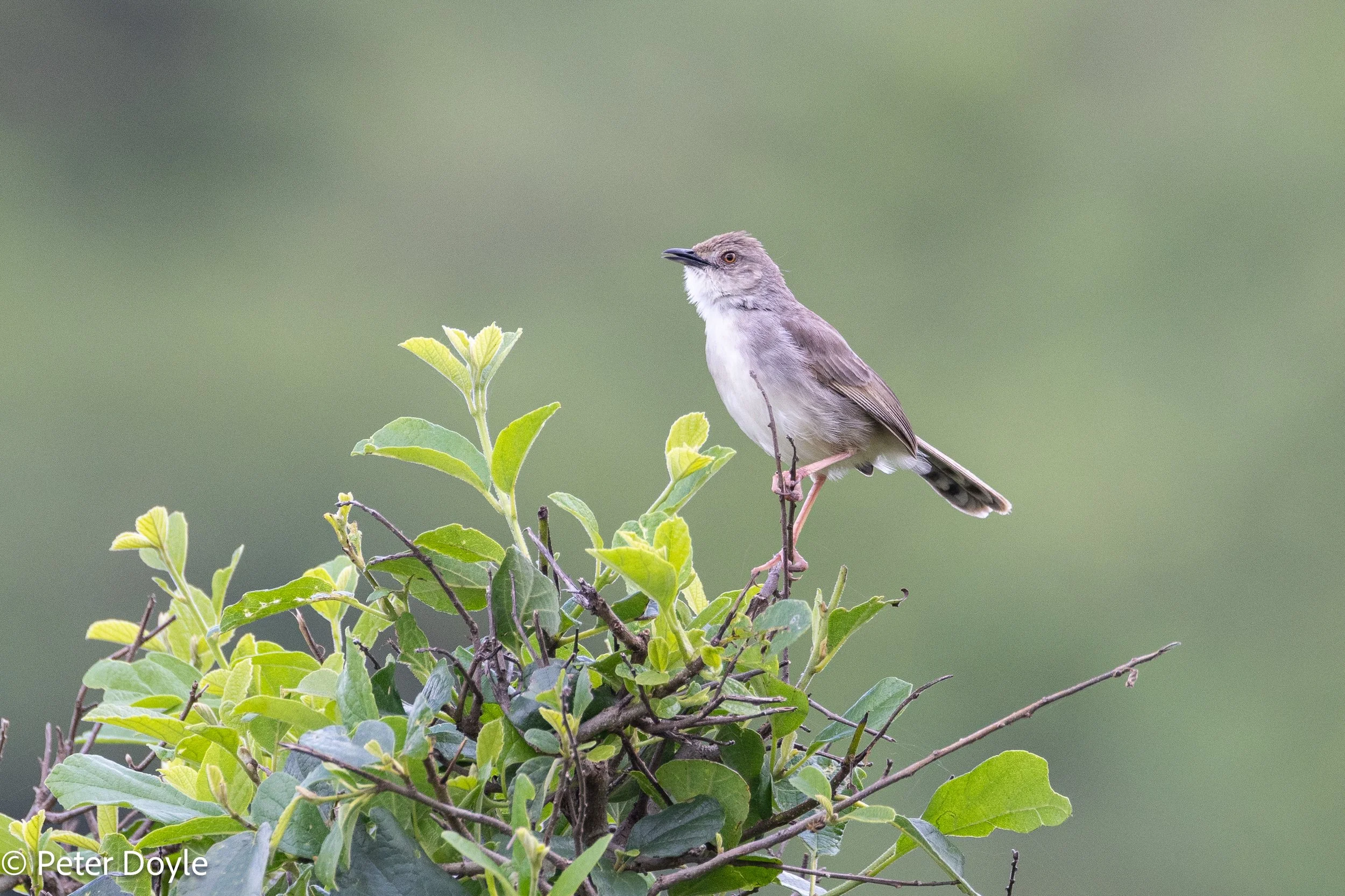
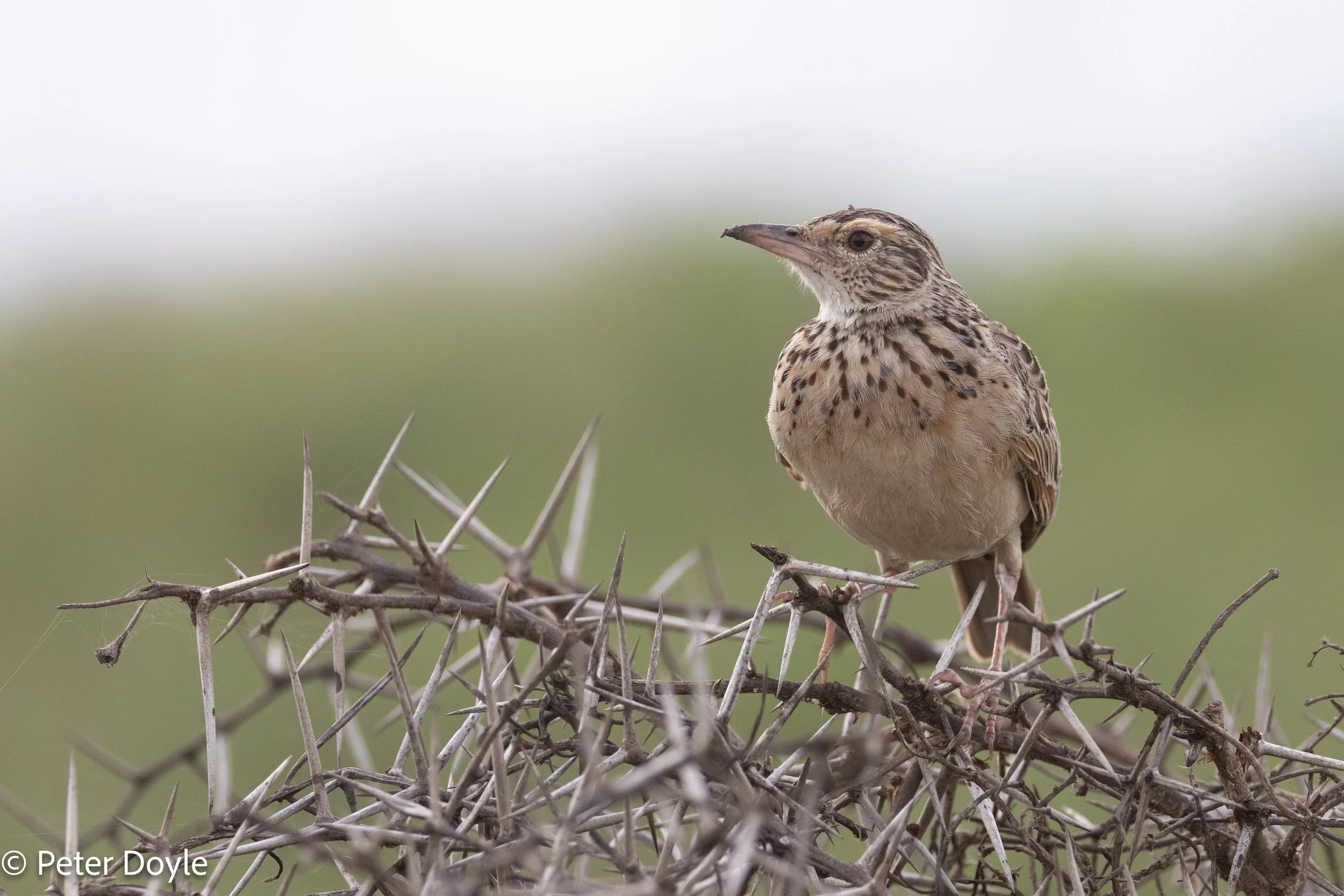
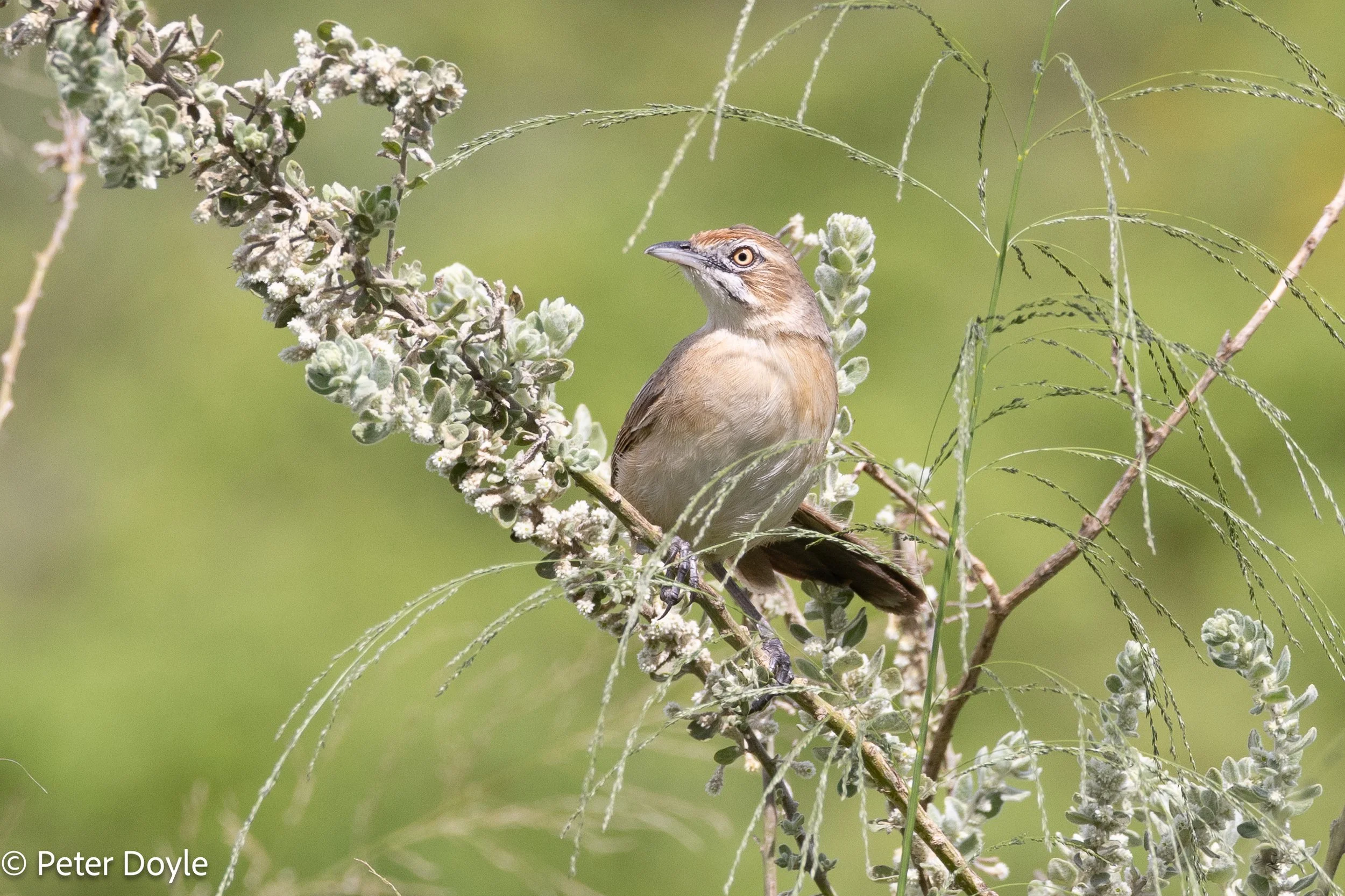
Clockwise from top left:
Pangani Longclaw (Macronyx aurantiigula) Trilling Cisticola (Cisticola woosnami) Moustached Grass Warbler (Melocichla mentalis) Sentinel Lark (Corypha athi)
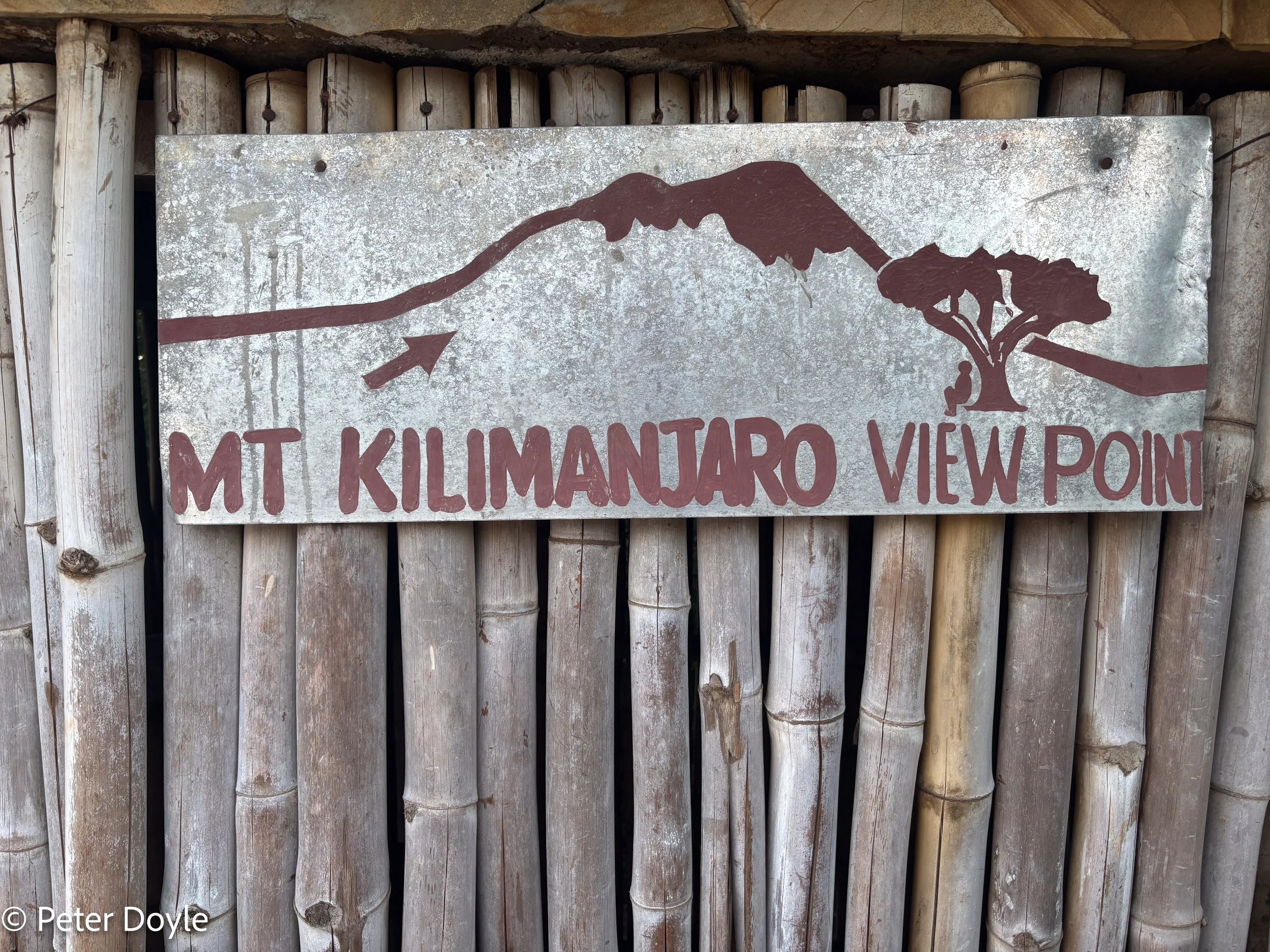
The moral of this story … don’t believe every sign during the rainy season … there was no view!
White-eyes
Finally, from Arusha National park, a story about White-eyes. There are no less than 8 species of White-eye in Tanzania. These are the Green, Mbulu, Northern Yellow, Pale, South Pare, Southern Yellow, Pemba and finally the Broad-ringed (Kilimanjaro) White-eye (pictured below in Arusha NP).
Of these, it is only the Pemba we have yet to see, and for that we will have to go to Pemba Island!
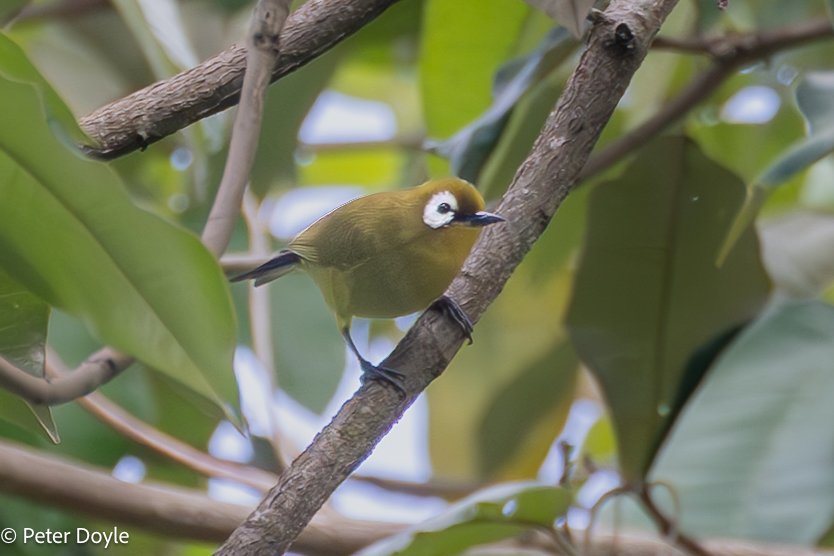
Broad-ringed (Kilimanjaro) White-eye (Zosterops eurycricotus)
Massai Steps
On paper, the Maasai Steppes does not perhaps seem to be as interesting for birding as some of the other incredible habitats we had visited in northern Tanzania. The Steppes are huge, about 40 000 square kilometers, running through northern and central Tanzania. While there are no large cities, there are estimated to be about 600 000 pastoral Maasai people with their livestock living in the area.
The habitat is a semi-arid, open grassland and savanna ecosystem, dominated by acacia-commiphora woodlands and seasonal floodplains.
It turned out the Steppes has fantastic birdlife, and many of the species not found elsewhere in Tanzania or even East Africa. It was so interesting that we drove down into the Steppes three times during our three weeks in Tanzania.
If you are visiting Tanzania primarily for birding, don’t be tempted to miss out on the Maasai Steppes … it is fantastic! And we saw many lifers there. Here are just a few:
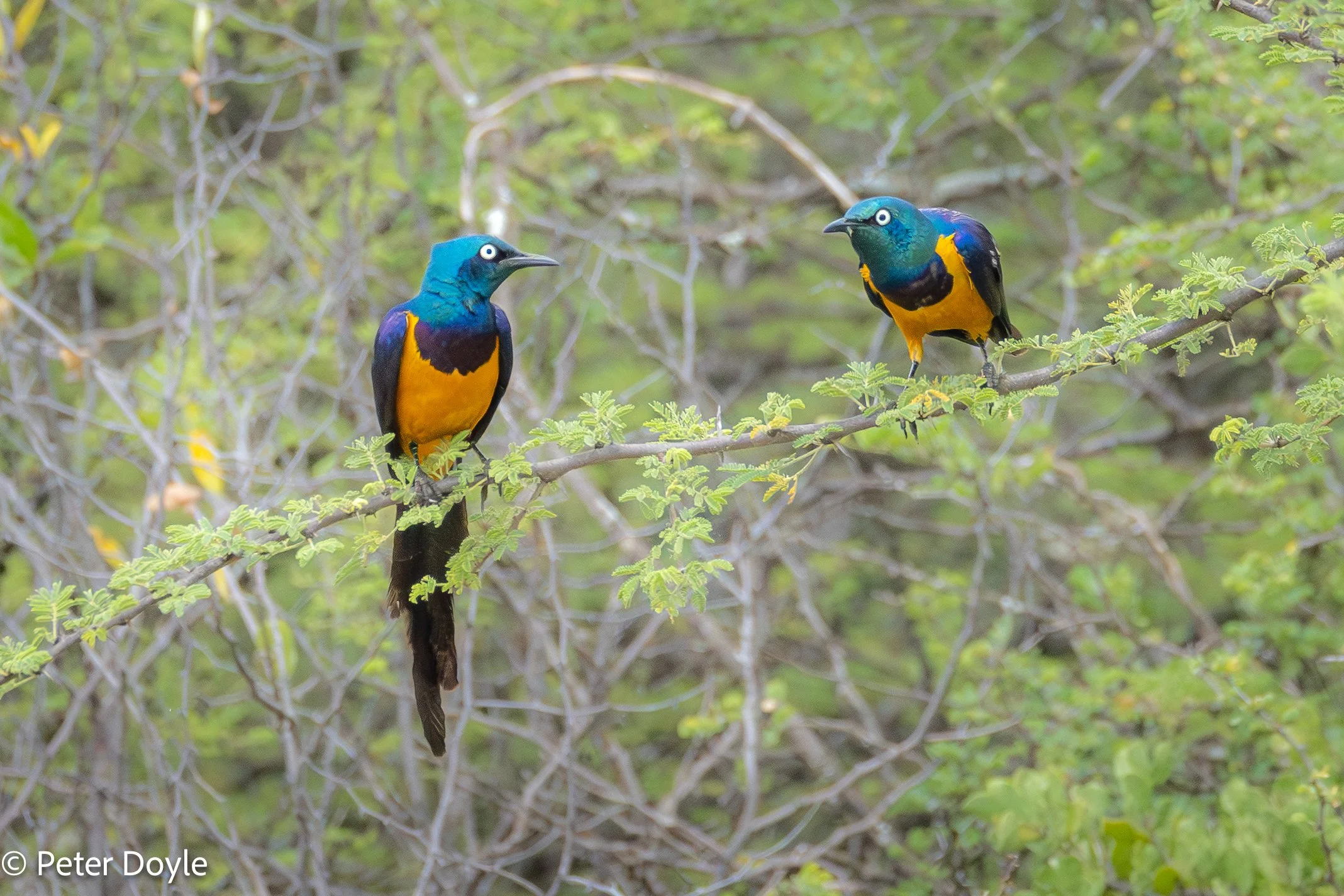
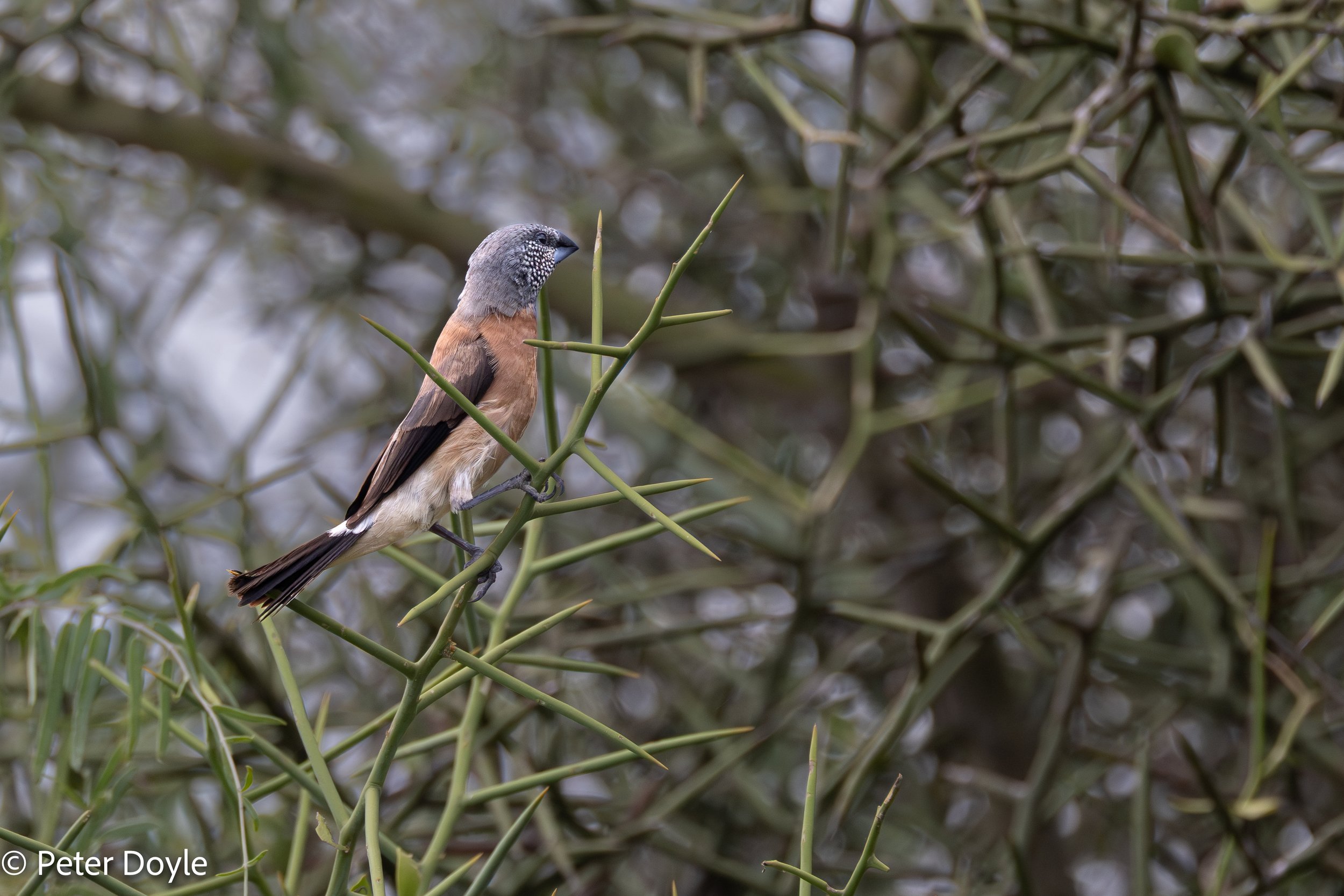
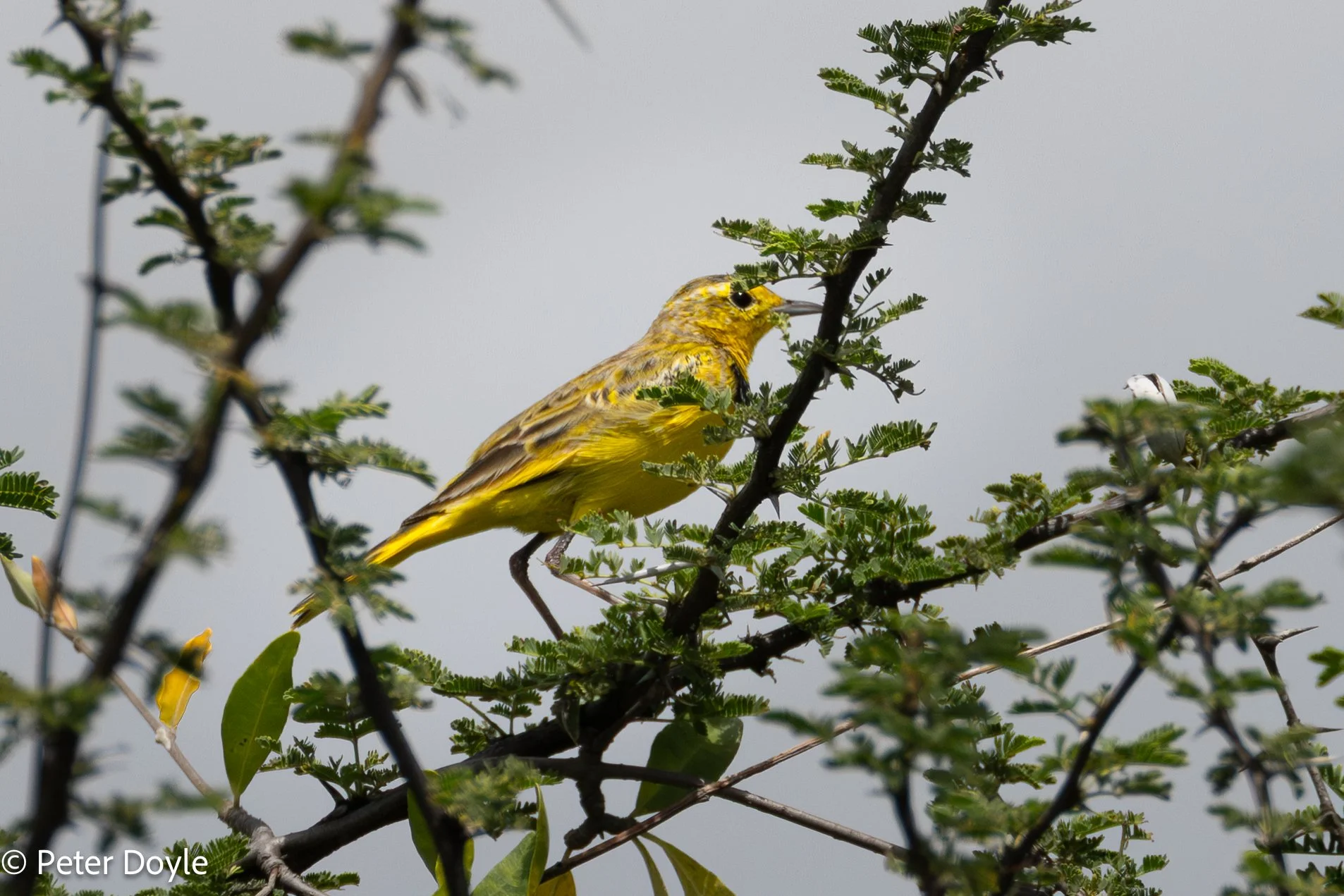
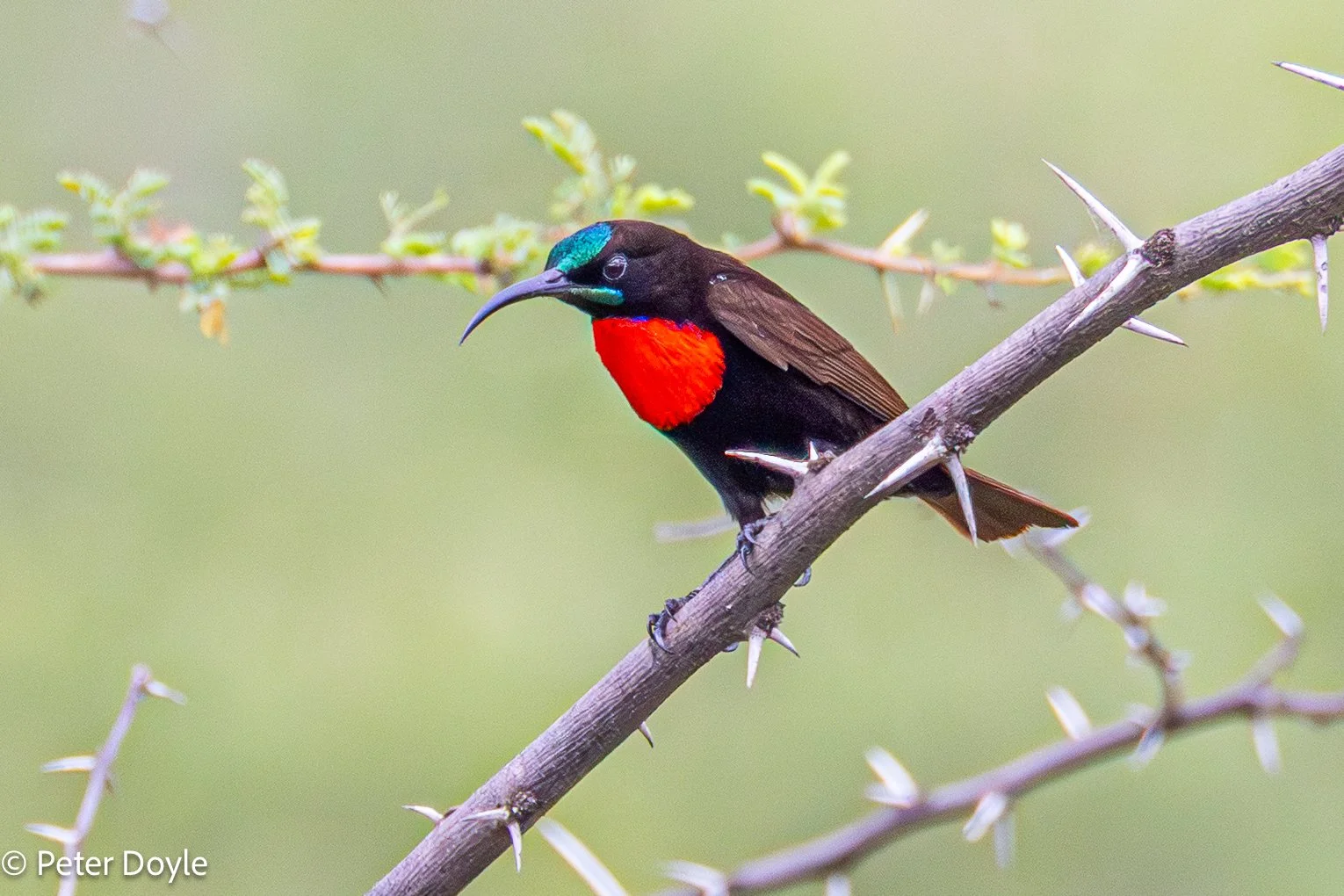
Clockwise from top left:
Golden-breasted Starling (Lamprotornis regius) Grey-headed Silverbill (Spermestes griseicapilla) Hunter's Sunbird (Chalcomitra hunteri) Golden Pipit (Tmetothylacus tenellus)
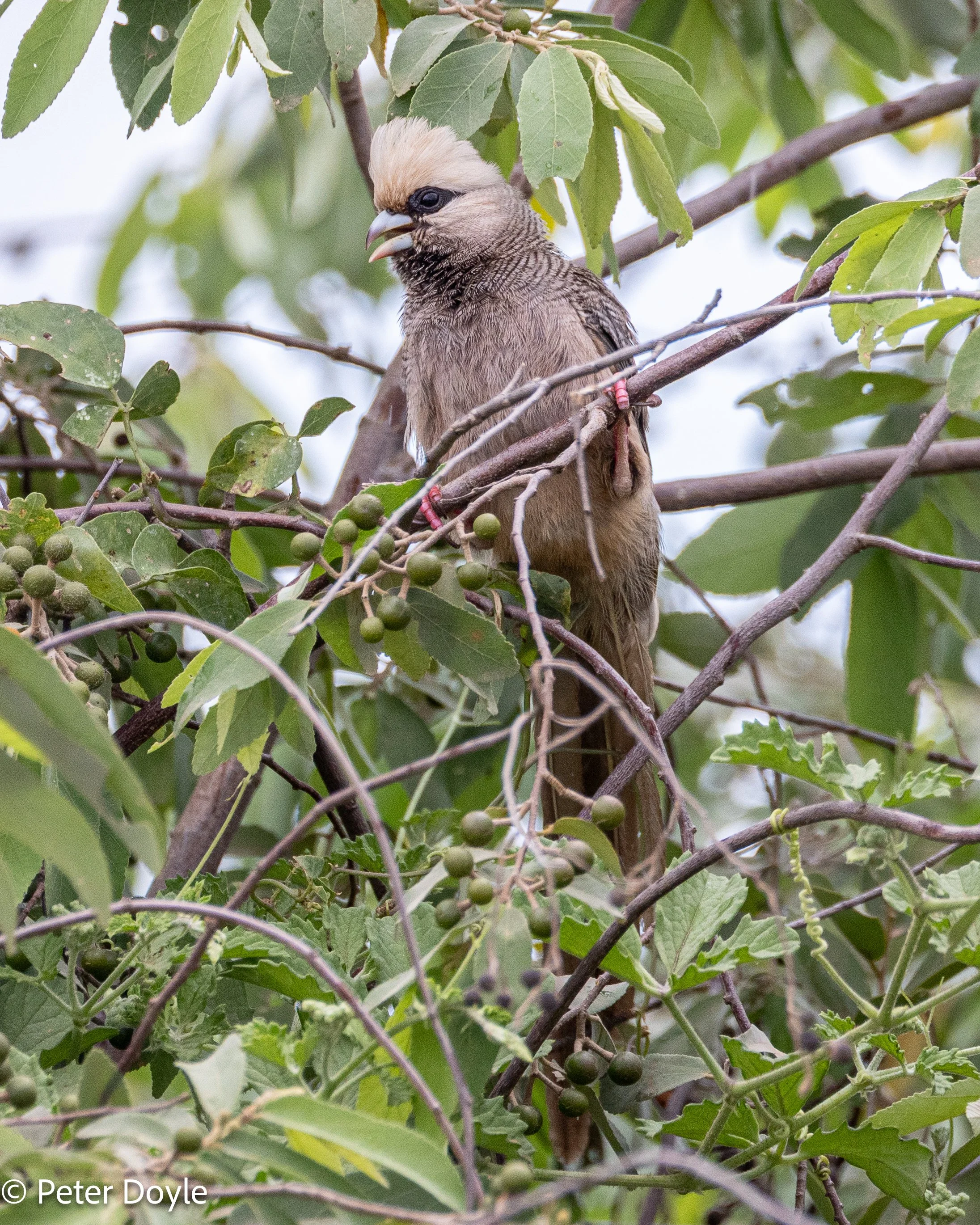
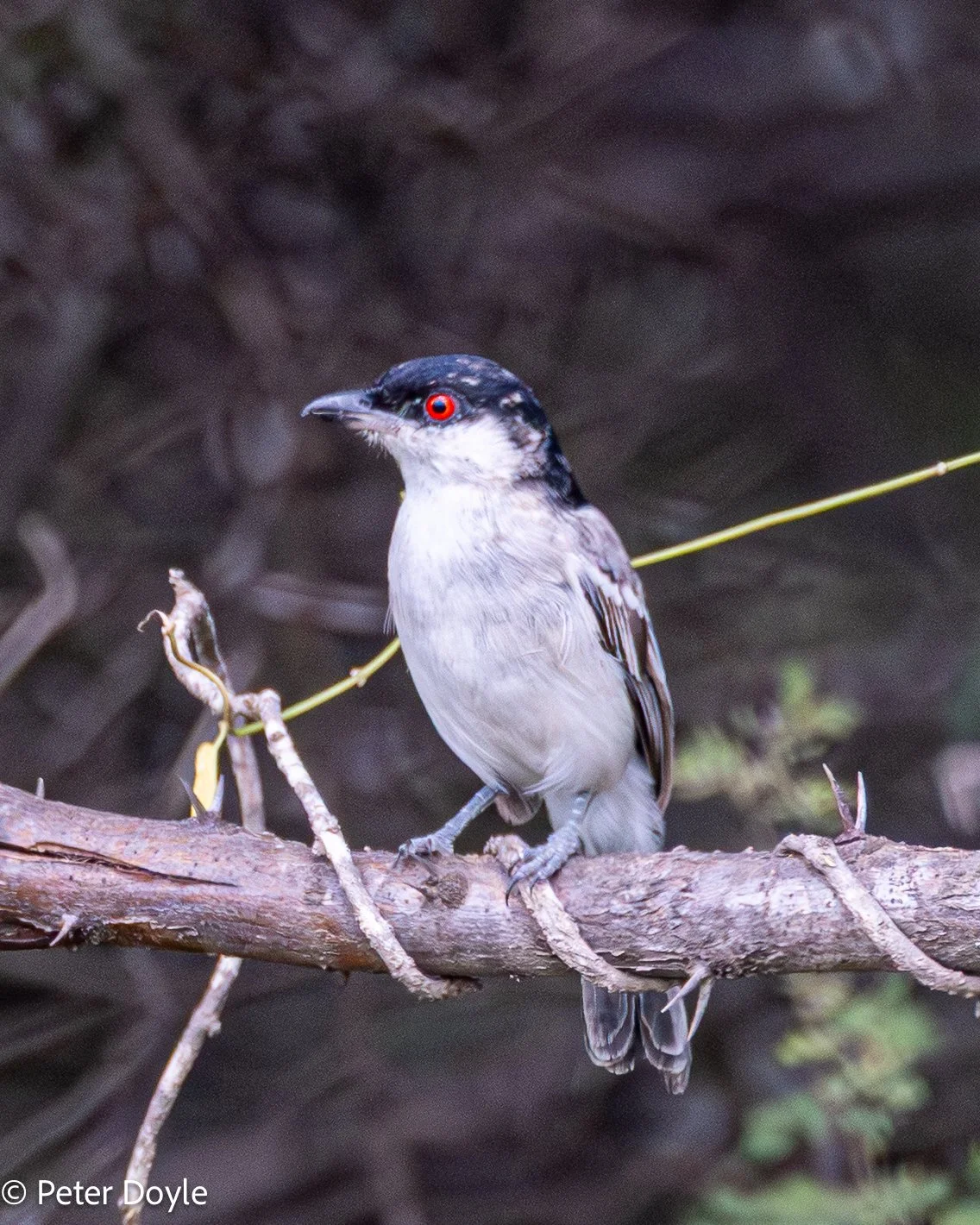
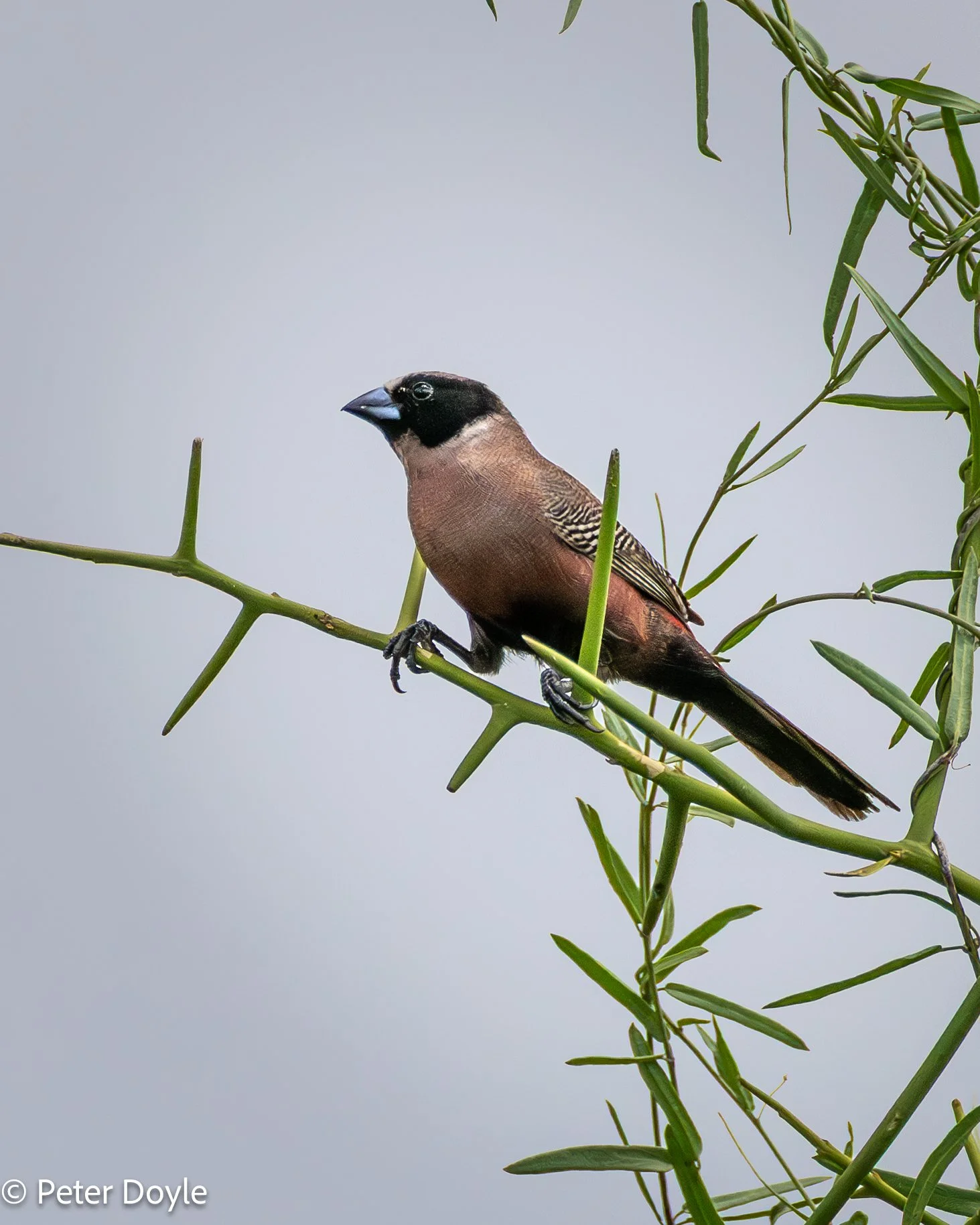
L to R:
White-headed Mousebird (Colius leucocephalus) Pringle's Puffback (Dryoscopus pringlii) Black-faced Waxbill (Brunhilda erythronotos)
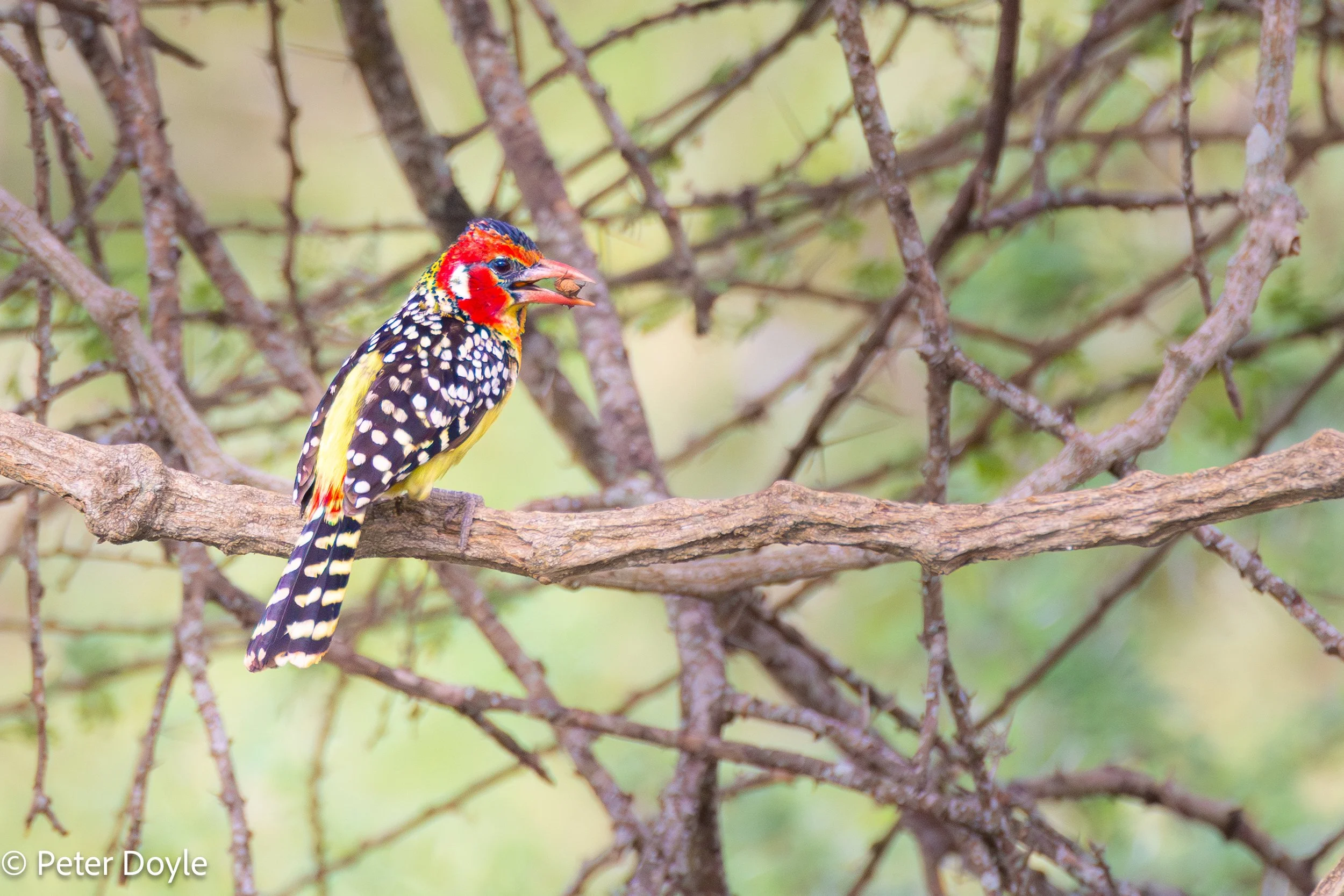
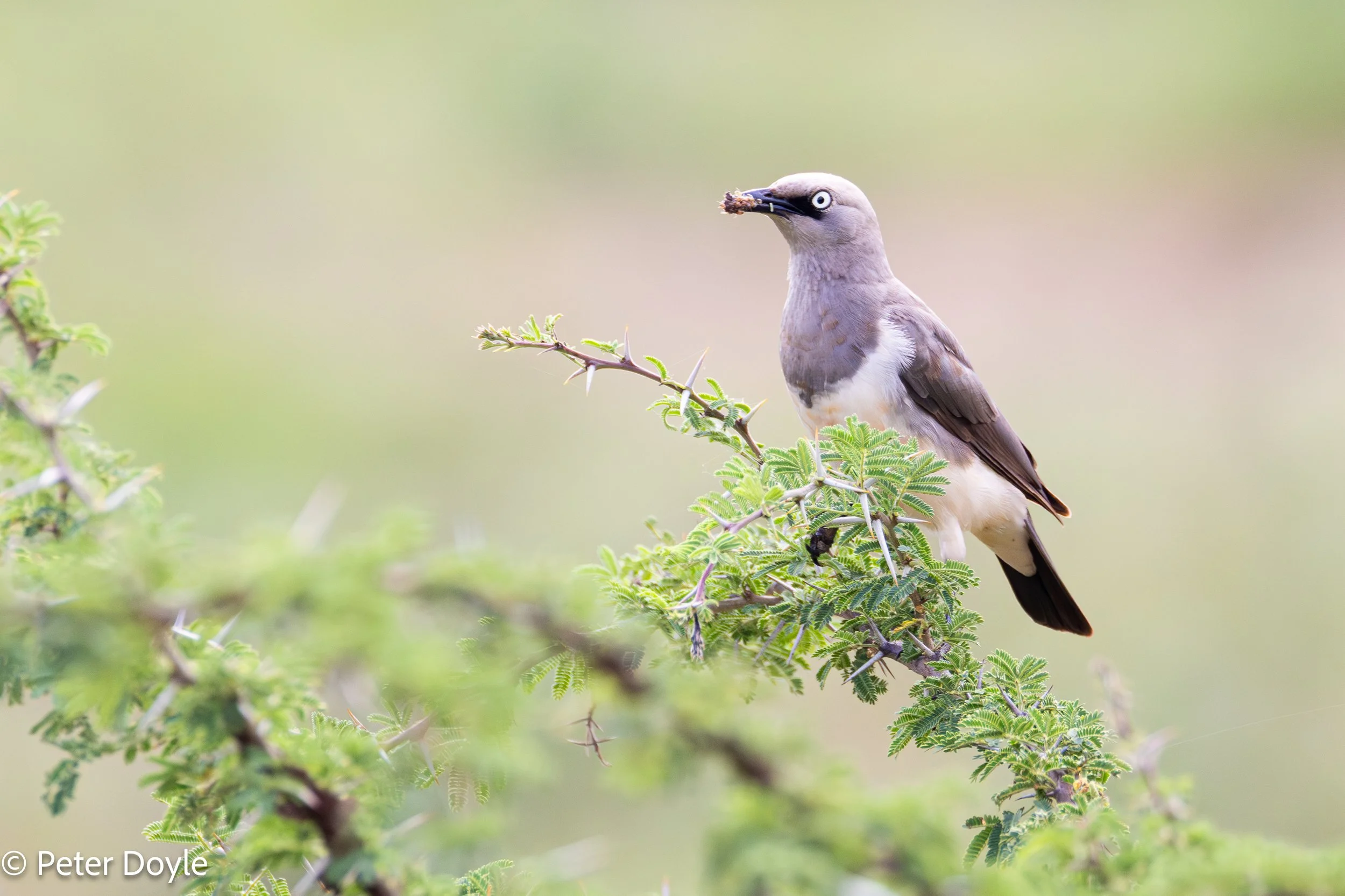
Red-and-yellow Barbet (Trachyphonus erythrocephalus) Fischer's Starling (Lamprotornis fischeri)
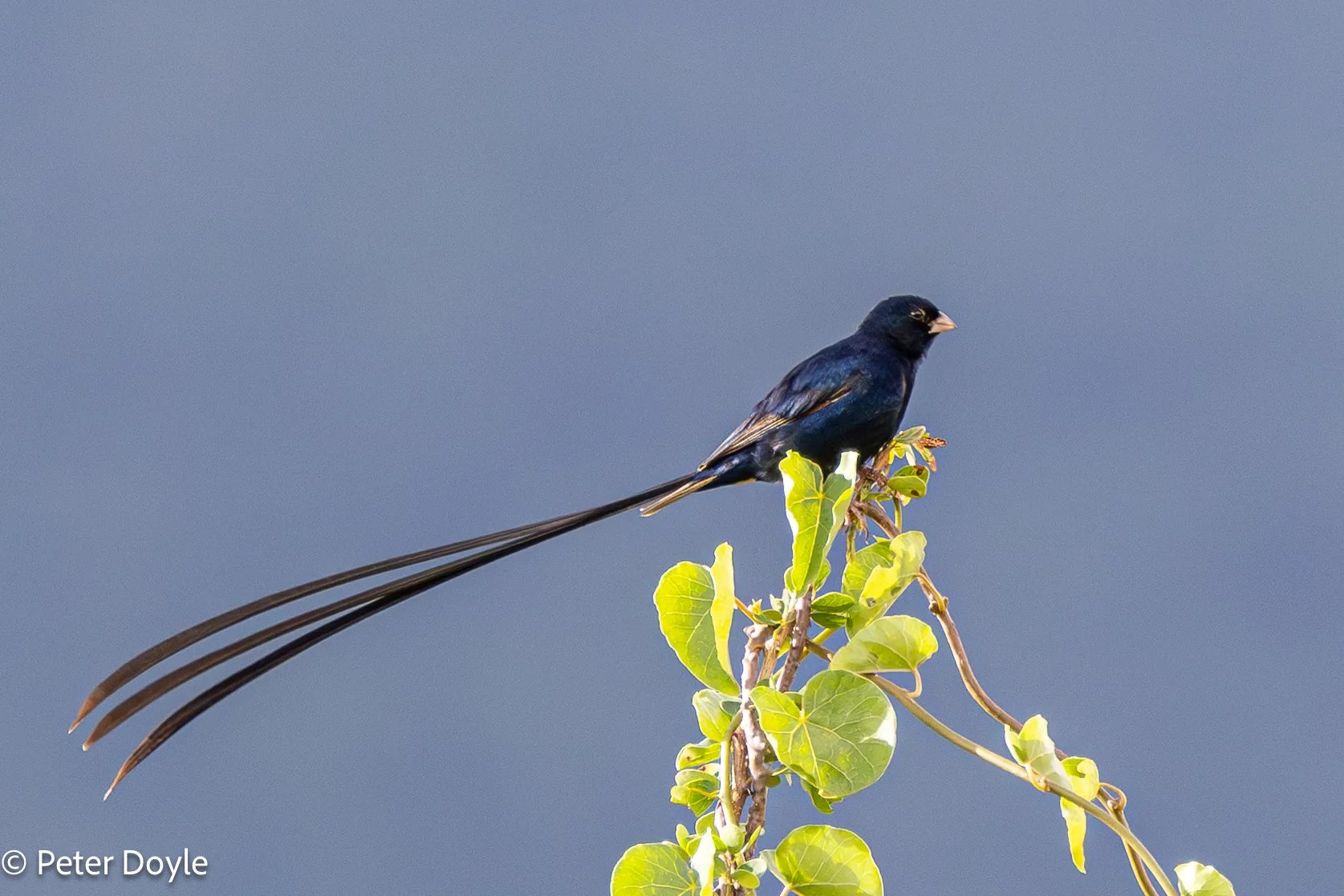
Steel-blue Whydah (Vidua hypocherina)
All good things come to an end …
All our fellow travellers returned to South Africa after 6 days, while we had the opportunity to stay for another 2 weeks, primarily to explore the South Pare and Usambara mountain ranges. I have written about that part of our trip in another story.
One of the striking things about our short 6 day trip was the huge diversity of landscapes and habitat we experienced. And going with habitat is, of course, the diversity of bird species. From forest birds, to riverine, to montane, savannah, grass plains, volcanic crater and parks, alklilne lakes, flood plains and other lakes and, finally, the vast stretches of dry thornveld of the Maasai Steppes.
