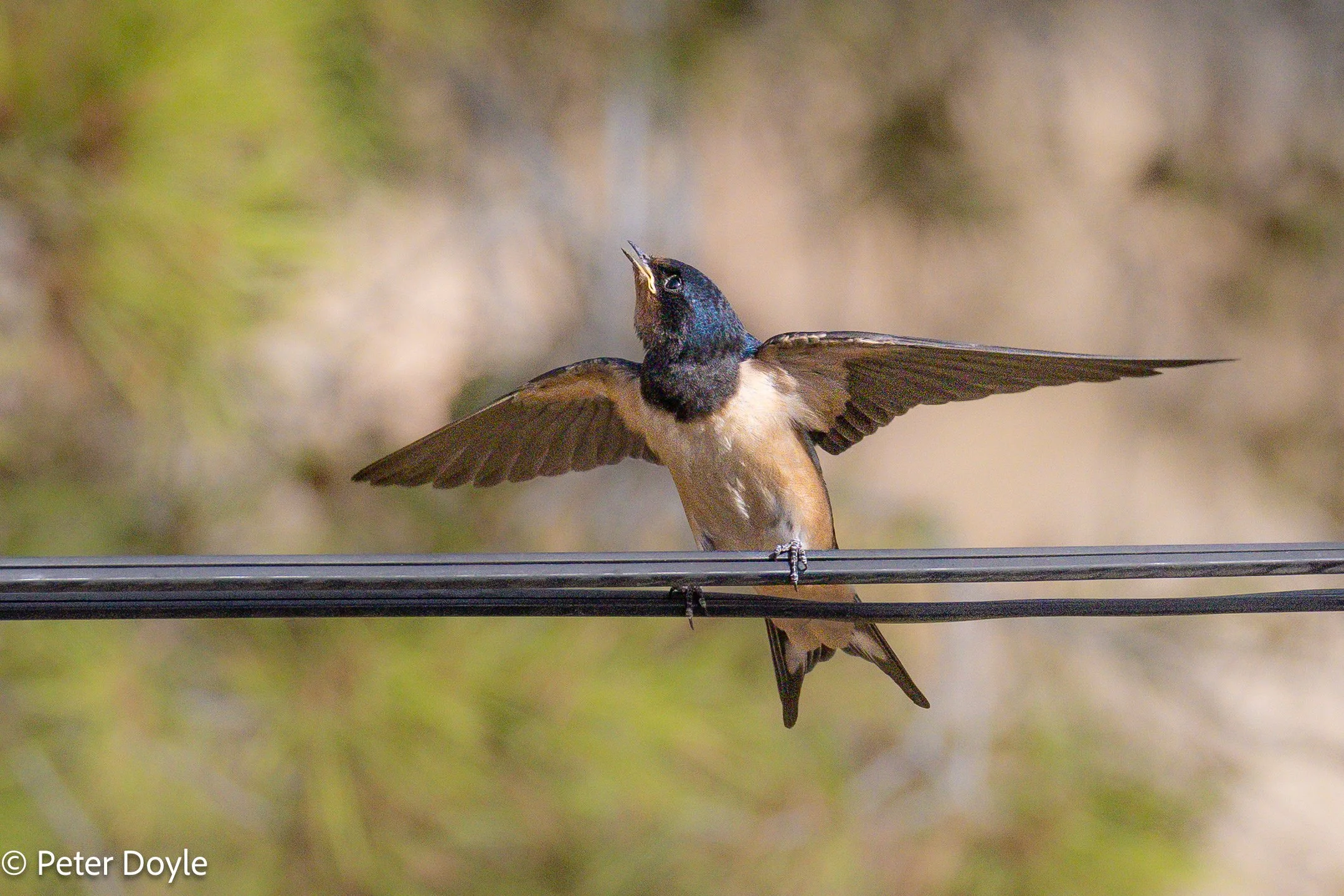
Barn Swallows Feeding
We were staying in Aigües, a little mountain village near Alicante in Spain.
In the mornings, at our lovely guesthouse, Finca El Otero, we were often treated to the spectacle of Barn Swallows(Hirundo rustica) swooping low past us, hawking insects, and then soaring high up through the trees. The adults were also starting to feed insects to their fledglings sitting on the electrical wires.
Summer in Spain is a very active time for the arial feeders, the Martins, Swifts and Swallows, which come to breed in great numbers. Most common are the Brown House Martins & Sand Martins, Barn & Red-rumped Swallows and a variety of Swifts; Common, Plain, Pallid & Alpine.
One day I noticed some fledglings doing their characteristic fluttering, demanding to be fed. The adults were obliging, coming in at great speed with insects in their bills. I tried to photograph them, but the angle was wrong and the adults were too fast to capture any decent images.
The next day I noticed that I could observe the birds at eye-level from my balcony, but although the adults continued hawking insects, they stopped feeding the fledglings, because I was putting them off! Soon they all moved further away to continue their feeding. Chance spoiled!
On the third day, I decided to stay in my room, out of sight, with the balcony door open. As I now had only a very narrow field of view through the doorway, I decided to observe only one fledgling and its behavior … as opposed to looking at the whole feeding frenzy. This decision produced great results.
Waiting for food …
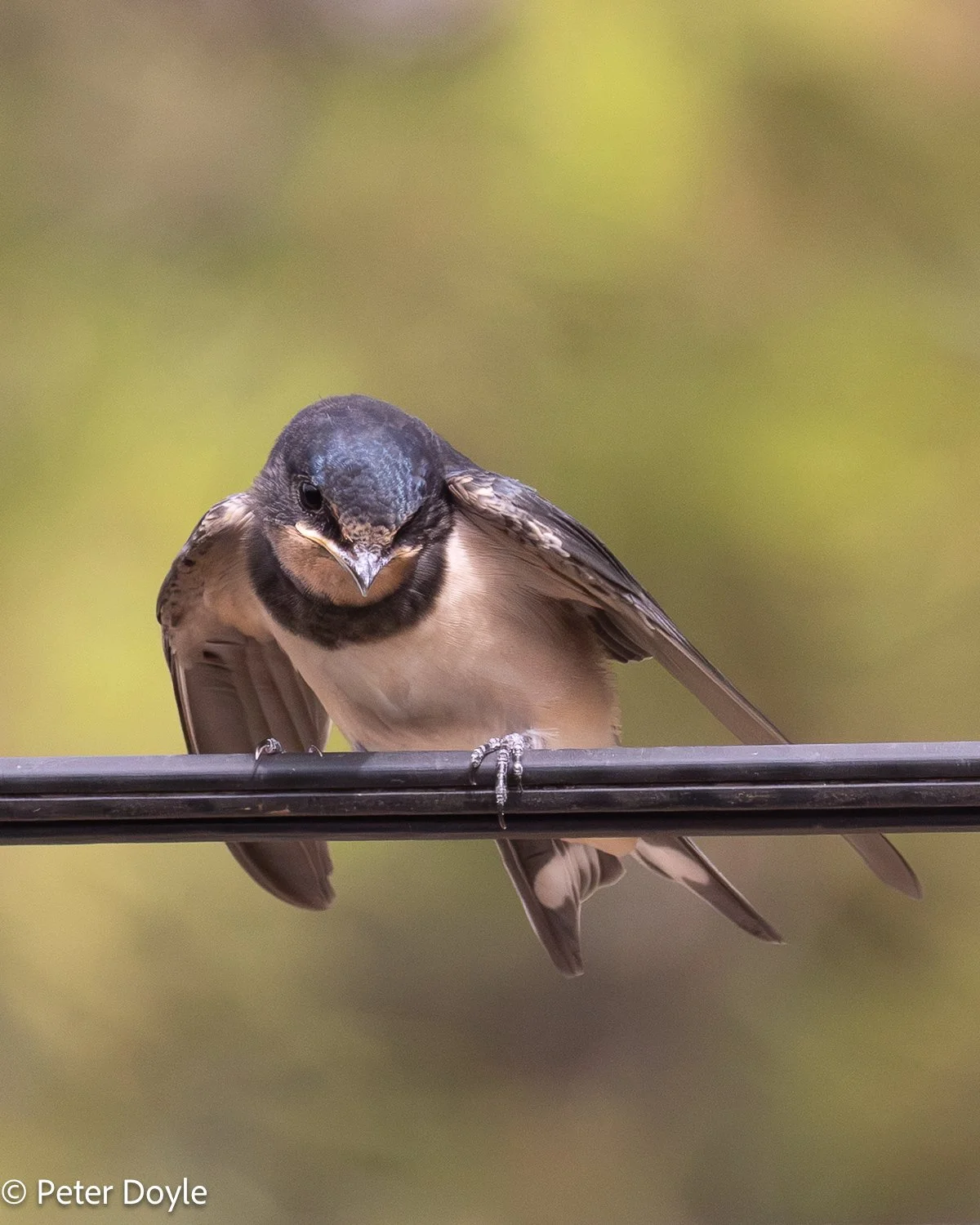
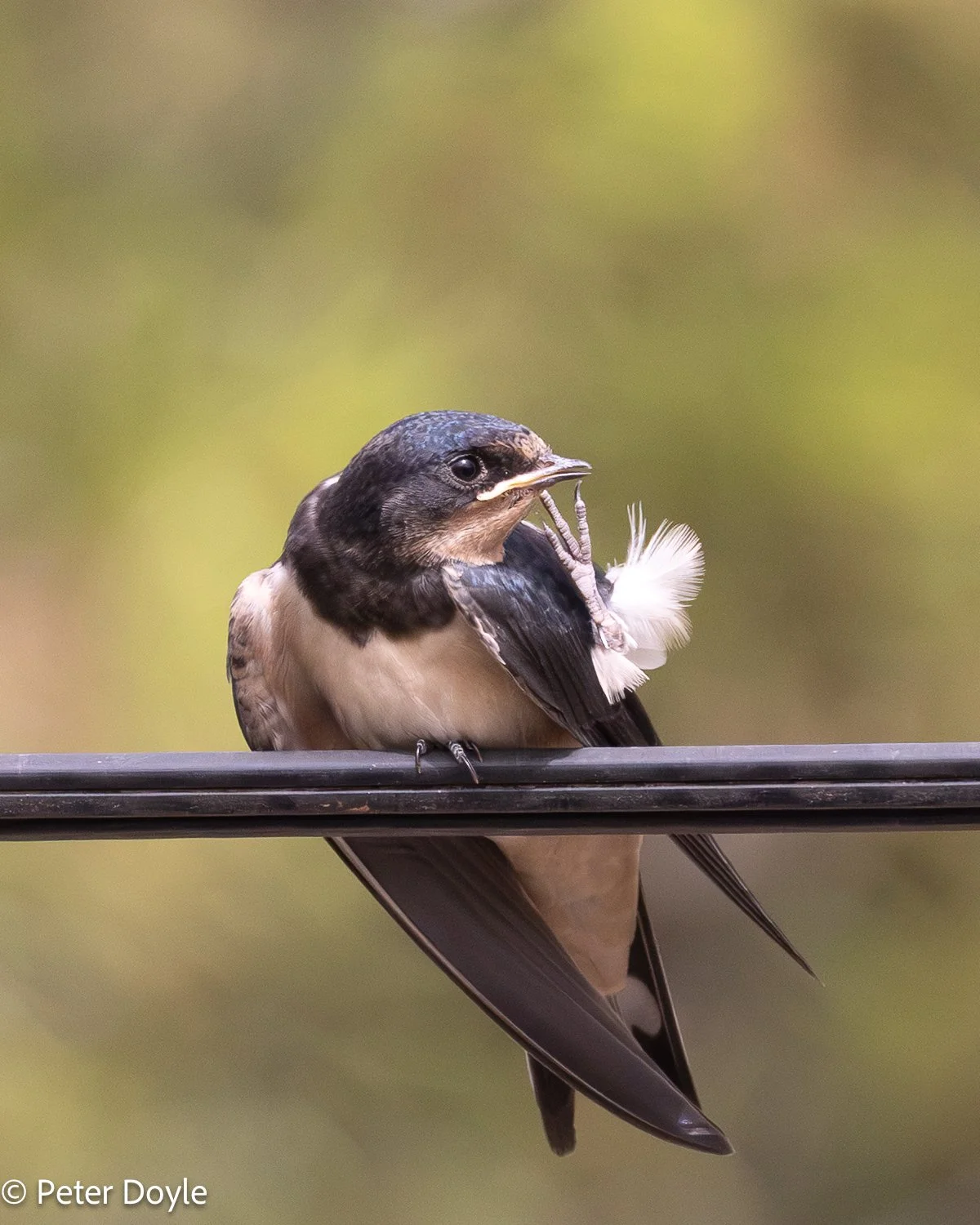
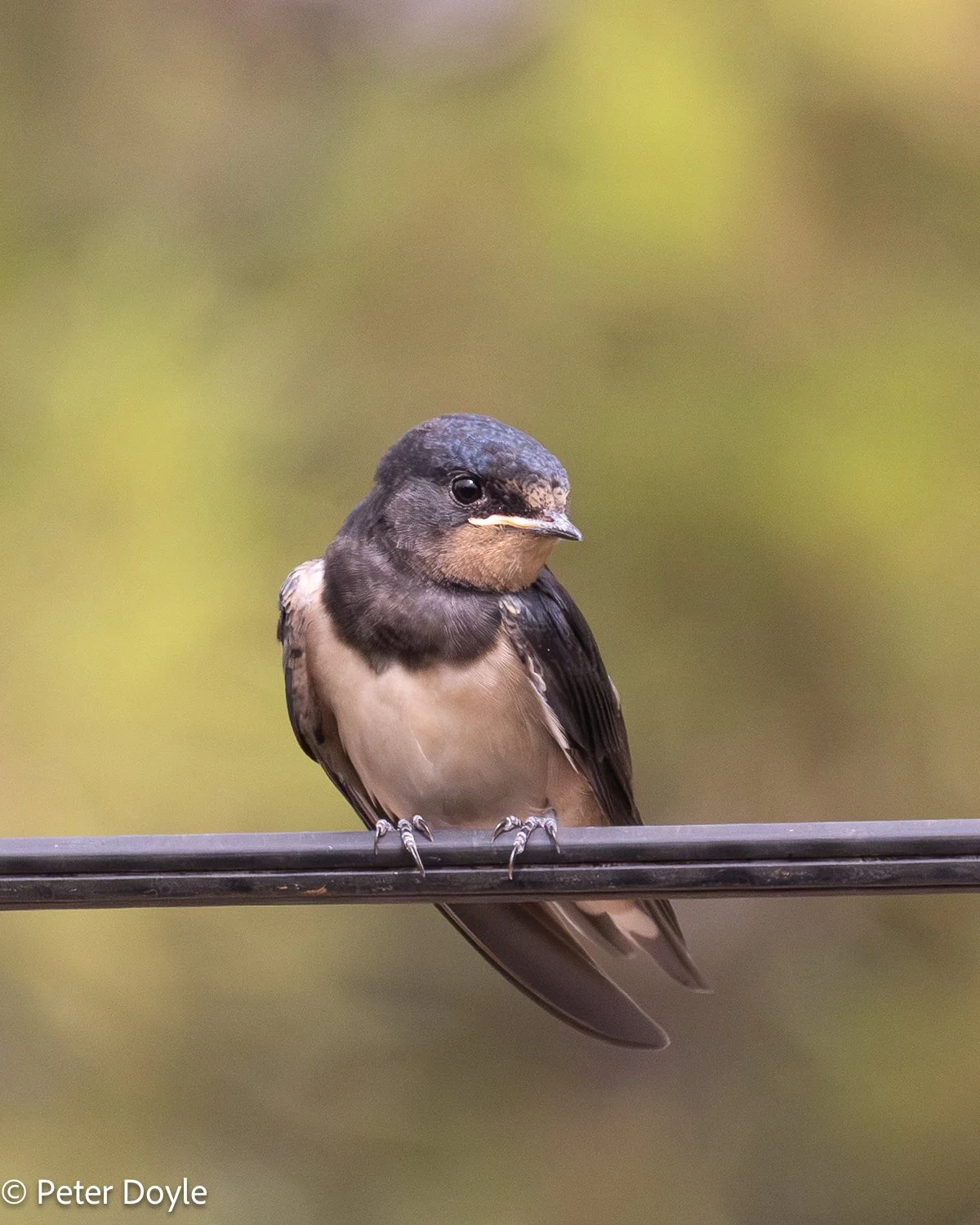
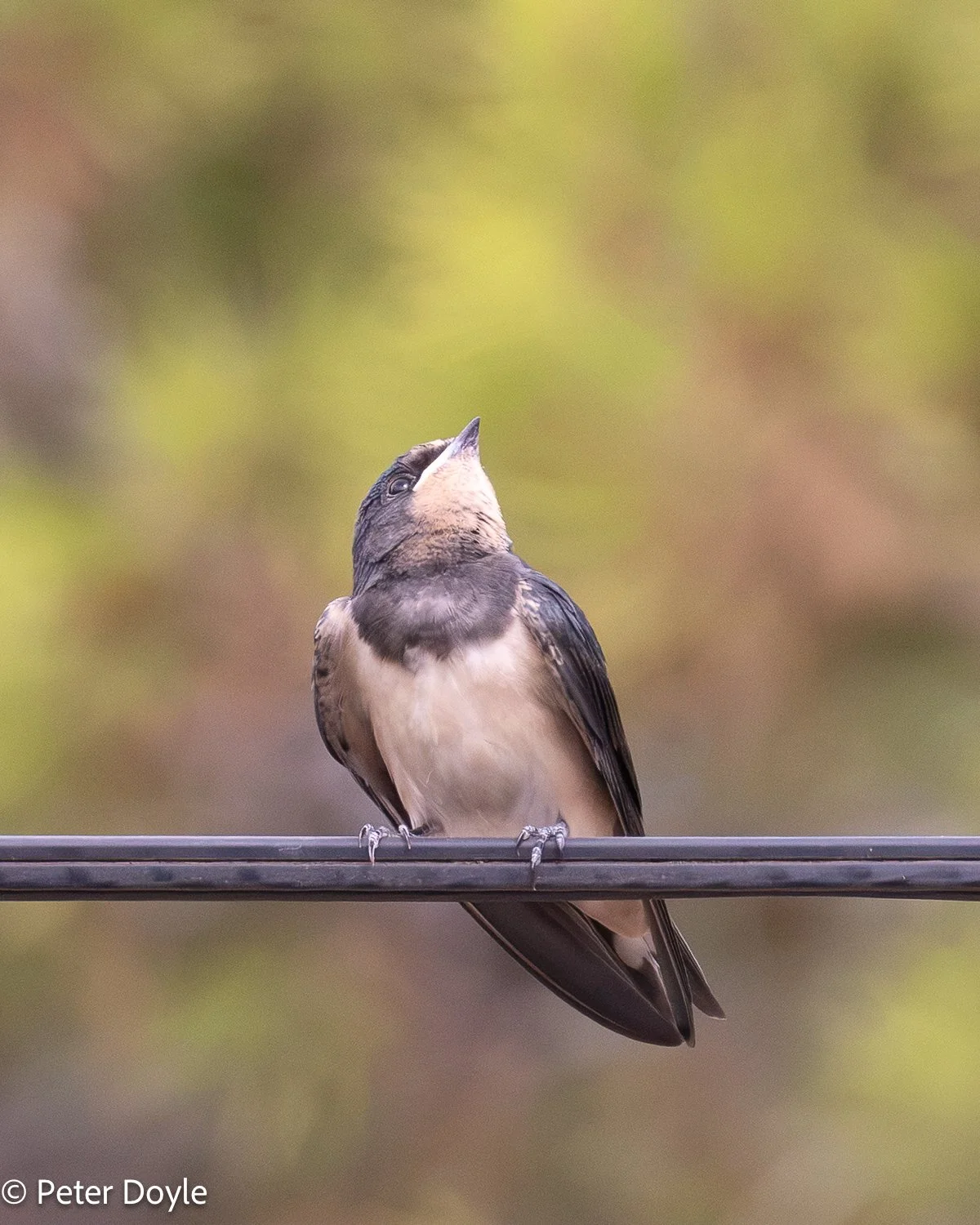
And as I watched this one bird, I started to notice all its micro movements and signals and its interaction with the adults. I observed that:
· After a feed, the fledgling started to preen and stretch and flap its wings.
· After a while it started to scan for the returning adult again, looking up, down and about.
· The adults did not come in directly to the fledgling, but did a low fly-past, so that the fledgling could probably see the food in the adult’s bill and perhaps receive a signal that their food was in-coming.
· The fledgling opened its gape wide, signaling that it was ready for food.
· It also started a very agitated flutter of its wings, demanding food.
· Then it turned in the direction the adult was coming from, opened its mouth wider and crouched down horizontally, reading to receive the insect.
· The actual feeding event was incredibly quick. In one sequence that I photographed, from the first appearance of the adult to its departure, was less than 3 seconds.
· I missed out on several feeding actions because it was all too quick.
· But watching one single bird, the pattern became familiar. Feeding action, preening, waiting, scanning for the adult, excited flutter and then intense fluttering, position changed to a crouch; adult arrives, feeding … and repeat.
Now understanding their behavior and timing I could set my camera up better and concentrate only on the focus. These were my settings and changes:
· Shutter speed at 1/4000 and aperture f7.1, auto ISO.
· Electronic shutter mode to increase the frames per second and importantly on silent mode so as not to disturb the birds.
· Focus changed from eye-tracking to single spot focus, which I then pre-focused on the bird on the wire.
Ready to feed!
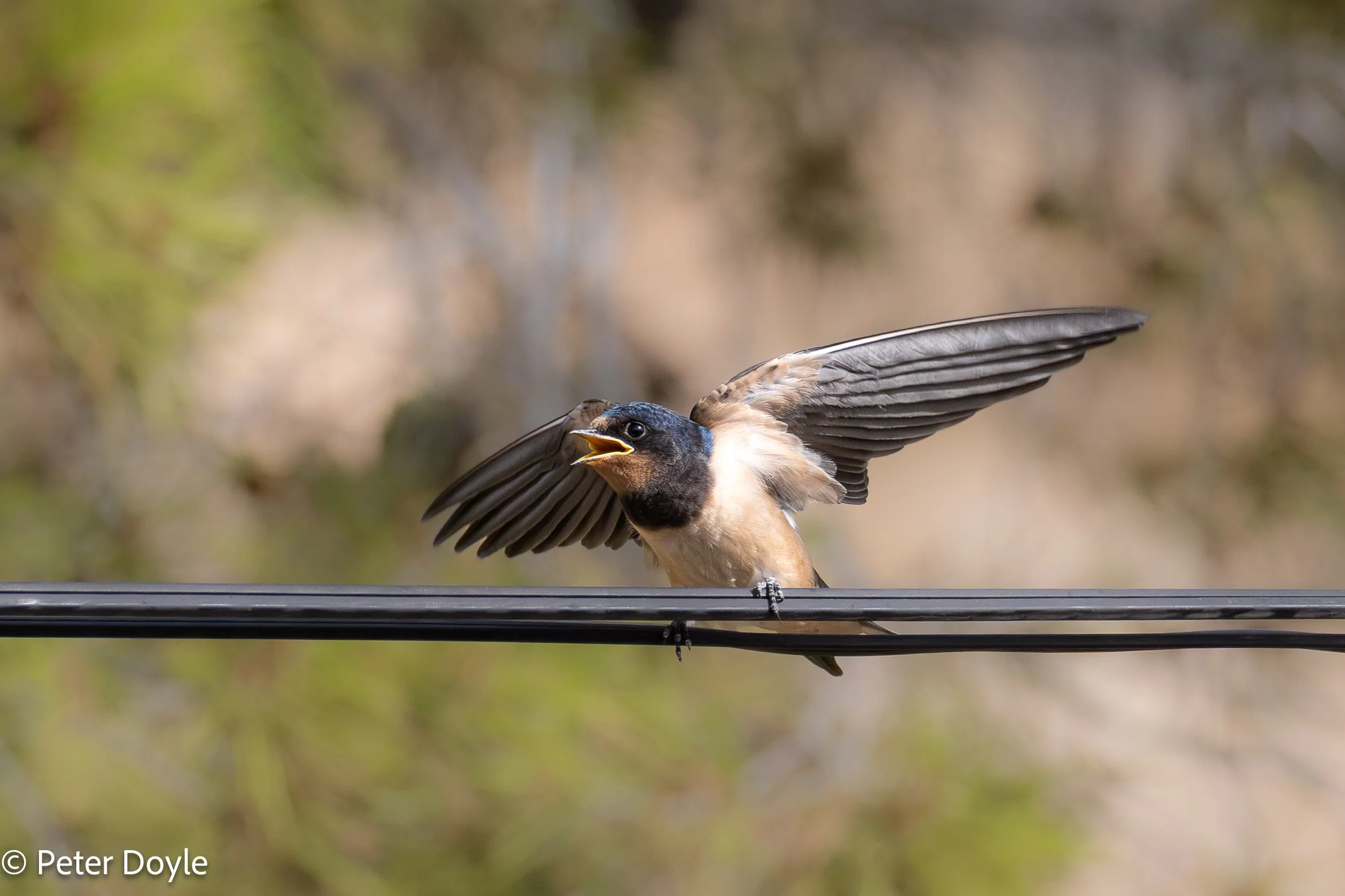
Finally, the challenge became when to press the shutter button.
· Because of the very narrow field of view, I could not see the adult approaching.
· Pre-capture would also have been nice, but I don’t have that feature on my Canon R5 camera.
· Instead, I started to tune in only to the single fledgling’s behavior. Now, understanding its behavior, I could more accurately time when to press the shutter button as the adult came in.
On one occasion, what I saw through my viewfinder was confusing, because suddenly another bird came into the scene, and I did not understand what was happening, until I looked at my photographs. Another fledgling was trying to steal the food! These are the images I captured over the next 3 seconds of action:
Three seconds of action:
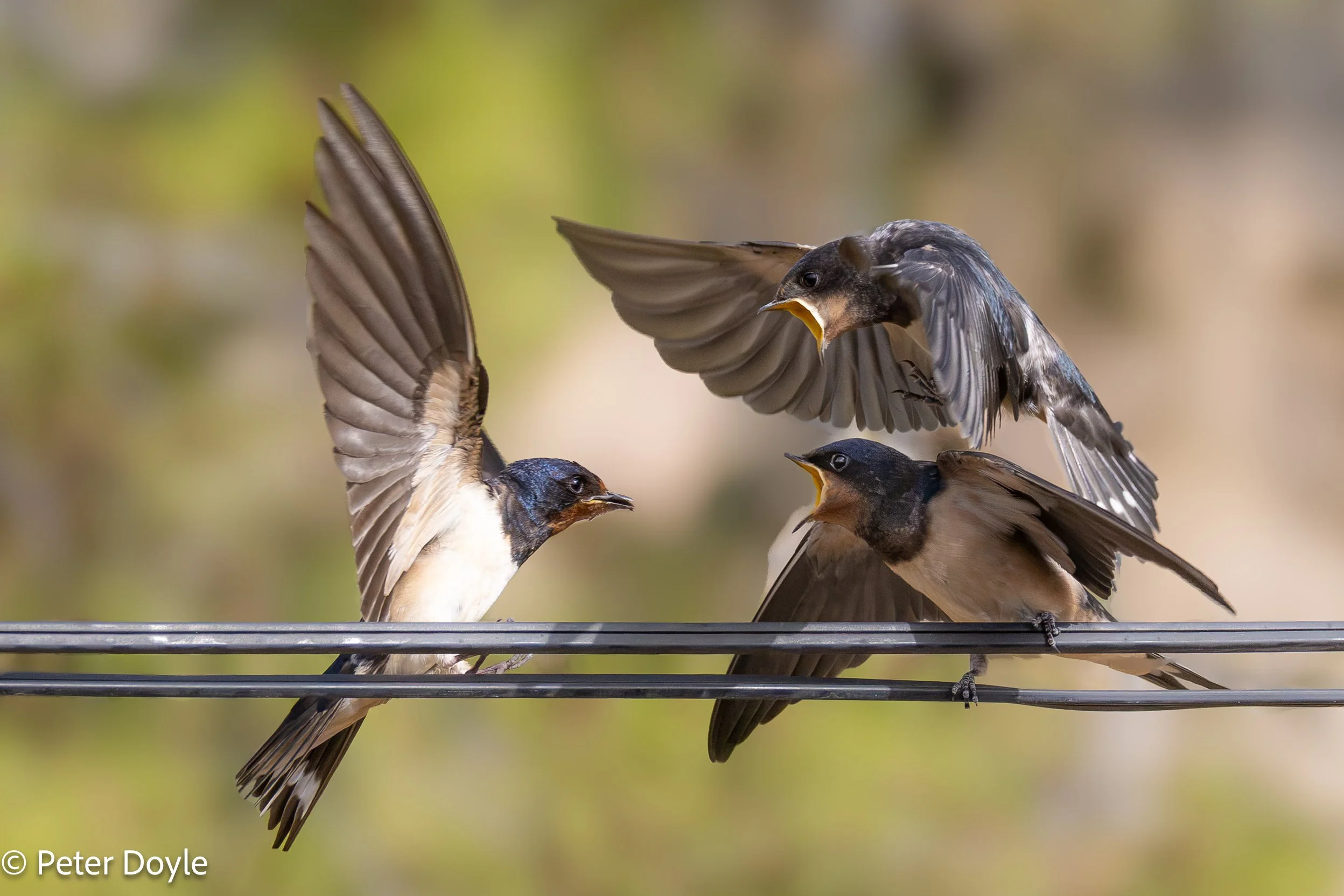
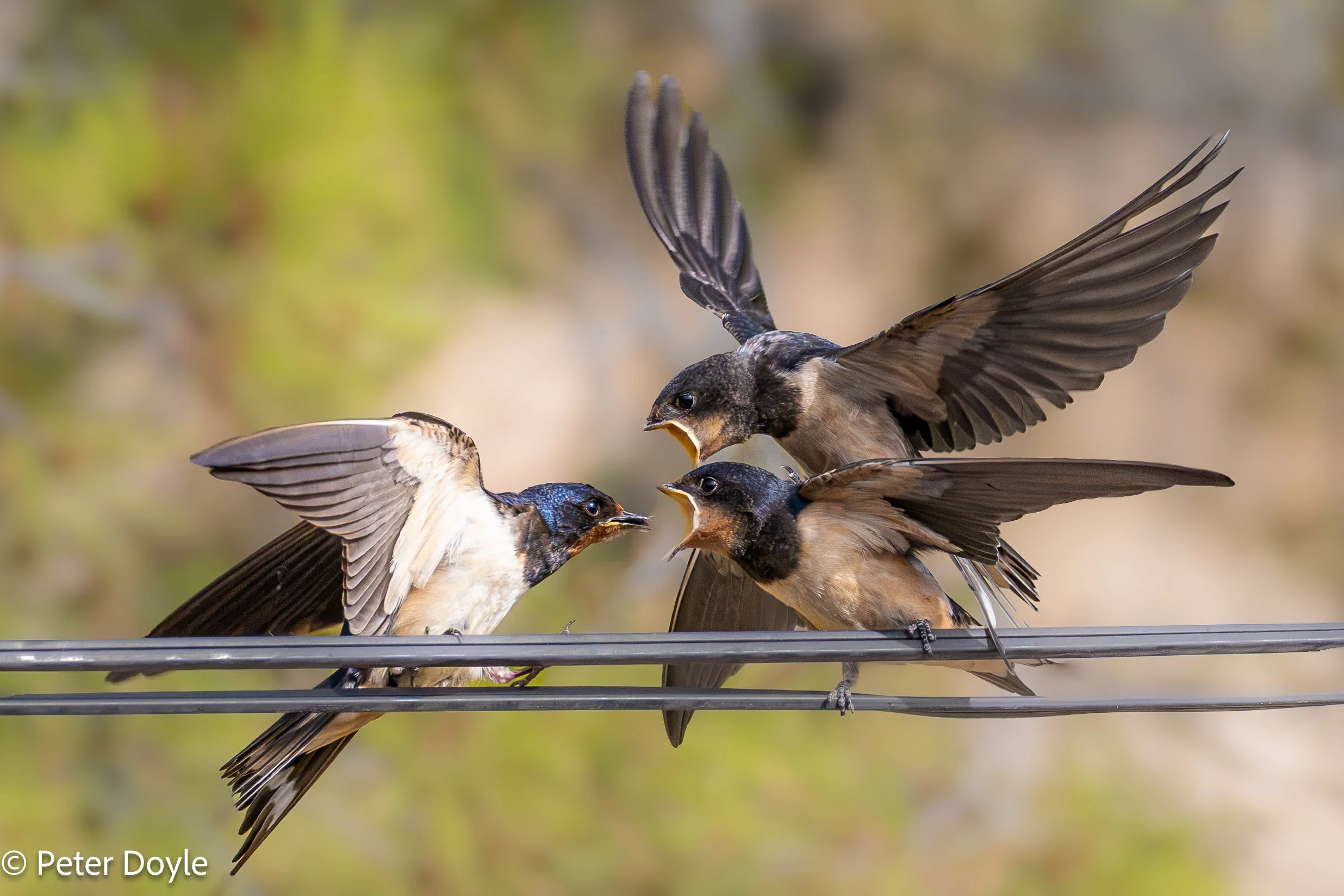
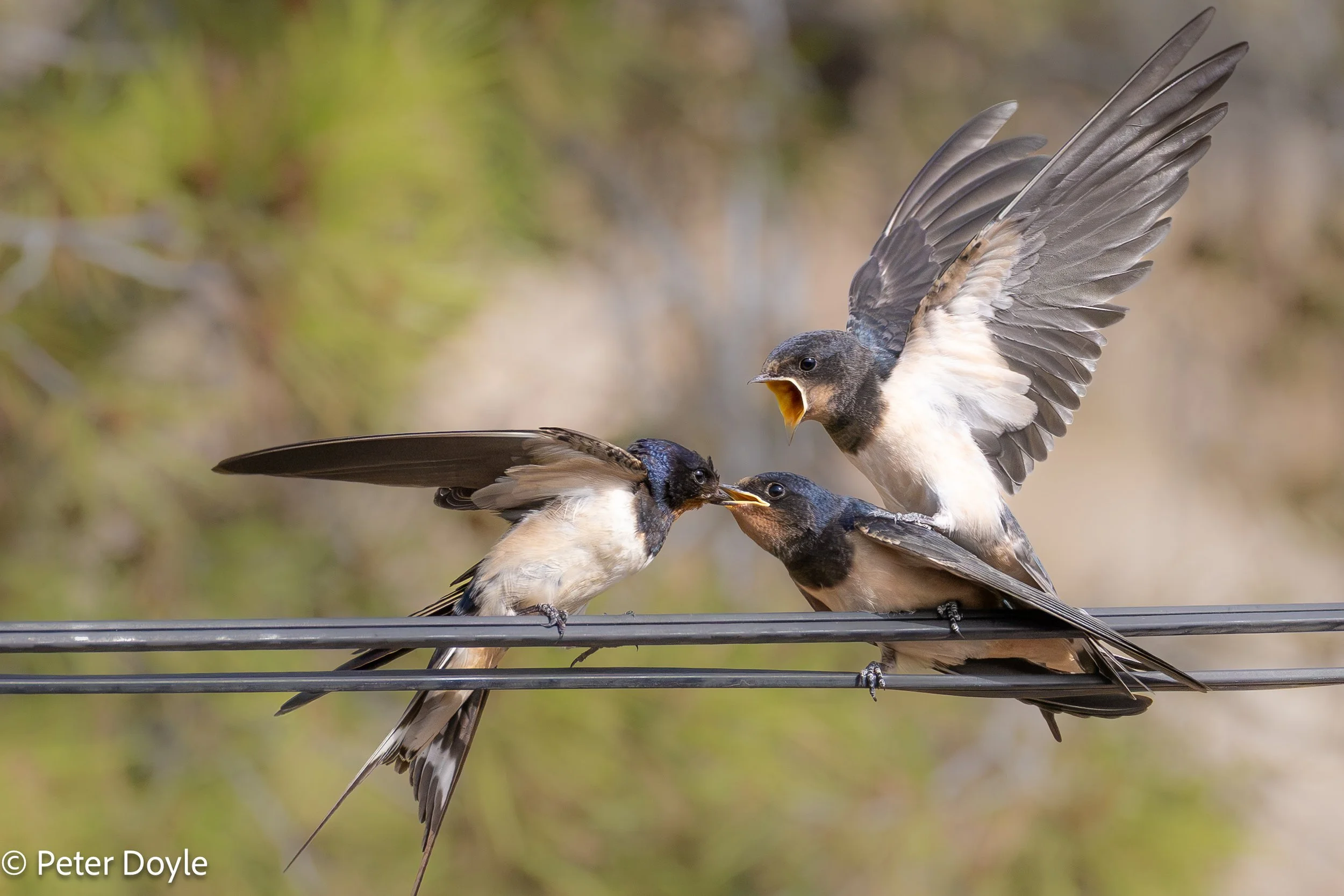
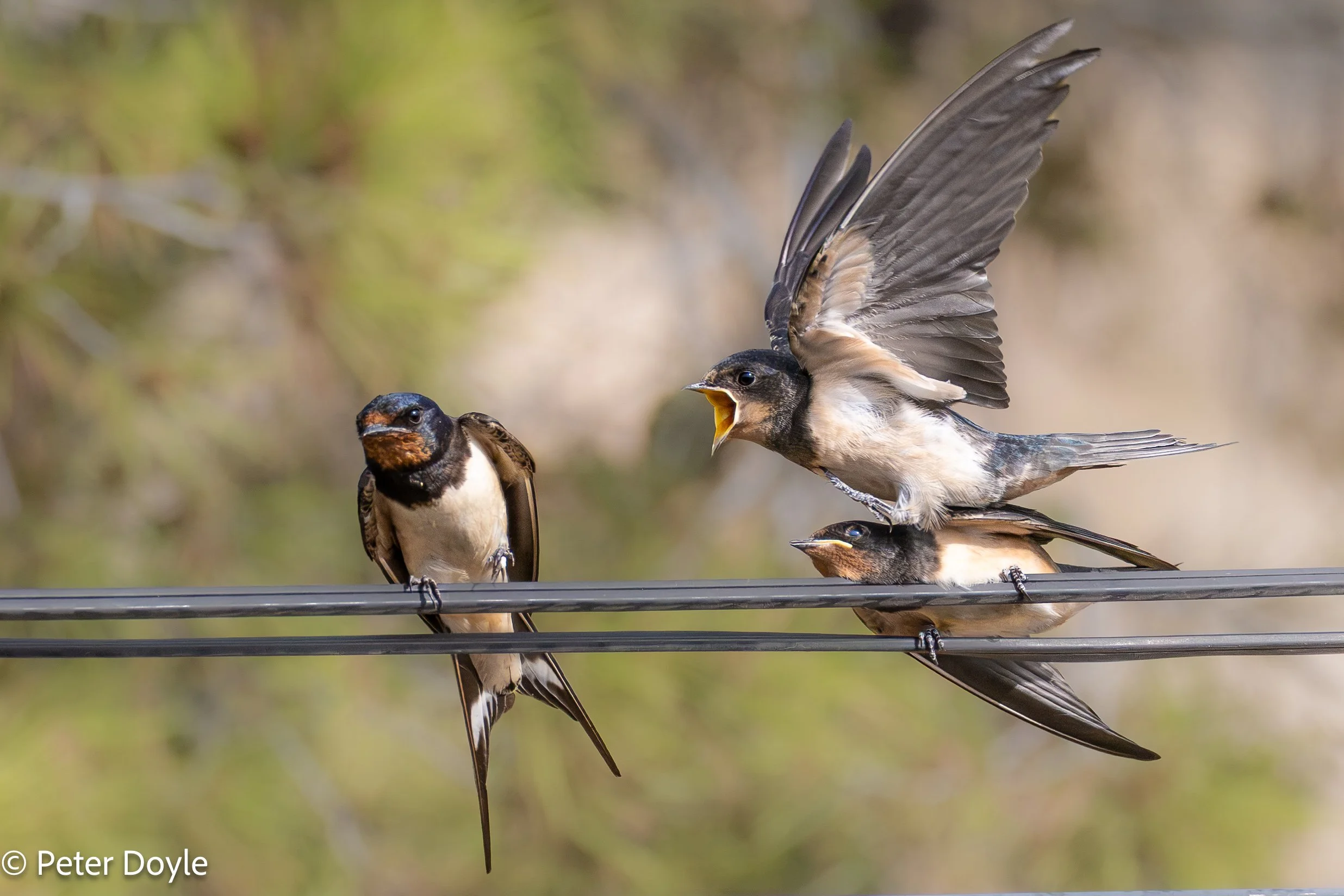
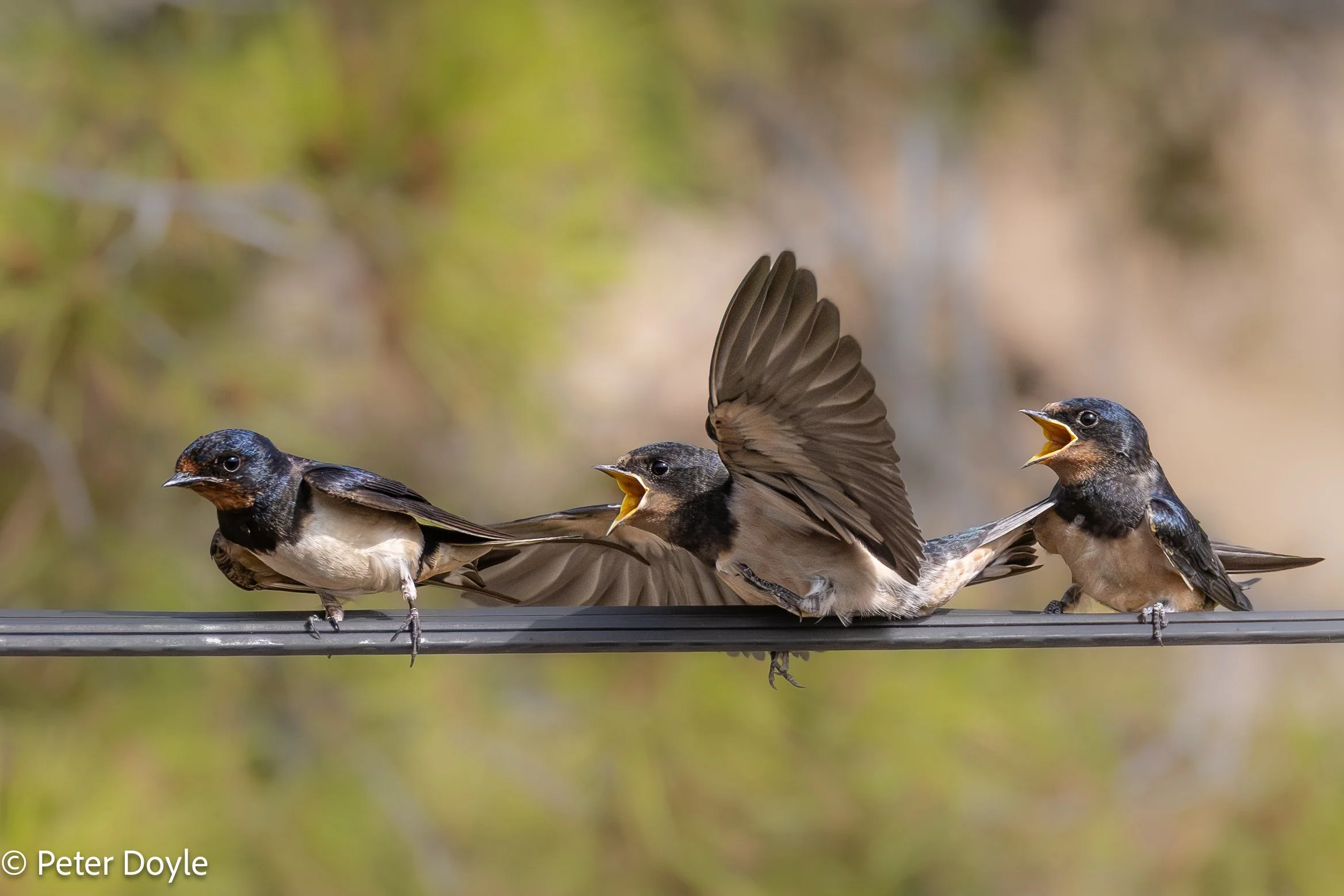
I came away with some good images, but also with a better understanding on how to capture birds in action.
Were these just lucky shots? Perhaps not … I had taken the time to set up the shot and was ready to capture the action.
The image below of the happily fed Swallow fledgling sums up how I felt too!
Happiness is …