Travels in Botswana
Botswana is one of the gems of African overland travel
We spent only 3 weeks in Botswana on this trip. That is too short to appreciate the country, but we have travelled to Botswana seven times before, especially to the Kgalagadi Transfrontier Park, the Okavango Delta, the Makgadikgadi pans and, many years ago on my first ever overland trip, to the Central Kalahari.
A special aspect of this trip was that we were joining my brother and sister-in-law, with whom we have often travelled overland in southern Africa. We first met up in Caprivi, before driving down the Okavango pan-handle to Maun and onwards to the. The Makgadikgadi basin, especially at Nxai Pans and Baines’ Baobabs.
Birdlife
Interestingly, even though Botswana has an excellent bird list, especially in the Okavango Delta, it has no endemic birds.
When looking at the geography and habitat, the reasons are clear. Botswana sits in the middle of several countries, including in South Africa, Namibia, Zambia and Zimbabwe. And the birds and the animals all migrate across all these international boundaries, always in search of better water and food.
As a result, there are no habitats that are unique just to Botswana that would lead to endemic bird species. The only near-endemic is considered to be the Short-clawed Lark, where it is estimated that 80% of the population are in Botswana and the balance in the northern provinces of South Africa.
However, what Botswana lacks in endemic species, it makes up in the sheer numbers and variety of birds found primarily along the Chobe and Okavango rivers, and, of course in the Okavango Delta and where the Delta disappears into the Makgadikgadi basin and the sands of the Kalahari.
Our Route and Campsites in Botswana:
• Drotsky Cabins on the Okavango river pan-handle
• Situtunga at Maun on the Boteti River
• Nxai Pans at Baines Baobab
• Nxai Pans at South Camp
• Elephant Sands just north of Nata
• Chobe Forest Camp
• Chobe Safari Lodge on the Chobe river
• Ihaha Camp in the Chobe National Park on the Chobe river
• Muchenje Camp on the Chobe river
Drotsky Cabins
This is a legendary camp, and deservedly so. The campsites along the river are wonderfully, set in the shade of ancient trees. There is excellent birding, both in the natural woodlands of the campsite, but also along the Okavango river. We saw two special, mainly nocturnal, birds from the boat.
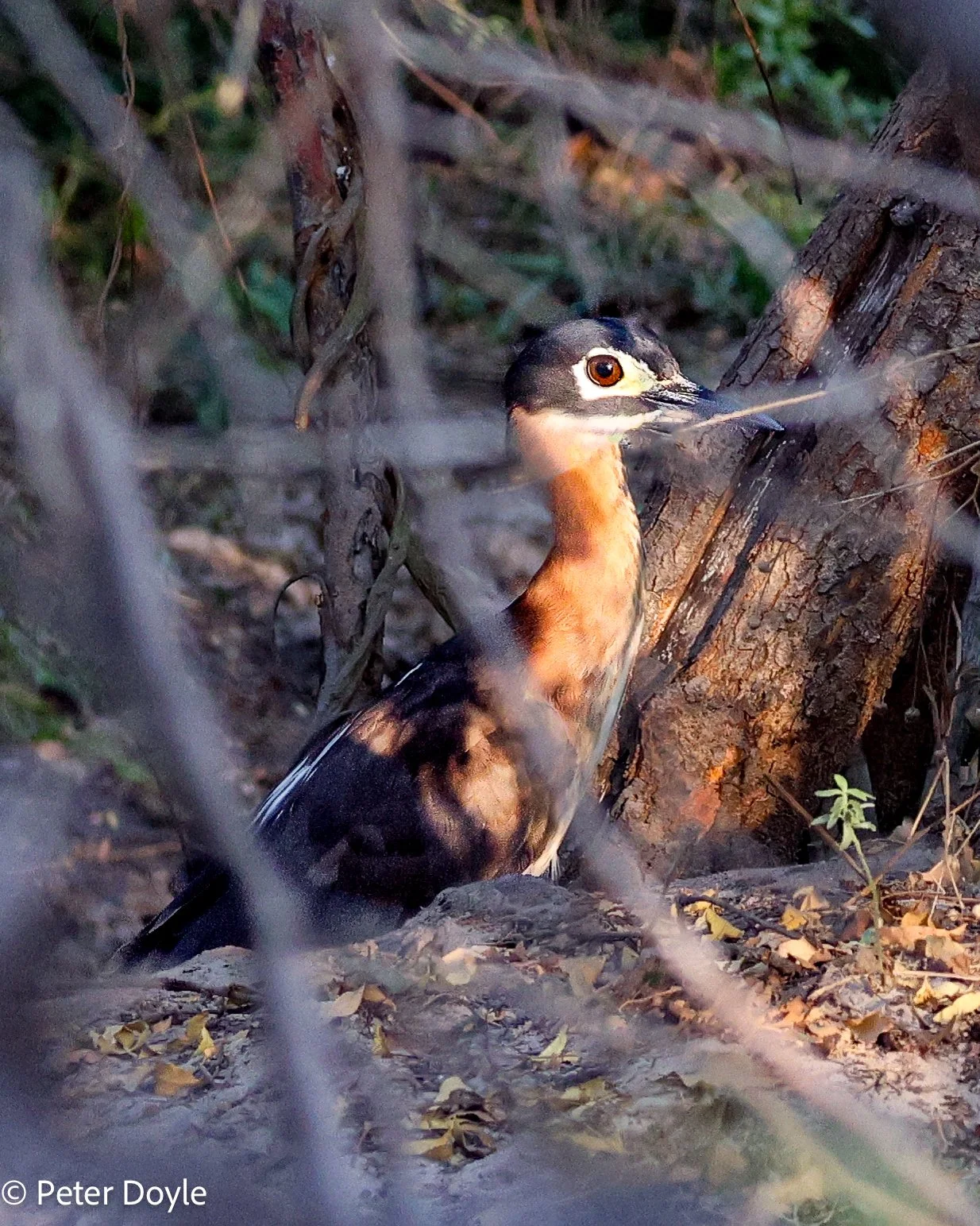
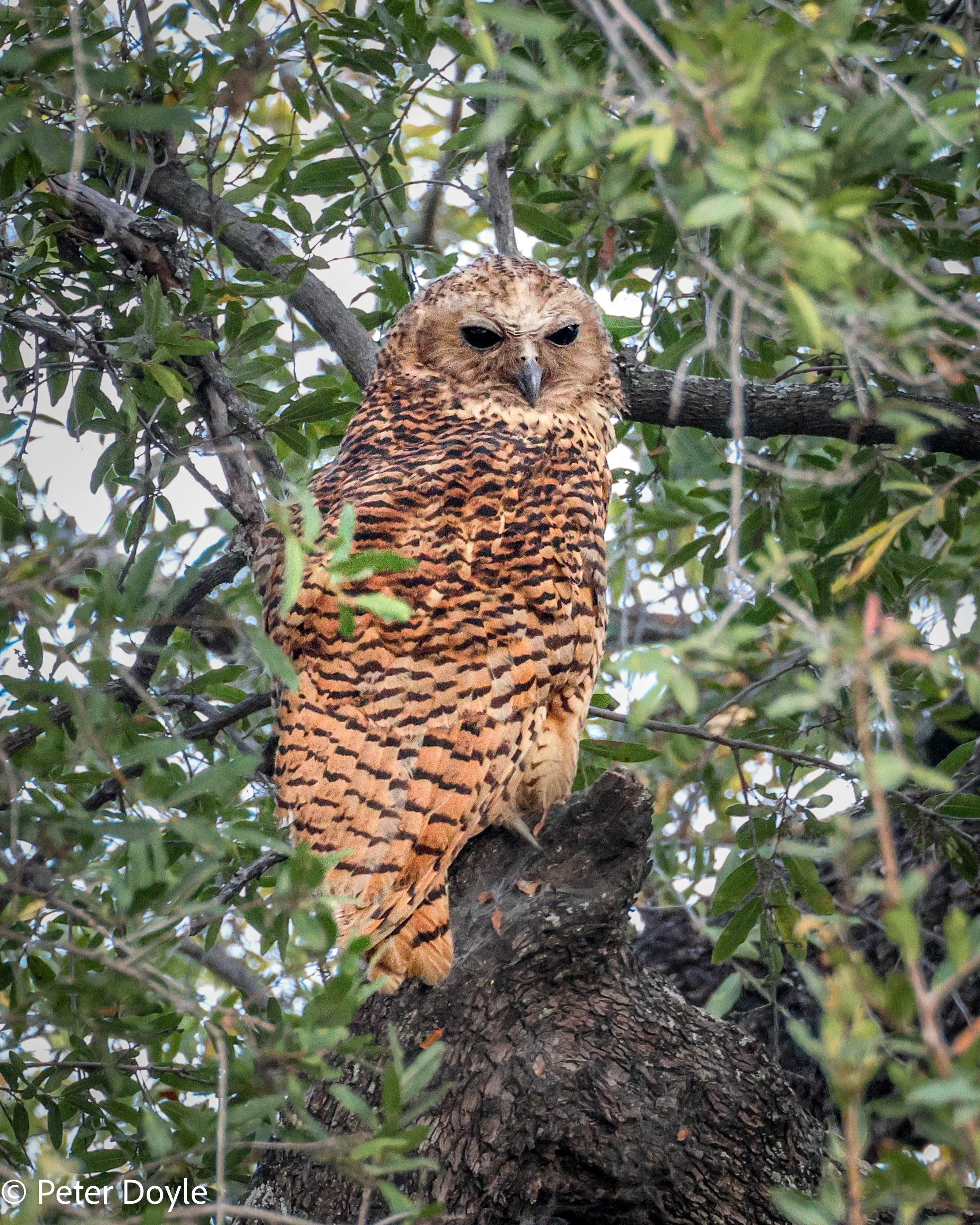
White-backed Night Heron (Gorsachius leuconotus) Pel’s Fishing Owl (Scotopelia peli)
Maun & Situtunga Campsite
Situtunga camp, near Maun, is on right on the Boteti River. This is an interesting river, because it is one of the few rivers flowing out of the Okavango Delta. But then it ultimately disappears into the sands of the Makgadikgadi basin. The town of Maun itself is very busy; and feels something like a frontier town, with virtually all overland travellers in Botswana going through Maun in one direction or the other around the Okavango Delta.
Nxai Pans National Park
This park is in the north-east of Botswana and is part of the Makgadikgadi basin. Nxai Pan itself is one of the Makgadikgadi salt flats.
Driving in the Nxai Pans NP roads to South Camp and Baine’s Baobabs is exciting … if you enjoy off-road driving! Deep sand, “twee-spoor”, corrugations, undulations, deep ridges and dry mud holes. This is not always easy to drive, but you are unlikely to get stuck, except in the wet season.
Baine’s Baobabs
This was one of the primary destinations of our entire trip. For some inexplicable reason, both my brother and I always had a hankering to come to this place. We had two glorious days and nights exploring the pans and the Baobabs and the islands around the pans. We were the only one there, other than a brief visit from a lodge vehicle with two hot and dusty travellers.
We saw sunsets, sunrises, moonrises, star trails, shooting stars, comets, pelicans, birds jackals, and other spoor galore. We mulled over the significance of these baobabs and Baines visit here. In the end, we left, satisfied.
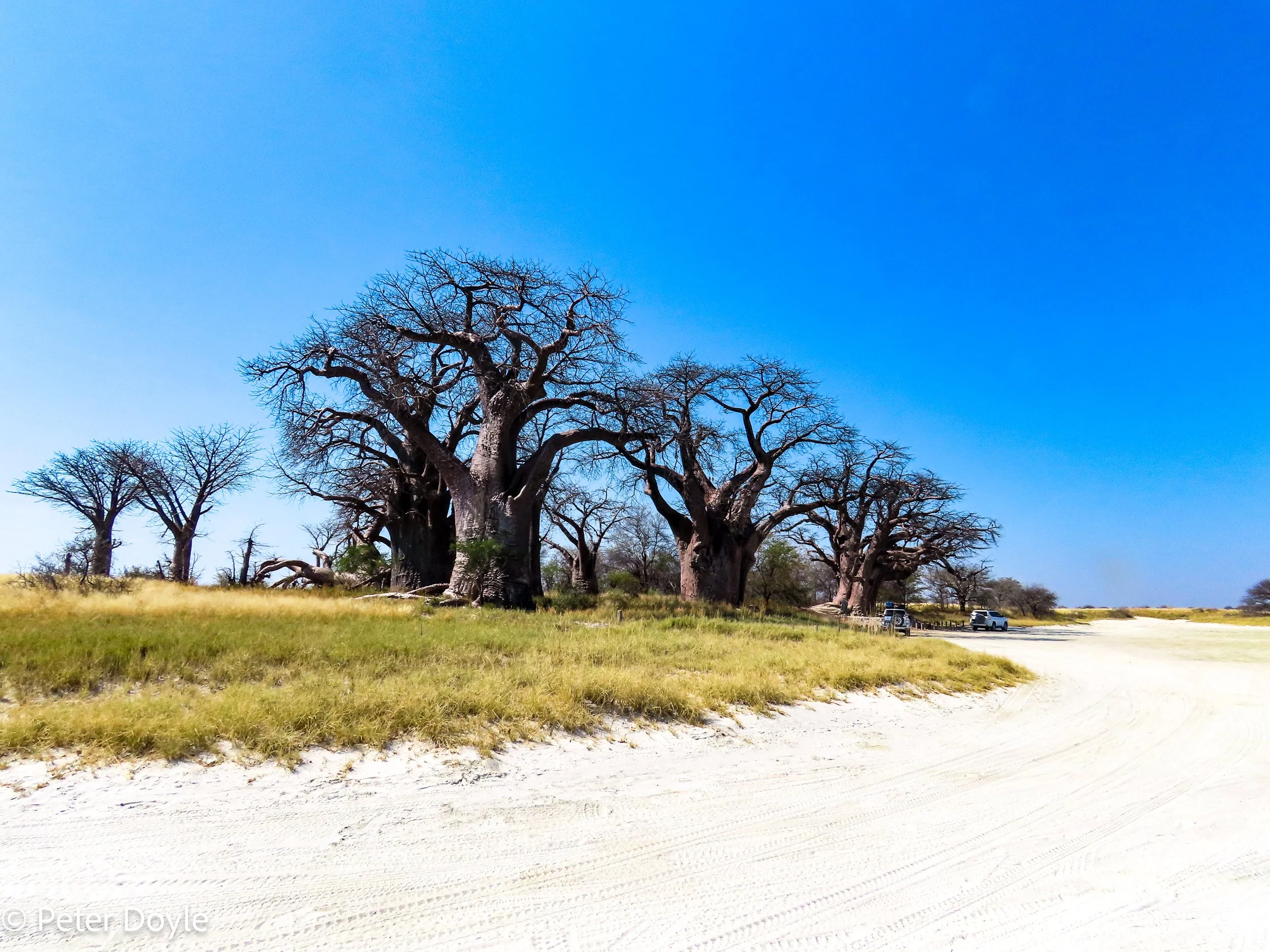
Baine’s Baobabs … this is the perspective of the Baobabs that Thomas Baines famously painted in 1862.
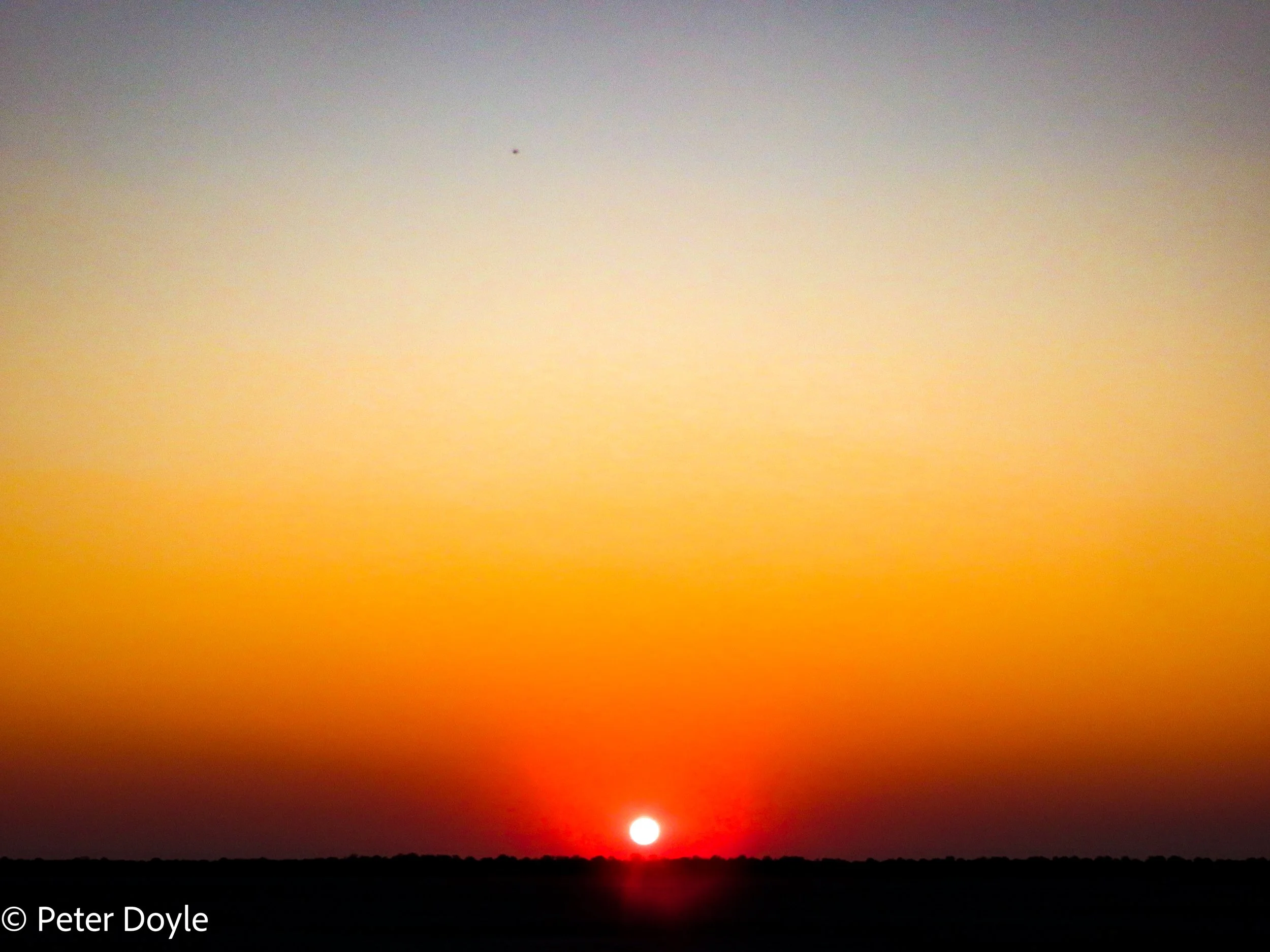
Sunset over the pans
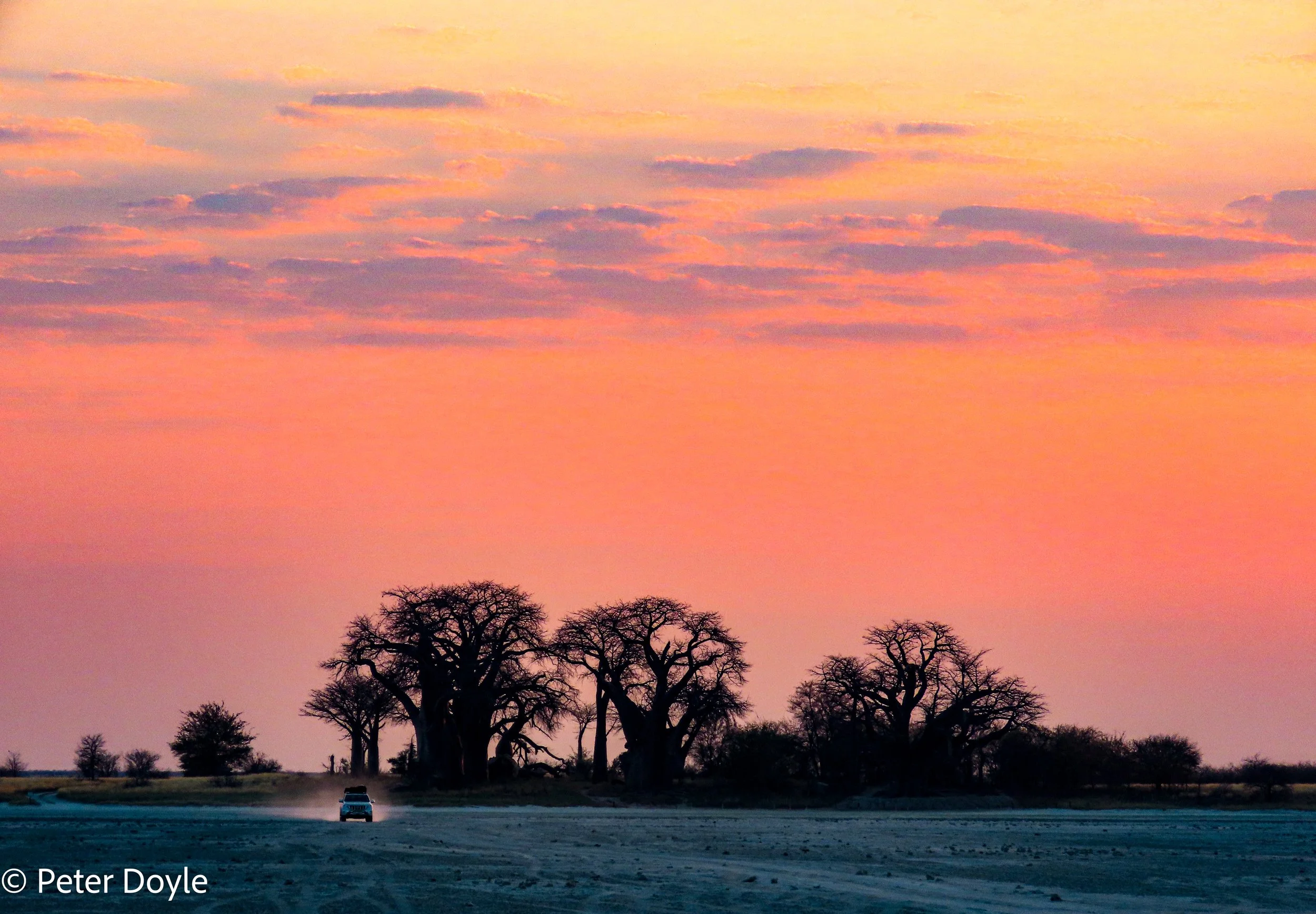
Sunrise over Baine’s Baobabs
Nxai Pans, South Camp
Here you can drive to the main waterhole, where great herds of springbok come to drink, together with wildebeest, elephant, kudu, jackal, zebra, giraffe, kori bustard, and numerous other birds. But it is the elephant that are always the star of the show.
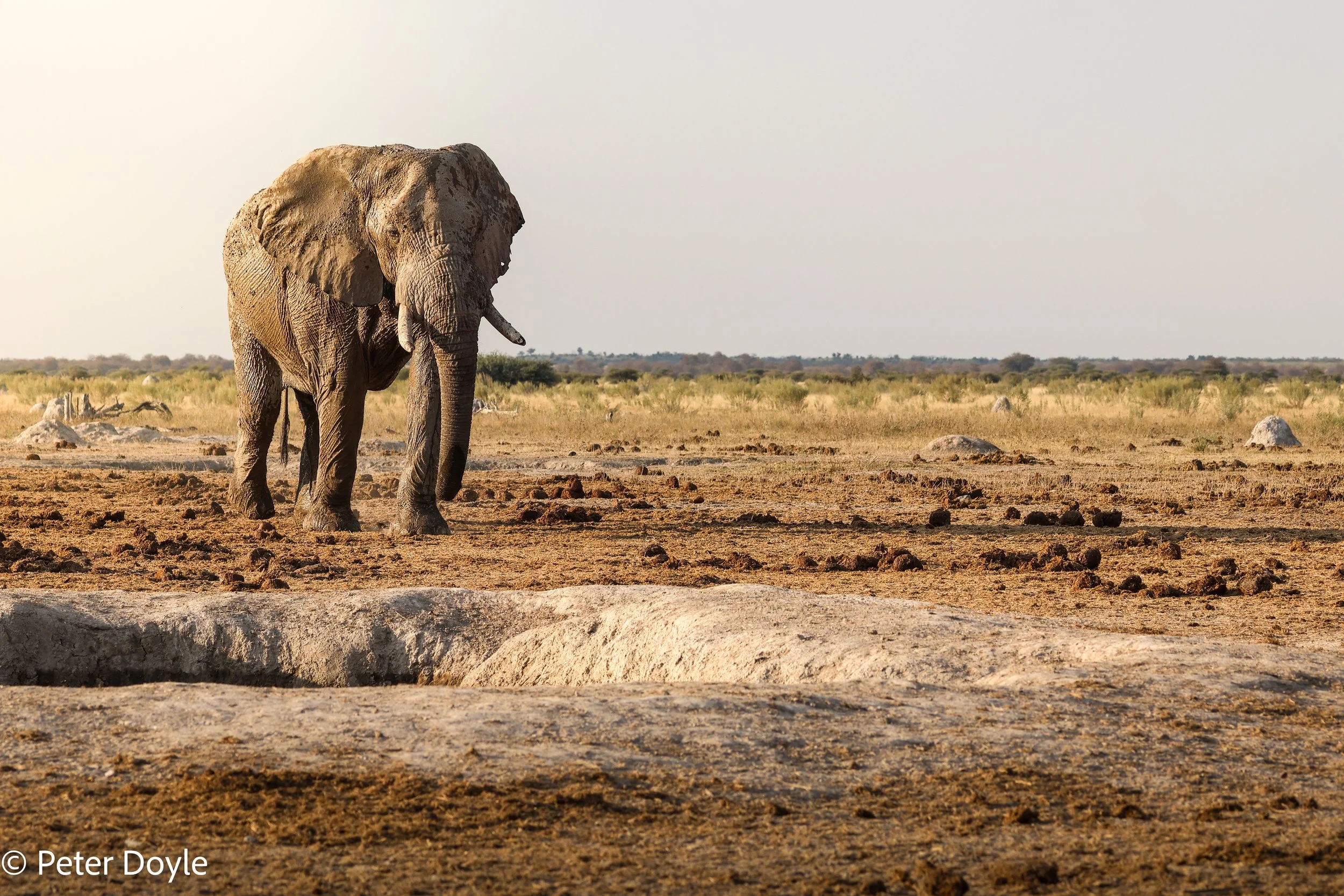
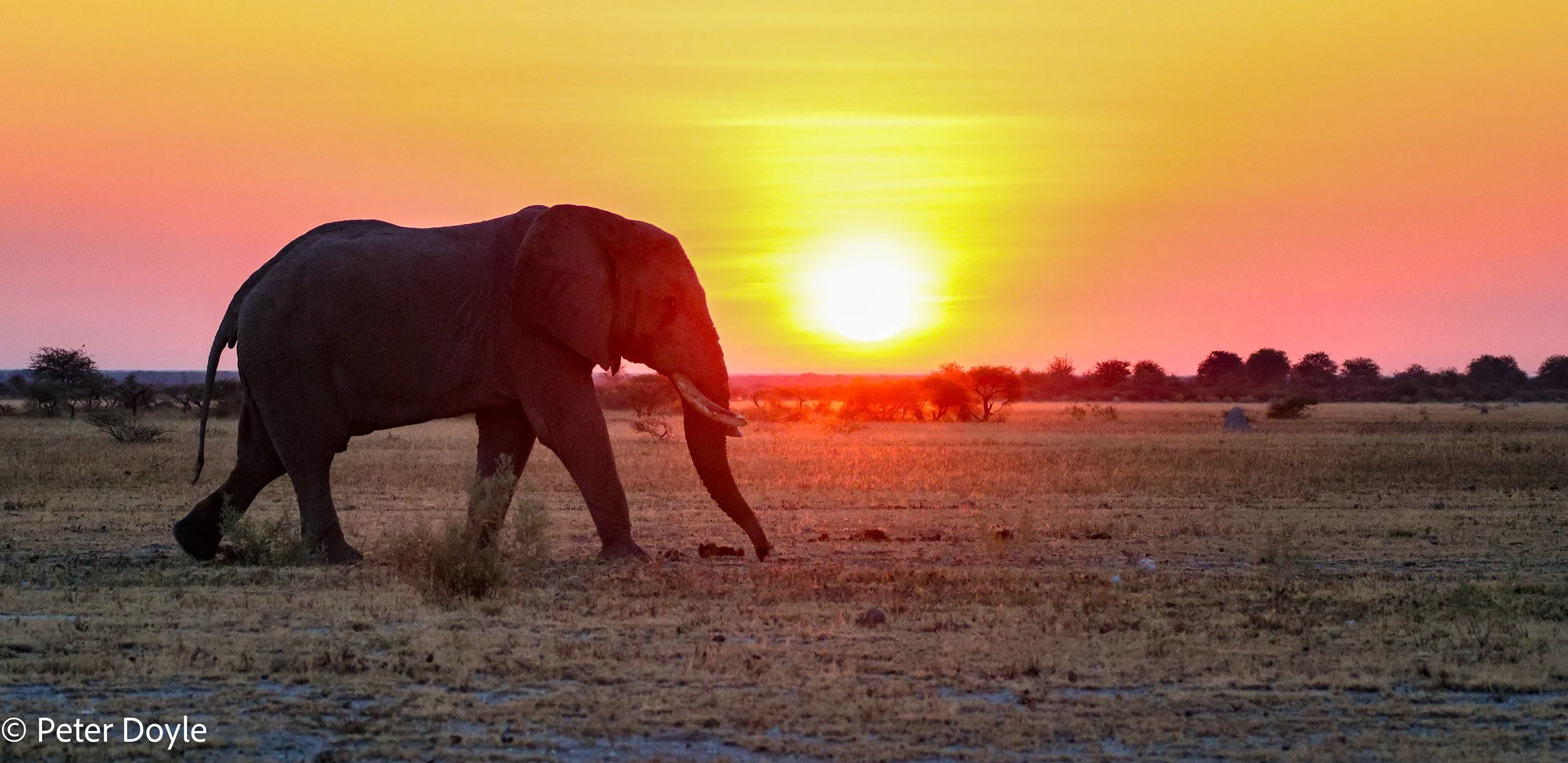
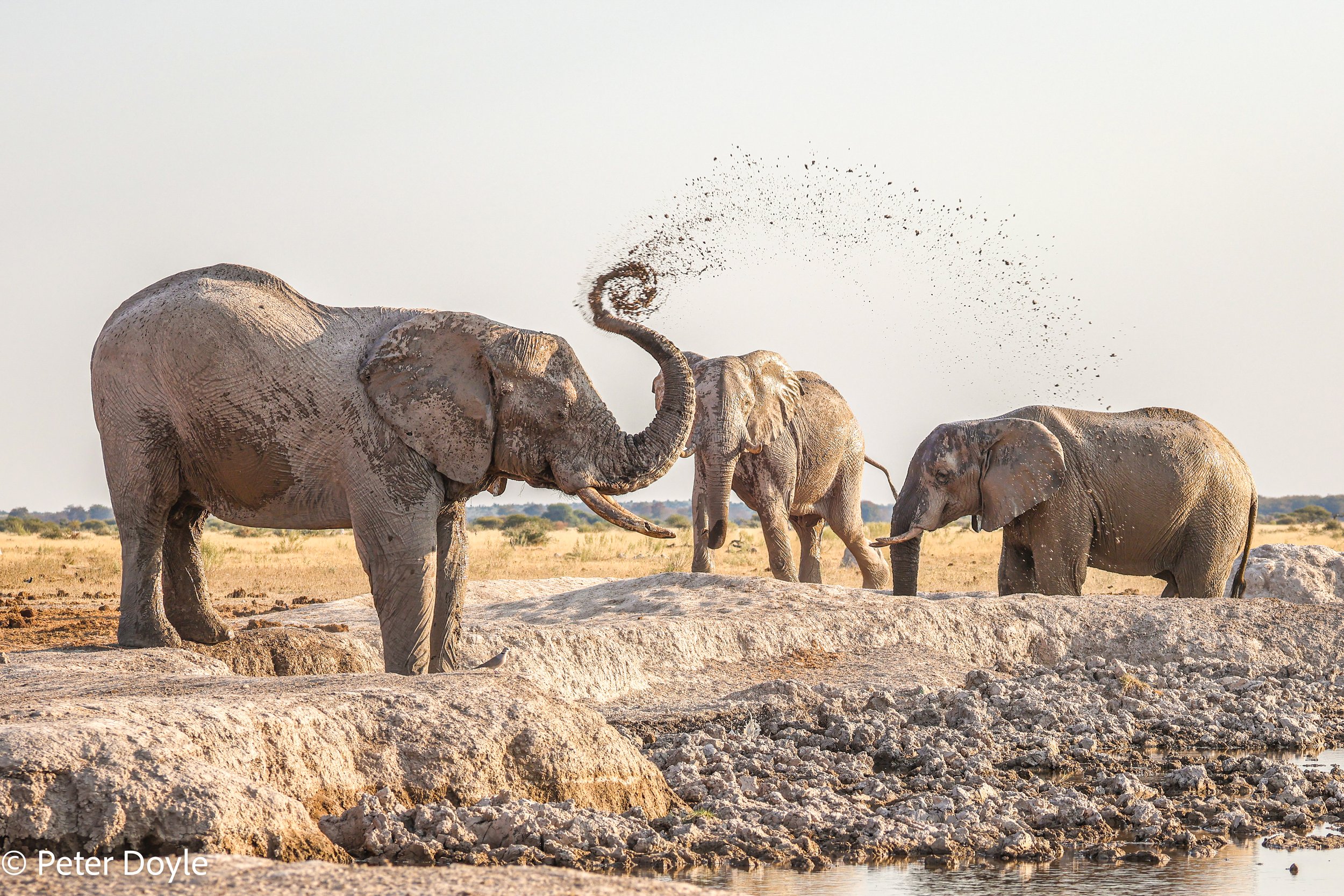
The big sport is watching the interaction between all these animals. Apparently, the predators had migrated down south to Khumaga with the zebra and wildebeest herds at the time we were there, but we enjoyed it all nevertheless.
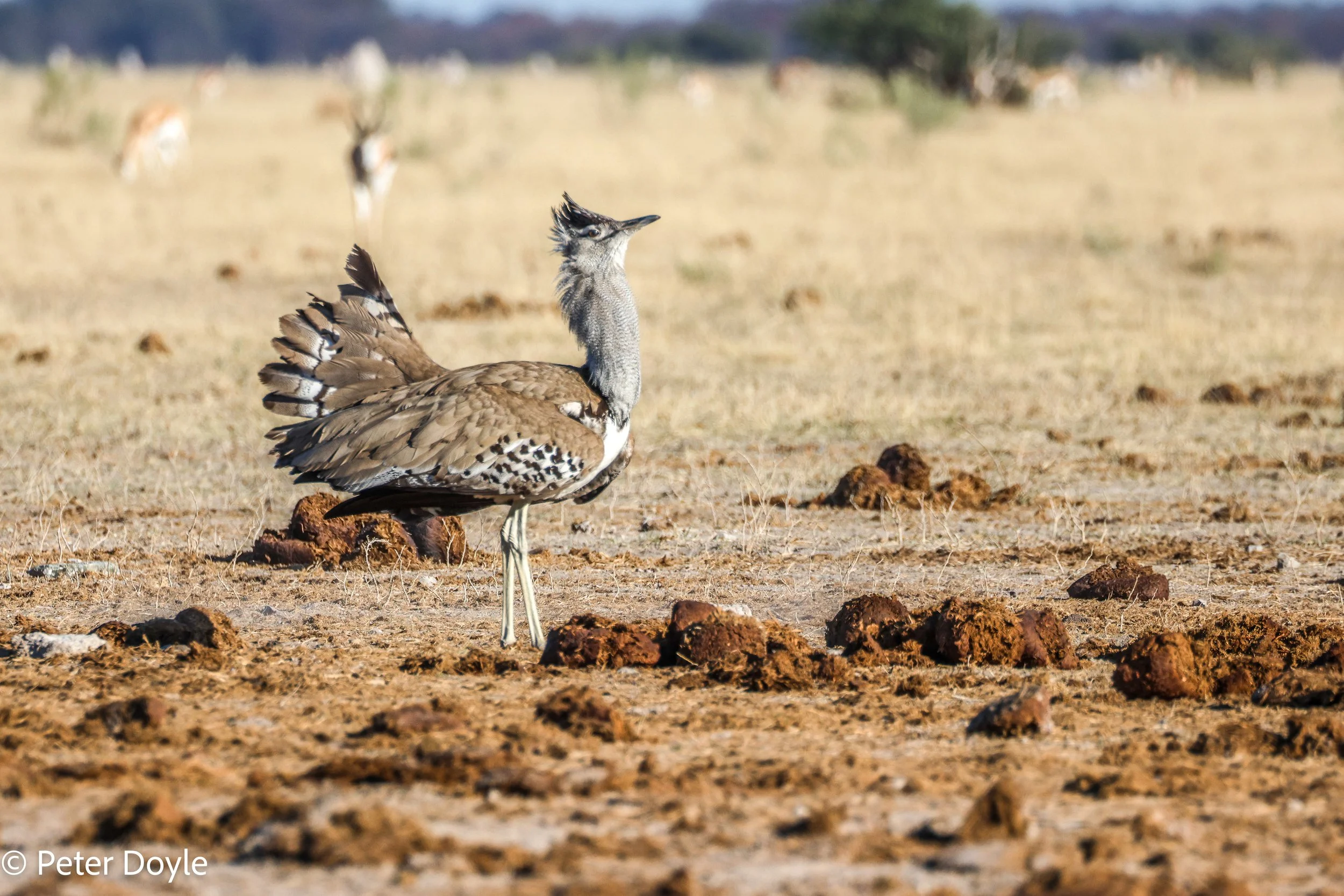
Kori Bustard (Ardeotis kori)
One can also stay in South Camp and watch the game come to you all day long. Especially the elephants. Every evening 4 or 5 big male elephants come to drink water near the ablution blocks and it is clear that they own the unfenced camp, not the campers.
We were just the bystanders as these giants of the bush walked past and through our camp. Their entire body language is relaxed, so we relaxed too. A few people scattered off into their tents and vehicles and watched from a distance. The jackal are unfortunately becoming a nuisance in the camp.
Driving from Nxai Pans to Chobe
Planet Baobab
near Gweta is always a welcome stop. A quirky oasis with magnificent Baobabs and shady lounge and coffee shop, or bar, depending on the time of day or your preferences. After Gweta, the road deteriorates rather badly, with some sections having no tar visible, with various tracks formed alongside the road, until you get to Nata.
Elephant Sands
About 60km north of Nata is Elephant Sands.
Here you get to see the wild elephant herds really close up. The lodge has an unusual position, ethos and approach to conservation. It is situated in the middle of the bush on one of the main migration routes of the herds of elephants going between Zimbabwe and Botswana. These elephant are always in search of the scarce, seasonal, water in the Makgadikgadi basin.
This is a very challenging environment for elephant, who have to travel long distances, in a dry landscape. To assist them, the owners of Elephant sands have developed several waterholes, the main one right in the middle of the grounds of the lodge.
It is planned in such a way that you can sit, late into the night, as wild elephant come to drink fresh water, pushing and shoving and trumpeting, just like a busy bar on a Friday night. But all this happens within a few meters of where you sit watching. We had a surprisingly good rib braai buffet that night and stayed late into the night watching the elephants. Whatever you think of their approach to conservation, this is an unforgettable experience.
Parting ways: Unfortunately, it was at this point that my brother and sister-in-law had to turn back home to South Africa, while we turned to go up north, back to the Chobe river.
Chobe River
Chobe Forest Camp.
This is a bush camp off the A33 about 40km before Kasane. We were not ready to meet Kasane, so we chose the bush camp. It was great. The camp is in a natural woodland with a lovely deck and hide overlooking a discreet waterhole. We had dozens of elephants come to drink from the fresh borehole water throughout the day and we could hear them busy all night. There were also impala, waterhog, kudu, baboon, etc. and reputedly the occasional lion. We were the only people there and wondered why?
Kasane
Good old Kasane has never been a pretty town, but it works. With the beautiful Chobe River on its doorstep, Kasane does not need to do anything to attract people. An airport, many lodges, with some new developments looking rather run down and dilapidated even before they have opened …
But if you need a Chobe boat cruise, Kasane it must be. Kalahari Safaris in town can organise you anything, and their Coffee Buzz coffee shop is a nice spot to relax, eat and communicate with the world. WIFI does come in handy when you are on the road. The bonus is their flowering trees that attract a myriad of Sunbirds.
Chobe Safari Lodge.
After a boat trip on the Chobe river, we camped for the night at the Chobe Safari Lodge. The campsite is not great, but it works. The Lodge itself has an old-world safari feel to it, with a mix of torusits and overlanders, having coffee or breakfast overlooking the river.
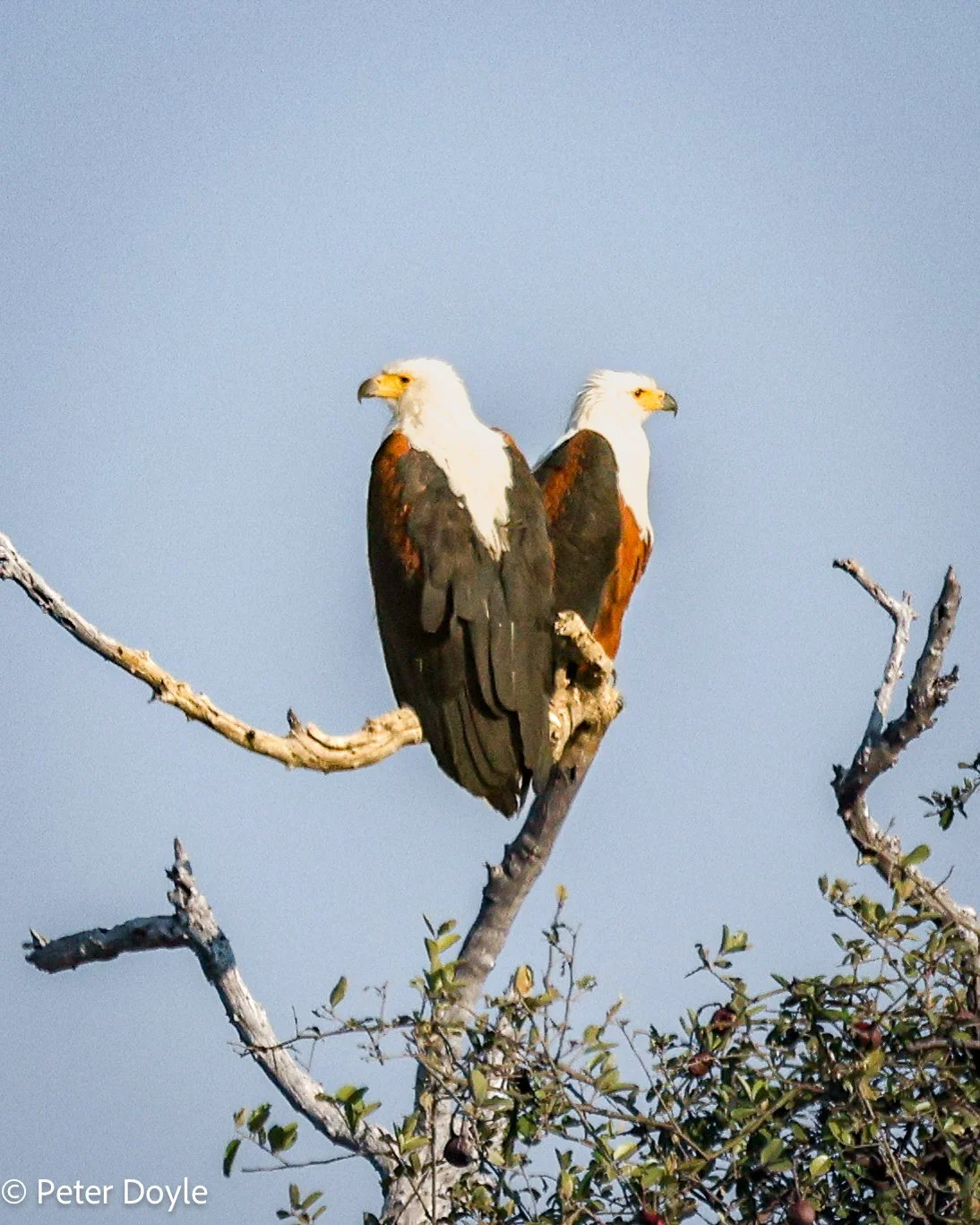
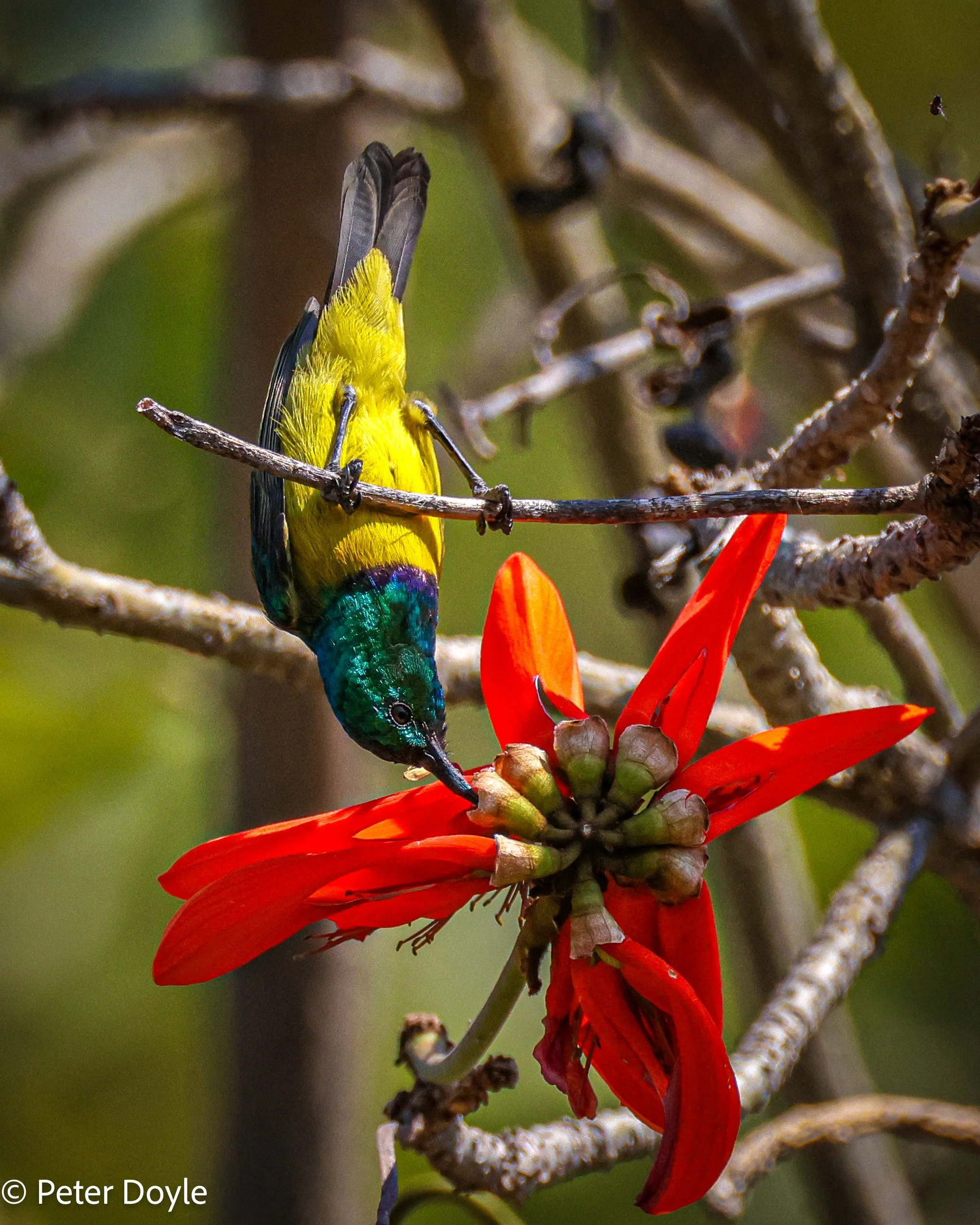
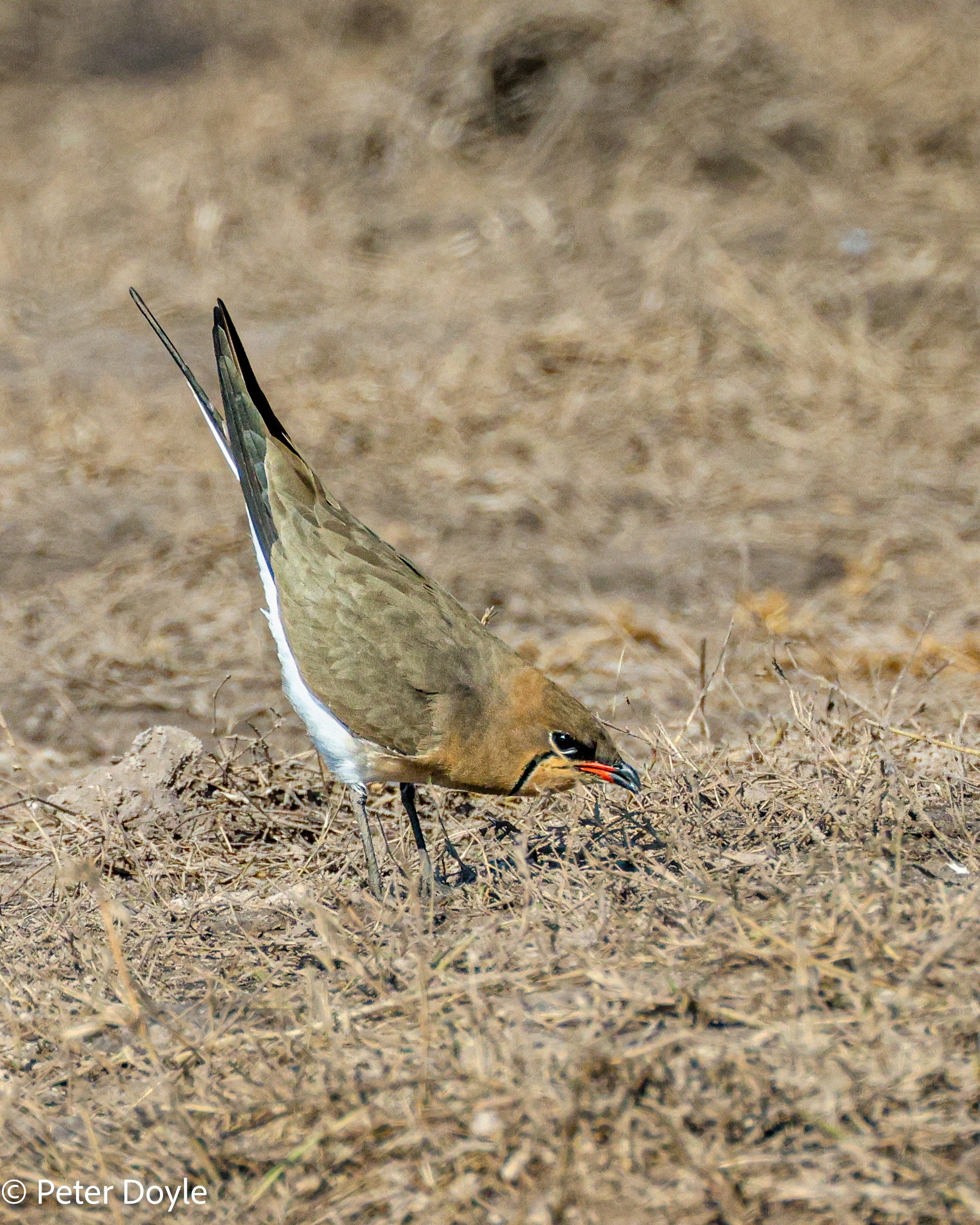
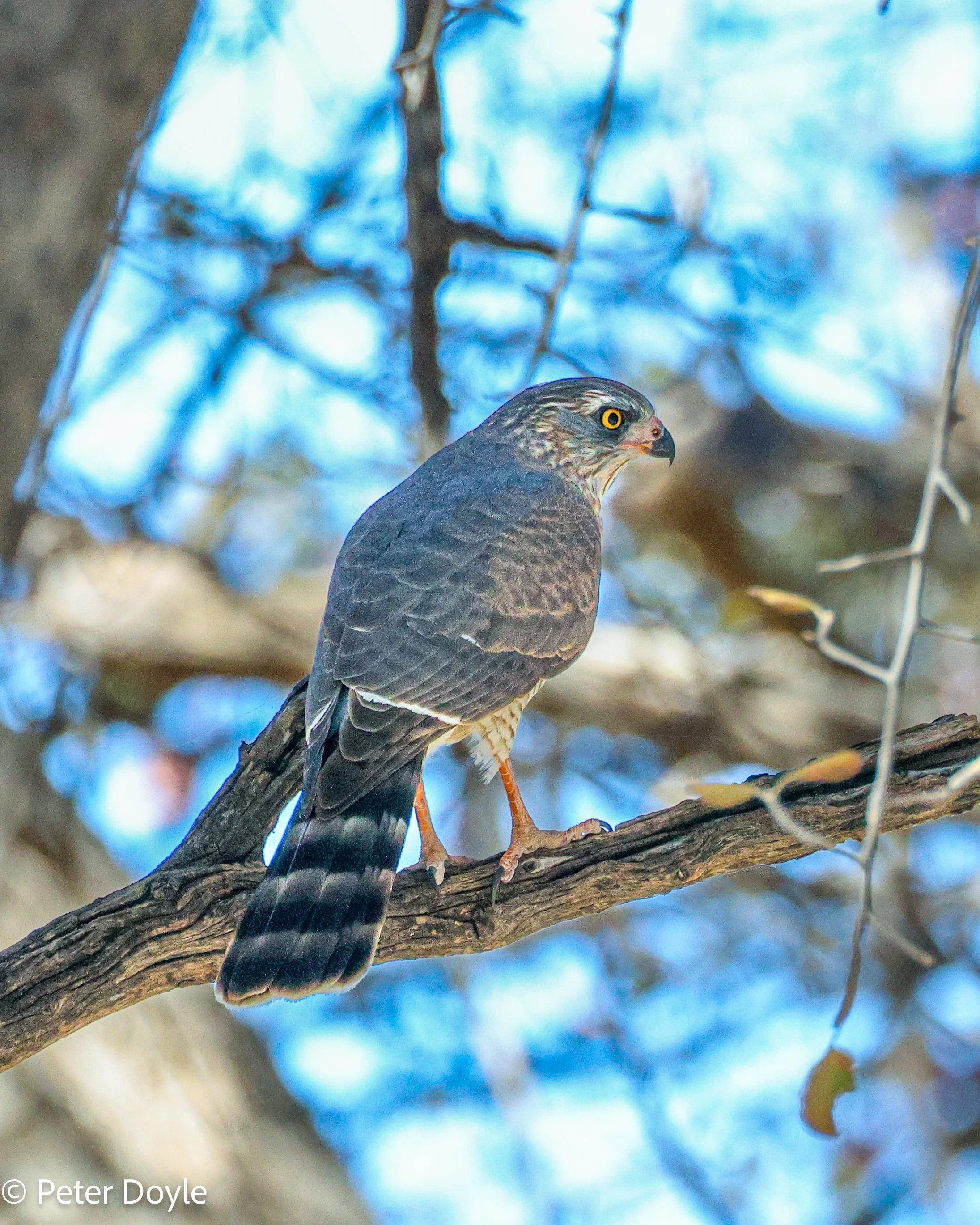
Clockwise from top left: African Fish Eagle (Haliaeetus vocifer) Collared Sunbird (Hedydipna coolaris) Little Sparrowhawk (Accipiter minullus) Collared Pratincole (Glareola pratincola)
Chobe National Park & Ihaha Camp.
We have been to Chobe National Park often before, but mostly ended up on the boat cruises and short riverside drives. This time we explored the park extensively, with great rewards.
The road network can be confusing, because very few of the road signs are still legible (a problem we found throughout Botswana parks). But basically, there are river drives that function at different times according to the seasonal water level and a higher-level road going from Kasane (Sedudu Gate) all the way through to Ngoma Gate.
The Ihaha campsite in the middle of the park has an unbeatable location on the river. The big advantage of Ihaha is that it takes you away from the very heavy game lodge vehicle traffic nearer to Kasane.
We had great sightings, both in terms of variety and quantity of game and birds. This is an unfenced camp, and the area is teeming with game. You have to be alert though, and we saw a leopard mother with her three cubs less than 200m from our campsite. Lion spoor everwhere and even in the campsite.
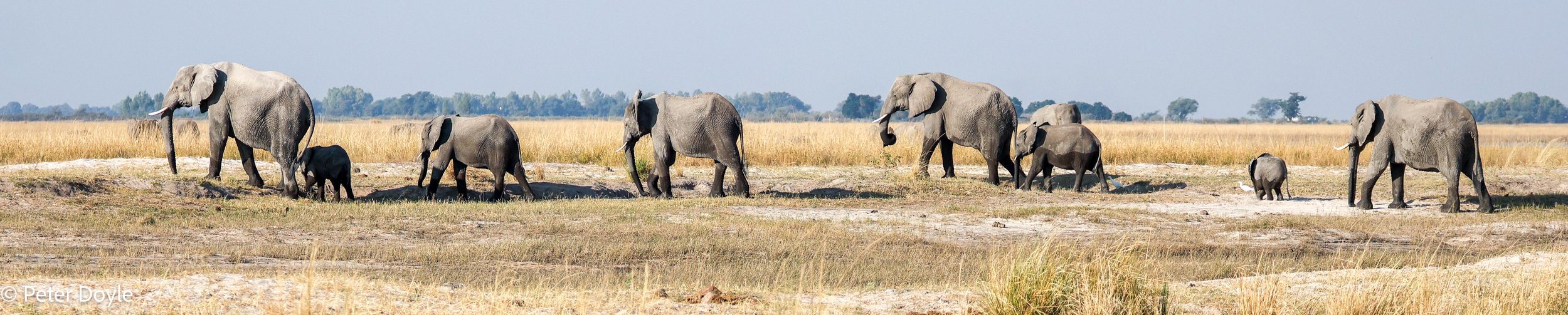
Elephant on the Chobe River flood-plain
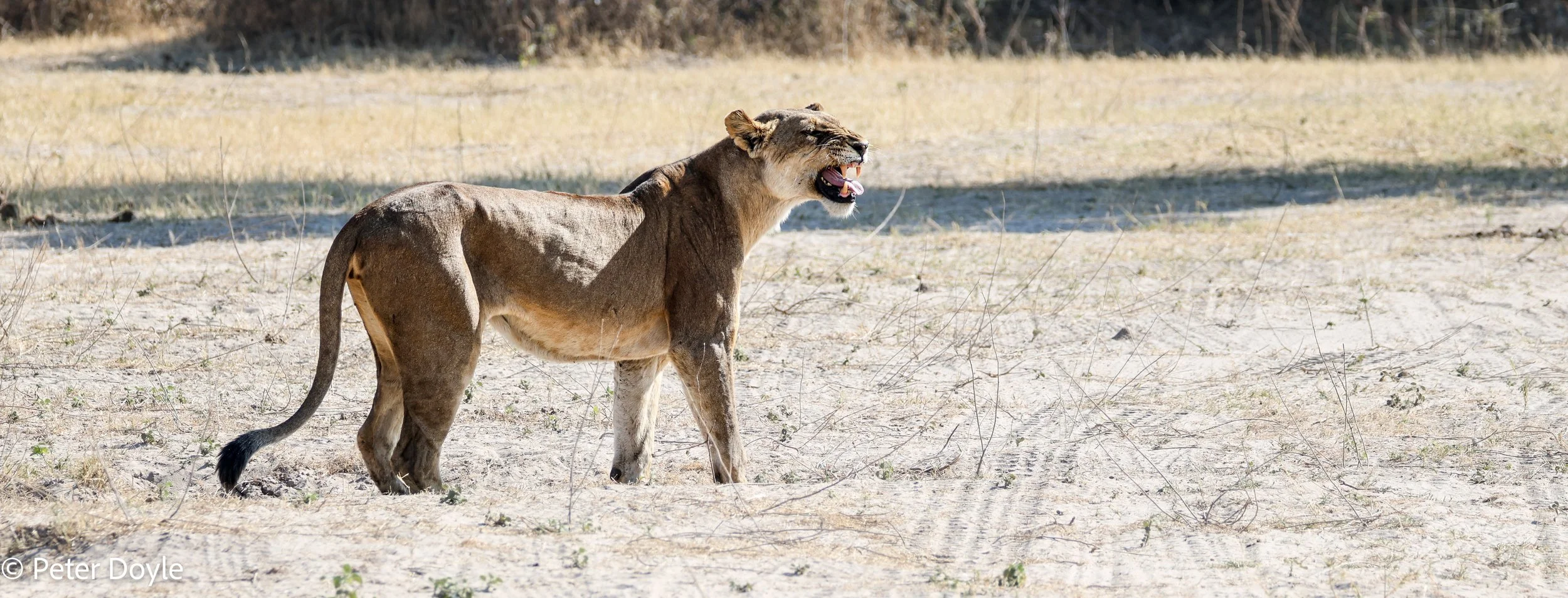
A female lioness shows her “Flehmen Grimace” as she senses the air.
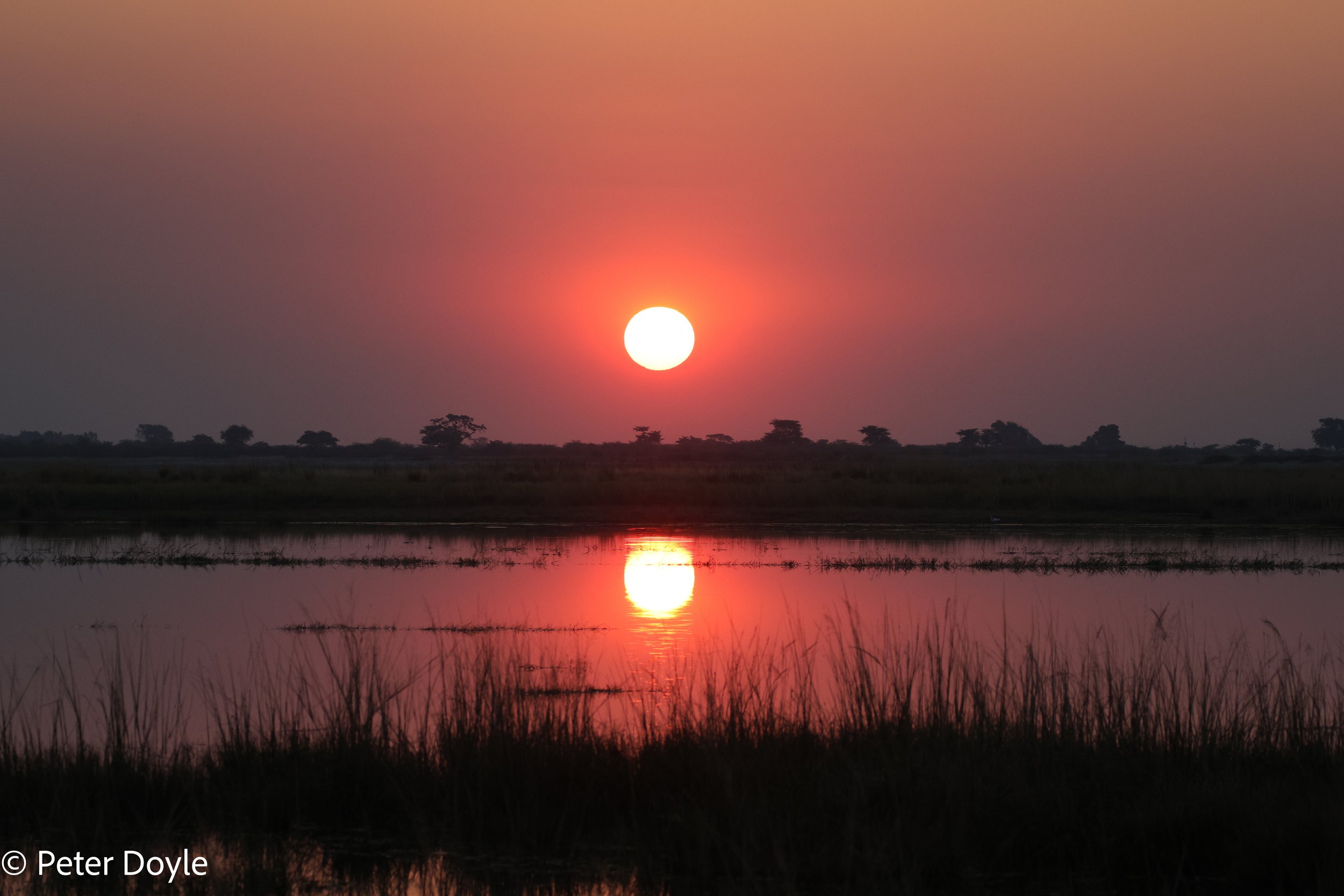
Sunset over the Chobe River
Muchenje Campsite.
This is a comfortable and well-planned campsite near the Ngoma gate to the Chobe National Park and the Ngoma border post going through to Namibia. It is also on the road in from Sinyati and Savuti, and makes an excellent stop-over for travellers going to or from the Okavango Delta. The riverside bird life is excellent.
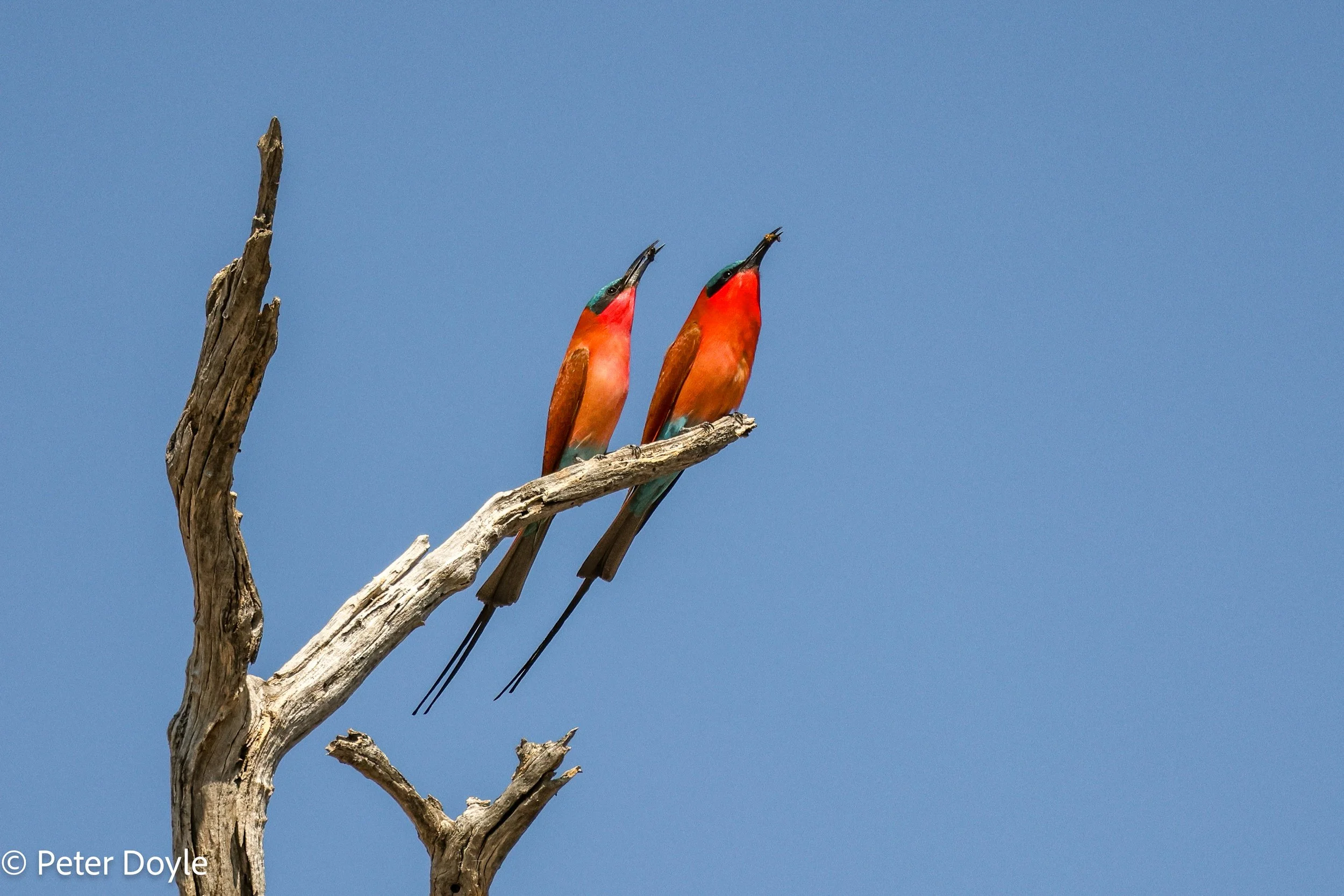
Southern Carmine Bee-eaters (Merops nubicoides)
But as with everywhere else in the Caprivi, the main attraction is the river, and the Chobe River is no exception. The birdlife on and alongside the river is always outstanding.
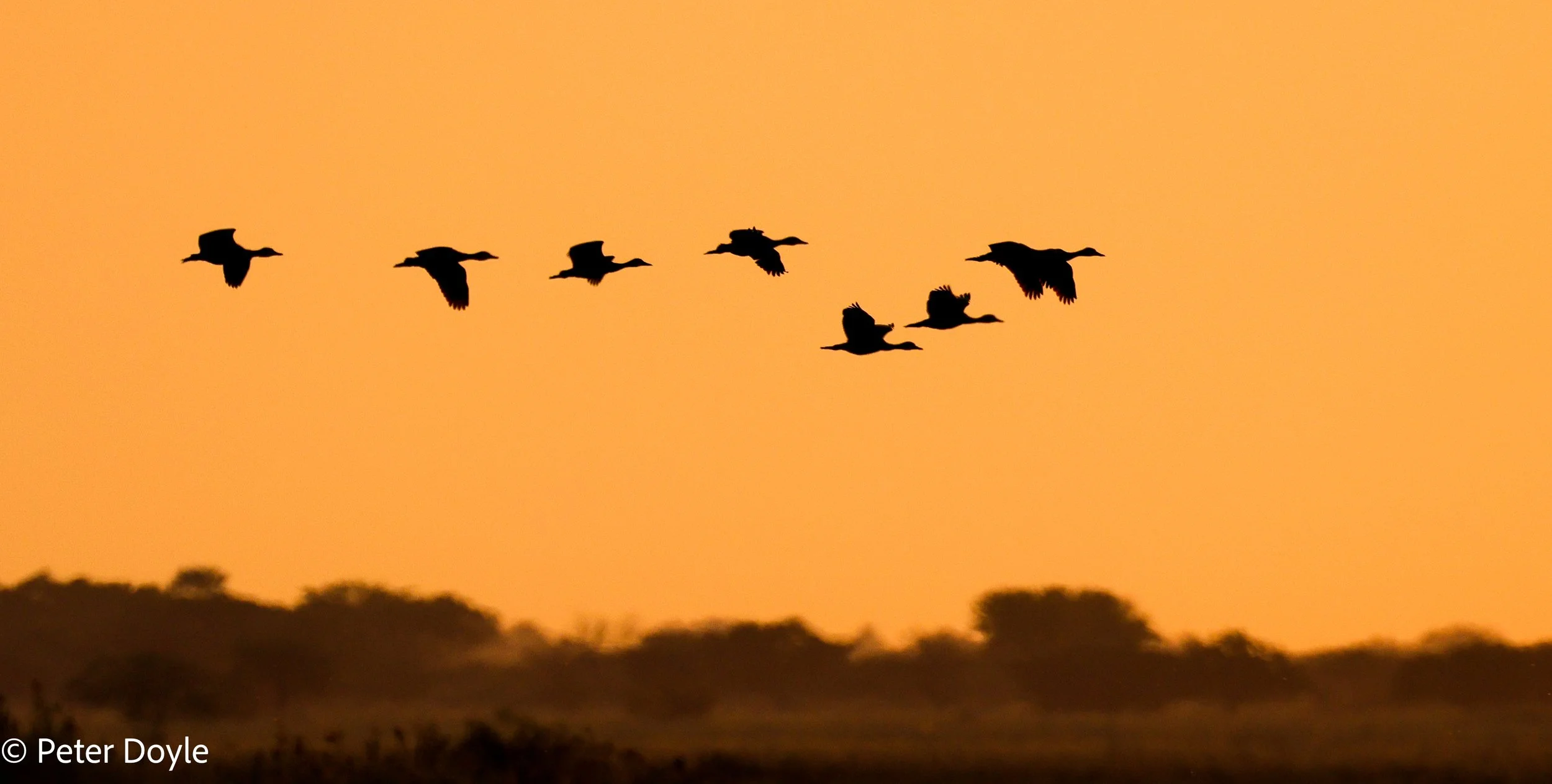
Spur-winged Geese flying along the Chobe River (Plectropterus cambensis)
We left Botswana, having satisfied our urge to follow the rivers and birdlife of the Caprivi.
