Travels in Namibia - Spitzkoppe
We again traveled on interesting roads and went to some amazingly beautiful places.

Namib Valley of 1000 Hills
West Coast Namibia: Route
• Walvis Bay
• Swakopmund
• (Hentjies Bay
• Spitzkoppe
Driving to the Coast
Funnily enough, I was concerned about doing this stretch of road, the C14 to Walvis Bay. Reports have been that it is deadly dull and boring and a bad road. Wrong again!
Yes, it is gravel. Yes, there are wide-open plains. But we saw two bird “lifers” on this road. We met and shared a Coke with some road-graders, Gideon and Wilfred. After the Kuiseb gorge, the road improves significantly and eventually it becomes a hard mud packed freeway, beautiful to drive on. We were very appreciative of them and generally how well these Namibian gravel roads are kept.
On the way we stopped in the Kusieb gorge to see 100’s of Bradfield’s Swifts nesting in the cliffs and hunting in the valley. All just in front of and above us; very special. Then on the road again, when we stopped to see one of several Lanner Falcons alongside the road, Ellen saw two of the very illusive Gray’s Lark on the other side of the road. We had hunted for this bird for days … it was another lifer … and it turned out to be our only sighting of them on this trip.
We saw the start of the white sand desert dunes. Arrived at the Atlantic Ocean at Walvis Bay.
Walvis Bay
After spending weeks in the desert, Walvis Bay is a shock to the senses. Houses, buildings, industry, working harbour, tarred roads, minibus taxis … and people!. But it does have the redeeming features of a very large estuary and mudflats, adjacent to the sprawling salt works and evaporation ponds.
The desert sand dunes make their last charge here towards the Atlantic Ocean, which is visible just past the dunes in this photo, just above the first sight of Walvis Bay.
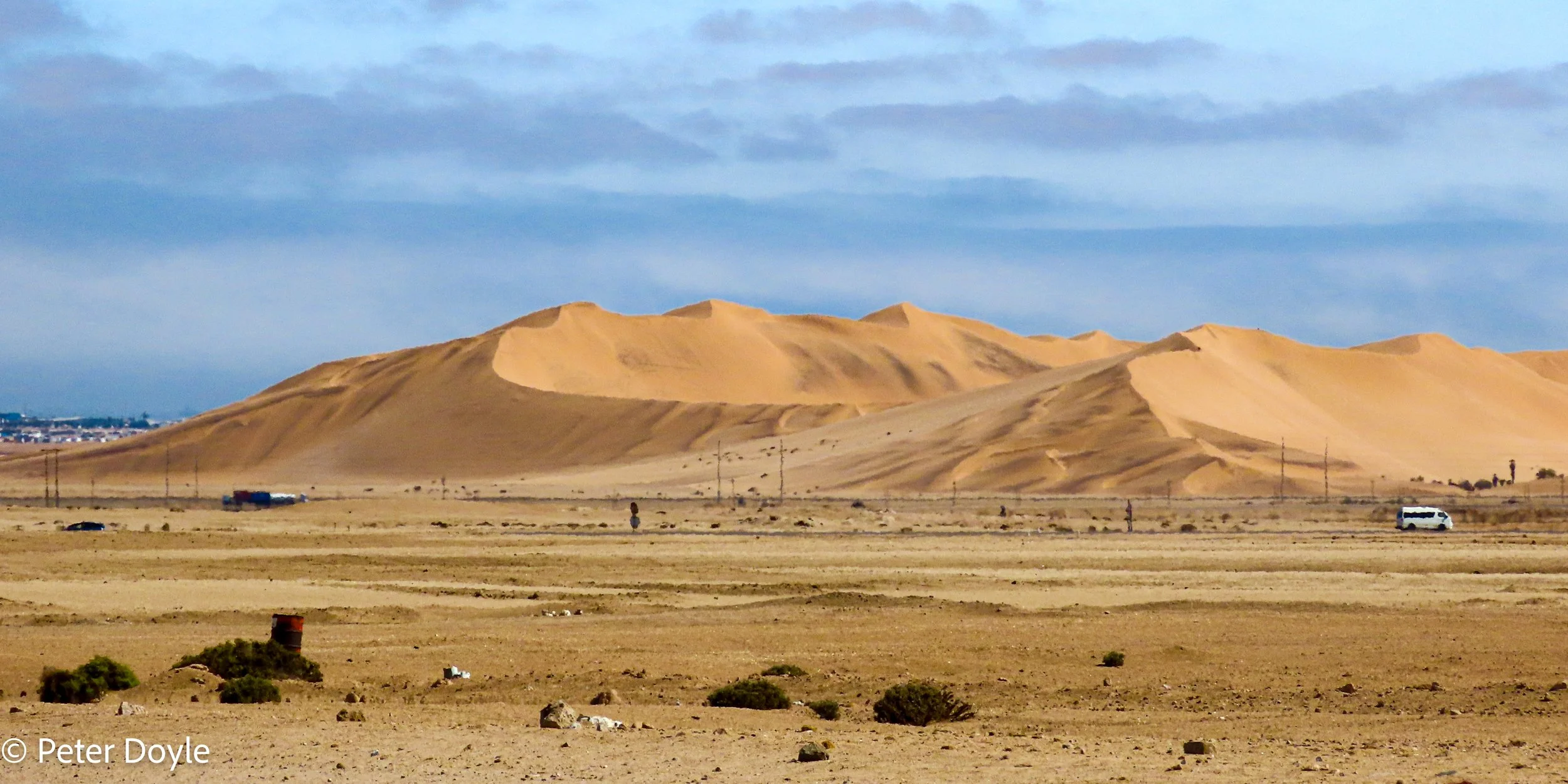
We did arrive there on a day when the coastal fog was rolling in and the temperatures were dramatically cooler compared to the desert. The lack of sunlight made bird photography challenging. The good part was that many of the waders were in breeding colours that we generally do not see down in South Africa.
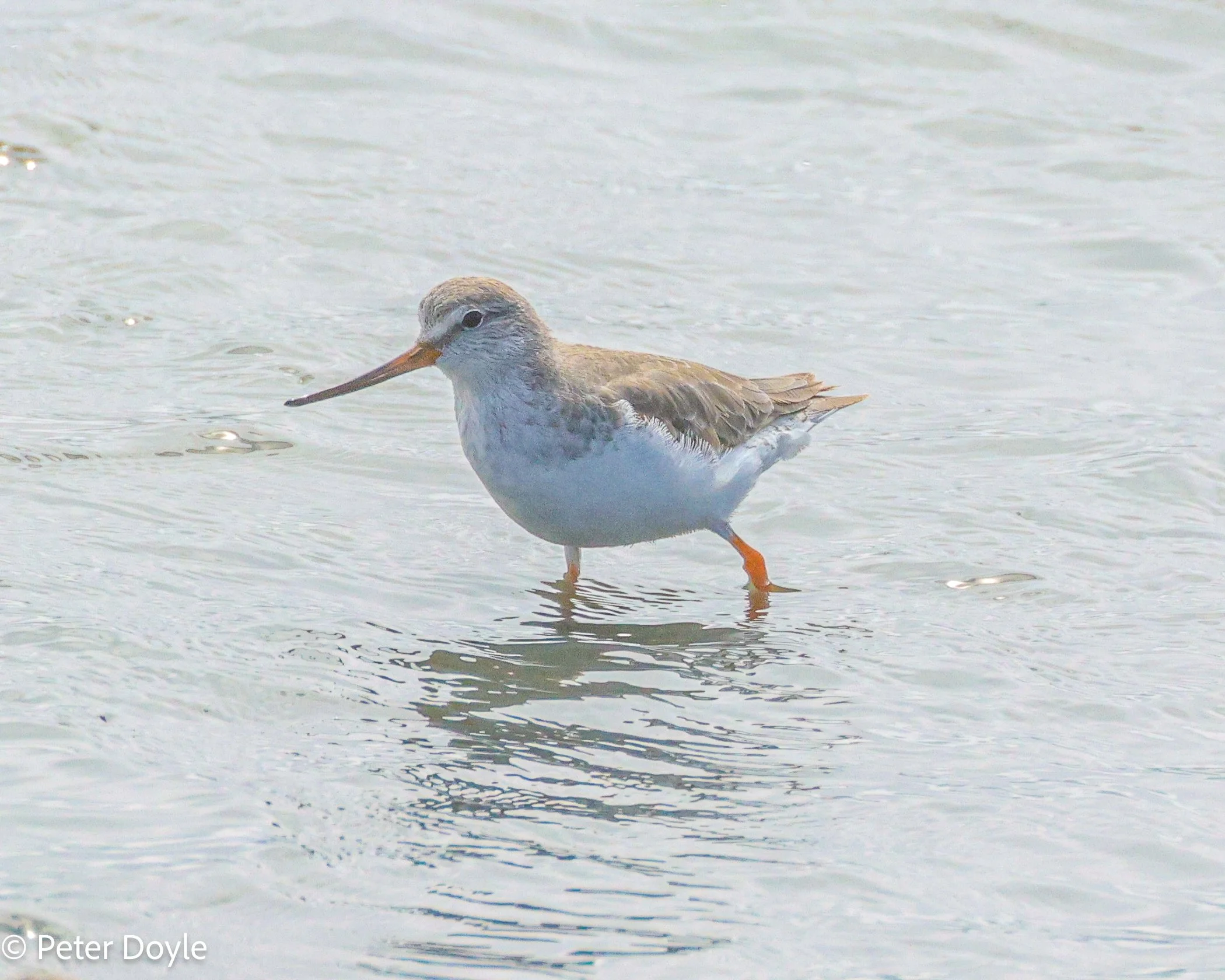
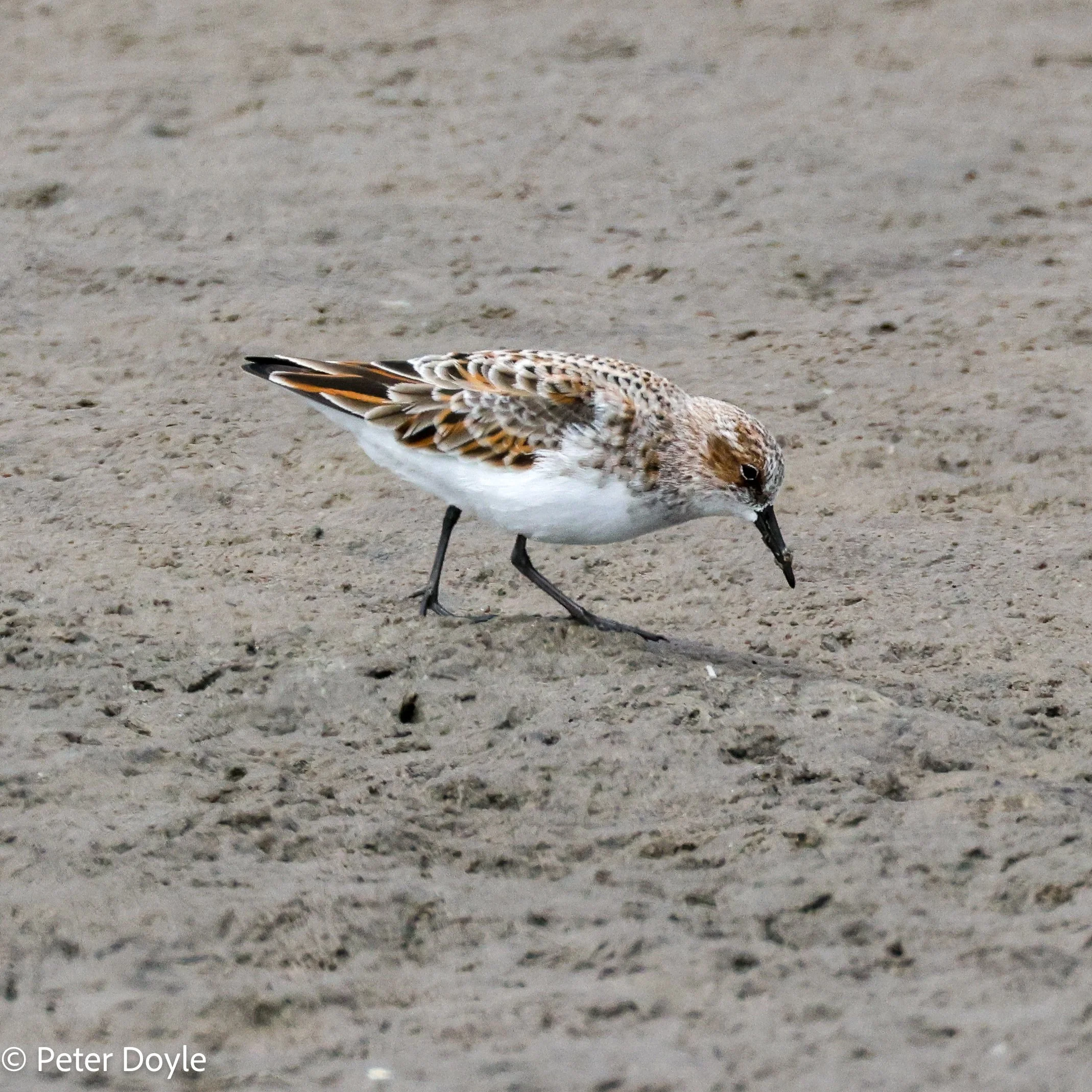
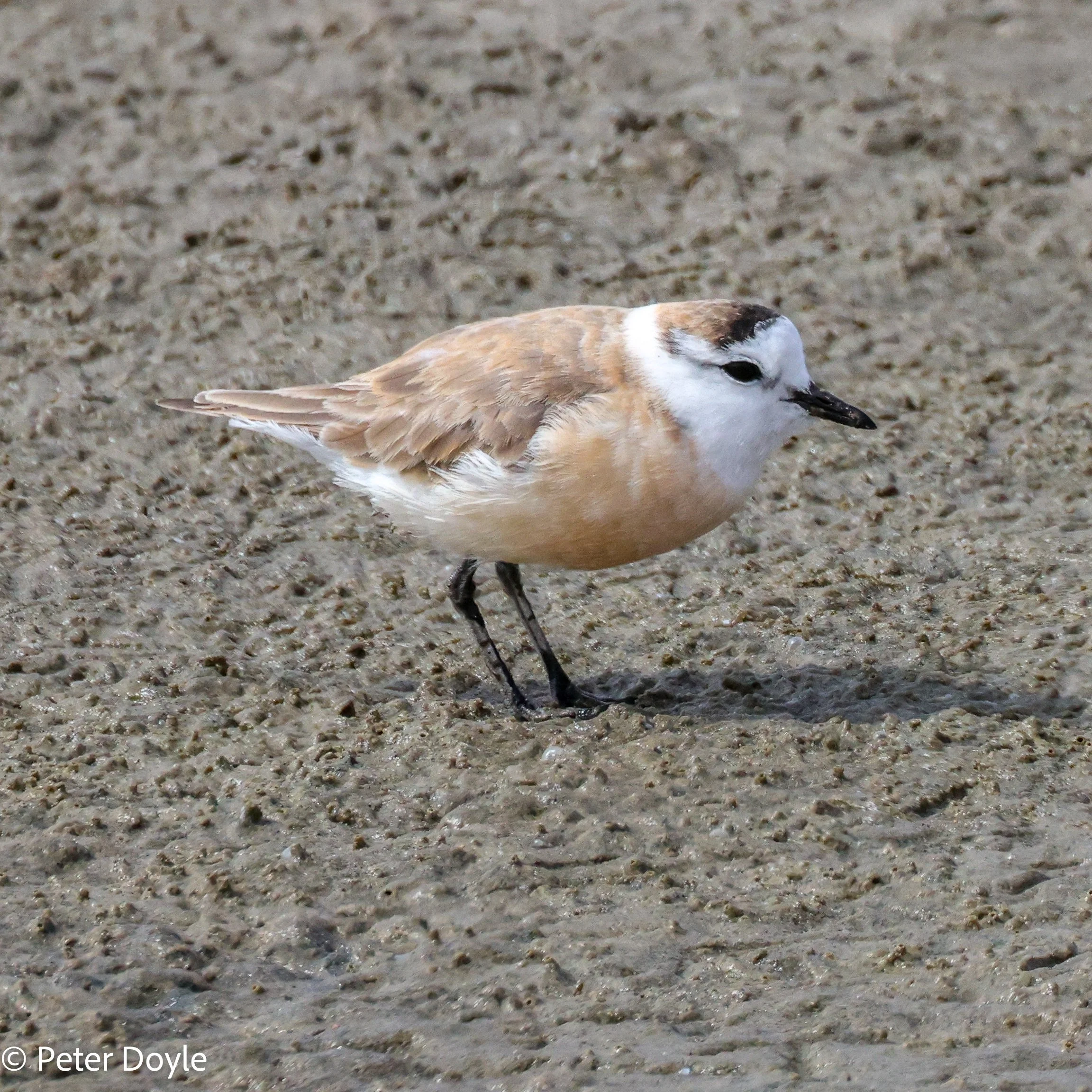
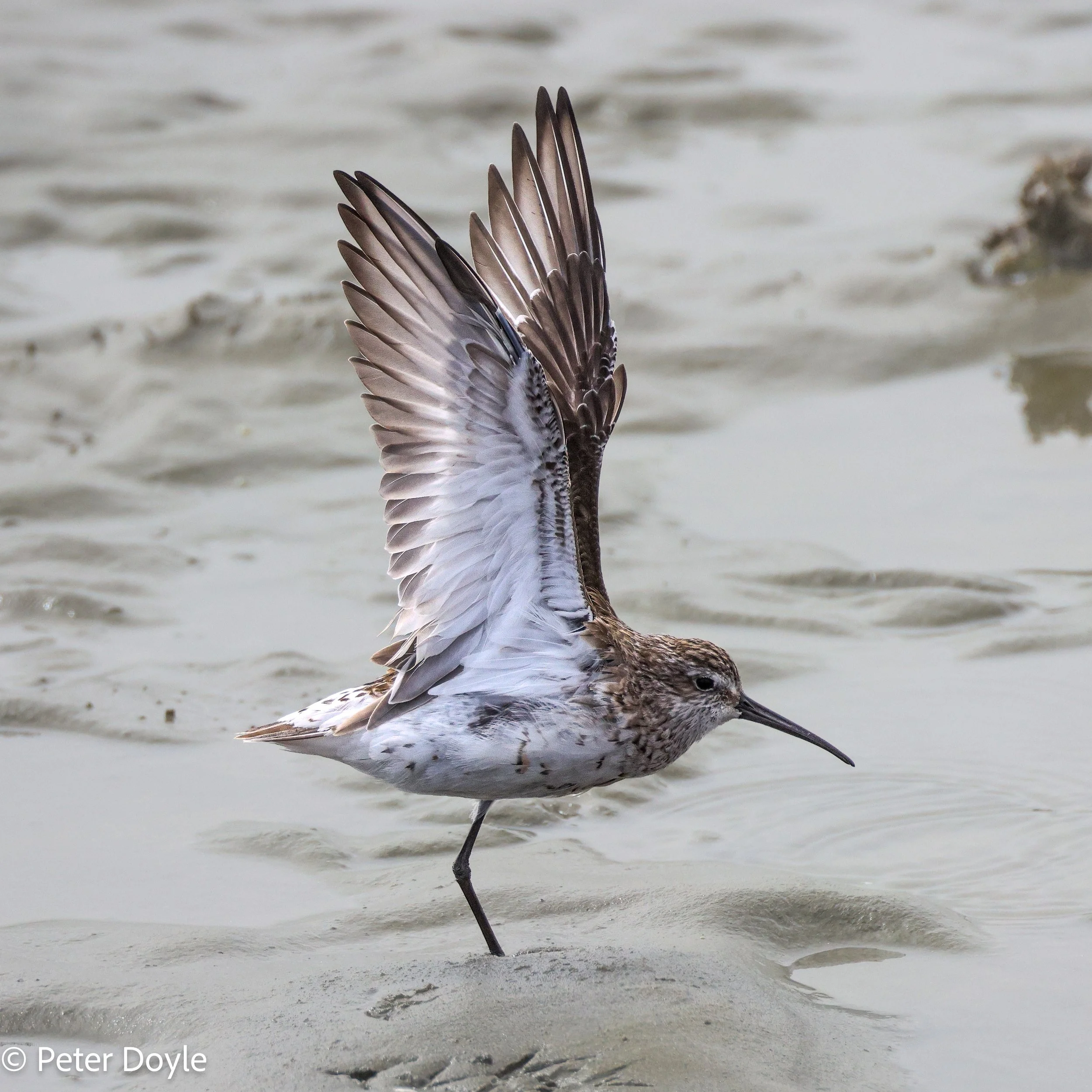
Clockwise from top left: Terek Sandpiper (Xenua cinereus) Little Stint (Calidris minuta) Curlew Sandpiper (Calidris ferruginea)
White-fronted Plover (Charadrius marginatus)
After a short visit to Walvis Bay, we stayed overnight in Swakopmund. This is an anomaly in Namibia, looking and feeling more like a German town, but on the desolate coast of Africa. Interesting architecture and coffee shops, serving delicious German törte.
At the campsite in Swakopmund, we found friendly fellow campers and it was great to chat to people that had just come down from the north and could give us up to date information road conditions and other tips on Etosha and the Zambezi region. Good stop to re-charge (literally and figuratively), do some shopping in Swakop and visit the coffee shops. But the cold sea fog was in full force and we did not stay long.
Then we drove out north along the C34 to the famous fishing village of Henties Baai where, appropriately, we stopped for wonderful fish and chips.
The Phenomenon
Along this coast we saw a phenomenon we have never seen before (and I wonder if it exists like this anywhere else in the world; possibly in North Africa?). The red sand dunes of the Namib desert, march towards the ocean all along the Skeleton Coast, but then are stopped in their tracks by the sight of the ocean and the white beaches. The red desert sand does not even mingle with the white beach sand.
Desert meets Ocean … an incredible sight!
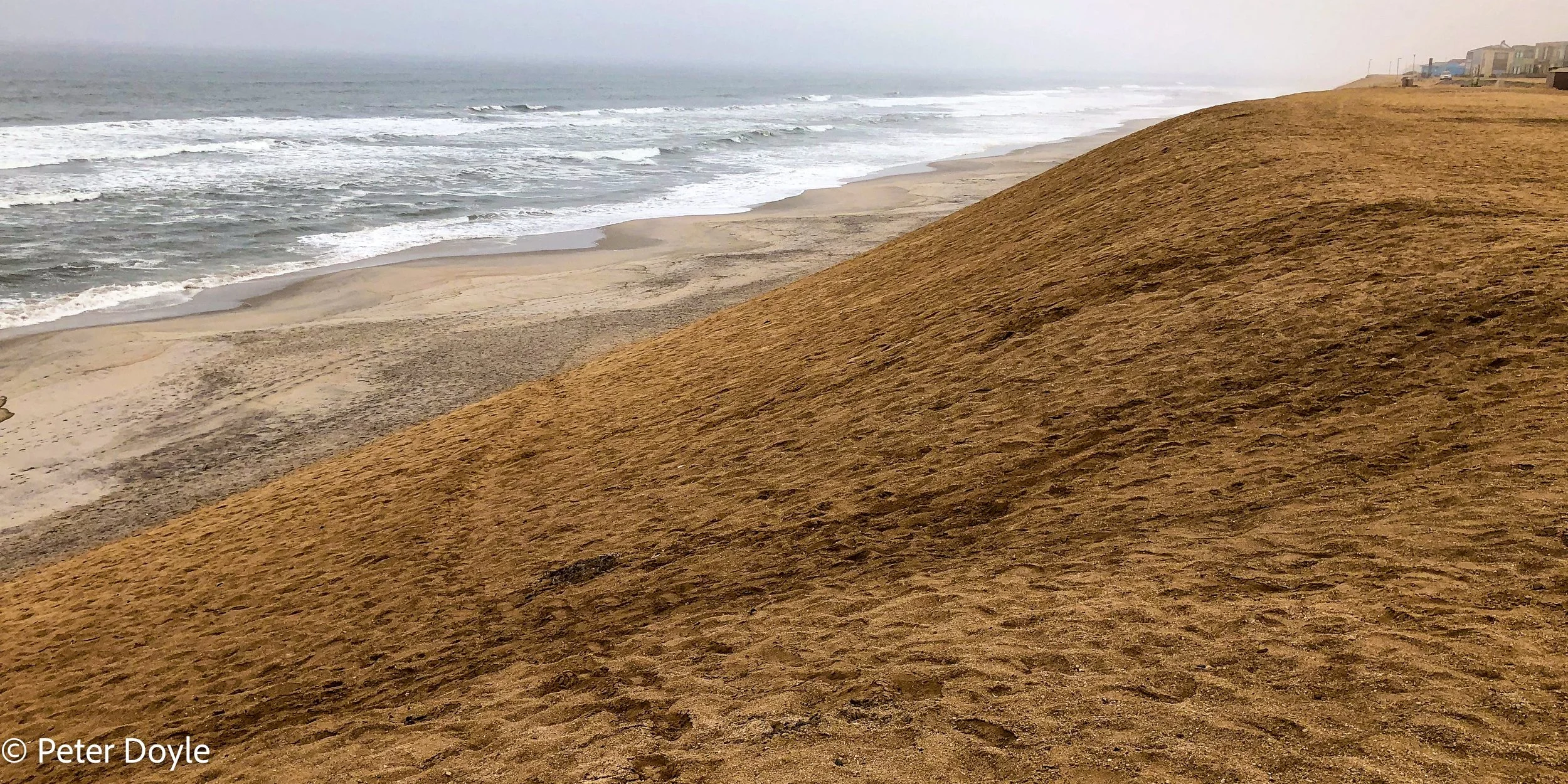
Namibia’s Skeleton Coast
Spitzkoppe
Experiences like Spitzkoppe are why we travel to wild places.
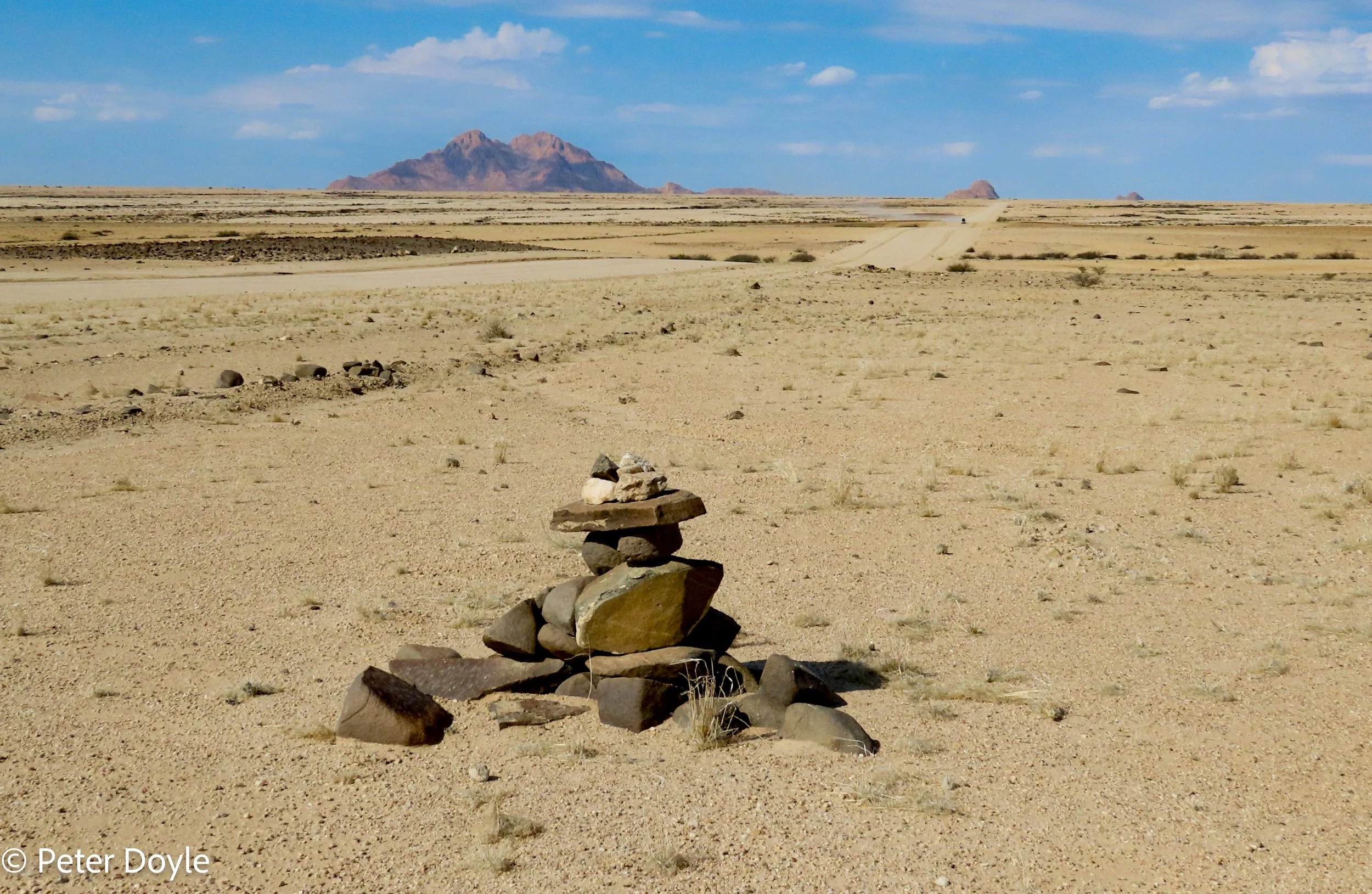
From Henties Baai we turned back inland towards our happy place … the desert. We were traveling to see something really spectacular … and from about 80km out you can already start to see the granite Spitzkoppe masif rising out of the desert plains.
It is such an inspiring place. A solid granite “inselberg” rising 700m above the surrounding desert floor. Ancient rock, incredibly sculptured by the wind and water and sand. From every angle and view, Spitkoppe is imposing and challenging. The colours are also stunning, and change throughout the day.
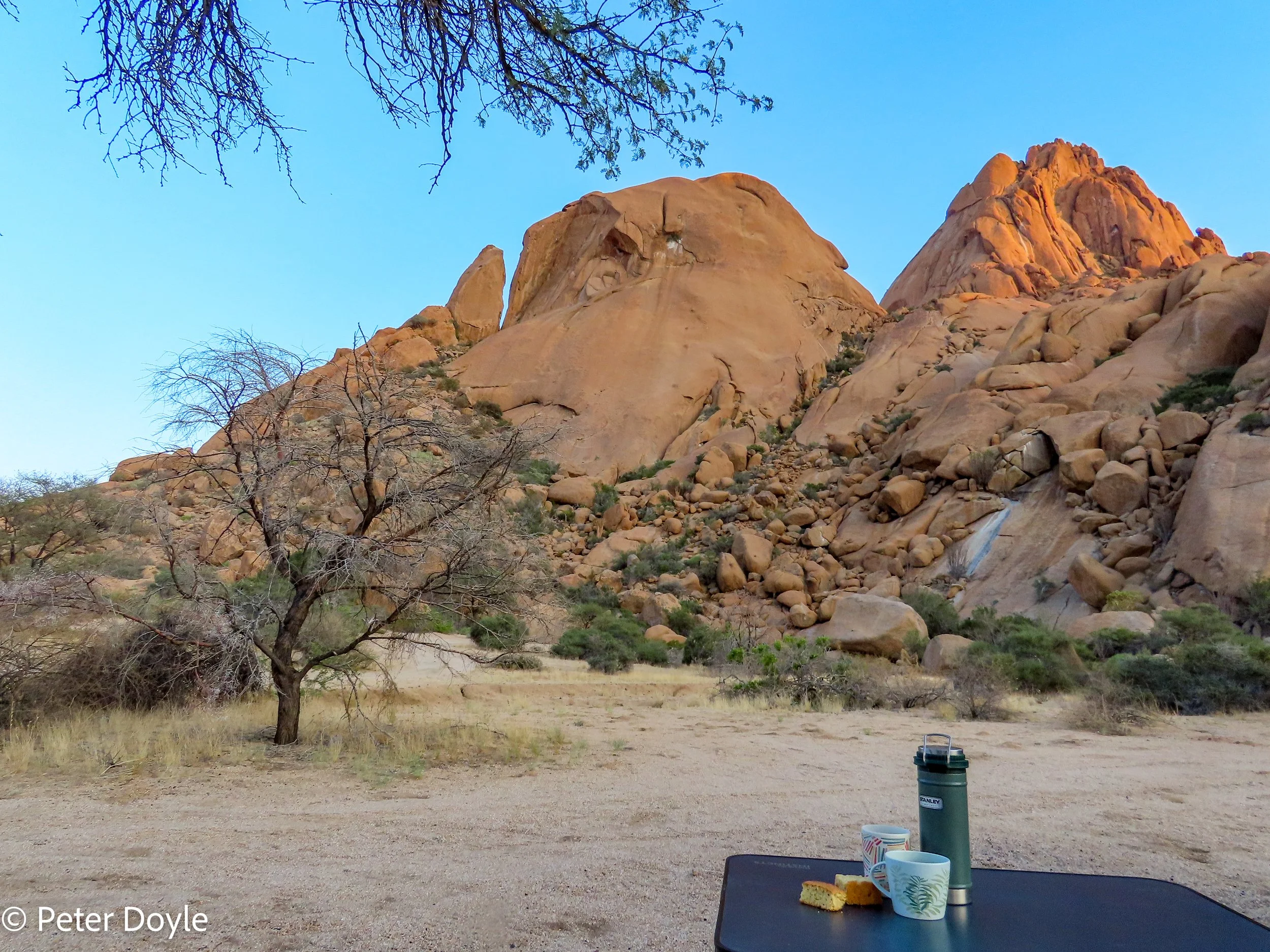
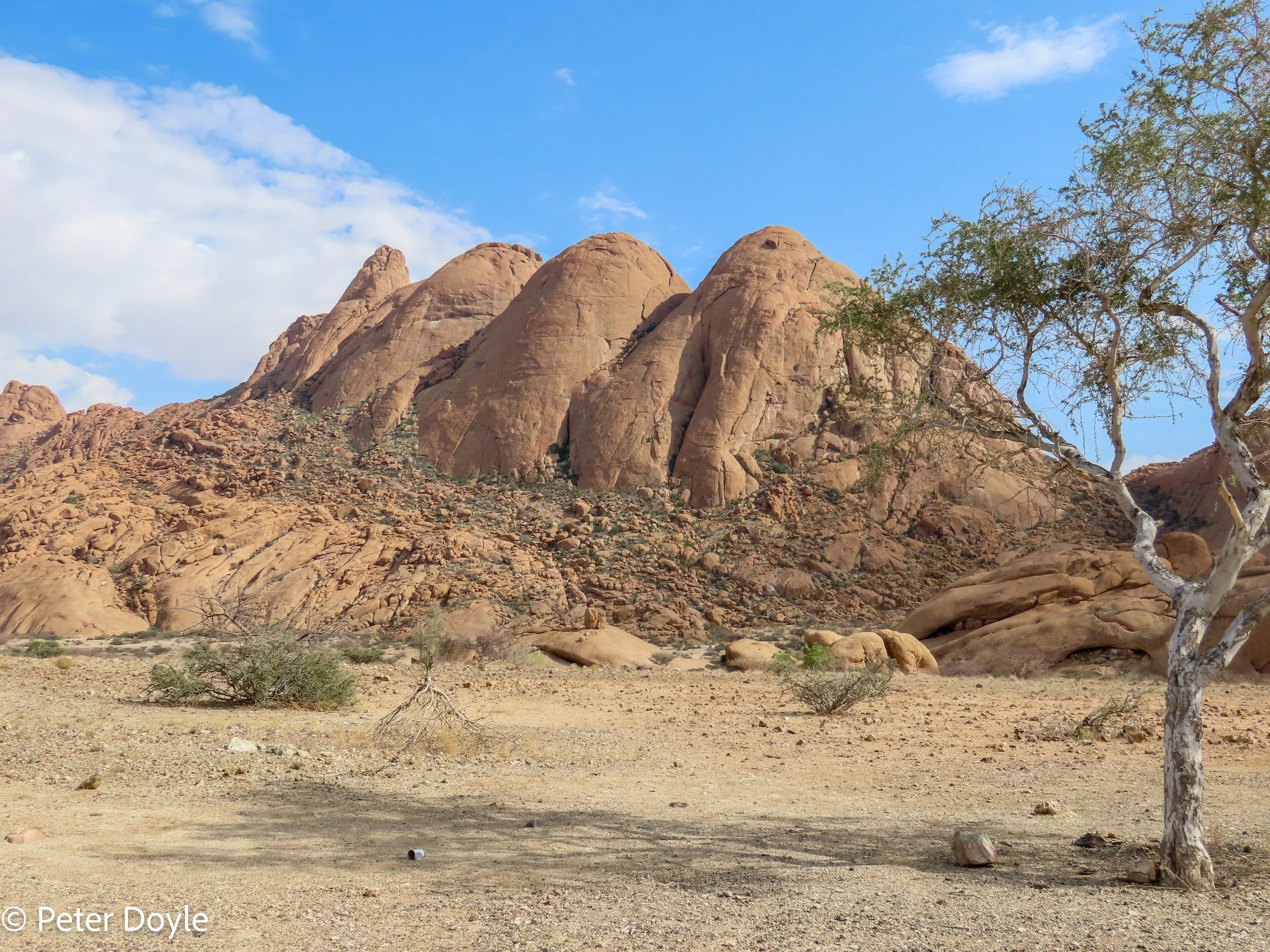
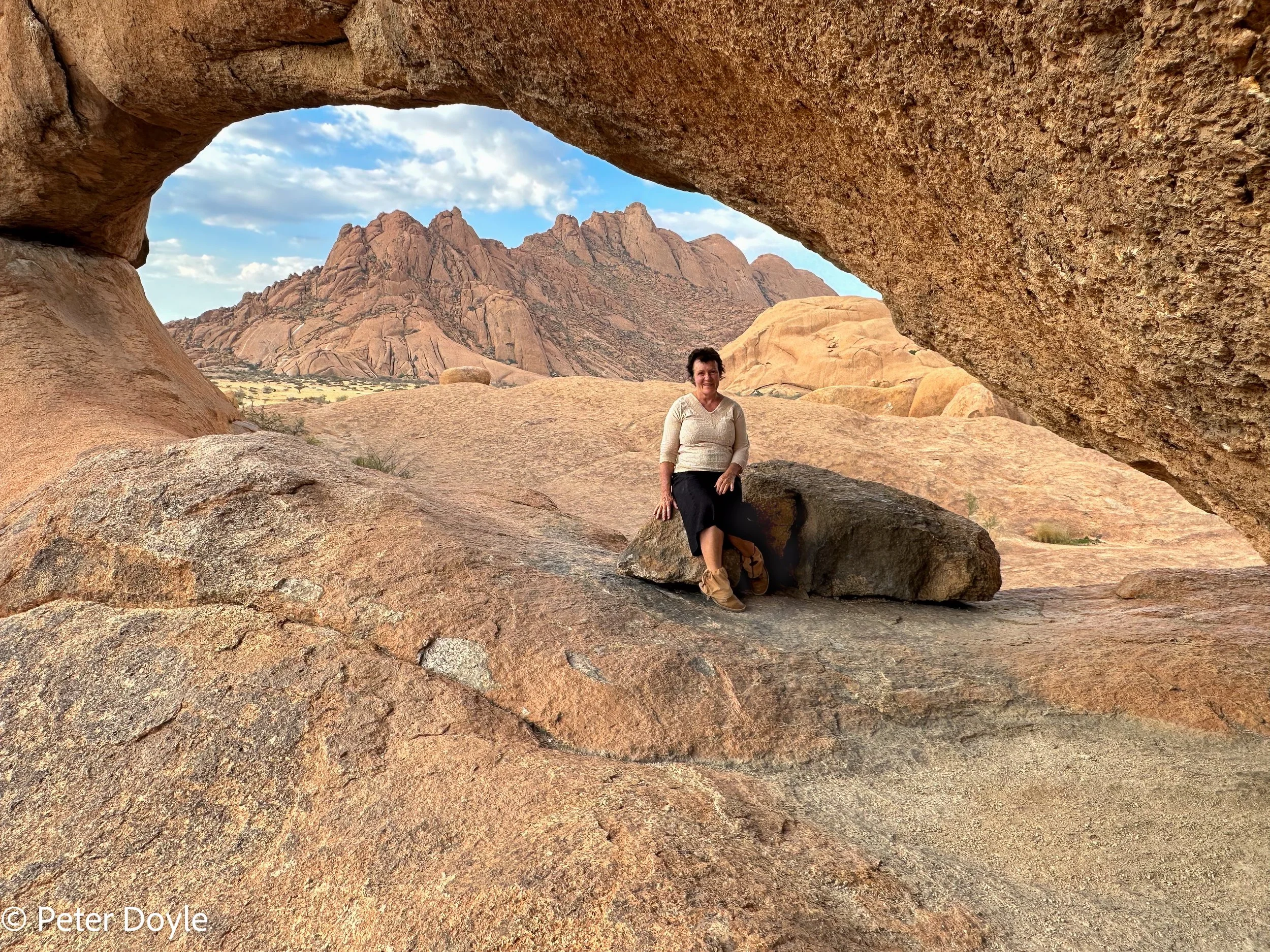
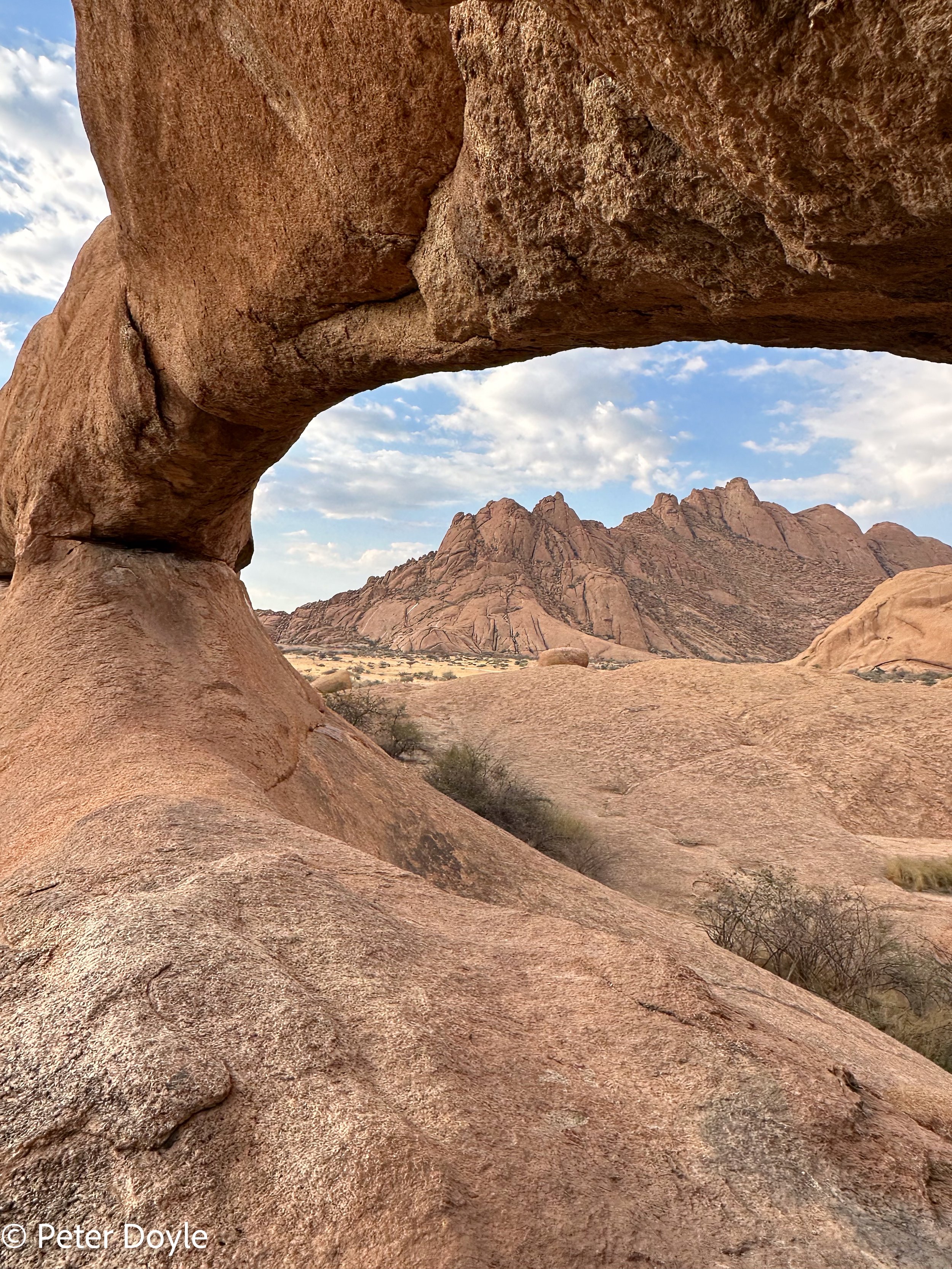
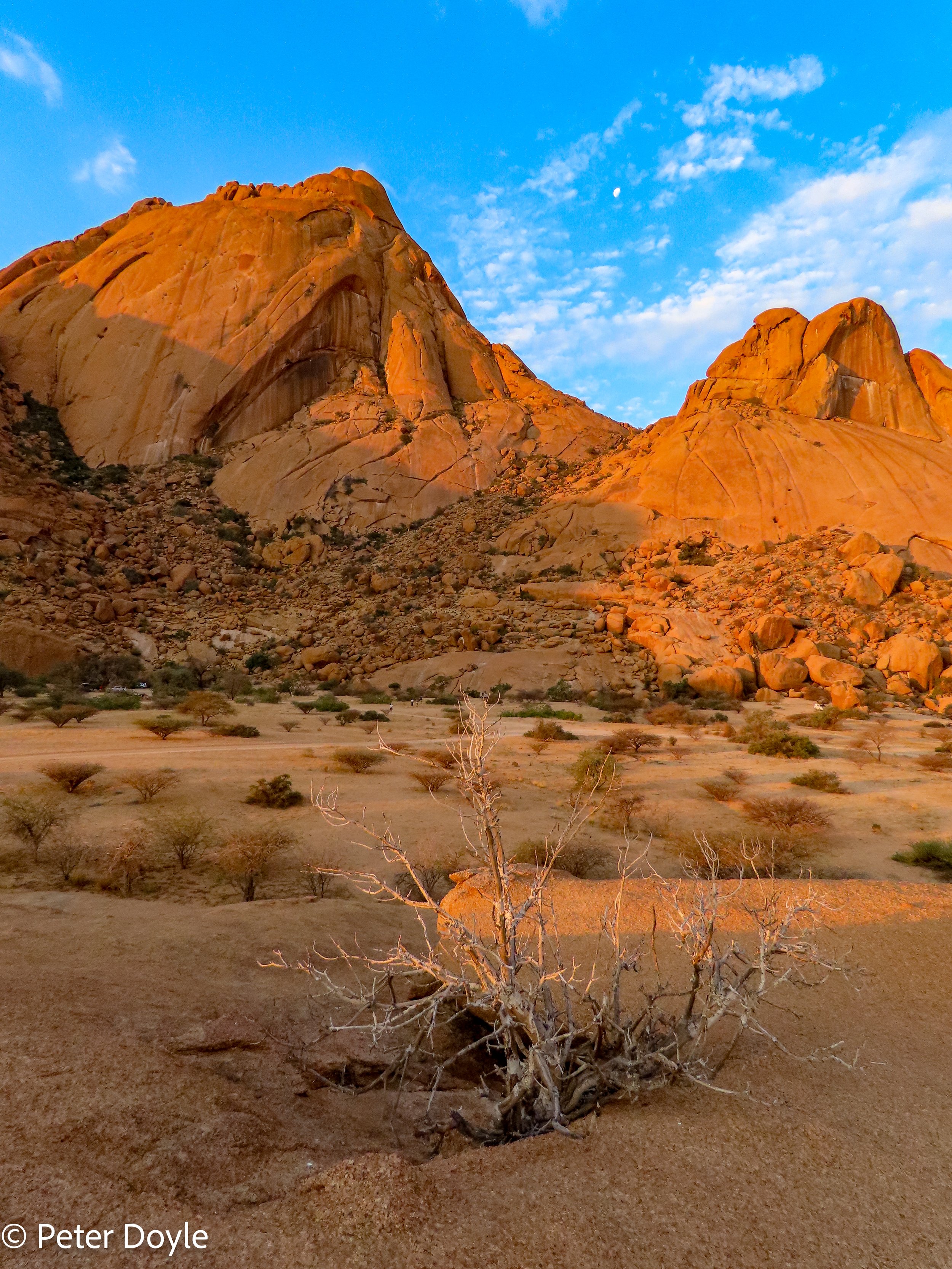
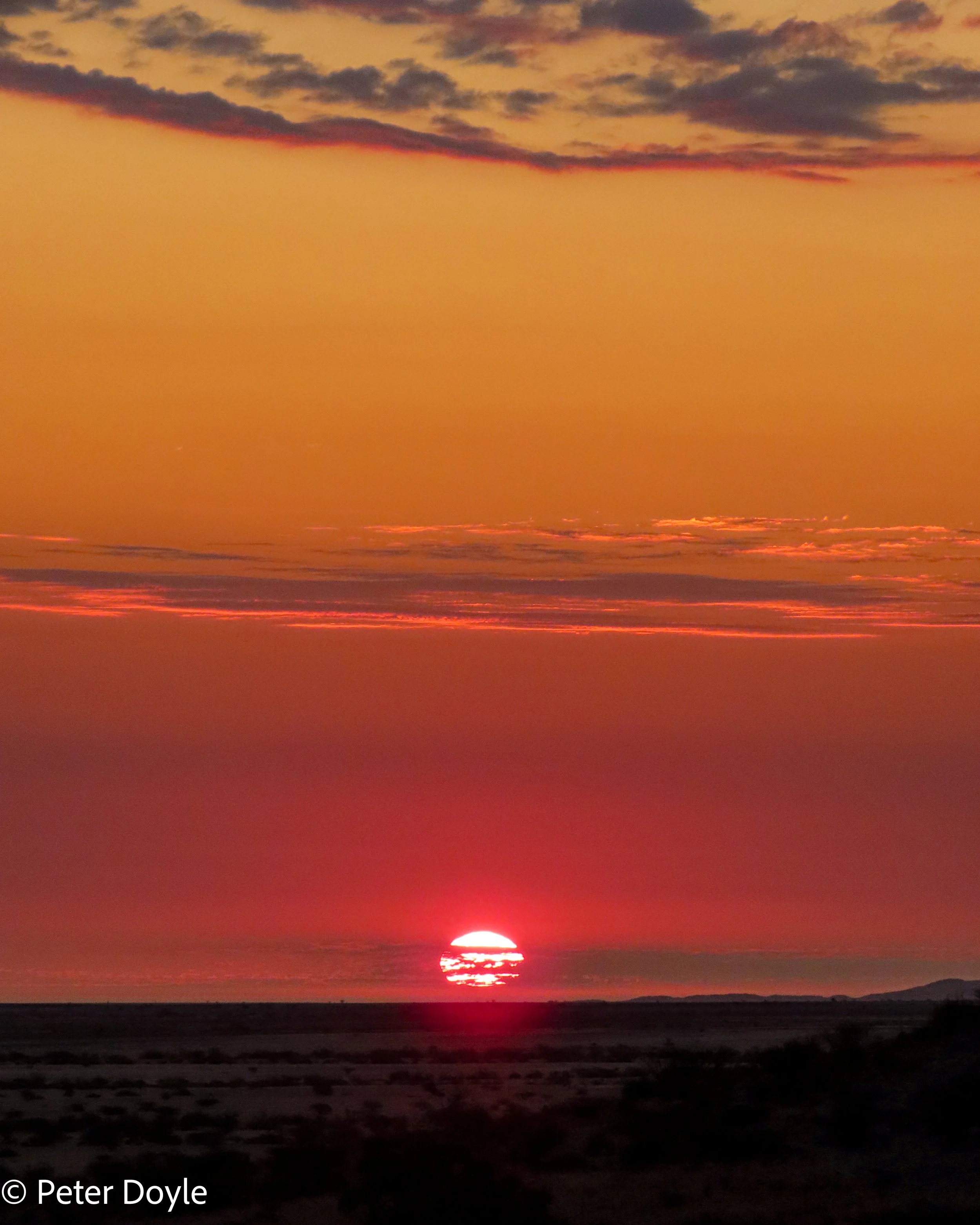
Every campsite is widely spaced from each other and located at the base of the cliffs, so that it feels like you have the mountain to yourself. It towers above you at sunrise, it gives shade during the day and glows red at sunset. At night it shuts out some of the stars above, so you know it is still there.
We climbed some of the lower cliffs, but the scale is vast and the exposure soon becomes too much, unless you are equipped for rock climbing.
We also met inspiring people. The camp is run by the community. Everyone you meet is proud of the place and it is well kept. The campers are a happy lot. Families with teenagers, youngsters learning the art of rock climbing, hikers and climbers, travellers like us. We met one retired-looking, but fit, couple walking the entire circumference of the Spitzkoppe, 21 km in all. He was just recovering from a heart valve replacement two months previously!
To crown it all, we saw and photographed four special birds at Spitzkoppe. Monteiro’s Hornbill, Rosy-faced Lovebird, White-tailed Shrike and the Herero Chat.
The Monteiro’s Hornbill is a very charismatic and entertaining bird, spending most of its time clambering over the rocks or fighting with its neighbours.
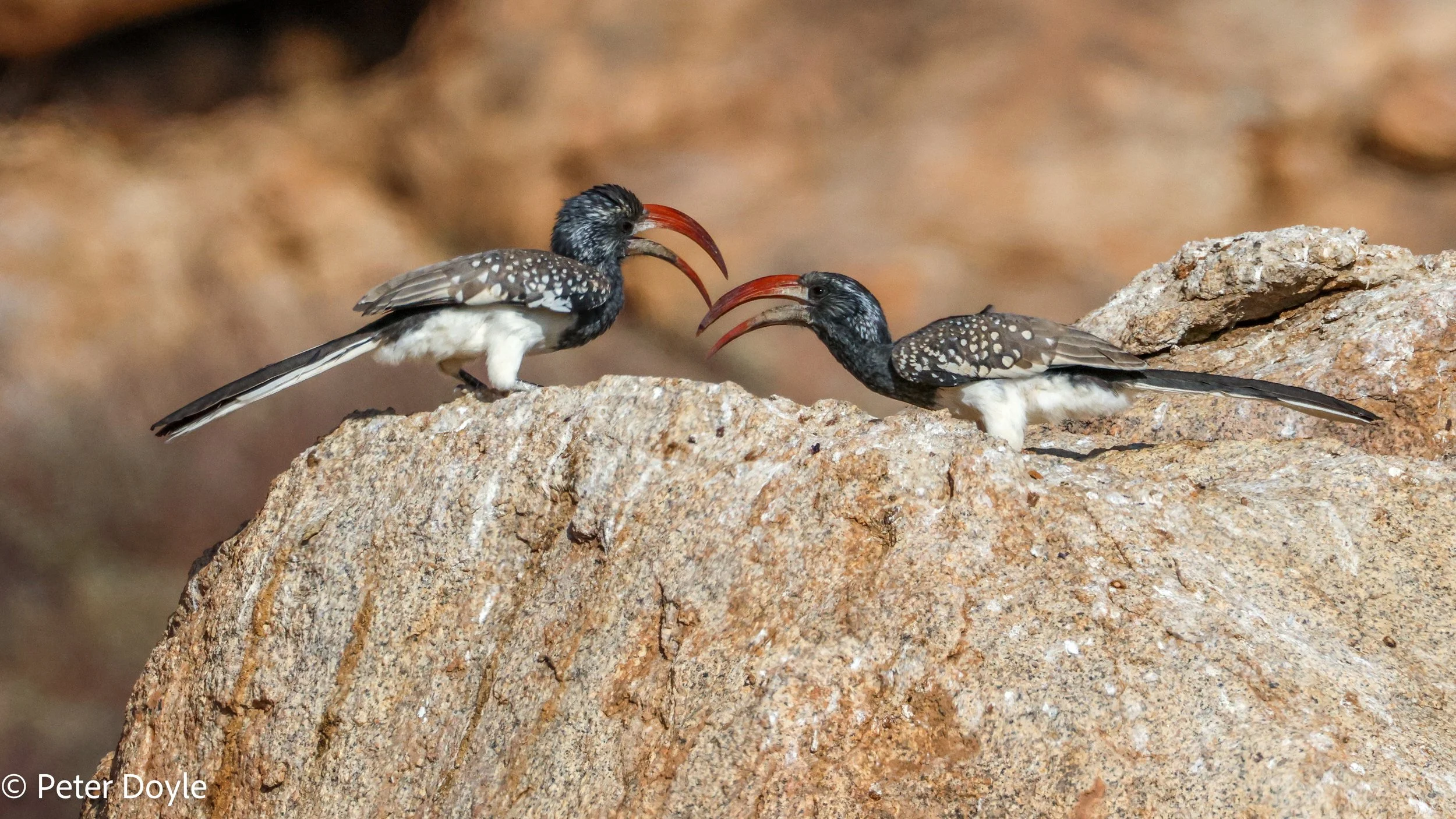
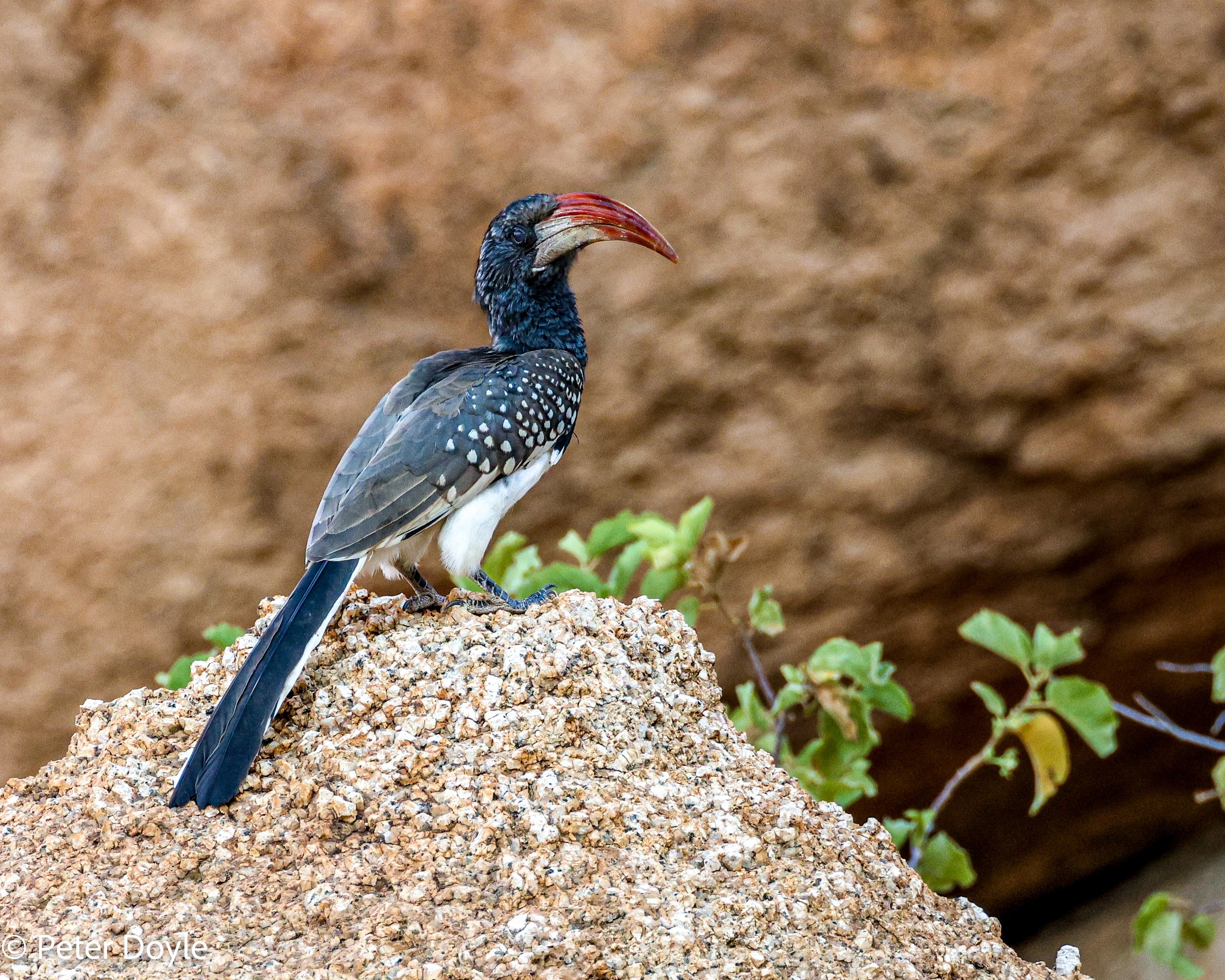
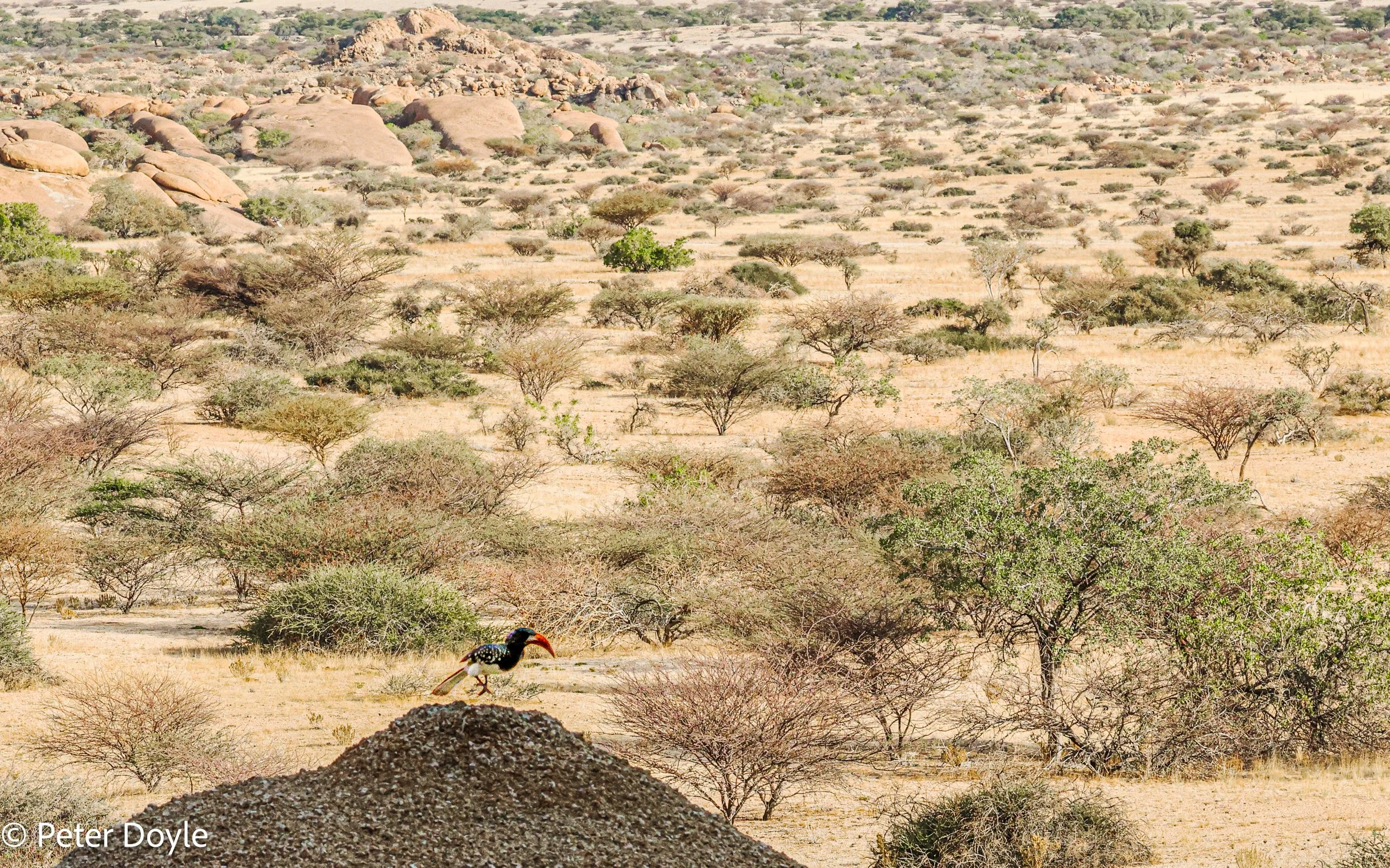
Monteiro”s Hornbill (Tockus monteiri)
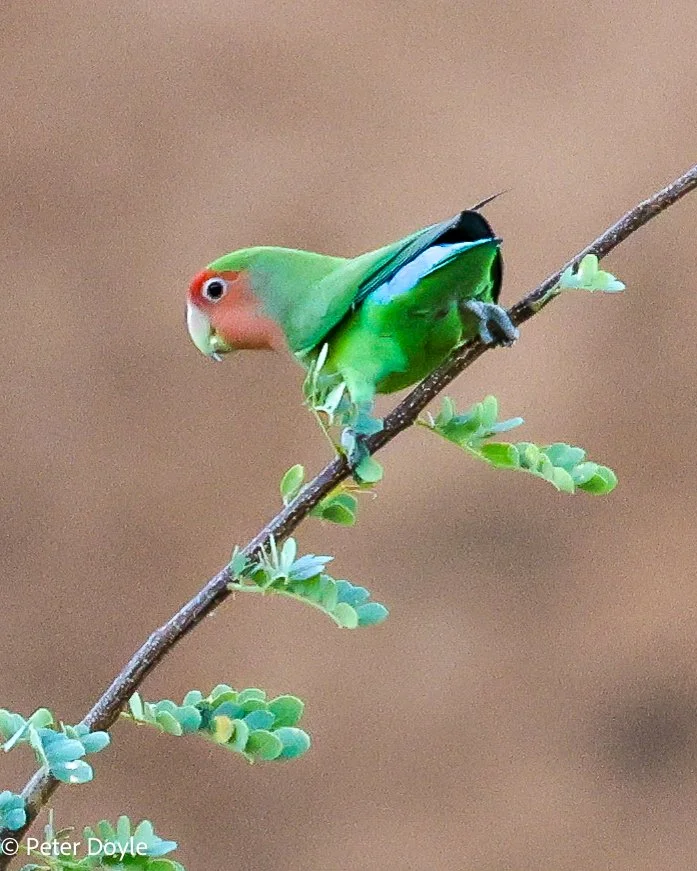
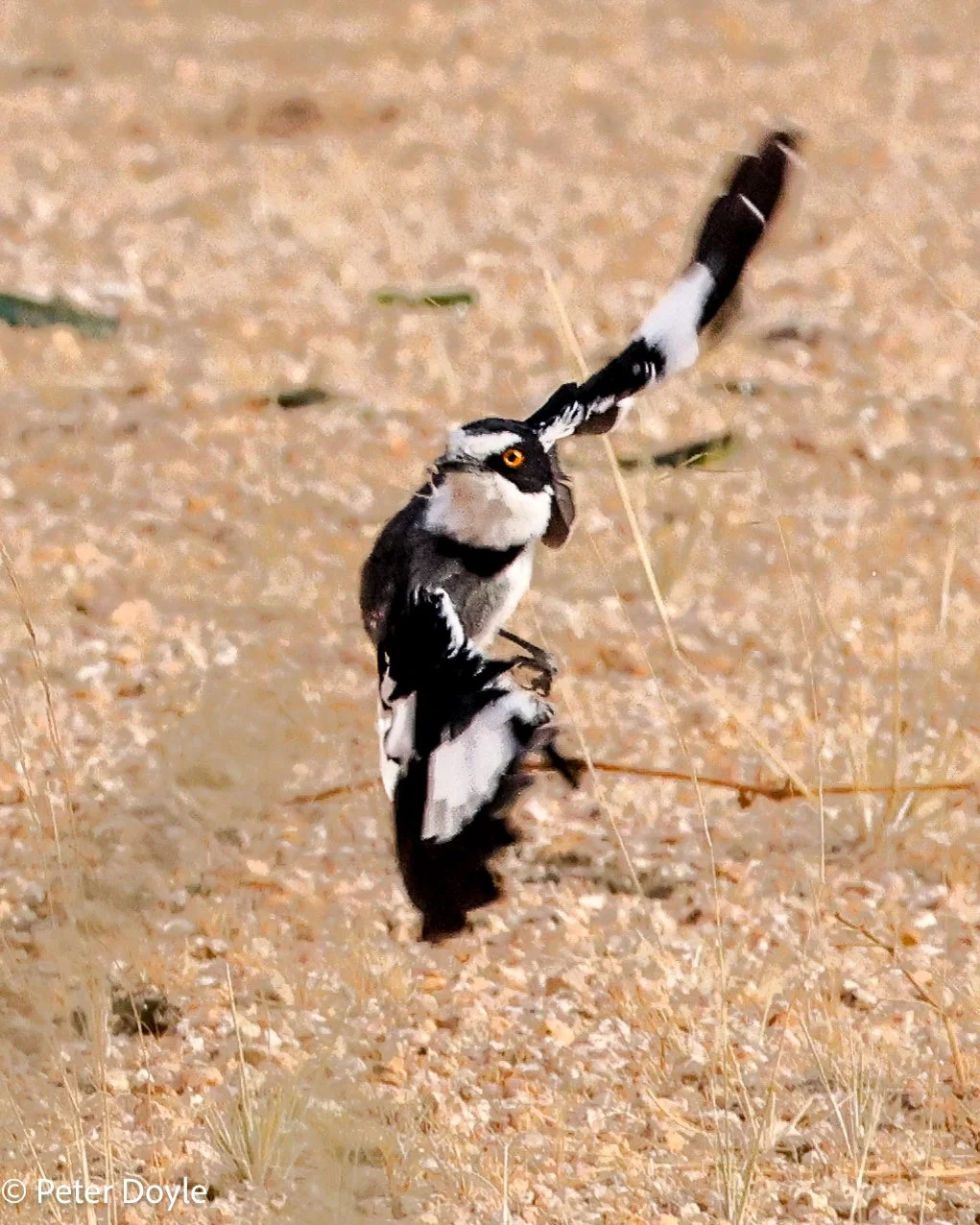
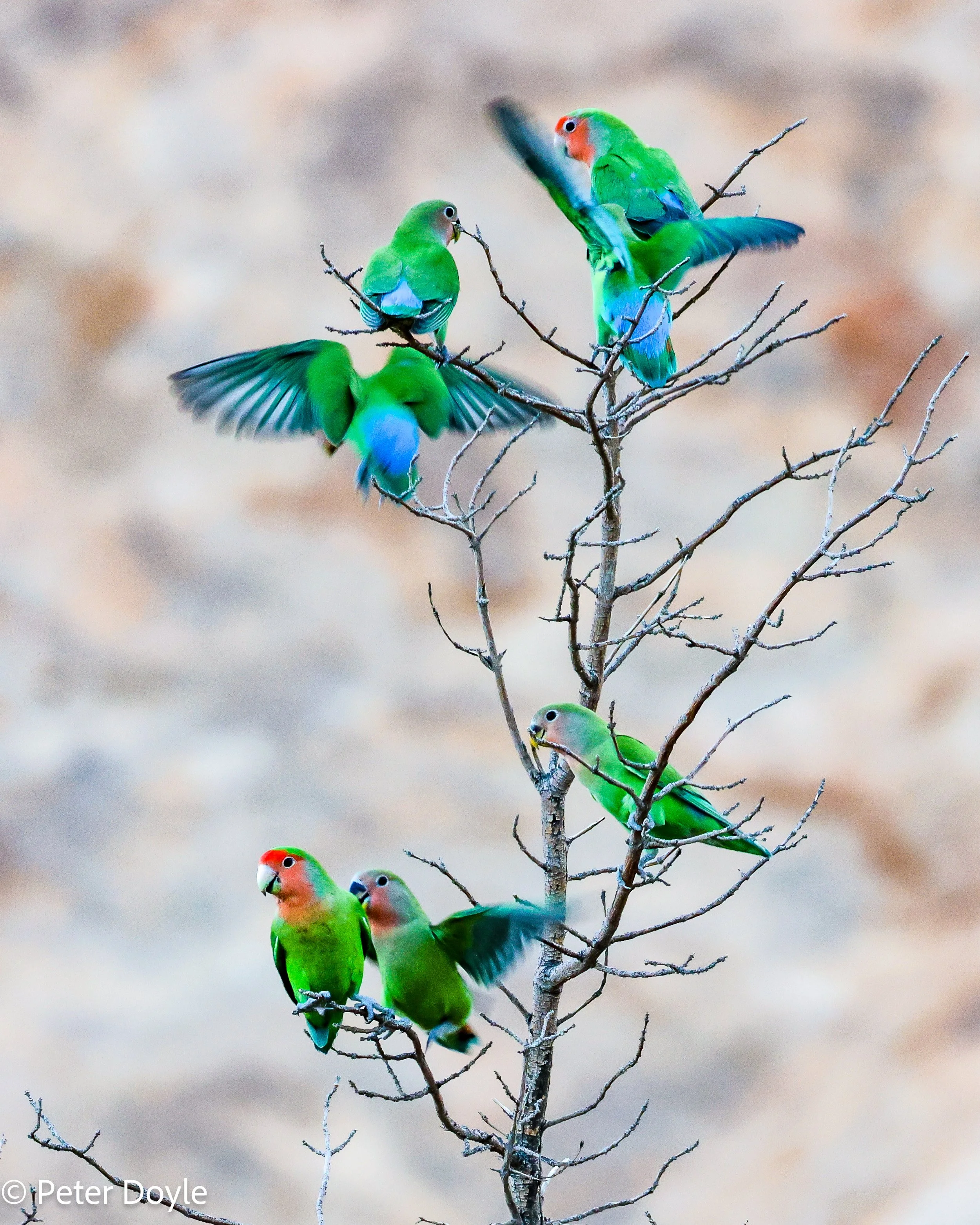
Rosy-faced Lovebird (Agopornis roseicollis) White-tailed Shrike (Lanioturdus torquatus)
We also had one of our most bizarre birding experiences and one of our best … both caused by one bird … the Herero Chat.
We knew that Spitzkoppe is one of the best places in the world to see the Herero Chat, a near-endemic to Namibia. But it is a huge area around the mountain and the bird was not to be seen.
One day we drove down a side road to a well-known climbing spot. There was reputed to be a guide there who could find the Chat; but he was not around that day. Instead we met a “car-guard”, wielding a stick. He assured us that, should we pay up, he would find the Chat for us.
What followed was a bizarre charge over rocks and rough terrain, with the stick pointing every which way at any bird-like object. We also came across a magnificent Parabuthus Scorpion, which we just managed to save from being squashed by the stick. Perhaps we saw a Herero Chat that day, perhaps not, but nothing to confirm a sighting.
We sadly left Spitzkoppe the next day. Both sad to be leaving, but also sad not to have photographed the Herero Chat. As we drove out on the D3316, we stopped to look back at Spitzkoppe one more time. And believe or not, there was a couple of birds in a tree, one looking different to all the birds we had seen here before.
On closer inspection, one was the Herero Chat! Not only that, but this was a very confiding bird. We took many photographs of it as we edged closer to the tree, expecting it to fly off at any moment. Eventually we were about 5 metres away from it, listening to its soft, beautiful call.
In the first photo below, you can see Spitzkoppe in the background, the tree and the Herero Chat (the bird lower left) and a Karoo Chat (bird higher right).
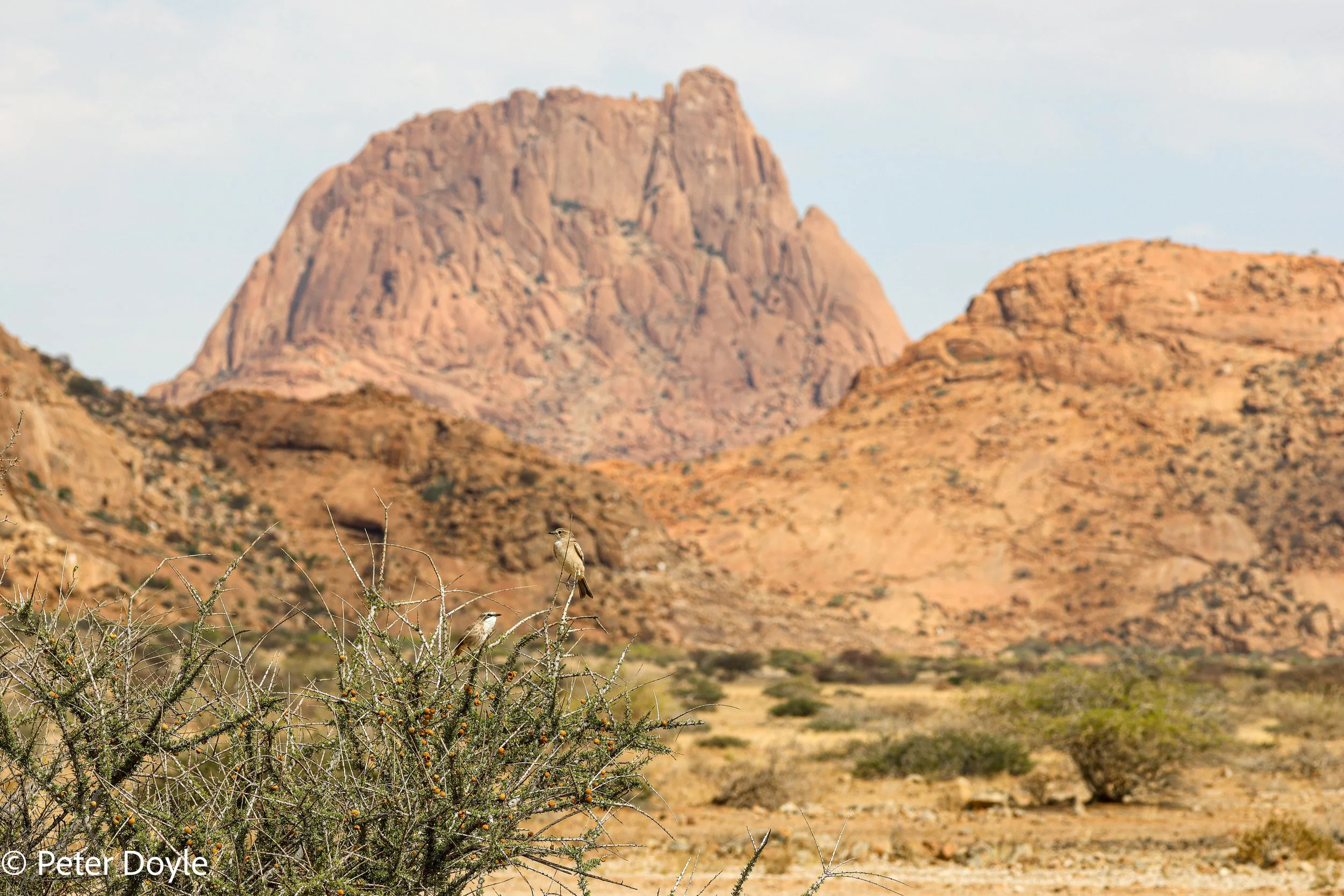
Spitzkoppe and the Herero Chat
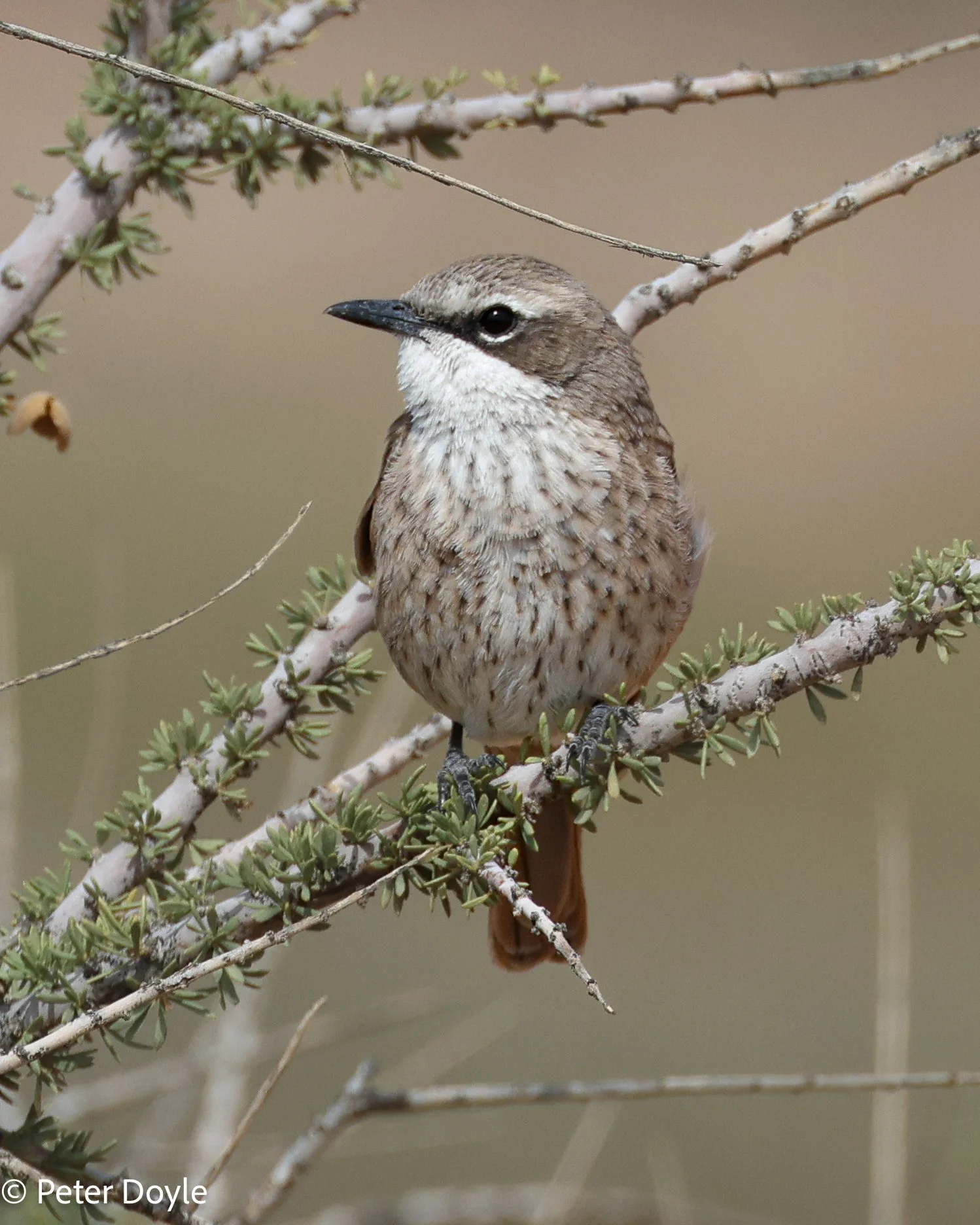
Herero Chat
(Namibornis herero)
This story and these two photographs perfectly sum up birding for me.
Being in a beautiful and awe-inspiring place, with towering, majestic mountains, and yet a small speck of a bird can be just as enchanting. The beauty of creation exists in both the grandeur and the detail. And we humans get to enjoy and appreciate and comprehend both. That is miraculous.
Leaving Spitzkoppe on a high, we headed out across the savannah to our next destination … the Etosha National Park.
