Travels in Namibia - Etosha National Park
On our trip to the Etosha National Park, we went via the Erongo Mountain Sanctuary and the Waterberg Plateau, criss-crossing central Namibia until we reached the Hobatere Roadside Camp just outside Etosha.
On this route there was now big change in scenery, from desert to thorn-veld savannah. And for the first time small villages and goat herds, large game and animal farms and towns. Through Erongo Mountain Nature Conservancy where again we walked we saw several new birds and ancient rock paintings, as well as the small creatures Elle loves.
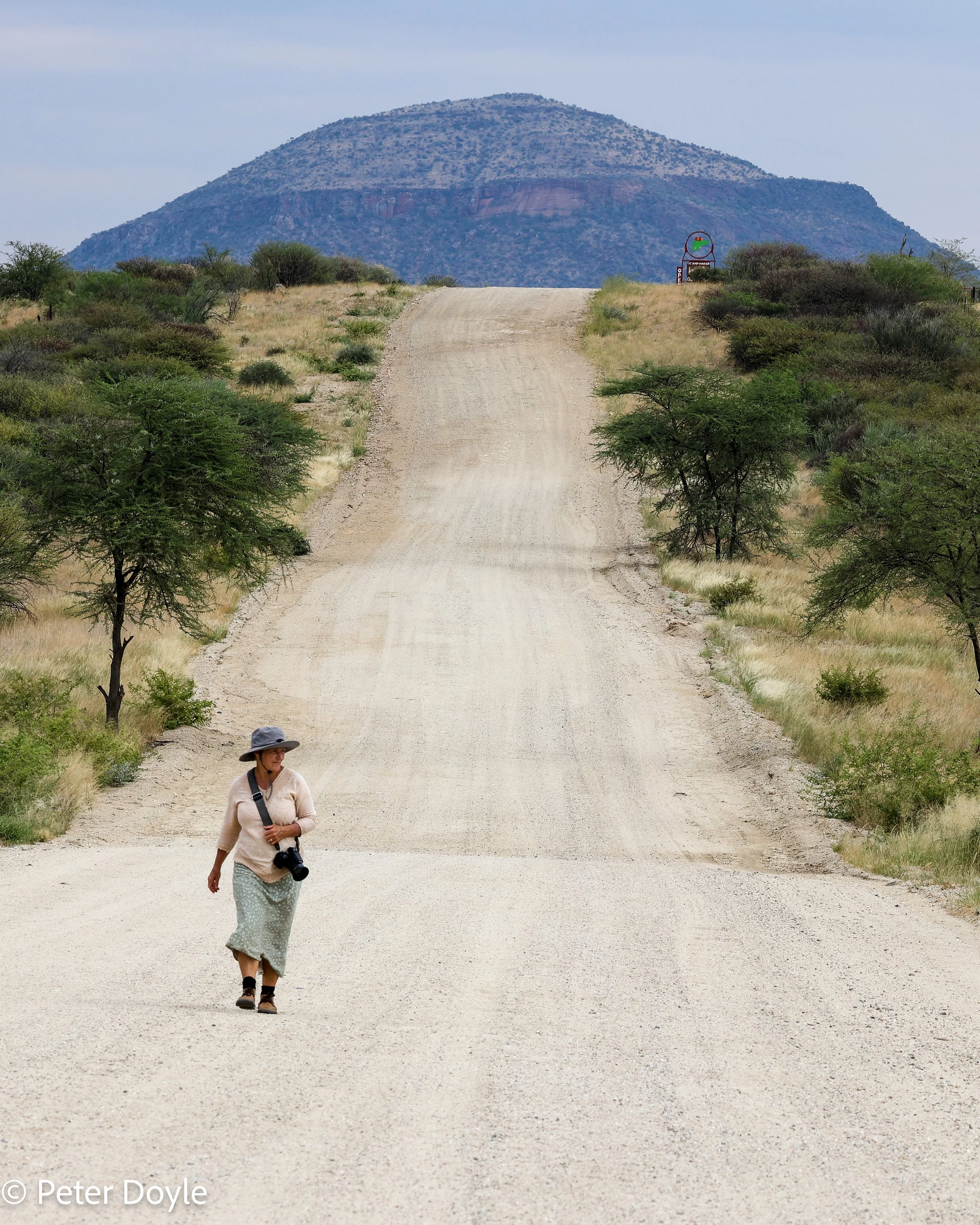
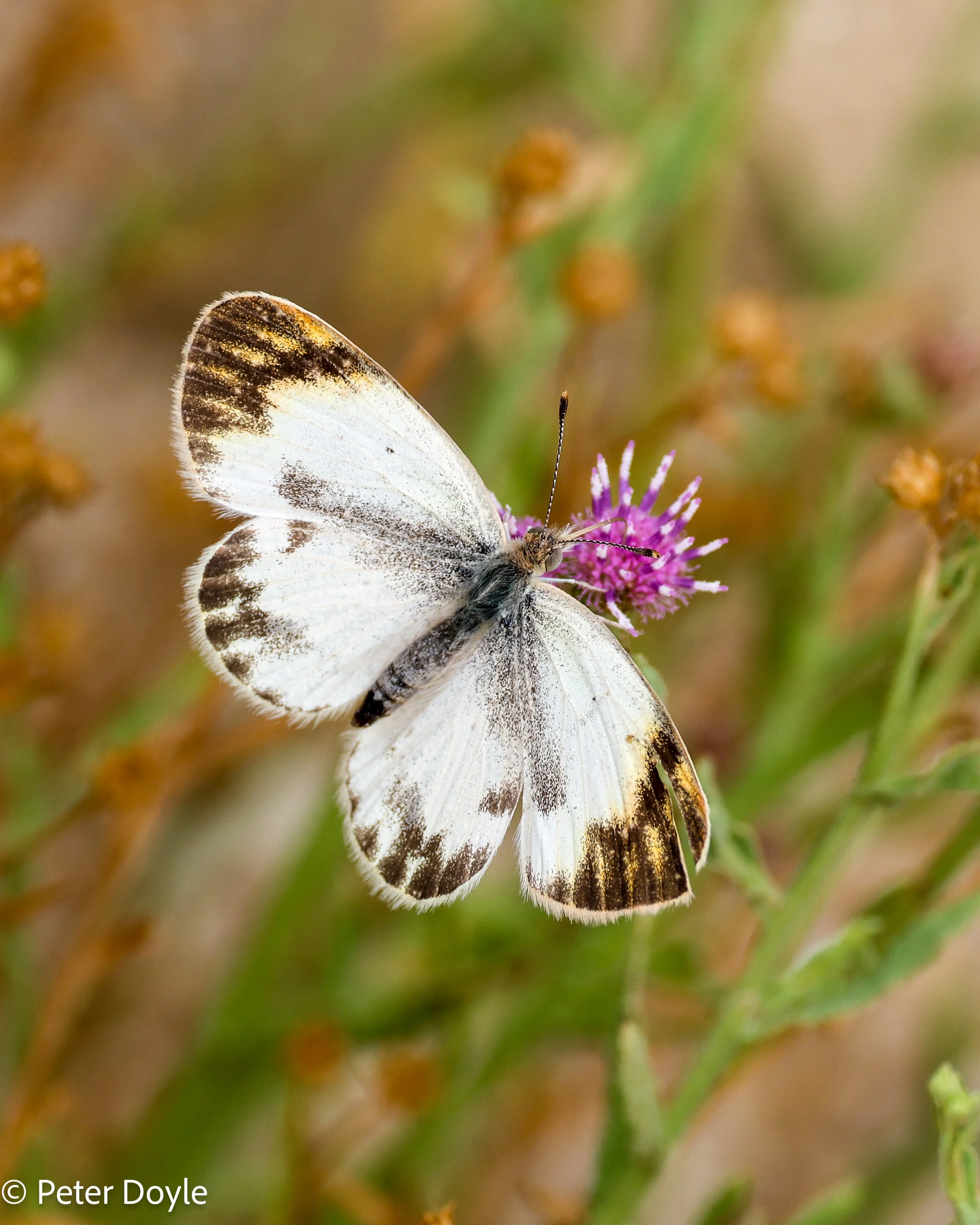
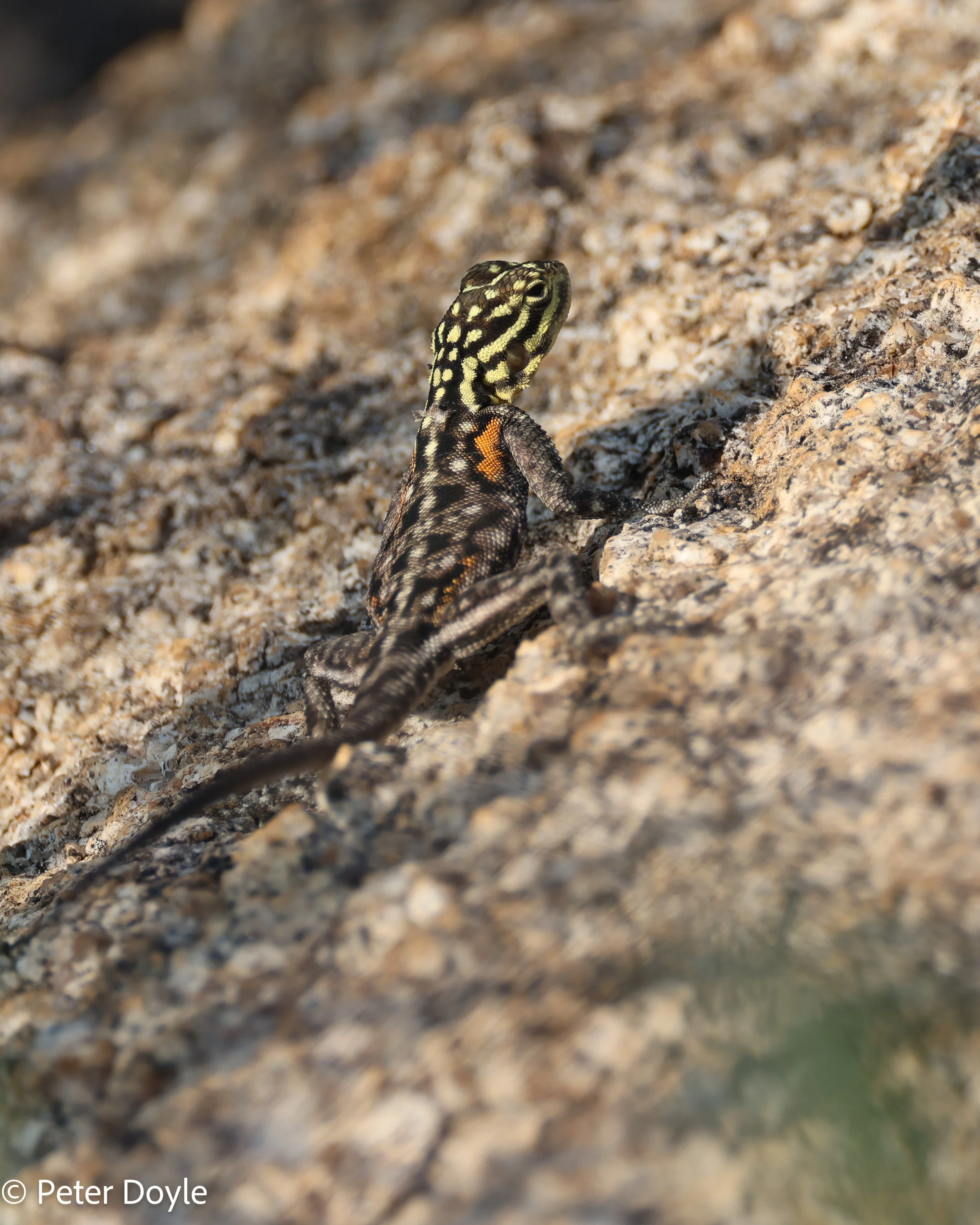
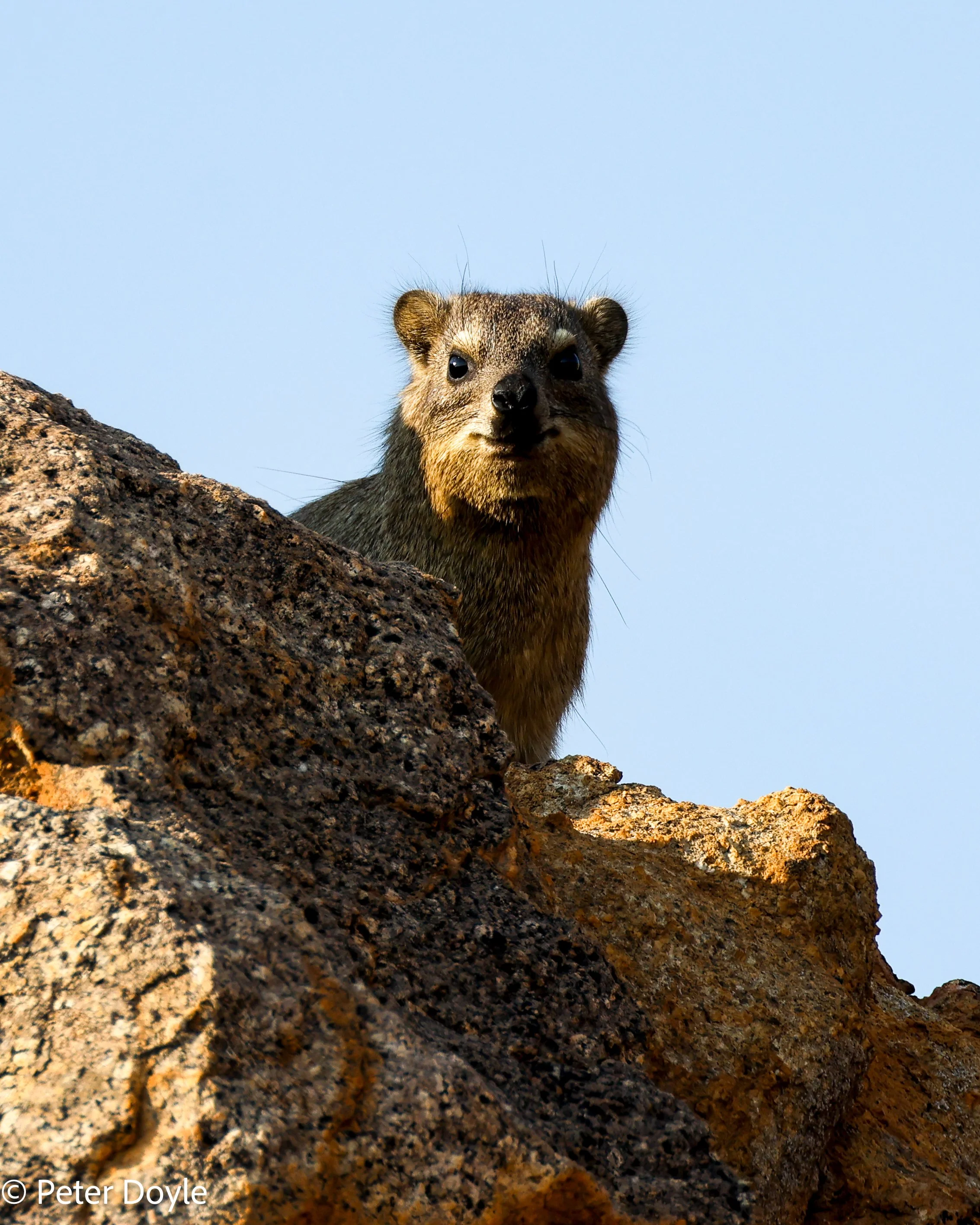
Clockwise from top left: Walking in Erongo Mountain Sanctuary; Butterfly; The Rock Hyrax (“Dassie”) is a favourite meal of the black Verreaux’s Eagles (Aquila verreauxii); Gecko/lizard.
The Waterberg Plateau was an interesting stop. This is a 200 metre high red sandstone mountain, rising vertically above the plains. Sometimes called the “Table Mountain of the Kalahari”, it is very very different to the southern granite mountains.
It is a national park used primary for breeding herds of rare animals that can be protected up on the plateau. As usual, we walked a lot, up to the Mountain View trail. Birds everywhere. Baboons everywhere. Saw a few Damara DikDik in the camp … very attractive little antelope. The top of the plateau is not rock, but thick red Kalahari sand and thick vegetation.
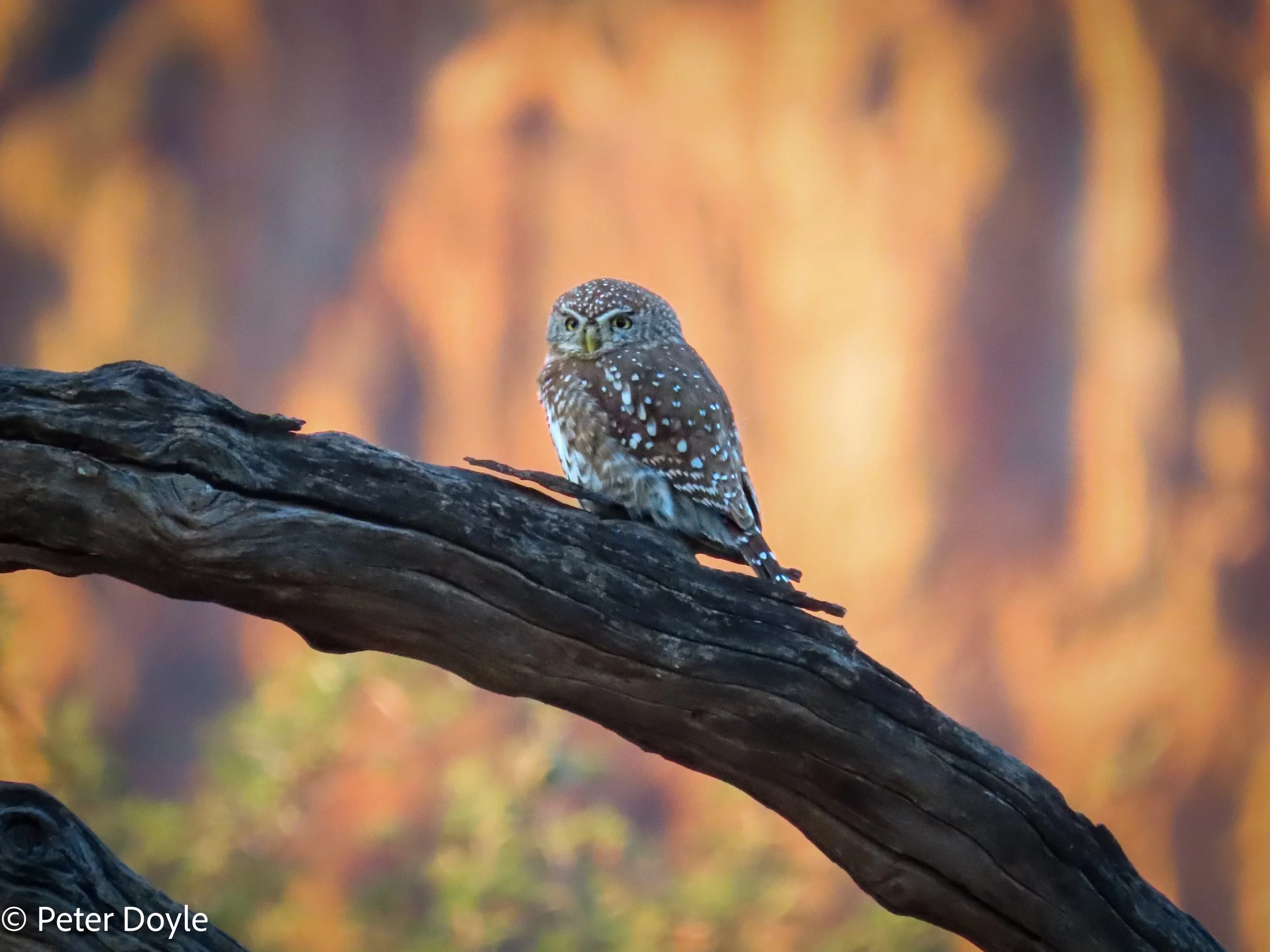
We also photgraphed a Pearl-spotted Owlet(Glaucidium perlatum) in front of the red sandstone cliffs.
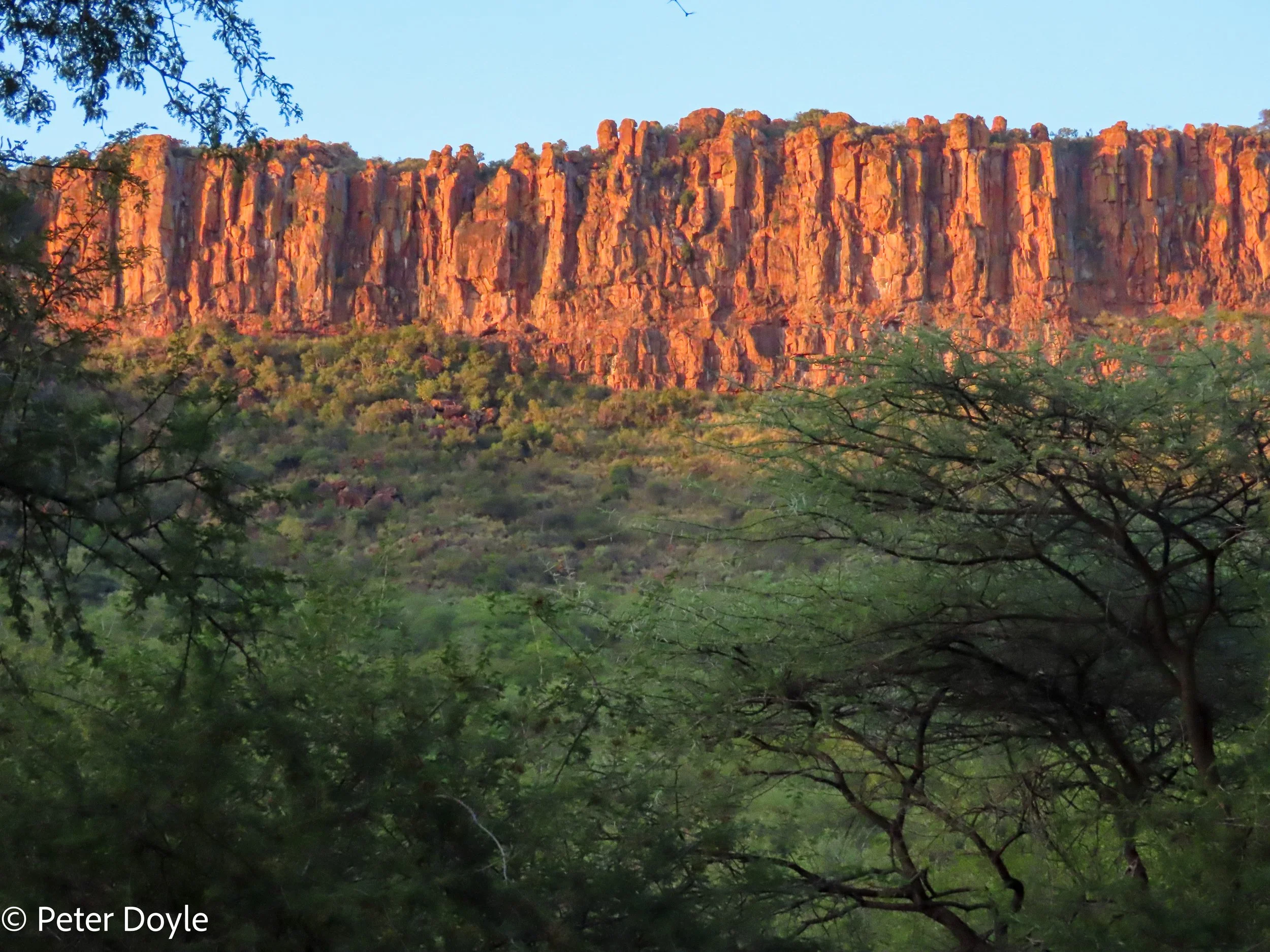
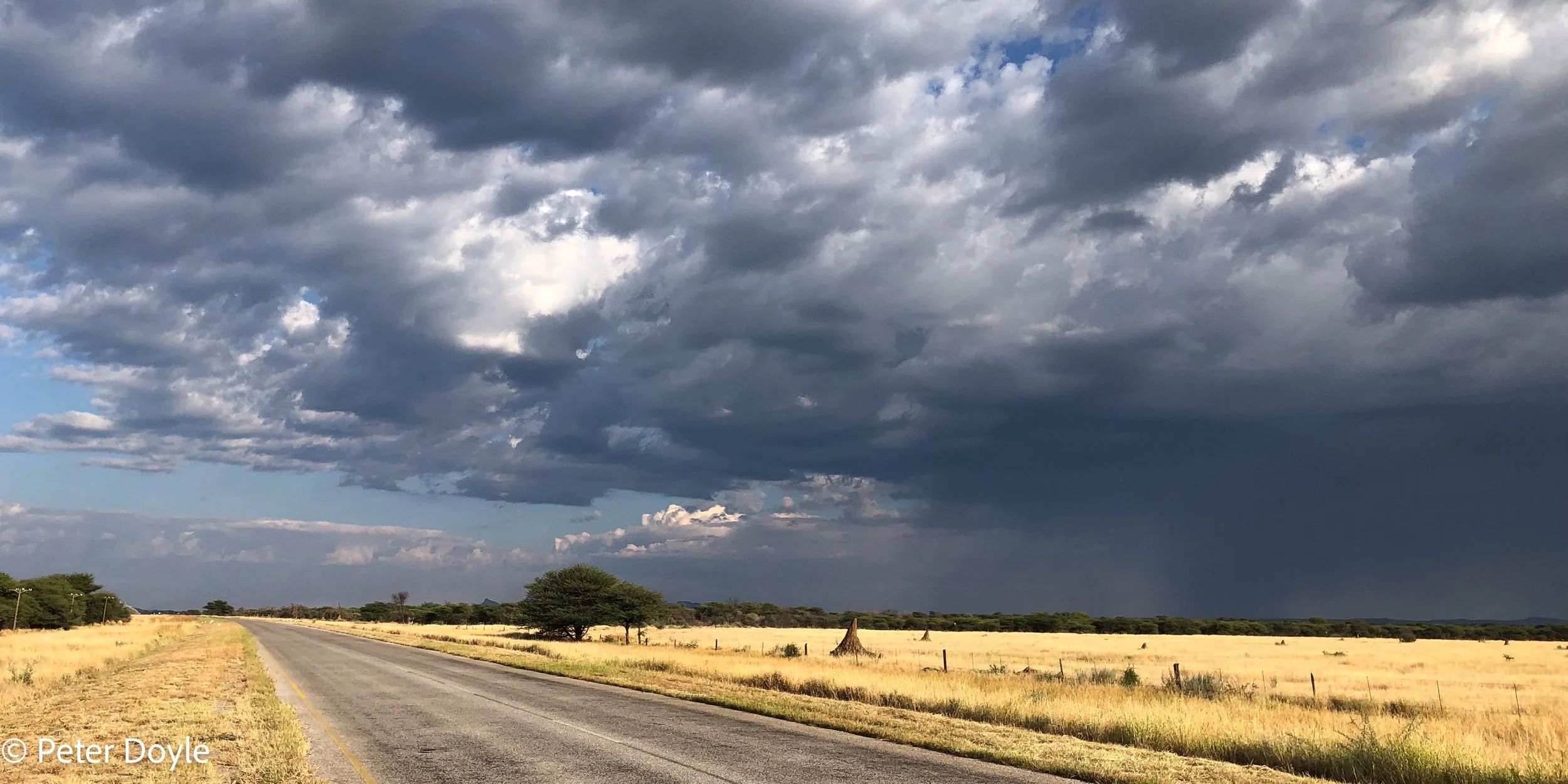
Along all the roads in Namibia there are vast vistas and a changing kaleidoscope of colours.
Hobatere Roadside Camp
This does not sound like an exciting destination, so why did we go here? We included this camp just so that we could go into Etosha in the far west, at Galton Gate, so that we could travel the full length and breadth of Etosha. This is a seldom-visited part of the NP that has only be opened to the private travellers in recent years.
Hobatere was previously a private nature reserve, but it is somewhat derelict now. Although the roadside camp itself is a lovely bush camp, in the bush, but with great facilities. And it is not actually on the roadside, but a short, easy drive into the bush, far enough from the main road to be private.
The birdlife was fantastic and we walked everywhere. Only later, we were told that Hobatere is almost open and unfenced to Etosha, and lions, elephant and other big game regularly migrate through this area. We did see a giraffe kill at the waterhole!
It is a great stop-over for anyone going along this road to the north or wanting to go into Etosha from the west, as we did.
Etosha National Park:
While in Etosha, we stayed at all four NWR rest-camps:
Olifantsrus
Okaukuejo
Halali
Namutoni
Many people seem to recommend these days that you stay outside the park., in private camps, and just drive in every day, because the camps are not luxurious. But our priority is always experience over comfort and our Bush Lapa off-road trailer allows us to be quite self-sufficient. Eight nights in total … but we would loved to have stayed longer.
We entered from the west through Galton gate and drove the full length of Etosha, exiting in the north east via the Von Lindequist Gate at Namutoni. We thought the roads were generally in quite good condition in the park, and we found each camp had its own character and interest.
OLIFANTSRUS:
We arrived there hot and bothered. There is very little shade and the campsites are small. The ablutions are ugly. We resolved to leave again as soon as we could, especially after the incredible camping we had experienced in southern Namibia.
But the camp staff and other travellers we met were friendly. The game viewing was incredible. Life was good again. Another lesson learnt in Namibia … don’t be fooled by first impressions. After 3 nights there we wished we could have stayed longer.
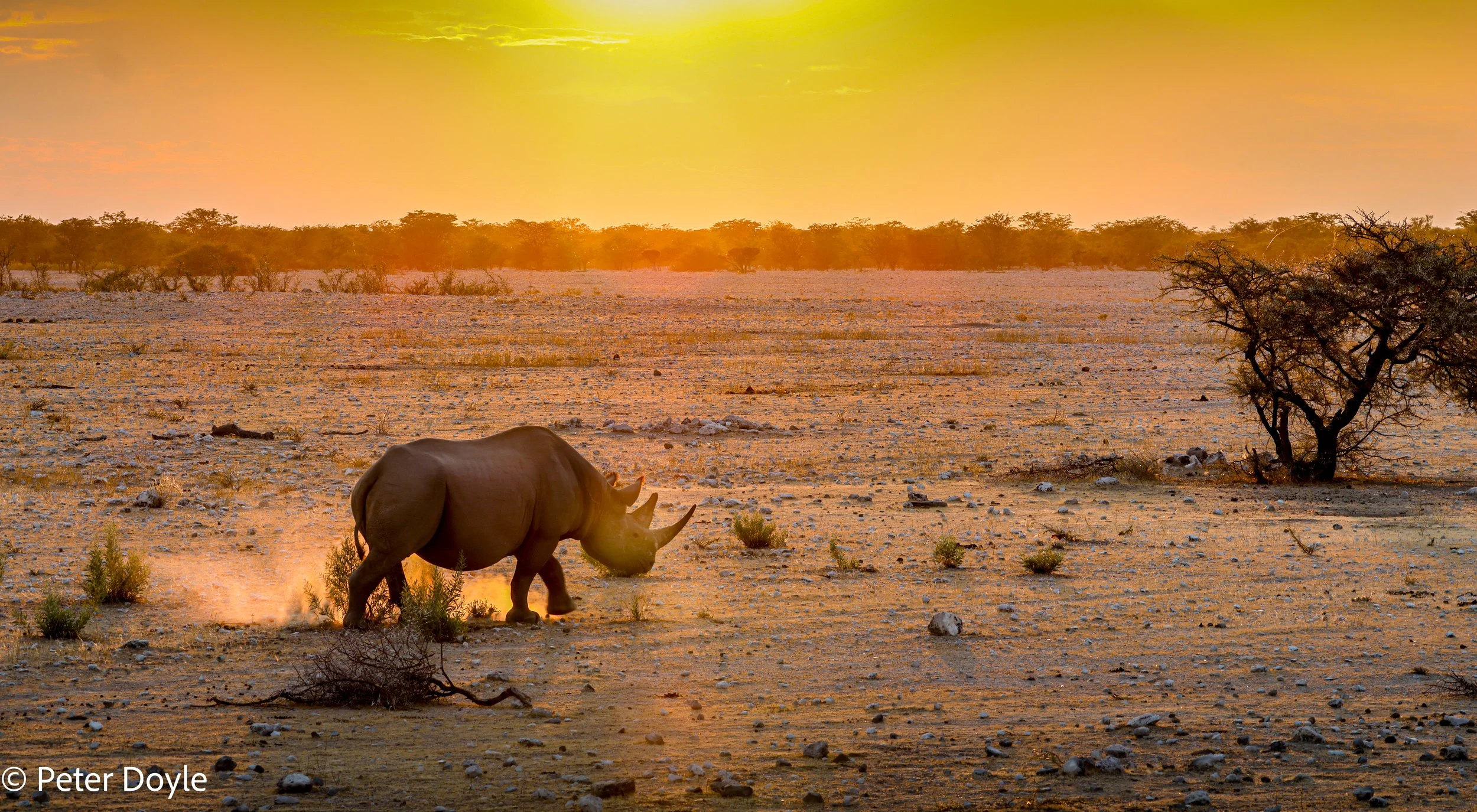
The waterhole and hide at Olifantsrus is unique, and we had incredible night-time game viewing, Many animals come to drink in the dark, and we saw Elephant, Rhinos, Lion, Brown Hyena, Zebra and antelope of various shapes and sizes. At night we also saw Marsh Owls and Coursers.
THE WATERHOLE STORY
During the day the other waterholes delivered magical sightings for us, and often we were the only vehicle around. One day we spent 5 hours at a waterhole, watching a scene unfold that could have been scripted.
Waterholes are a somewhat unique feature of southern Africa game reserves. They are necessary, but controversial. Ordinarily, the game will migrate vast distances in search of water and food. But these game corridors and now limited by human activities and boundaries. The extremely dry winter means that waterholes, usually with solar-powered borehole pumps, are a necessity for survival for some species within the national parks.
The upside is that waterholes make for great game viewing and photography opportunities. In Etosha, in winter, the actual area of water is quite small, but surrounded by a wide, dry pan, so it is very easy to see the comings and goings.
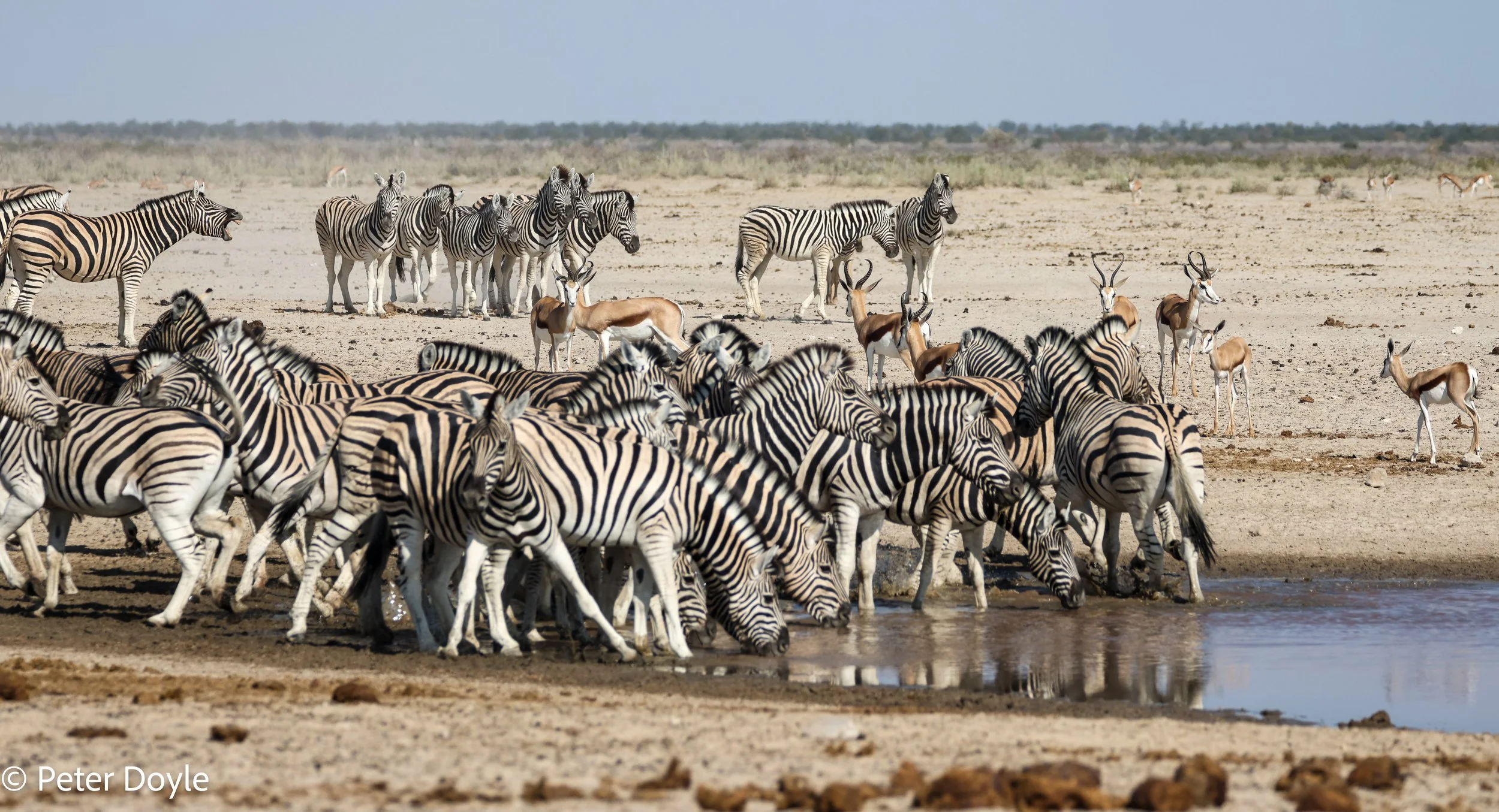
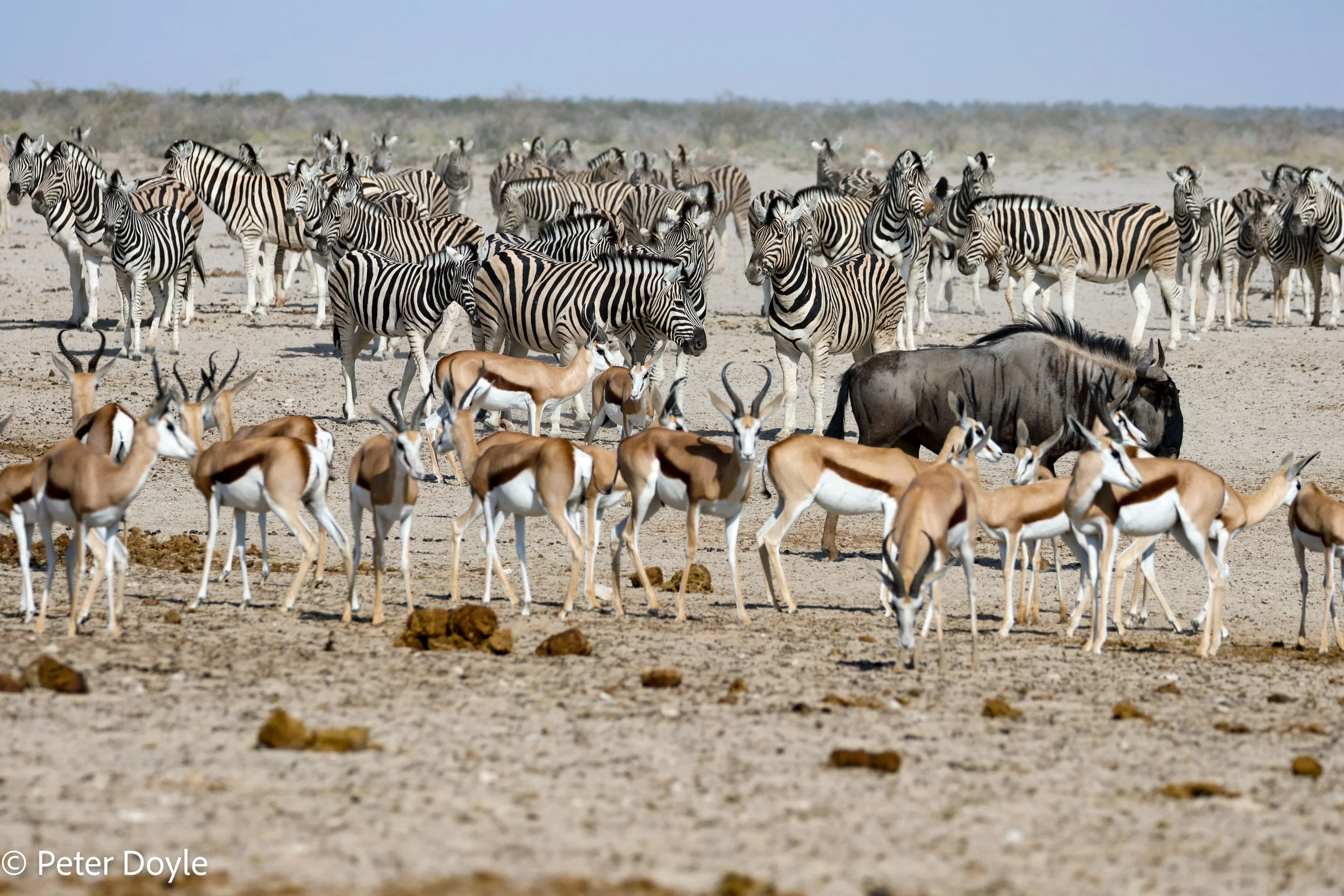
Burchell’s (plains) Zebra and Springbok
One day we spend nearly 5 hours at a single waterhole, most of the time on our own, watching a compelling spectacle unfold in front of us. When we arrived there were large herds of antelope and zebra coming to the water. Probably 100’s and maybe all told, 1000’s of animals passed through that day. We saw the usual suspects: springbok, gemsbok, eland, zebra, kudu and wildebeest. The herds came in waves, each to its own kind, all bunched together.
All were cautious, checking out the lay of the land, before going down to drink. The most skittish were the zebra, both because they were alert, but also because there is always a lot of in-fighting and jostling among each other. It was so interesting to watch all their behaviour and interaction between all these species.
The one antelope that we love, but had not yet seen was the red hartebeest, a beautiful, if somewhat ungainly animal that we knew were around. They are easy to spot because of their red colour, but also because they always walk in single file, normally about 10 to 20 of them together; not the big herds of the springbok or wildebeest.
Suddenly, I thought I saw them coming through at the far end of the pan. But something was “off” with their behaviour, because these animals were walking boldly straight into the pan area, not cautious at all, as antelope normally are.
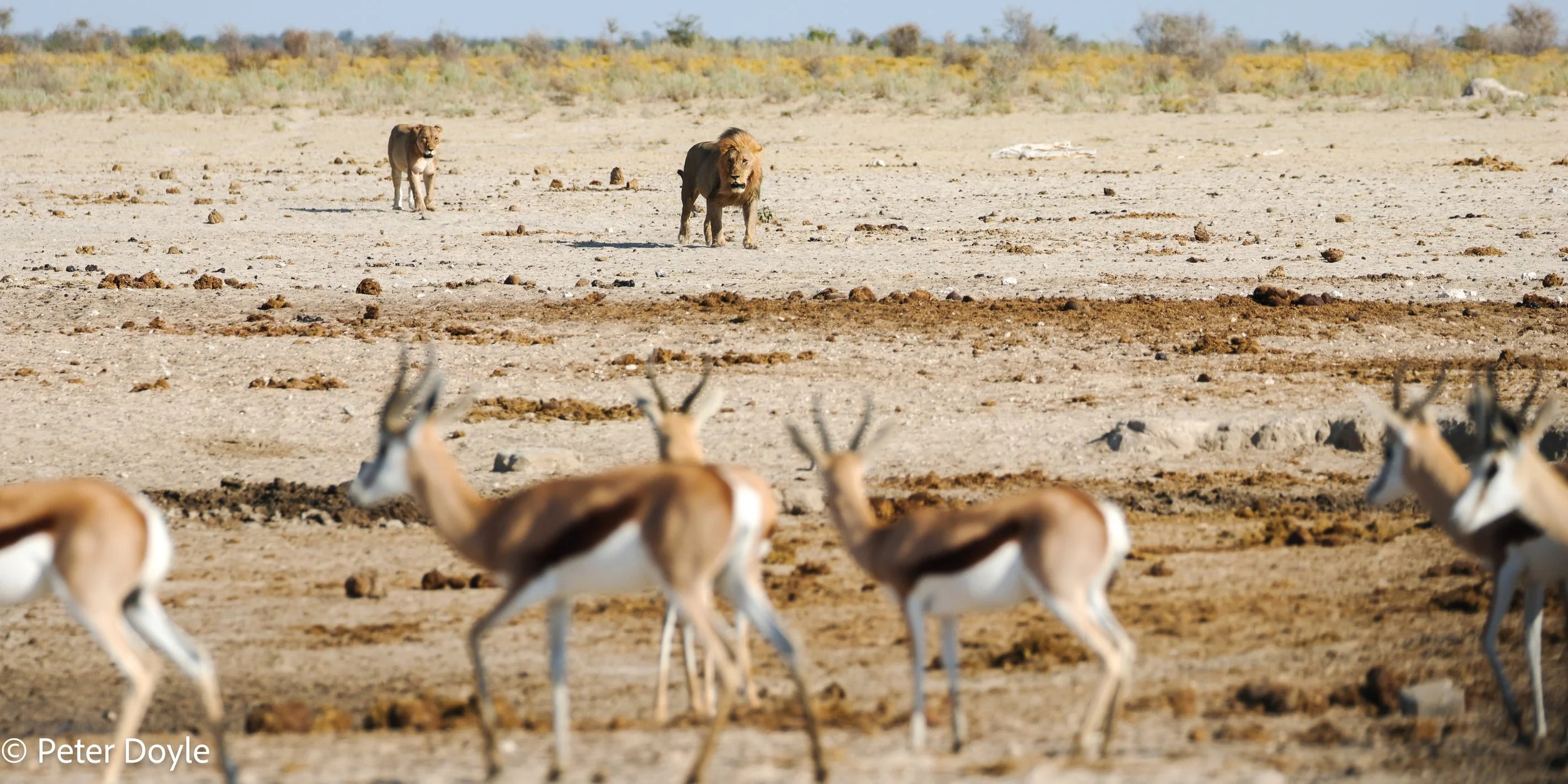
Lion and Springbok
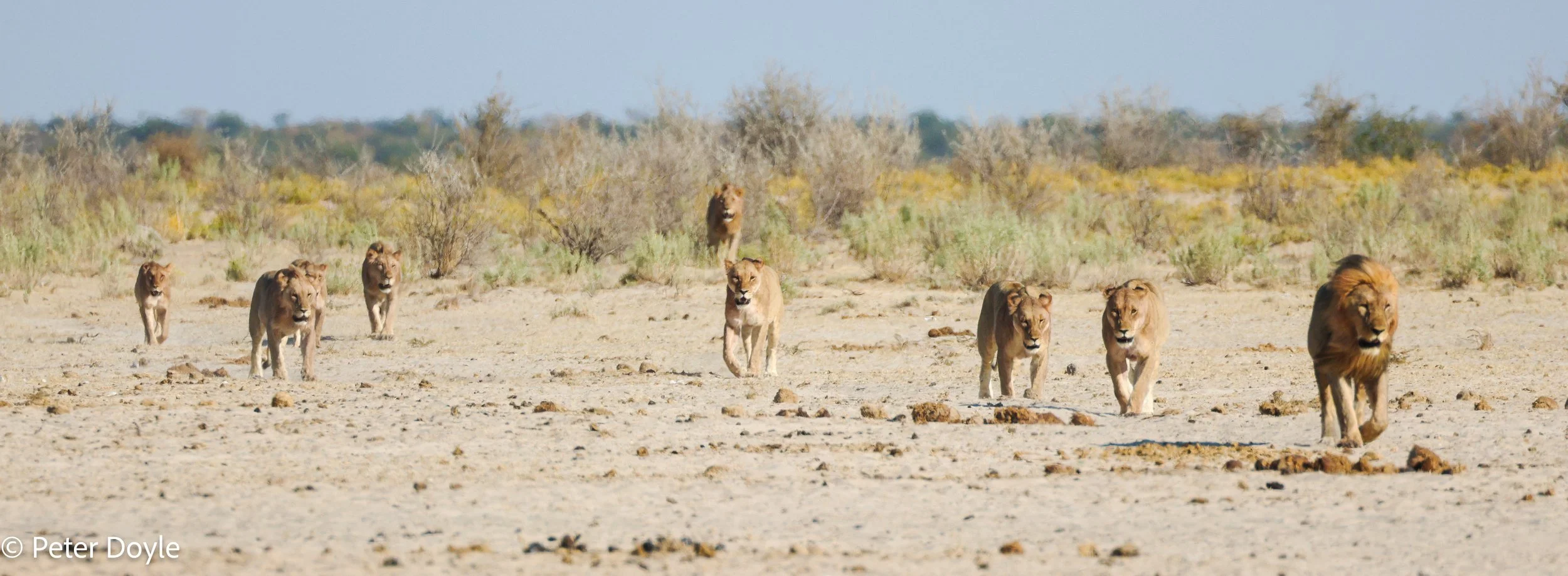
When I grabbed my binoculars to have a closer look, I was astonished to see that it was a pride of lion! Eventually I counted 15 lion, being led in by a big male lion, coming to the water. Their colour was different to anything else in the pan and looking closer I could also see the traces of blood from the previous night’s feast.
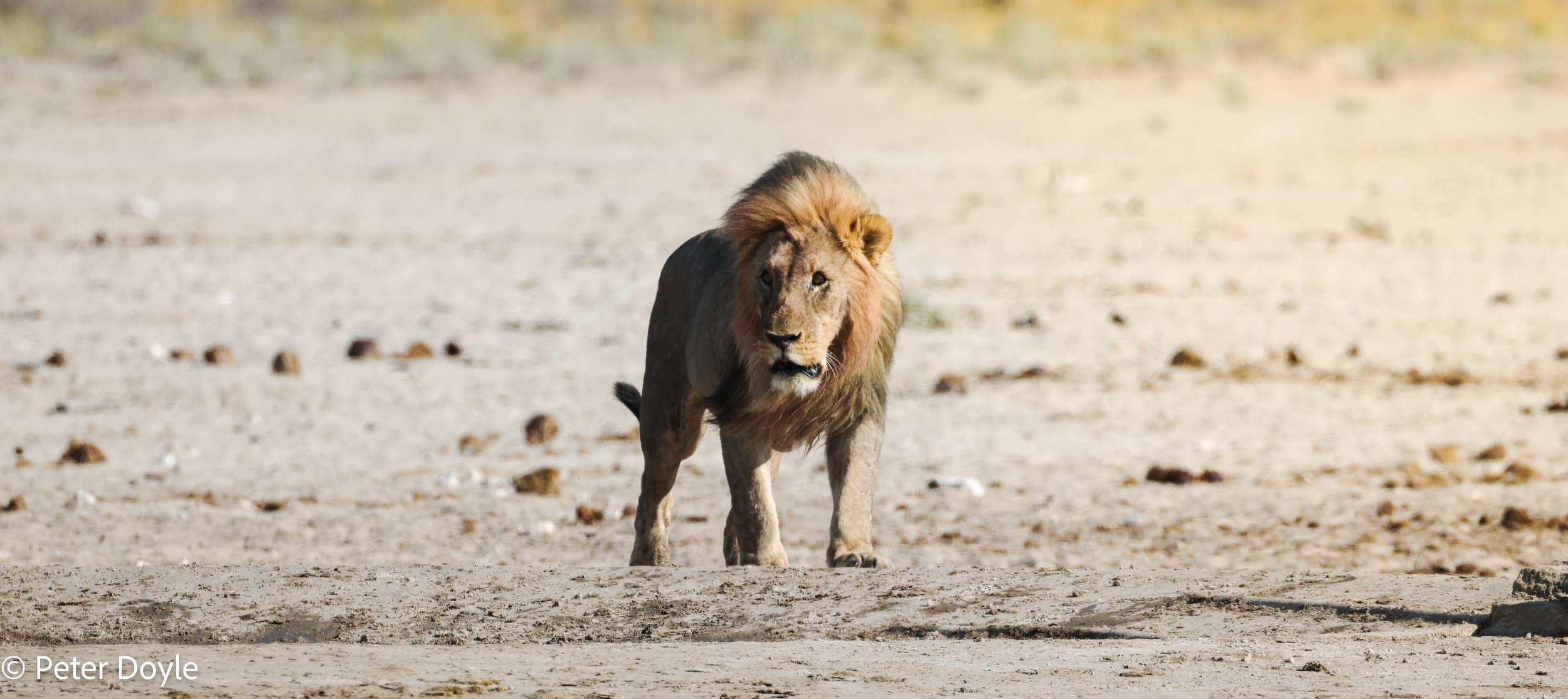
It was like the parting of the red sea. Interestingly the zebra, springbok, etc. did not run away, but just opened up a channel to the water for the lion. They did not need binoculars to know who was coming! The potential prey obviously understand lion behaviour intimately. They immediately knew that the lion had already eaten in the night and were now coming down for water, as they always do after a kill. So they were no immediate threat. But still, caution prevailed.
The lion came to drink where the fresh water comes into the waterhole. And they drank deeply and repeatedly for many minutes, perhaps half-an-hour. In the meantime, every other animal left the water to stand at a decent distance away, pretending not to see the lion.
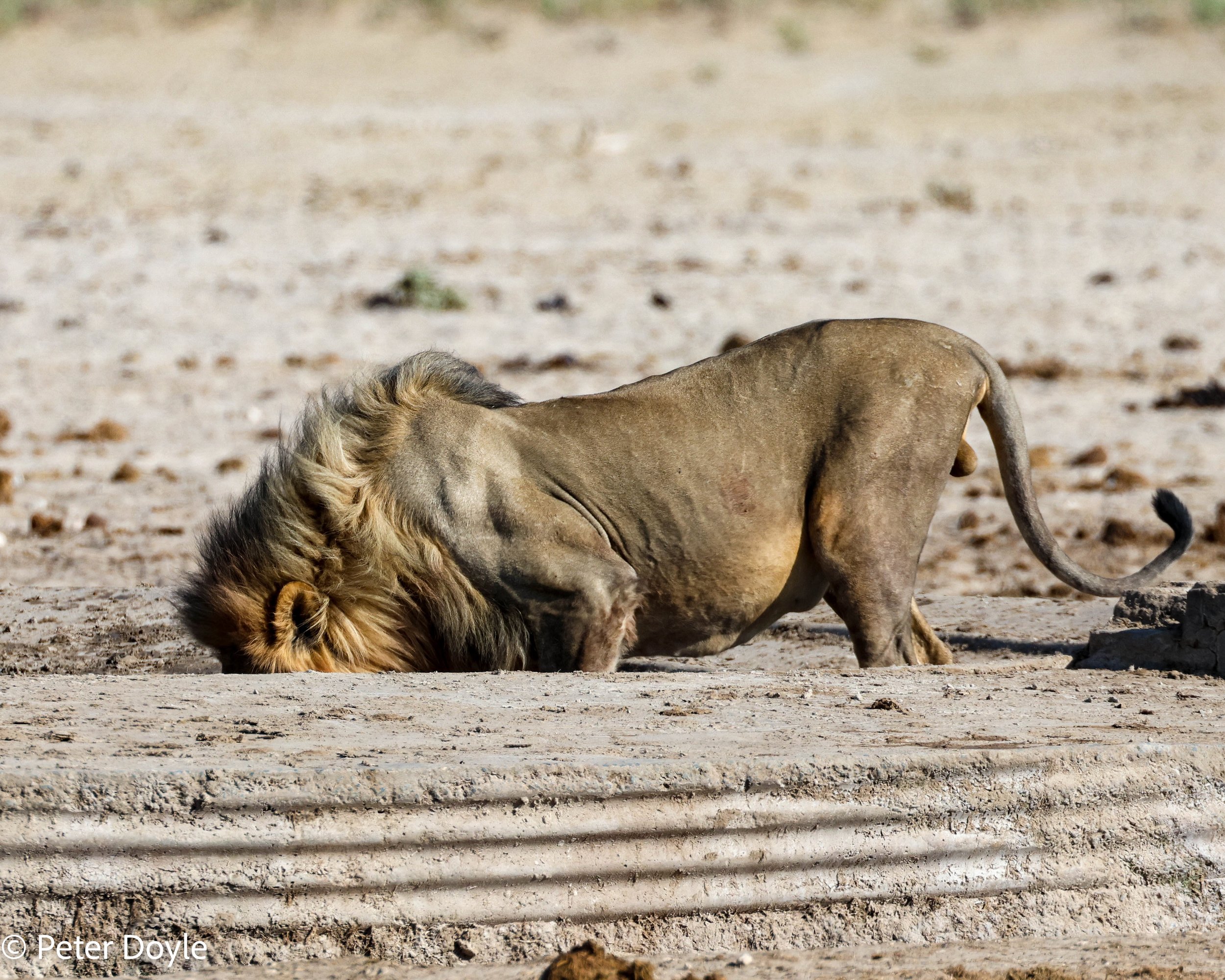
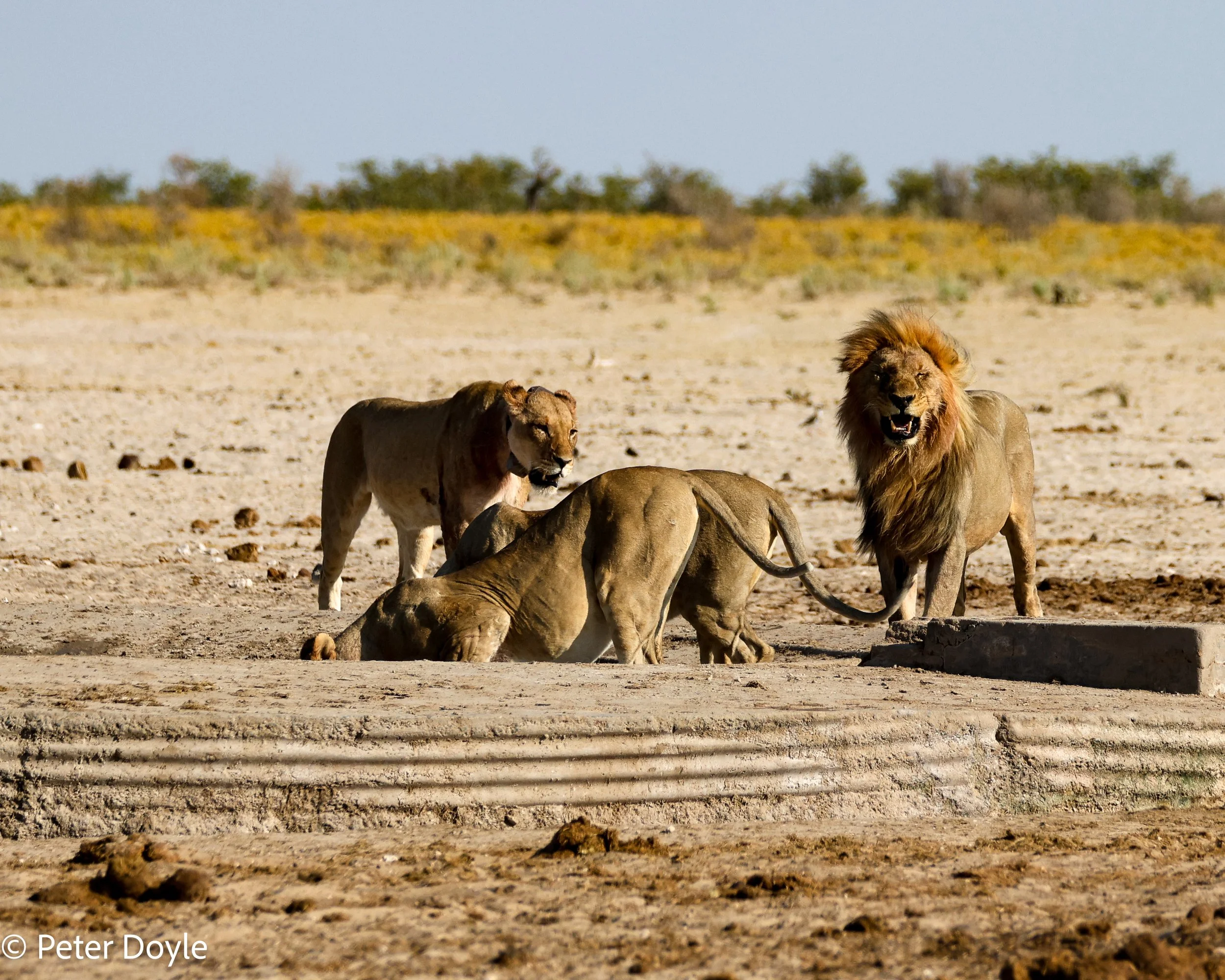
It was most interesting to see that the main pride of lion went off a few meters to rest in the shade of a few trees, but two large lionesses went to drink at the main waterhole and then lie down at the water’s edge. This was clearly a tactic and a long-term plan of the lion for their lunch later on in the day.
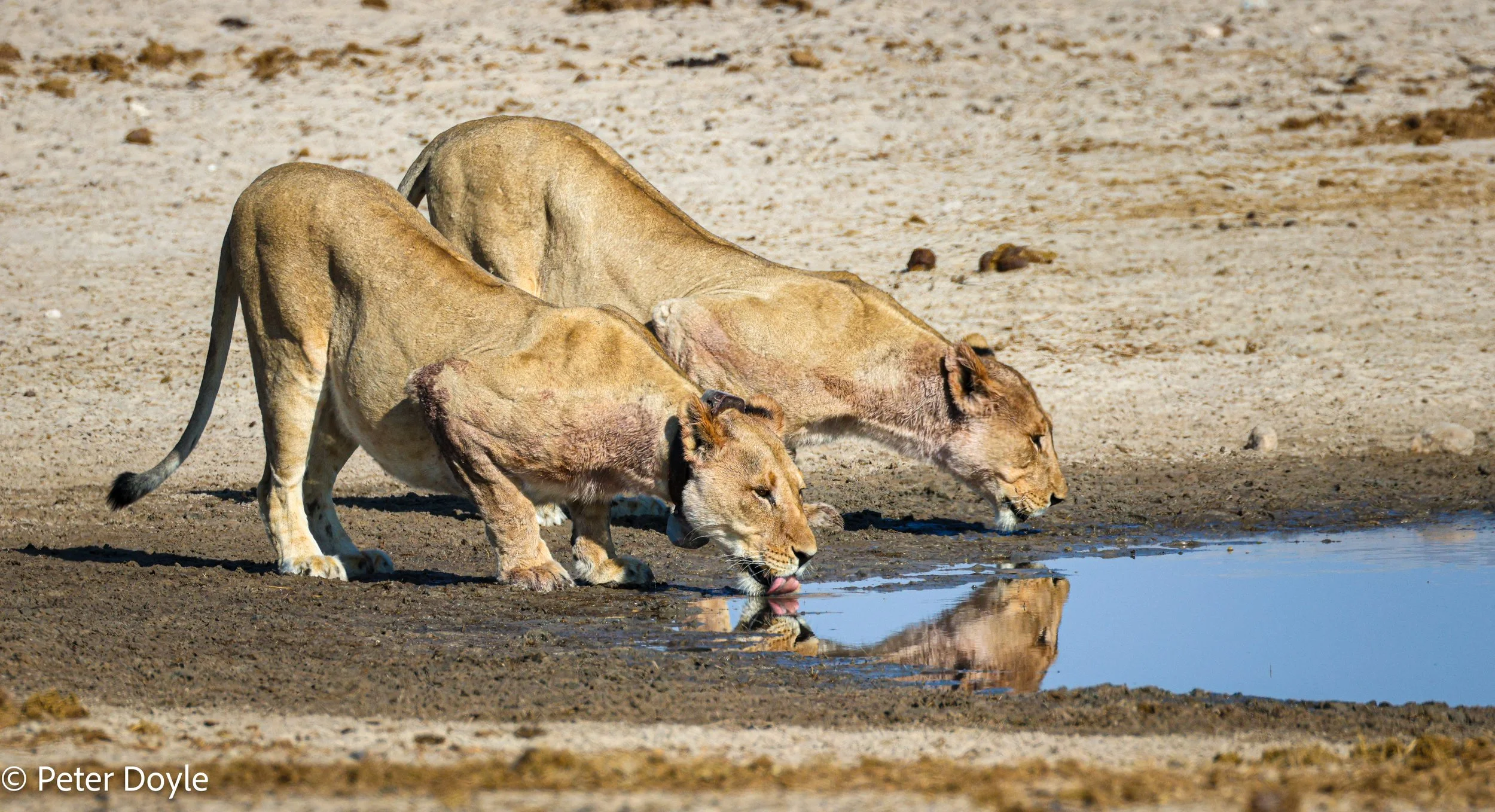
All the other game could now not drink. And the day was becoming hotter. As more animals started appearing at the waterhole, expecting, or longing for a drink of water … but for the lion! Gradually the zebra and springbok edged closer and closer to the water on the opposite side of the lion, but just a twitch of her tail would send them scattering; the zebra especially giving each other a scare with a clatter of hooves.
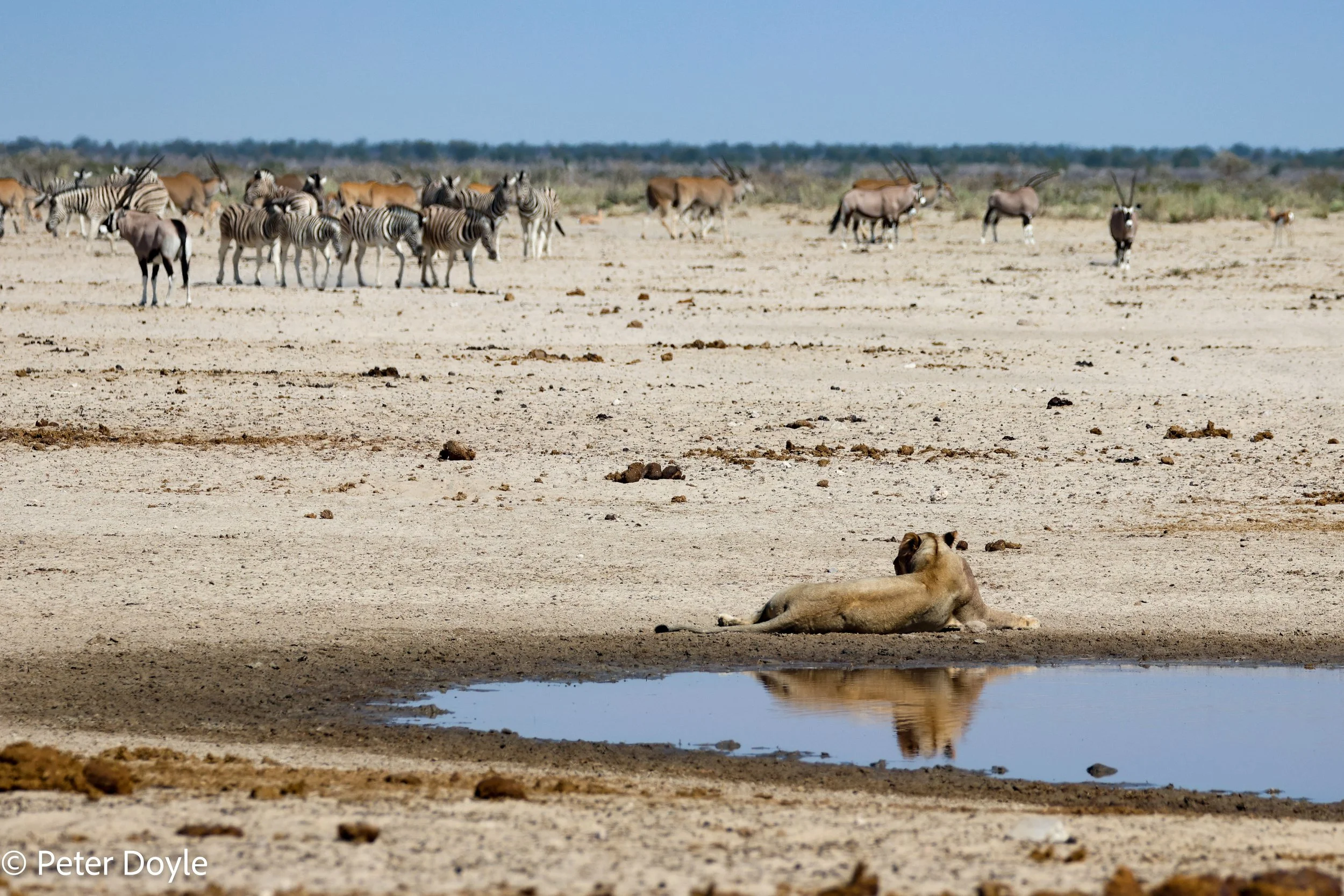
This spectacle went on for several hours. Now and then a brave group of springbok went to drink, but we think the lion had the zebra in their sights. The big eland came the closest, but they were actually charged by the lioness, just to show who was the king of the jungle. Unfortunately no elephant came that morning, because the interaction between lion and elephant is always fascinating to watch.
Later on we saw two lionesses drift off around into the bush, and we thought that they were setting up an ambush for later in the day. Lion can play the long game. But we could not stay that long, and eventually we too drifted away; but with wonderful memories and photographs.
Postscript: I did not mention the Blacksmith Lapwings. People familiar with these pans will know that the Blacksmith Lapwings are always here; making a nuisance of themselves, flying, calling at the big animals and generally trying to boss everyone around. This day there was a particularly bold pair of Lapwings doing this. It was only very late in the day, after the excitement of the lion, that it occured to me to try and better understand the behavior of this pair of Lapwing.
Then suddenly, I saw what it was all about. Right in the middle of the pan, surrounded by zebras, antelope and lion, was a Lapwing chick that they were defending all this time. I had not noticed it before, because their main defence is the art of distraction. And they were clearly successful, because neither the people (us), nor the animals, had noticed the chick.
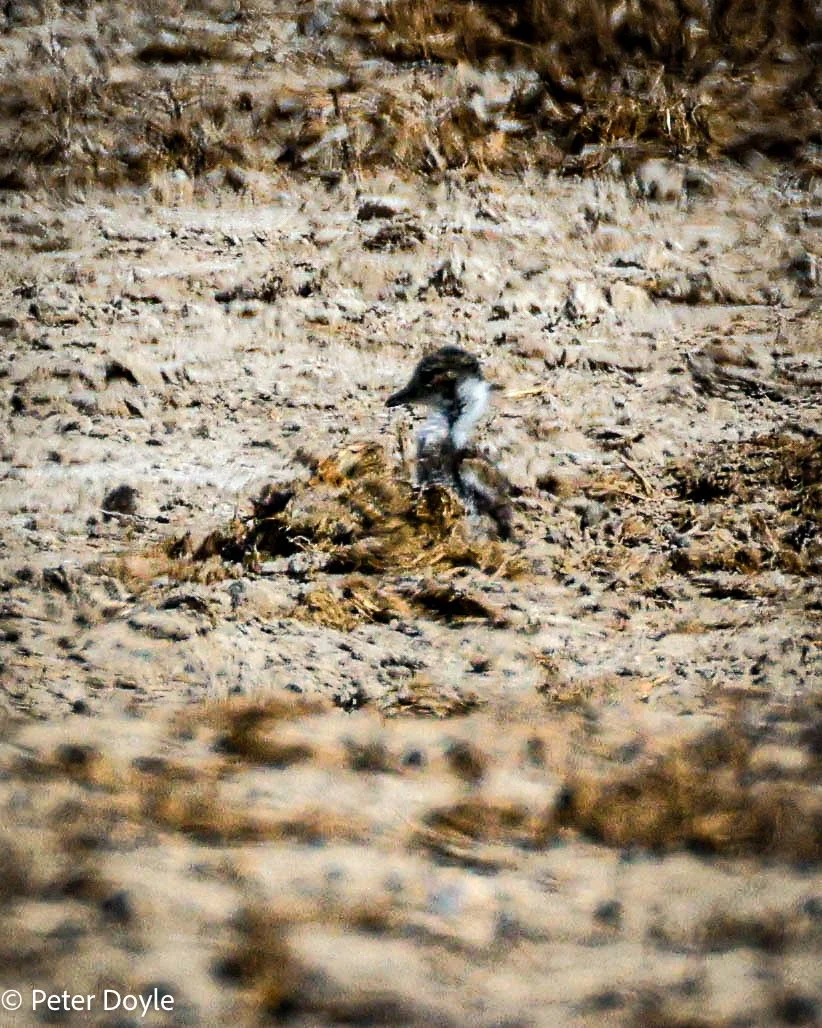
Blacksmith Lapwing
(Vanellus armatus)
This tiny Lapwing chick was being protected by its parents in the middle of this vast pan, with probably 1000’s of large mammals going around it, engaged in their own life or death struggles.
Once again, we were humbled by the beauty and complexity of creation.
So impressive!
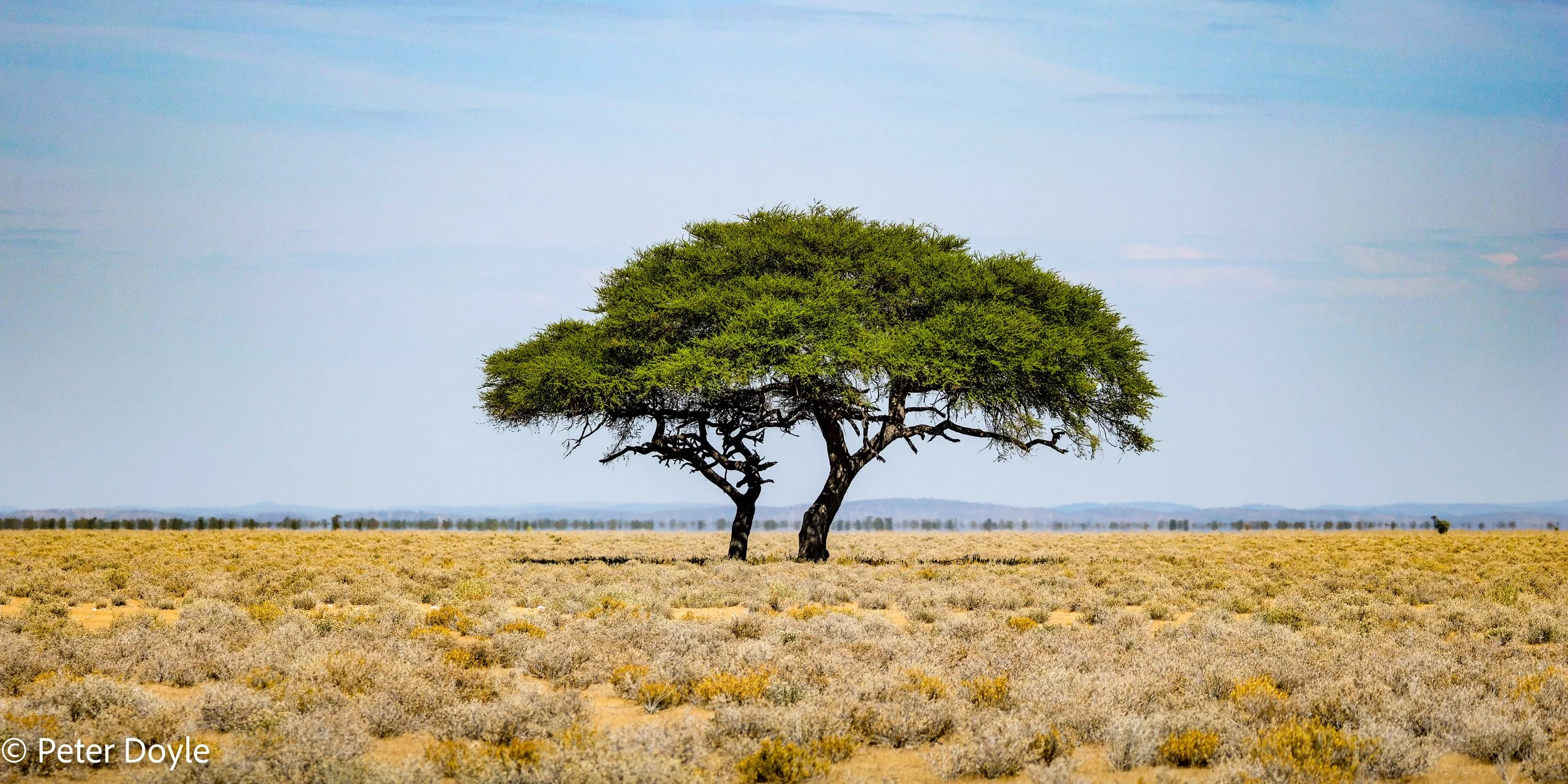
Etosha is obviously very flat, but the scenery is never boring. Although trees are sometimes few and far between, they are noticeable!
OKAUKUEJO:
We stay only a couple of days, because the camp and the roads around the camp are just too busy for us.
But there are always rewarding sightings if you get slightly off the beaten track.
The birds around camp and in the grasslands are also very prolific. Especially the Larks, Coursers, Secretarybirds, Kori Bustards and raptors.
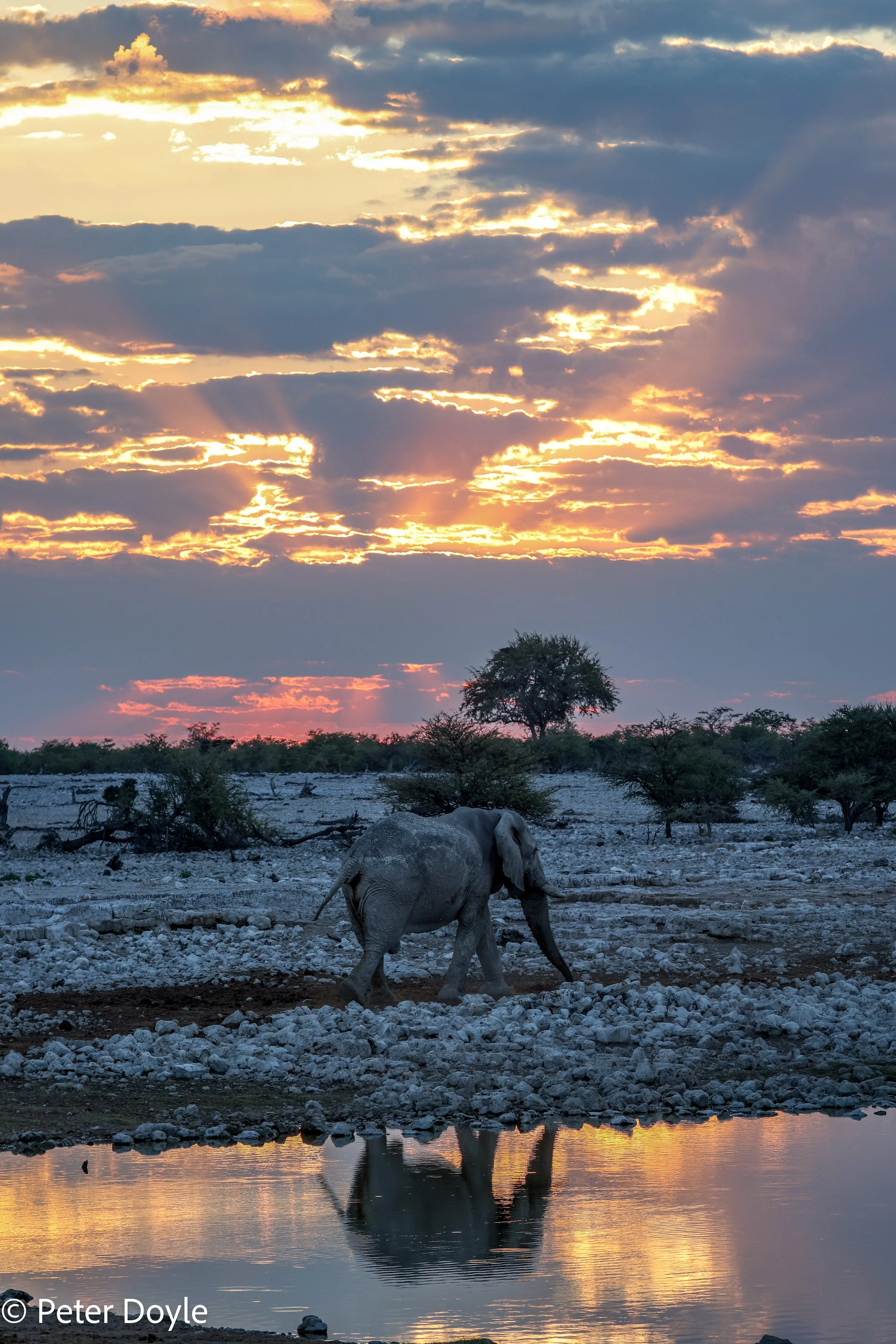
Okaukuejo also has a lovely waterhole and the big game often start to come through to drink only in the evening and at night, when it is cooler.
Halali: We were initially not going to stay here because it does not always get good reviews. That was great for us, because not so many people go there and this makes it all the more enjoyable. The campsite reminded us of some of the great camps in the north of the Kruger NP, like Shingwedze or Panda Maria. Wide open spaces, lovely shade trees, very adequate ablution blocks.
The camp waterhole is probably the best in Etosha and the game and the bird sightings we had there were second to none. You hardly need to leave camp, day or night (it is floodlit at night).
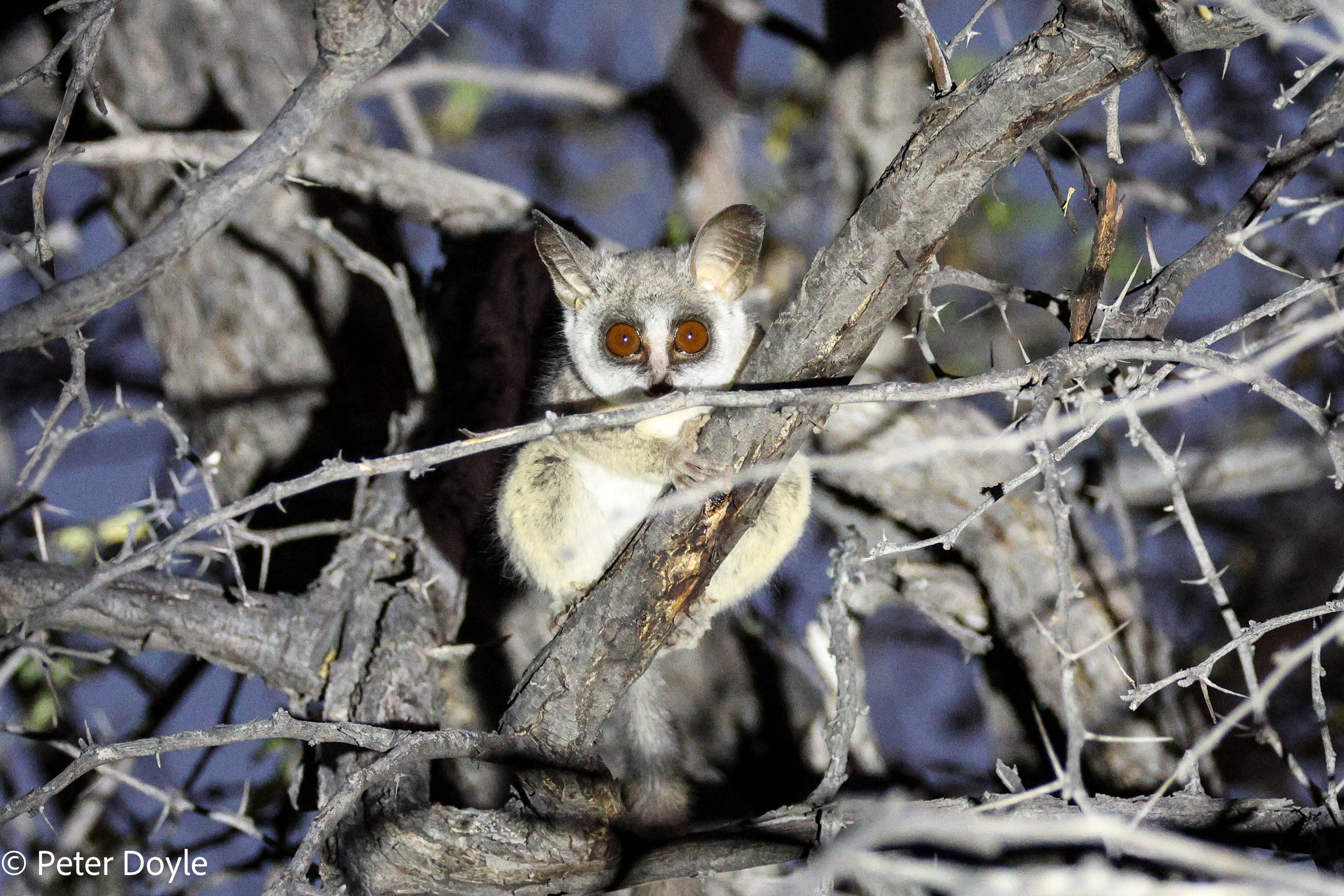
In the tree is a Southern Lesser Galago (Bushbaby or Nagaapie)
Driving between camps is always rewarding for the birders. Here are some birds that we saw along the way:
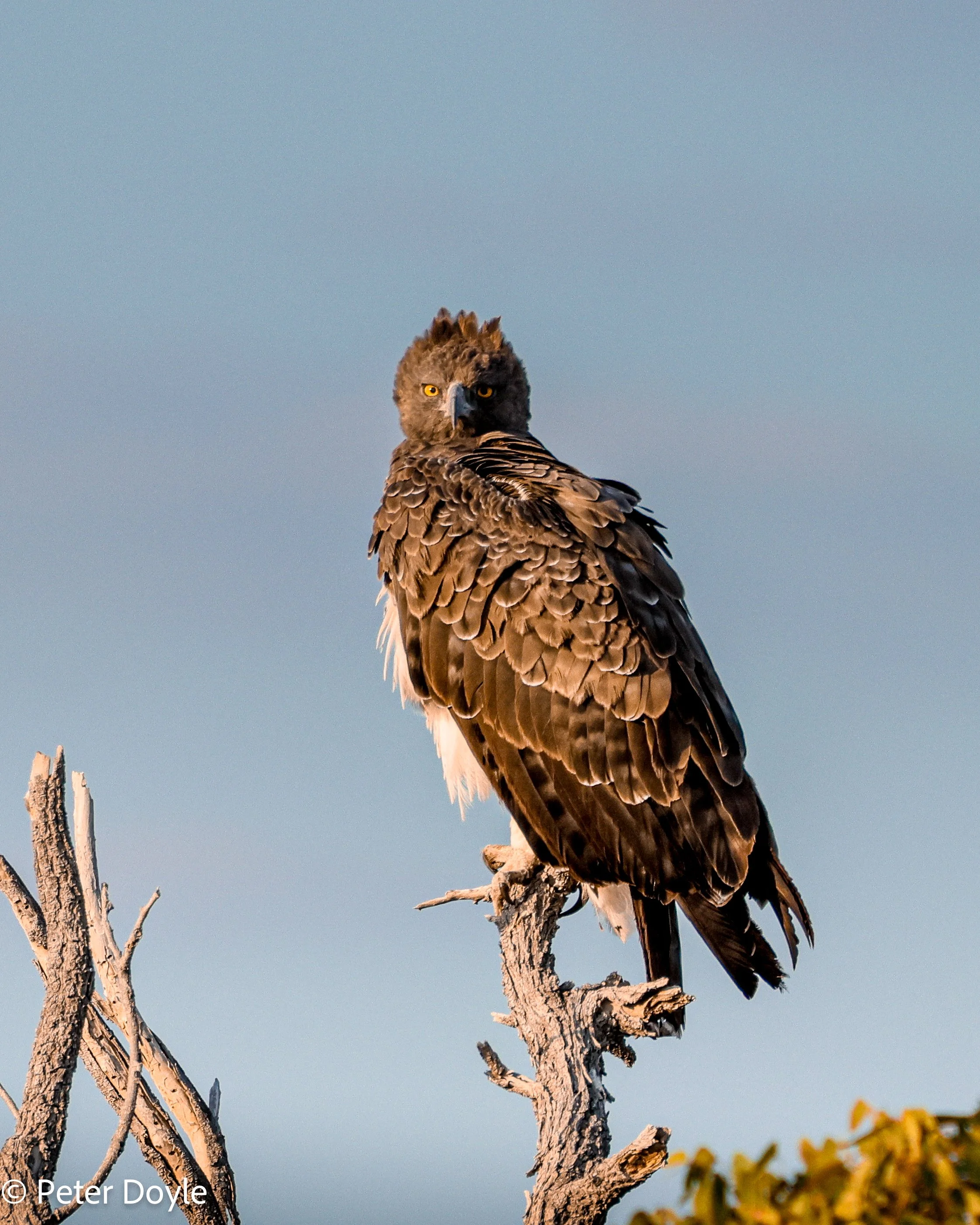
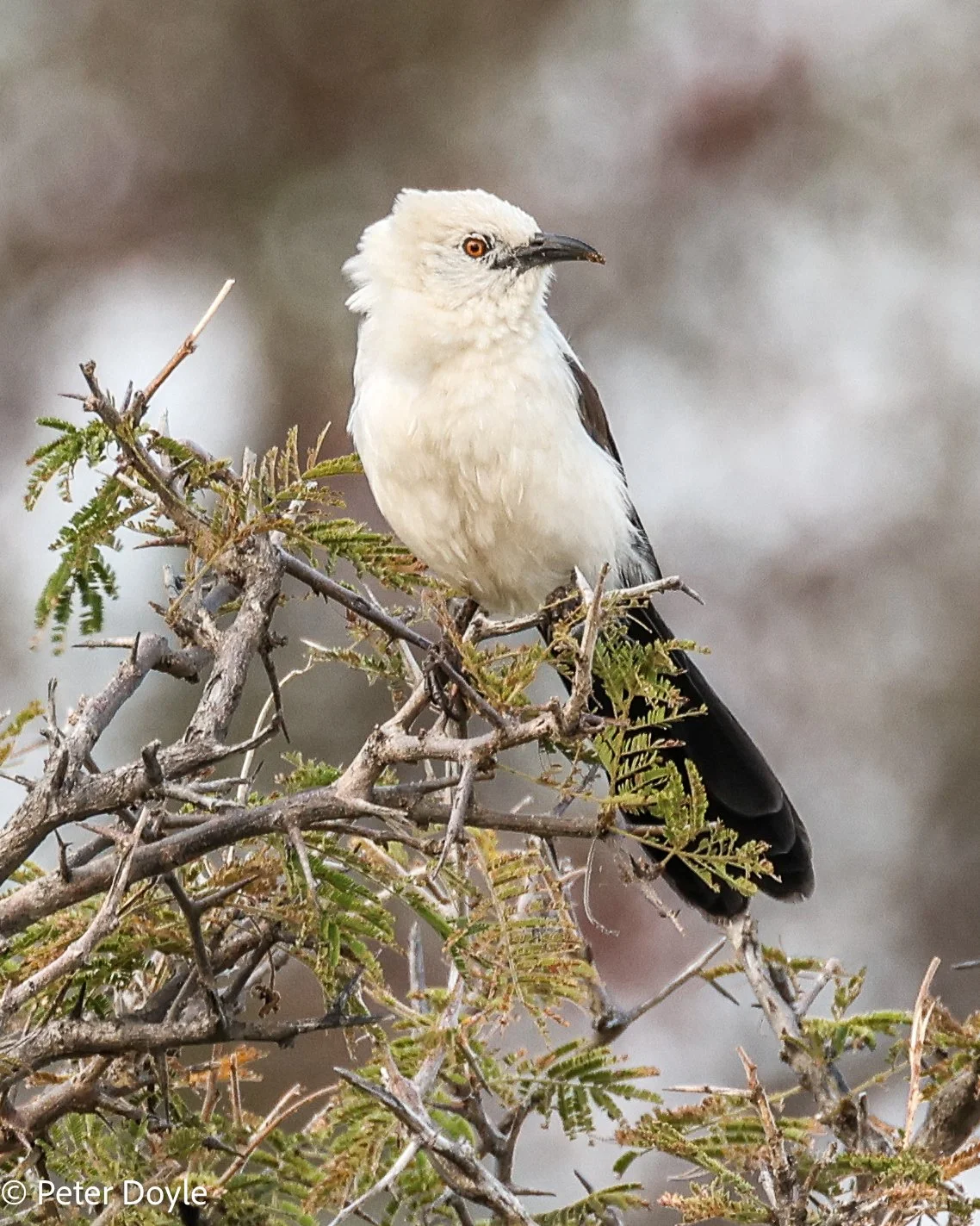
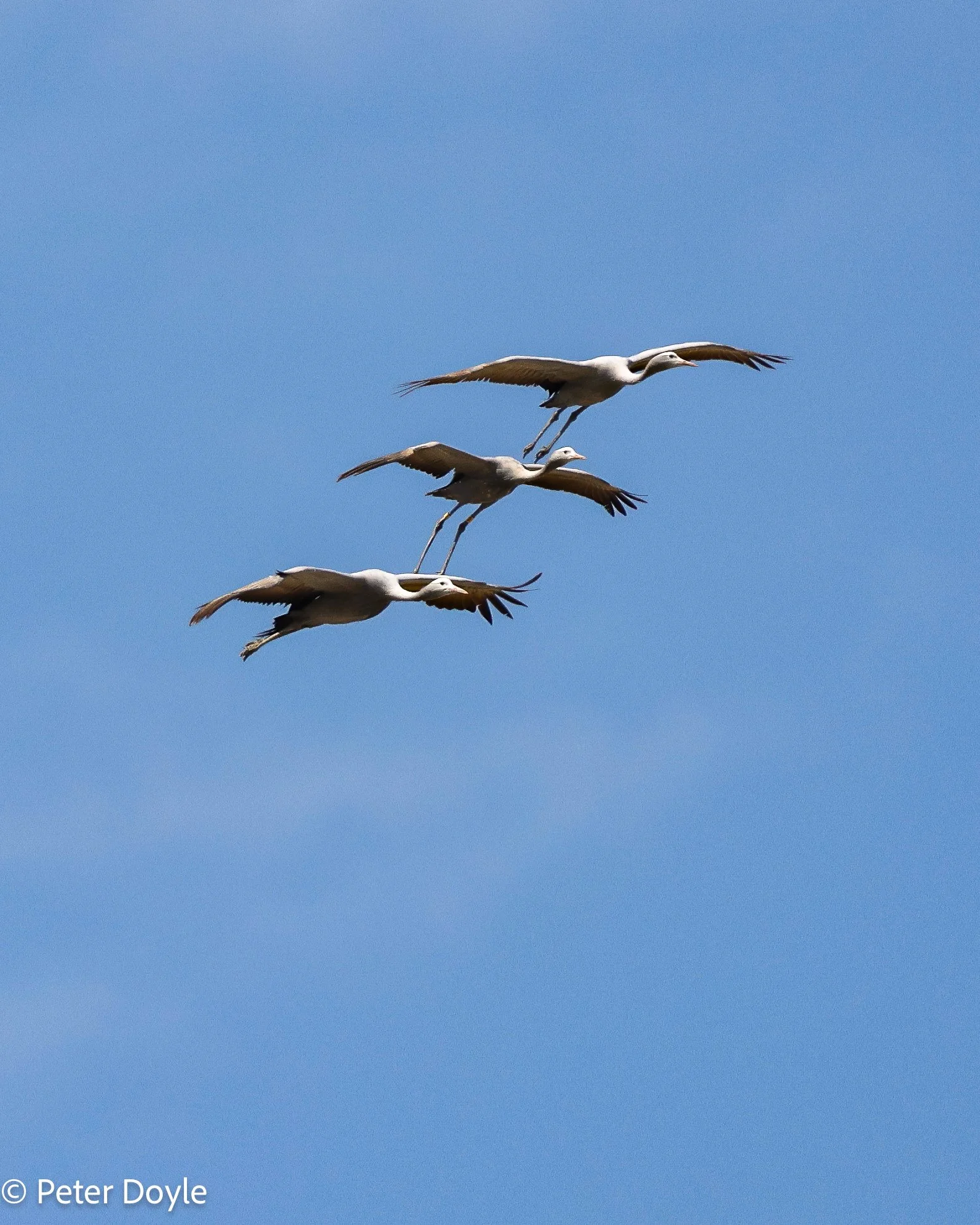
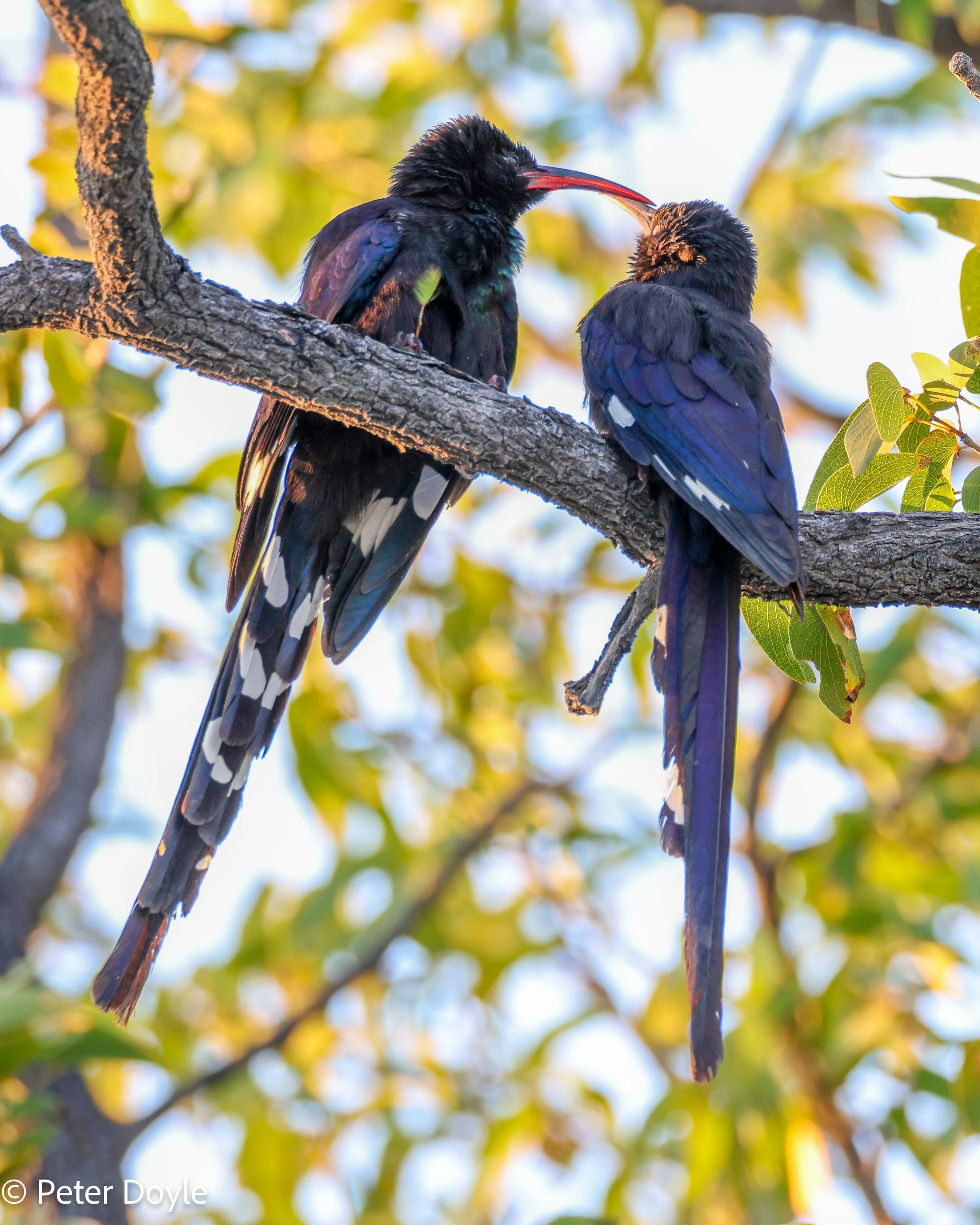
Clockwise from top left: Martial Eagle (Polemaetus bellicosus) Southern Pied Babbler (Turdoides bicolor) Violet Wood Hoopoe (Phoeniculus damarensis). Blue Crane (Grus paradisea)
THE LEOPARD
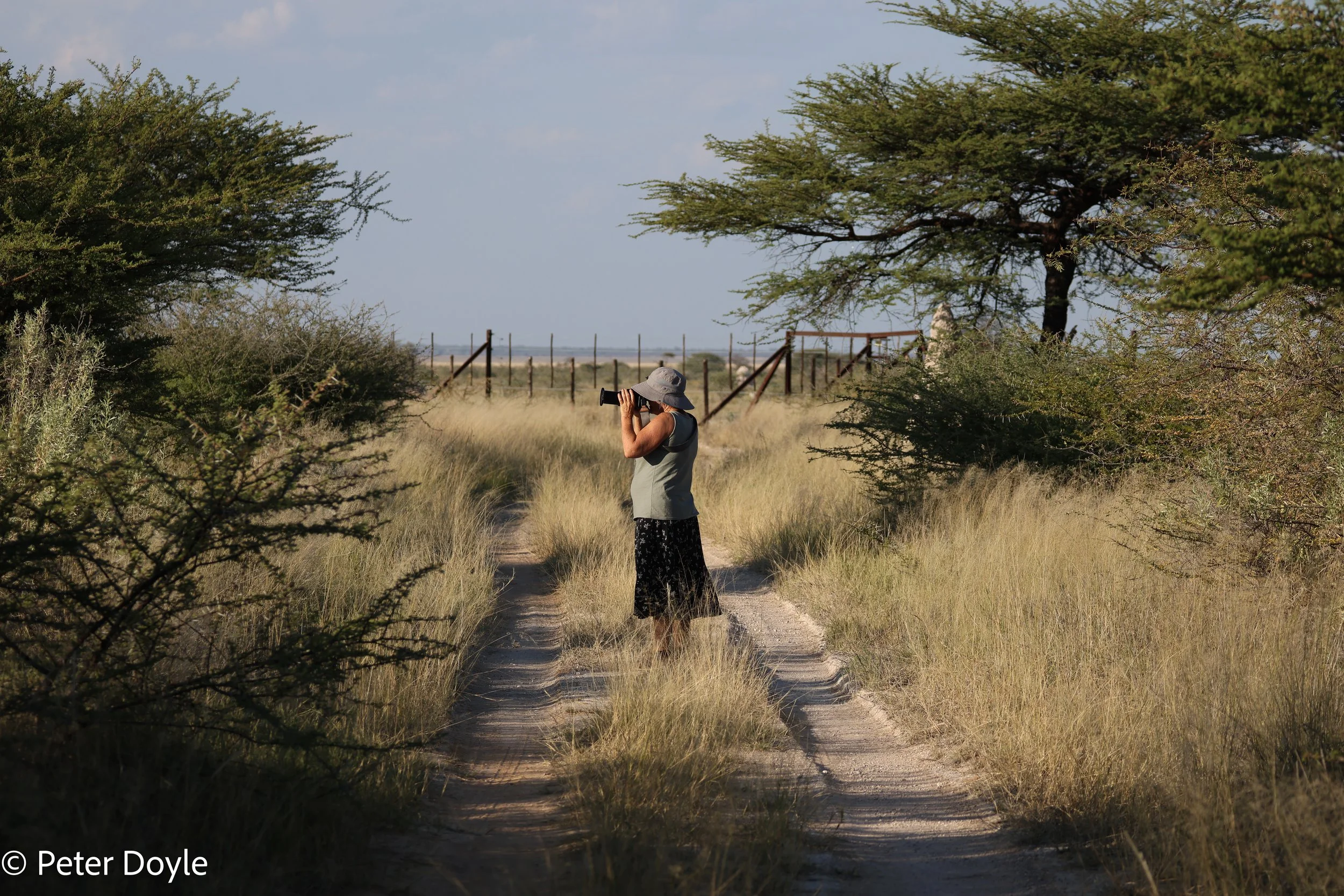
Walking around the koppie inside the Halali camp fence, as you can see in the photo below. This is the only photo we have of this leopard story!
We were searching for a flock of Hartlaub’s Spurfowl(Pternistis hartlaubi), one of the only Namibian endemics we had not photographed yet. We had heard them and I had just flushed them in this thick grass. As they flew up, Elle thought she saw a cat run off, but she thought it was a lynx and we did not pay it further attention, still focused on the birds.
We followed the Spurfowl all the way up the koppie. It is a highly vocal bird, always found among hills and rocks, so we were confident of our identification. The grass remained too high and thick to see them. For about 30 minutes we walked slowly up the track to the reservoir on top of the koppie, where we thought they were going to drink.
Instead, as we got to the top, a large male leopard walked out onto the path, just 3 meters in front of us. It never made eye contact, but I watched in amazement as its muscles rippled beneath its beautiful black and gold coat. My camera was useless in my hands (I turned it off instead of pressing the shutter button).
Neither Elle nor I felt any fear … we should have (!) … but instead we just felt over-awed by this experience. The leopard had certainly known about us all along.
We have still not photographed the Spurfowl!
NAMUTONI:
This was another one of our favourite campsites. Big trees, grassy stands, our first grass since Swakopmund, friendly on-site camp manager and for us, excellent game and bird viewing in the general area. The waterhole at camp is badly positioned and a disappointment compared to the other camps.
But we enjoyed the drive up to the Adoni plains and waterhole.
Our highlight in the north of Etosha was a waterhole overrun with herds of elephant. They were all dry and dusty when they arrived. This was obviously the only water for miles around, because all the elephant ran in to drink as they arrived.
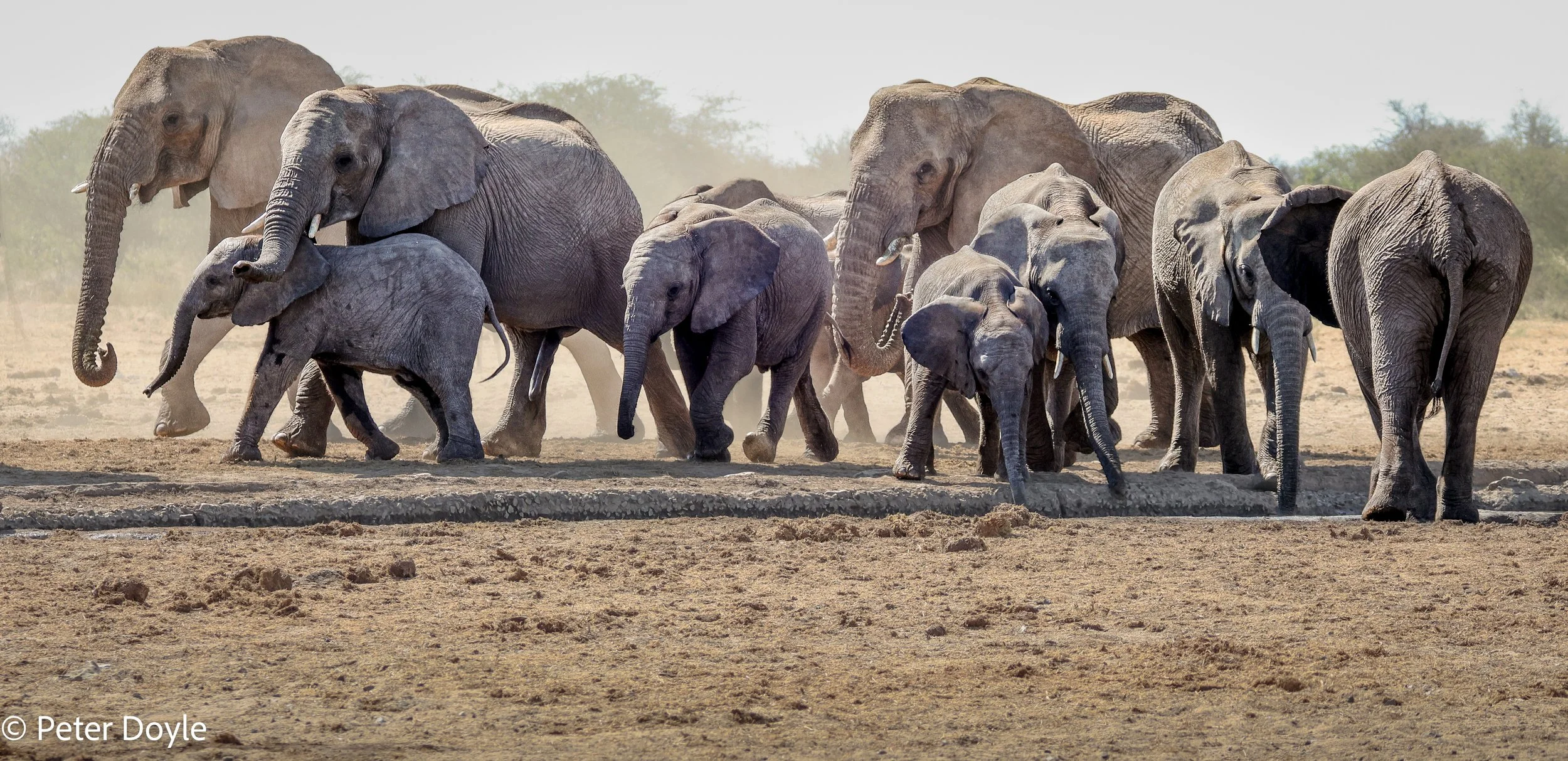
A fitting end to our visit to the Etosha National Park.
