Forests & Woodlands & Farmlands
For the next week we drove down south, all along the Western (Albertine) Rift. Most days we were in sight of the hills of the DRC on the other side of Lake Albert and, later, the Rwenzori Mountain peaks appeared out of the haze in the valley.
We went birding in many of the protected forests on the way, including Budungo, Kibale and Semuliki; and finally all the way to Queen Elizabeth National Park.
Along the way we often stopped to do “roadside birding”. Sometimes this would be among the woodland trees just on the side of the road, at other times we would go down farm tracks and into the open grasslands, or to nearby wetlands.
The land & mountains are intensively farmed and without the protected forest reserves, there would be a severe loss of habitat for plants, birds and wildlife.
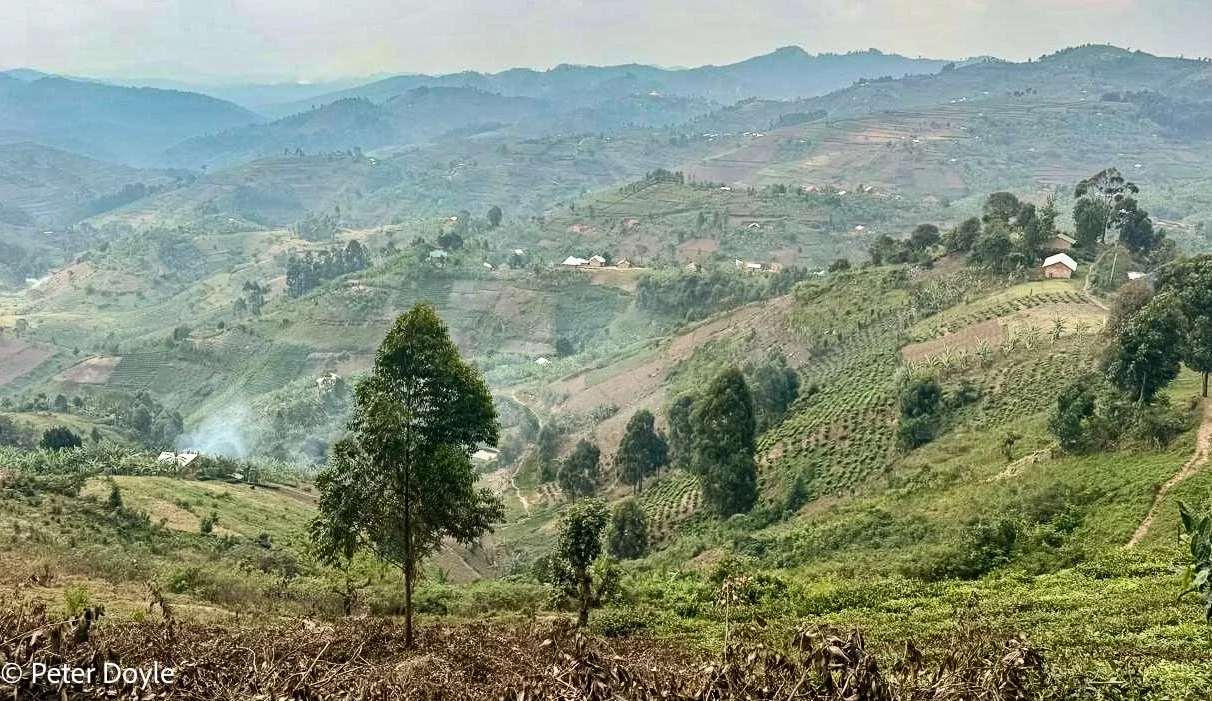
De-forestation happens right up to the margins of the reserves.
The Ugandan Wildlife Authority, however, seem to be doing a good job of protecting the forests and reserves and involving the local communities in the process.
All the Ugandans we met were proud of their country and their natural resources.
Street life
The road itself was always interesting too. All manner of transport and traffic, especially the motorbikes (“boda-bodas”), that seemingly could transport anything: people, families, beds, bananas, pineapples, potatoes, steel frames, chickens, pigs, goats, sorghum, maize, drinks, roofs, carpets, boxes, wood and poles were just some of the things we saw on the “boda-bodas” and bicycles.
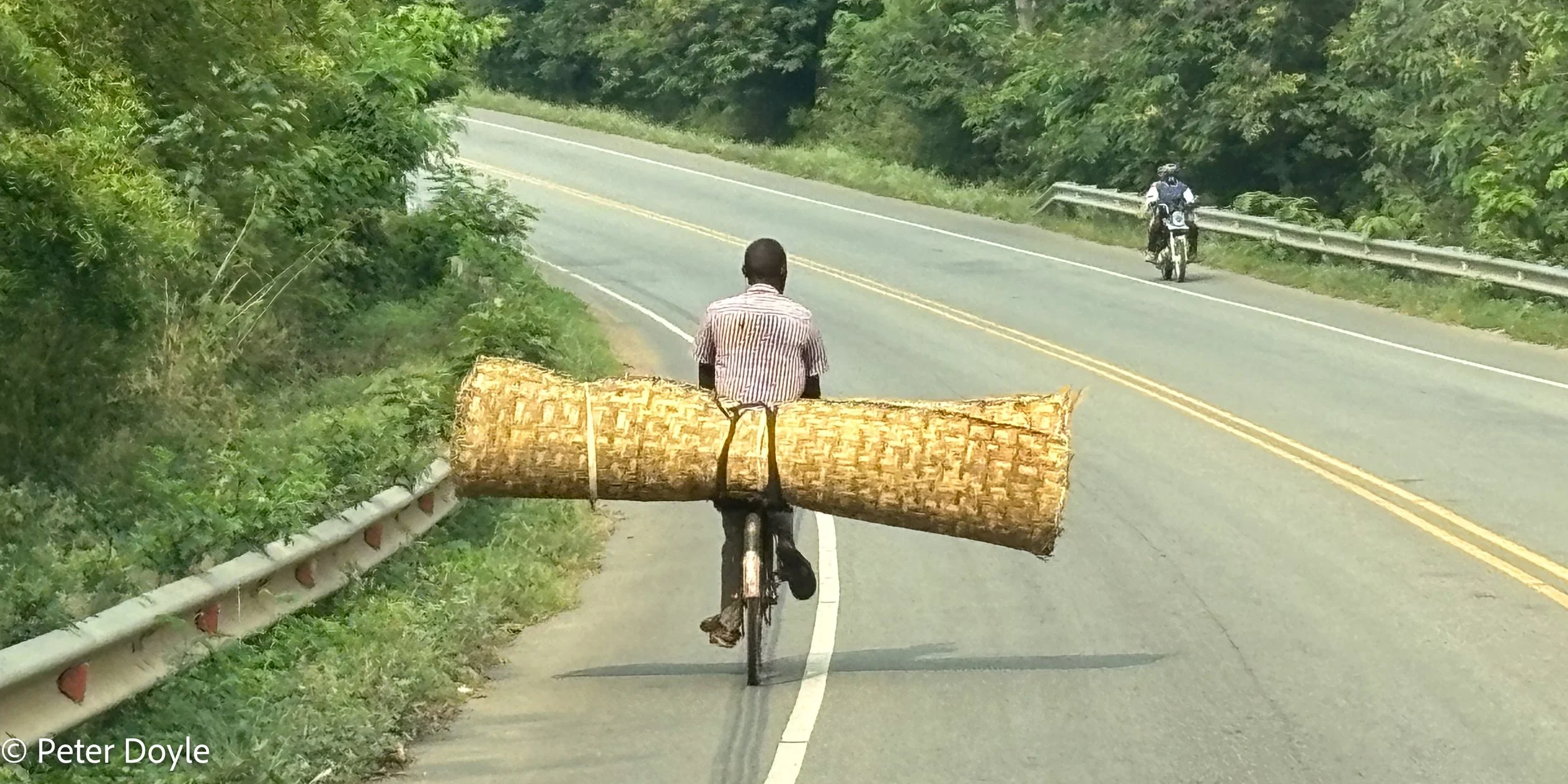
In many places, it felt like we were driving through a continuous village, with people and vehicles and businesses thriving on both sides of the road for many kilometers. There was so much to see in Uganda that was fascinating for the first-time visitor, that the long road trips between birding locations held their own fascination.
This including crossing the Equator.
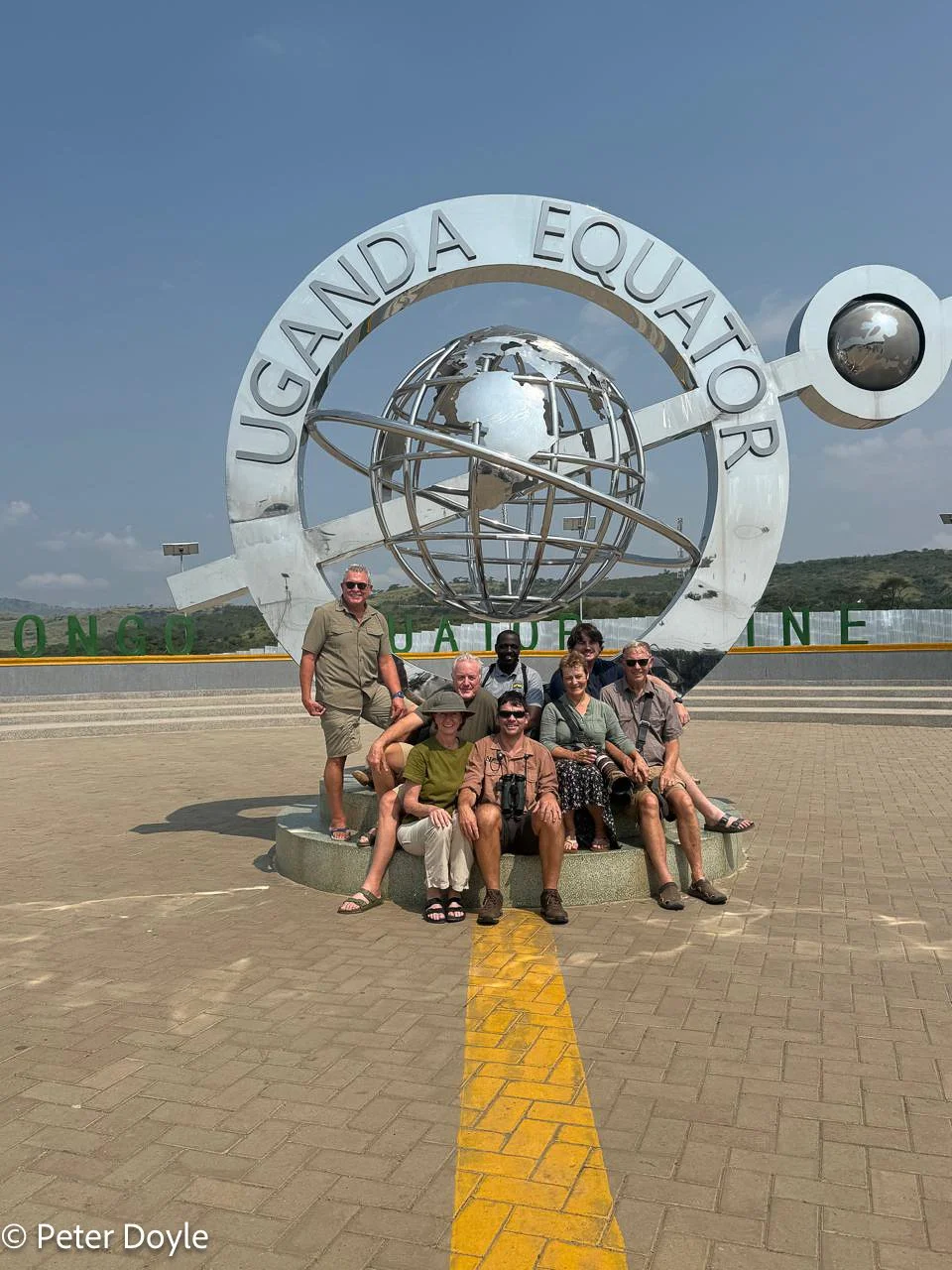
On the Equator.
Two different types of Elephant in Uganda
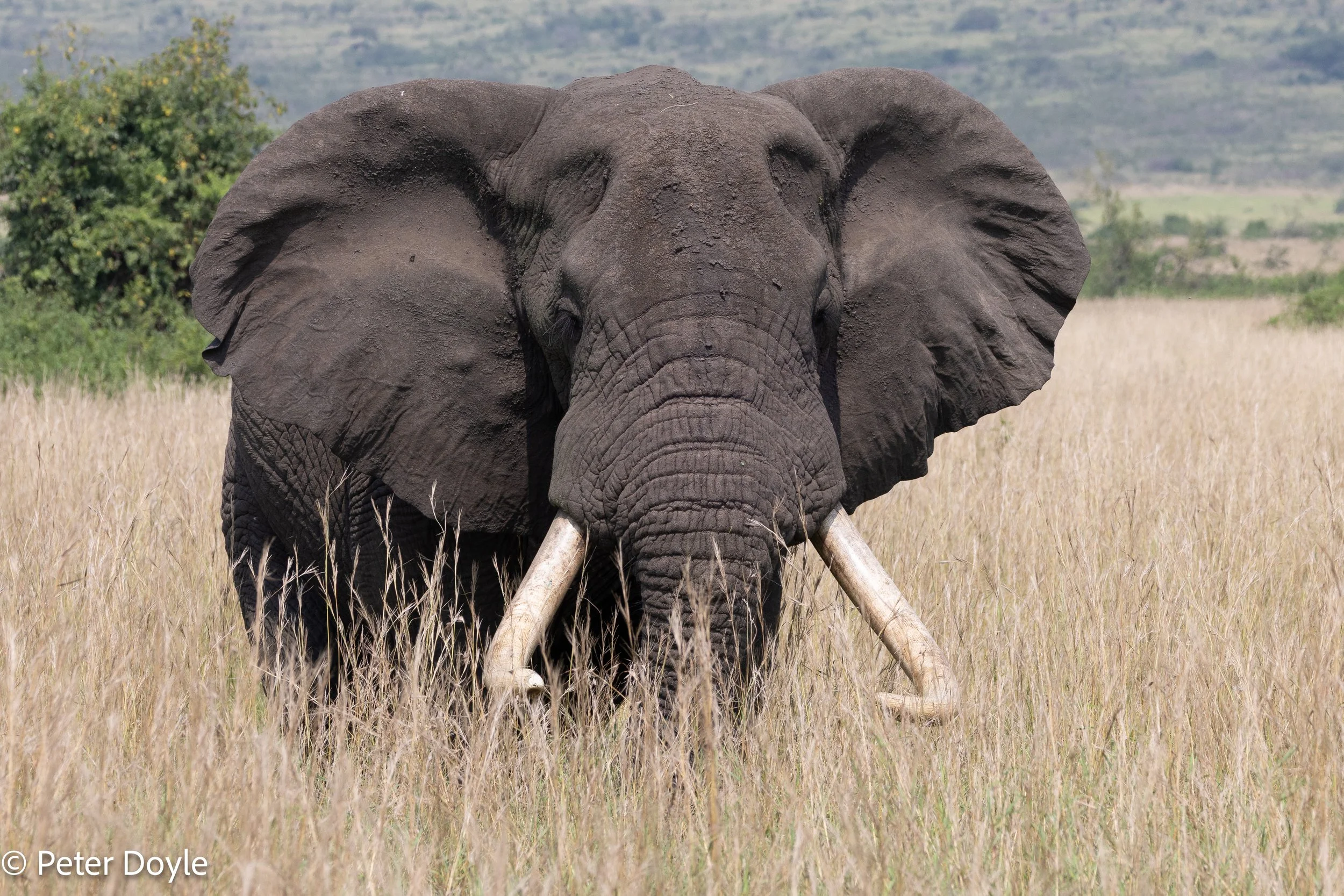
African savanna elephant (Loxodonta africana)
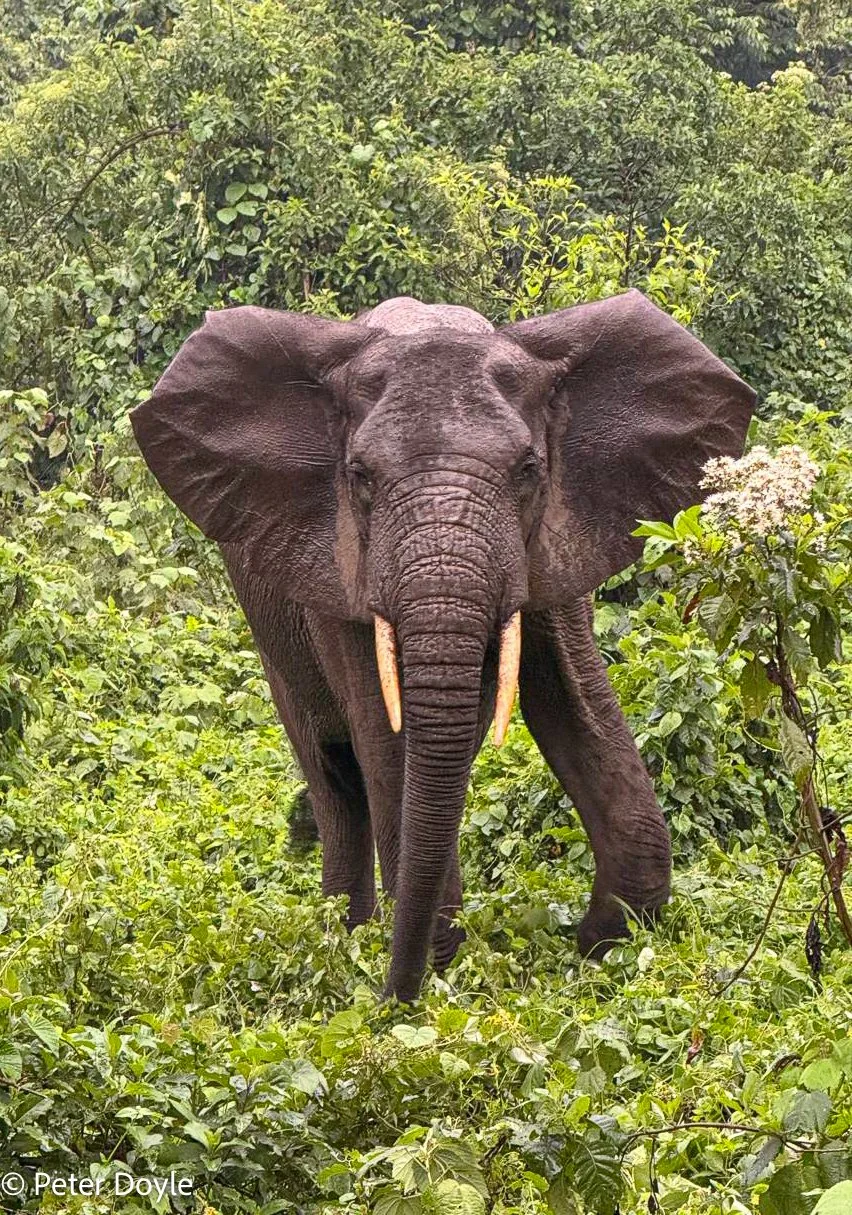
African Forest Elephant
(Loxodonta cyclotis)
They are smaller, more elusive and more unpredictable that the Savannah Elephant. On a few occasions in the forests we had an armed guard nearby to protect us from them, but forturnately we never came across one on foot.
Birding in the forests, woodlands and grasslands
However interesting Uganda was to us, we had come to see the birds! We saw many bird species every day, and many new lifers for us.
What follows is a gallery of just some of the birds we saw and photographed in the Albertine Rift forests, woodlands, farmlands and grasslands.
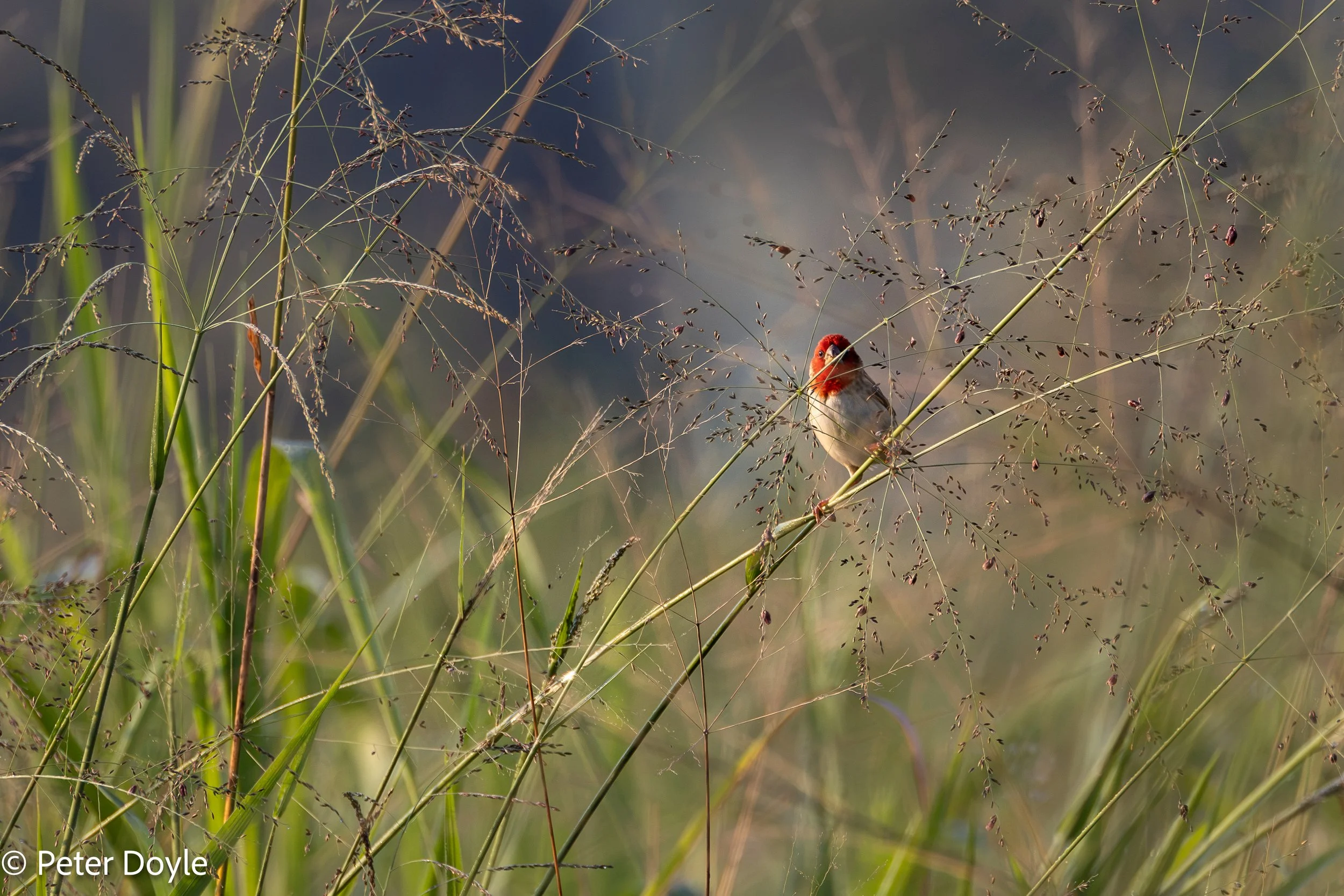
Red-headed Quelea Quelea erythrops
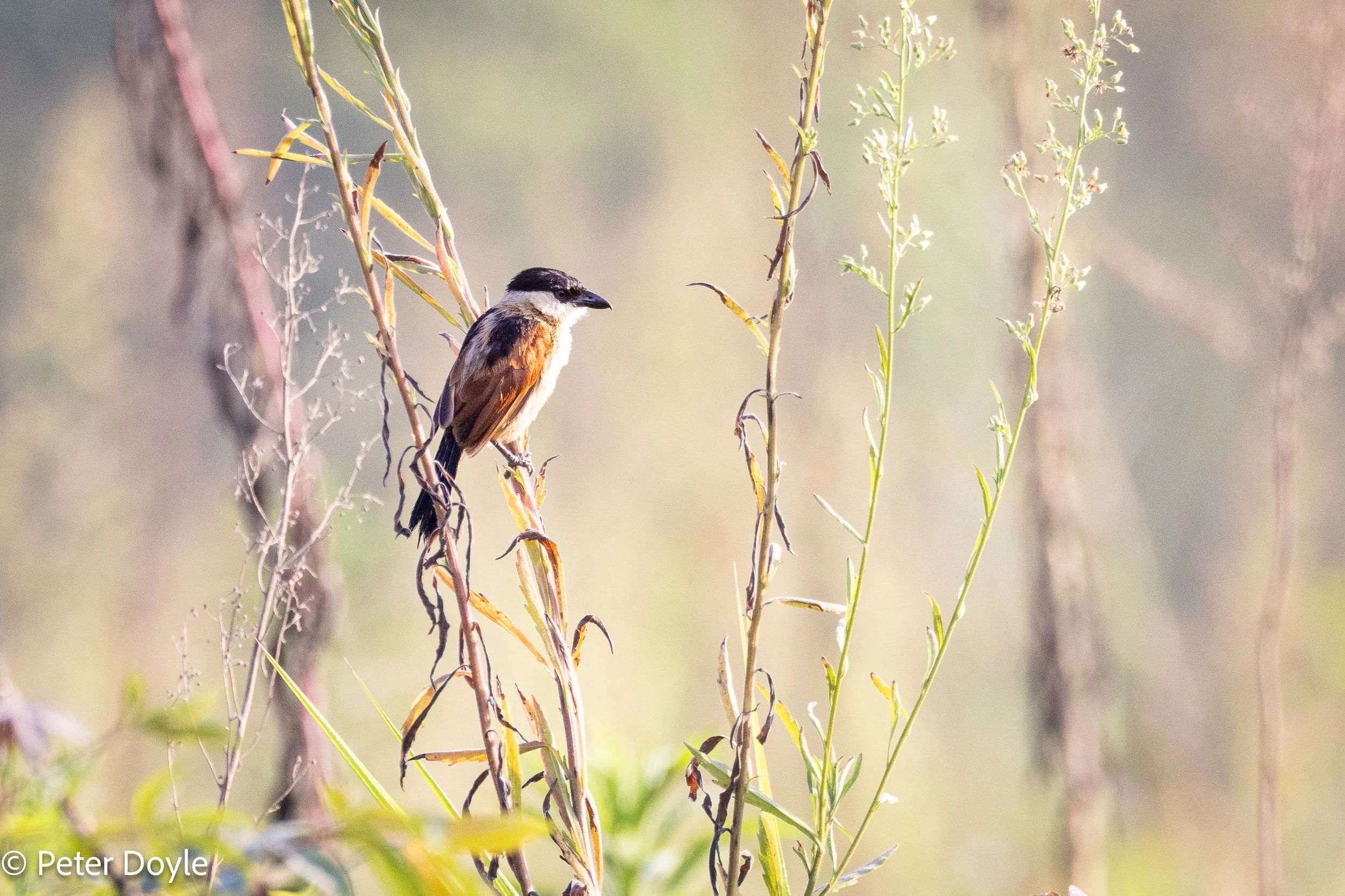
Marsh Tchagra Bocagia minuta
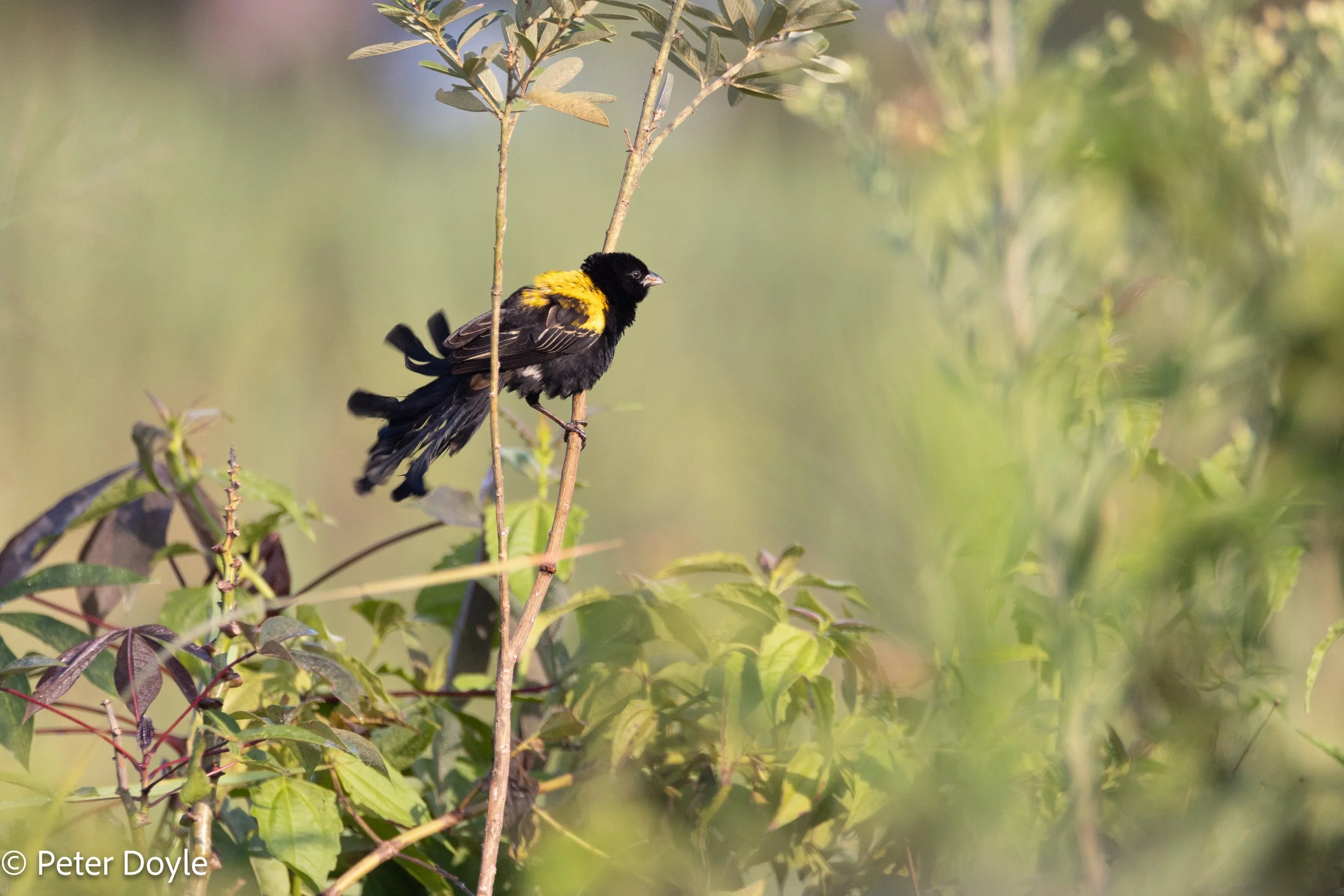
Yellow-mantled Widowbird Euplectes macroura
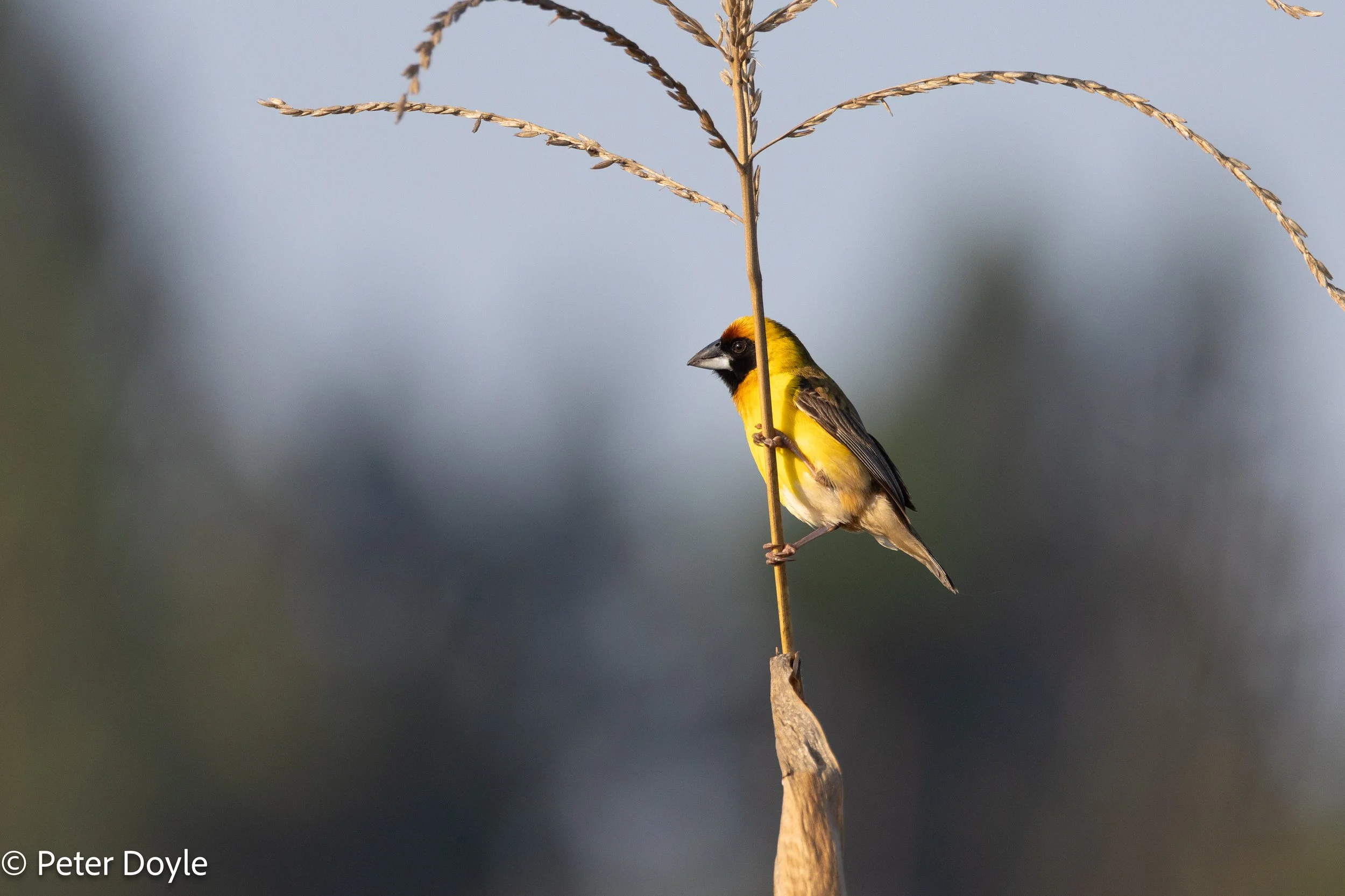
Compact Weaver (Male) Ploceus superfilliosus
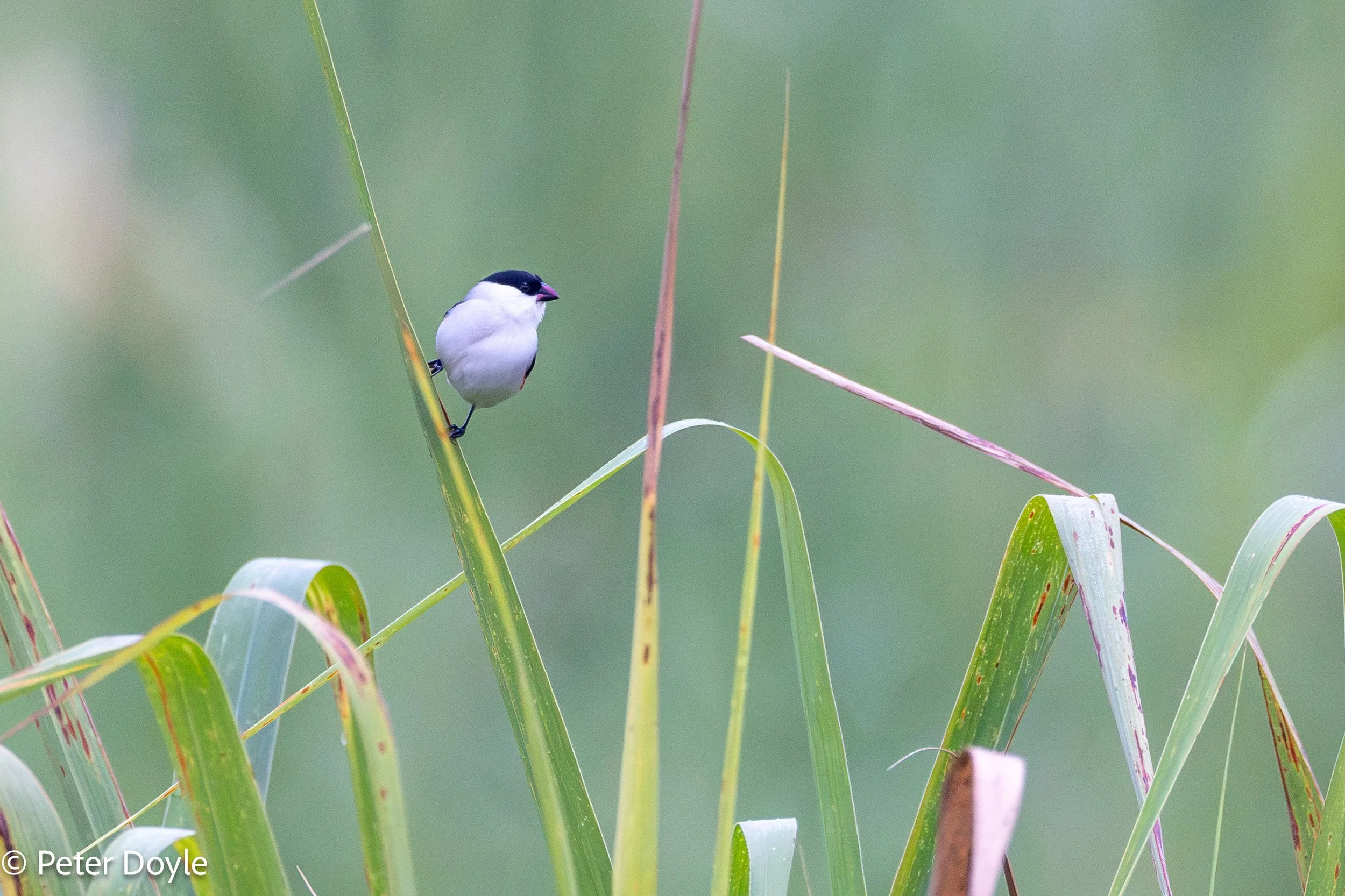
Black-crowned Waxbill Estrilda nonnula
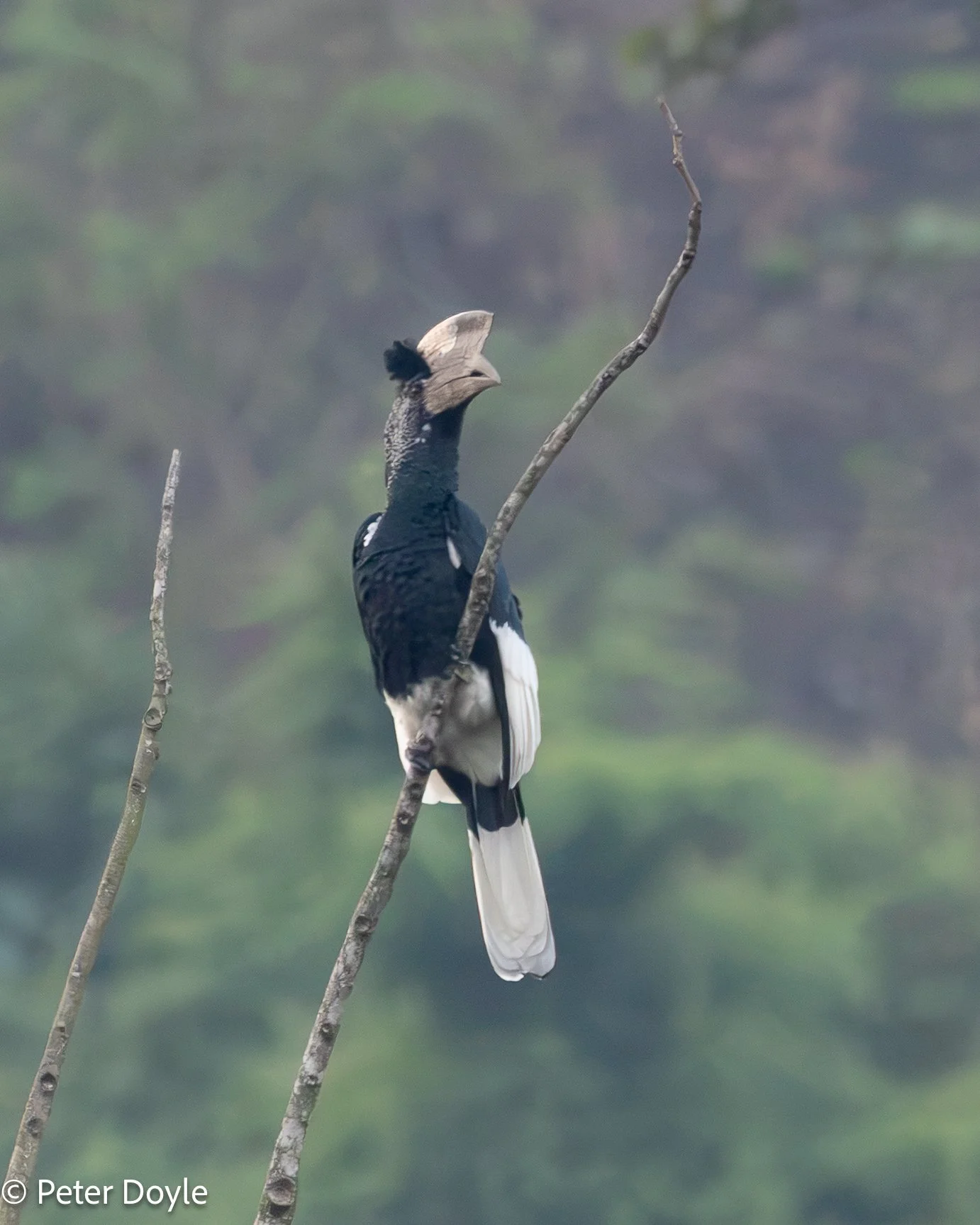
Black-and-White Casqued Hornbill Bycanistes subcylindricus
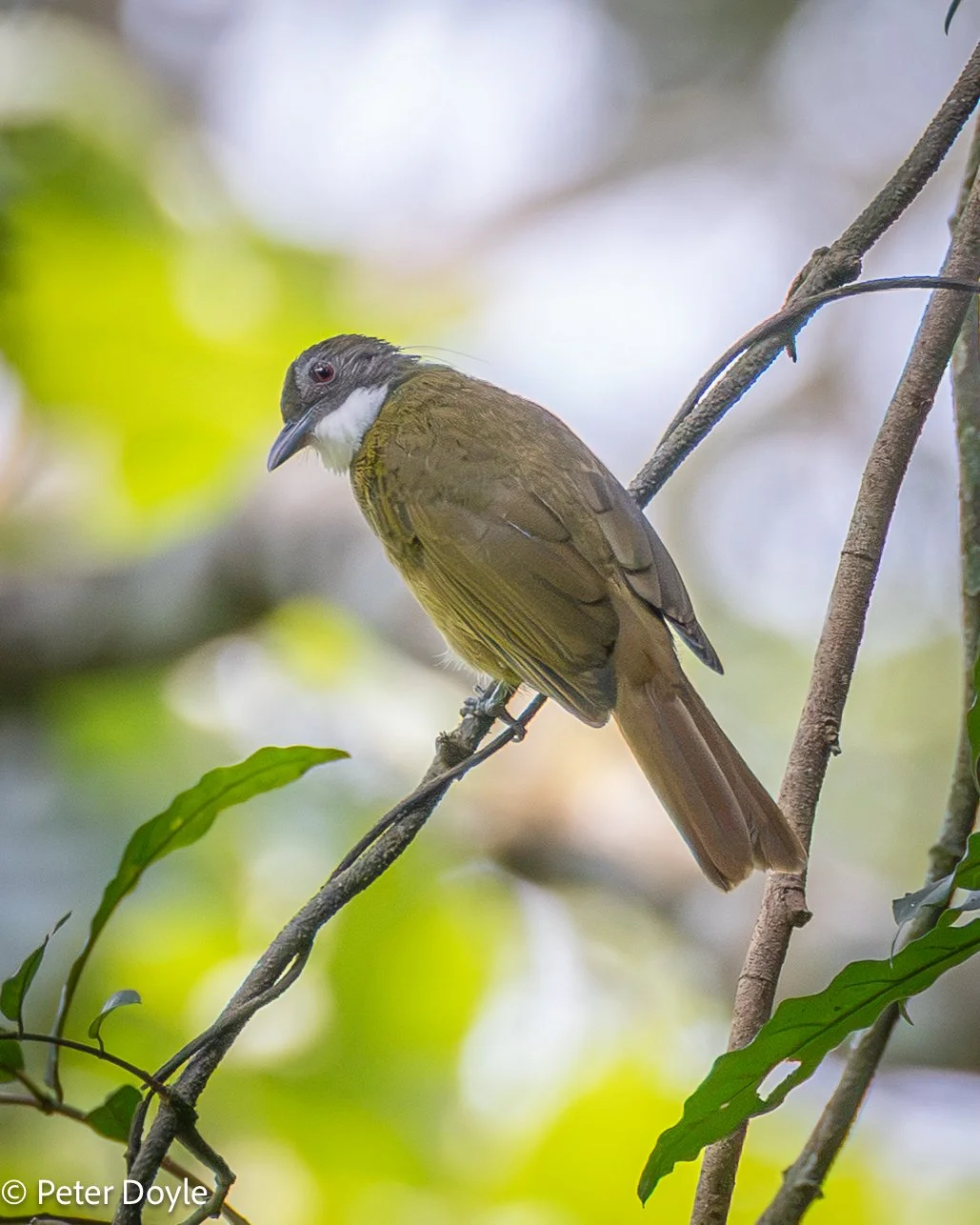
Red-tailed Greenbul Criniger calurus
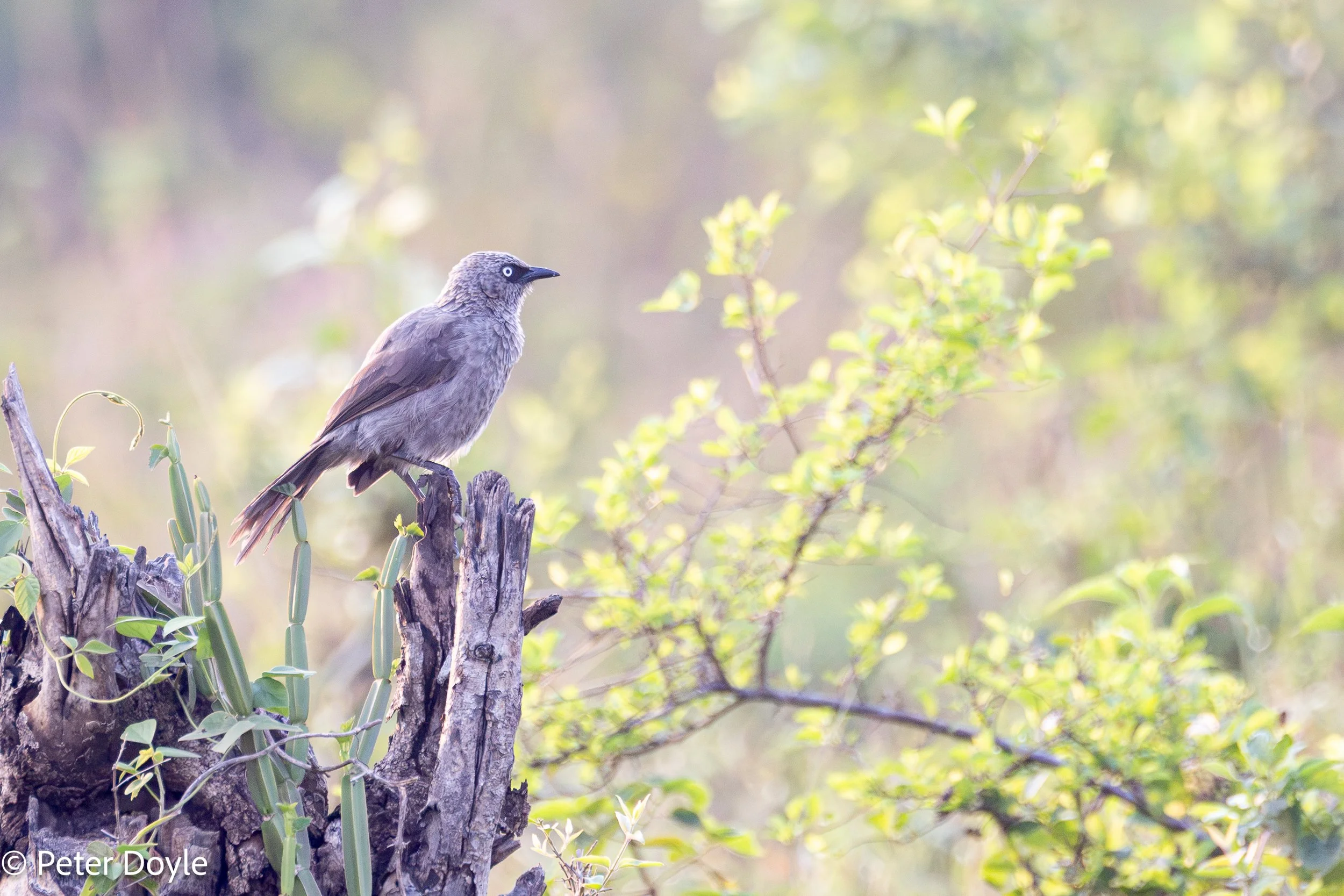
Black-lored Babbler Turdoides sharpei
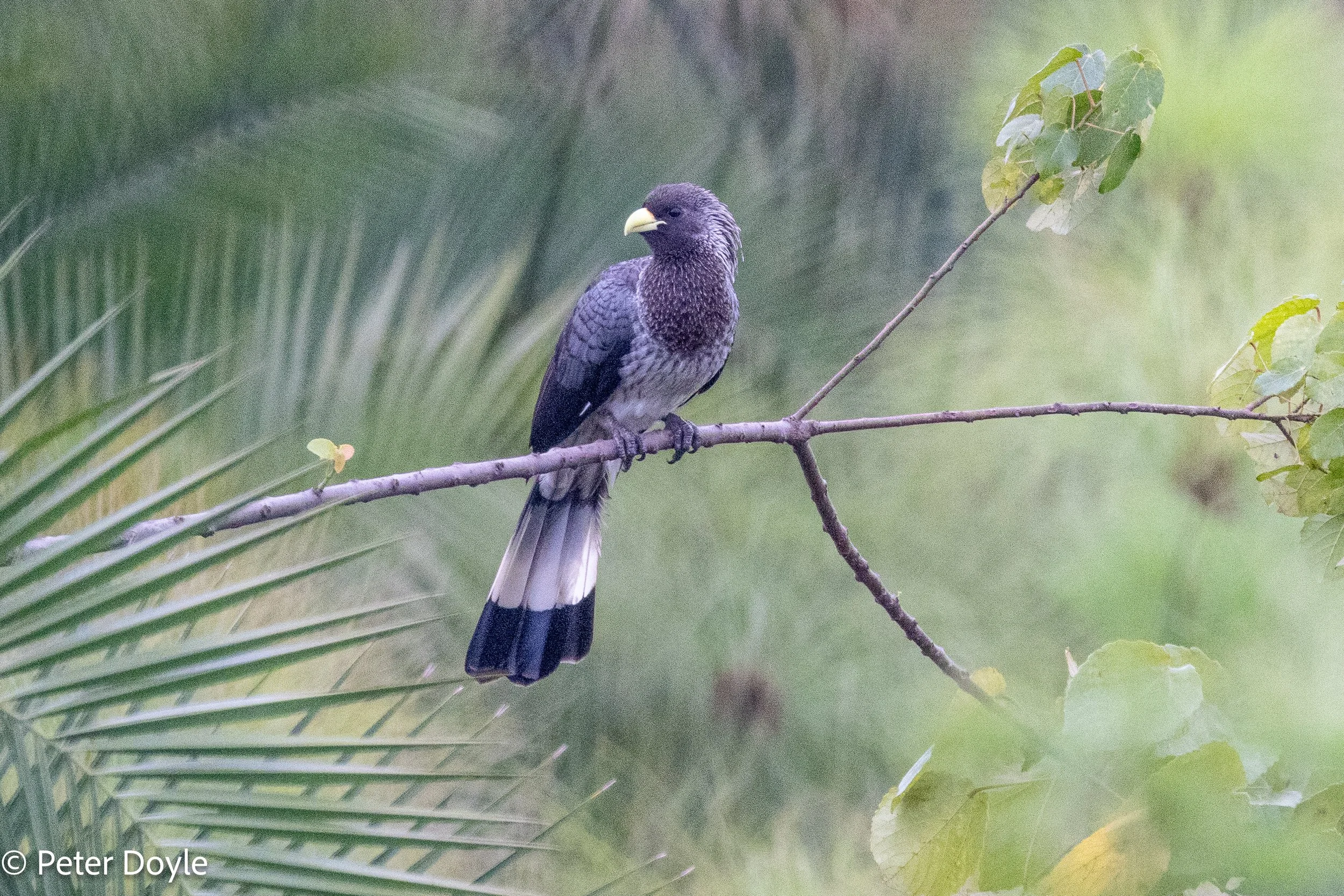
Eastern Plantain-eater Crinifer zonurus
Forest Birding
A word about forest birding … it is difficult!
The forests are dense and the canopy is high.
The light is dappled or non-existent.
The birds are shy and easily scared off.
The bird calls are new and complex.
Legs are tired from walking long distances.
Necks and backs ache from holding a big camera and a long lens, for minutes at a time, pointing pointlessly up into the sky.
Camera settings change as the birds move and the light changes.
Focus is near impossible with leaves and branches in the way and with a skittish bird.
Eyes strain, only to get distracted by the tiniest movement … a leaf falling, a drop of rainwater, a butterfly, a bird!
And then … a glimpse of a new bird, never seen before.
A chance to photograph!
Aah, it was all worth it!
A Partridge in a forest bush
One new bird was Nahan’s Partridge.
A really rare forest bird, only found in dense primary forests below 1400m in Uganda and the DRC.
We saw a small family of these Partridges in Budongo Forest Reserve. Marc heard them coming down through the undergrowth, and we found an open clearing they had to cross. We crouched down and held our breath, for what seemed like minutes.
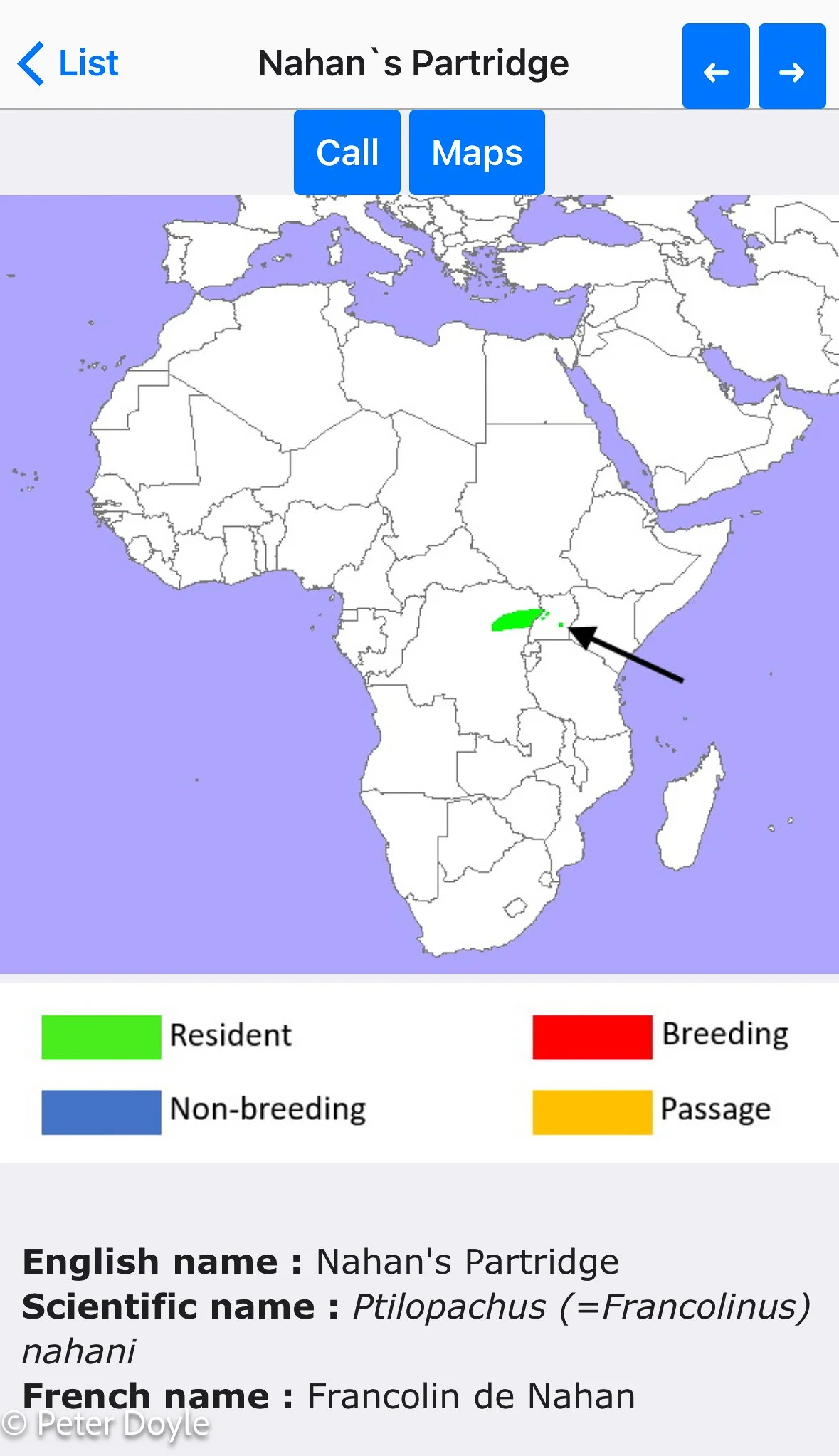
Global distribution and scientific name of Nahan’s Partridge.
Source: Birds of Africa
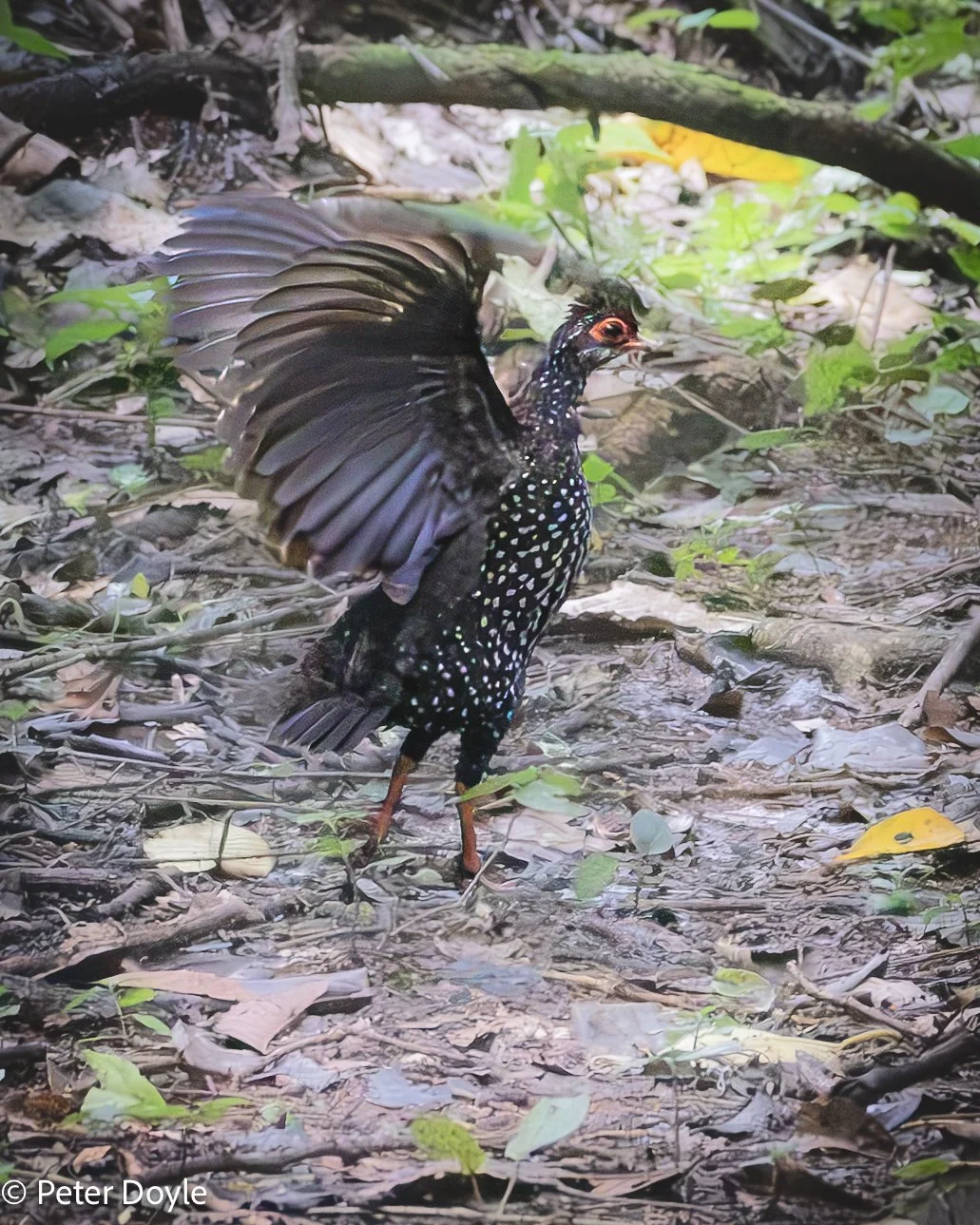
Nahan’s Partridge Ptilopachus nahani
A note for the photographers. This image was taken in a very dark forest. Settings: 1/320 sec f/7.1 ISO 25600 Lens 200mm. The RAW file is so noisy you can hardly see the bird. Thank goodness for Lightroom Denoise and masking. Lightened the background to increase contrast.
But we were not done with Ugandan forests just yet …
While in the forests of the Kibale National Park, we had the unique experience, early one morning of watching a Green-breasted Pitta displaying at the same time as listening to a troop of Chimpanzees calling in the tree-tops behind us.
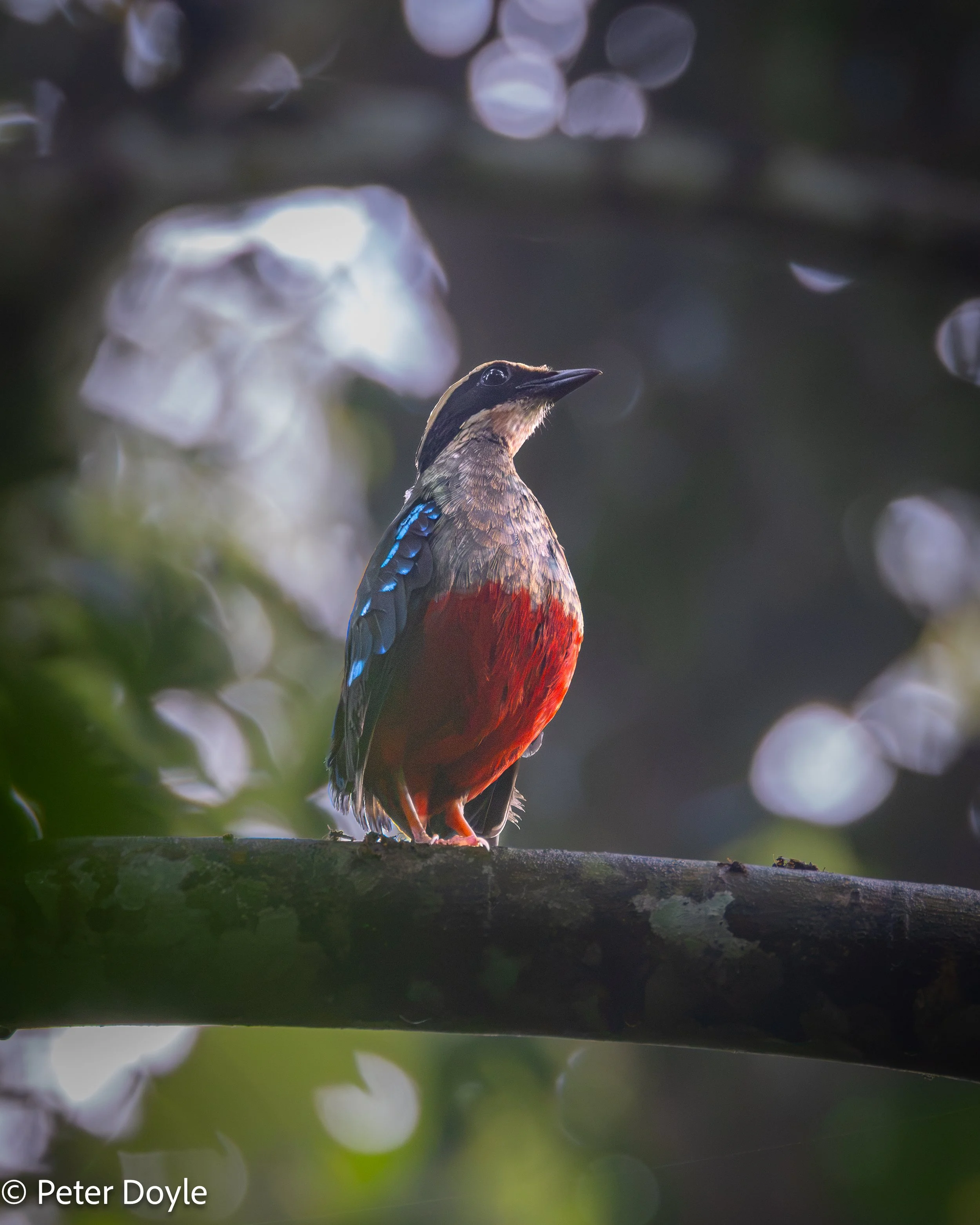
Green-breasted Pitta Pitta reichenowi
Meanwhile, in a nearby ficus tree, it was figs for breakfast!
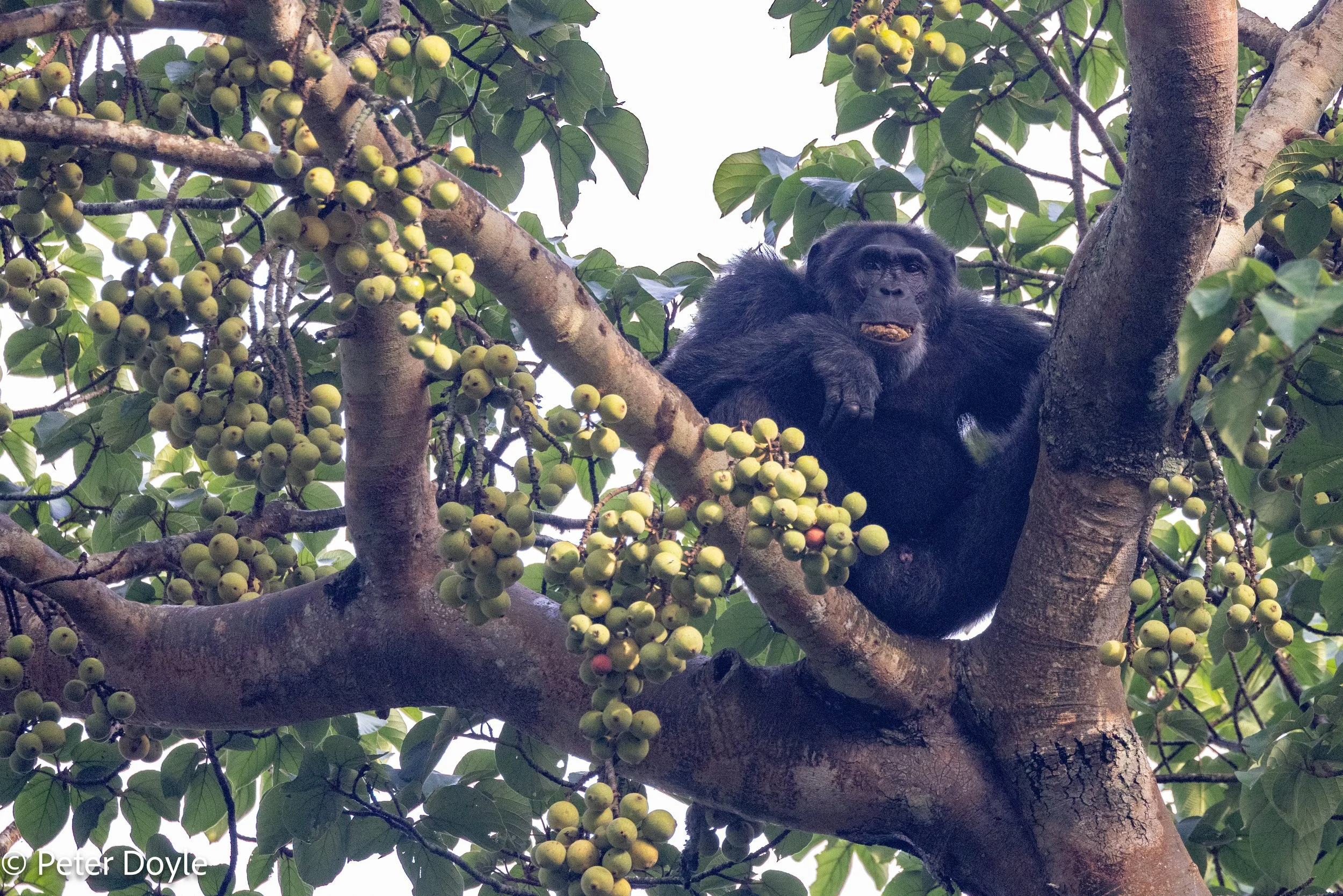
Chimpanzee Pan troglodytes
The variety of birds and habitat was astonishing …
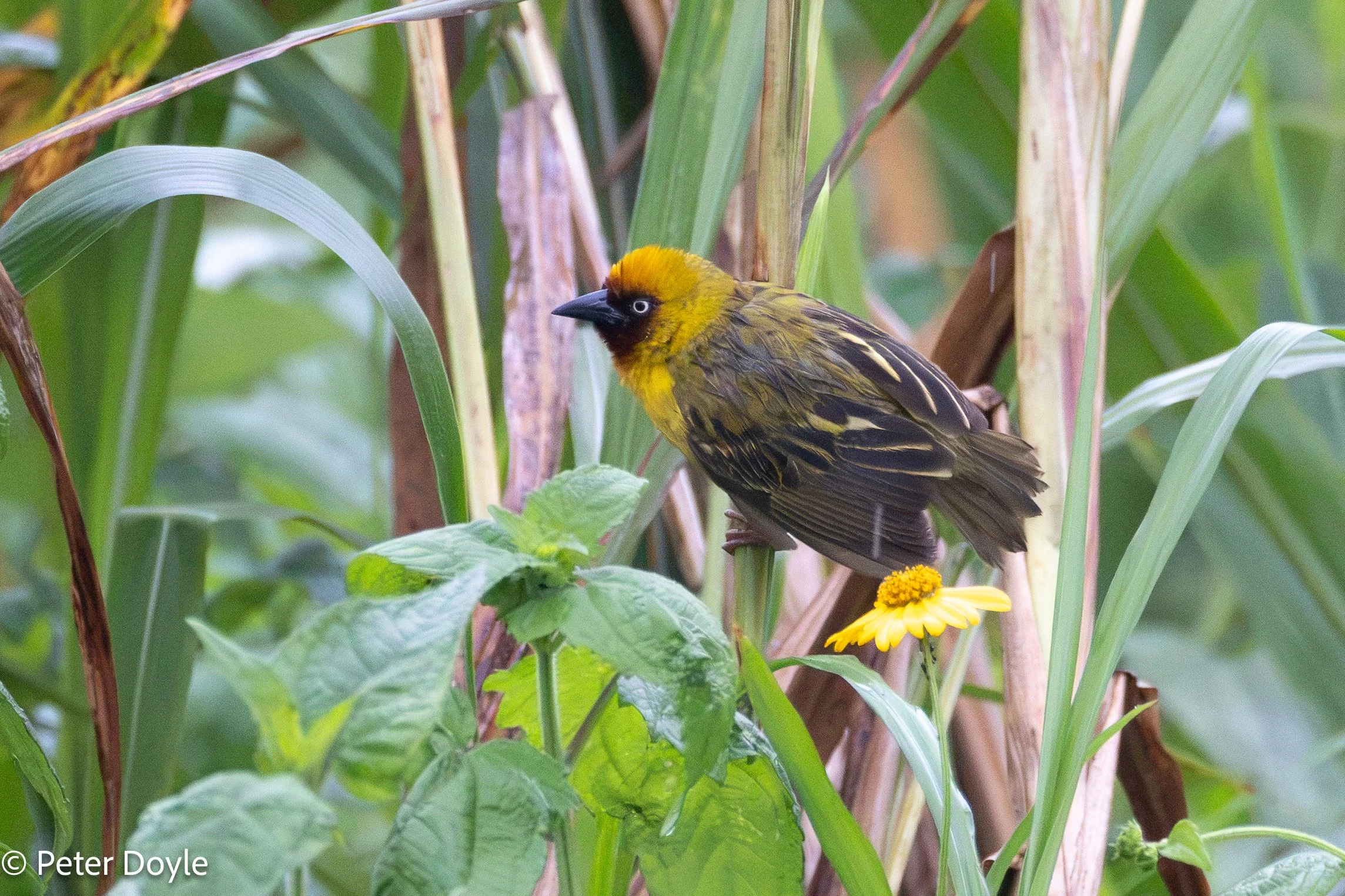
Northern Brown-throated Weaver Ploceus castanops
It is hard to believe that these 2 birds species (above and below) are from the same family.
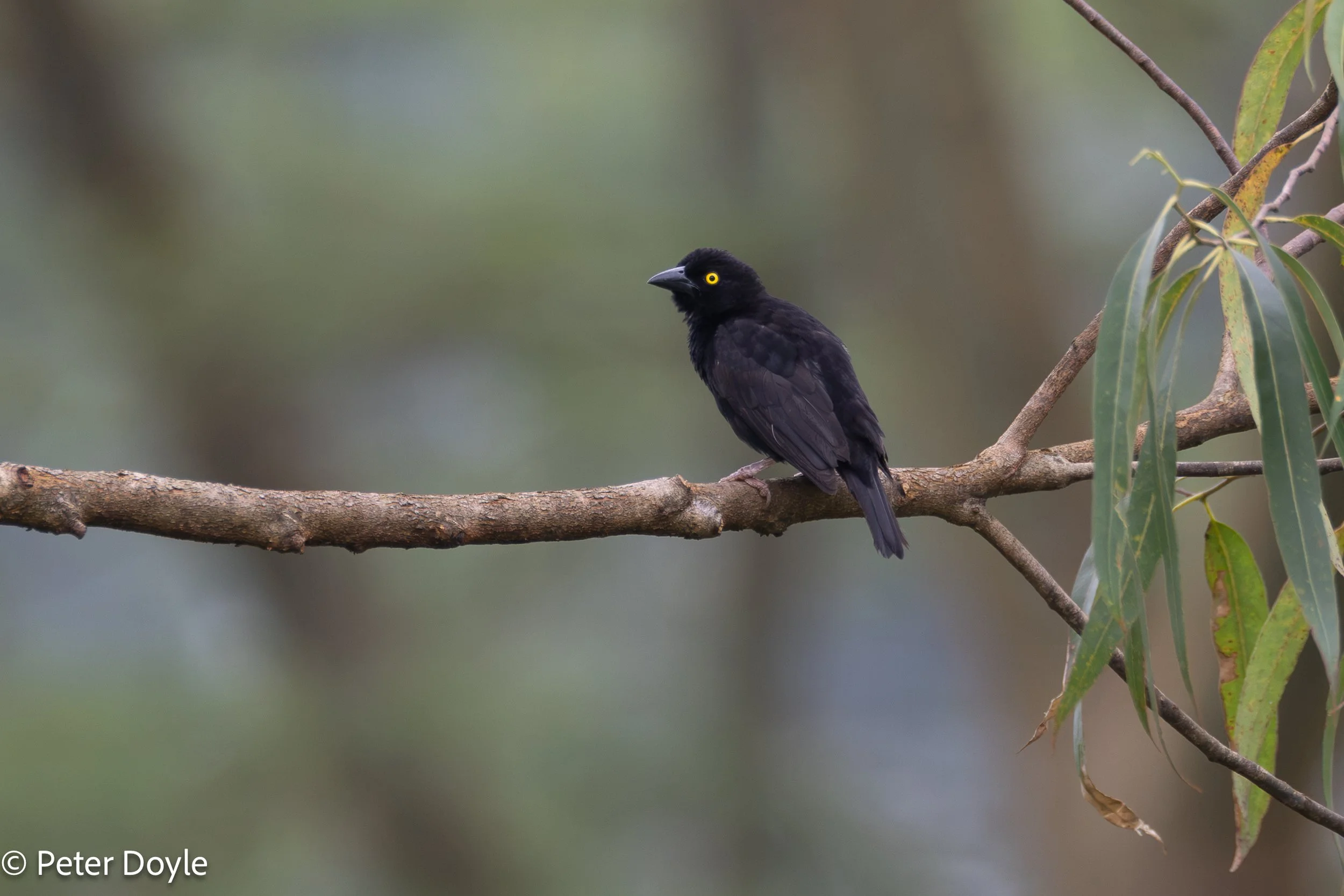
Viellot's Black Weaver Ploceus nigerrimus
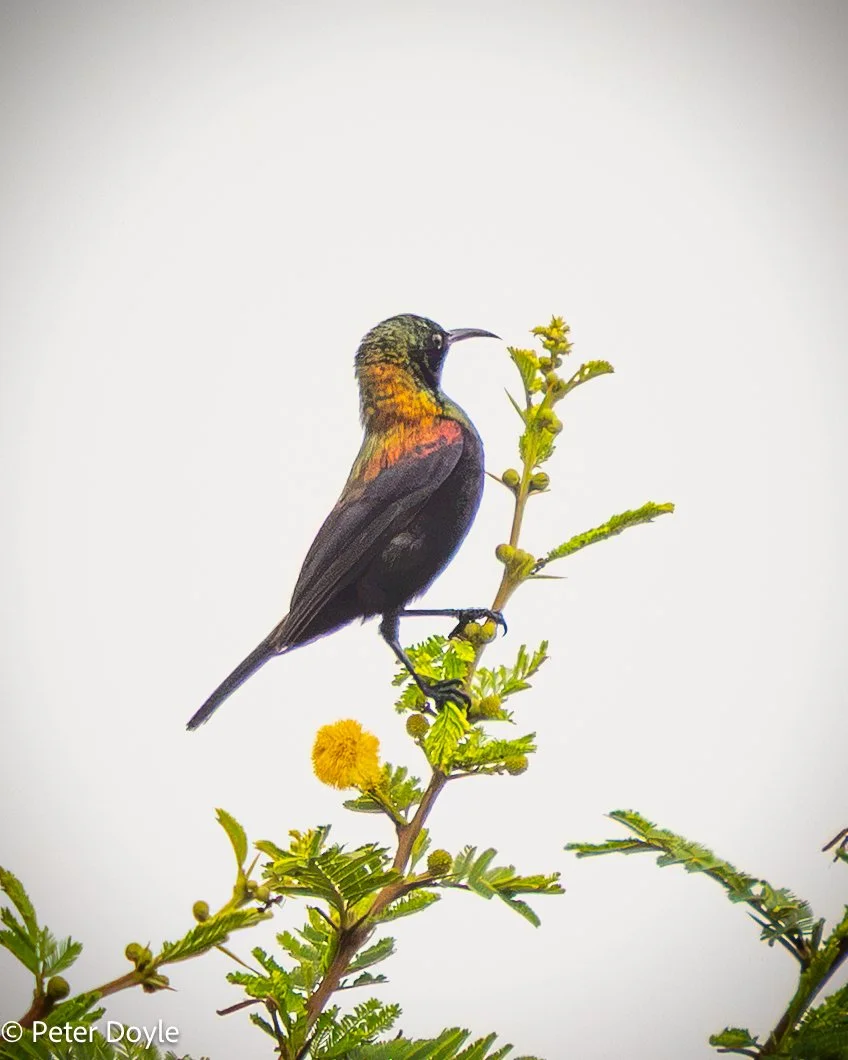
Copper Sunbird Cinnyris cupreus
How descriptive is this name?
There are a number of really beautiful Bee-eaters in Uganda, including the White-throated, Red-throated and the Black. Here are two of them …
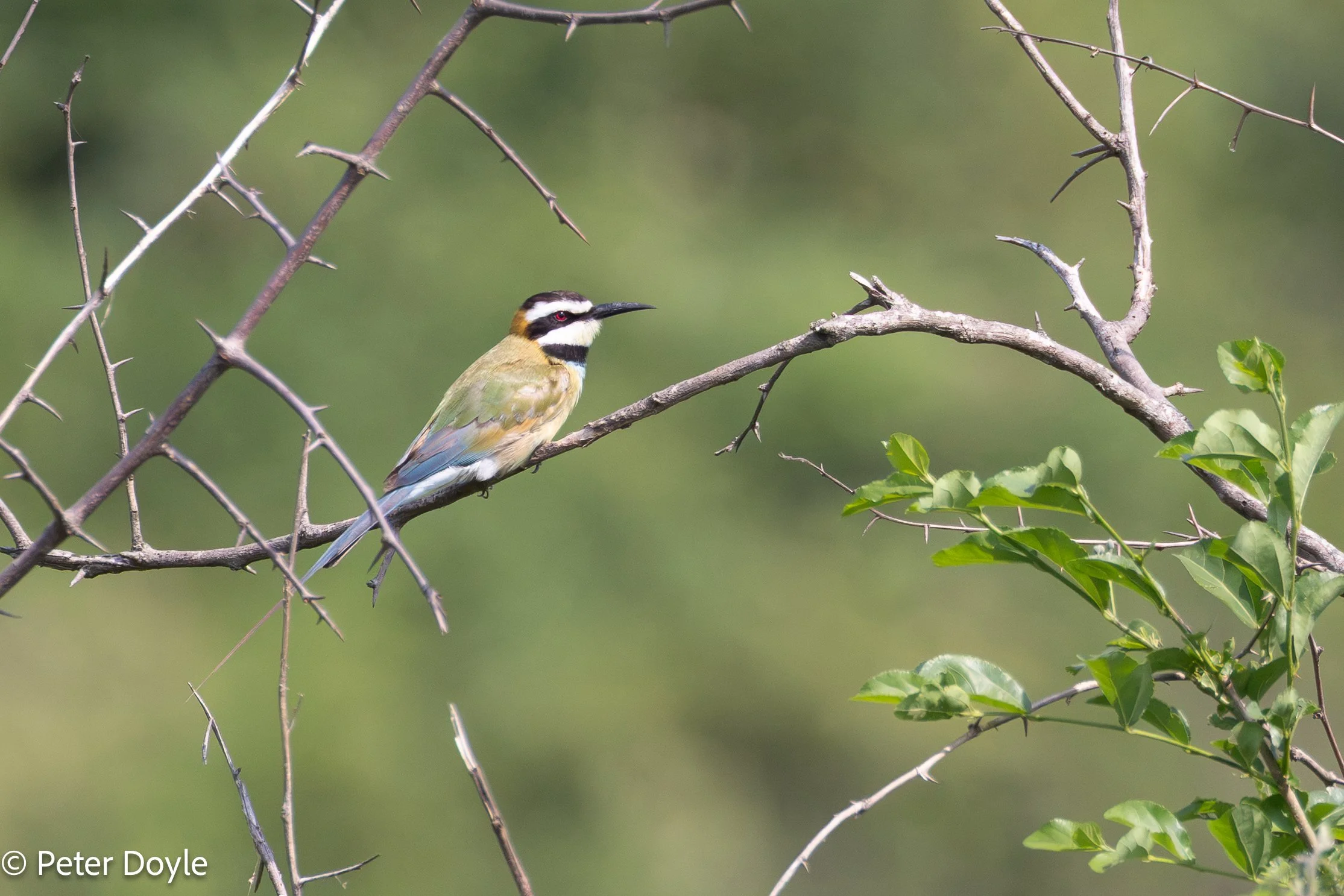
White-throated Bee-eater Merops albicollis
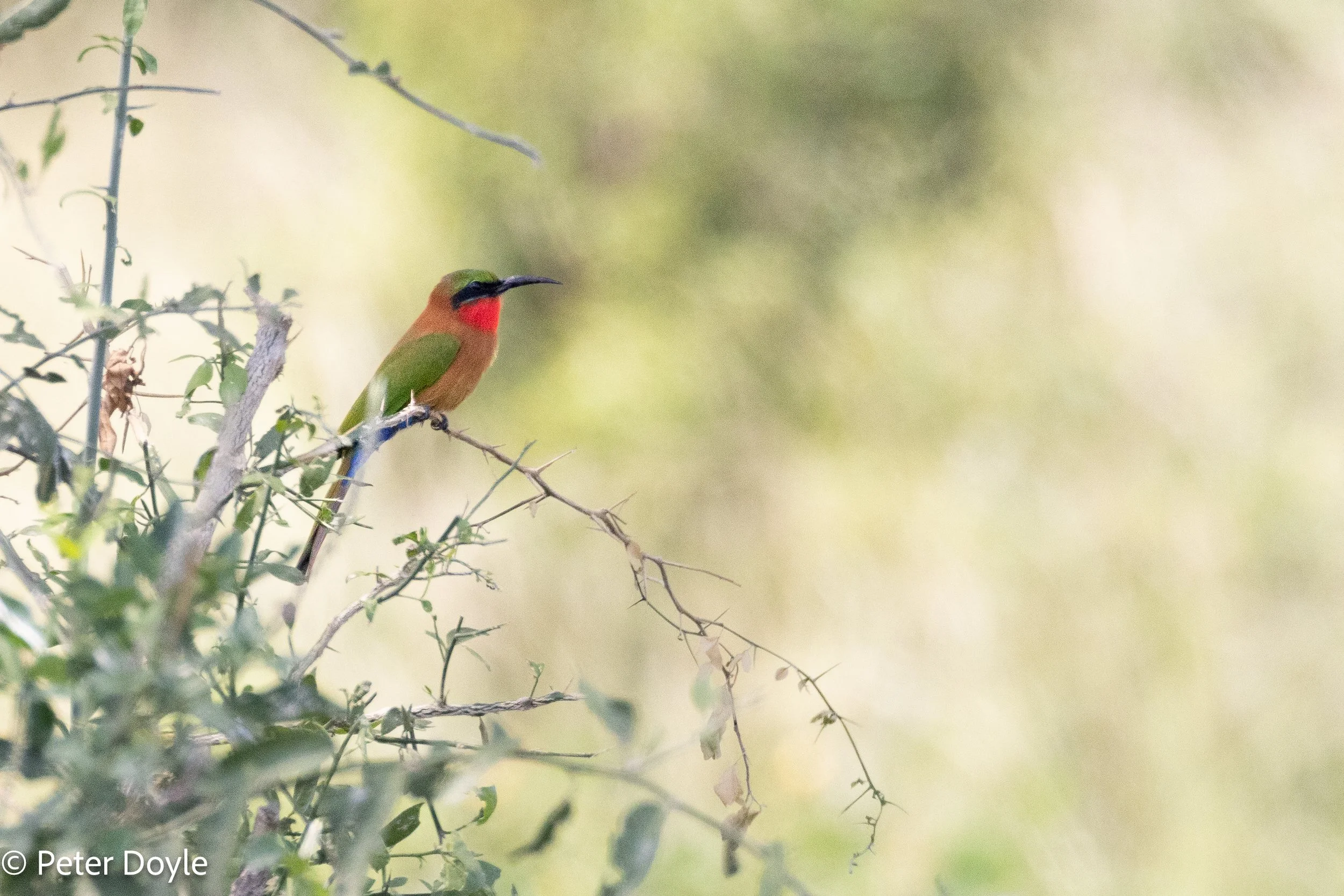
Red-throated Bee-eater Merops bulocki
There is also a number of unusual Barbet in Uganda. Two of these are also look very different:
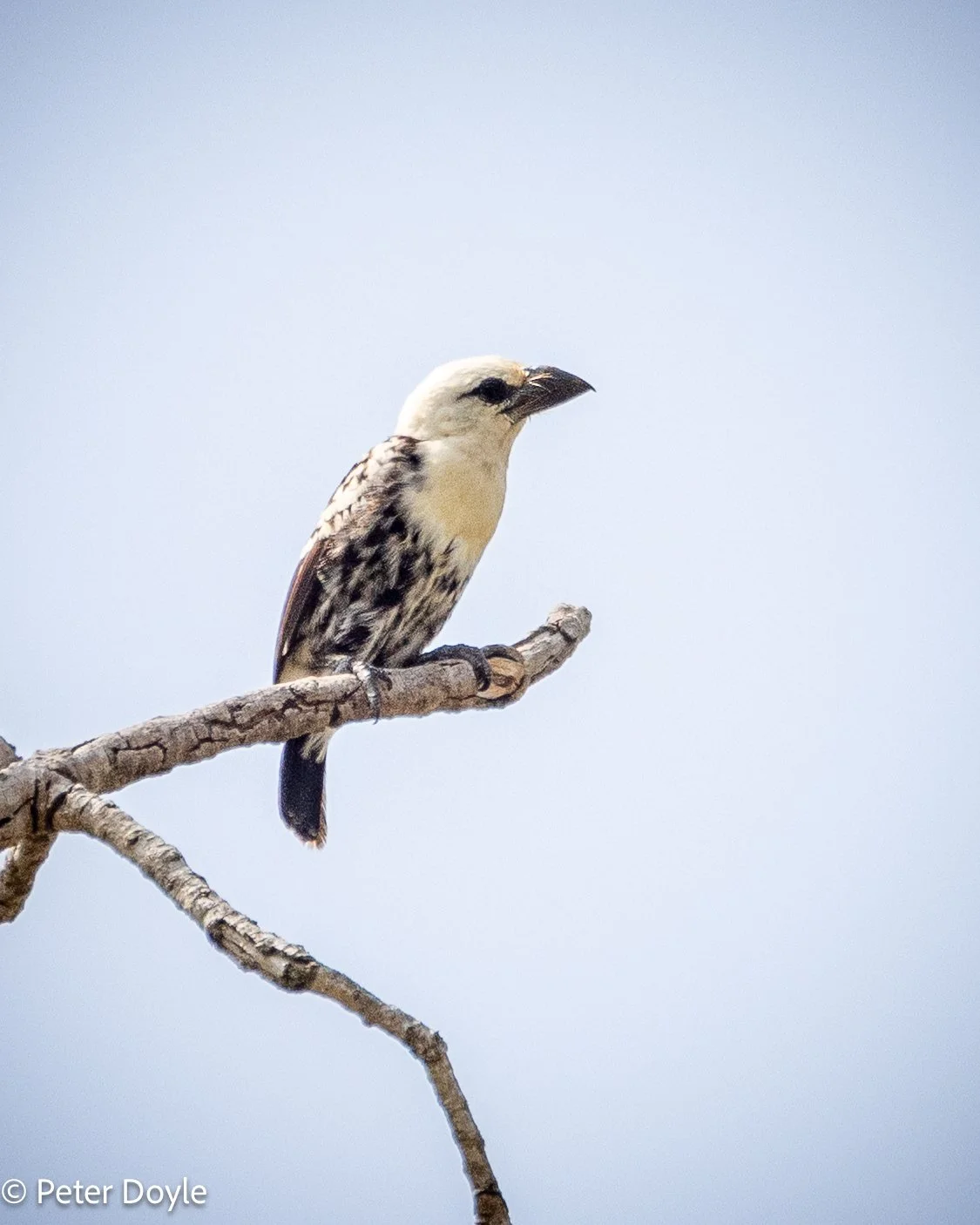
White-headed Barbet Lybius leucocephalus
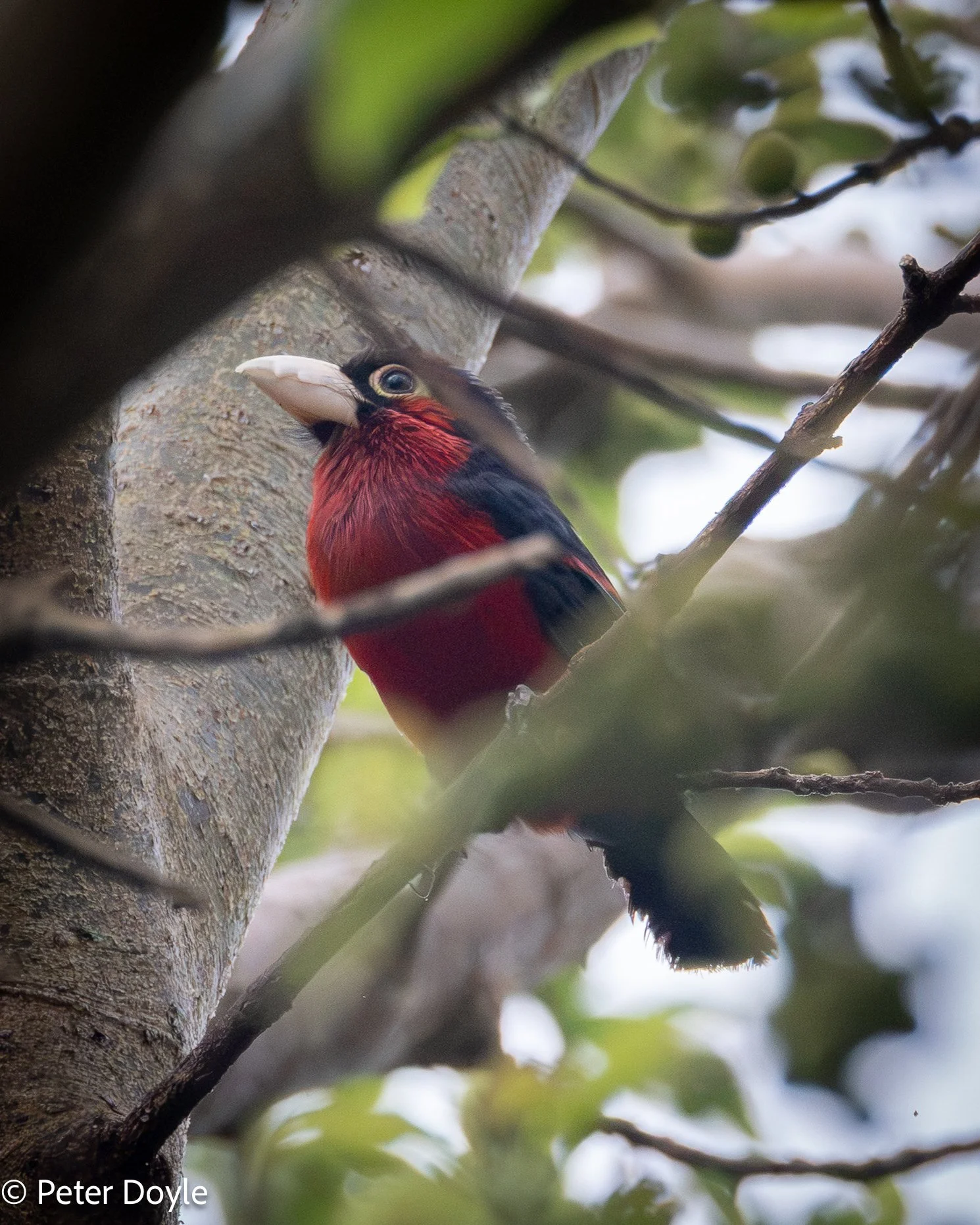
Double-toothed Barbet Pogonornis bidentatus
Although we also get these in Southern Africa, this was certainly our best sighting and photograph of the stunning Grey-headed Kingfisher.
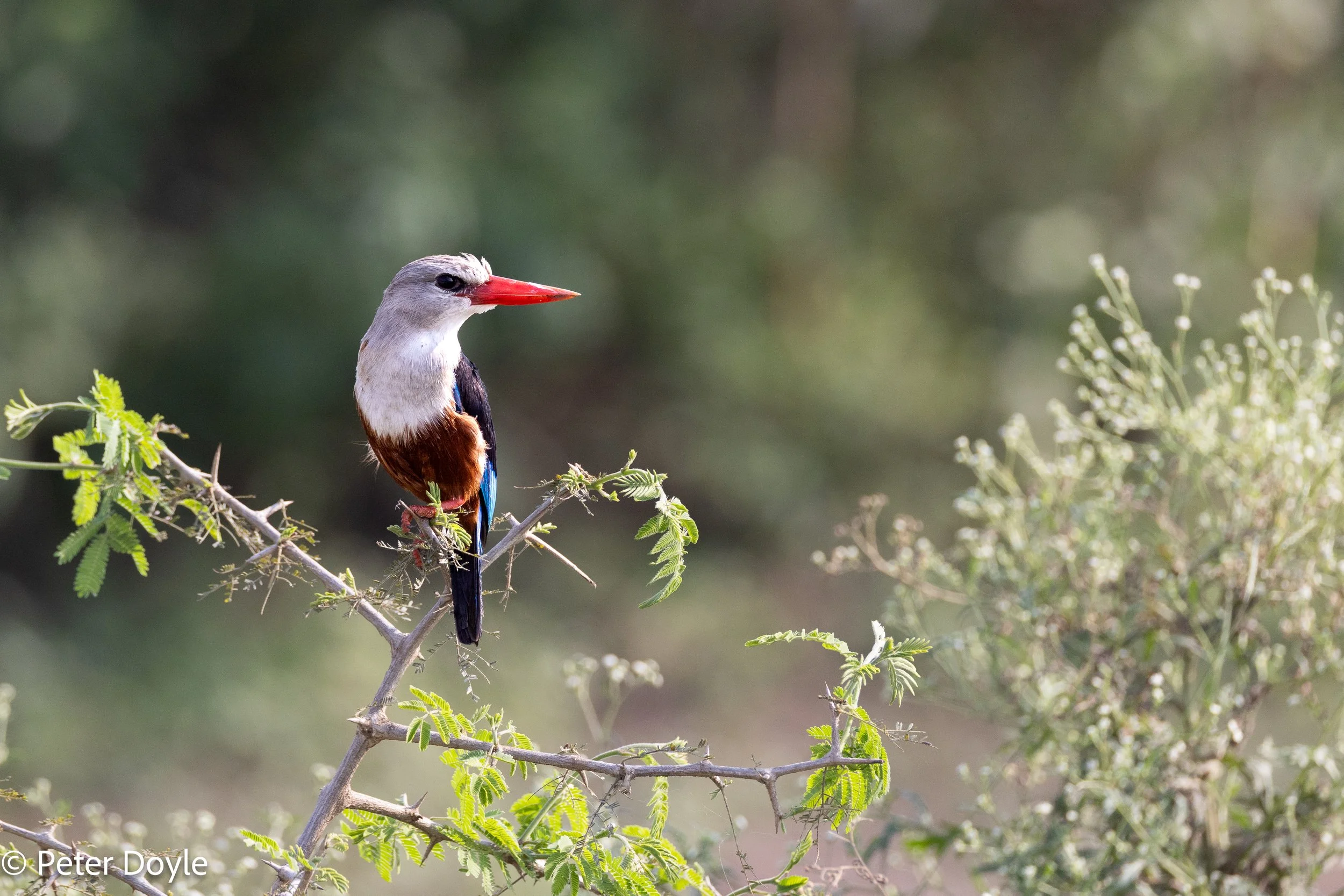
Grey-headed Kingfisher Halycon leucocephala
In Conclusion: Co-existence
Finally, a note on co-existence in Uganda.
Uganda is densely populated and has very productive and extensive farming and forestry activities.
What is most interesting, however, is the very close proximity and interaction between people and wildlife.
Yes, there are forest and game reserves and national parks. Yes, they are demarcated on a map. But the boundaries are porous. Fences are rare. Demarcation seem to be by mutual agreement, especially on the margins, where people and wild animals co-exist, tolerating each other’s presence.
Wildlife are often found outside reserves and people and villages can be found (legally) inside the reserves.
None better illustrated than the photo below, of a young man walking along a road, almost oblivious to the large, peaceful elephant also wandering down the same road. This was near the Queen Elizabeth National Park. Whether we were inside or outside the actual park was rather immaterial at that point!
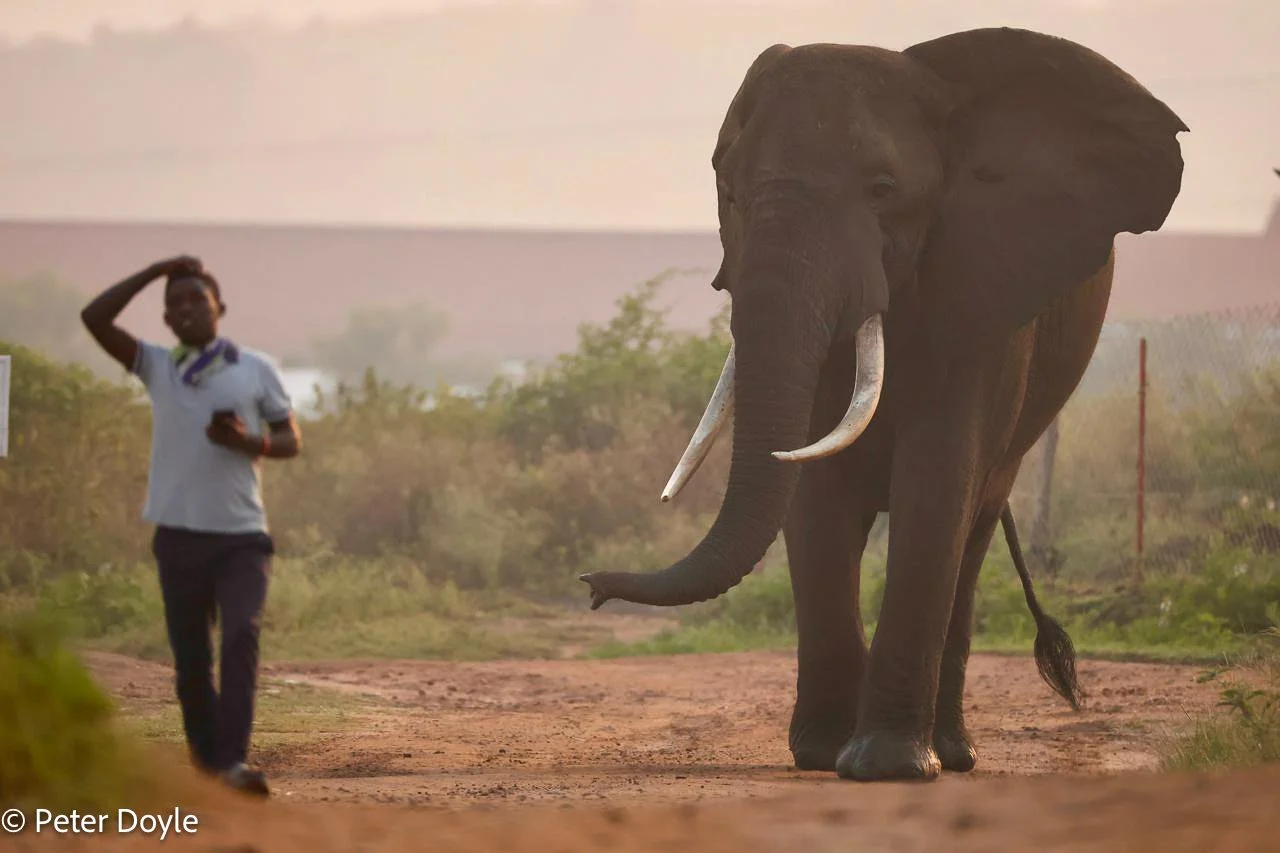
Homo Sapiens & African savanna elephant (Loxodonta africana)
The savannah elephant are well known and better researched than the forest elephant, perhaps because they are more plentiful and more visible, while the forest elephant are very difficult to count and observe.
Although numbers continue to decline, it is estimated that there are still about 400 000 savannah elephant and 135 000 forest elephant in Africa.
Source: https://www.wwf.org.uk/learn/wildlife/african-elephants
